
Many thanks to SWLing Post contributor Mark Hirst, who shares the following guest post:
A Radio Postcard from Seoul
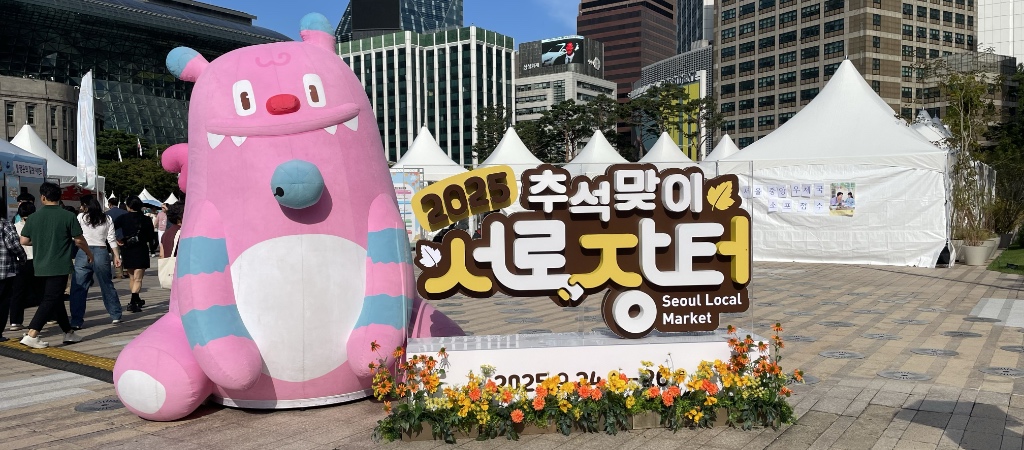
Hechi is a mascot for the Seoul Metropolitan Government
by Mark Hirst
I recently spent a very memorable week in Seoul, motivated to travel there by Hallyu or the Korean Wave, a cultural phenomena exemplified by the TV show Squid Game, animated movie K-Pop Demon Hunters, boy band BTS, and girl group Blackpink.
While I can credit Netflix and its huge library of Korean TV and film content for introducing me to K-drama, it was KBS World Radio and its Weekend Playlist programme on shortwave that led me to K-pop.
Early on in my holiday planning, I discovered that KBS has a public exhibition called KBS ON located in their headquarters building. Later during the trip, radio would appear unplanned in one of the other museums I hoped to explore.
Travelling to Seoul of course was a unique radio listening opportunity to hear and record stations that would otherwise require a Web SDR or internet streaming. Armed with a relatively recent copy of WRTH, I was able to compile a list of radio stations with the intention of making some short audio and video recordings.
What follows is a description of my experiences at KBS ON, some historical references to radio at the National Museum of Korean Contemporary History, and notes about the radio stations I was able to hear during my stay.
All photos are my own.
The Korean Broadcasting System
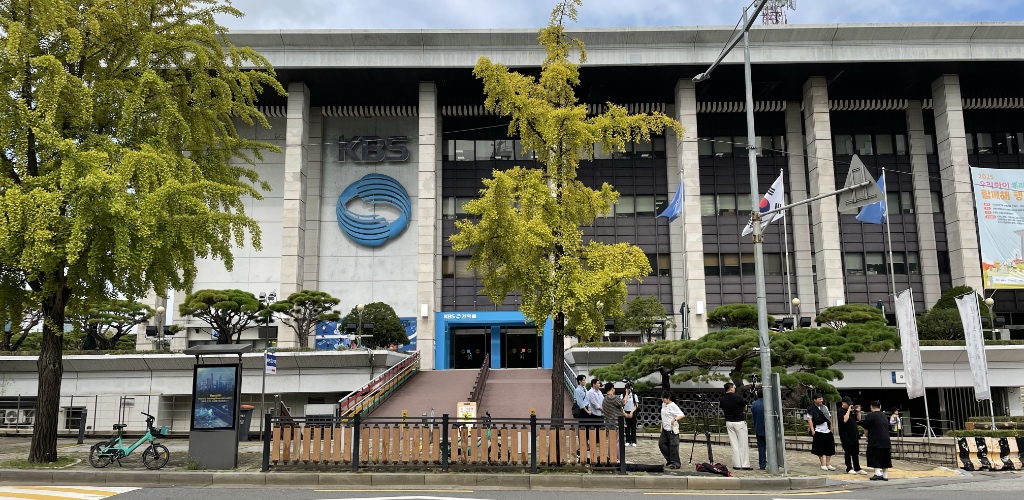
The Korean Broadcasting System or KBS is the national broadcaster of Korea, providing radio, TV, and internet based content to its national audience. KBS World is the outward facing arm of the organisation providing similar services to an international audience.
The headquarter buildings of KBS are located in Yeouido, an area of Seoul that also hosts Korea’s National Assembly Building. Technically a river island, Yeouido is bordered by the Han River, offering spectacular views of central Seoul and a skyline familiar to K-drama fans everywhere.
The main KBS building is a short walk from Yeouido station on Line 5 and Line 9 of the Seoul metro system. Your route takes you through Yeouido Park where you can see a preserved Douglas C-47 cargo plane dating from the Korean War.
The main building sits along side several other KBS related areas including the KBS Hall and KBS Art Hall. Even to the untrained eye, it’s obvious that the facility is communications related with a prominent red and white antenna tower on the main building, with red scaffolding on an adjacent block housing another tower and communication dishes.
Other notable locations at the site include a roadway and building entrance where K-pop idol groups arrive every Friday to record Music Bank, a programme that showcases the latest hits of the music genre. This photo opportunity is so popular with fans that it has a dedicated playlist on the KBS World English YouTube channel.
KBS ON Exhibition Hall
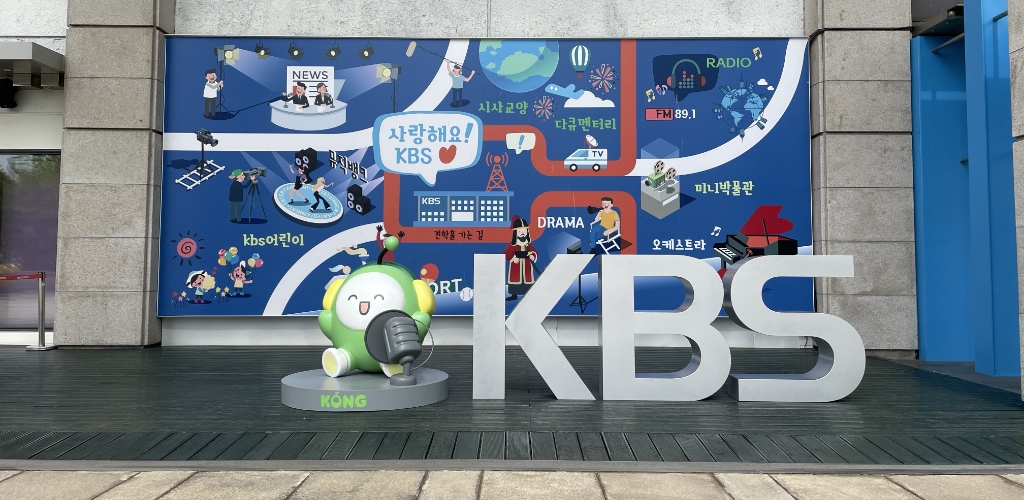
The KBS ON Mural featuring the mascot Kong
The KBS ON exhibition is part of a range of locations promoted by the official visitor guide to Seoul, details of which can be found here.
Accessing the exhibition is through distinctive blue bordered doors into a large reception area. The exhibition proper then begins at the top of a short flight of stairs.
Although all sections of the tour are in Korean, section overviews are also provided in other languages. QR codes link to audio commentaries to provide the remaining explanations for non-Korean visitors.
The audio commentary supports the following languages:
- Korean
- English
- Simplified Chinese
- Japanese
- Bahasa Indonesia
- Vietnamese
- Spanish
The tour proceeds through a series of linked sections and topics which are described below.
KBS History
This section is comprised of information panels outlining the origins of KBS. Originally known as the Gyeongseong Broadcasting Station (callsign JODK) beginning in 1927, the name KBS emerges in 1945 following the liberation of Korea from Japan. KBS was established as a public broadcaster in 1973.
On Air
Through a series of large screens, this section describes the various channels KBS provides including terrestrial TV, international radio, cable, and Digital Multimedia Broadcasting, a radio transmission technology developed in South Korea.
Current Affairs / Culture programme
As a public broadcaster, this section highlights the current affairs and educational output of KBS.
Virtual Studio
This interactive section demonstrates the familiar ‘blue screen’ or chroma key technology used in news and weather forecasts. Visitors are encouraged to present their own Korean weather forecast!
Drama
The visitor is treated to a display of props and magnificent costumes from Korean period dramas, with panels and displays highlighting the role of KBS in driving growth in the K-drama industry.
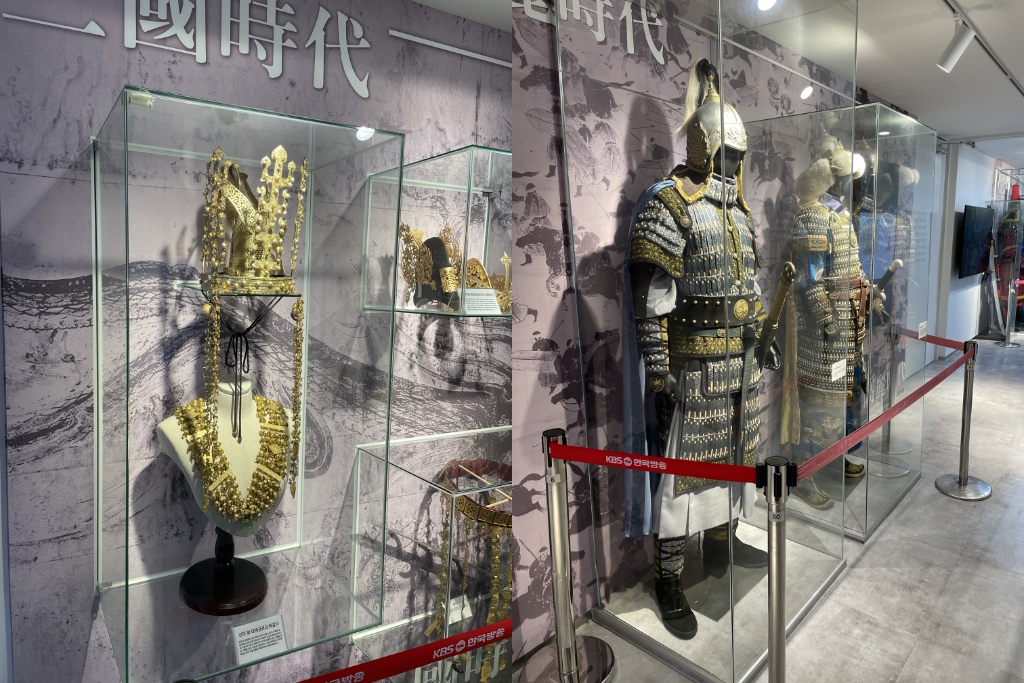
Props and Costumes
Entertainment programme
Supported by large screens, this area showcases a range of local programming including talent and variety shows.
Music Bank 
While the shows in the previous sections will be unfamiliar to most, Music Bank is more well known to overseas fans of K-pop. This high profile programme features live performances every Friday evening from the big names of the genre with a lottery system for fans to attend recordings.
Vertigo
This section demonstrates AI based technology developed by KBS to allow a single fixed camera to track individual members of an idol group simultaneously as they sing and dance on stage. Previously, these so-called ‘fancam’ shots required a separate camera for each performer incurring extra costs and logistics problems.
Examples of Vertigo in action are shown on large screens, featuring performances by girl groups STAYC and Illit.
Visitors can step on to a virtual stage adjacent to the displays where a single camera will automatically track your face and body without physically moving.
Who’s the best singer?
A section aimed squarely at children, this show dates back to 1954. Interactive features include a singing stage.
Voice Acting
Not all content aired by KBS is in the Korean language, so this interactive section demonstrates how foreign content is dubbed into Korean. A simplified editing desk allows you to dub over some live action and animated clips.
TV Studio 1
This was not active at the time I visited. Double glazed windows allow visitors to peer into the studio used for current affairs and culture programmes at KBS.
Sports
Supported by a number of large screens, this section showcases KBS coverage of major sporting events, with a particular focus on the recent 2024 Paris Olympics. Sporting memorabilia from the Olympics is also shown under glass.
News 9
This section highlights the work of KBS News 9 transmitted on the KBS 1 television channel.
A mockup of a news presenter studio has a camera and teleprompter, with a desk and chair where visitors can pretend to read the news.
TV Studio 7
Studio 7 is used to produce children’s television and is another studio visible to visitors through double glazed windows. This was not in use during my visit.
News Anchor
This section shows the names and faces of news readers over the years. Visitors can tap the image of a presenter to get more information about them.
Finding Dispersed Families
The tone of the exhibition changes markedly in this area. For 138 days over 450 hours, this live programme aimed to reunite families separated by war in Korea, attracting a record viewership rating of 78%. Around 10% of families involved were reunited. Still images and video clips illustrate this ground breaking broadcast.
KBS Radio
Radio continues to be well loved by audiences according to this section, despite the rise of TV, internet, and mobile platforms. Adjacent to this area is a drama studio where radio content is recorded.
Drama studio
A radio drama was being recorded at the time of my visit. The studio was filled with props to provide suitable sound effects to support the voice actors performances.
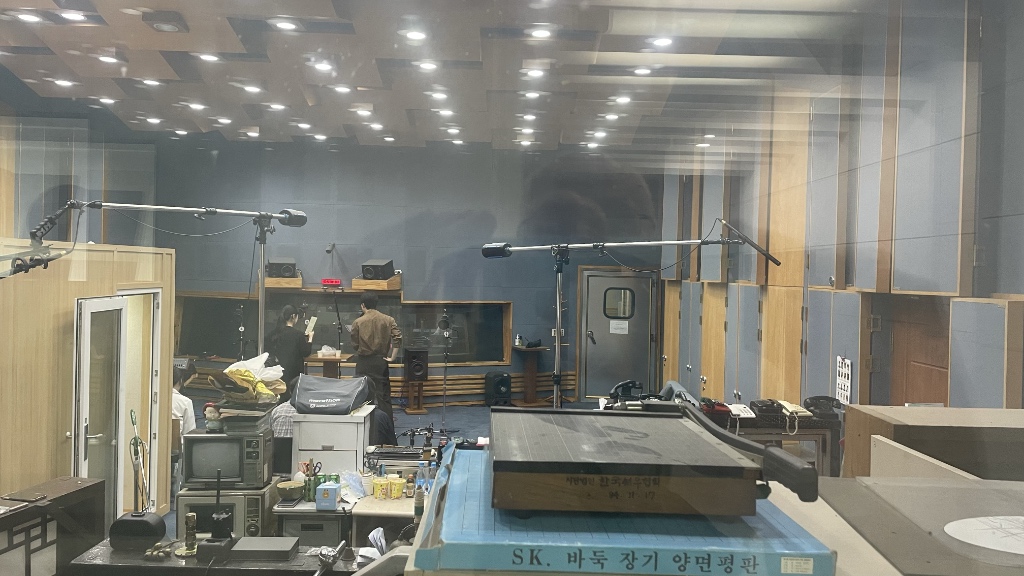
A recording session in progress
KBS International Broadcasting
This section describes the mission of KBS World, which is to promote Korean culture around the world through TV, radio and the internet. KBS World Radio is available in 11 languages, but in a sign of how technology is changing, the display area is focused towards apps running on mobile platforms as the main way to access KBS content.
The KBS World Apps on my iPhone
Mini Museum
The mini museum is the only section of the tour to contain examples of radios and televisions. Microphones are also shown, some dating back to 1927 when KBS was known as the Gyeongseong Broadcasting Station.
American radios on display included a Zenith Transoceanic brought to Korea by US soldiers in 1954, an Arvin radio introduced in 1950, and a Philco C-661.
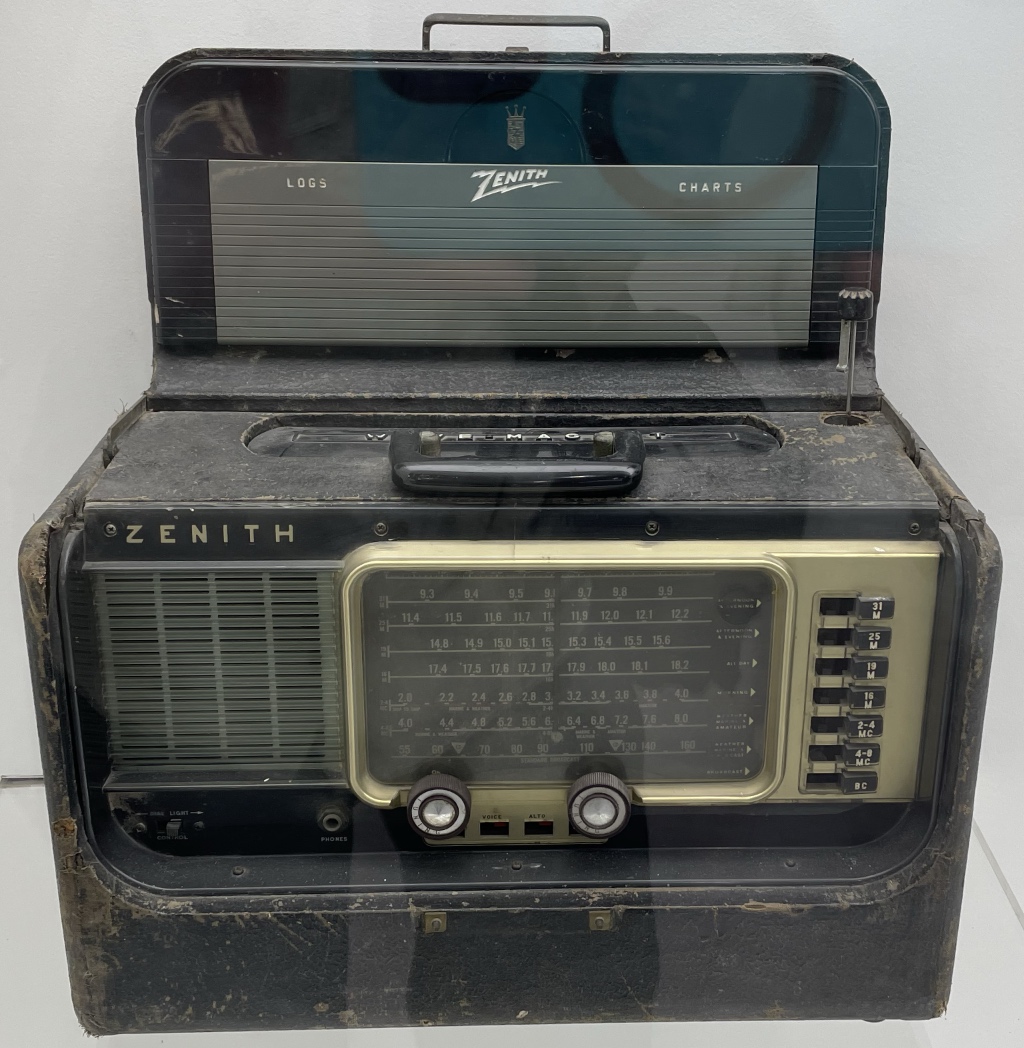
Zenith Radio
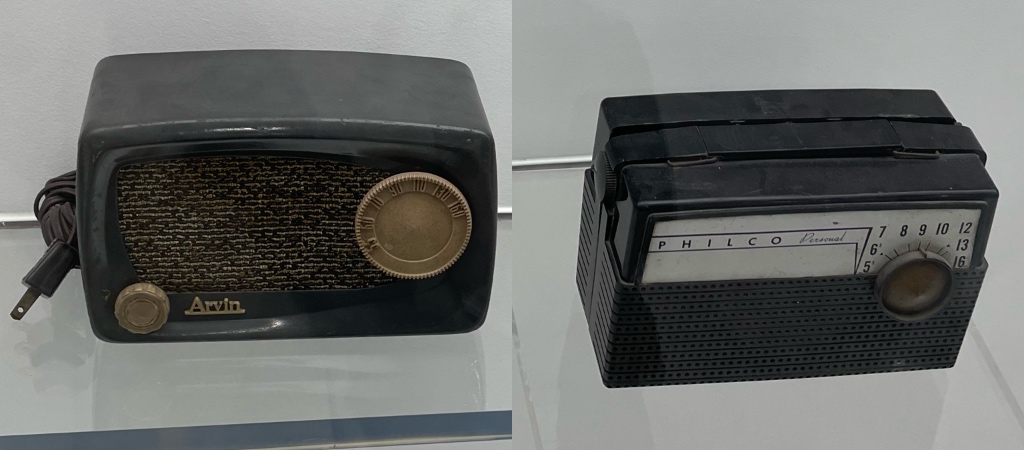
Arvin and Philco radios
A Japanese model from 1927 made by National Electric and sold below cost in Korea by the Joseon Broadcasting Association was adjacent to the Zenith.
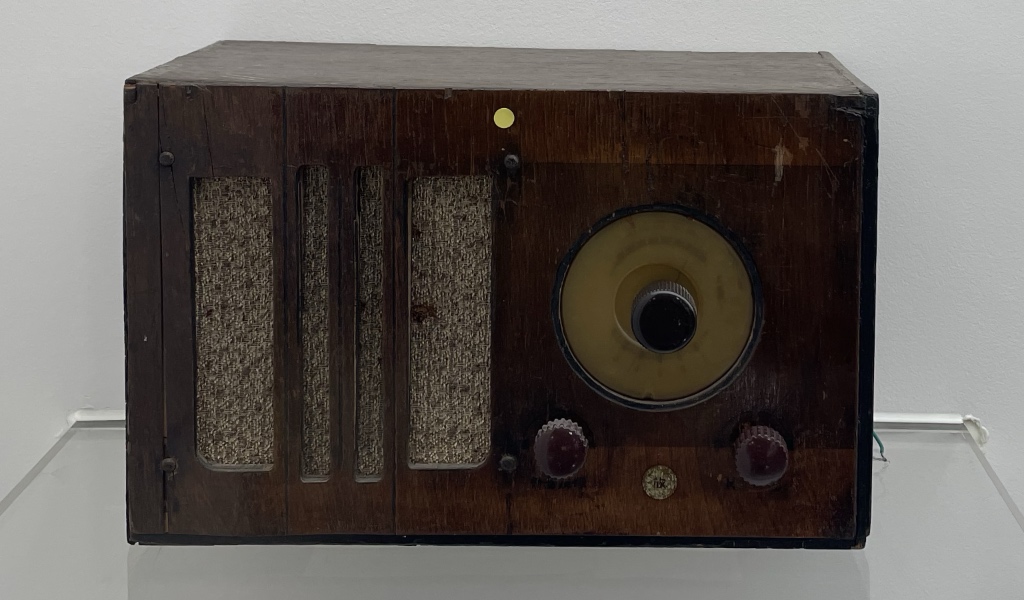
National Electric Radio
The central display cabinet dominated by an early studio camera contains an example of the Korean made Goldstar A-503 dating from 1959.
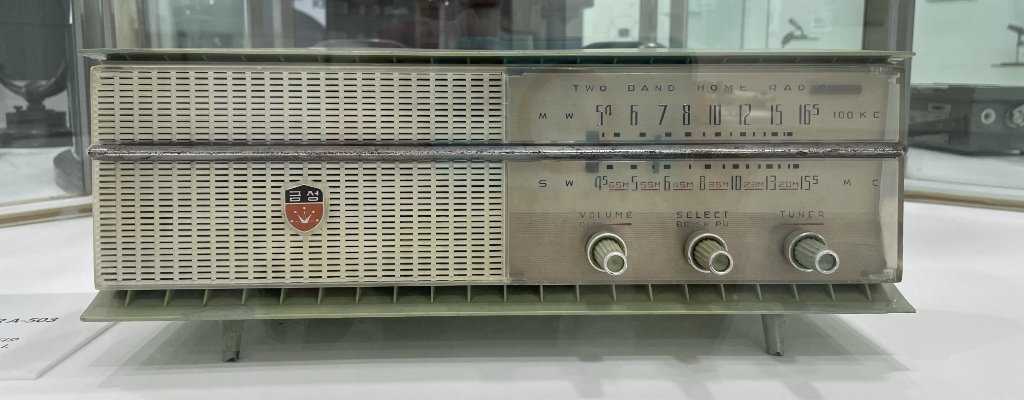
Goldstar A-503
Goldstar radios of a similar vintage would appear again when I visited the National Museum of Korean Contemporary History. As a side note, Goldstar would later become LG, a brand many of us are familiar with today.
KBS Symphony Orchestra
Rehearsal space for the orchestra is visible behind doubled glazed windows. The orchestra has existed in various forms since 1956.
AI Photo Booth
Put yourself into a K-drama promotional poster using this AI powered camera !
End of the tour
Visitors are directed down a set of stairs back to the entrance lobby. Although the tourist page for KBS ON estimates that the tour should take 40-50 minutes, it took me about 60 minutes to complete.
One Final Look at KBS
Before leaving Yeouido for my rendezvous with lunch and my next Seoul landmark, I circumnavigated the block to see the KBS Hall and Art Hall, providing a clearer view of the two antennas positioned at the site.
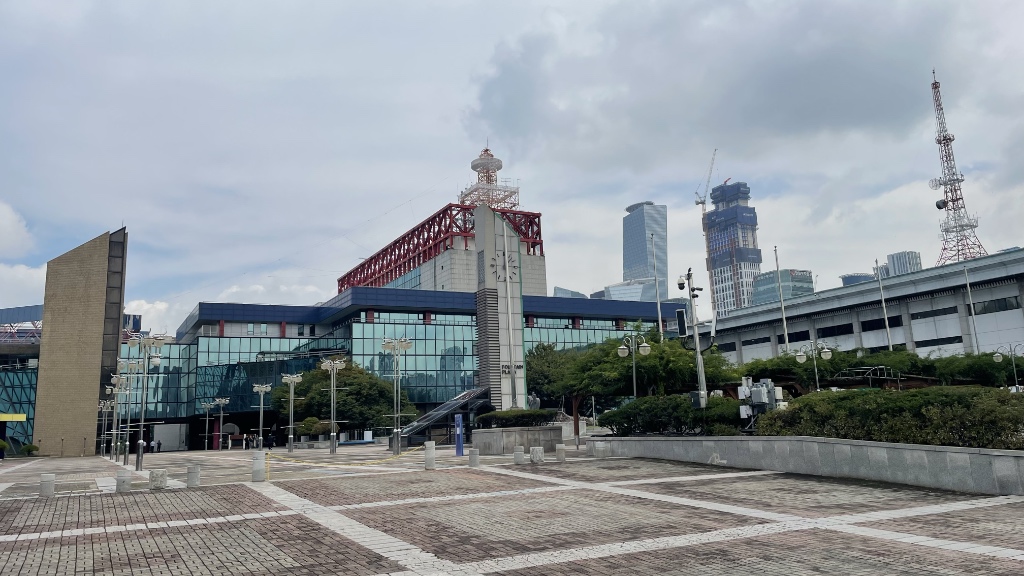
The KBS headquarters seen from near the KBS Hall
National Museum of Korean Contemporary History
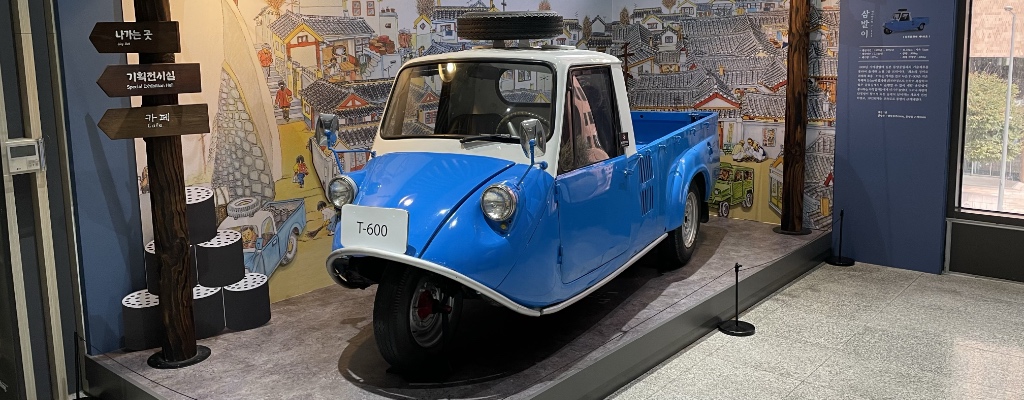
An exhibit from the Contemporary History Museum
In contrast to the National Museum of Korea located in Yongsan-gu, the Contemporary Museum covers Korea’s recent history including the Japanese occupation, the Korean War, and the eventual rise of Korea as a major economy and cultural force across the world.
Radio and TV Displays
In a section of the museum covering changes in Korean society, food and lifestyles, there were two large panels covering radio and television.
Examples of radio programming is shown and another Goldstar radio serves as an interactive control. On the right, we can see illustrations of several radios including the Goldstar A-503 seen previously at the KBS ON exhibition.
The station callsigns and programme listings shown are:
- HLKA – KBS Radio 1
- HLKJ – Dong-A Broadcasting Corporation
- HLKV – Munhwa Broadcasting Corporation (MBC)
- HLKC – Tongyang Broadcasting Corporation – Now KBS Cool FM
- HLKY – Christian Broadcasting System
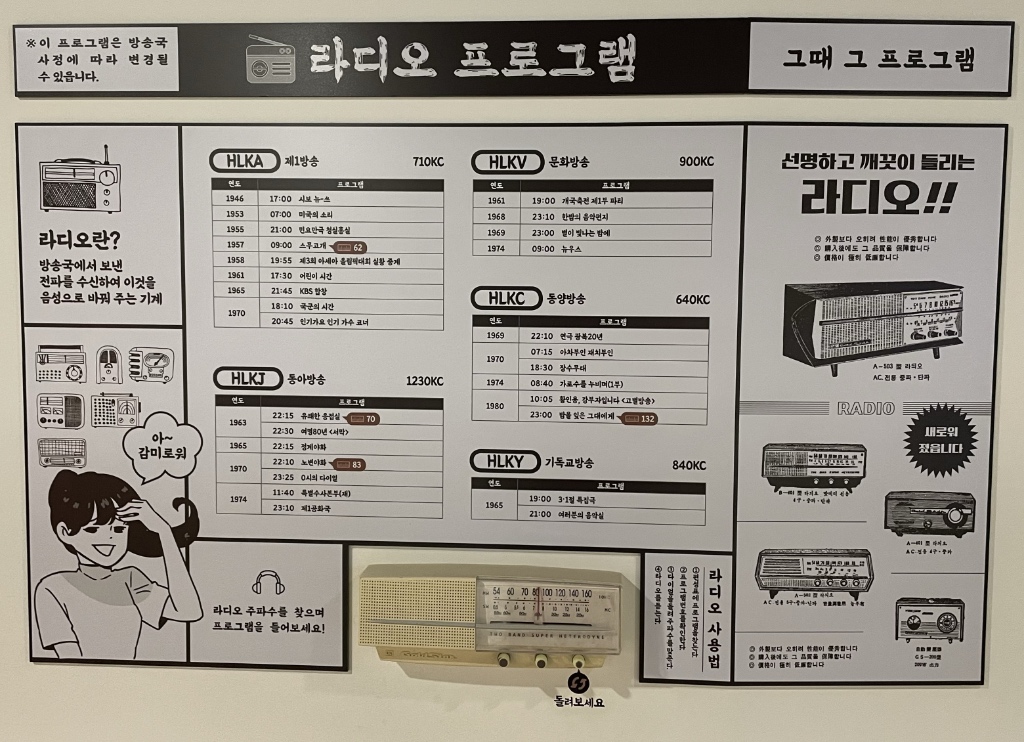
Radio Poster
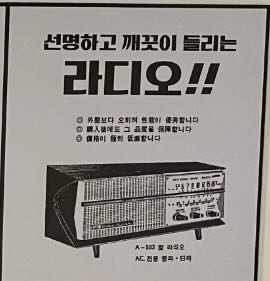 The legend above the radio images translates as ‘A radio that sounds clear and crisp!!’, where [the part ending with double exclamation points] is an example of a phonetic loan word – an approximate pronunciation of the English word ‘radio’ but using Hangul, the Korean writing system.
The interactive radio mounted in the display appears to be a GoldStar A-501, similar to this replica display item listed at the Victoria and Albert Museum in London.
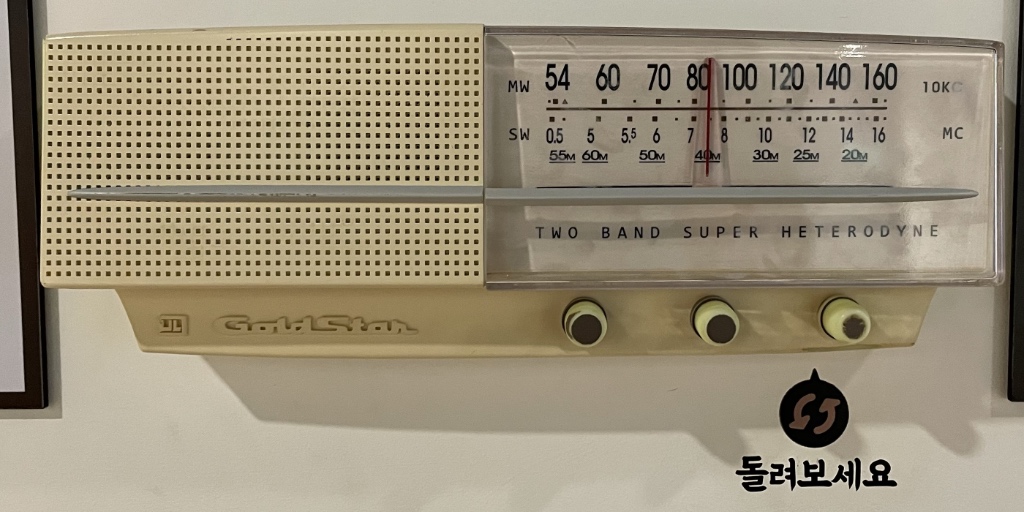
Goldstar A-501
A Radio Subscription Receipt
A display cabinet in the modern history section shows a receipt issued by the Korean Broadcasting Association in 1943 for a monthly subscription fee of 75 jeon. The display card notes that the number of registered radios increased from 949 Koreans and 1,481 Japanese in 1927 to 144,912 Koreans and 125,882 Japanese in 1942.
The radio next to the receipt is a 3rd distribution model radio of the Korea Broadcast Association. This radio was distributed inexpensively to the public by the Korea Broadcast Association to secure subscription fees.
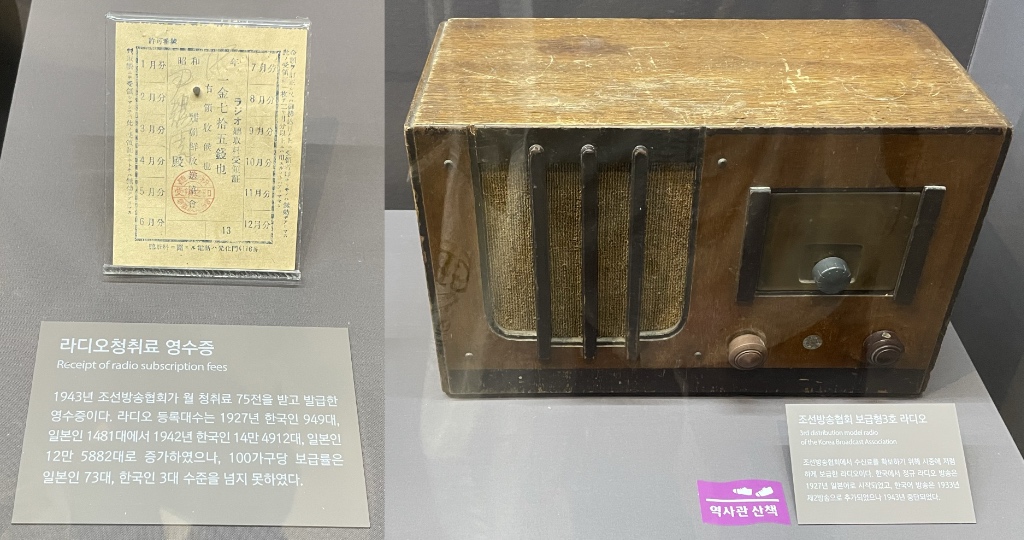
Radio and Radio Subscription Receipt
The Liberation of Korea from Japan
A media console allows visitors to hear a recording of a VOA radio broadcast made on the 14th of August 1945 announcing the liberation of Korea.
Accompanying it is a panel written in Korean which translates using Google Translate as follows:
News of Independence Sent to the Homeland
During the Pacific War, the United States launched the Voice of America (VOA) radio broadcast to strengthen its foreign propaganda efforts. Many Korean students studying abroad and Korean-Americans worked with the broadcaster, translating foreign language articles, reporting the news as announcers, and developing new programs.
On the morning of August 15 (Korean time), U.S. President Truman held a press conference at the White House and announced Japan’s unconditional surrender, thus ending the war.
Staff working in the Voice of America (VOA) Korean Broadcasting Department immediately translated this news into Korean, announcing Japan’s defeat and Korea’s independence. The broadcast was broadcast three hours before the Emperor of Japan officially announced the surrender, marking the first news of liberation to be delivered in Korean.
Tuning into Local Radio
Reception of shortwave and medium wave transmissions proved to be almost impossible from my hotel room, with the building structure and lighting systems likely contributing to the problem.
FM reception however had no such limitations, so using a combination of an entirely citation free Wikipedia article titled List of Korean radio stations and my 2022 print edition of WRTH, I was able to easily find and identify a number of these stations.
My radio of choice for the trip was the Tecsun PL-310ET for its size and AA battery power, which avoided any airline safety and baggage control complications around lithium batteries.
The following stations were logged in the evening of the first day:
- Munwha Broadcasting Corporation (FM4U) – 91.9 Mhz
- American Forces Network Korea – 102.7 MHz
- KBS 1 – 97.3 MHz
- KBS 3 – 104.9 MHz
- Gugak FM – 99.1 MHz
- Christian Broadcasting System – 98.1, 93.9 MHz
- Seoul Broadcasting System – 106.9 MHz
- Catholic Peace Broadcasting Corporation – 105.3 MHz
- Buddhist Broadcasting System – 101.9 MHz
Since my Korean is barely conversational at this time, MBC FM4U on 91.9 MHz with a mostly music focused format became a reliable audio backdrop in subsequent evenings as I relaxed and wrote up the events and observations of each day.
FM Jamming
The Wikipedia article provides lists of jamming frequencies for the Seoul area on FM.
When I tuned into these frequencies there was only the usual VHF hiss, making it difficult to determine if the article was incorrect, or if I was hearing perfect examples of the capture effect in action.
YouTube Video and Audio Recordings
I’ve uploaded the following short videos to YouTube. For the Korean language recordings, you can use the language translate options under settings to get English subtitles:
- American Forces Network Korea (English)
- MBC FM4U (Korean)
- Christian Broadcasting System (Korean)
- KBS 1 (Korean)
In Conclusion
If you have made it this far, I thank you!
My primary focus for this holiday was always about experiencing Korean culture through a variety of museums and cultural landmarks in Seoul, but with only a little effort was able to add a radio themed strand to the many great memories I have of my short stay in South Korea’s capital city.
Thank you so much, Mark, for sharing this guest post! I really enjoyed your blend of radio, travel, and culture—it’s always a treat to see how radio connects us to the wider world. I had no idea KBS was such a powerhouse of broadcasting, and your perspective really opened my eyes to that.
Again, many thanks for taking the time to share your journey with us!
Thomas