
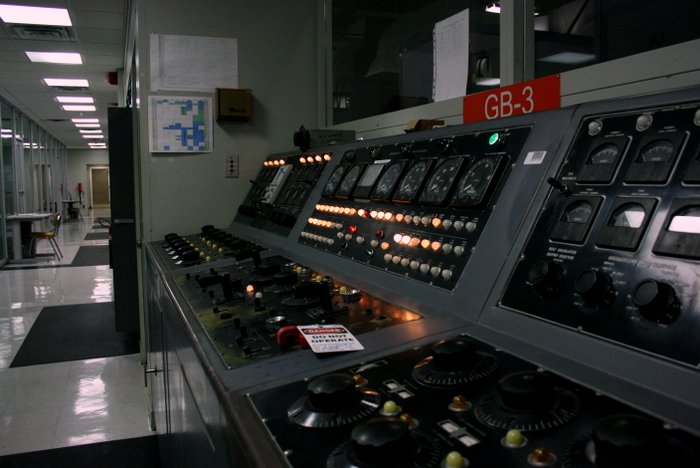
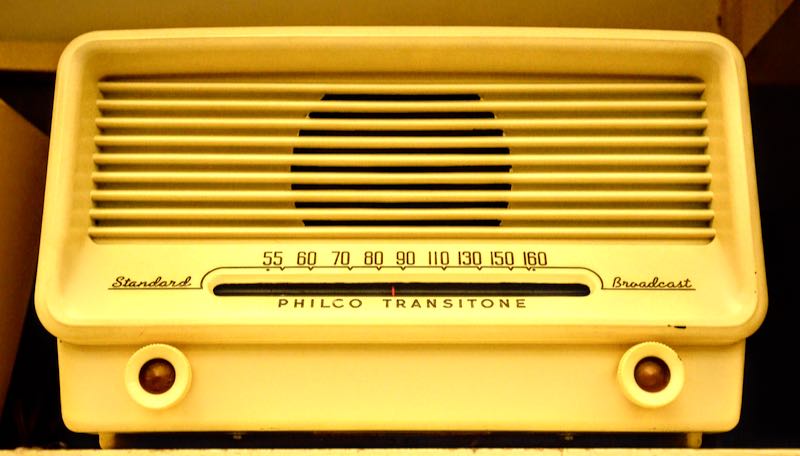
Many thanks to SWLing Post contributor, Frans Goddijn, who spotted the radio gear above in the The Royal Tenenbaums (2001). Can you recognize this iconic brand? How about the receiver on the lower shelf?
Thanks for the tip, Frans!

Many thanks to SWLing Post contributor, Frans Goddijn, who spotted the radio gear above in the The Royal Tenenbaums (2001). Can you recognize this iconic brand? How about the receiver on the lower shelf?
Thanks for the tip, Frans!
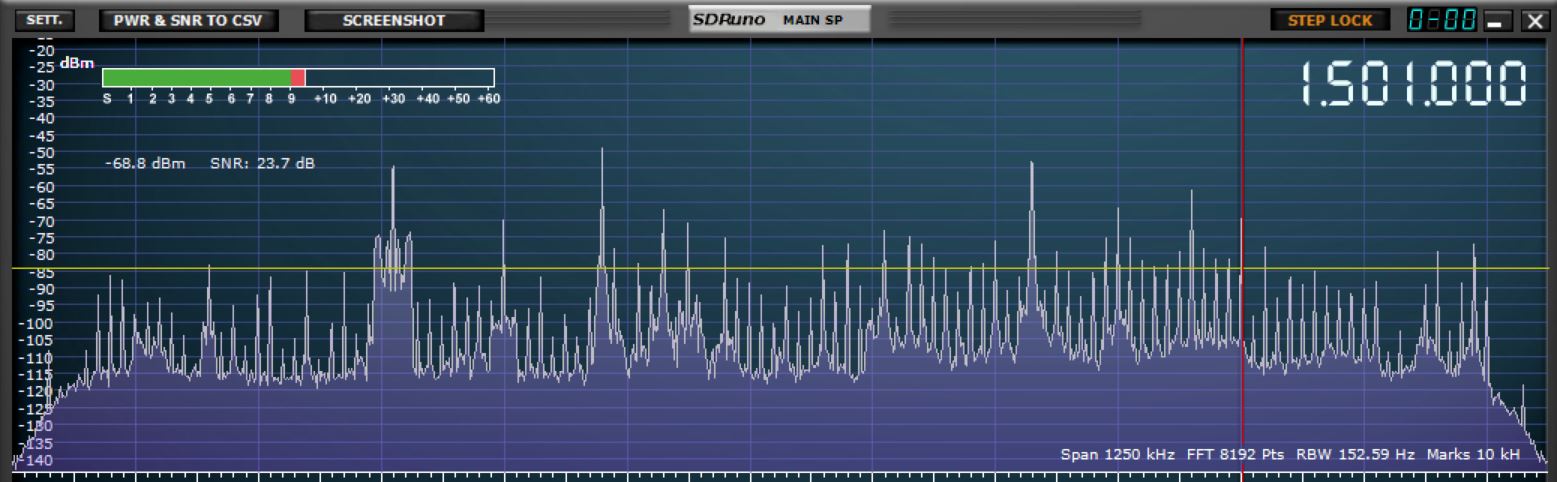 Many thanks to SWLing Post contributor, Ulis Fleming, who shares the following article from KFIZ via Twitter. I love these articles where a mediumwave DXer blows the minds of a small AM radio station’s staff!
A man from Finland contacted KFIZ recently to let us know he was listening to our station IN Finland earlier this month. And while it doesn’t sound like such a big deal since we do announce you can listen around the world on the “Tune In” app, this person actually heard us on the AM spectrum of frequencies.
Jari is a self described AM radio enthusiast in Finland that says he is passionate about listening to and identifying AM stations from around the world.
In early December, Jari travelled about 750 miles from his home in southern Finland, by train and car, to an isolated area in Northern Finland, well into the Artic Circle, where he has a base station set up designed to pull in AM radio signals from around the world. Jari says conditions are ideal there because there is ample space for long antennas and little to no man-made electrical noise or interference.
On December 4th at 6:00 Universal time, which would have been midnight local Fond du Lac time, Jari recorded a transmission on his receiver. Its very faint but it’s our station’s radio ID that we play often throughout the day that says “News Talk 1450, KFIZ Fond Du Lac – a Mountain Dog Media Station.”
Given how hard it is to hear, you can respect the fact that Jari now has transmissions confirmed from over 800 stations from North America.
While generally AM radio waves only travel at most 100 miles from the transmitting antennas, with the right conditions, usually during the nighttime hours, AM radio waves can reflect off the ionosphere and propagate past the curvature of the earth, a phenomenon called “skywave” propagation.
So from all of us here at KFIZ, if you are listening locally, on the tune in App, or isolated deep within the Artic Circle, we want to say thanks for listening.
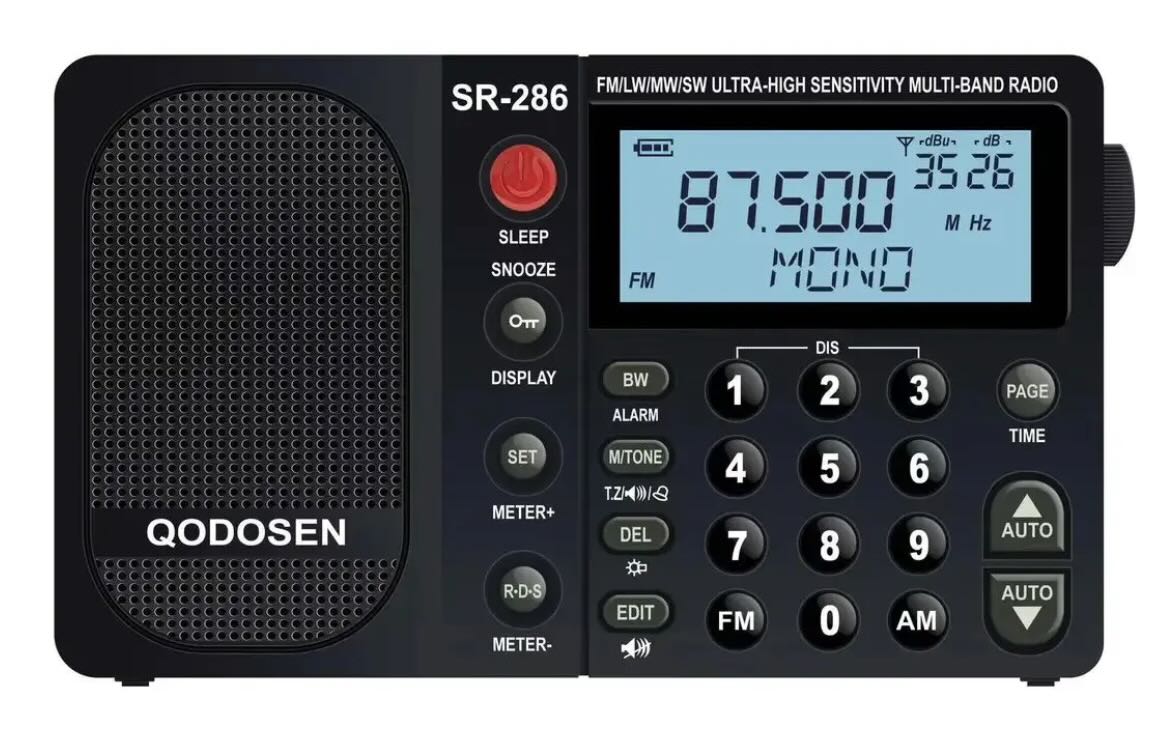 Many thanks to SWLing Post contributor, TomL, who writes:
A couple of weeks ago, “Radio Jay Allen” sent out a review of a Chinese portable using a different DSP chip from NXP called the TEF6686 usually used in car radios with lots of features. I also notice that the description for the new 2024 WRTH lists an in-depth an article about the TEF6686 chip. Does anyone else know about the new chip or the portable that was reviewed? Is it better than the current crop of portables based on Silicon Labs chips?
Here is a link to the review of the portable radio:
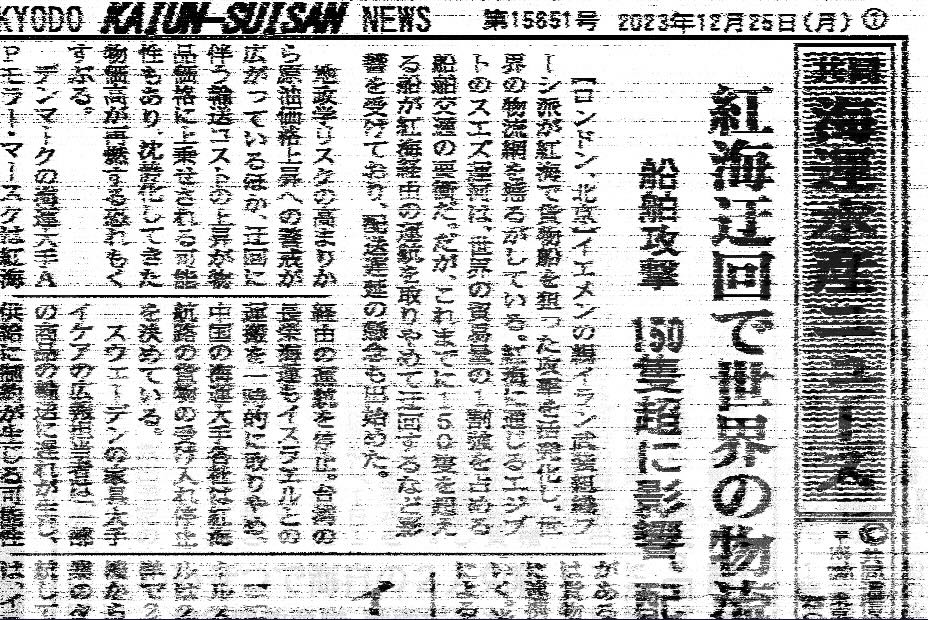 Many thanks to SWLing Post contributor, Carlos Latuff, who shares the Radiofax news report (above) from Kyodo News Agency and his amazing artwork (below) detailing the news and his Radiofax reception:

Thank you, Carlos!
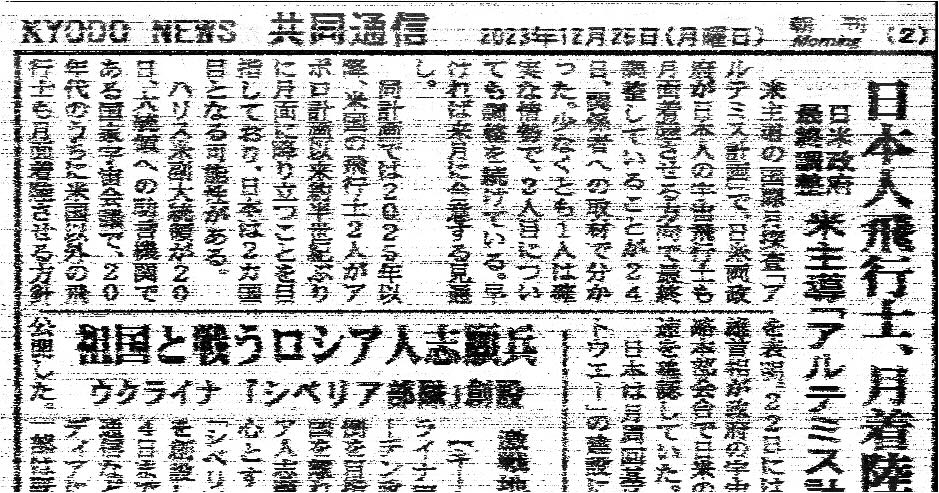 Many thanks to SWLing Post contributor, Carlos Latuff, who shares the Radiofax news report (above) mentioning that a Japanese astronaut may step on the surface of the Moon for the first time, under a U.S.-led lunar exploration program. Click here to read a full news article.
Carlos also included this amazing artwork he created commemorating the news and his Radiofax reception:

As always, thank you so much for sharing your artwork and your radio adventures with us, Carlos!
Welcome to the SWLing Post’s Radio Waves, a collection of links to interesting stories making waves in the world of radio. Enjoy!
Many thanks to SWLing Post contributors Dennis Dura, Rich Cuff, and Dan Robinson for the following tips:
Access to radio becomes even more important for America’s producers in times of emergency.
Producers of milk, wheat, cotton, sugar, corn, rice and many other farm and ranch products in the United States are speaking up in support of the federal legislation that would require AM radio in new vehicles.
Twenty-five agricultural groups have sent a letter to Capitol Hill endorsing the AM Radio for Every Vehicle Act. (Read the letter.)
The National Association of Broadcasters highlighted the letter. It said the bill has 196 cosponsors in the House and 44 in the Senate.
“Our members rely on AM radio and the vital services it provides daily,” they wrote.
“AM radio is a source of weather, commodity and national farm policy updates for our members. Access to radio becomes even more important for America’s producers in times of emergency.” [Continue reading…]
Edison Research releases its latest “Share of Ear” data
Pierre Bouvard is chief insights officer for Cumulus Media and Westwood One. This story originally appeared on his blog.
Edison Research’s quarterly “Share of Ear” study is the authoritative examination of time spent with audio in America. Edison Research surveys 4,000 Americans annually to measure daily reach and time spent for all forms of audio.
Since “Share of Ear” has been running continuously since 2015, it affords an opportunity to examine an eight-year view of American audio usage. Here are the major trends:
South Africa first came into my life as a young boy in Canada for two reasons.
One, I had an uncle who worked for a shipping company. Among other things, the company imported goods from and exported goods to South Africa.
A ship carrying South African tinned pineapple, bound for Montreal, sank in the St Lawrence River in the 1960s. My uncle was involved in the salvage operation, and, as a consequence, my family and many other relatives ate tinned pineapple from South Africa for the next few years — we grew to hate it.
The second reason was radio. My grandfather gave me a shortwave radio when I was about eight years old. One of the distant radio stations that blasted into my bedroom, loud and clear, was Radio RSA (now Channel Africa), the voice of the South African government of the day.
I listened to Radio RSA, as I listened to any shortwave station I could pick up, because it was exotic.
The easiest stations to pick up in those days were from the big broadcasting countries — the BBC, Radio France Internationale, the Voice of America, Radio Moscow and Radio Havana Cuba, to name but a few. Even Albania had a strong-signal broadcaster — Radio Tirana. [Continue reading…]
Journalists at VOA have pushed back on newsroom leadership’s AI policy regarding “synthetic voices,” documents obtained by FedScoop show.
Dozens of journalists and staff at Voice of America are strongly opposed to the state-owned news organization’s plan to use AI-generated synthetic voices, documents obtained by FedScoop show, with employees expressing concerns that the tool could breed mistrust with its audience, cause misinformation to spread and potentially eliminate jobs within the newsroom.
VOA, which has a weekly worldwide audience of approximately 326 million, is the largest and oldest of U.S. government-funded news networks and international broadcasters.
The news organization released internal guidance on the use of artificial intelligence in November, following months of discussions with journalists and labor representatives that stirred up backlash and controversy within the news organization.
FedScoop obtained the new AI guidance as well as a letter of opposition — signed by dozens of journalists within the news organization — that was sent to VOA leadership in October and has not been made public until now.
“We are deeply concerned that a portion of the Artificial Intelligence guidance that the agency is preparing to issue will do more harm than good,” the signed letter said. “Specifically, we object to language that would allow Artificial Intelligence to be used ‘for voicing scripts.’” [Continue reading…]
Please consider supporting us via Patreon or our Coffee Fund!
Your support makes articles like this one possible. Thank you!

 Many thanks to SWLing Post contributor, James Copeland (KDØICP), who writes:
Hi Thomas,
Hope you are doing well. A few years ago, I sent you a story about radio dramas we were doing on my college radio station, KSDB in Manhattan, KS. Well, I’m now working at KGGF in Coffeyville, KS, continuing the tradition on this heritage AM station.
Earlier this month, we broadcast a community Christmas program to benefit our local theater in town that is being restored. The broadcast featured two old-time radio dramas and local music. Coffeyville, KS is a small town with a population under 9,000, but it has one of the oldest and largest radio stations in the area. 10 KW day and 5 KW night on 690 kHz. I thought some in your audience might enjoy trying to tune in Christmas morning at 8 a.m. CST for the rebroadcast of the program. A link for more information and the audio as well is available here:
https://kggfradio.com/local-news/721426
For those who are interested in the technical details of the broadcast, I used two ribbon mics and the main microphones, an RCA 77-DX and an RCA BK-11. The room acoustics proved to be a bit of a challenge with the final mix, but the whole thing was live with no edits and while it was far from perfect, I think the genuine nature of the community program shines through. The signal was sent to the station using a VHF Marti remote pickup unit. This particular recording was made at the station.
Also, if your readers are interested in submitting QSL reports, I would be glad to answer them. We usually get a few throughout the year, and I especially enjoyed a report early this year from some of the serious DXers in Norway!
Merry Christmas and 73!
James Copeland, KDØICP
Many thanks, James, for sharing this here on the SWLing Post. We all love a good radio production! It’s brilliant that you’ve brought this tradition to Coffeyville, KS!
I’ve also linked to the audio file of the broadcast below: