Category Archives: News

VOA plans to “sunset” shortwave broadcasts?

(Source: boingboing)

A strategic technology plan prepared by the Broadcasting Board of Governors (BBG), the federal agency responsible for Voice of America, Alhurra, Radio Free Asia and other international stations, concludes that it should end many shortwave broadcasts in favor of “more effective” media such as internet radio.

I found the quote above, and most of the beginning of this article, very disturbing. The same themes keep coming up in this type of announcement: that shortwave broadcasts are expensive while internet services are cheap, that no one listens to shortwave because most people are connected to the internet.

As I’ve mentioned in previous posts, these statements simply aren’t true. Rather, they’re short-sighted and “western” centric.

I did find one telling paragraph in the above article:

The “sun-setting strategy” proposed will reduce the number of stations owned by the BBG in favor of lease or sharing arrangements with—or outsourcing to—independent broadcasters. A “long-term analysis” of each country and language, and in-house research on shortwave’s effectiveness in each, would determine which areas retain service.

Though I’d love to see the engineers and workers of the VOA broadcasts sites keep their jobs, I do believe outsourcing the actual shortwave transmissions to independent broadcasters makes a lot of financial sense, and could be the way forward to retain vital shortwave in areas which rely almost solely upon it. If you talk to WRMI or WBCQ, you’ll find that they can operate a SW broadcast operation at a fraction of the cost of the VOA; in fact, broadcasts with these independent stations can cost as little as $120 per hour of air time–a small price to pay to retain listeners and keep information flowing.

I don’t necessarily have faith in the ability of the BBG to effectively do “in-house” research to determine which countries/regions get chopped. After all, have any of these decision makers ever lived in a third world country ruled by a dictator? Have any of them ever lived without reliable access to the internet, or even without electric power, as many of these listeners do? Highly doubtful.

I urge readers of the SWLing Post to speak up! Contact the Broadcast Board of Governers and let them know how important shortwave broadcasts are to those living in poverty and in countries with unstable regimes–people who, informationally-speaking, live in the dark.

Broadcasting Board of Governors (BBG)
330 Independence Avenue, SW
Washington, DC 20237
Tel: (202) 203-4400
Fax: (202) 203-4585
E-mail: [email protected]

 

VOA criticized for dropping Mandarin service to China

I just noticed this article from the VOA website regarding criticism it recently received from the Heritage Foundation for shutting down VOA’s Mandarin language shortwave radio service to China.

It’s may be once in a blue moon when I agree with a Washington think tank, but in this case, the argument is certainly valid.

VOA, following the lead of the BBC, Deutsche Welle and possibly other broadcasters, decided that it’s much more cost-effective to cut shortwave service and increase its web-based presence in China. Unfortunately, there are still many in China who rely on shortwave radio service for their uncensored view of the rest of the world. Indeed, China’s ruling party is concerned enough about this that they routinely jam VOA transmissions as a form of censorship. Of course, when it comes to shortwave radio, jamming is not often effective. But if broadcasters in the western world (meaning VOA, BBC, DW) decide not to bother broadcasting into China, limitation of service is 100% effective. Indeed, we’re “jamming” the service before it ever has a chance to leave our respective countries.

Access to the internet, on the other hand, is completely controlled by the Chinese ruling party. Should they decide to, they can simply pull the plug and leave their citizens in the dark, informationally speaking. If you question this, simply ask people in Fiji, Egypt and Burma–and, oh, yes– Iran is now tinkering with the idea.

China is an amazing country, not to mention a technological leader in communications; its government simply has a track record of filtering information in a manner which many view as a violation of a basic human right. And censorship is a thriving business:  just ask Google. Or try to view VOA’s Manadarin website while traveling in China: you, too, may find yourself a victim of Chinese censorship.

Let us leave some information access available to those in China by keeping shortwave service alive there. There must be other cost-effective means of information sharing that doesn’t require throwing the baby out with the bath water.

Read the original VOA article here.

Ten-Tec RX-320 and RX-320D software gets updated for Windows 7

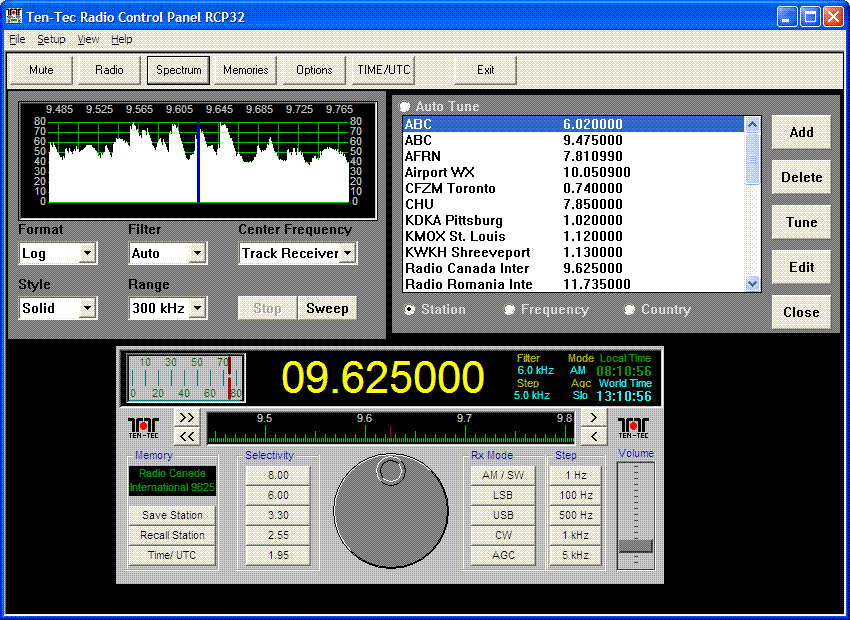
Fans of the RX-320D should note that Ten-Tec has just updated the GUI (Graphic User Interface) for this fine radio.  According to Ten-Tec Engineer, John Henry, this mainly makes it work better with the 64 bit version of Windows 7 and Windows 7 comm ports.

You can get the new software from the Ten-Tec download center.

WRTH Summer A11 Schedules Available

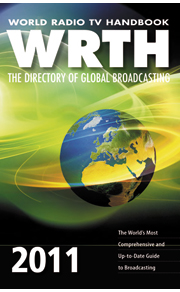
The World Radio TV Handbook (WRTH) summer (A11) schedules file is now available to download, free of charge, from the WRTH website. This is a comprehensive update and supplement to the printed 2011 WRTH.

This is what I love about WRTH–though they are a printed publication, they keep their readers informed with the latest changes in schedules via downloads from their website.  To me, this is the best of both worlds.

Click here to go to WRTH’s website and download your copy. Consider giving them a small donation as well.

NPR brings amateur radio spectrum threats to light

Click image to go to ARRL page for HR607.

(Source: National Public Radio)

Across Alabama, emergency communications systems fell silent this week when tornadoes knocked down antennas and cell phone towers. Amateur radio operators are helping to restore emergency communication in some of the areas hardest hit by the storms. But those volunteers say their ability to provide that help is threatened by a new bill in Congress.

Listen to full report at NPR.

As a ham radio operator, I ask that all SWLing.com readers (who live in the US) please take action by contacting your member of congress and asking them to protect the radio spectrum which is vital to emergency communications.