Shortwave listening and everything radio including reviews, broadcasting, ham radio, field operation, DXing, maker kits, travel, emergency gear, events, and more
Many thanks to SWLing Post contributor, Mark Hirst, who writes:
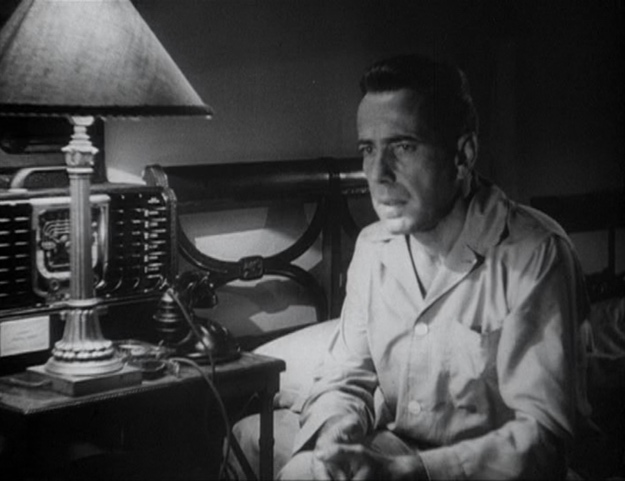
I’m something of a Film Noir fan, so I was pleased to have tracked down “Dead Reckoning” on Amazon recently.
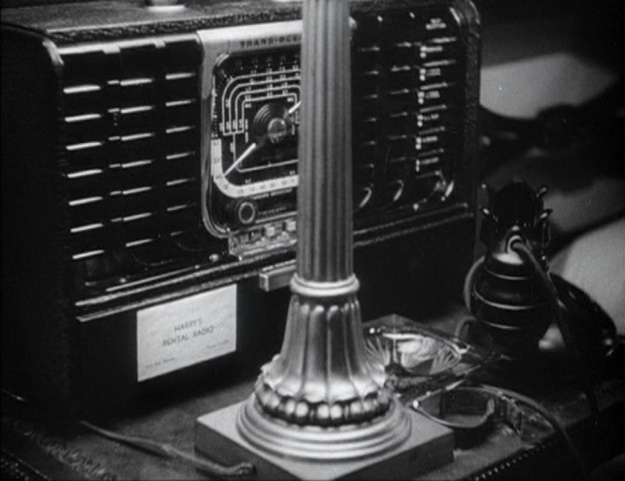
Starring Humphrey Bogart and Lizabeth Scott, Bogart’s character is seen early on in this 1947 film listening to police chatter on his bed side radio.
The police conversation sounds a bit contrived, serving the purpose of advancing the story of course, though I’m wondering if this type of radio could be used this way – I’m sure there are experts who would know.
Please comment if you can answer Mark’s question!
Thanks for sharing, Mark. Like you, I love Film Noir and pretty much anything starring Bogie (or especially Lauren Bacall)!
Many thanks to SWLing Post contributor, Dennis Dura, who shares the following article from SwissInfo.ch. Make sure you visit SwissInfo.ch to listen to their embedded recordings:
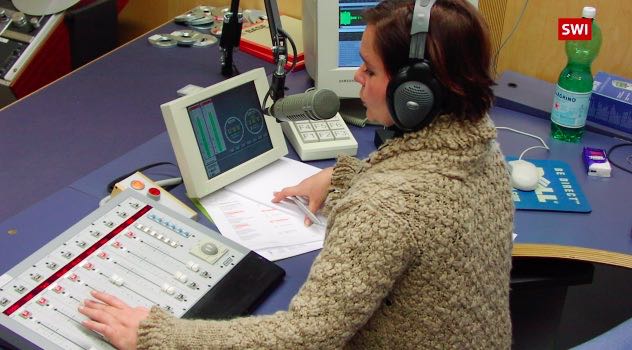
What did SWI swissinfo.ch sound like for the first seven decades of its existence? The short answer: a radio station.
From the mid-1930s to 2004, Switzerland’s international service was Swiss Radio International (SRI). The first few decades of SRI’s existence were the heyday of shortwave – it was often the only way of getting news directly from other countries.
A brief history of SRI, the predecessor of swissinfo.ch, helps explain why you hear what you do in the video above.
What began as the Swiss Short Wave Service in 1935, would grow from broadcasting programmes in German, French, Italian and English to include other European languages and Arabic, and eventually change its name to Swiss Radio International.
The international service was considered a voice of neutrality during times of war, first during World War II, followed by the decades of the Cold War and up to and including the first war in the Gulf in the early 1990s.
This decade would mark the beginning of the end for Switzerland’s shortwave broadcasts. Shortwave transmitters gave way to relaying programmes via satellite, and this, in turn, would give way to the internet when the service went online in 1999 as SRI’s website.
In 2004, the plug was pulled for good on SRI as part of budget cuts, but not swissinfo.ch. Now producing exclusively online, the international service extended its linguistic reach by adding Russian, Japanese and Chinese, and publishing more video and audio reports.
Journalists working in swissinfo.ch’s current ten languages collaborate closely to set the editorial agenda, providing the necessary context in their stories so they are understood wherever they are read, seen, or heard in the world.
Many thanks to SWLing Post contributor, Gérard Koopal, who writes:
This might be interesting for your followers in Europe and especially for those living in or nearby Germany.
On the 9th and 10th of November, the Eifeler Radiotage are to start transmitting in German from a Cold War bunker in Germany. There is also a possibility to visit the location (Kall Krekel). Below is a link to their homepage where you can also find a few videos from the Cold War radio room which is still functional and in use.
Many thanks to SWLing Post contributor, Lennart Weirell, who shares the following in reply to our recent posts regarding Radio Malaysia and Radio Sarawak:
Back in early 80-ies (1981-1984) I lived in Kuala Lumpur, Malaysia and I used my Panasonic DR-28 with a short indoor wire to listen.
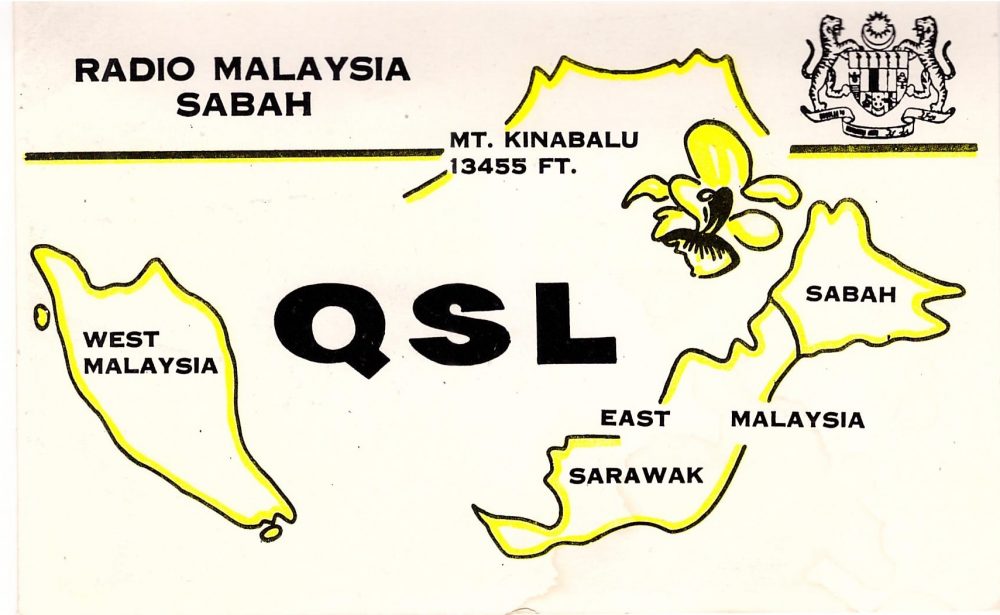
RM Sabah QSL
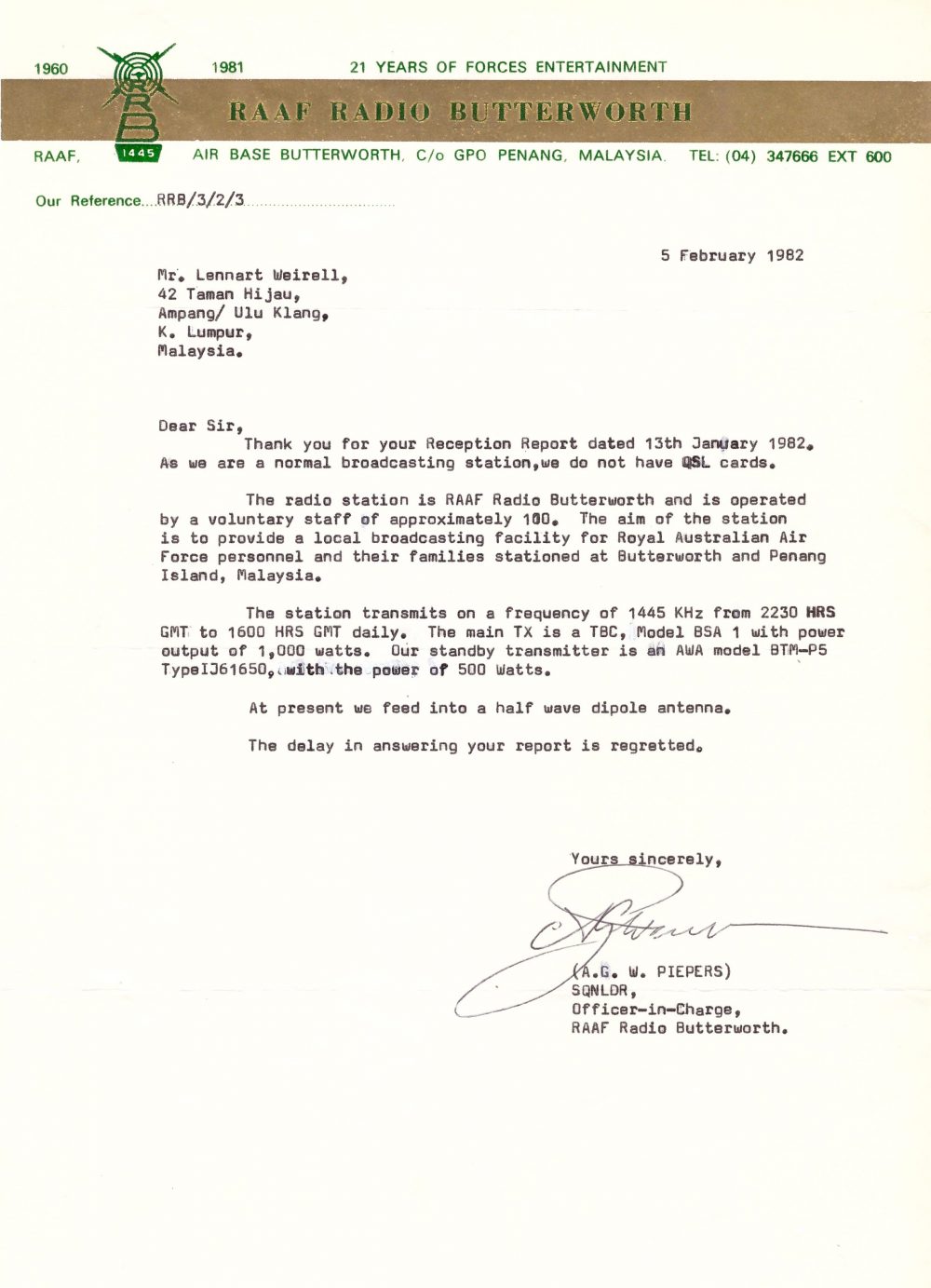
Of course some of the loggings were “local”, i.e. RAAF Butterworth, RM Sarawak and RM Sabah. RAAF Butterworth answered with a letter and RM Sarawak with card and RM Sabah with letter and card. All these 3 QSLs are from 1982.
RAAF Butterworth
Brilliant, Lennart! Thank you for sharing these QSLs.
I’m very curious how many listeners were able to snag the 1,000 watt Butterworth signal on 1,445 kHz from outside of Malaysia. Please comment!
Many thanks to SWLing Post executive producer, Scott Gamble, who shares the following article from Hungary Today:
From October 19th until November 12th, Radio Free Europe‘s (RFE) Hungarian broadcast recorded around and during the 1956 Revolution can be listened to online, exactly how it was aired 63 years ago minute by minute, HVG reported.
The Hungarian broadcast of RFE’s 1956 program that was aired on shortwave, through foreign transmitters, was recorded at the repeater stations, and has been preserved thanks to the German government’s examination of the radio’s role in the revolution, launched after the events.
After the inquiry, however, the footage, consisting of 60 tapes, was concealed in a basement for decades, until it was rediscovered in the 90s, transferred to cassettes, and digitized.
In the framework of the First University Radio in Pest’s (Els? Pesti Egyetemi Rádió- EPER) voice memorial project dubbed “SZER56” (derived from the radio’s Hungarian name: Szabad Európa Rádió), people can hear (once again) these recordings. The recordings were restored, digitized, and published by the National Széchényi Library (OSZK), which EPER then restored to the original broadcast session.
The footage includes four days that preceded the outbreak of the Revolution, making it the only available recording that preserved the 50s’ “every day” shows. Moreover, this would be the first time the public can hear this outstanding piece of media history. In addition to political broadcasts, the recordings include radio plays, musical compositions, and even quizzes.
The “broadcast” will be available from Saturday on eper.elte.hu or here and here.
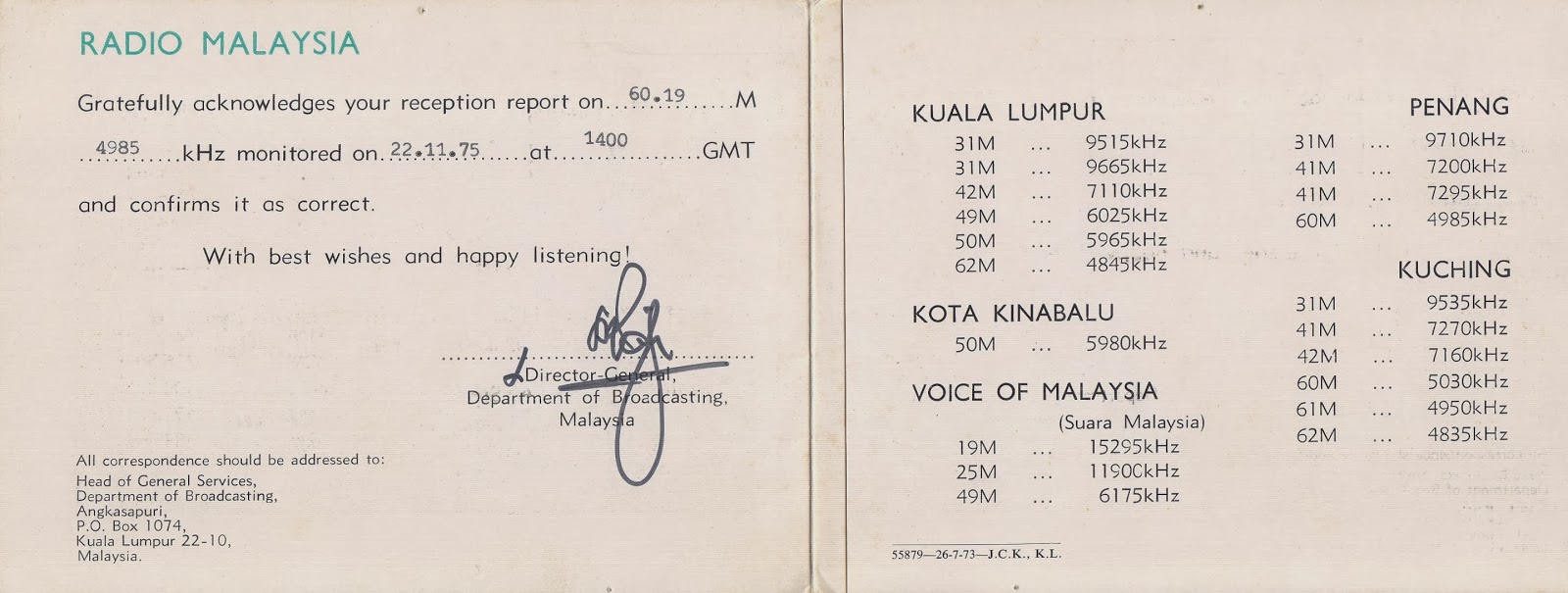
These were the shortwave frequencies RTM used in 1975. This is my QSL card for an RTM transmission originating from Penang, as received on Denver, Colorado. [Click images to enlarge.]
Most MW stations in Malaysia ceased operation after 2000. That said, a 750 kW MW station in Sabah remained operational as late as 2008, if I remember correctly. My guess is FM became more prominent thereafter.
Certainly here in peninsular Malaysia (Kuala Lumpur), particularly in 1987, we had six government FM stations. Sign-off was usually at midnight or 1 am, depending on the station. An annual license (tax) was issued for each radio owned.
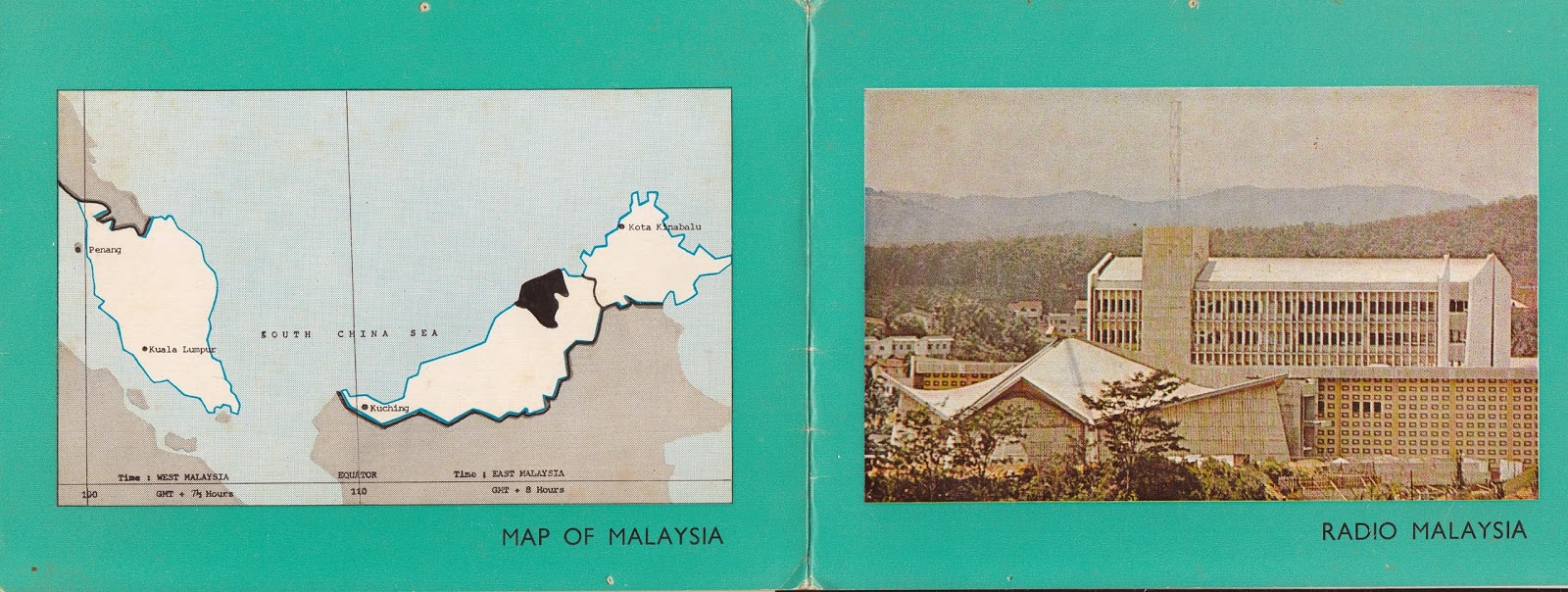
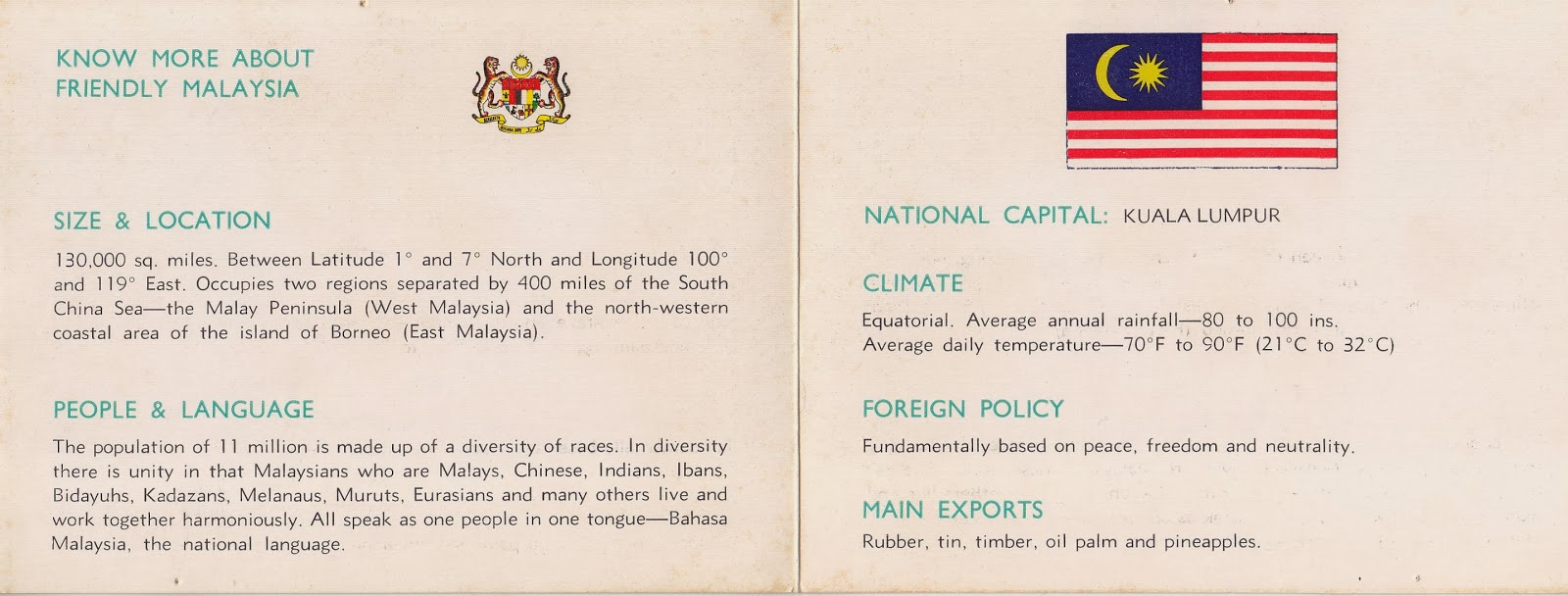
Note, the QSL card [above] appears to have first been printed in 1973, judging by the smaller date printed at the bottom of the card. It was one of the few folded cards I received in my DXing years from 1967 to 1980. It features three sections, folded twice and printed on both sides. The Angkasapuri studio in Kuala Lumpur, map and flag of Malaysia, caption about the country, transmitter sites and frequencies and verification data is depicted on it.
This particular card was issued for a reception report I posted on 22 November 1975, nearly 40 years ago. Unbeknownst to me then I had picked up Radio Malaysia via Penang, according to the frequency legend (4.985 kHz) stated on the card. I assumed it was Kuala Lumpur and, more importantly, I was excited to have logged a new country to my growing list of international broadcasters.
At the time I lived in Northglenn, Colorado — a suburb north of Denver. As I recall Radio Malaysia was usually received in the early morning hours between 5 and 8 am. Reception was always weak, yet music and speech was audible despite atmospheric noise.
The receiver I used was a Zenith Trans-Oceanic H-500, a 5 valve/tube radio originally manufactured in the early 1950s. The antenna was an inverted L, elevated at over 30 feet, spanning approximately 75 feet in length.
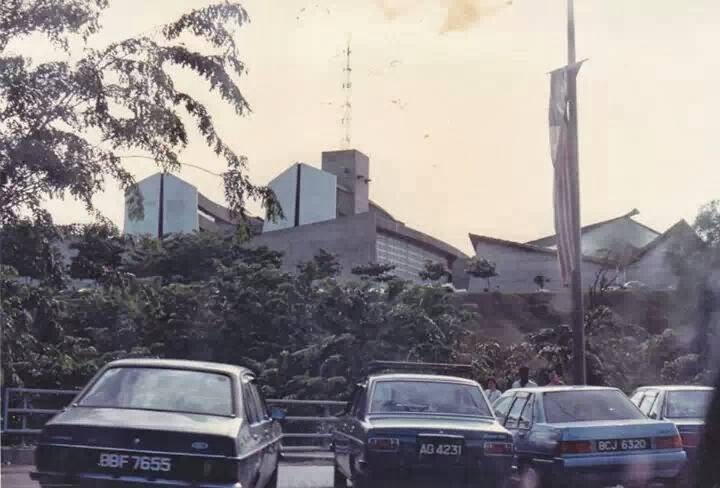
This is a photo of Angkasapuri, the RTM Headquarters in Kuala Lumpur, as it appeared in 1987. The HQ as changed very little since then:
Interestingly, the Australian Armed Forces had a radio station based in Penang in the late 70s-early 80s.
Wow–thank you for sharing your DXing experience with us! It sounds like the Zenith Trans-Oceanic H-500 served you quite well back then! What a classic set.
Good question, Adid. The FM band wasn’t widely included on radios until the late 1950s and early 1960s. Since this film dates from 1961, I imagine some of those new transistor/valve radios could have included FM, although I imagine mediumwave was the choice band for regional broadcasts.
Hopefully, an SWLing Post reader can shed some more light on Radio Sarawak’s history! Please comment!