Category Archives: Radio History

Google Doodle honors Heinrich Hertz’s 155th birthday

If you visit Google’s home page today, you’ll notice that their typical logo has been replaced with an animation of an undulating, multi-colored wave.
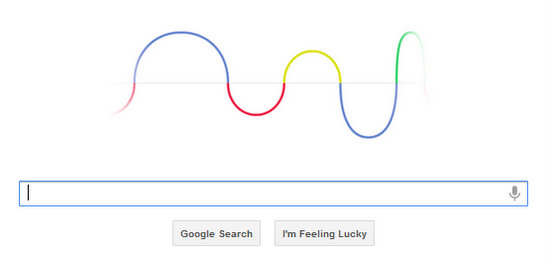
If you click on the wave, you’ll be taken to sites telling the story of Heinrich Rudolf Hertz.

We should all take a moment today to thank Hertz for his contribution to the radio spectrum. Indeed, it was Hertz who showed that electricity could be transmitted via electromagnetic waves. This laid the groundwork for developing wireless telegraph and radio. In the 1930’s the International Electrotechnical Commission decided that Hertz’s name would become the unit of frequency for our electromagnetic spectrum–the hertz (Hz)–about four decades after the his death.

To read the story of Hertz, I would suggest browsing his Wikipedia entry.

If you missed seeing the Google Doodle animation, check out the video below:

This isn’t the first time Google has honored an influential innovator in our radio world, a few years ago we posted their Google Doodle tribute to Samuel Morse.

“Radio Moscow and the Western Hemisphere”–more Cold War recordings

If you haven’t gotten your fill of Cold War shortwave yet,  you’ll love these recordings posted on YouTube–Radio Moscow and the Western Hemisphere 1961 by Cook Labs. There are four separate recordings representing two LP’s, both side A and B. Here are direct links to YouTube:

Sherlock Holmes: The Night Before Christmas

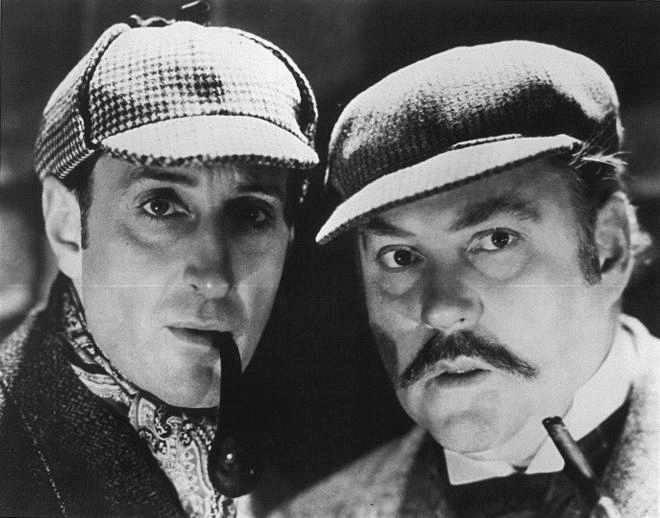
Basil Rathbone (Sherlock Holmes) and Nigel Bruce (Dr. Watson)

Like many shortwave radio listeners, I’m all about nostalgia–perhaps that’s why I enjoy the holiday season so much.

This year, I would like to share with you a radio play featuring Basil Rathbone and Nigel Bruce in The New Adventures of Sherlock Holmes: Night Before Christmas.  If this doesn’t make you feel nostalgic, nothing will.

This radio play was originally aired in 1945–this particular copy was downloaded courtesy of OTR (Old Time Radio).

Click here to download and play your copy, courtesy of OTR.

Enjoy and Happy Holidays!

11 GB+ of digital pirate radio recordings

(Source: TextFiles.com via Radio Survivor)

Since the 1990s, a fellow named Sealord has been recording pirate radio broadcasts coming across shortwave bands. Without authorization, license, or any sort of oversight, all manner of folks have been broadcasting illegal but probably not overly immoral shows out into the air. This collection, which is over 11 gigabytes and counting, has hours and hours of radio broadcasts, crackling with the sound of distant voices shouting over static and electromagnetic corruption. With names like XYZ Digital Pirate, Wolverine Radio, Whispery ID, Thinking Man Radio, The Voice of the Last DJ…. you’re talking some strange and mysterious personalities out there.

Not only is this collection worth checking out, but the whole of archive.org is an amazing collection of similar digital archives. I have listened to some of Sealord’s collection in the past but never recognized the extent of the total anthology. What an amazing service to us in the radio community who believe in the importance of preserving the sounds of the shortwaves.

On that note, I humbly ask that if you ever record shortwave audio, please consider uploading the uncompressed file to archive.org so that your recording can be shared and properly archived.  I’ve certainly uploaded many hours of shortwave radio recordings on behalf of SWLing.com (though, nowhere near 11GB and counting!).

Leeds Radio featured in the NY Times

(Source: NY Times)

WHEN an insurance company declared the merchandise at Leeds Radio “not pilferable” last year, it meant that the store’s hundreds of thousands of analog electronic parts — all manufactured before 1968 — were unlikely to be stolen anytime soon.

[…]And yet Leeds, one of the oldest electronics stores in the country, has plenty of paying customers. Located at 68 North Seventh Street in Williamsburg, Brooklyn, two blocks from the Bedford Avenue stop of the L train, it attracts a steady stream of musicians, hi-fi aficionados, ham radio buffs and the kind of people who build Tesla coils in their basements.

The 2,500-square-foot space smells like a vintage record shop (an odor Mr. Matthews describes as equal parts phenolic resin, adhesive, old cardboard and wire insulation) and appears shockingly disorganized. Cubist piles of boxes overflow with switches, capacitors, Bakelite knobs and watt meters. The floor glitters with the glass of shattered vacuum tubes.

Sounds like my radio room, though on a much, much larger scale…the part with piles of boxes, at least. Thanks to the Herculodge for leading me to the NY Times article. We actually posted another article about Leeds Radio when it was featured on WNYC. As both articles mention, radio parts shops like Leeds are certainly on the decline [understatement alert]–luckily, the internet opens up a whole world of mom-and-pop vendors like Leeds, though with a virtual store front, so there is still hope.

Read the full article here.

WWII shortwave messages found on cardboard discs

Photographer: Nigel Mykura. (Creative Commons)

(Source: The Globe and Mail)

The voices of Canadian servicemen fade in and out, at times clear and booming, at others distant and muffled. But for their families, these scratchy, static-laden messages were the sound of hope.

The men were prisoners captured during the Second World War by the Japanese army, which broadcast their messages home over Radio Tokyo. Short-wave radio enthusiasts on the west coast of the United States listened in, making a hobby of recording the messages onto cardboard discs and sending them to the soldiers’ families.

Complete with audio from the original discs, this is an article you should view in full at The Globe and Mail.