Category Archives: Shortwave Radio

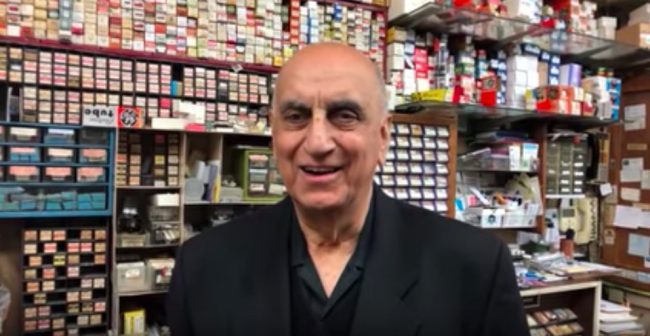
Joseph Hovsepian: Montreal’s “Radio Doctor”

Many thanks to SWLing Post contributors Scott Gamble and Bill Mead who both share the following story via the CBC News:

Joseph Hovsepian says he is part of the last generation that knows how to repair electronics

Joseph Hovsepian has been repairing? radios for so long that he claims that he can sometimes smell the problem.

“When I pick up a radio, I turn it on or I plug it in and the way it smells, the way it sounds or doesn’t sound, the way it crackles and fades away, all these things are recorded in my brain and I know exactly how to start and how to fix it,” he said.

Since 1960, Hovsepian has been fixing radios, turntables and other electronic gadgets from his Parc Ave. repair shop.

The 79-year-old sees himself as part of the last generation of people trained in the art of repair.

“We have lost the ability to touch things, fix things, repair them and feel good for doing it,” he said.

For almost his entire life, Hovsepian has been tinkering with radios. He built a crystal radio when he was 12, and his first tube radio at 15.

[…]He believes that today’s electronics lack the warmth that the old radios offered. Hovsepian said smartphones look dead to him compared to old technology.

“Even the sound of the old radios, a little scratch here, a little scratch there…This is radio.”[…]

Click here to read the full article at CBC News.

This is a charming story and I think Post readers can certainly understand why radio seems to be in a class of its own. I feel very fortunate that I’m friends with two people who repair radios for others, my buddy Charlie (W4MEC) and Vlado (N3CZ). Both are kind enough to show me the ropes as they troubleshoot problem sets.

Post readers: Do you live somewhere with a radio repair shop? Have any readers ever visited Mr. Hovsepian’s shop in Mile End? Please comment!

Tommy (N1SPY) on monitoring airplane communications

Many thanks to SWLing Post contributor, Ivan (NO2CW), who writes:

If anyone is interested in monitoring aircraft communications across HF, VHF and UHF, Thomas, N1SPY put together a demo video of what you can hear and how:

Click here to view on YouTube.

Brilliant instructional video, Tommy! Like you, I love both radio and aviation so appreciate the effort you put behind this video.  Great primer!

Click here to check out other projects by N1SPY.

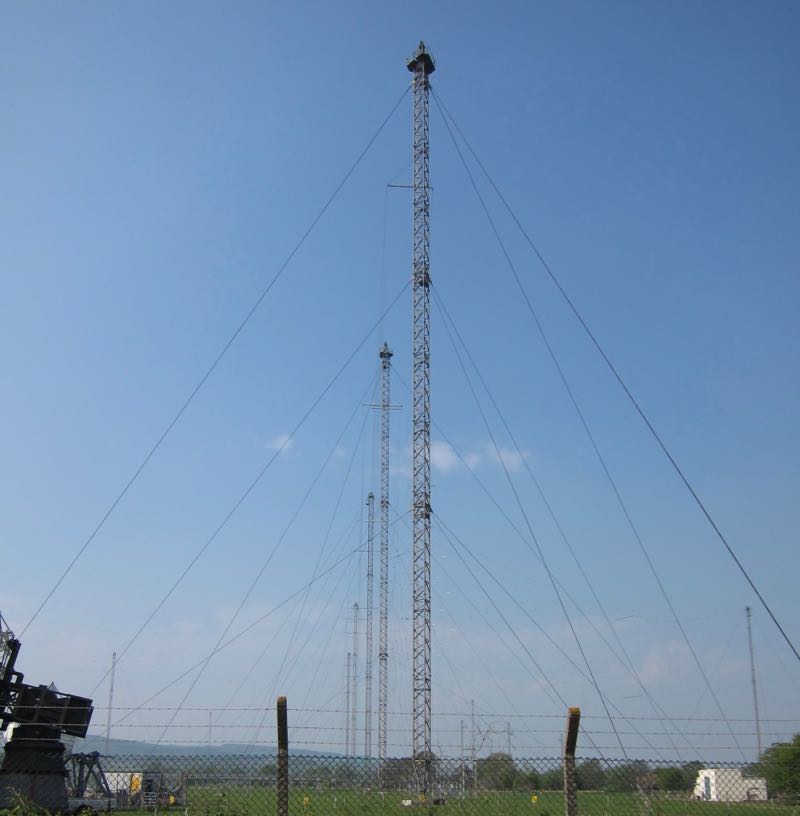
Woofferton Transmitting Station: 75 years of continuous operation

Photo by Flickt user Shirokazan via Wikimedia Commons.

Many thanks to SWLing Post contributor, Dave Porter, who notes:

Pleased to let you know that Woofferton Transmitting Station celebrated 75 years of continuous operation yesterday 17th October 2018.

It is now run by Encompass Digital Media to give it its full name!

Woofferton has certainly experienced and propagated a lot of world history!  Thank you for sharing Dave!

If you’d like to dive deeper into the station’s history, check out this book published around the time of Woofferton’s 50th Anniversary. Also, click here to check out Dave’s video tour of the Woofferton Transmitting Station.

Spoiler Alert: As we approach the SWLing Post’s 10th Anniversary next month, Dave is generously donating a little piece of Wooferton’s history that one lucky reader will win! Interested?  Stay tuned!

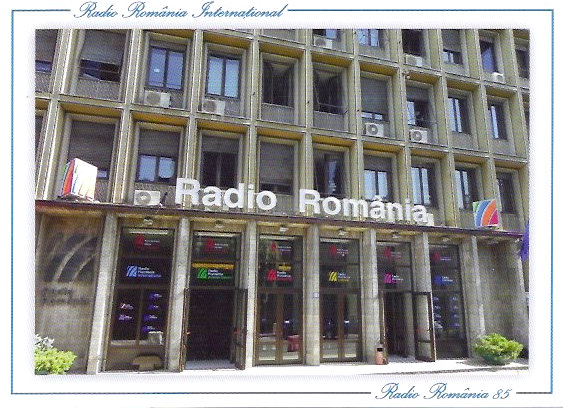
Radio Romania International Listener’s Day 2018

(Source: Radio Romania International via David Iurescia)

Dear friends, on Sunday, November 4th 2018 we invite you to Listener’s Day on Radio Romania International, to tell us about the role of radio in your life

On November 1st, 2018, we celebrate the 90th anniversary of the first official radio broadcast in Romania. We are celebrating 90 years of documenting history, when radio professionals have kept the public informed, reflecting every stage of events as they occurred, from the interwar period, World War II, the post-war period, as well as the decades of communism and Cold War.

It documented the December 1989 spectacular collapse of the communist regime, then the transition to democracy in Romania. Since then, listening to the radio in itself has changed dramatically, going from the vacuum tube wireless receiver of your grandparents to radio received on a smart-phone or a smart speaker.

Radio Romania International is the voice that has been telling the story of Romania and explained events as they occurred. This year, on Listener’s Day, we would like you to share with us and all our listeners what the role of radio is in your life, and what RRI means to you.

We will be including in our programs a selection of your answers. You can send them by e-mail at [email protected], on Facebook, or using the dedicated form on our website, www.rri.ro.

Click here to view at Radio Romania International.

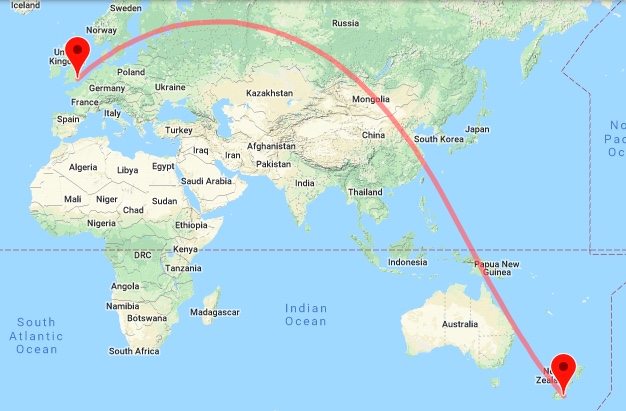
1917: First wireless transmission from New Zealand to London

(Source: New Zealand History via Andrea Borgnino)

First trans-global radio transmission to London

From the family sheep station in Shag Valley, East Otago, amateur radio operator Frank Bell sent a groundbreaking Morse code transmission received and replied to by London-based amateur operator Cecil Goyder.

Frank and his older sister Brenda were radio pioneers. Invalided home from the Western Front in 1917, Frank revived a boyhood interest in wireless communication while recuperating. He helped pioneer the use of short radio waves to communicate over long distances, initially through Morse-code telegraphy. He achieved a number of firsts, including New Zealand’s first overseas two-way radio contact with Australia and North America. But it was his radio conversation with London that made world headlines.

When Frank turned his attention to running the family farm, his sister Brenda took over the wireless station, becoming New Zealand’s first female amateur radio operator. In 1927 she was the first New Zealander to contact South Africa by radio. After the Second World War, Brenda Bell moved into professional radio as a writer and broadcaster for Dunedin station 4YA.

Click here to view this article and a photo of Frank Bell at New Zealand History.

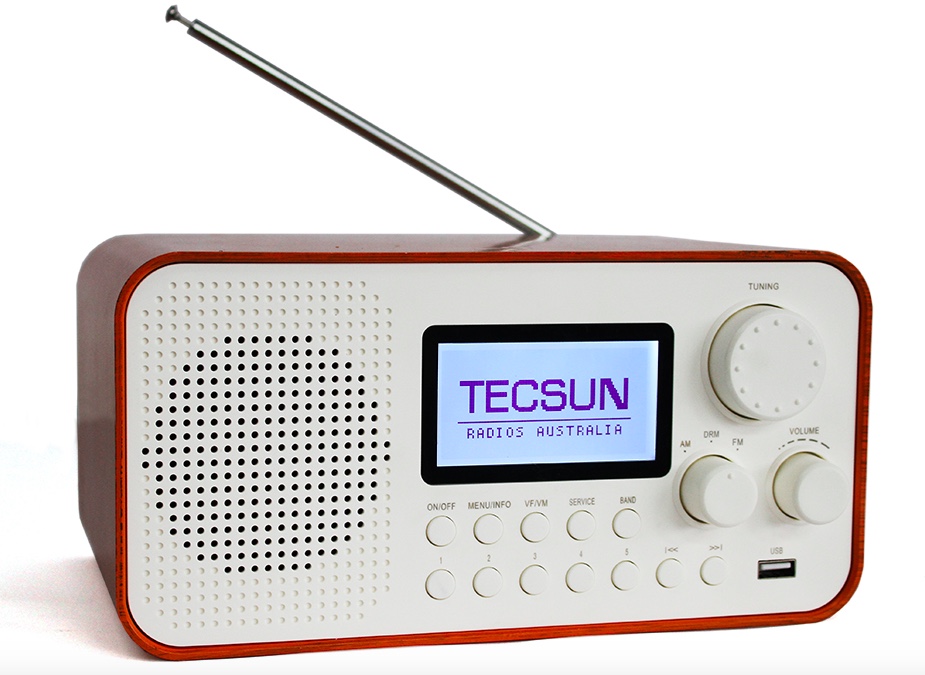
The “Tecsun Radios Australia Q-3061” DRM Shortwave Radio

Many thanks to SWLing Post contributor, Alan Hughes, who notes that Tecsun Radios Australia have announced a new DRM stand-alone receiver: the Q-3061.

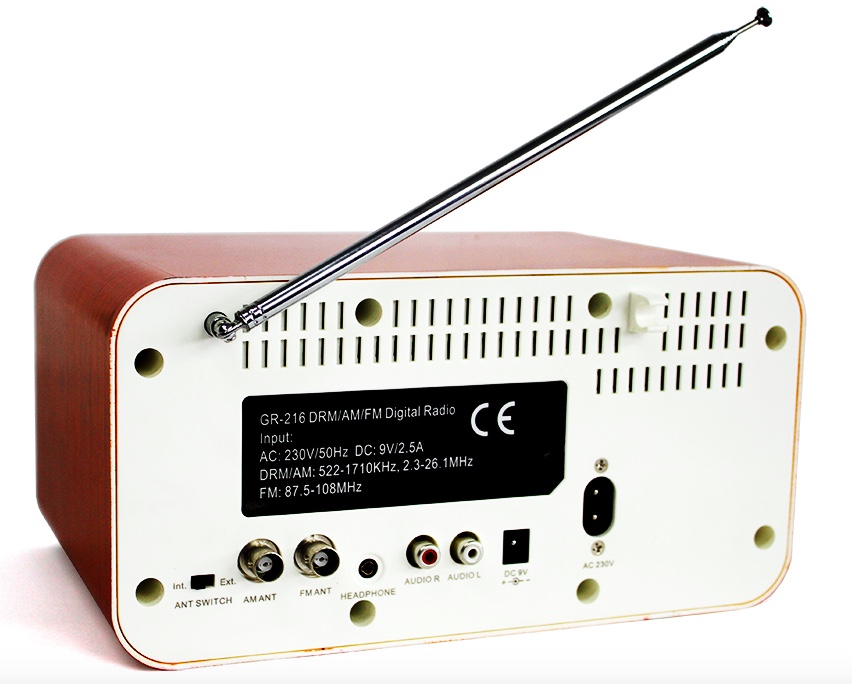
When I first received Alan’s tip, I was surprised that I had not been been given some advance notice or even a hint about Tecsun developing and producing a DRM radio. Then I saw the Q-3061 product image and it looked to be a spitting image of the Gospell GR-216 DRM radio. A quick look at the radio’s back panel and the connection with the GR-216 was confirmed.

Reading through the product description, it appears they worked with Gospell to badge this for Tecsun Radios Australia’s primary markets:

“The Tecsun Radios Australia Q-3061 DRM Shortwave Radio is for experienced shortwave users. There a limited number of DRM signals available in our region although the total number of DRM broadcasts are increasing. This radio is squarely aimed at radio enthusiasts and DXers, most signals require an external antenna, experience, and patience. We recommend our Tecsun Radios Australia Q-3061 DRM Shortwave Radio be used in conjunction with our Tecsun Shortwave and AM Outdoor Antenna for the best results (this is the setup we have in our Brookvale NSW office).

The Tecsun Radios Australia Q-3061 DRM Shortwave Radio is the culmination of several years work. Tecsun Radios Australia has worked in close co-operation with the manufacturer providing testing results from locations across the Pacific, including Samoa, Vanuatu, Solomon Islands, Fiji, and New Zealand. Reception of DRM signals in Australia requires many factors to be optimised, because we are outside the traditional coverage area of most broadcasters. Nevertheless, with an optimised antenna, correct selection of DRM broadcaster, schedule and good propagation conditions DRM signals can be received. New DRM broadcasters are appearing every month.”

After the product description they also include this disclaimer:

Note: This DRM radio has no association with Tecsun of China and is an exclusive initiative and product of Tecsun Radios Australia

The price is $500 AU or approximately $357 US.

To recap, this isn’t a new Tecsun DRM radio, rather it’s a rebadged GR-216 for the retailer/distributor Tecsun Radios Australia.

Click here to read about the Q-3061 at Tecsun Radios Australia.

Click here to read a review of the Gospell GR-216 DRM receiver.

Do you enjoy the SWLing Post?

Please consider supporting us via Patreon or our Coffee Fund!

Your support makes articles like this one possible. Thank you!

Icom IC-R30: Free RS-R30 remote control software available

(Source: Southgate ARC)

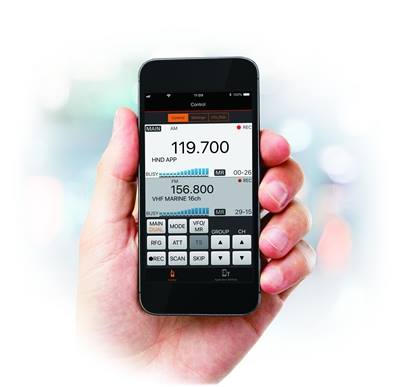
After recently being demonstrated at the Tokyo Hamfair, we are pleased to announce that the new RS-R30I (for iOS)/RS-R30A (for Android) remote control software for the IC-R30 Communications Receiver is now available to download for FREE from the App Store and Google Play.

The RS-R30I and the RS-R30A enable you to wirelessly connect to the IC-R30 and remotely control VFO operation, memory channels, a variety of scans and the voice recording functions. Using the optional VS-3, Bluetooth headset, the VS-3 and iOS™/Android™ device can be wirelessly connected to the IC-R30 at the same time. You can control the IC-R30 from the connected device while listening to the received audio on the VS-3 optional Bluetooth headset.

To download either remote control software follow these links.

•  RS-R30I remote control software (for iOS)
•  RS-R30A remote control software (for Android devices)

For more details about the IC-R30 visit the dedicated  IC-R30 Wideband Communications Receiver Product Page .  More details and further documentation about the RS-R30 can be found on the RS-30 Product Page.