Category Archives: What’s On Shortwave

World Music Radio broadcasting 24/7 on the 19 meter band

Many thanks to SWLing Post contributor, Harald Kuhl, who shares the following from Stig Hartvig Nielsen with World Music Radio.

I’m testing a new audio feed for the 15805 kHz transmitter. Hopefully more stable than the previous one, which sometimes would run 24 hrs without a single drop out – at other times produce drop outs almost continuously.

My plan is to keep 15805 kHz (200 W) on the air 24/7 for the next week or two. Should give DXers around the world a chance to catch 15805 when conditions on 15 MHz in some rare cases might improve. Currently propagation on 15 MHz is usually poor with a few fair days, but right now at this time of the years I suppose chances are the best.

WMR on 15805 kHz (200 W) – transmitter site: Randers
WMR on 5840 kHz (100 W) – transmitter site: Bramming
F.pl.: Power increase to 500 W on 5840 kHz. And new transmitter on 927 kHz
(500 W) in Hvidovre

Best 73s
Stig Hartvig Nielsen
www.wmr.radio
Keeping Short Wave Radio Alive!

Thank you for the tip, Harald!

Help record the 2020 BBC Antarctic Midwinter Broadcast on June 21

Halley VI Research Station on the Brunt Ice Shelf in Antarctica (Source: British Antarctic Survey)

Every year, the BBC broadcasts a special program to the scientists and support staff in the British Antarctic Survey Team. The BBC plays music requests and sends special messages to the small team of 40+ located at various Antarctic research stations. Each year, the thirty minute show is guaranteed to be quirky, nostalgic, and certainly a DX-worthy catch!

After successful listener events from years past, I’m once again calling on all SWLing Post readers and shortwave radio listeners to make a short recording (say, 30-60 seconds) of the BBC Antarctic Midwinter Broadcast and share it here at the Post (frequencies and time below).
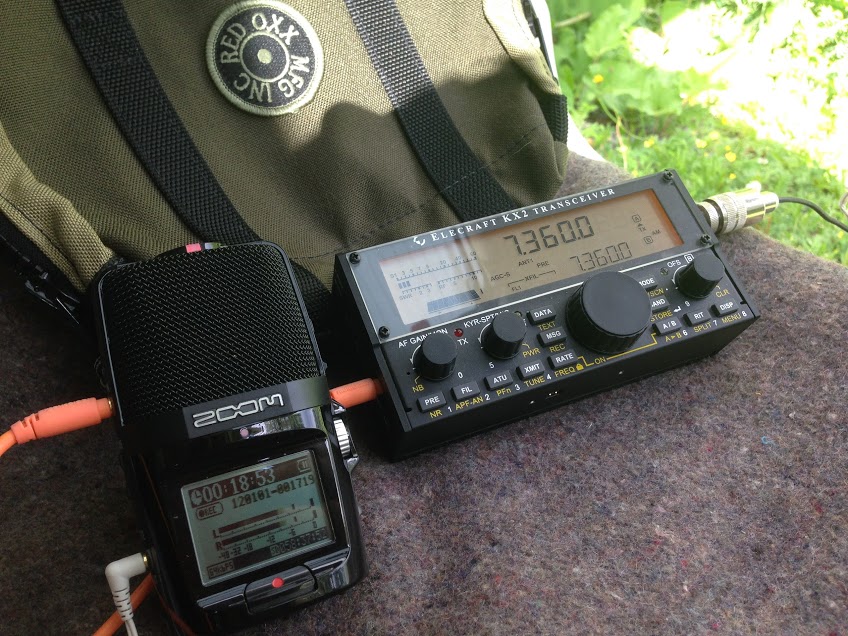
The recording can be audio-only, or even a video taken from any recording device or smart phone. It would be helpful to have a description and/or photo of your listening environment and location, if possible. Please only submit recordings made from your location–since this is all about how you’re able to receive the broadcast at your location, we would rather not include WebSDR recordings.

Audio should be in the MP3 format and videos either hosted on YouTube or Vimeo so that I can easily embed them without having to convert and upload myself.

If you submit your recording to me, I will post it here on the SWLing Post–and insure that the British Antarctic Survey receives the post, too.  The recordings will be arranged by geographic location. Note that due to my schedule this year, it might take a few weeks before I can curate all of the recordings (the process typically takes 8+ hours!).

2020 Midwinter Broadcast Frequencies

The BBC Antarctica winter solstice broadcast will be on June 21, 2020 at 2130-2200 UTC.

Many thanks to SWLing Post contributor, Troy Riedel, who shares the frequencies the BBC plan to use.  Note that, in the past, the BBC has sometimes only broadcast on three of the four announced frequencies:

  • 5790 kHz Woofferton
  • 6170 kHz Ascension
  • 7360 kHz Woofferton
  • 9580 kHz Ascension

The Midwinter broadcast is one of my favorite programs of the year. I suppose, in part, this is because it happens on June 21–the Summer/Winter solstice–which also happens to be my birthday!

Recording the Midwinter Broadcast has become an SWLing Post community tradition!

Radio Emma Toc World Service Schedule for June 2020

(Source: Jim Salmon)

Radio Emma Toc World Service – Schedule Summary – June 2020

Ways to listen…   Radio Emma Toc World Service – programme no. 2 – June 2020

You can listen online – www.emmatoc.com  – visit the ‘World Service’ page.

You can listen to our shortwave or FM broadcasts via our relay partners as follows:

Happy listening! If you are outside the transmitter coverage areas, why not listen via the broadcasters’ online services. Website details for the above stations are listed on our own website here –  www.emmatoc.org/worldserviceschedule

If you don’t have access to receivers & aerials you can try using an online SDR receiver – ve3sun.com/KiwiSDR – experience the enjoyment of tuning around shortwave from worldwide locations online.

We are happy to issue eQSLs for reception reports sent to – [email protected] – & will gladly include for online reports. If using an online SDR, please give us the SDR location.

Finally if any stations wish to relay our programme a download link is available on our website. Please advise us of times & dates so we can publicise in our schedule.

Thank you!

Jim Salmon  –  Radio Emma Toc

Free Radio Skybird: May 24 & 31, 2020

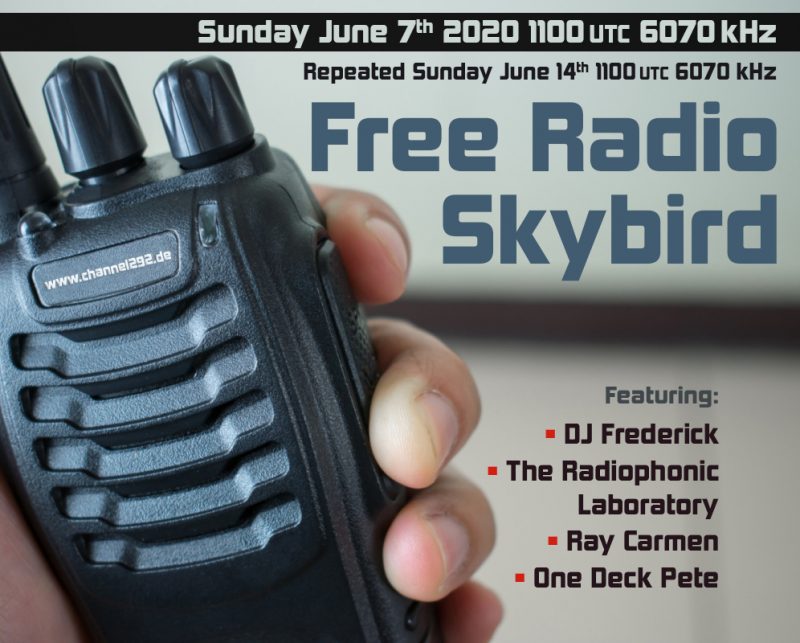
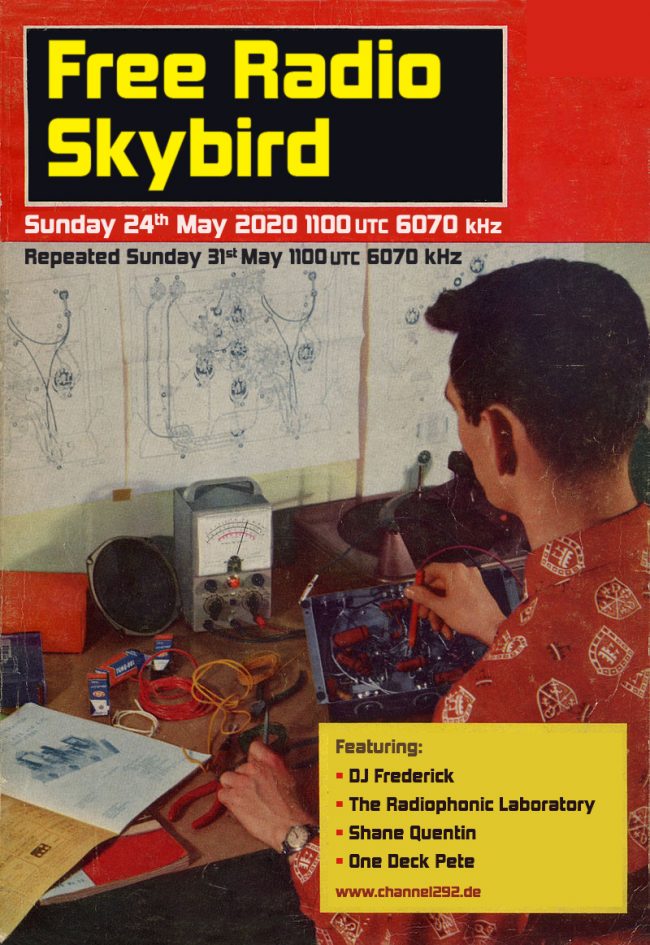
SWLing Post contributor, Pete Madtone just shared the Free Radio Skybird graphic above announcing their broadcasts on Sunday, May 24th, and repeated on Sunday, May 31st, 2020 at 1100 UTC on 6070 kHz (Channel292).  Thanks again for another excellent show graphic Pete! We look forward to tuning in!

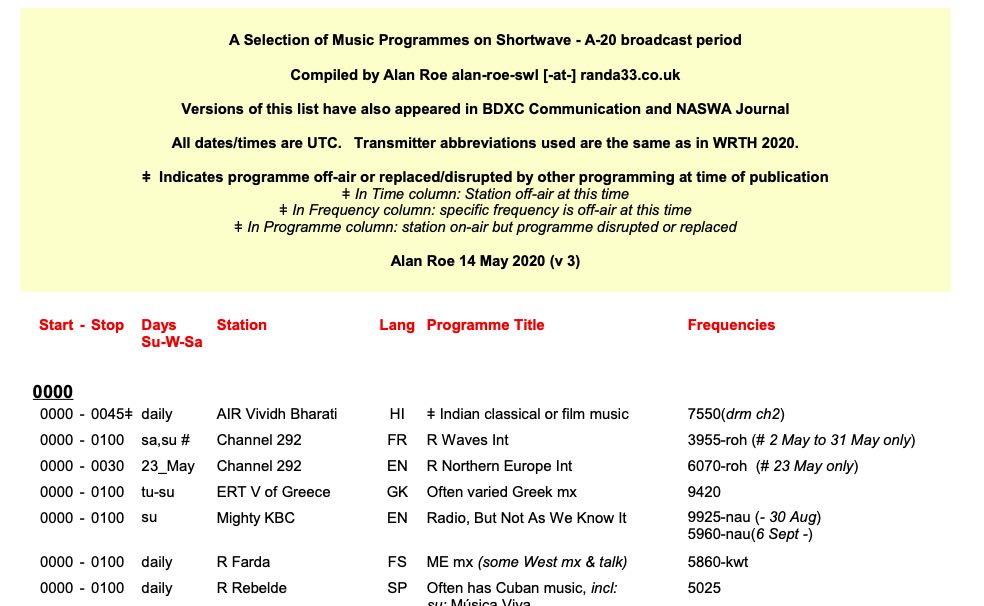
Alan Roe’s updated A20 season guide to music on shortwave

Many thanks to SWLing Post contributor, Alan Roe, who shares his latest update to his A20 season guide to music on shortwave.

Click here to download a PDF copy of Alan Roe’s Music on Shortwave A20.

Alan, thanks so much for keeping this brilliant guide updated each broadcast season and for sharing it here with the community!

Return of “radio six international” to shortwave June 6, 2020

(Source: radio six international via Gérard Koopal)

Shortwave broadcast on June 6th

After an absence of five years, Scottish station radio six international returns to the HF bands to mark the outlet’s 57th anniversary.

Saturday Sounds with Tony Currie will air from 22:00 to 24:00 UTC on 6,070kHz (49.39m) via Channel 292’s 10kW transmitter in Germany. The programme will largely feature independent and unsigned music from around the world. QSL cards will be issued on receipt of either one Euro of one US dollar for return postage, with Reception Reports requested to be sent to Radio Six International, 21 Sherbrooke Avenue, Glasgow G41 4HF, Scotland. E-QSLs will happily be sent free of charge.

Launched in 1963 as an afternoon’s entertainment by a group of primary school children, it never went away and after various incarnations – including a spell as Europe’s first commercial cable radio network in the 1980s – the station has been webcasting round the clock for the past twenty years.

For a time, the station maintained a daily shortwave presence from 2004, using the facilities of both IRRS and WBCQ, switching to weekly transmissions from Ulbroka, Latvia in 2005 and daily programmes on medium wave and satellite via RTI in Tatras, Slovakia.

In 2008 the various transmissions were ended to concentrate on the internet service and the provision of syndicated programming around the world. 58 stations now take some or all of our output, with 9 hours a week simulcast on FM in New Zealand and 4 hours on FM in Taiwan.

Our broadcast on June 6th is currently on one-off; however we are considering a more regular return to the HF bands in the future.

Note: Radio Six International is an internet station at www.radiosix.com with audited listeners in 200 countries worldwide. It’s been webcasting since 2000, and syndicates up to 9 hours a week of programmes to its affiliate network of 58 AM, FM and DAB Digital stations around the world.