Tag Archives: BBC

BBC strike could affect World Service today

It appears some BBC journalists, as of 23:01 UTC (Sunday), have gone on the strike we mentioned previously.

(Source: BBC News)

Members of the National Union of Journalists (NUJ) began their strike at 00:01 BST. From Tuesday, members will also observe a work to rule.

The NUJ says the BBC is “unwilling to engage in finding reasonable resolutions” for those forced to leave and who face compulsory redundancy.

The BBC says it is unable to agree to demands for no compulsory redundancies.

[…]The NUJ accuses the BBC of “wasting thousands of pounds making skilled and experienced people compulsorily redundant instead of redeploying staff”.

If this strike affects the World Service, and if history is a guide, we will most likely hear pre-recorded content today.

Read full article here.

Public Diplomacy Magazine features array of articles on the state of international broadcasting

It is a rare occurrence when so much attention is given to the topic of international broadcasting. Financial hardship combined with a rapidly changing media landscape set a stage where broadcasters are being forced to a precipice of change. How well they quickly evaluate restructuring their message and the medium they use to deliver it could very well determine the future of broadcasting on the shortwaves.

This issue of Public Diplomacy Magazine covers the scope.

(From: RNW Media Network)

PD Magazine, Summer 2011 of the University of Southern California Center on Public Diplomacy, is devoted to international broadcasting. Its contents include:

Also available is the pdf version.

Thanks to RNW Media Network, Kim Andrew Elliot and Richard Cuff for the tip.

Shortwave plays vital roll in Somalia

I found this BBC profile on Somalia quite indicative of many countries in Africa. In light of cuts that the BBC World Service has been facing, this short article, about Somalia’s fragmented media landscape, admits that shortwave plays a vital roll in domestic news.

The TV and press sectors are weak and radio is the dominant medium. There are around 20 radio stations, but no national, domestic broadcaster. Many listeners tune to Somali-language media based abroad, in particular the BBC Somali service. The latter is available on shortwave, and via FM relays in Mogadishu (91.1), the Somaliland capital Hargeisa (89.0), and elsewhere.

They go on to say:

The Somali diaspora – in the West, the Gulf states and elsewhere – sustains a rich internet presence. But domestic web access is hampered by practicalities such as limited access to mains electricity. There were 102,000 internet users by September 2009 (Internetworldstats). In secessionist Somaliland and Puntland the authorities maintain a tight hold on broadcasting.

Shortwave listeners in Somalia, one should note, also listen to the likes of the Voice of America, Radio Netherlands Worldwide, Radio France International and many others. Most of whom are facing cuts right now as national budgets are being tightened in the economic recession. To those living in Somalia, where the media is fragmented and untrustworthy, shortwave radio represents a lifeline of information.

As we mentioned in this previous post, please consider speaking up on behalf of those without a voice. Let international broadcasters and their governing bodies know how crucial shortwave services are into impoverished regions of the world.


BBC strike next week

BBC journalists have announced that they will strike next week in protest of the mandatory lay-offs/redundancies which will greatly reduce the BBC World Service staff.

(Source: Journalism.co.uk)

Journalists at the BBC have announced they will take strike action next week in a dispute over compulsory redundancies.

Members of the National Union of Journalists voted in favour of strike action earlier this week, with 72 per cent of those who voted saying they would be prepared to strike.

According to the NUJ, more than 100 people are at risk of compulsory redundancy at the BBC World Service.

Union members are also said to be at risk in divisions including BBC Monitoring, BBC Scotland and potentially at BBC Wales, BBC 4, BBC Sport and TV Current Affairs.

Today the union confirmed a one-day walk out will take place on 15 July.

Read full article at Journalism.co.uk.

Between Broadcasts-Exploring Interval Signals

Lately, I’ve been listening to a plethora of shortwave broadcasts as I’m about to review several new radios. I’ve noted so many great interval signals that are still in use. The following is a reprise of a previous post–from over two years ago–about interval signals. If you’ve never heard of interval signals, this post offers an introduction. 

What are interval or tuning signals? Often the most recognized sounds in the shortwave bands are the repetitive tones and musical interludes heard between broadcasts, known as interval signals. These are simply characteristic  musical phrases that broadcasters play between programs.  In fact, for me, nothing is more nostalgic than to hear the interval signals of some of my favorite broadcasters from my youth. Here are a few classic examples of interval signals:Analog Radio Dial
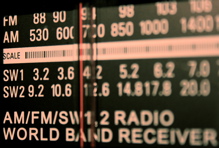
Interval signals usually include station and program identification, and are often in multiple languages. Not only do they help identify the station, but in the days of crowded international broadcast bands, interval signals helped listeners tune in and adjust their radios prior to program commencement.

Broadcasters have been using interval signals since the 1920s, but there has been a decline with the advent of digitally tuned radios which, unlike analog tuners, take the guesswork out of tuning into a specific frequency.

So, in this digital age, are interval signals still around? Sure. Many broadcasters believe an interval signal is still the best way to announce station and program identification; one might say their interval signals have become audio “logos.”

Here is an audio clip I recorded on April 23, 2009, of the interval signal for the new Happy Station Show: [Click here to listen]

For comparison, listen to this audio clip of the Happy Station Show from Jan 20, 1980, when it was a part of Radio Netherlands: [Click here to listen]

Listening for Signals

Where can you hear interval signals today?  Fortunately, they can be heard all over the shortwave broadcast spectrum. The best times to hear interval signals are on the top of the hour and sometimes at the half or quarter hour.

Another great place to hear interval signals are on the web. There are several interval signal databases where you can listen to a wide variety of interval signals. One of my favorites is the Interval Signal Database. This site is in German and English and is well categorized and searchable. In fact, Bernhard, the webmaster of the Interval Signal Database, gave me permission to publish several of his audio clips above. [Danke, Bernhard!]

Here is a list of interval signal websites:

Since he’s somewhat of an interval signal guru, I asked Bernhard for his favorite interval signal recording. He pointed out this one from the Cold War era:  it is a recording of a special low-power (1kW) training station of the Austrian military. Bernhard informed me that in times of crisis, this station was to serve as a back-up for the Austrian Radio ORF.

Leave a comment:  What is your favorite interval signal, and why?

• • • • • • • • • • • • • • • • • • • • • •

On a side note–Bernhard also pointed out one of his favorite non-interval signal recordings.  In this recording, the news reader started the German language news by reading the frequencies, then noticed that the studio door was open.  You can clearly hear her getting up to close the door in the recording.

Hague giving BBC World Service £2.2 million to save Hindi shortwave broadcasts

This is fantastic news for BBC World Service’s Hindi shortwave broadcasts. The allocated funds will be given to BBC WS over a 3 year period.Kudos to

Foreign Secretary, William Hague (photo source: Wikimedia Commons)

Foreign Secretary, William Hague, for recognizing the impact of BBC Wold Service’s Hindi language service.

Sadly, the cuts in funds earlier this year will still eliminate vital language services like Albanian, Macedonian, Portuguese for Africa, Serbian, and English for the Caribbean.

(Source: the Guardian)

The BBC World Service’s Hindi short-wave broadcasts have been saved from the axe after the foreign secretary, William Hague, agreed to give extra money to the highly regarded international broadcaster.

Hague has agreed to give an extra £2.2m annually to the World Service for the next three years from the Foreign & Commonwealth Office budget.

This slightly reduces the impact of a controversial 16% cut in the World Service’s FCO grant, announced as part of the government’s comprehensive spending review in October.

Read full article in the Guardian.

BBC World Service to be allocated additional funding

BBC World Service - Bush House

In the midst of many international broadcasting budget cuts, very good news for the BBC World Service (Source: BBC):

BBC World Service is to receive an extra £2.2m per year over the next three years from the government.

The funding boost will be used to maintain BBC Arabic Service’s “valuable work in the region”, Foreign Secretary William Hague said.

The BBC will also reallocate an additional £9m to safeguard the Hindi language short wave service.

Read full article here.