Shortwave listening and everything radio including reviews, broadcasting, ham radio, field operation, DXing, maker kits, travel, emergency gear, events, and more
Many thanks to SWLing Post contributor Fred Waterer, who writes:
I’ve subscribed to this channel for some time. This video, which dropped the other day, will be of relevance to both SWLs and HAMS:
Rob does some deep dives into language. Including the surprising origins of many words in English and the lingering influence of both Anglo Saxon and Norman French.
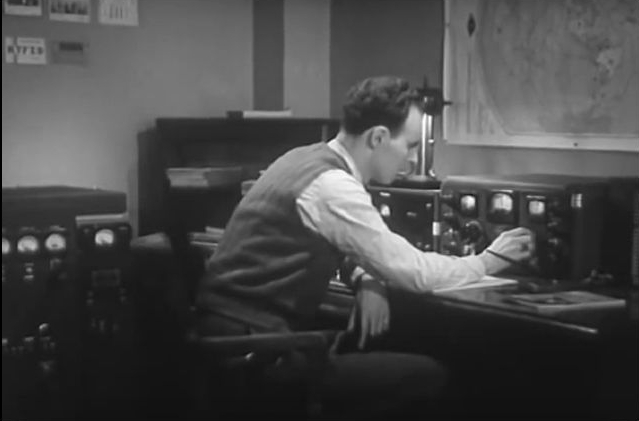
Many thanks to SWLing Post contributor Fred Waterer, who tipped us off to Patrolling the Ether—a 1944 short film produced by the U.S. Office of War Information. This wartime documentary highlights how amateur radio operators and federal agents collaborated to monitor the airwaves and track down enemy spies. A fascinating glimpse into radio’s role in World War II era homeland security:
Many thanks to SWLing Post contributor, Fred Waterer, who shares the following post from James Cridland’s blog and notes:
Overseas listeners could listen to BBC Domestic broadcasts, then they couldn’t, then they might be able to and then they might be able to for a fee and then who knows….
Many thanks to SWLing Post contributor, Fred Waterer, who writes:
At Noon on August 15, 1945, Emporer Hirohito spoke to his nation by radio for the first time, ever. The intrigue surrounding the recording of his speech and the effort to get it on the air would be worthy of a Hollywood film. When word started getting out that the broadcast would be made, fanatics who wanted to keep fighting staged an attempted coup. An NHK (Japan Radio Corporation) engineer had a gun to his head as an officer attempted to hijack the station at 5am. His coolness under pressure saved his life. He also temporarily severed the line to the transmitter, just in case the officer changed his mind about killing him.
Meanwhile at the palace, the NHK recording engineers had recorded two versions of the speech. The recordings (and the engineers) were hidden overnight, as was the Emporer, in the labyrinth of the palace. Coup leaders searching for the disks to destroy them failed. Eventually troops loyal to the Emporer took control of the situation, with many of the coup plotters killing themselves. At noon, the recordings were in the NHK studios and were broadcast as scheduled.
The actual broadcast:
In 1967 a film about these events was made in Japan, called Japan’s Longest Day and starring the great Toshiro Mifune.