Tag Archives: Longwave

And now, the Shipping Forecast…

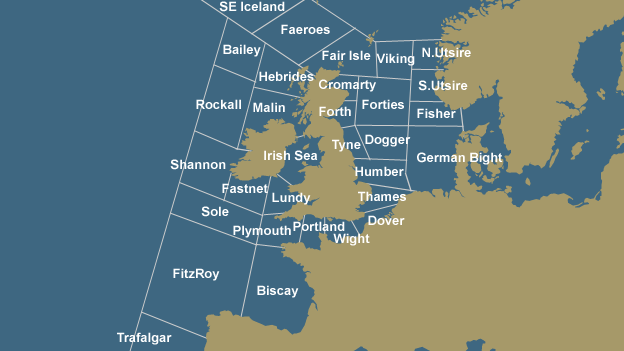
shipping-forecast-locations

When I lived in the UK, I would often fall asleep and/or wake up to the Shipping Forecast: a BBC Radio broadcast of weather reports and forecasts for the seas around the coasts of the British Isles.

Though I had, of course, no real need of the Forecast, on many occasions it lured me like the voice of a hypnotic siren (especially, I must admit, when read by a woman). When I moved back to the US in 2003, I missed hearing the Forecast on the radio, but thankfully one can listen to it at Radio 4 online. Although the online stream lacks the delectable sonic texture of long wave radio, the Forecast still has the power can still reel in its listeners.

Last December, I followed a brilliant series on NPR which highlighted the BBC Shipping Forecast.  I intended to publish it here on the SWLing Post at the time, but somehow lost it in the shuffle of a busy travel season. Fortunately, NPR has archived audio from the series online. I love their introduction:

“It is a bizarre nightly ritual that is deeply embedded in the British way of life.

You switch off the TV, lock up the house, slip into bed, turn on your radio, and begin to listen to a mantra, delivered by a soothing, soporific voice.

“Viking, North Utsire, South Utsire, Forties, Cromarty, Forth, Tyne, Dogger ….” says the voice.

You are aware — vaguely — that these delicious words are names, and that those names refer to big blocks of sea around your island nation, stretching all the way up to Iceland and down to North Africa.

The BBC’s beloved Shipping Forecast bulletin covers 31 sea areas, the names of which have inspired poets, artists and singers and become embedded into the national psyche.

Your mind begins to swoop across the landscape, sleepily checking the shorelines, from the gray waters of the English Channel to the steely turbulence of the Atlantic.

Somewhere, deep in your memory, stir echoes of British history — of invasions from across the sea by Vikings, Romans and Normans; of battles with Napoleon’s galleons and Hitler’s U-boats.

Finally, as the BBC’s Shipping Forecast bulletin draws to a close, you nod off, complacent in the knowledge that whatever storms are blasting away on the oceans out there, you’re in your pajamas, sensibly tucked up at home”

You can listen to the series on NPR, or via the embedded player below:

Click here to listen to the Shipping Forecast on the BBC Radio 4 website. Also, check out the history of the Shipping Forecast on Wikipedia and from this excellent article by Peter Jefferson in Prospero (PDF, page 10).
Russia “quietly” ends longwave services

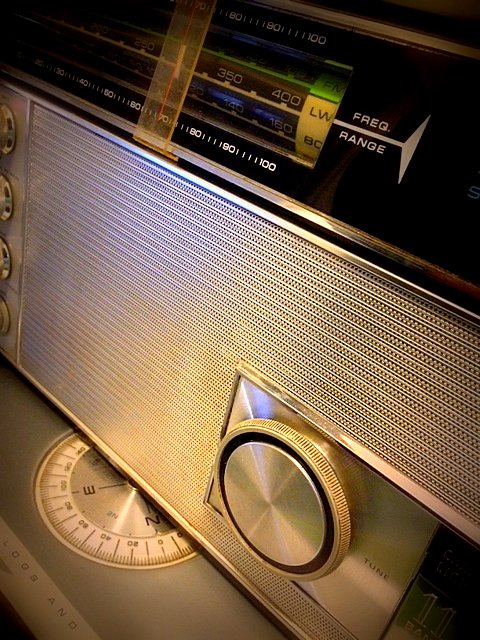
Zenith Transoceanic tuned to shortwaveThe BBC reports that Russia has “quietly switched off nearly all of its long-wave transmitters, ending almost nine decades of broadcasting – as cost finally catches up on the medium.” Read the full story on the BBC News.

Not a huge surprise as many countries are pulling the plug on longwave, despite the medium’s large local broadcasting footprint. It does make one wonder if VOR shortwave could also be pulled with little fanfare or warning.

Indeed, check out Jonathan Marks’ comments on the changes at the (former) Voice of Russia which we’ve mentioned has at least, administratively, been liquidated and consolidated.

I can tell you that for those of us in North America, VOR is now a much harder catch on shortwave–a very strange shift from the ubiquity of the broadcaster’s signal in past decades.

But if you want to hear frank, public comments about how these changes are affecting the staff of VOR, just bookmark and listen to From Moscow With Love. Hosts Vasily and Natasha happily march to their own beat and comment openly to listener inquiries.

Longwave Radio Recordings: WG2XFG

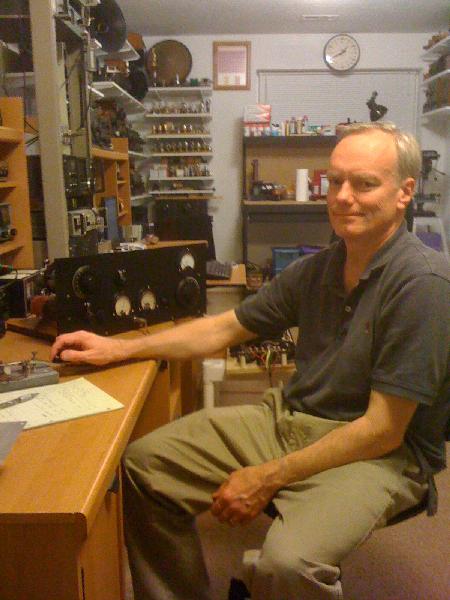
Brian Justin with his homebrew transmitter (Source: http://w4dex.com/500khz/wd2xsh31.htm)

Brian Justin with his homebrew transmitter (Source: http://w4dex.com/500khz/wd2xsh31.htm)

A few weeks ago, I posteded an article about Brian Justin’s holiday longwave broadcasts commemorating Reginald Fessenden’s Christmas Eve 1906 AM voice transmission.

I don’t spend a lot of time in the longwave portion of the radio spectrum, so this special event station gave me an excuse to venture a little lower on the radio dial.  Fortunately, LW propagation was in my favor, and Justin’s signal made it the 215 miles to my home. While it’s not armchair listening, it’s most impressive, especially considering the transmitter used is “home-brewed” with modest output power.

This recording of WG2XFG was made when the signal seemed to be at its strongest on December 26th, 2013 starting around 12:40 UTC (Christmas evening, EST). Click here to download the recording as an MP3, or simply listen via the embedded player below:

WG2XFQ: Brian Justin’s holiday longwave broadcasts

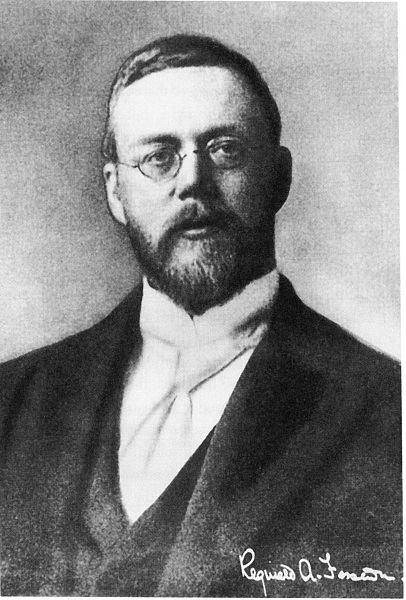
Reginald Fessenden: "The Father of Radio Broadcasting" (Source: Wikipedia)

Reginald Fessenden: “The Father of Radio Broadcasting” (Source: Wikipedia)

SWLing Post reader, Tom, recently shared a link to an article on the ARRL news page which describes this annual longwave broadcast:

“As he has over the past several years, Brian Justin, WA1ZMS/4 — an active participant in the ARRL’s WD2XSH 600 meter experimental project — will transmit voice and music on 486 kHz as WG2XFQ on Christmas Eve and Christmas Day and again on New Year’s Eve and New Year’s Day. Transmissions will begin at 0001 UTC and end at 2359 UTC.

Justin, who may be better known for his microwave exploits on ham radio, will use an AM audio loop modulating his vintage-style, homebrew transmitter to honor Reginald Fessenden’s Christmas Even 1906 AM voice transmission.”

Since I’m a sucker for radio history, I contacted Brian Justin and he kindly answered a few questions:

Brian Justin with his homebrew transmitter (Source: http://w4dex.com/500khz/wd2xsh31.htm)

Brian Justin with his homebrew transmitter (Source: w4dex.com)

SWLing: How did you first become interested in longwave (LW)?
Justin: Always had an interest in history of radio since becoming a ham at age 11. Early wireless had emphasis on LW and so it was a good trail to follow in my years as a ham.

SWLing: Is the process of getting a license to broadcast complicated?
Justin: Yes and No. What I hold is not a broadcast license as a TV or FM or AM station would have. I hold an FCC Part 5 license which is for The Experimental Radio Service. The LW and MF spectrum is formally US Govt spectrum that is managed by the NTIA (the US Govt Agency version of the FCC). So before the FCC can issue any license that is in non-FCC regulated bands the NTIA must first approve any license Grant. A good number of people who are involved in radio today don’t always understand the difference between FCC and NTIA spectrum. But licenses can be granted if you have the willingness to wait and know how the application process works. It’s not all that difficult once you know the context of what one is asking for.

SWLing: What is the best time to listen for WG2XFQ and how can listeners improve their chances of hearing you?
Justin: The transmissions are only a few times each year to mark historical dates in radio history. I try to make at least two each year, one for Fessenden and one for the Berlin Radio Treaty. I also ran one on the 100th Aniv of the sinking of the Titanic since wireless played a big role in the tragic event.

A loop antenna is a good antenna to try as one can at least null any loud noise source. But simple E-field probe antennas have worked for many in years past.

Anyone who copies WG2XFQ is encouraged to submit a logging of it at 500kc.com.

Thank you and good DX to all this Holiday Season. I hope I can deliver a tiny DX gift to all if the band is in good condition this year.


Many thanks, Brian!

I will be listening for WG2XFQ on 486 kHz on December 24th and 25th, then again on December 31st and January 1st. With any luck, and if conditions are favorable, perhaps I’ll hear a little longwave DX commemorating Reginald Fessenden’s Christmas Even 1906 AM voice transmission.

Readers, be sure to check out Brian Justin’s web page and the ARRL 600 meter experimental group’s website. Please log your WG2XFQ listener reports at: 500KC.com

If you would like to learn more about Reginald Fessenden, check out Fessenden.ca.