Shortwave listening and everything radio including reviews, broadcasting, ham radio, field operation, DXing, maker kits, travel, emergency gear, events, and more
Many thanks to SWLing Post contributor, Franco (K4VZ), who writes:
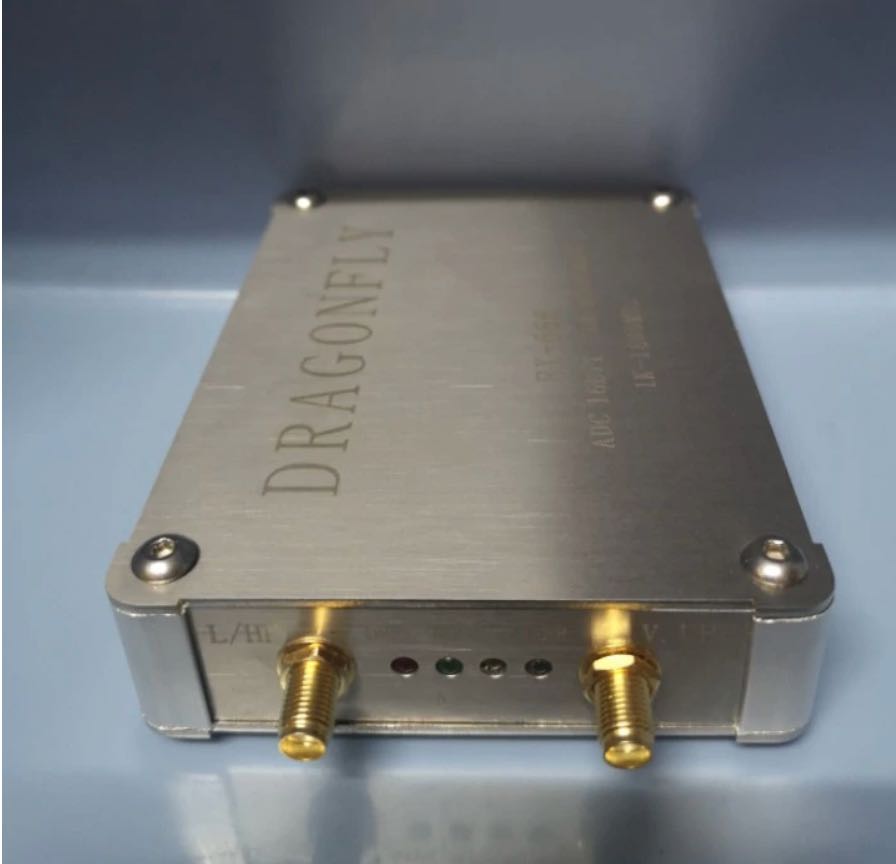
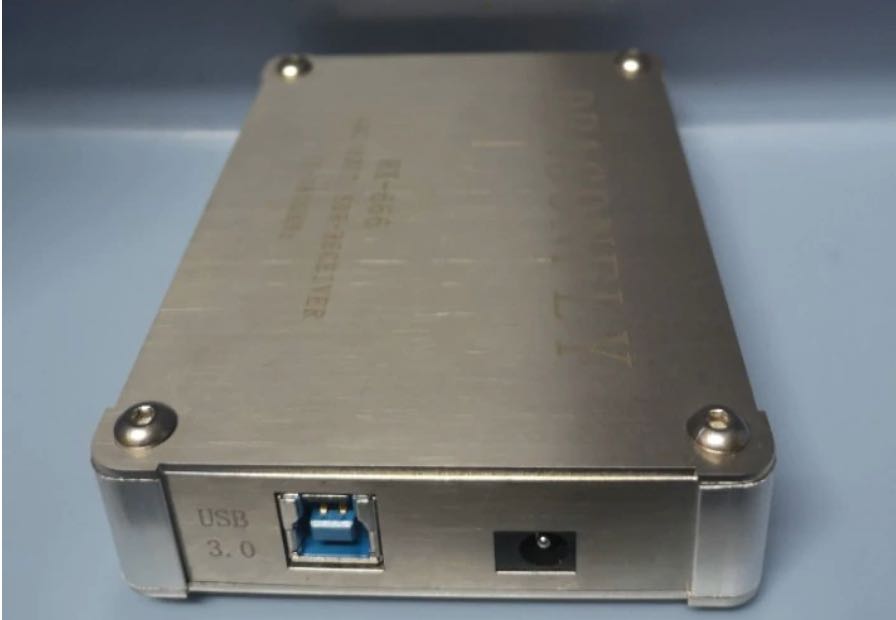
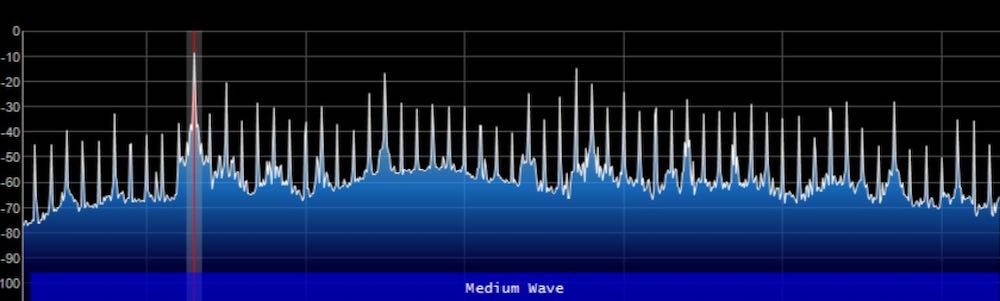
Last night I came across a new SDR receiver from China called ‘RX-666’. On paper its specs are interesting: 16bit ADC, max sample rate 32MHz (in theory one could sample the whole LW+MW+SW bands at the same time), USB 3 interface, and tunable from 1kHz to 1.8GHz.
Its design seems to be a “derivative” of Oscar Steila’s (IK1XPV) BBRF103 SDR – see this post from Oscar – it looks like they upgraded the ADC, made use of a better voltage regulator, and moved to a 4-layer PCB (the original was a 2-layer PCB).
Unfortunately (for Linux people like me) they only have proprietary drivers running on Windows.
Besides the AliExpress store, I saw it is also available on eBay – the AliExpress vendor has two versions, a cheaper one with a ‘standard crystal’, and a more expensive one with an ‘upgraded crystal’; I messaged them earlier to find out what is the difference between the two, but I haven’t heard back yet.
I thought some of those readers of the Post who are interested in capturing large parts of the radio spectrum to decode later might want to look into this SDR receiver.
Thanks for the info on this SDR, Franco. I was not familiar with it. A 16 bit wide band SDR with a 32 MHz working bandwidth is most impressive–I’m sure FM DXers will be following this closely. I’m glad they’re using a USB 3.0 port but am very curious if it can even handle the amount of data should a user initiate a really wide spectrum recording. Perhaps recordings have capped bandwidths?
As a side note, someone should tell the manufacturer that their model number “RX-666” is…well…a culturally sensitive number!
Post Readers: Please comment if you’re familiar with this SDR.
Radio Waves: Stories Making Waves in the World of Radio
Because I keep my ear to the waves, as well as receive many tips from others who do the same, I find myself privy to radio-related stories that might interest SWLing Post readers. To that end: Welcome to the SWLing Post’sRadio Waves, a collection of links to interesting stories making waves in the world of radio. Enjoy!
Many thanks to SWLing Post contributors Ron, Pete Eaton, Paul Evans, and Jennifer Gulley for the following tips:
The FCC has issued a Forfeiture Order (FO) calling for HobbyKing to pay a fine of $2,861,128 for marketing drone transmitters that do not comply with FCC rules. An FCC Enforcement Bureau investigation stemmed in part from a 2017 ARRL complaint that HobbyKing was selling drone transmitters that operated on amateur and non-amateur frequencies, in some instances marketing them as amateur radio equipment. The fine affirms the monetary penalty sought in a June 2018 FCC Notice of Apparent Liability (NAL). The FCC said its investigation found that dozens of devices marketed by the company transmitted in unauthorized radio frequency bands and, in some cases, operated at excessive power levels. “Such unlawful transmissions could interfere with key government and public safety services, like aviation systems,” the FCC said.“We have fully considered HobbyKing’s response to the NAL, which does not contest any facts and includes only a variety of legal arguments, none of which we find persuasive,” the FCC said in the FO. “We therefore adopt the $2,861,128 forfeiture penalty proposed in the NAL.”[…]
Phil Karn, KA9Q; Randy Standke, KQ6RS, and members of the Mount Carmel High School Amateur Radio Club (MCHSARC) in San Diego have constructed and deployed an amateur radio marine buoy in the Pacific. The buoy, which transmits WSPR on 14.0956 MHz USB, has already been heard around the continental US, Brazil, Hawaii, Japan, Costa Rica, Australia, and South Africa.
“Over the past year, Randy and I have mentored the MCHSARC in designing and constructing a simple marine buoy that was deployed from the RV Sally Ride [on July 16], about 700 kilometers off the coast of southern California,” Karn said in a post on the AMSAT Bulletin Board. “It is up and transmitting WSPR on 20 meters using the call sign KQ6RS, and is being received all over the US and into Canada and Brazil.” Karn is blogging about the project with updates.
The electronics are the 20-meter WSPR version of the WB8ELK “pico tracker” that has been flown on long-duration balloons. “We removed the solar panels and substituted 21 ordinary alkaline D cells, wired to supply 4.5 V,” Karn explained. “We estimate battery lifetime will be 6 months.”
[…]The first reception report was on July 16 at 12:52:30 UTC from grid square CL89eu, although the current carried the buoy east into CL89fu at 20:32:30 UTC. The buoy (KQ6RS-1) can be tracked on the APRS and WSPRnet sites.[…]
With everything else going on this summer, you might be forgiven for not keeping abreast of new proposed regulatory frameworks, but if you’re interested in software-defined radio (SDR) or even reflashing your WiFi router, you should. Right now, there’s a proposal to essentially prevent you from flashing your own firmware/software to any product with a radio in it before the European Commission. This obviously matters to Europeans, but because manufacturers often build hardware to the strictest global requirements, it may impact everyone. What counts as radio equipment? Everything from WiFi routers to wearables, SDR dongles to shortwave radios.
The idea is to prevent rogue reconfigurable radios from talking over each other, and prevent consumers from bricking their routers and radios. Before SDR was the norm, and firmware was king, it was easy for regulators to test some hardware and make sure that it’s compliant, but now that anyone can re-flash firmware, how can they be sure that a radio is conformant? Prevent the user from running their own firmware, naturally. It’s pretty hard for Hackaday to get behind that approach.[…]
A new internet radio station called Radio Recliner has started during the coronavirus pandemic. It gives residents in senior living facilities a chance to share some of their favorite music.
Space Communications and Navigation (SCAN) Testbed
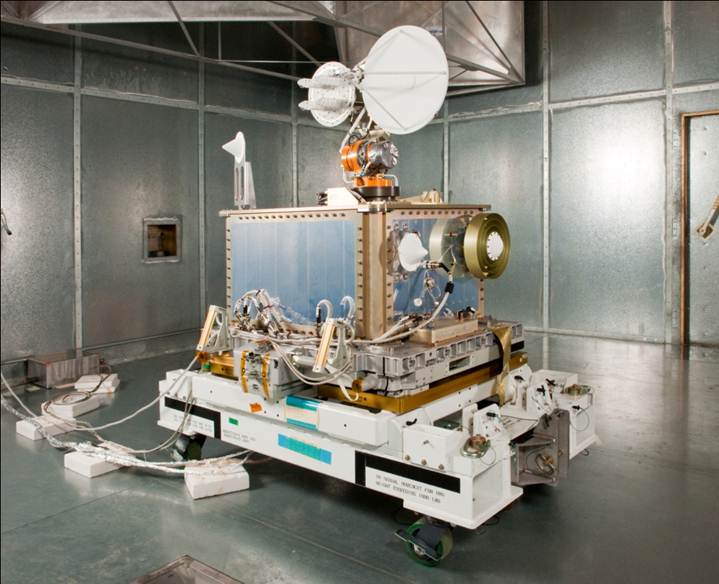
The SCAN Testbed, formerly known as Communications, Navigation, and Networking reConfigurable Testbed (CoNNeCT), served as a test facility for NASA research on radio communications and the Global Positioning System (GPS).
SCAN Testbed on International Space Station (Source: NASA)
The SCAN Testbed was launched on July 20, 2012 on a Japanese H-IIB Transfer Vehicle and installed in the International Space Station to provide an on-orbit, adaptable software-defined radio (SDR) facility with corresponding ground and operational systems. This permitted mission operators to remotely change the functionality of radio communications through software once deployed to space, offering them flexibility to adapt to new science opportunities and recover from anomalies within the science payload or communication system.
The SCAN Testbed payload was used to conduct a variety of experiments with the goal of further advancing other technologies, reducing risks on other space missions, and enabling future mission capabilities.
After seven successful years, and more than 4,200 hours of testing, it was decommissioned June 3, 2019 as it burned up in the trunk of SpaceX CRS-17 upon reentry into Earth’s atmosphere.
Thank you for sharing this, Dan! I had never heard of the SCAN testbed. I can only imagine what it might have been capable of accomplishing from orbit. I dare say there are even more powerful SDRs orbiting the planet at this moment!
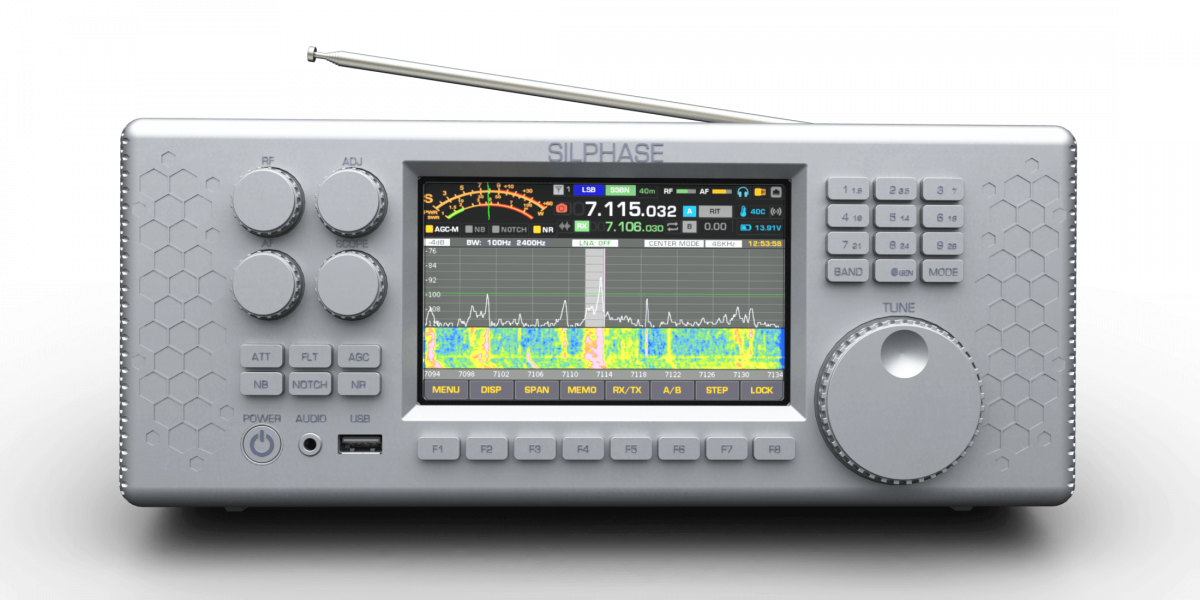
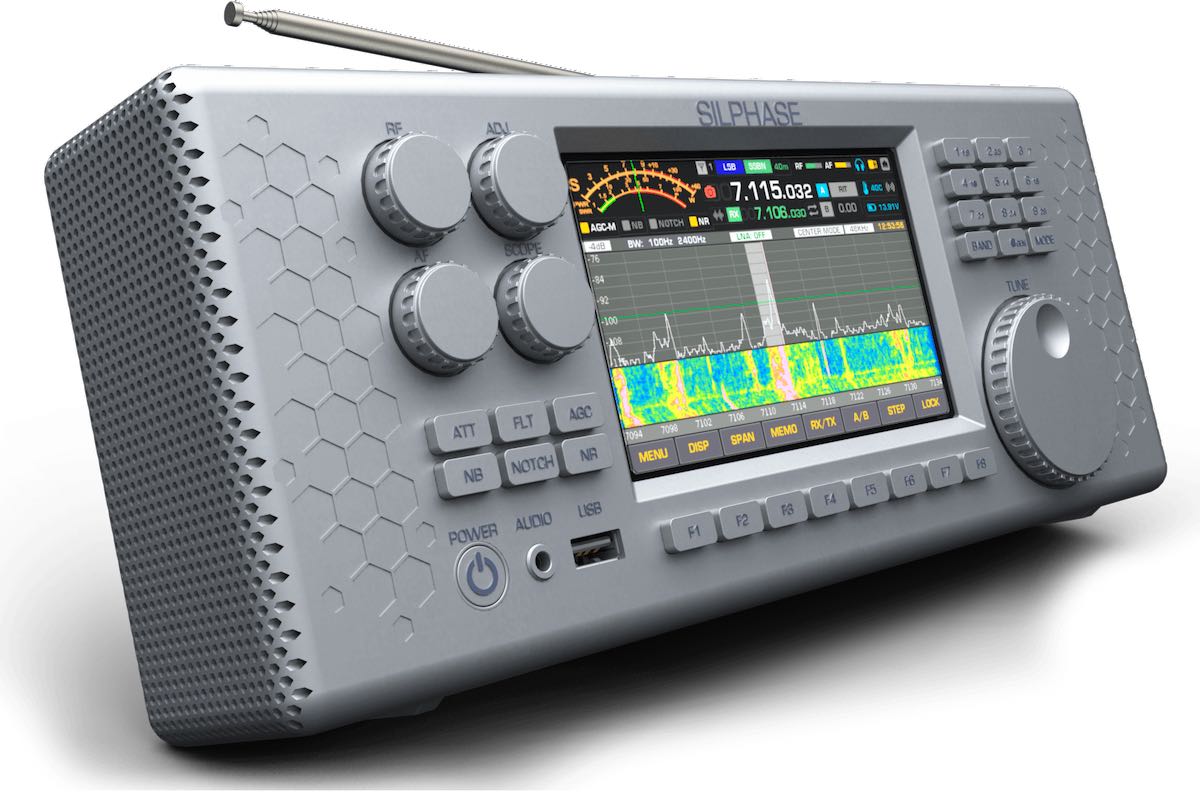
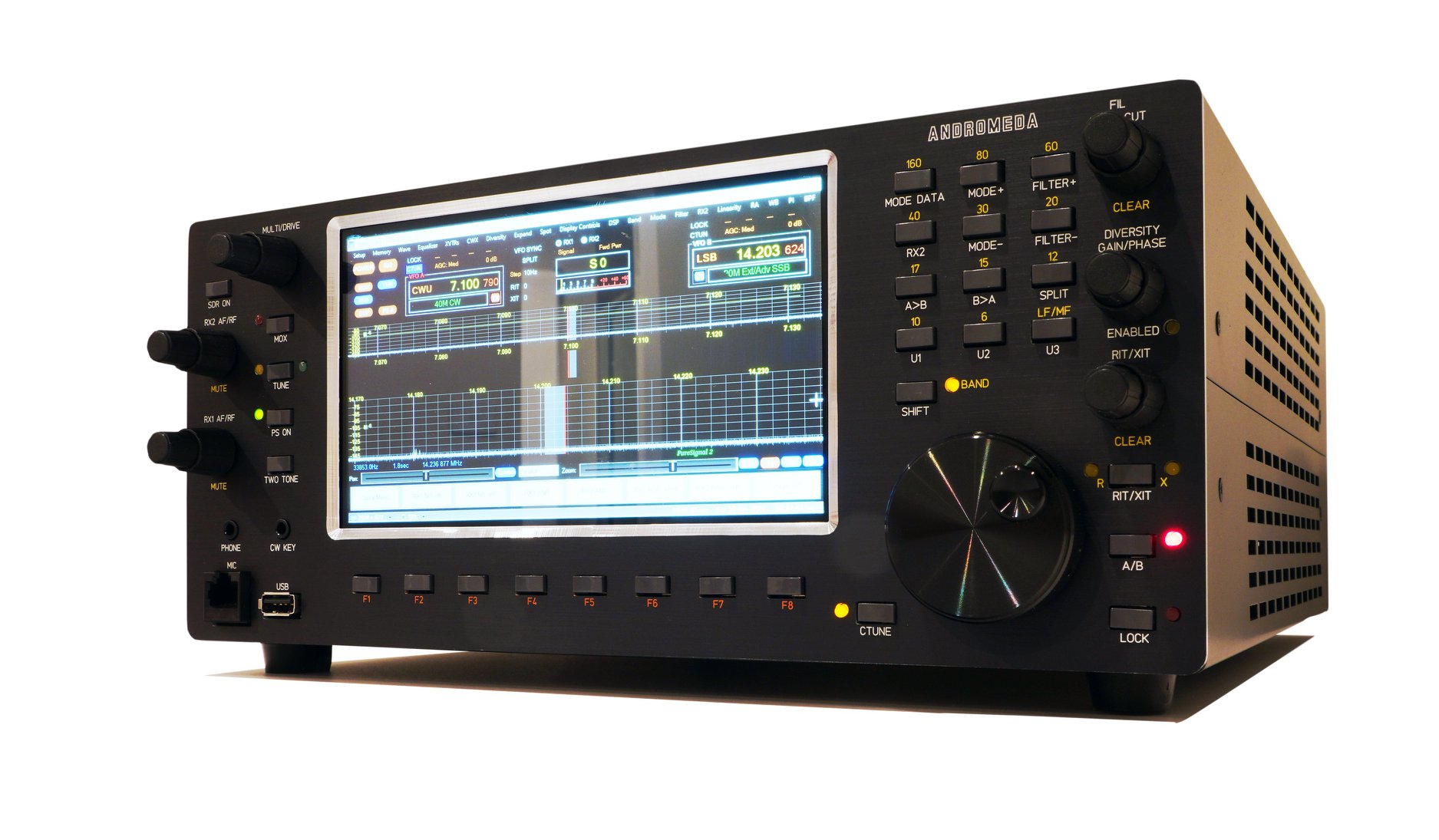
I’ve just learned about a new SDR receiver in development by the Polish company Silphase. It’s called the Silphase R1 and appears to be a stand-alone, high-performance SDR receiver.
What could set this receiver apart from the rest is the:
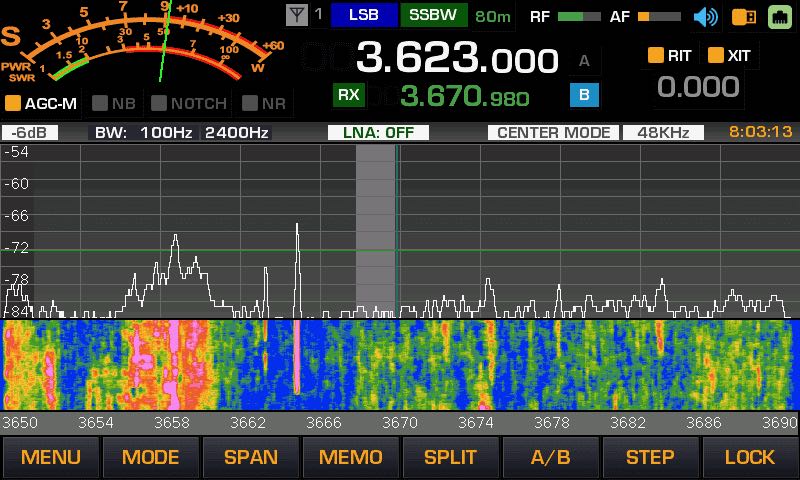
Color backlit 5″ TFT touch screen display
Magnesium alloy body/chassis
USB out for recording and native logging
Record to internal “flash memory” (unclear if audio and/or spectrum)
Four internal speakers
12.6V 12000 mAh, internal battery
IP55 rating for water/dust protection
The price is $1199/€1099 with no expected availability date at time of posting
The receiver is portable and will measure 11.25×4.3×2.2in (285×110×55mm). Looks like the screen will be 5″ which should allow for a detailed spectrum viewing area (for comparison, the Icom IC-7300 TFT display is 4.3″)
Siphase is a new company based in Poland and they claim they also plan to eventually produce transceivers:
“At the end of 2020 we will introduce a 25W transceiver in the same form factor powered by an internal battery, and a bit little later a 100W transceiver in the same form factor also powered by an internal battery.”
The Silphase product page has a complete list of specifications, but here are some worth noting:
Many thanks to SWLing Post contributor, Rob, who writes:
I recently made another video on the AirSpy YouLoop – this time paired in a configuration that shouldn’t really work. I used it with an RTL-SDR v3 dongle in direct sampling mode, and signals still came in. This was somewhat of a surprise given the RTL-SDR v3 isn’t primarily designed for HF.
It may be interesting to readers of the SWLing blog.
I have also started a 2020 SDR Guide that may also have some relevance. Episode 1 looked at some of the things that are possible using Software Defined Radios, and Episode 2 which was released yesterday was an introduction to accessing over 500 online SDRs through 4 different platforms. I focused mainly on HF, and although I didn’t specifically mention the broadcast bands, gace a demo of each platform (KiwiSDR, WebSDR, SpyServer & SDR Console).
Many thanks to SWLing Post contributor, Alexander (DL4NO), who shares the following announcement from Markus (DL8RDS):
This year’s Software Defined Radio Academy is taking place as an online conference. Because of the great number of contributions, we are spanning the conference over two days: Saturday June 27 and Sunday June 28 2020.
We also decided to start the stream in the afternoon in order to give our overseas audience a fair chance to participate.
We have pre-recorded the talks, so there is no back-channel or interruption during the talks, but the speakers will be available in our video conferencing system and we will closely observe all the comments that will be submitted into the channel. At the end of the according slots, there is always a little time left for the speakers to respond. So there is a certain degree of interaction and we do encourage you to make use of it.
Our mother organisation, the German Amateur Radio Club DARC also decided to provide a decent online substitute to the HAMRADIO hamvention that was called off by the authorities and I’m proud to say that our team was giving the ideas and helped this really large event to take place. Alltogether our video team, the other video team from Faszination Amateurfunk and the DARC permanent staff managed to provide more than 60 hours of talks, discussions and fantastic content, which will be streamed at this weekend. For those of you who understand German, here is the streaming plan: