Shortwave listening and everything radio including reviews, broadcasting, ham radio, field operation, DXing, maker kits, travel, emergency gear, events, and more
Part of Paraguay’s Radio ZP-30 news bulletin (in Spanish) about Brazilian President Lula at CELAC (Community of Latin American and Caribbean States) Summit in China. Listened in Porto Alegre, Brazil, on a Xhdata D-808 receiver.
Many thanks to SWLing Post contributor, Dan Greenall, who writes:
Many years ago, I used to enjoy listening to distant stations that broadcast a regular English language program to Eastern North America (where I live). They would generally have a newscast and commentary, which was often followed by a daily feature that would help a listener better understand what life was like in other parts of the world.
This type of programming is harder to find these days, but I was recently pleasantly surprised to find that the Tibet Autonomous Region of China (or Xizang in Chinese) has had a couple of daily broadcasts in English for some time. The programs are called “Hello Xizang”. According to their website, Hello Xizang “covers everything from social issues to traditional culture. It brings you news, stories and in-depth reports happening in Xizang. Check it out to gain an insight into modern Xizang and feel the pulse of contemporary Xizang.”
Hello Xizang is an hour long program in English between 0700 and 0800 UTC, and again from 1600 to 1700 UTC (most convenient time for me). A few frequencies to try are 4905, 4920, 6200 and 7255 kHz.
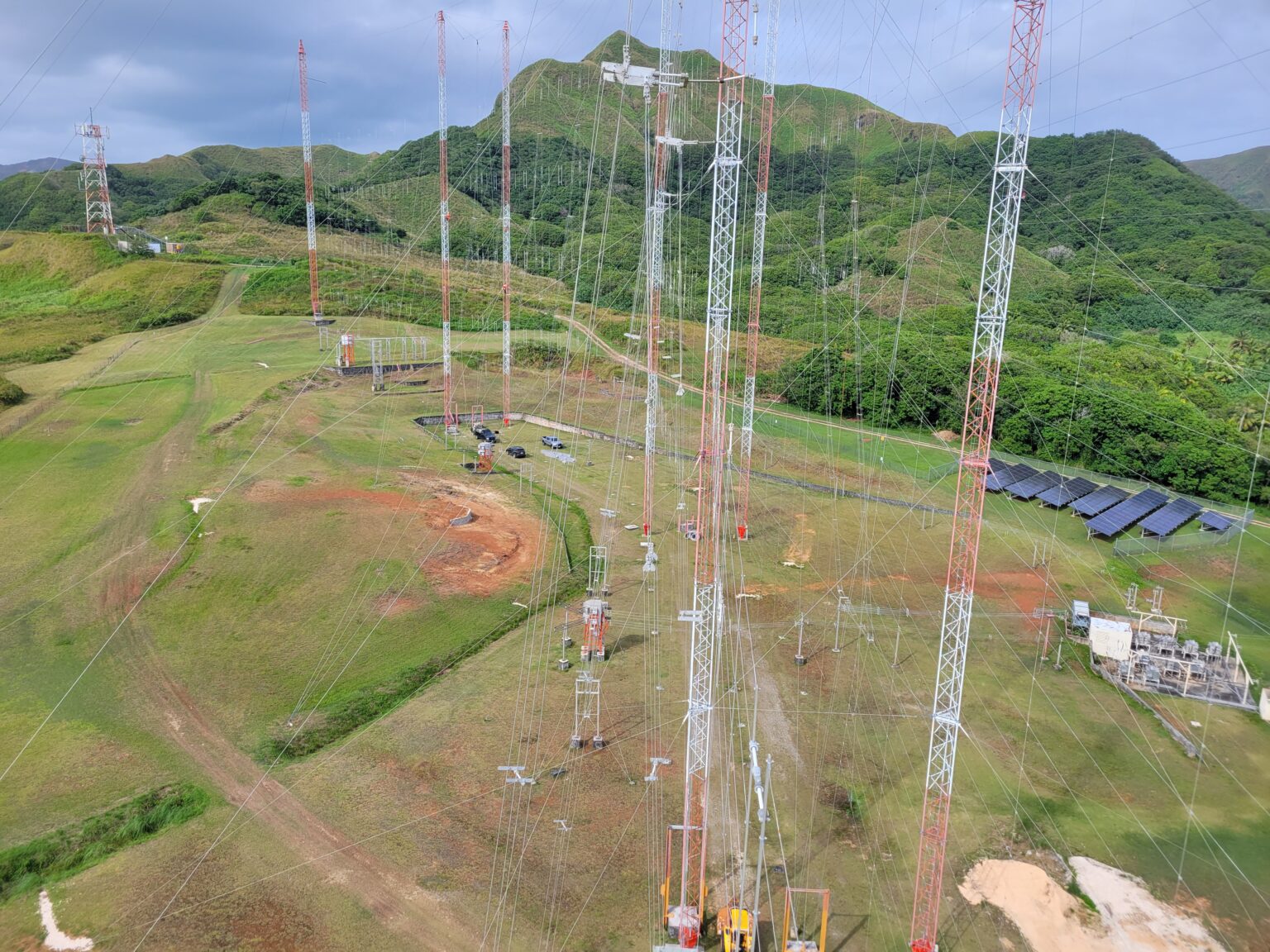
This schedule may not work too well for listeners in North America but quality reception can be had through the use of various SDR’s located closer to the transmitter site. I often use the Kiwi SDR of VE3HLS (Ken) who has retired in northern Thailand, from which I made the attached recording of their switch over from Tibetan to English programming:
A new resource such as Passport was always an incentive to turn on a radio.
Do You Need a Break from Radio?
by Bob Colegrove
A couple months ago I became one of the last 10 people east of the Mississippi River to acquire a smart phone. It was a great improvement for someone who had been trying to navigate through modern life for several years using a flip phone. The transition came at a cost, however. It required an investment of time learning the basic features and functionality. Having a long-standing familiarity with computers and tablets, there was a degree of experience I could draw from. Still, it was different, plus it included new features I found to be amazing and demanding of my attention.
Not long after this I was informed by Microsoft that I would soon be needing a new computer to remain safe and functional. Having logged on to a mainframe for the first time in September 1976, I had been around the block too many times to be greatly alarmed by such warnings. Nevertheless, having not purchased a new computer since 2014, I decided to use this information as leverage to do just that and treat myself to a new laptop. The basic features and functionality remained similar; however, the transition still required time to find where they had been relocated. An operating system upgrade is kind of like buying a new car and finding the steering wheel in the trunk and the spare tire in the front seat.
These new technological acquisitions demanded my undivided attention for a period of several weeks – time which had to be carved out of life’s normal activities. Admittedly, being retired helped. Still activity tends to progressively slow with age. The transitions were completed relatively painlessly; I would even say with a good level of discovery and enjoyment.
I told you all of that in order to tell you this: While all this transpired, not a radio functioned for several weeks. Neither a knob was turned nor a button pressed. Notwithstanding the newly enhanced forces of 5G and Wi-Fi, the world could have stood still. Not once, but many times during this period I would look over at the radio table and see them all silently looking back like so many forelorn puppies in want of a scratch behind their ears. Coldly and cruelly, I would turn my back and set up another email account.
I was on what is simply called a “break.” Not my first. I am hard-pressed to say how many breaks I’ve been on over the years; nor can I tell you how long each one lasted. I am reassured by my fellow radiofiles that I am not alone. I occasionally read comments or blogs from folks who have returned after a break, sometimes after several years.
In the old days tinkering could reignite flagging interest.
Breaks may be caused by many things, the increased burdens of life being the most obvious. Maybe there is illness. Seasonal changes can initiate a break; it’s just good to be outside when the air is fresh and warm. It might be an increased level of boredom where one simply neglects to turn the radio on. In my case, it was an irresistible distraction like a new gadget. I have never consciously told myself I needed a break and turned the radio off for a planned length of time. It has never ever become a matter of work to operate a radio. Perhaps that’s how you know you’ve been irrevocably hooked.
We all come back – eventually. It’s in our DNA. Are breaks bad? No. Every human endeavor requires a break now and then. Sportspersons hang up their spikes or sneakers for six months at a time every year. The idea is they come back refreshed and renewed ready again to conquer the mountain. While success may be illusive, it is the break that provides the incentive to go on. So it is with radio.
I could spend hours to the point of ignoring meals attentively getting a dial cord to run smoothly. Source : The National NC109 Communications Receiver.
Eventually you turn the radio on with renewed enthusiasm. Perhaps you recall a previous discovery, an untried band, a different time of day, a new tuning technique, a suggestion of something you read or heard. Maybe it’s a new radio, or one you haven’t used for a long time. Maybe it’s just the attraction of the dial and buttons that draws you back. These are some of the sparks that reignite your interest.
Eventually, the initial flash of enthusiasm for the new phone and computer subsided. Sound again emanates from the headsets. What was old is new again. Regardless of why you went away or how long you’ve been gone; you’ve got that old feeling and you’re back.
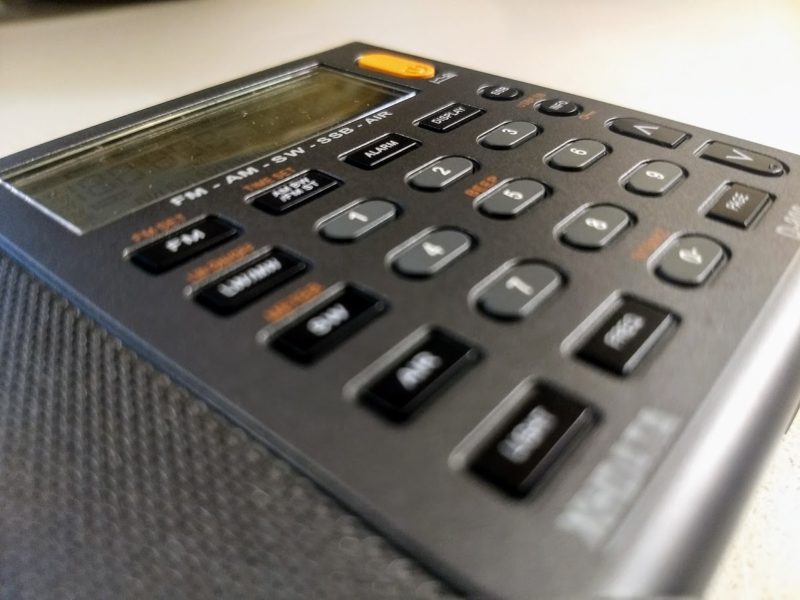
Do radio designers try to attract us with appearance?
Radio ZP-30: (Russia) Drone attack repelled; 80th anniversary of Nazi Germany defeat:
Part of Paraguay’s Radio ZP-30 news bulletin (in German) about a Ukrainian drone attack repelled by Russian army, and the preparations for the celebrations of the 80th anniversary of Nazi Germany defeat by Soviet Union. Listened in Porto Alegre, Brazil, on a Xhdata d-808 receiver.
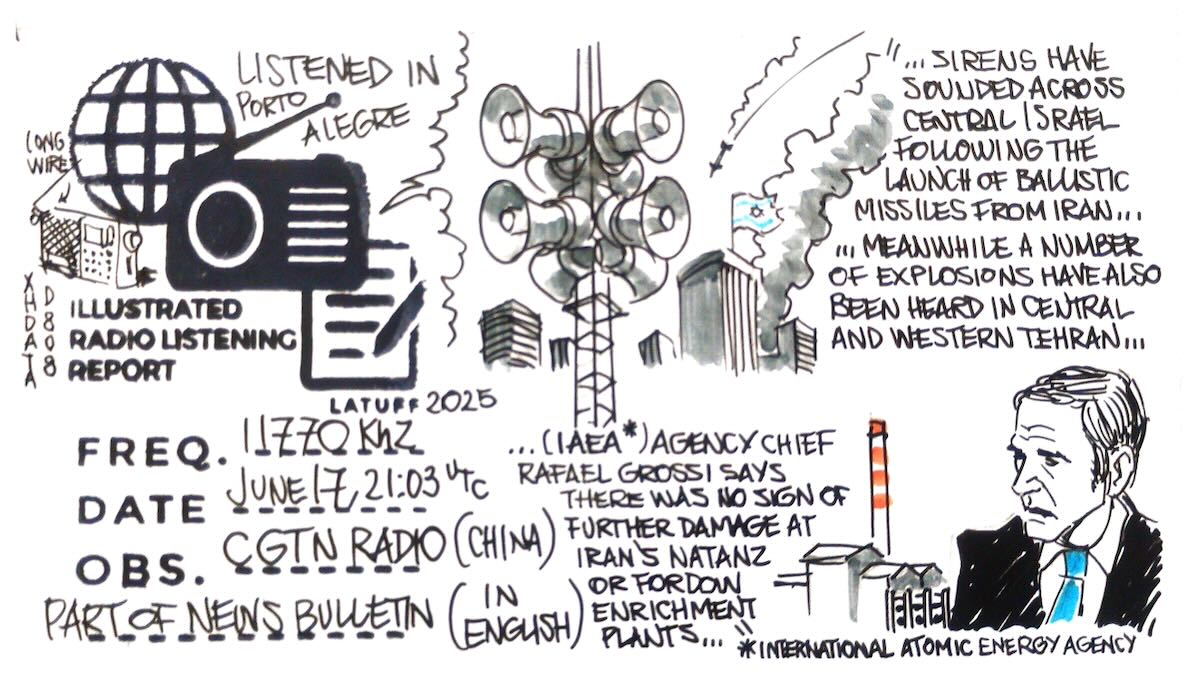
Many thanks to SWLing Post contributor and noted political cartoonist, Carlos Latuff, who shares the following illustrated radio listening report of a special Radio Nacional de España broadcast. Note that the Spanish version of this post follows the English version:
This illustrated radio listening report was particularly special to me. It’s a radio station’s acknowledge of the importance of a battery-powered radio in emergency situations.
Spain went through a massive blackout, which left the population used to mobiles without knowing what to do. But then along comes the simple battery-powered AM-FM radio, a device that in developed countries ends up being despised and overlooked, since with a cell phone you can have access to news from all over the world.
However, there’s one *tiny* detail.
No matter how modern (and expensive) a mobile is, it can only work with electricity and, of course, a cell phone signal. And, in a massive blackout like the one Spain, Portugal and parts of Europe were facing, with no cell phone signal or Internet, mobile is useless.
Well, I can speak about this subject with authority, since last year in Porto Alegre, where I live, a flood left me without electricity, telephone and Internet for 6 days.
But back to Radio Nacional de España. They broadcasted today a compilation of audios from news aired by the station during the blackout, and what draws attention is the fact that it highlights the importance of radio in critical situations. One of the phrases in this compilation is pithy:
“Es el dia de los transistores, los viejos, los de pila.”
(It’s the day of radio receivers, the old ones, the ones with batteries).
And there are testimonies from people who said they gathered their neighbors to listen to the news on the radio, or even put a radio on their balcony connected to a speaker so that the neighbors could hear the news from Radio Nacional de España. I believe this was the first time I heard a major broadcaster making such a clear recognition of the importance of the radio.
The younger generations will have to learn that they cannot depend solely and exclusively on the Internet.
Informe Ilustrado de Escucha de Radio y Grabación de Radio Nacional de España de Carlos (29 de abril de 2025)
Muchas gracias al colaborador de SWLing Post y reconocido caricaturista político, Carlos Latuff, quien comparte el siguiente informe ilustrado de escucha de una emisión especial de Radio Nacional de España:
Este reportaje ilustrado sobre la escucha de radio fue especial para mí.
Es el reconocimiento de una emisora ??a la importancia de una radio de pilas en situaciones de emergencia.
España sufrió un apagón masivo que dejó a la población acostumbrada a los móviles sin saber qué hacer. Pero entonces apareció la sencilla radio AM-FM de pilas, un dispositivo que en los países desarrollados acaba siendo despreciado e ignorado, ya que con un móvil se puede acceder a noticias de todo el mundo.
Sin embargo, hay un *pequeño* detalle.
Por muy moderno (y caro) que sea un móvil, solo funciona con electricidad y, por supuesto, con señal. Y, en un apagón masivo como el que sufrieron España, Portugal y partes de Europa, sin señal ni internet, el móvil es inútil.
Bueno, puedo hablar de este tema con total autoridad, ya que el año pasado en Porto Alegre, donde vivo, una inundación me dejó sin electricidad, teléfono ni internet durante seis días.
Pero volvamos a Radio Nacional de España. Hoy han emitido una recopilación de audios de noticias emitidas por la emisora ??durante el apagón, y lo que llama la atención es que resalta la importancia de la radio en situaciones críticas. Una de las frases de esta recopilación es concisa:
“Es el día de los transistores, los viejos, los de pila”.
Y hay testimonios de personas que dijeron haber reunido a sus vecinos para escuchar las noticias por la radio, o incluso haber puesto una radio en su balcón conectada a un altavoz para que los vecinos pudieran escuchar las noticias de Radio Nacional de España. Creo que fue la primera vez que escuché a una gran emisora ??reconocer tan claramente la importancia de la radio.
Las generaciones más jóvenes tendrán que aprender que no pueden depender única y exclusivamente de internet.
Rádio Exterior de España returns to shortwave one day after the massive blackout that affected Spain and other regions of Europe. Porto Alegre, April 29, 18h13 UTC.
RNE Addendum
Carlos also originally confirmed that Radio Nacional de España was operational again on April 29, 2025. He noted:
Rádio Exterior de España returns to shortwave one day after the massive blackout that affected Spain and other regions of Europe. Porto Alegre, April 29, 18h13 UTC.
Massive blackout in Spain, Radio La Red, Argentina, 910 kHz AM:
Part of Radio La Red news bulletin (In Spanish) about the massive blackout in Spain. Listened (indoor) in Porto Alegre, Brazil, on a Xhdata d-808 receiver.
With the massive blackout that hit Spain, Portugal and other regions of Europe on Monday, April 28, once again the good old battery-powered radio proved to be the king. Without electricity, cell phone or Internet signal, people turned to the radio to stay informed. These are just some of the posts that flooded Twitter, from Spaniards grateful to have a simple battery-powered AM-FM receiver in their homes. Does anyone still have any doubts about the importance of the radio?
Please support this website by adding us to your whitelist in your ad blocker. Ads are what helps us bring you premium content! Thank you!