
Many thanks to SWLing Post contributor Don Moore–noted author, traveler, and DXer–who shares the following post:
A Cheap and Simple Noise Filter
By Don Moore
Don’s traveling DX stories can be found in his book Tales of a Vagabond DXer [SWLing Post affiliate link]. If you’ve already read his book and enjoyed it, do Don a favor and leave a review on Amazon.
My DXing career started over fifty years ago in an upstairs bedroom in tiny Milesburg, Pennsylvania. I had a consumer-grade multi-band radio and some copper wire strung from the roof to a nearby tree. It was a simple setup but it worked very well. Do you know what I didn’t have? A noise problem. The only time I remember noise ruining my DX was when my mother was using the electric mixer and that meant she was making cookies or a cake. I never complained.
Times have changed, haven’t they? What DXer doesn’t complain about noise these days? I know people who have left the hobby because the place they lived at and DXed at for decades gradually became so noisy they couldn’t DX anymore.
Unsurprisingly, a lot has been written about how to find and eliminate noise in your home. However, most of my DXing is done as I wander the globe. I try to find places to stay at that should be good for DXing. But no matter how good a place looks beforehand, there’s no way of knowing what the noise level will be until I get there.
As a traveling DXer, I need quick, easy, and compact noise solutions. The best solution I’ve found are these CCTV distortion filters (ground loop isolators) that Brett Saylor recommended to me several years ago.
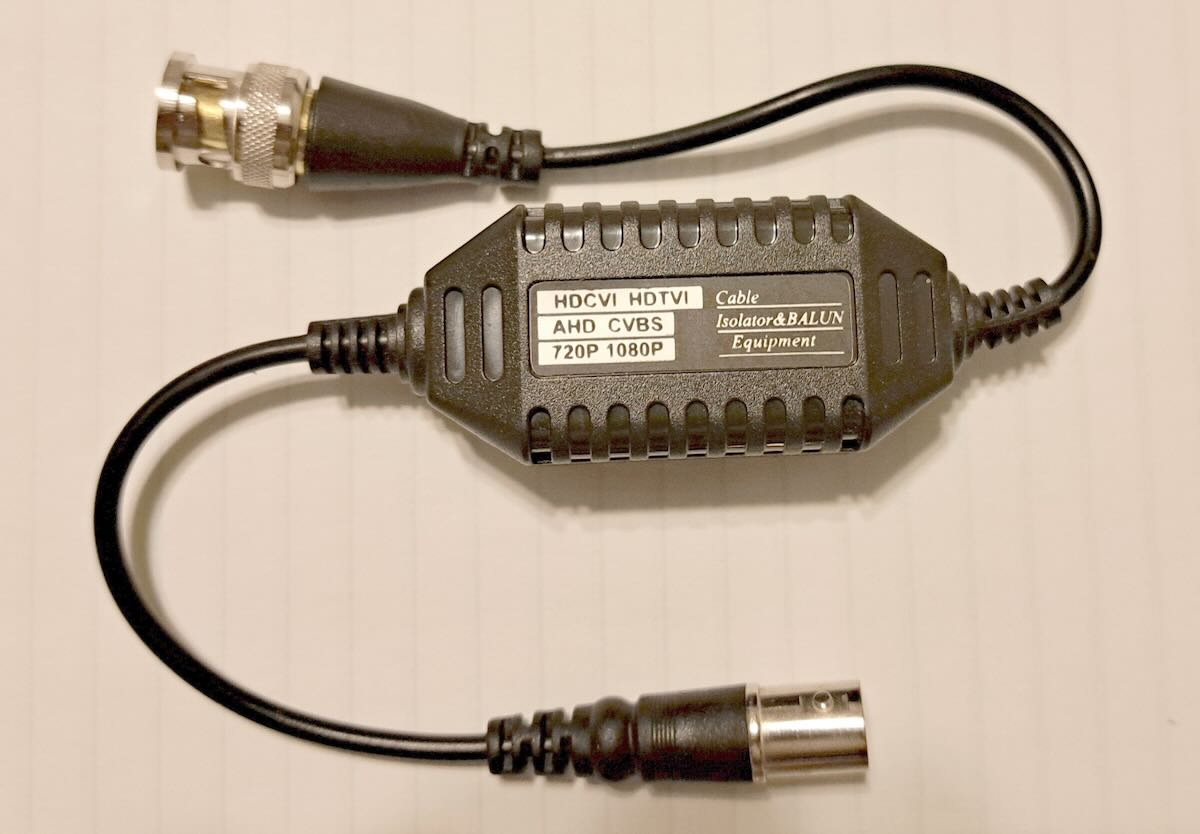
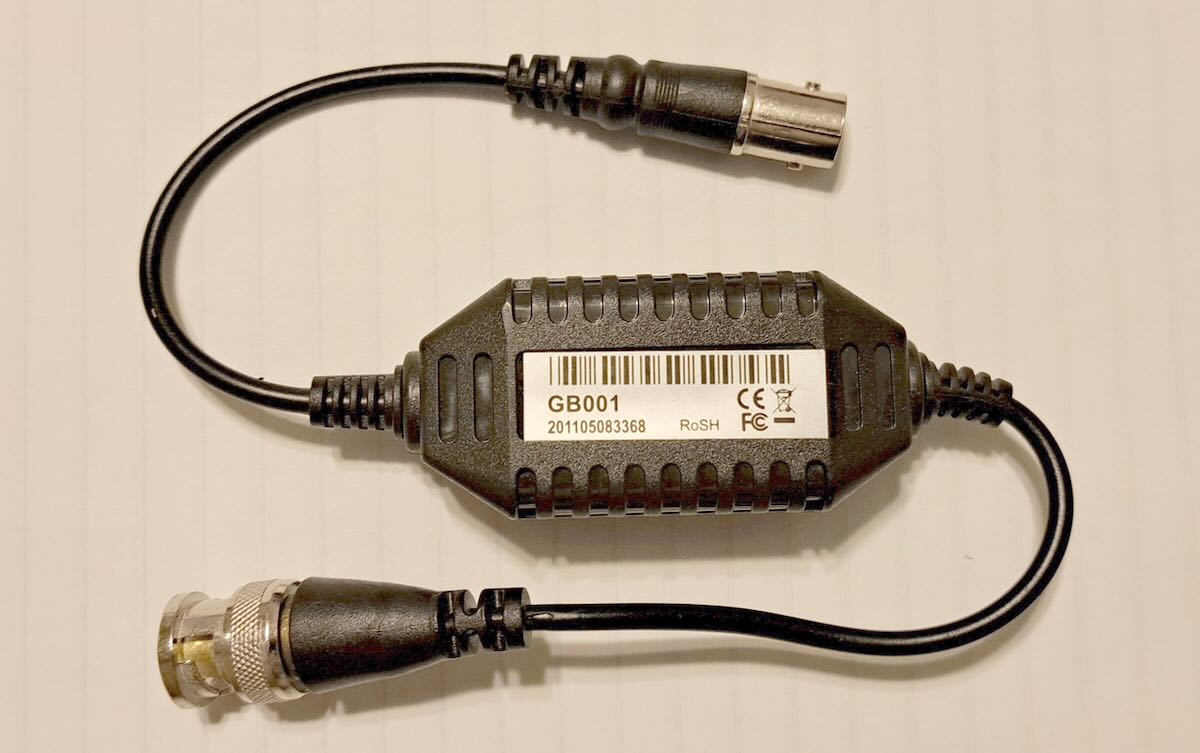
No, these weren’t designed for radio use. And they aren’t a miracle solution that will eliminate all the noise that plagues DXers. Sometimes they’re no use at all. But I’ve DXed in dozens of locations over the past ten years and there have been multiple occasions where one of these filters has turned what would have been a disappointing stay into a good DX session. I don’t go anywhere without two of these packed in my mobile DX shack.
But let me show you some results. All of these SDR screenshots were made with SDR-Console using an Airspy HF+ Discovery SDR connected to a PA0RDT mini-whip antenna.
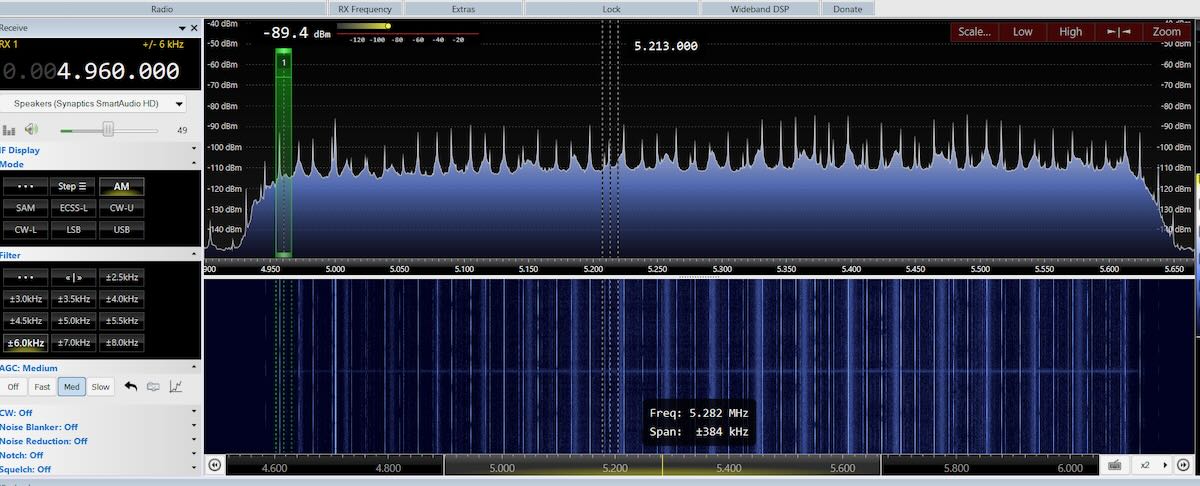
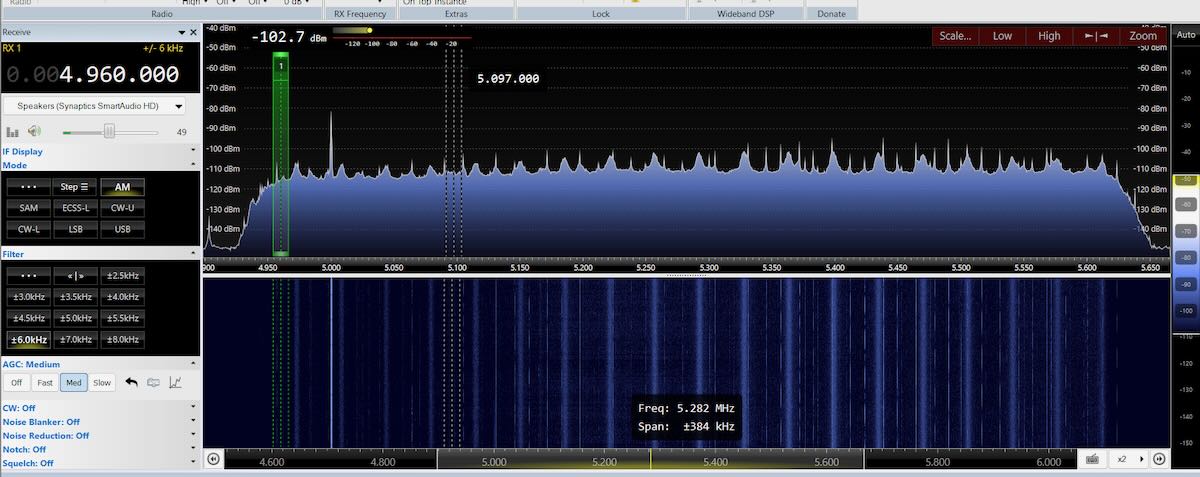
I spent last summer in the north suburbs of Chicago and several times went to a park to test my DX equipment. Around midday, the lower shortwave frequencies were filled with noise peaks. On this first image, it’s hard to pick out WWV on 5 MHz from all the noise peaks. In the second image the filter hasn’t totally eliminated the noise, but WWV’s signal is now strong and clear.
The noise was nearly as strong on 49 meters but the filter almost totally eliminated it. CFRX’s signal on 6070 kHz was slightly weaker with the filter, but it was significantly more listenable without the noise.
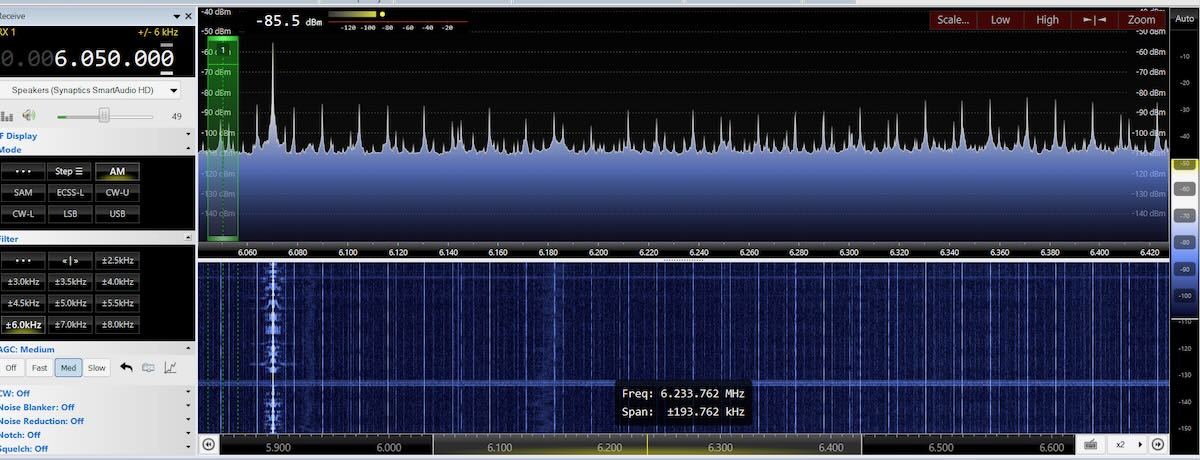
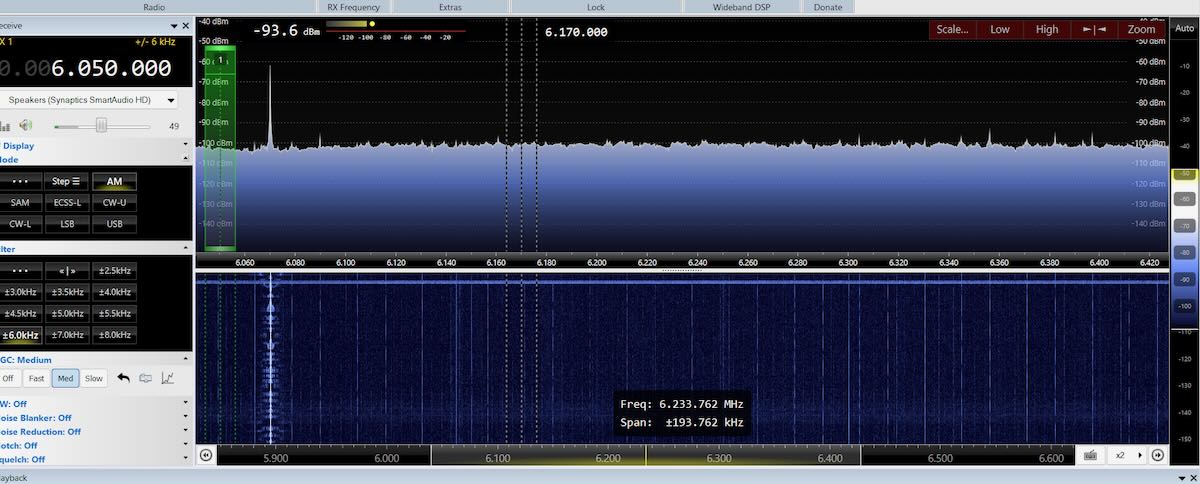
Which frequencies noise affects can vary between locations. At that park the noise was gone above about 11 MHz. While traveling across the US in mid-October, I stopped at a park just west of Kansas City to do some more DXing and equipment tests. The noise there was bad in the middle shortwave bands, such as in the 25 meter band.
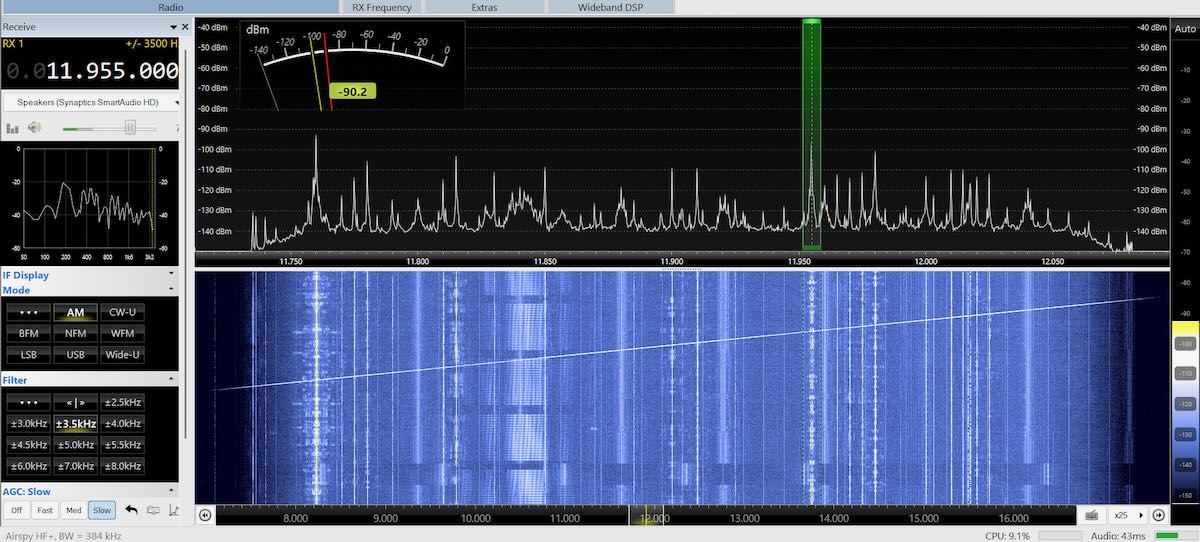
But the filter did a good job cleaning it up.
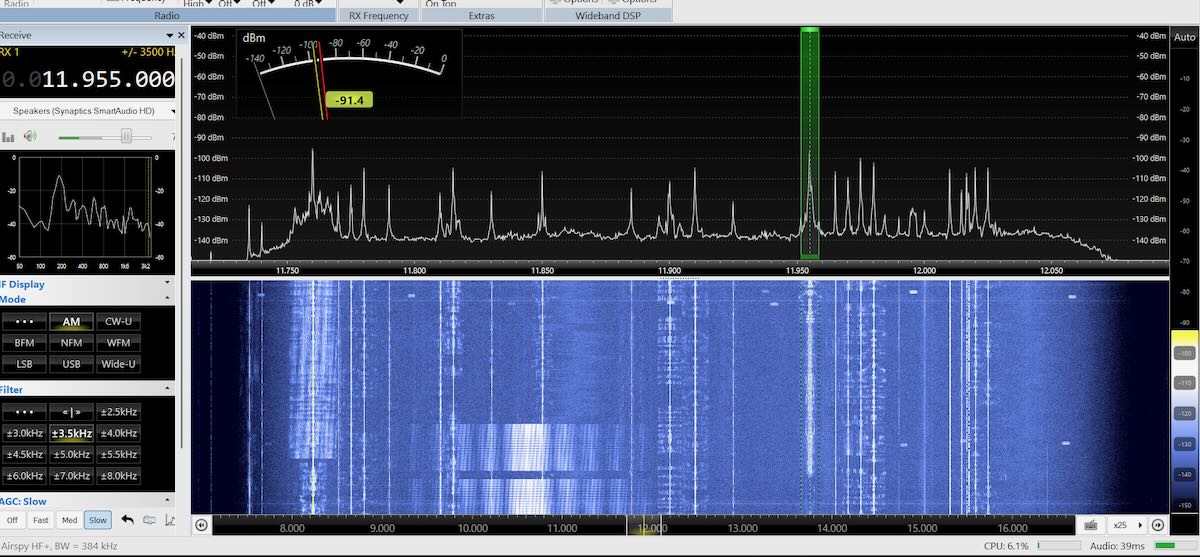
Finally, about two years ago when I was DXing in Rafina, Greece, the noise was bad on the higher bands. Here are before and after screen shots on the 16-meter band.
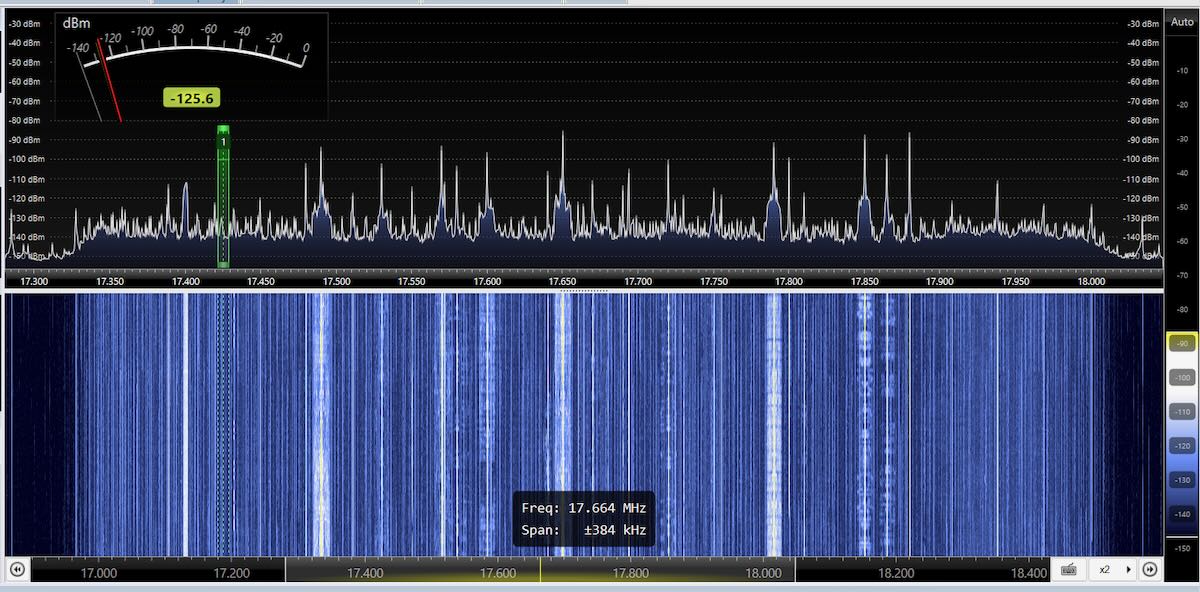
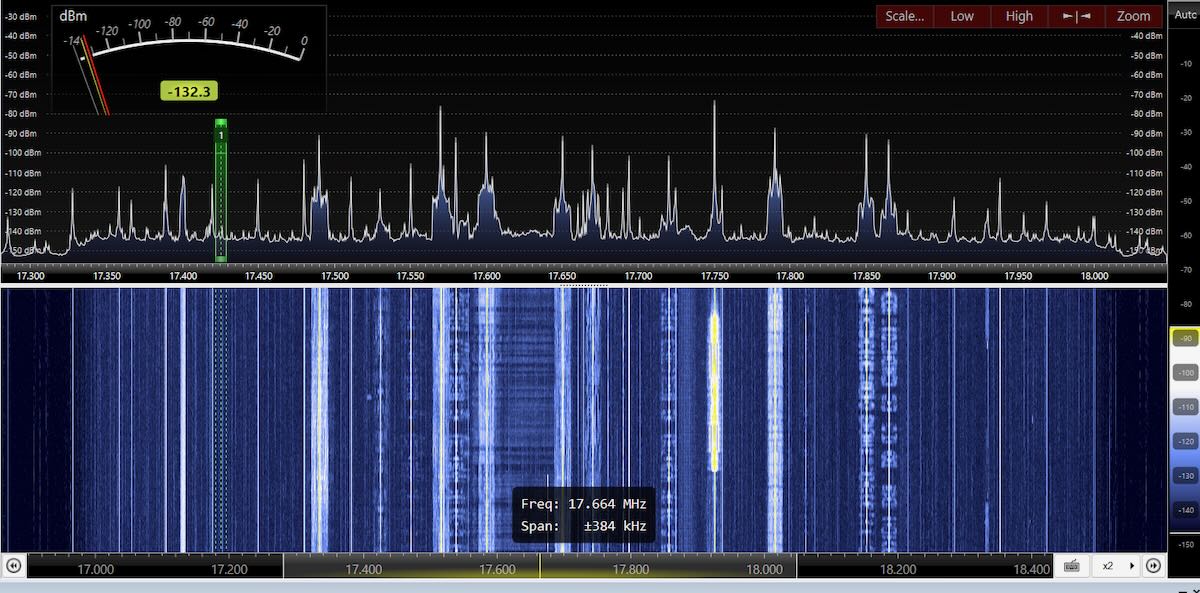
These filters should work with any coax-fed antenna. I’ve used them with beverages, Wellbrook loops, the PA0RDT, and the MLA-30+ loop. If the antenna has an interface, such as the last three mentioned, the filter goes between the interface and your receiver (and not between the interface and the antenna). I’m not sure what the impedance on these is, but I’ve used them with both 50- and 75-ohm coax cable.
Sources of the Filters
An Internet search for “CCTV Ground Loop Isolator” brings up all kinds of products. They are probably all the same but I have no way of knowing that. So I recommend getting the exact ones that I have purchased. Just compare the product to the pictures of mine.
Here are links to three current sources for these exact ones on Amazon. They can also be found on eBay and other sites. [Note that all of these links are affilliate links that support the SWLing Post at no cost to you.]
A Few More Ideas
At just a couple dollars each, every DXer should have a few of these filters in their shack. But types of noise vary and at several places I’ve DXed from using one of these filters made no difference at all. When that happens I have a few other solutions to try.
The first thing I try is to either move the antenna or, if it’s directional, to point it in a different direction. On several occasions that’s all it has taken to totally eliminate what at first seemed like an impossible noise problem.
If the noise is coming in through the power lines, unplugging the laptop and DXing off of battery power might do it. (I only use SDRs powered off the USB connections on my laptop.) If you do that, be sure to unplug the cord from the outlet and move it away from the wall. If you unplug the cord from the laptop and leave the other end plugged into the outlet, it may act as an antenna and radiate the noise from the power lines into your SDR. And, yes, I learned that lesson the hard way!
Do you have any interesting experiences or solutions to the DX noise problem? Please leave them in the comments section.
Go For The Gold !!!!! I wish that the technology was out there and BHI had their noise reduction module’s around 40-50 years ago.Nothing is cheap anymore,as we all know.I did create a fund for myself to purchase the BHI “Dual ” Noise Reduction (in Line) modual at around $260.00.Nothing that I know of can cancel out all of the atmospheric noise but this unit is worth every penny at making speech,not music intelligble.There is another company that makes a similar device Xiegu GNR-1 but I heard,excuse the pun,that it is not as effective on weaker signals as the BHI rig.The BHI brought back the fun of twisting and tuning dials and not fighting to hear the spoken word,again.The cost does equal out vs. marginal copy,year after year JUMP !!!!!!
Three thoughts:
– for about $5 it’s worth a try.
– if I didn’t already have them on hand, I’d have to pay more for the BNC-to-UHF adapters.
– if it works, it ain’t stupid. Though I have to admit, I’m a little pressed as to how this will improve matters.
Maybe you should have a look at this tiny packaged noise blanker.
https://shop.elisys.gr/products/nr1/
You can find videos on the youtube playlist: https://www.youtube.com/playlist?list=PL0KwxiKZqJ1TzQpscf3voh5CR1c30WLD_
It has been featured in the SWLing post here: https://swling.com/blog/2024/05/kostas-releases-the-nr-1-noise-blanker/
This works on the antenna side, no audio trick, just pure RF and noise removal at the antenna side.
AFAIK, basic CCTV ground loop isolators are rated for like a few Hz to ~10MHz. Rejection and losses could be impacted at higher frequencies, but they should suffice likely to 30MHz or perhaps even low-VHF for our purposes. It would not surprise me if there is a mix 73 or similar ferrite in the casing.
For the DYI crowd, a 3:3 or 4:4 winding on an inexpensive BN-73-202 binoc core often suffices for a decent small common mode choke under 30MHz. Common mode rejection rolls off at higher frequencies, but as for still passing signals without substantial transfer losses, I have left such a choke inline for well into VHF frequencies with little to no concern.
Try some AUDIO noise filters on Amazon. They also work well. MJM