Many thanks to SWLing Post contributor and noted political cartoonist, Carlos Latuff, who shares the latest entry in his Radiofax scrapbook.
Carlos notes:
Today’s Kyodo News Morning Edition, radiofax received in Porto Alegre.



Many thanks to SWLing Post contributor and noted political cartoonist, Carlos Latuff, who shares the latest entry in his Radiofax scrapbook.
Carlos notes:
Today’s Kyodo News Morning Edition, radiofax received in Porto Alegre.
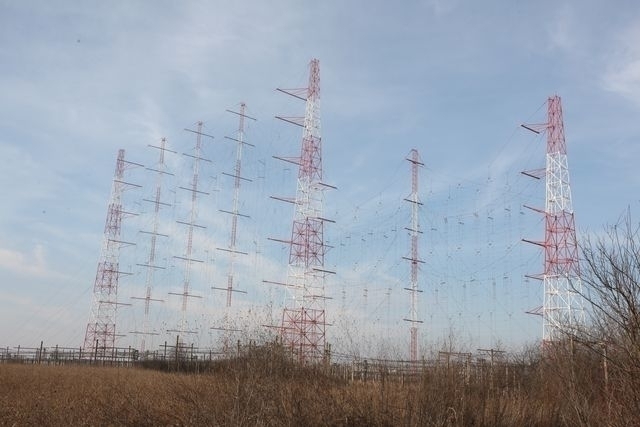
RRI’s Tiganesti-based shortwave transmitter centre (Photo source: Radio Romania International)
Many thanks to SWLing Post contributor, David Iurescia, who shares the following announcement from Radio Romania international:
Like every year, Radio Romania International is again inviting listeners to choose their favourite person in 2025.
It’s been a difficult and complicated year, with Russia’s war in Ukraine waging on, conflicts in the Middle East, natural disasters and the effects of climate change. Under these circumstances, who, in your opinion, has had the most positive influence on the world in 2025? And why?
Your choice can be a global figure or someone who is unknown to the wider public but whose story you find inspiring.
We’re looking forward to your proposals, either in text or audio format, by email, Facebook, Instagram or WhatsApp at 0040.744.312.650.
Stay tuned to find out the name of RRI’s 2025 Personality of the Year in our programmes and online on Thursday, 1st January 2026.
Many thanks to SWLing Post contributor Carlos Latuff, who writes:
Since the pandemic, I’ve been receiving news in Brazil from the Japanese agency Kyodo News, transmitted by radiofax. From now on, I’ll print the radiofax and paste them into this scrapbook, illustrating one or more news items.

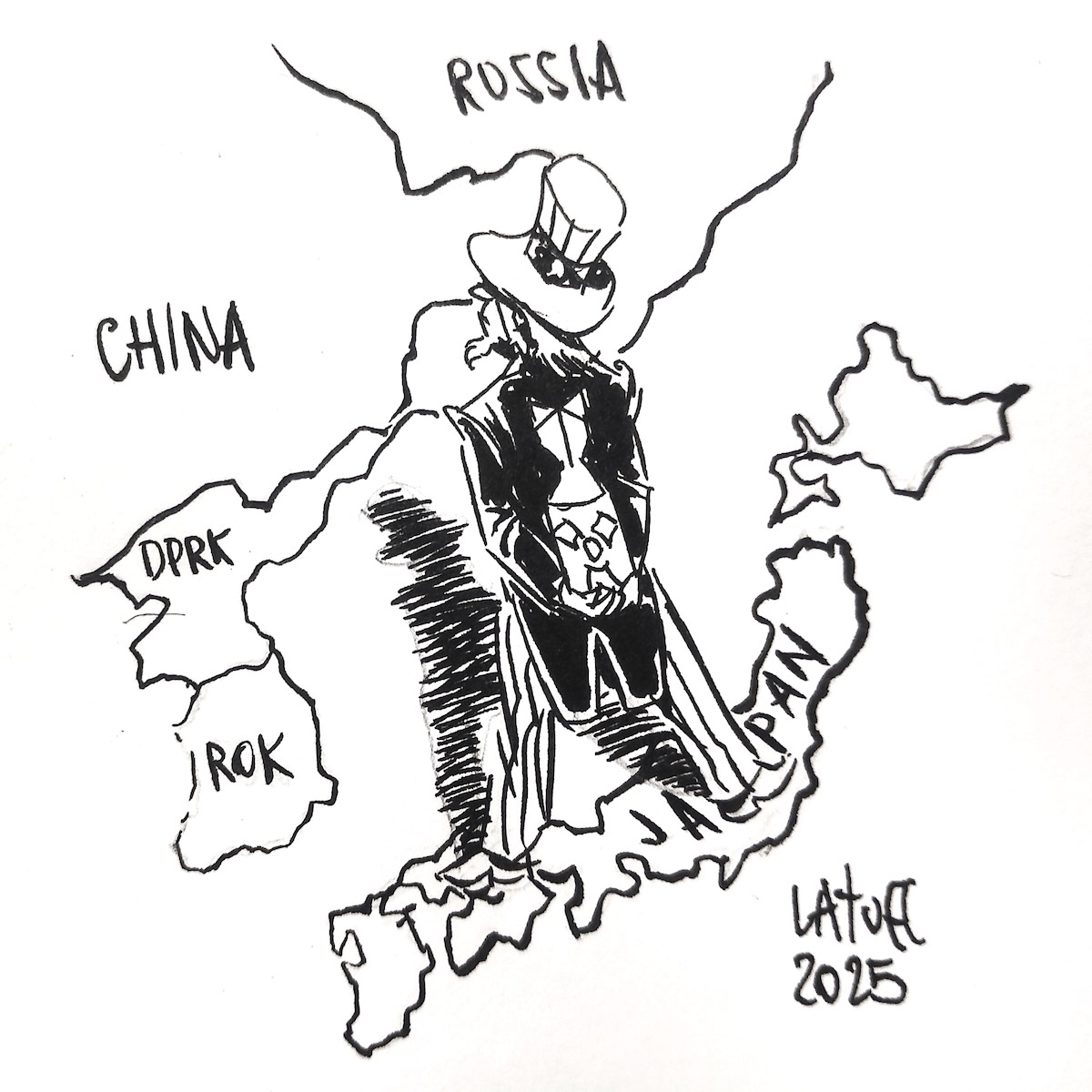
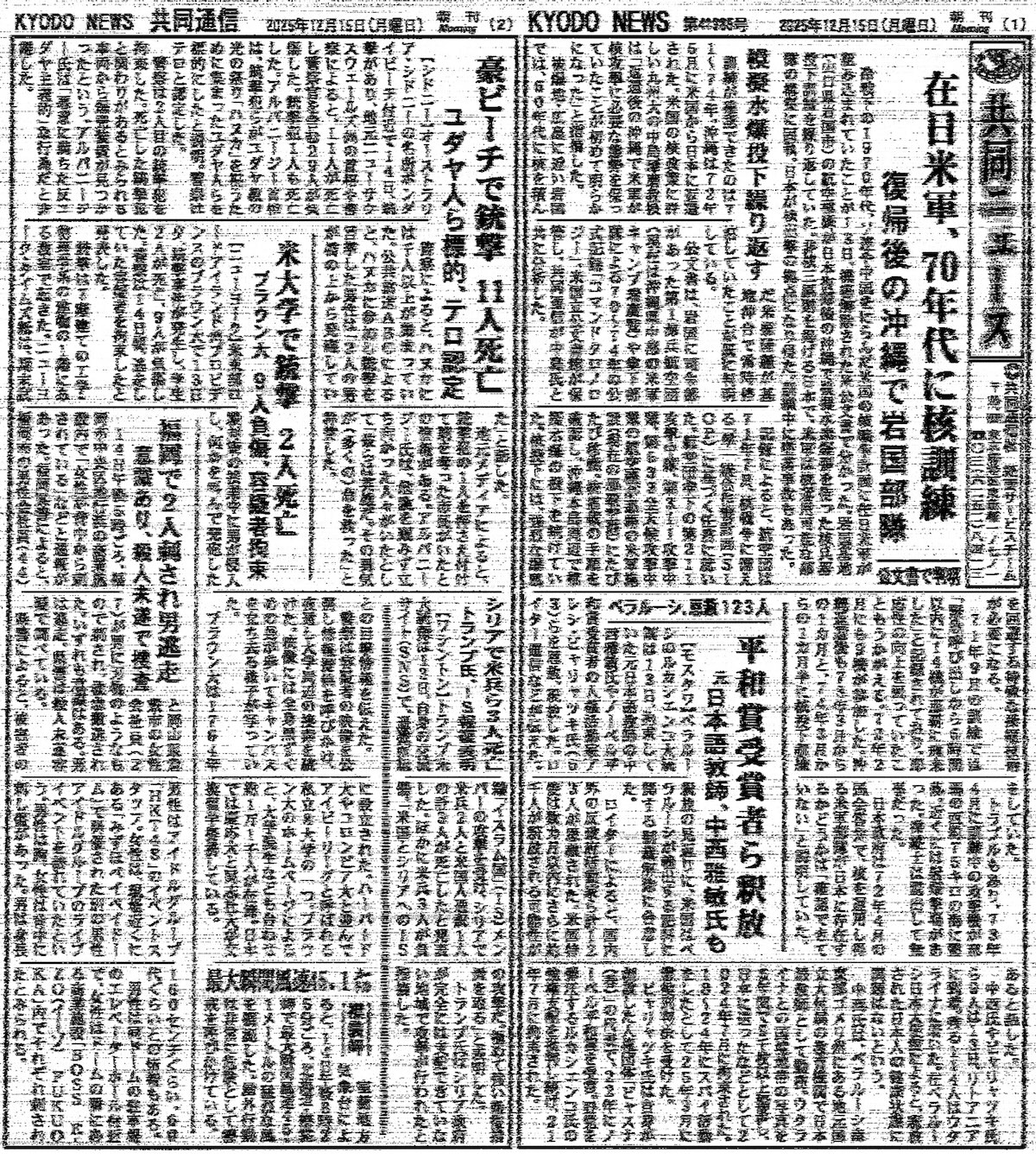 I love it, Carlos! You’ll fill that book quickly with the number of decodes you log each year!
by Dan Greenall
Shades of the 1970’s. Commercial AM radio (in English) the way it used to be. Heavy on nostalgic music from the 1960’s to the 1990’s, plenty of good old style jingles, and of course, the LM chime every hour.
 Decades ago, the “LM” used to stand for Lourenco Marques Radio as the station was based in this city in Mozambique. Today, it is Lifetime Memories Radio, and broadcasts to Maputo and the surrounding area, where it can be heard on 87.8 FM. The station also broadcasts on 702 kHz medium wave from a transmitter near Johannesburg, South Africa, and can be heard worldwide via Kiwi SDR or online stream here https://lmradio.co.za/
In addition to the live stream, be sure to read about the rich history of the station that began in 1936. The station was shut down in 1975 when Mozambique gained independence, but has re-emerged in the 21st century. A visit to the LM Radio museum is well worth the trip. https://lmradio.co.mz/history/
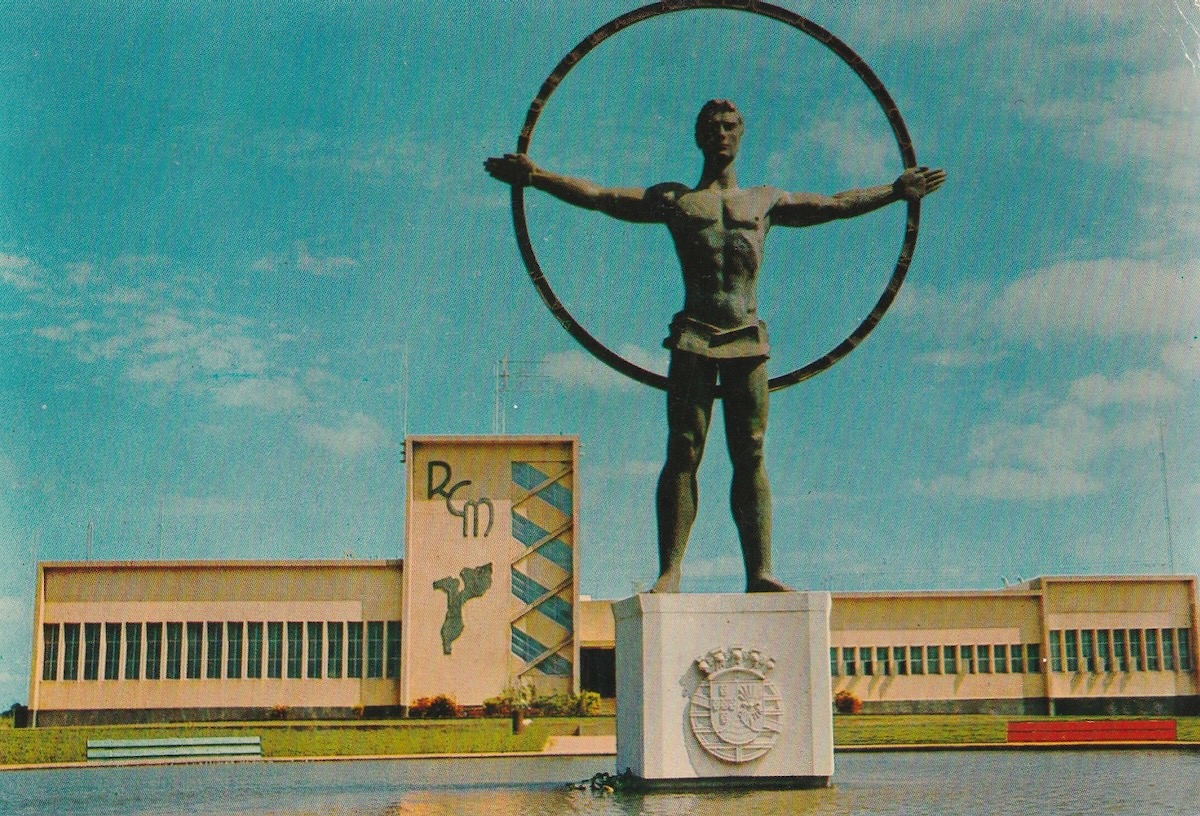
 In 1973, I was able to hear Radio Clube de Mocambique on 4855 kHz shortwave from here in Canada. If you listen closely, you can hear the LM chime.
Give them a listen, but first, check out these sample recordings made between November 27 and December 8, 2025, through a Kiwi SDR located near Johannesburg:
2025-11-27:
2025-11-28:
2025-11-28:
2025-11-29:
2025-12-04:
2025-12-08:
 Many thanks to SWLing Post contributor Ken, who shares the following announcement:
Broadcasting across the globe on shortwave radio, All Tribes Radio champions world peace through an eclectic blend of culturally diverse music, spoken word, and vintage treasures from the golden age of radio.
We offer a welcoming platform for independent artists who license their work through Creative Commons, while also sharing open-source, public-domain, Copyleft, and other copyright-free content.
Founded in 2008, All Tribes Radio (ATR) streamed Creative Commons music 24 hours a day, seven days a week, to an average of 6,000 listeners per month in more than 120 countries across every continent. With studios in Nosara, Costa Rica, ATR’s signal reached the world via an internet server in Tampa, Florida.
In 2011, streaming gave way to podcasting, resulting in the production of 68 one-hour episodes for iTunes, completed in 2012.
ATR entered a new chapter in 2020 with its first shortwave broadcasts: a weekly one-hour program showcasing Creative Commons music in English, Spanish, German, French, and Italian. These were transmitted from WRMI in Okeechobee, Florida, and Channel 292 in Rohrbach, Germany. Unfortunately, the disruptions of Covid-19 brought those broadcasts to an end the following year.
Happily, as of November 30, 2025, ATR has returned to shortwave —now transmitting exclusively from Channel 292 with 10 kW of power and a 315º beam aimed toward northern and western Europe. One-hour broadcasts can be heard each Sunday from 1400–1500 UTC on 9670 kHz. Reception reports are warmly welcomed, and e-QSL verification is available.
Click here to read more about All Tribes Radio on Ken’s Substack.
Many thanks to SWLing Post contributor Bob (K7ZB), who writes:
Hi Tom,
Bob, K7ZB here, and I was just looking at a post on your SWL site for NSS, the US Navy station which was activated back in 1918.
It brought to mind a very unique QSL card I made for a listening event back in the days that I served on board a Polaris missile submarine during the Cold War.
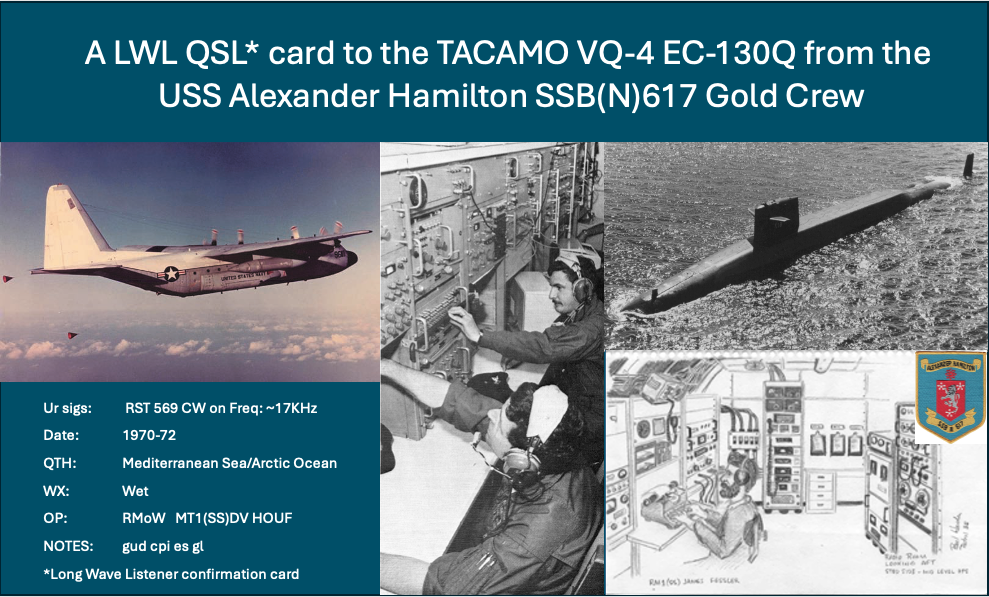
I created an “LWL” QSL card (I did this tongue-in-cheek) for Long Wave Listening confirmation of TACAMO transmissions sent from a special Hercules C-130 aircraft which was used in the event of nuclear war and the anticipated destruction of all land-based military communications capabilities. TACAMO aircraft are still in use in this system today and aviation enthusiasts track them occasionally.
The National Command Authority would issue commands to launch retaliatory nuclear strikes from our missile subs through the signals sent at VLF 17KHz from the aircraft and received by our boats while submerged.
The system is unclassified (like the Doomsday Machine in ‘Dr Strangelove” of the 1960’s film noir – if it is kept secret it is not a deterrent) so you can read about it here:
https://www.wikiwand.com/en/articles/TACAMO
I was a Missile Technician and Navy SCUBA Diver on a missile boat during the Cold War and had been a ham radio operator (WA8KEX) for 6 years prior to serving on board. When I reported to the submarine, the LPO (Leading Petty Officer) of the Radio gang was also a ham and when I spoke with him he got permission for me to qualify as a Radioman of the Watch so I could stand watches in the radio shack while out at sea on our 75 day patrols in the Mediterranean Sea and above the Arctic Circle. I did that when I was off watch back in the Missile Compartment which was my normal duty staton.
Of course we maintained radio silence during patrols but we could copy VLF when we put out our long trailing floating wire antenna when we were near but below the surface. We could then pick up the transmissions from the TACAMO EC-130Q’s flying in very tight circular patterns just above stall speed with a 5-mile long wire trailing behind them which circled down in a helical form just above the sea somewhere out in the Atlantic.
This allowed the VLF signal to travel great distances and we could then copy it while submerged.
The transmissions were digital with the exception that Morse code was also used back in my day. I served on board the USS Alexander Hamilton SSB(N)617 Gold Crew from 1969-72 for 6 patrols out of Rota, Spain.
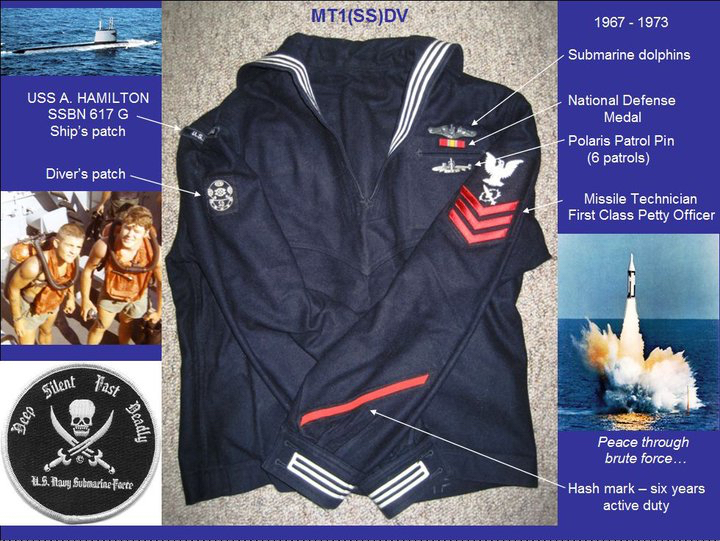
I was an MT1(SS)DV, and here is the uniform I wore. I am on the right in the photo of the two divers and with my swim buddy at the US Navy Diver School in Key West, FL (1970), who was a Recon Marine.
I or another RM (Radioman) would strap on headphones and sit at an IBM Selectric ‘mill’ and copy 5-letter code groups sent in International Morse code from a Navy RM up in the aircraft. That RM was working in tough conditions because the C-130’s had to fly at a steep angle approaching 45 degrees which put them at about 1G and they were sending on a straight key at 15wpm.
Once the messages were received I handed them off to the RM’s and then I left for the Missile Compartment because it meant we were going to have a Weapons System Readiness Test soon – a drill in preparation for the real thing.
Which never came, thank God, or we wouldn’t be seeing this email.
The special LWL QSL card I made shows a real C-130 with the antenna spooling out with its counterpoise – you can just see the drogues at the end of the wires – and the middle photo is of the aircraft internal transmitter gear where the signals were sent.
My submarine is shown in the card with our ship’s patch and a pencil sketch of what the radio shack on board an FBM Polaris submarine looked like – the RM with his headphones is sitting at the mill copying TACAMO messages.
I put a small QSL data block on the card detailing some of the conditions of a typical message received as if we had been SWL QSLing a ham station.
I posted this on my submarine’s FB group as well as the FB Submarine Radioman’s group for their enjoyment – if any of them were also hams or SWL’s they would get it immediately.
73,
Bob
K7ZB
Thank you, Bob, for allowing us a glimpse into this chapter of Cold War communications history through your unique LWL QSL. It’s a wonderful blend of personal story, service, and radio heritage.
 Many thanks to SWLing Post contributor Fred Waterer for sharing the following update from Marion’s Attic. Fred received notice of two upcoming holiday-themed episodes airing on WBCQ. Here’s the message he received:
Hello Fred,
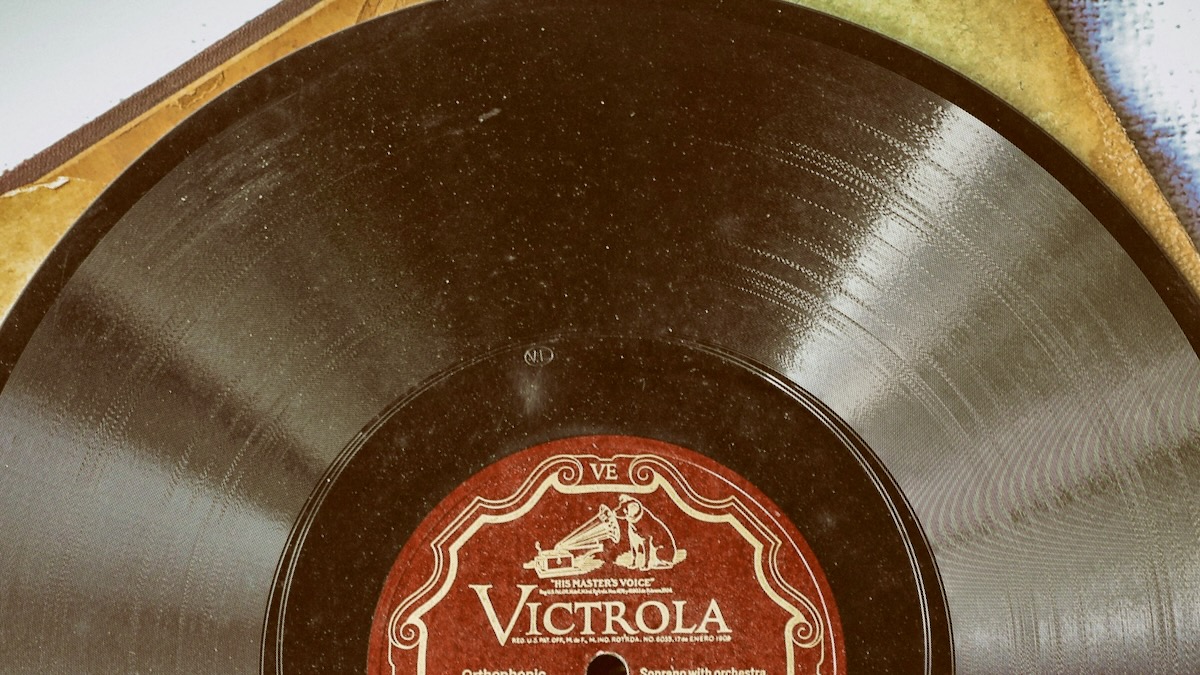
Marion’s Attic will be spinning upbeat, “Christmas Light”, 78 rpm Christmas records. T
hat will be show number 1,022, airs Sunday, December 14th, at 2200 UTC, on WBCQ 7.490 MHz.
The following Sunday, December 21st, we will be airing show number 980, featuring “Traditional” Christmas music, from the collection of phonograph expert, Baron von Knight.
Show 980 did not air last year, due to transmitter difficulties, and a web server glitch. We are pleased to air this fine program this Christmas season.
Lovingly,
Marion Webster
Marion’s Attic
WBCQ, the Planet