Author Archives: Thomas

Education Secretary covers IMER shortfall

Many thanks to SWLing Post contributor, Tracy Wood, who shares the following update regarding the potential closure of Radio México Internacional’s streaming service. Tracy notes:

The Education Secretary came up with 19.3 million pesos to cover the shortfall. Article has timelines:

https://www.elsoldemexico.com.mx/mexico/sociedad/austeridad-de-la-4t-pega-a-imer-despidos-renuncias-y-cierre-de-estaciones-3816328.html

Thanks for the update, Tracy!

“No Strong Opposition to 144 – 146 MHz Reallocation Proposal at CEPT Meeting”

Many thanks to SWLing Post contributor, Paul, who shares the following links and notes:

No Strong Opposition to 144 – 146 MHz Reallocation Proposal at CEPT Meeting
http://www.arrl.org/news/no-strong-opposition-to-144-146-mhz-reallocation-proposal-at-cept-meeting

This appears to be pushed through by France at the behest of Thales, a large and diverse manufacturer of civilian and military tech that, among other things, builds UAVs and aeronautical communication equipment. This portion of the band is allocated globally to amateur radio, and is not assigned to any commercial or (formal) public safety use. This likely makes it a valuable and easy target for reallocation for an entity wishing to operate on it globally.
https://www.f4fxl.org/update-on-the-threats-on-2m-amateur-band/

In the UK, the Radio Society of Great Britain (RSGB) is leading the charge to stop this in Europe:
https://www.change.org/p/rsgb-stop-the-2-meter-band-144-146mhz-being-taken-away-from-radio-amateurs

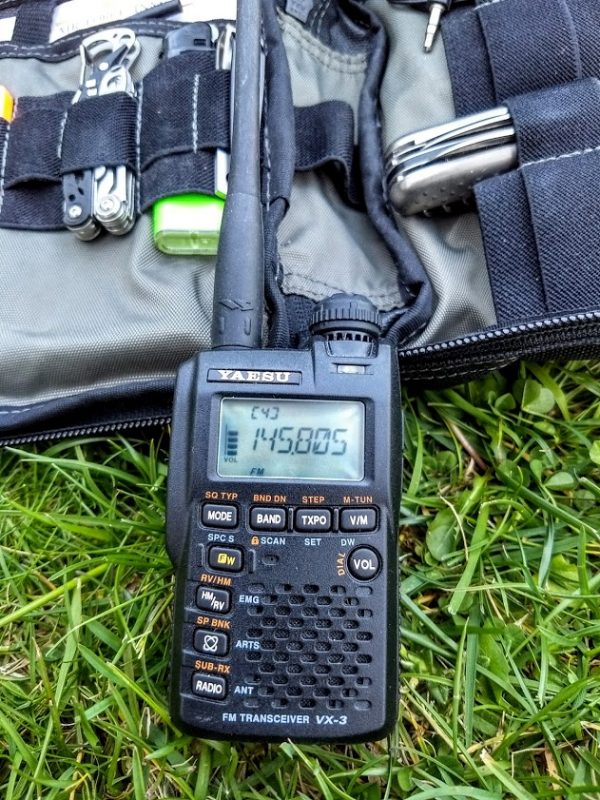
The loss of this band would really hurt ham radio. The cheap Baofeng VHF radios that use this band are probably second only to the RTL-SDR for enticing people into the radio hobby.
Use of this band is not limited to amateur radio novices who are new to the hobby; during emergency/disaster relief, the 2m VHF amateur bands are the among the most used bands due to how inexpensive the radios are. By creating an ad-hoc network used as a failsafe when cell towers and internet services could be offline for an indefinite period of time, civilians are able to save lives when police and and EMS are allocated at their capacity.

Thanks for sharing this, Paul. It seems this issue has gotten the attention of all of the major amateur radio associations.

Grand Solar Minimum may lie ahead according to an article in Nature

(Image: NASA)

(Source: ARRL News)

juried research paper in Nature, “Oscillations of the baseline of solar magnetic field and solar irradiance on a millennial timescale,” suggests that a “grand solar minimum” — similar to the legendary “Maunder Minimum” — is approaching, starting as early as next year and lasting for three solar cycles. That would be bad news for HF enthusiasts, who are already struggling with marginal conditions.

As the paper’s abstract explains, “Recently discovered long-term oscillations of the solar background magnetic field associated with double dynamo waves generated in inner and outer layers of the Sun indicate that the solar activity is heading in the next three decades (2019–2055) to a Modern grand minimum similar to Maunder one.”

As propagation buff and contester Frank Donovan, W3LPL, observed, “It’s very uncertain if this forecast is correct, but as usual the forecasts of the next solar cycle are all over the map. Let’s hope these scientists are wrong.”

Click here to read this article via the ARRL News.

LightSail 2 to transmit Morse Code ID on 437.025 MHz

(Source: Southgate ARC and ARRL)

The Planetary Society’s LightSail 2 CubeSat, launched on June 25, will transmit Morse code from space.

LightSail is a citizen-funded project to send a small spacecraft, propelled solely by sunlight, into Earth’s orbit. The innovative satellite is due to be deployed on July 2 from Prox-1, a Georgia Tech student-built spacecraft the size of a small washing machine.

Once deployed, LightSail 2 will automatically transmit a beacon packet every few seconds, which can be decoded into 238 lines of text telemetry describing the spacecraft’s health and status, including everything from battery status to solar sail deployment motor state. Every 45 seconds, the spacecraft will transmit “LS2” on the spacecraft’s frequency of 437.025 MHz, within the Amateur Radio 70-centimeter band.

Further details can be found online at,
http://www.planetary.org/explore/projects/lightsail-solar-sailing/ .[…]

Click here to read the full article at the Southgate ARC.

Can you identify this Hallicrafters model onboard the Columbine III?

The Lockheed VC-121E “Columbine III” (Image Source: USAF Museum)

Many thanks to SWLing Post contributor, Robert Yowell, who writes:

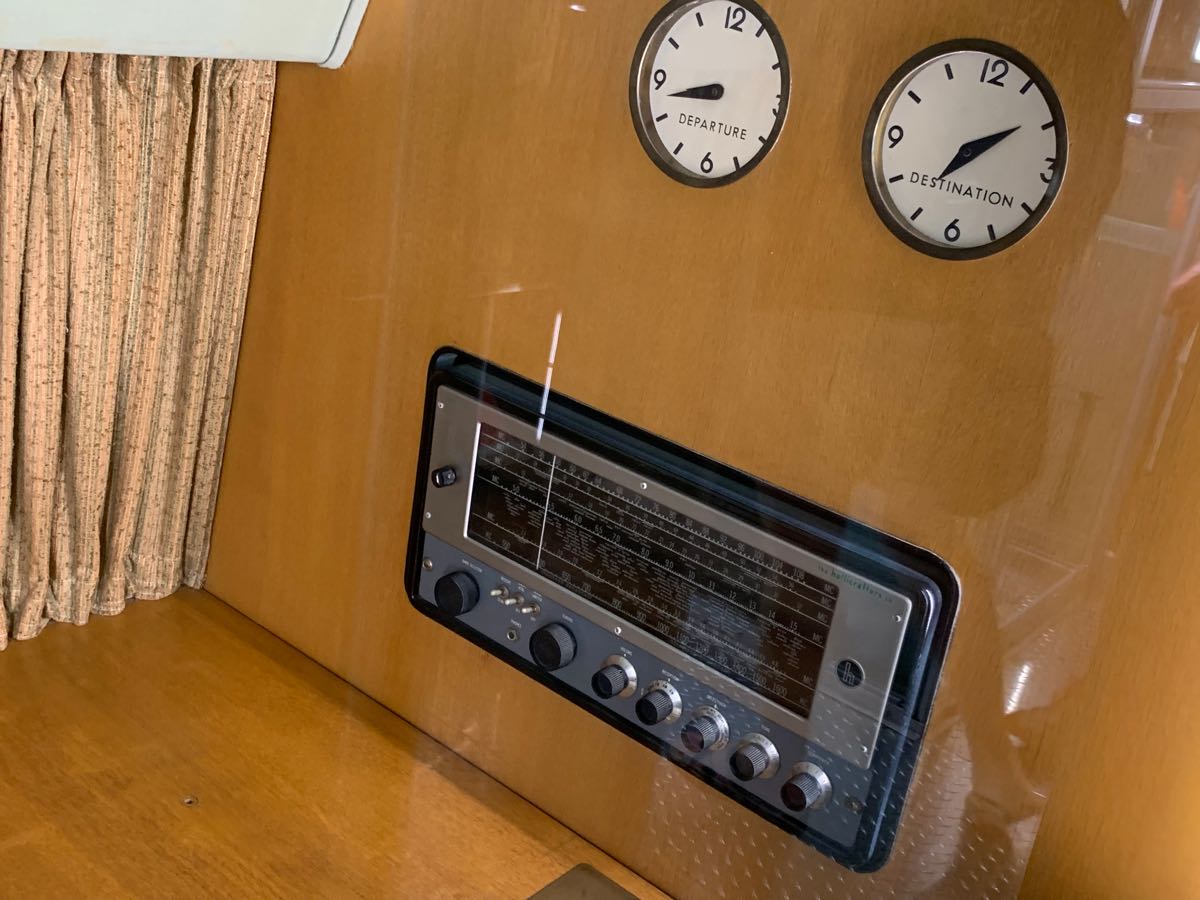
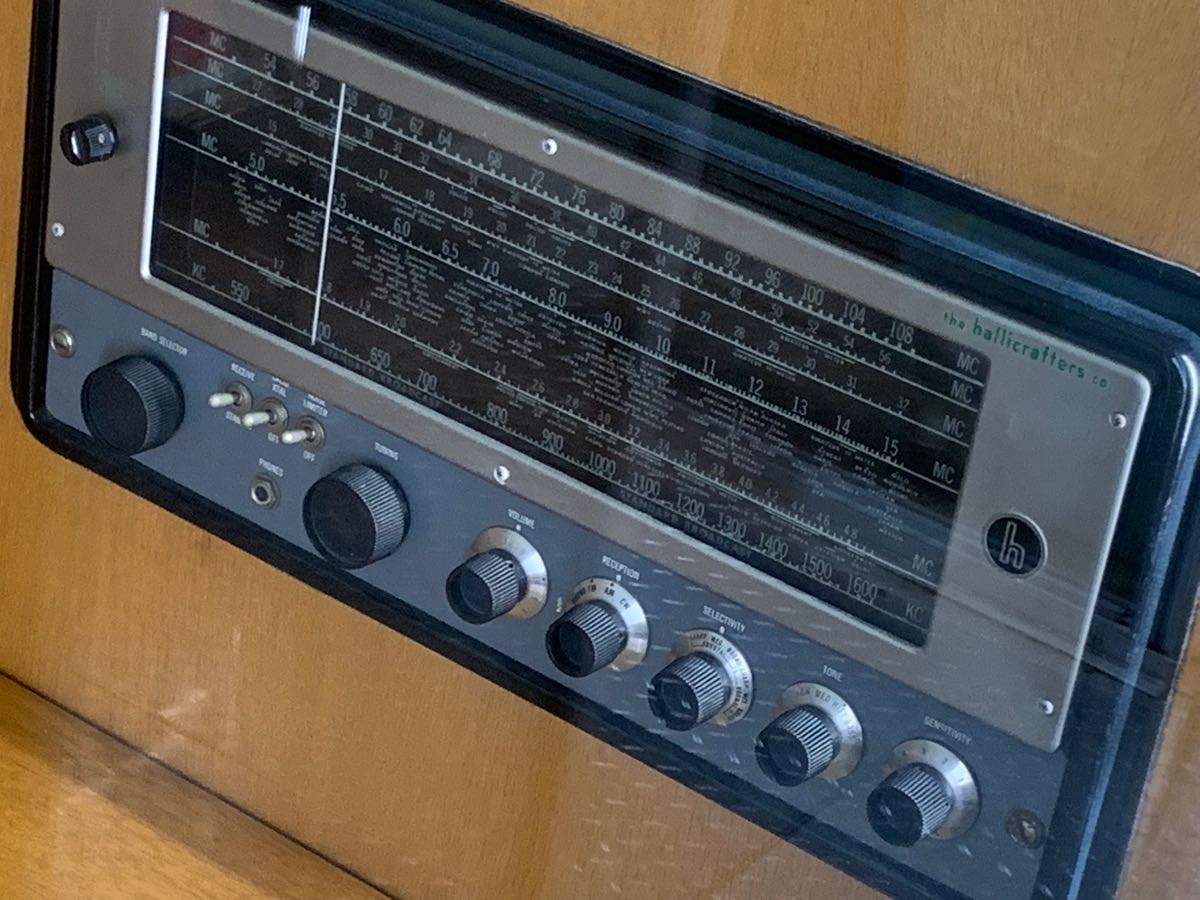
I was visiting the US Air Force Museum [Friday] and walked through “Columbine III” which was the Lockheed Constellation used as Air Force One by President Eisenhower from 1954 until he left office. In the back of the cabin was a nice cozy area where this Hallicrafters receiver was installed – ostensibly for the passengers to listen to news or other events while in flight.

I am sure one of your readers will be able to identify which model it is.

Can you imagine flying in this gorgeous Lockheed VC-121E four prop aircraft and listening to HF radio from a built-in Hallicrafters set? Wow…

Thank you, Robert, for sharing these photos. The National Museum of the US Air Force is one of my favorite museums in the world. I bet I’ve visited it more than a dozen times over the past decade–always a treat and always something new to discover!

Post readers: Can you identify this Hallicrafters model?  Please comment!

Russia to test DRM over FM

(Source: Radio World via Michael Bird)

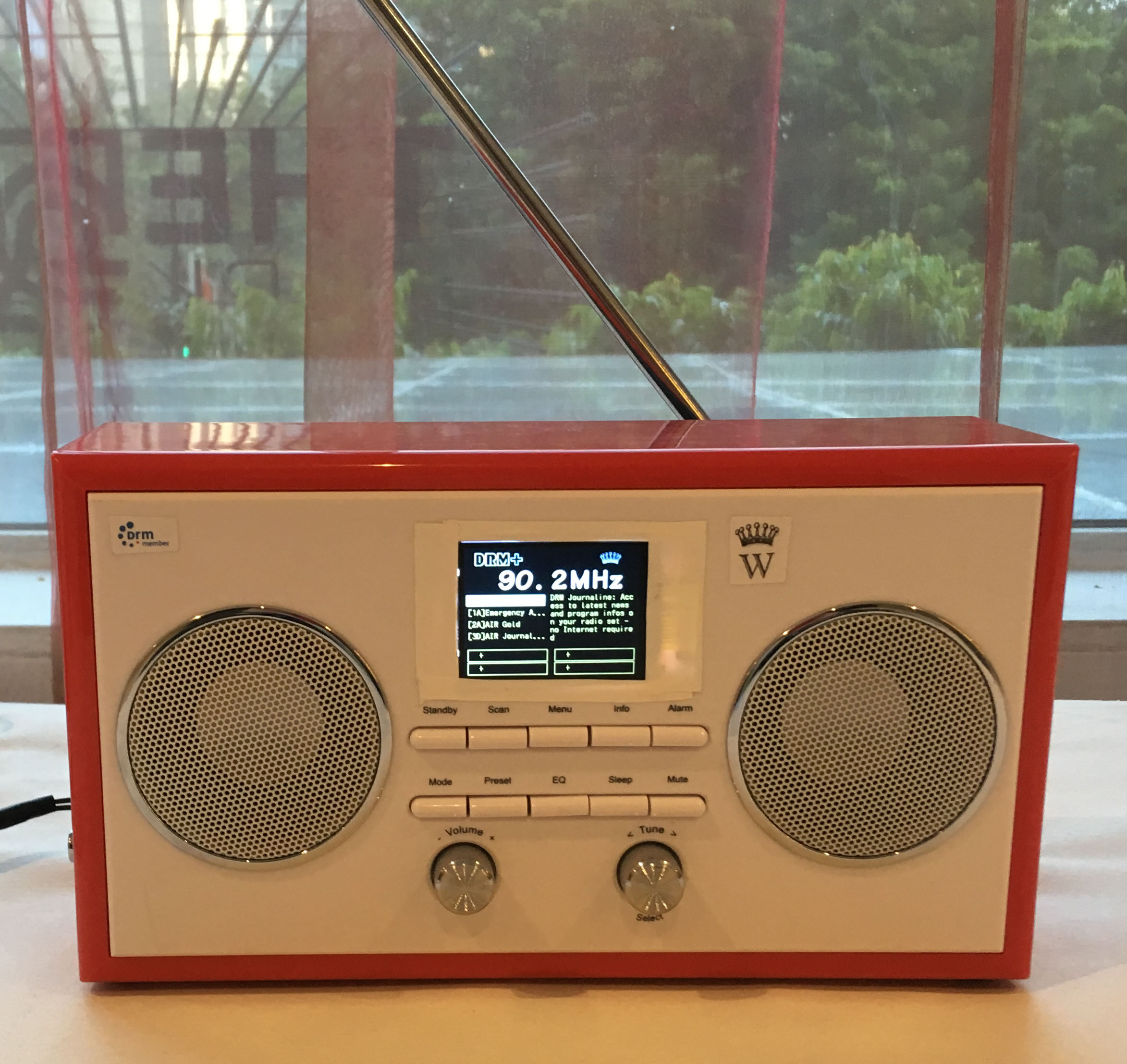
Russia will begin testing the Digital Radio Mondiale digital radio standard in the FM Band in July in St. Petersburg.

Russian firms Digiton and Triada TV are working with Fraunhofer IIS, RFmondial, chipmaker NXP and others to carry out the pilot.

The organizers will install a DRM-capable transmitter mid-July and begin regular simulcast broadcasts (DRM for FM) immediately after site acceptance checks are complete. The transmitter will reportedly be on air for six months and have an analog transmitting power of 5 kW and a digital output power of 800 W.[…]

Click here to read the full article at Radio World.

Radio México Internacional to disappear

Many thanks to SWLing Post contributor, Tracy Wood, who writes:

Radio México Internacional will disappear (again)…web stream to sadly go away.

Tracy referenced this article (in Spanish) from El Sol de México. The following excerpt was translated to English via Google Translate:

A grim picture was presented to employees and workers of the Mexican Institute of Radio (IMER), since the budget cut would technically lead to “paralysis” and a labor liability of seven million pesos before the dismissals.

In an audio, which was obtained by El Sol de México, the workers and collaborators were explained that “the IMER does not have the capacity to hire anyone. Neither in fees nor as a freelance, ” he says.

[…]But the recount of the damages that the IMER will have for the lack of resources is that “four stations will disappear in their entirety: Radio Mexico International, World Music, HD Interference and Digital Jazz. There will be no hearing advocate, which is why article 259 of the Federal Telecommunications and Broadcasting Law is not followed. “

Very sad news. While RMI hasn’t been on the shortwaves since 2004, they have maintained a web presence.

Thank you for sharing, Tracy.