Category Archives: Books

Review: The Worldwide Listening Guide

The Worldwide Listening Guide by John Figliozzi

On the SWLing Post, I write an annual review of the World Radio TV Handbook–a fantastic and comprehensive frequency guide, with a focus on broadcasters and frequencies, though it certainly lacks the programming detail–i.e. content–I so enjoyed in the late Passport To World Band Radio.

That’s where John Figliozzi’s The Worldwide Listening Guide (WWLG) comes in–in short, I think you need a copy in your shack, not to mention, next to your computer.

The Worldwide Listening Guide is like no other frequency/schedule guide you’ll find on the market. First of all, it’s instantly apparent that the author, John Figliozzi, is a DXer, since the book has a spiral bind–which permits it to lie flat when open, and allows the pages to be folded back to take up less table space. A small detail, but important for those of us who want an easily accessible reference in the shack. Figliozzi, moreover, is a noted SWLer, a long-time active member of the North American Shortwave Association, co-host of the annual NASWA Winter SWL Fest in Plymouth Meeting, PA–and did I say, a great guy?

But back to the book: perhaps what makes the WWLG so unique is its comprehensive look at “radio” listening in general, guiding the reader through the many forms radio content now takes:  live, on-demand, WiFi radio, podcasts, satellite, internet, AM/FM and, of course, shortwave radio. He explains the pros and cons of each delivery method and a little about its utility. I thought that I wouldn’t gain a lot from these beginning sections as I’m quite familiar with all of them, but was pleasantly surprised to find all sorts of interesting facts hidden within; no doubt you will, too. Figliozzi also spends a good deal of time time covering the various devices–such as WiFi radios, satellite radios, apps, shortwave radios, portables–that have become indispensable tools of the trade.

Program details like no other

My favorite part of WWLG, and the sections I turn to the most, are those covering programming and content. Figliozzi exhaustively curates more than 4,000 programs sorted by time of day, station, days of broadcast, program types, their frequencies and web addresses. He also sorts the listings by genre:  from the arts, culture and history, to music, sports and more. In fact, he has a well-thought-out list of 34 genres that have helped me locate programming I would have otherwise have never known about. For example, SWLs will find his “Media and Communications” genre listing programming from Allan Weiner Worldwide, Glenn Hauser’s World of Radio and DXers Unlimited to Click and Tech Nation. Each listing tells you exactly when you can catch the program, and where.

What’s also great is the fact that if I find a program I like, I can cross-reference its offering on shortwave–and, if I miss that, I can look up where to find it on demand, on the internet.

A program guide with longevity

I have the 5th edition of The Worldwide Listening Guide–the latest. While I like to have an annual guide, I actually believe this guide will be valid for several years. True, some programming comes and goes–as we’ve seen shortwave stations leaving this year–but, Figliozzi also actively maintains a companion website, The Worldwide Listening Guide Online, which he keeps up-to-date with the latest changes; there is even a blog with his comments and news items. He tells you when to cross out and change listings in your WWLG as programming evolves.

In short, I like the WWLG and have decided that it will become a permanent reference book in my shack, along side my trusty WRTH. There is a surprising amount of information packed into this slim, spiral-bound book. Enough to keep even the seasoned DXer happy for years.

The Worldwide Listening guide can be purchased here:
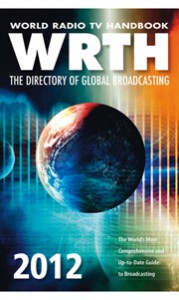
Updates to the WRTH Summer A12 schedules are now available for download

The World Radio TV Handbook (WRTH) has updates their A12 International Radio Supplement as of July 13. The file is now available to download, free of charge, from the WRTH website. This is a comprehensive update and supplement to the printed 2012 WRTH.

Updates to the WRTH Summer A12 schedules are now available for download

The World Radio TV Handbook (WRTH) A12 schedules updates file is now available to download, free of charge, from the WRTH website. This is a comprehensive update and supplement to the printed 2012 WRTH.

(Source: Sean Gilbert, WRTH)

The WRTH Editorial team is pleased to announce that the Summer/’A’ season broadcasting schedules file is now available to download, free of charge, from the WRTH website – click on http://www.wrth.com/ and follow the link “Latest PDF Updates”.

The file is in PDF format (you will require the free Adobe Acrobat reader to open this file. If you do not have the Acrobat reader, please visit http://www.abobe.com/ to download and install it). The 86 page file is approximately 4500kB in size and contains the following information:

Summer / ‘A’ Season broadcasting schedules for over 200 international and Clandestine/Target stations;

Frequency listing of the above stations to facilitate band scanning;

Broadcasts in English, French, German, Portuguese and Spanish;

International DRM broadcasts.

Please feel free to pass this information on so that we may reach as many SWL’s, DX-er’s and professionals as possible.

For contact details, transmitter sites and much more, please refer to the printed WRTH, which is available to order from the website.

We hope you find this a useful accompaniment to the printed WRTH.

On behalf of the publisher and editorial team at WRTH, happy listening!

73,
Sean D. Gilbert,
International Editor – WRTH (World Radio TV Handbook)

CIA: A History of the Foreign Broadcast Information Service

I just stumbled upon this fascinating history of the CIA Foreign Broadcast Information Service and thought SWLing Post readers might enjoy browsing it as well. This  is a history of the early, pre-CIA, years of the Foreign Broadcast Information Service. It was published with a classification of “Confidential” in 1969 and fully released to the public by the CIA’s Historical Declassification Division in 2009.
Click here to go to the CIA website, or download each chapter via links below:

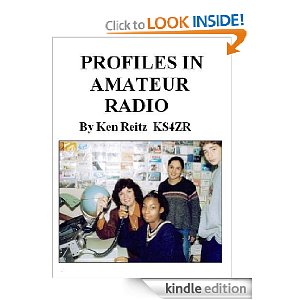
Profiles in Amateur Radio

Ken Reitz, Features Editor for Monitoring Times magazine, has published a new eBook called, “Profiles in Amateur Radio.” It features stories and biographies from a lengthy list of radio personalities/figures (including  yours truly!). A common theme in many of these personal radio histories is an interest in amateur radio that was built on a foundation of  shortwave radio listening.

PRESS RELEASE

February 3, 2012

Profiles in Amateur Radio

By Ken Reitz KS4ZR

A new Kindle e-book now available at the link below

Profiles in Amateur Radio” is a collection of nineteen articles taken from the First Person Radio series that appeared over the last three years in Monitoring Times, a national monthly magazine about all things radio, now in its 32nd year. It’s a three part look at the inspirational life stories as told in the words of those on whom shortwave and amateur radio has had a lifelong impact. The book is edited by Ken Reitz KS4ZR, a freelance writer since 1988, Features Editor for Monitoring Times, and author of the Communications and Beginner’s Corner columns which appear monthly in the magazine.

Profiles in Amateur Radio Table of Contents

  • The Uncommon Life of Charlie Gyenes W6HIQ — by Ken Reitz KS4ZR
  • In the Right Place at the Right Time — by Bob Heil K9EID
  • Life’s Been Good to WB6ACU — by Ken Reitz KS4ZR
  • How I Survived Self-Electrocution, Fame, Congress and the Publishing Industry — by Bob Grove W8JHD
  • Reading, ‘Riting and Radio — by Carole Perry WB2MGP
  • CQ at 51,000 Feet and Mach .85 — by Rick Dougherty NQ4I
  • If You’re Old Enough to Read, You’re Old Enough to Get Your License — by Mattie Clauson AE7MC
  • A Life of Service in Amateur Radio by Harry Dannals W2HD
  • My Half-Century in Radio — by Ron Walsh VE3GO
  • A Love of Listening — by Thomas Witherspoon K4SWL
  • My Lifelong Fight for Free Speech Radio — by Allan Weiner
  • Obsessed by Time and Shortwave Radio — by Myke Dodge Weiskopf
  • Crystal Set Leads to Lifelong Hobby and Career — by Maury Midlo
  • Shortwave from Both Sides of the Microphone — by Jeff White
  • A Most Unlikely Radio Career — Keith Perron
  • Radio Dreams of a Lifetime — by Jack K. Neal W8AQ
  • Amateur Radio and Education in America — by Ken Reitz KS4ZR
  • The LBJ High School Experience — by Ronny Risinger KC5EES
  • CQ DX from KC7OEK — by Nick Casner K7CAS, Cole Smith KF7FXW and Rayann Brown KF7KEZ

Updates to the WRTH B11 schedules are now available for download

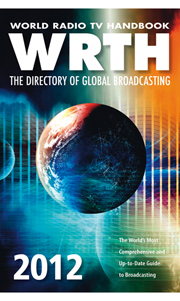
The World Radio TV Handbook (WRTH) B11 schedules updates file is now available to download, free of charge, from the WRTH website. This is a comprehensive update and supplement to the printed 2012 WRTH.

2012 WRTH: A Look Inside

I just received my eagerly-anticipated copy of the 2012 WRTH directly from the publisher and, as ever, jumped right into their articles and reviews.

Like many radio listeners, I always look forward to the newest edition of the WRTH. It takes its rightful place at arm’s length next to my main receiver. Even though I use online frequency guides, I find they generally lack the detail and foresight that WRTH delivers.  And much more than just a listing of frequencies, WRTH’s radio reviews, feature articles, and HF report make for excellent reading.

On that note–this year, WRTH reviews several noteworthy shortwave receivers: the Alinco DX-R8E (the European version of the DX-R8T which we reviewed), the Reuter Elektronic RDR54C, WinRadio Excalibur Pro, Sangean ATS-909X and the Tecsun PL-660. They also take a look at the very affordable Pappradio DRM SDR receiver. The WRTH review mix always covers the receiver spectrum, from portables to professional, tabletops to SDRs.

The 2012 WRTH edition also gives a simple primer on the terminology and techniques used for evaluating receiver performance–e.g., sensitivity, selectivity, dynamic range, etc.–a worthy reference for anyone who routinely reads radio reviews.

I always enjoy their human-interest articles as well. In this edition they take us to the remote–I should say, most remote–Atlantic island, Tristan da Cunha; report on radio’s involvement (or lack of it) in the “Arab Spring;” and visit our good friends at Radio Bulgaria.

But, of course, the reason we all buy WRTH is for their in-depth comprehensive radio schedules for the upcoming year. How comprehensive are they? Check out the results from the annual comparative analysis of WRTH vs competitor guide Klingenfuss at the end of this post. Personally I can’t do without my WRTH–as I’ve often said, this indispensable go-to reference guide is the source for my shortwave listening fare.

Purchase your copy of WRTH directly from WRTH’s publishers, or from a distributor like Universal Radio (US) or Radio HF (Canada).

If you’re new to WRTH, note that they regularly update changes to their schedules throughout the year:  go to their website to download these updates.

If you would like to know more about using WRTH’s schedules, please see one of our previous posts.

How does WRTH compare with other frequency listings? Sean Gilbert posted the following on WRTH’s Facebook page:

The annual comparative analysis of WRTH vs Klingenfuss has just been published. I am pleased to announce that, once again, WRTH has proved more accurate and comprehensive than the Super Frequency List as regards Shortwave broadcasting (which is the area this study concentrates on). Overall we scored 98.4%, compared to the SFL which scored 97.6%. Breaking this down out of a possible 125 points for international broadcasting, we scored 124, whereas SFL scored 120. For domestic broadcasting, WRTH scored 122/125 and SFL scored 124/125, so the SFL just has the edge. This is caused by WRTH not including the full schedule for some of the tropical band stations in SAm. Here is a comment extracted from the report:
——-
“I still consider it useful, if the Handbooks also can provide the DX-er with additional information about Geographical Coordi-nates for his propagation calculations and Google Earth search, and ID in the language heard. Furthermore it is necessary to know current addresses (postal, e-mail and web) and QSL-policy for his reception report writing. For listeners with Broadband internet (ATDL) is it also useful to know, if the station broadcasts live audio on the web.

Most of these useful details can be found in the WRTH, but they are still missing completely in the SWFG !

The Handbooks are very useful for the DX-er and ordinary shortwave listener and are at a very high accuracy level and can hardly be much better!”
———
This fantastic result is down to the extremely hard work and dedication of all our country editors, contributors, monitors and, of course, the 3 main international sub editors who gather the majority of the information for the section. Without their enormous knowledge and skill, the section would not be what it is today. Finally we must not forget the publisher who has, amongst many other things, the unenviable job of doing the final setting and making it all fit into the available space – more difficult than it sounds, believe me!!

[…]Best wishes and regards,

Sean Gilbert – International Editor.