Category Archives: Broadcasters

Fabiano provides an English transcript from the final shortwave transmission of Radio Trans Mundial (RTM)

Many thanks to SWLing Post contributor, Fabiano Barufaldi, who kindly volunteered to translate an important conversation between the RTM Director of Communication and the Director of Studios and Technical Affairs in the final shortwave broadcast of Radio Trans Mundial (RTM).

Click here to read our original post and listen to recordings of the final broadcast in Portuguese.

Read Fabiano’s translation of the dialog below:

<– BEGINNING OF TRANSCRIPT –>

Hello Dear Listeners! It’s 2:46pm.

With us are André Castilho, our director of communication and also Samuel Marcos, director of studios and technical affairs, live.

Good morning all. It’s a pleasure to be in front of such important microphones in the history of Brazilian gospel radio.

First of all, I’d like clarify that we’re not the founders of Radio Transmundial, which was founded in 1970 in Brazil, initially transmitting from Bonaire in the Antilles in the Caribbean Sea, covering the entire Brazil’s territory in shortwave and mediumwave, reaching most of South America. They decided to discontinue the shortwave operation in the early 1990’s; they have recently resumed the 440KW power transmission from Bonaire, now with better quality, reaching the Amazon region and even listeners in the southern Brazil in MW 800kHz.

When the Trans World Radio (TWR) shut down its shortwave transmission, the Radio Transmundial (RTM) decided to invest in shortwave in the 1990s acquiring a transmission site in Santa Maria – RS, Southern Brazil, in three shortwave frequencies, covering up to 80% of the Brazilian territory. Recently, the Bonaire site increased the MW transmission power, reaching a greater territory share.

Talking about the 1990’s, a new, powerful transmitter was acquired for the Brazilian Santa Maria site, we always have been praised because of the quality of the transmissions. Our site was built with great diligence and care, mainly by Mr. Walter Wilke, who did excellent work during 20 years of dedication to our shortwave site, with the best equipment and sound, using three shortwave frequencies during these years that are now coming to an end.

That’s sad news, we’re not happy to say that but it’s an important, necessary announcement that the RTM shortwave transmissions are being shut down this midnight. We had ended the 31 meters transmission, now we’re ending the 25 meters, 49 meters also, and we are so sorry about that.

We have been asked by our listeners the reason, and it’s important to notice that this decision wasn’t made yesterday. We’ve been studying this matter since at least an year ago, considering the reach and audience and, of course, the financial aspects of it. The RTM has been keeping the shortwave transmission site and the equipment in excellent codition and, until now, Lord has provided the financial ways to maintain the operation but considering the low audience, the return of Bonaire to shortwave in high power, and elevated power expenses; all those factors contributed to take the decision some time ago of ending the operations – a decision that was matured – and now comes the time that we are finally shutting down the shortwave transmissions.

The summary of our decisions was that the audience was too low so it was not being worth to keep such expensive shortwave structure. To give our listeners a rough idea, when we increased the power (50kW to 25 meters, 10kw to 31 meters and 7.5kW to 49 meters) we had to hire a custom, special grid with the local power company – and that costs!! We are a non-profit organization, funded by voluntary donations, so we need to be very careful with our budget. It’s sad to say that, because we love the radio, but the audience was very low, not being worth expending that amount of money.

We are living a new tech era, so we as a mass media organization must be care about of our own survival, that’s why we took that decision and also because we’re experiencing over the years great increase in audience through the internet and by the local affiliates network as well.

Still talking about costs, our transmission equipment is nearly 20 years old, although it was bought brand new and being well kept by Mr. Wilke, it’s an old equipment that demands expensive maintenance because it’s imported equipment running on valves. To give you listeners and idea, a burnt valve had to be recently replaced and costed nearly 5,300 USD, so that give us an idea of how expensive is to keep that, beside the monthly power costs.

We have brainstormed on how to reach poor, isolated communities (Indian, forest people) with no access to new technologies for example by providing them our content stored in memory cards – we received reports of missionaries, social workers assuring that this is being welcomed. We’re also working to increase partnership with local stations to relay our content.

…[now they list some of the local affiliates currently relaying content throughout the Brazilian territory]…

There is a reason for us to be ending the shortwave transmissions on this particular day (August 8, 2018) – this is because our shortwave broadcasting license is expiring today, so due to the reasons explained above and also because the government’s bureaucracy, we are not going to renew it.

We are sorry for the listeners who have in the radio the only way of getting our content, the DXrs as well, but that’s a cost vs audience matter.

We’re having an average of 50,000 unique listeners over the Internet, some others through local affiliates, so we have to be responsible with our budget and focus on getting return over the investment, providing accountability to the donors.

[… now they explain how to listen over the station website or from the mobile app.. “ask your nephew how to do it LOL :-)” ]

[the host greets them by the detailed explanation on how the broadcast license process works, the costs and bureaucracy]

We thank our listeners for the support, care and understanding. We’ve been passionate shortwave listeners forever and that’s probably the reason why we do this for a living today.

New technologies arise in an incredible speed in these days–getting cheaper too, enabling more people to benefit from them.

Some people understand that in a near future the technologies will be unified and we will end on having a single media device for all content (TV, radio, internet, communications, etc), mostly cheap or even for free.

That will not be a happy day…that’s a sad day instead – we’d like to continue with shortwave broadcasting but we’re getting empathy and understanding from most of our listeners – we’re not stopping, the RTM keeps on going.

Thank you all for understanding and for your care; keep following us over the Internet, we’ll also be broadcasting every hour the list of local affiliates network.

Access our website at: https://www.transmundial.com.br/

… now they play the station’s identification jingle

… resuming the regular programming…

< END OF TRANSCRIPT >

On behalf of the whole SWLing Post community, I’d like to thank you Fabiano for taking the time to write up this excellent translation. This commentary was insightful and without your help, I would have never been able to understand or appreciate it.

Muito obrigado, Fabiano!
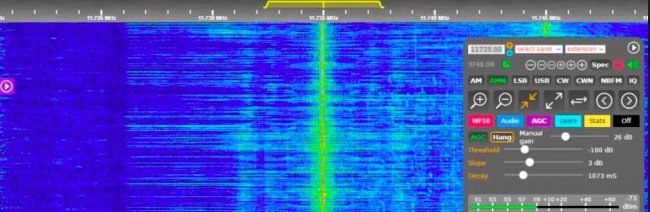
Dan records the final transmission of Radio Transmundial Portuguese

Many thanks to SWLing Post contributor, Dan Robinson, who shares the following notes about the final transmission of Radio Transmundial. [Dan made this recording yesterday, but Internet woes here at SWLing Post HQ prevented me from posting this until now.]

Dan writes:

FYI — I am monitoring Radio Transmundial via [the PY2BS KiwiSDR in] Brazil. They are in the midst of a final discussion in Portuguese between two announcers, mentioning advances/changes in technology, Internet, etc. that are forcing the station off the air. Many mentions of shortwave.

See attachments…..audio files are of studio discussion in Portuguese about their decision to end SW….then another file going right up until 1900 UTC or thereabouts when they went off.

At about the 9:36 mark in the 1st audio file announcer introduces a technical person (sounded like someone from TWR, but also mentioned was “director of communications”) to begin a discussion about their decision to end shortwave — that discussion lasts until about the 34:30 mark when they go into full IDs.

Click here to download audio file.

Second audio file you can hear Zanzibar gradually fading up and dominating the frequency, then in the clear after Transmundial goes off 11,735.

Click here to download audio file.

Would be very interesting to translate this conversation for a post on SWLing.

Perhaps SWLing Post readers with a knowledge of Portuguese could help us with any interesting details from this conversation? Please comment! UPDATE: Many thanks to SWLing Post contributor, Fabiano Barufaldi, who has volunteered  to help translate some of the key points from this broadcast!

Dan, thanks for grabbing a recording of this final Transmundial broadcast. When my Internet connection is fully functioning again, I will add these recordings to the Shortwave Radio Audio Archive.

The Shipping Forecast featured on 99% Invisible

Many thanks to SWLing Post contributor, Eric McFadden (WD8RIF), who notes that one of my favorite podcasts, 99% Invisible, has featured The Shipping Forecast in their latest episode:

Four times every day, on radios all across the British Isles, a BBC announcer begins reading from a seemingly indecipherable script. “And now the Shipping Forecast issued by the Met Office on behalf of the Maritime and Coastguard Agency,” says the voice over the wire. “Viking, North Utsire; southwesterly five to seven; occasionally gale eight; rain or showers; moderate or good, occasionally poor.” Cryptic and mesmerizing, this is the UK’s nautical weather report.

The Shipping Forecast is “part of the culture here,” muses Charlie Connolly, author of Attention All Shipping: A Journey ‘Round the Shipping Forecast. “It’s a much loved institution. People regard it as poetry.” Connolly grew up listening to the forecast. Even now, as an adult, he sets his alarm so he can tune into the early morning forecast.

The story of this radio program starts (well before the BBC itself) in the 1850s with a man named Admiral Robert FitzRoy. He was the captain of the Beagle, the ship that brought Charles Darwin to the Galapagos.

FitzRoy had a long, sometimes controversial career, but later in his life he became fascinated with the study of weather prediction.[…]

Continue reading and listen to this episode at 99PI.

As many of you know, I’m a big fan of The Shipping Forecast and have featured it in past posts. Thanks for the tip, Eric!

Guest Post: The Days of AM Pop Music in New York City

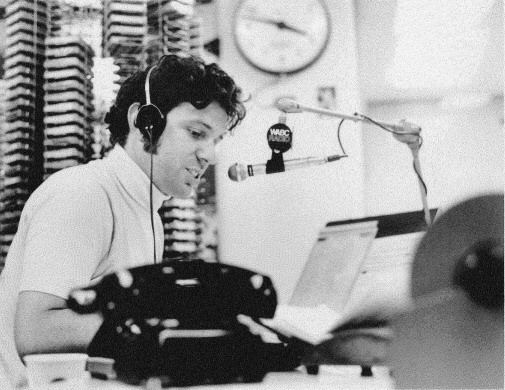
Dan Ingram (September 7, 1934 – June 24, 2018)

Many thanks to SWLing Post contributor, Patrick, who shares the following guest post:


Dear Thomas,

Thank you for all good articles on the SWLing Post.

After the passing of Top 40 radio disc jockey Dan Ingram of WABC 770 AM and later WCBS 101.1 FM, the golden days of Top 40 radio in New York City, the biggest radio market in the United States has been observed in TV and articles. Since 1988, no major AM station in the New York market plays pop music.

Video: Big Dan Ingram Tribute of YouTube

Click here to view on YouTube.

In 1960 WABC 770 AM changed format top Top 40 with upbeat disc jockeys, taking advantage of its 50,000 Watts clear-channel undirectional transmitter with the possibility to reach distant suburbs even 100 miles away during daytime and large portions of eastern United States and Canada after sunset. Its competitors at time were Top 40 stations 1010 WINS, 570 WMCA and 1050 WMGM but with directional transmitters.

Link: News12: A look inside the WMCA Meadowlands radio tower

http://www.news12.com/story/38678814/a-look-inside-the-wmca-meadowlands-radio-tower

Link: WMCA Transmitter Building in LEGO

http://robbender.blogspot.com/2011/02/wmca-transmitter-building-in-lego.html

Link: Photos of the WMCA Transmitter on Flickr

https://www.flickr.com/photos/docsearls/albums/72157686311013535

In the mid-1960s and on to the 1970s WABC had a long line of radio personalities like Dan Ingram, Harry Harrison, Ron Lundy, “Cousin Bruce” Bruce Morrow, and Chuck Leonard to name a few. Teenagers would enjoy listening to WABC with their transistor radios being popular. In the 1970s WABC was often No 1 or 2 in the New York radio ratings.

However, the Top 40 format was to become less popular in AM with FM stations starting to play hits. WMCA dropped its Top 40 format in the fall of 1970. Despite rivals from FM stations like WXLO 99X, soul station WBLS, album-oriented rock stations like WPLJ and WNEW-FM, WABC stayed on top until 1978 with the only notable AM competitor being 660 WNBC with an adult-leaning Top 40.

But when FM-station Mellow WKTU 92 changed format to disco and became Disco 92, an FM became the No 1 station in New York City putting down WABC to No 2 in December 1978. WABC started to play more disco but the audience became confused. With new management WABC started to aim for an older audience playing more adult contemporary songs. By 1981 WABC played more oldies and started to promote talk shows. In May 1982 it was announced that WABC would become a talk radio station. On May 10, the music ended on WABC and it was in radio called the day music died.

Video: Dan Ingram air check from 1980 on WABC in AM Stereo (Youtube)

Click here to view on YouTube.

Link: AM Stereo – the Kahn system (WNYC)

https://www.wnyc.org/story/am-stereo-the-kahn-system/

Video: The end of music on WABC (Youtube)

Click here to view on YouTube.

Video: Aircheck from WKTU Disco 92 in 1979 (Youtube)

https://www.youtube.com/watch?v=1IYPazTGO2I

Click here to view on YouTube.

1010 WINS dropped rock and roll music in 1965 and became an all-news station. 1050 WMGM (WHN from 1962) had various music formats until 1987 when it became all-sports.

660 WNBC was the last of the major Top 40-stations to drop music. It had various pop music formats until 1988 when it became all-sports 660 WFAN since WHN/WFAN changed to that frequency. 660 WNBC introduced shock jock Don Imus and afternoon jock Howard Stern.

Videos: WNBC sign-off

(WCBS-TV)

Click here to view on YouTube.

(WNBC-TV)

Click here to view on YouTube.

Many of the disc jockeys, including Dan Ingram, would join 101.1 WCBS-FM, playing oldies with the Top 40 disc jockey upbeat. The classic Top 40 era with double-digit ratings and the nighttime signal reaching hundreds of miles away was gone.

The website Musicradio 77 has a lot of resources and memorial about WABC but also WMCA: https://musicradio77.com

Patrick


Thank you, Patrick, for the stroll down Memory Lane–and thanks for sharing the informative links and videos!

I truly appreciate honoring Dan Ingram as well–no doubt, there are many SWLing Post readers who remember him from WABC. He was and will always be a radio legend.

Post readers: Do you have any memories of AM Pop Music in New York City? Please comment!

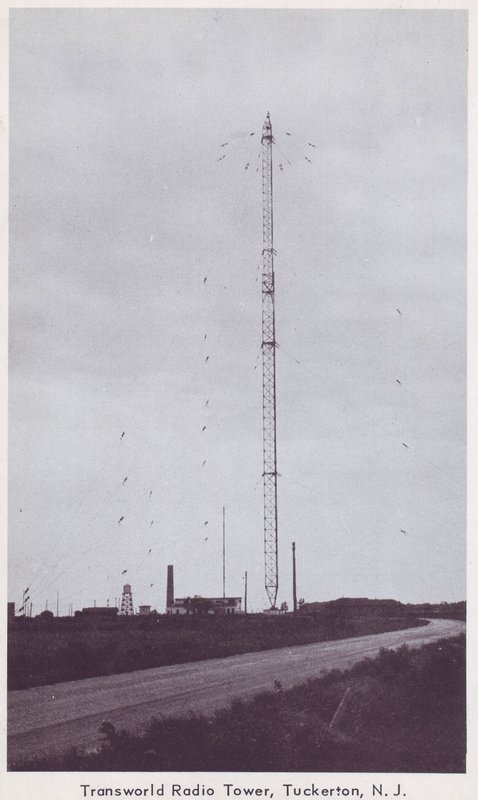
Tuckerton Radio Tower’s rich history and once record-setting height

(Image: RadioMarine.org)

(Source: The Sandpiper via Richard Langley)

Who knows how many Americans realize that 100 years ago the United States was at war? After all, when about 25 people on the street in Beach Haven in the summer of 2012 were asked for a SandPaper article what war the U.S. had been involved in 200 years previously, very few could answer the War of 1812. There seems to be a flaw in the way history is taught in the U.S., and maybe math as well.

So for those who don’t remember their high school history, in 1918 the U.S. was heavily involved – with well over 4 million troops in Europe – in World War I, the “War to End All Wars,” “The Great War.”

It is easy to imagine that even a world war wouldn’t very much affect what was then a remote and rural Ocean County. But it did, in many ways. German U-boats prowled the Atlantic off the Jersey Shore; nearby Fort Dix (at first Camp Dix) was created and became one of the premier U.S. Army basic training centers in the country for decades.

Nicholas Wood of the Ocean County Cultural Heritage Commission[…]discussed two aspects of Ocean County and WWI in his 75-minute lecture/slide show at the Long Beach Island Historical Museum on Monday evening.

[…]The second half of Wood’s presentation discussed the once-famous but now mostly forgotten Tuckerton Radio Tower, built in 1912 by the German government.

[…]The tower was 820 feet high, making it, at the time, the second tallest structure in the world, behind only the Eiffel Tower. It was one of the first and most powerful transatlantic radio stations ever constructed. It survived until 1955, when it was torn down and sold for scrap metal and today lends its name to Little Egg Harbor’s Radio Road.[…]

Click here to read the full story at The Sandpiper.

BBC World Service: Global audience up, shortwave listeners in “steep decline”

(Source: The BBC Media Centre)

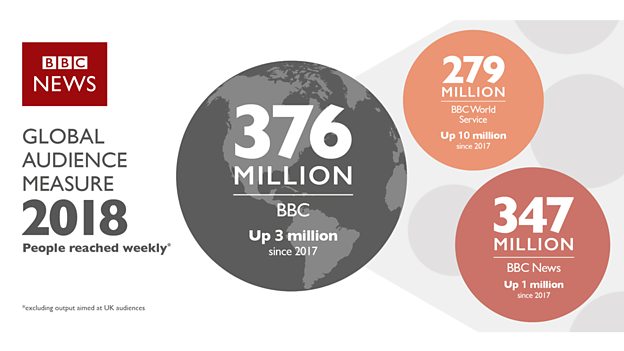
BBC’S Global audience rises to 376m

The BBC is reaching a record weekly audience of 376m people, new figures published today reveal.

The figures – the Global Audience Measure (GAM) – show how many adults the BBC reached weekly with its news and entertainment content in the year 2017/18.

The BBC World Service, which has just undertaken its biggest expansion since the 1940s, has seen its audience increase by 10m, to 279m.
The total global news audience has risen by a million, to 347m.

The GAM shows the way people access their news is continuing to change around the world. With the increased availability of cheap smartphones around the world, audiences are continuing to switch to digital platforms for news. Overall, online news website audiences have grown by four million, with social media audiences up by nine million.

The English language international website, BBC.com, continues to perform well even in competitive markets like the USA, adding two million weekly users this year.

More people listen directly to World Service English via the internet than by any other method – a total of 27m. And World Service English podcasts now reach one million people every week.

However, shortwave radio listening continues its steep decline, with shortwave audiences virtually disappearing in Pakistan, and down substantially in Nigeria.

Jamie Angus, Director of the BBC World Service Group, says: “This has been an exciting year for the BBC World Service, with the launch of 12 new services, new programming, and the opening of new and expanded bureaux across the world, so it is great to see international audiences continuing to turn to the BBC for independent and impartial news.

The figures highlight not only the successes of our global news operation, but the challenges that lie ahead for us. We still need to grow the share of women engaging with our news services globally, and we need to ensure we have the right services to continue to attract young audiences.

At a time when Britain is forging a new relationship with nations around the world, the BBC’s global news services are more important than ever.”

The figures also show:

  • More than a quarter of the BBC World Service’s audience is aged between 15-24 years old.
  • In Afghanistan, more than 60% of the adult population consumes BBC News; in Nigeria the figure is just under 40%
  • The top ten markets for the BBC’s international news services are Nigeria (41m), USA (33m), India (30m), Bangladesh (16m), Egypt (16m), Iran (13m), Afghanistan (12m), Tanzania (10m), Pakistan (9m) and Indonesia (8m).
  • More people are consuming more than one BBC service, or using more than one platform to access BBC News; 24m people consume the World Service in English as well as other languages.

Notes to Editors
The Global Audience Measure is an annual update of how many people are consuming the BBC weekly for all services in all countries across all platforms (television, radio, website and social media). Key to this is de-duplication i.e. ensuring that a person who consumes multiple BBC services or platforms or on multiple devices is not counted many times in the top level totals.

The total figure includes audiences for all BBC News services outside the UK and branded entertainment content on TV, BBC websites and social media pages for BBC Studios.

PR

RNZ and the “Chinese shortwave foray into the Pacific”

(Source: Radio New Zealand via Mike Hansgen)

China is taking up a lot of the Australian Broadcasting Corporation’s former shortwave radio frequencies into the Pacific region.

In response to budget cuts, the ABC last year ceased shortwave broadcasting in the Asia-Pacific region ahead of a transition to FM transmission.

Since that withdrawal, frequencies on which Pacific Islanders listened to ABC radio for many years are being filled up by China Radio International.

Radio New Zealand Pacific is of course still broadcasting to the Pacific region on shortwave.

Its Technical Manager, Adrian Sainsbury, spoke to Johnny Blades about the Chinese shortwave foray into the Pacific.

Click here to listen to this story via RNZ.