Category Archives: News

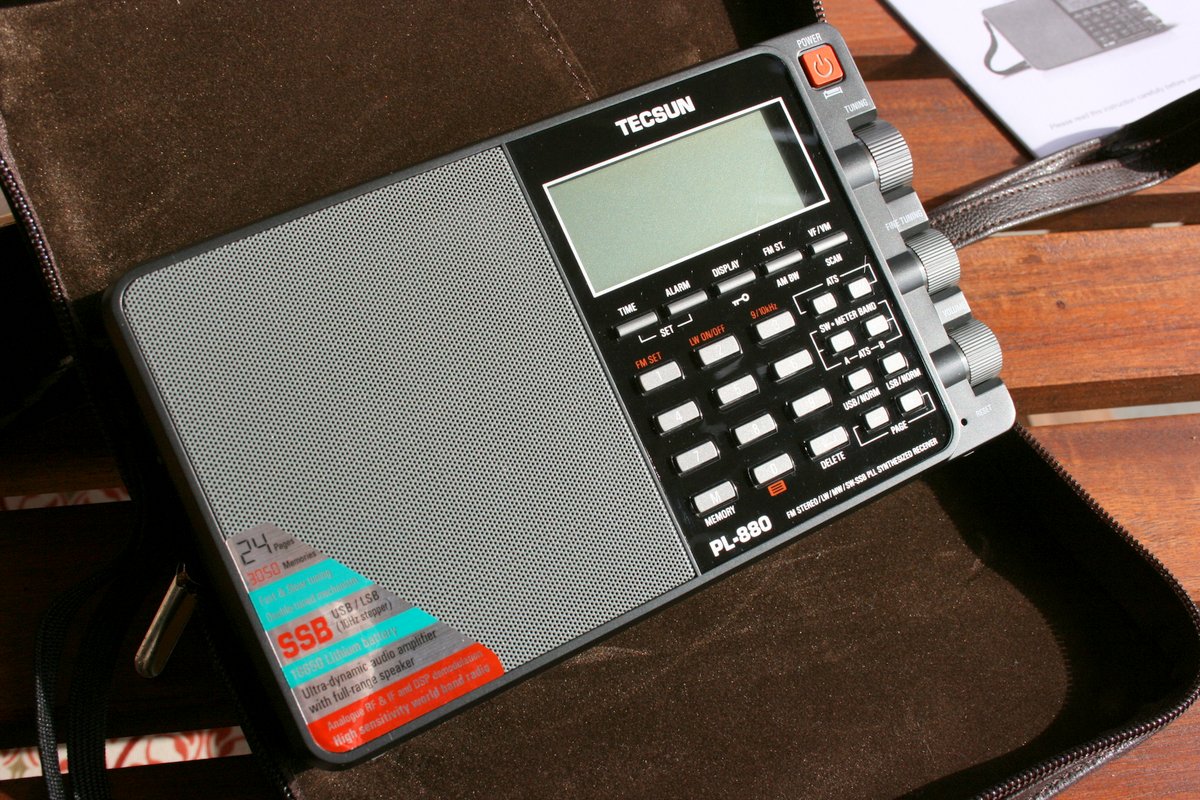
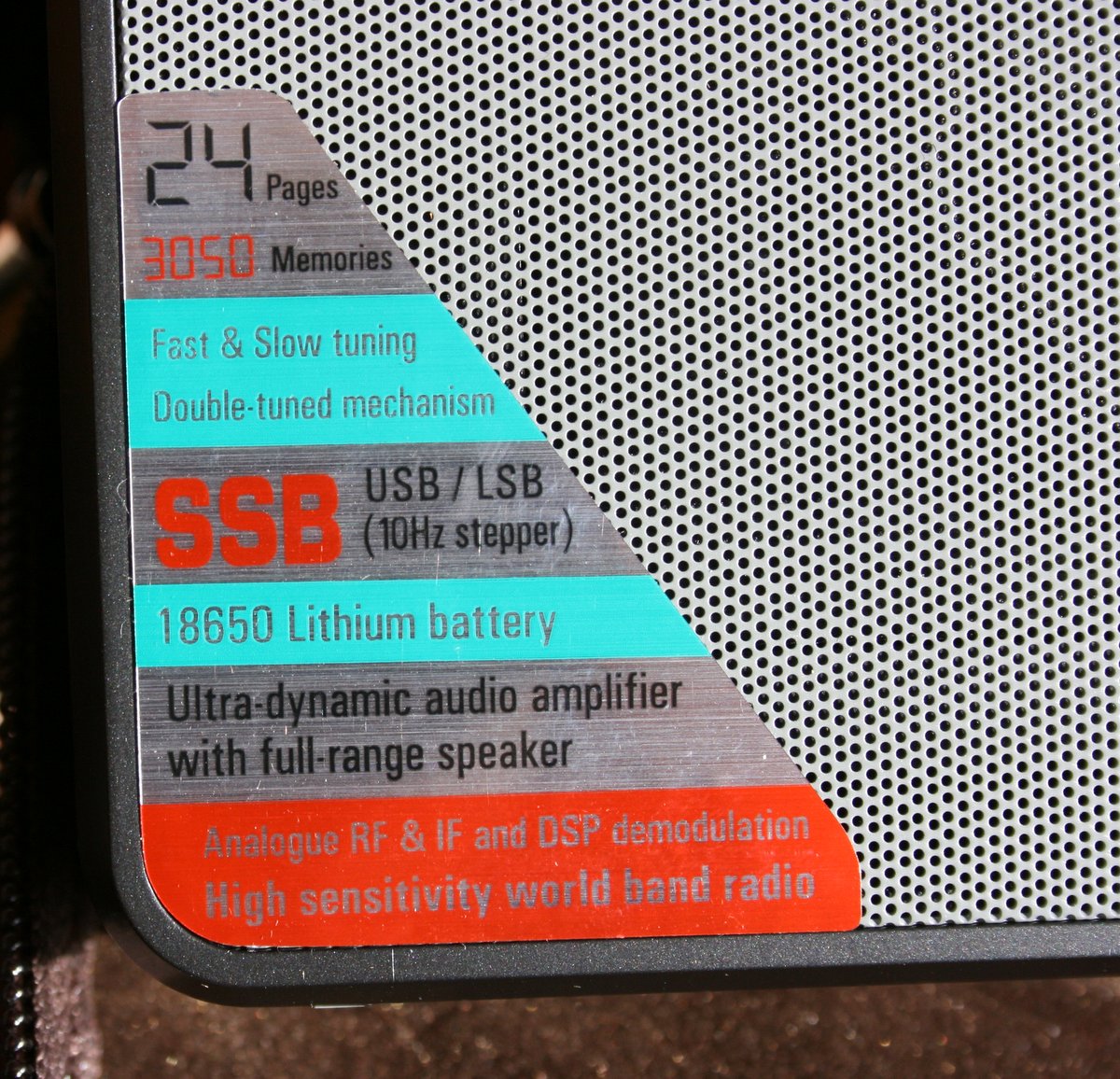
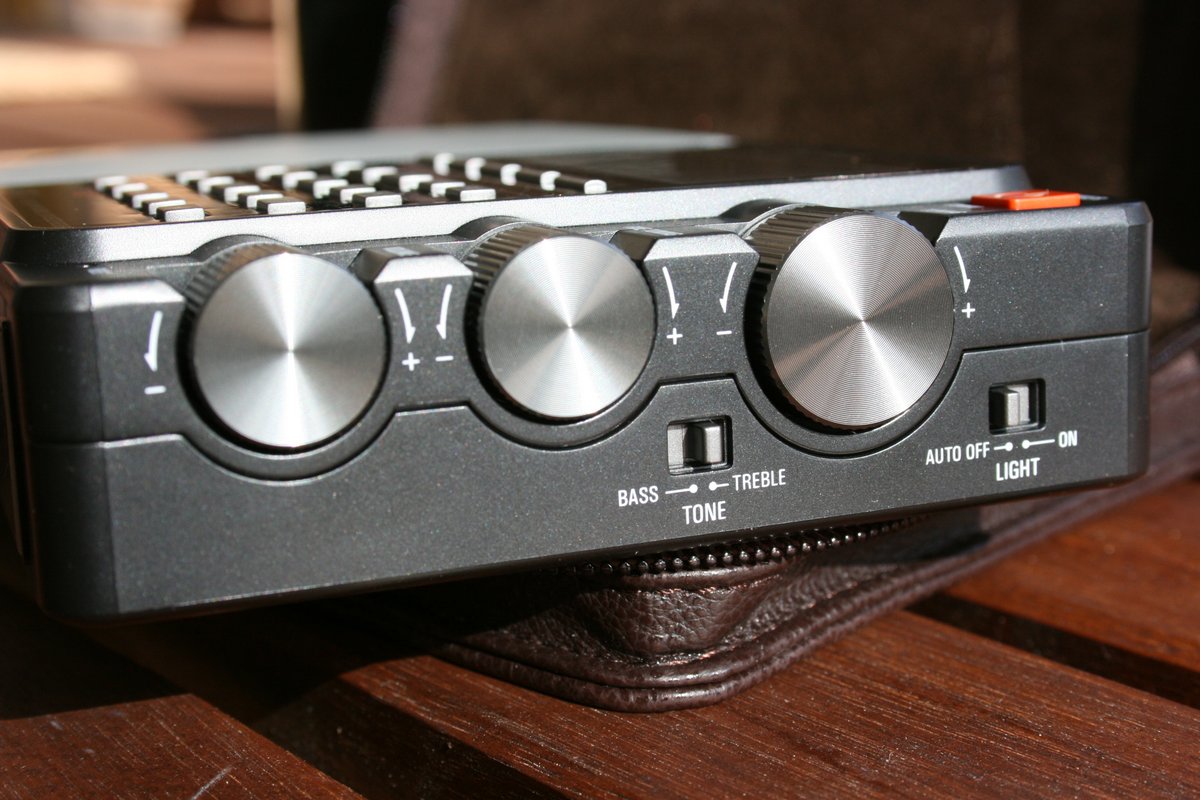
Hidden feature: Adjusting the Tecsun PL-880 muting threshold

Tecsun-PL-800-Sync-SWLing-PostSWLing Post reader Owl points out another hidden feature of the Tecsun PL-880:

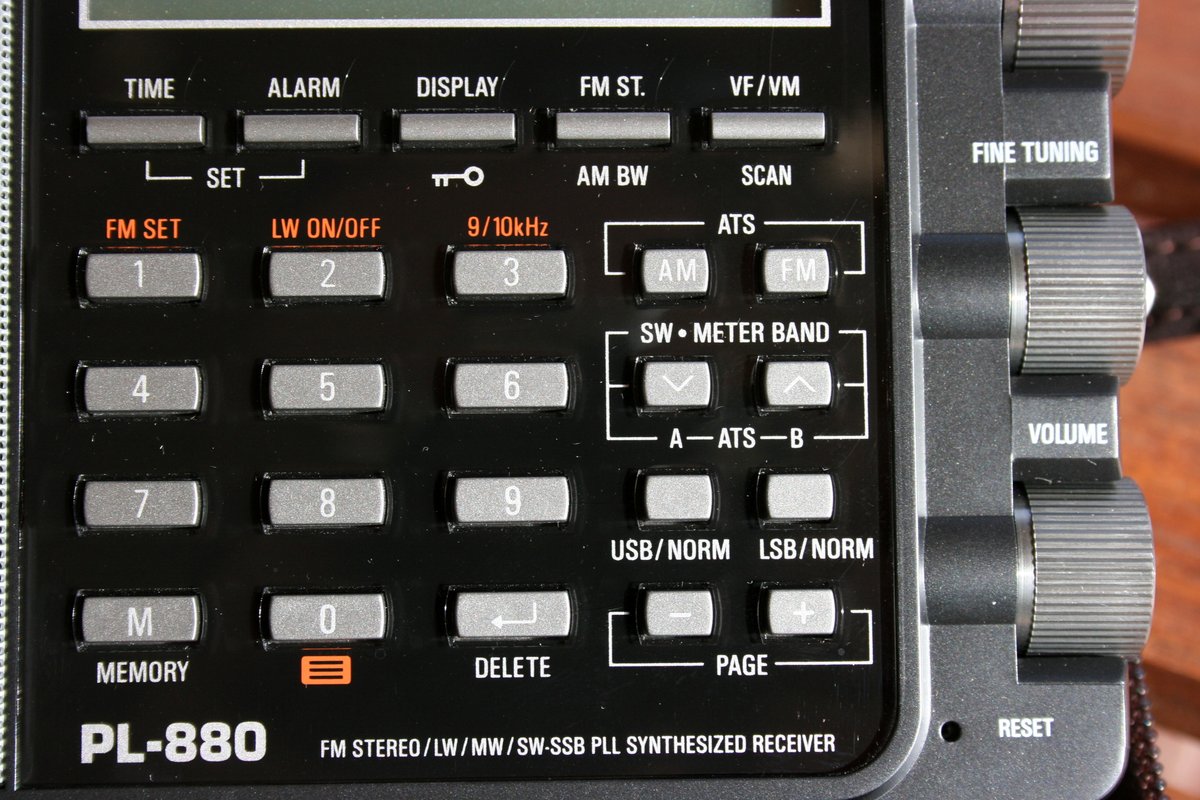
“Press and hold 9 when you listen to AM or SSB, you may adjust the muting threshold using either tuning knob. Press 9 again after you are done, the new threshold will be saved.”

Many thanks, Owl, as this solves a small problem I discovered with my PL-880.

Evidently, the muting threshold of the PL-880 defaults to 5 DBu. I found that listening to a marginal station produced a dip and jump in volume as the signal level hovered around 5 DBu. It was most annoying!

Owl is correct–simply holding the number 9 down while listening allows you to adjust the muting threshold between 00-25 DBu.  It seems setting the threshold to 00 turns off all muting. I prefer it off, so this is the setting I will use most of the time.

The PL-880 has a number of hidden features.  I will post them as they are uncovered.

You can follow all Tecsun PL-880 updates by bookmarking/checking this link.

Arctic DXing covered in the Chinese press

Photo of Saariselkä courtesy of DXing.info

Photo of Saariselkä courtesy of DXing.info

A few years ago we mentioned Mika Makelainen and Jim Solatie, who make a DXing pilgrimage each year to the most northern region of Finland for two weeks of DXing bliss.

The small cabin is very remote, but connected to 14 wire antennas and contains all of the necessities one needs for serious, long-haul DXing. Indeed, they even rent their cabin to other DXers.

I was happy to see Mika and Jim’s annual DX trip recently mentioned in the Xinhua News. Check out Hunting for radio signals near Arctic Ocean, an article by reporters Li Jizhi and Zhang Xuan.

Hidden feature: The Tecsun PL-880 has a sync detector

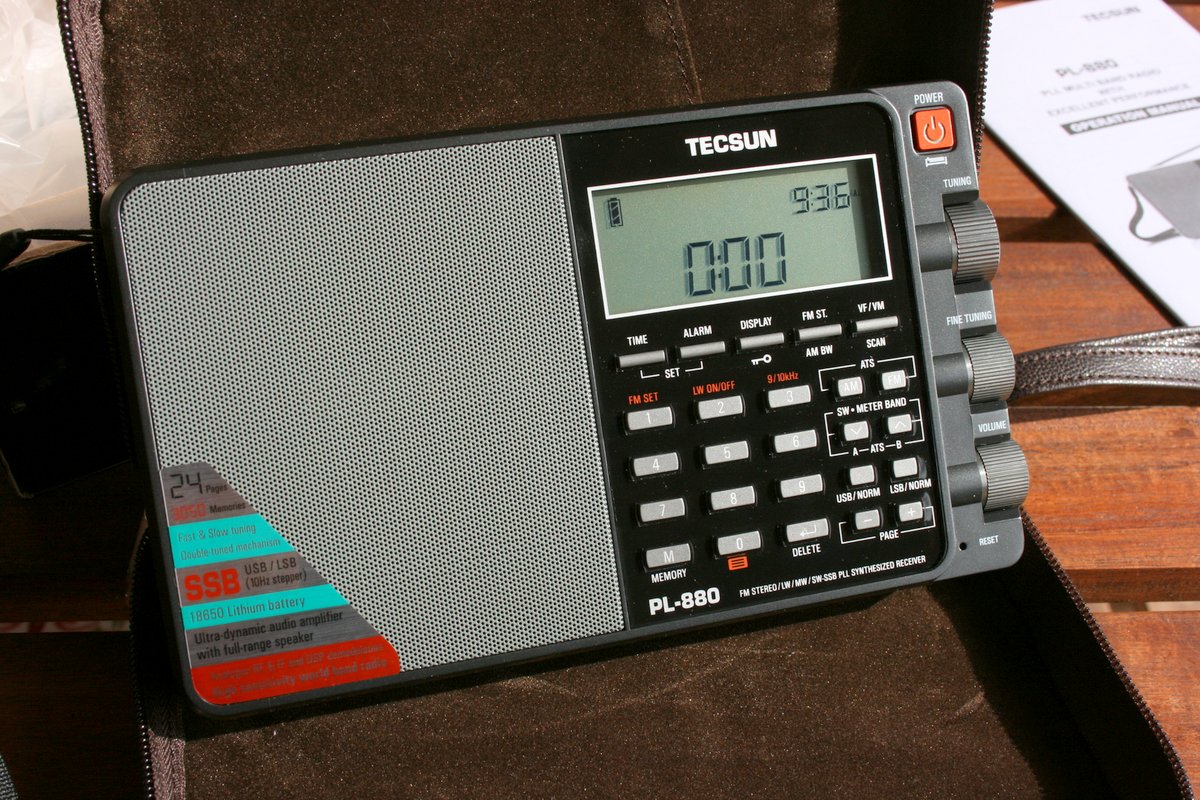
Tecsun-PL-800-Sync-SWLing-PostWhile evaluating the Tecsun PL-880 this afternoon, I discovered a hidden feature: synchronous detection.

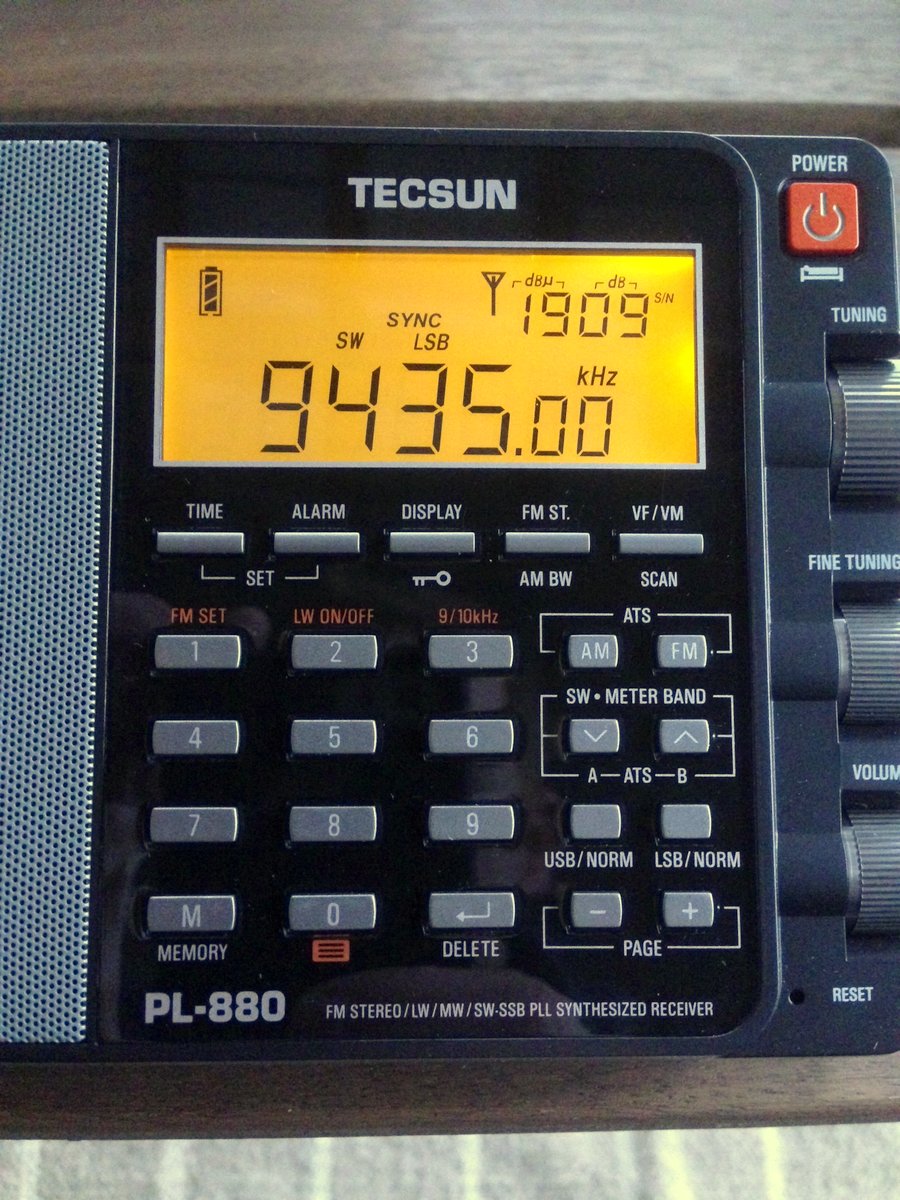
By pressing and holding either the USB/NORM or LSB/NORM buttons, you can make the PL-880 sync lock on either the upper or lower side band. By pressing either button momentarily, it simply puts the mode in either upper side band or lower side band.

Now to properly test it…

You can follow all Tecsun PL-880 updates by bookmarking/checking this link.
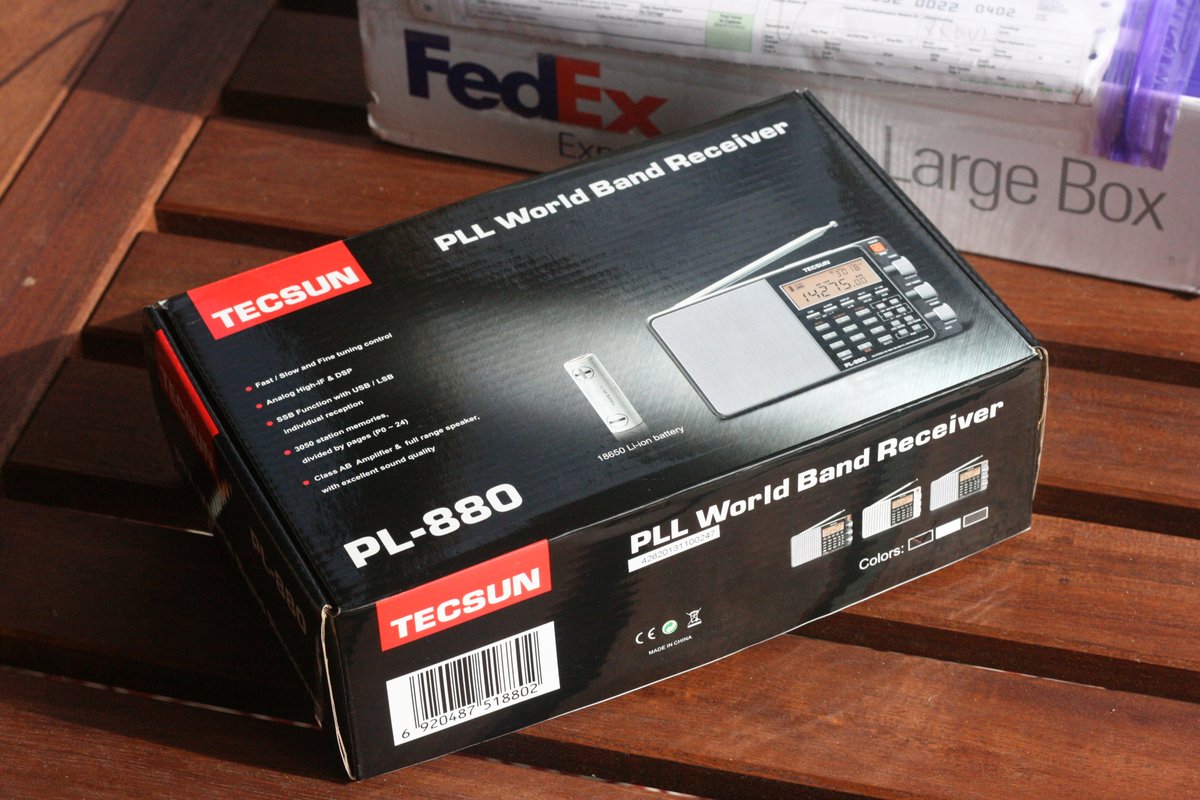
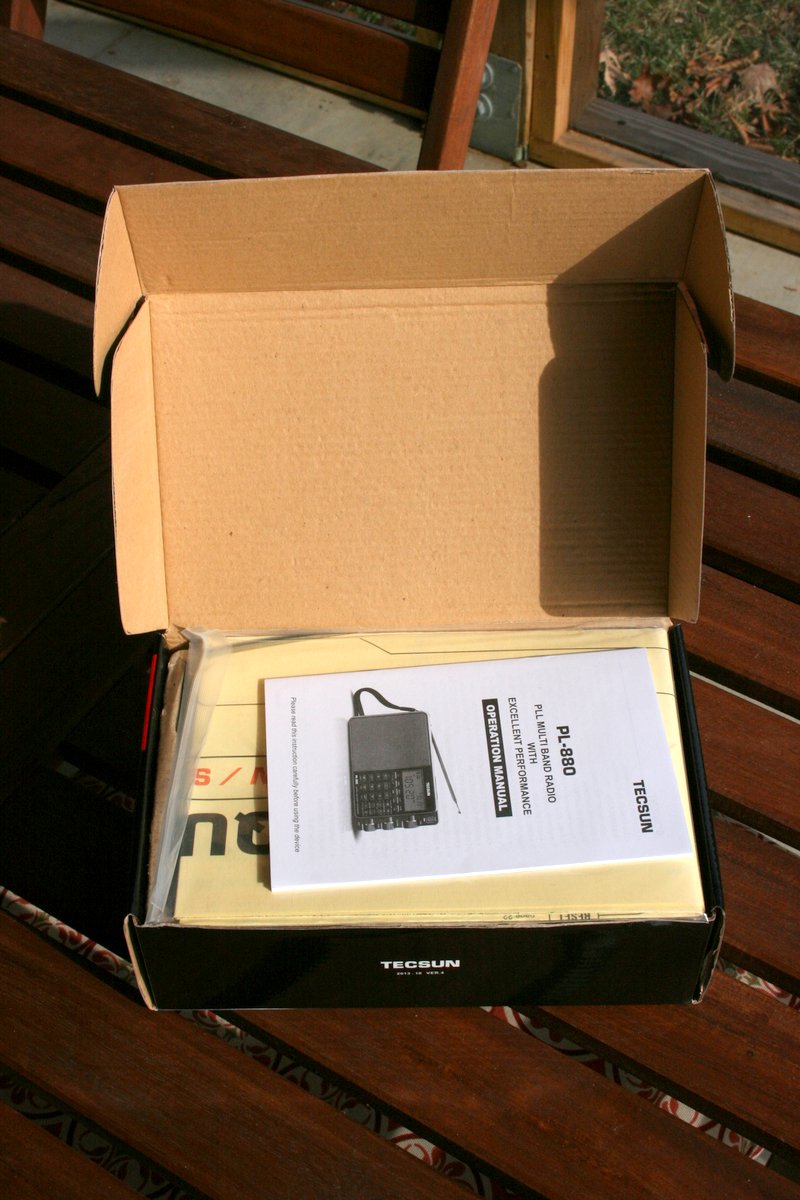
Photos: Unboxing the new Tecsun PL-880

I just received my Tecsun PL-880 from FedEx a few moments ago. I only purchased this radio last week from Anon-Co on eBay–I’m most impressed that it arrived so early.

The PL-880 has been a highly-anticipated radio and I’m eager to dig in and see how well it reviews. I had several readers ask if I would take photos as I unboxed the unit–so I’ve embedded photos below. Simply click on each photo to enlarge:

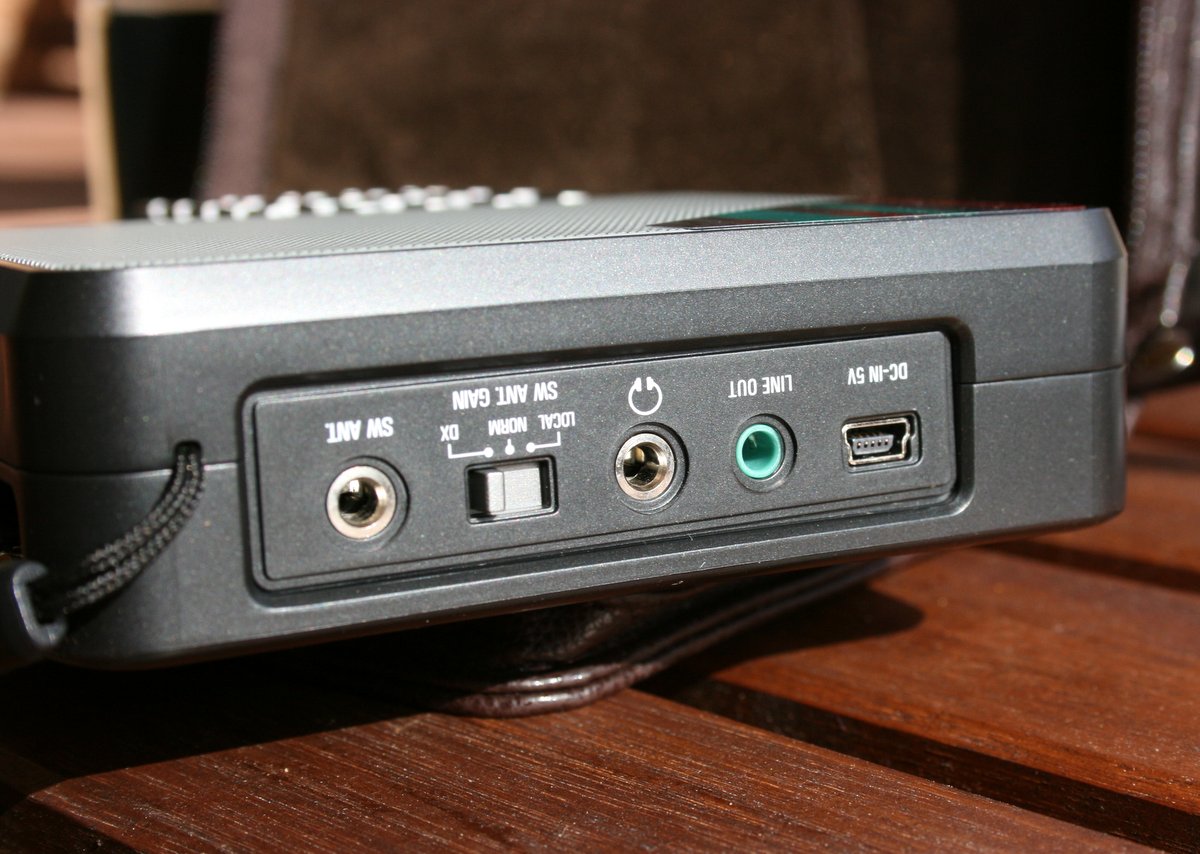
Tecsun-PL880-SWLing-Post-0510

Tecsun-PL880-SWLing-Post-0512

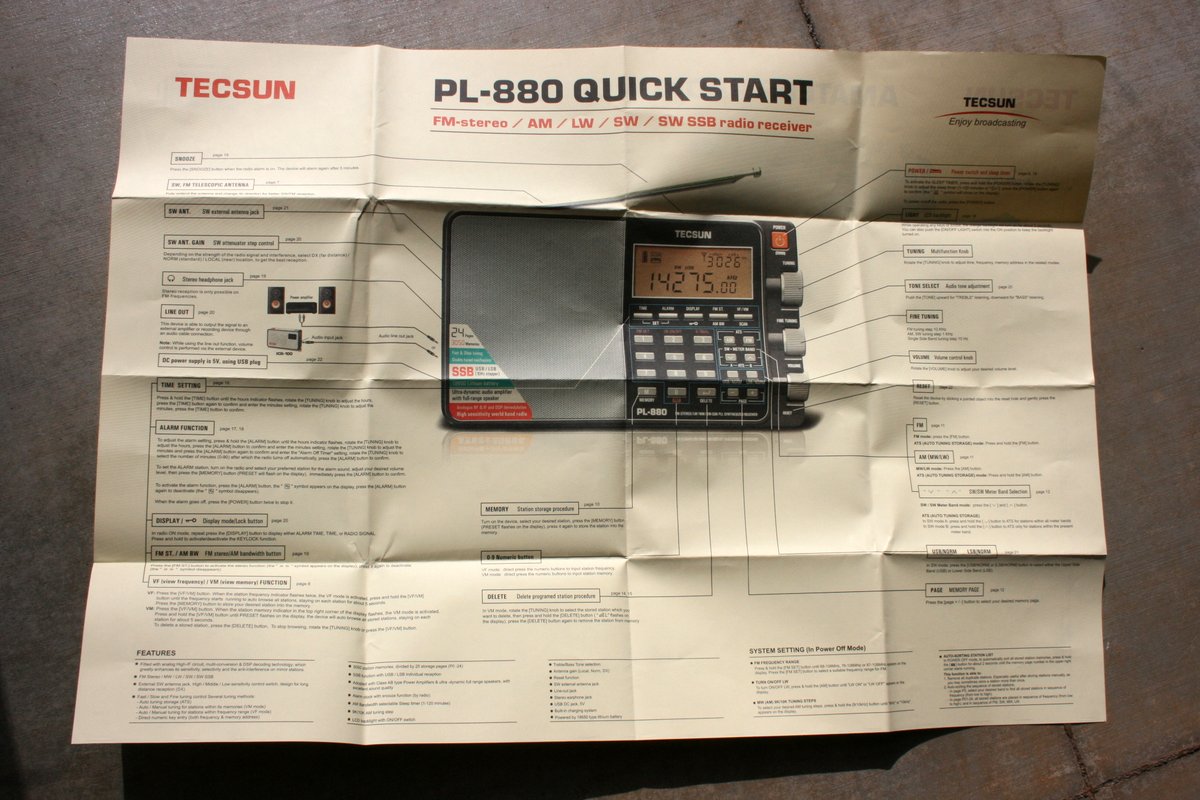
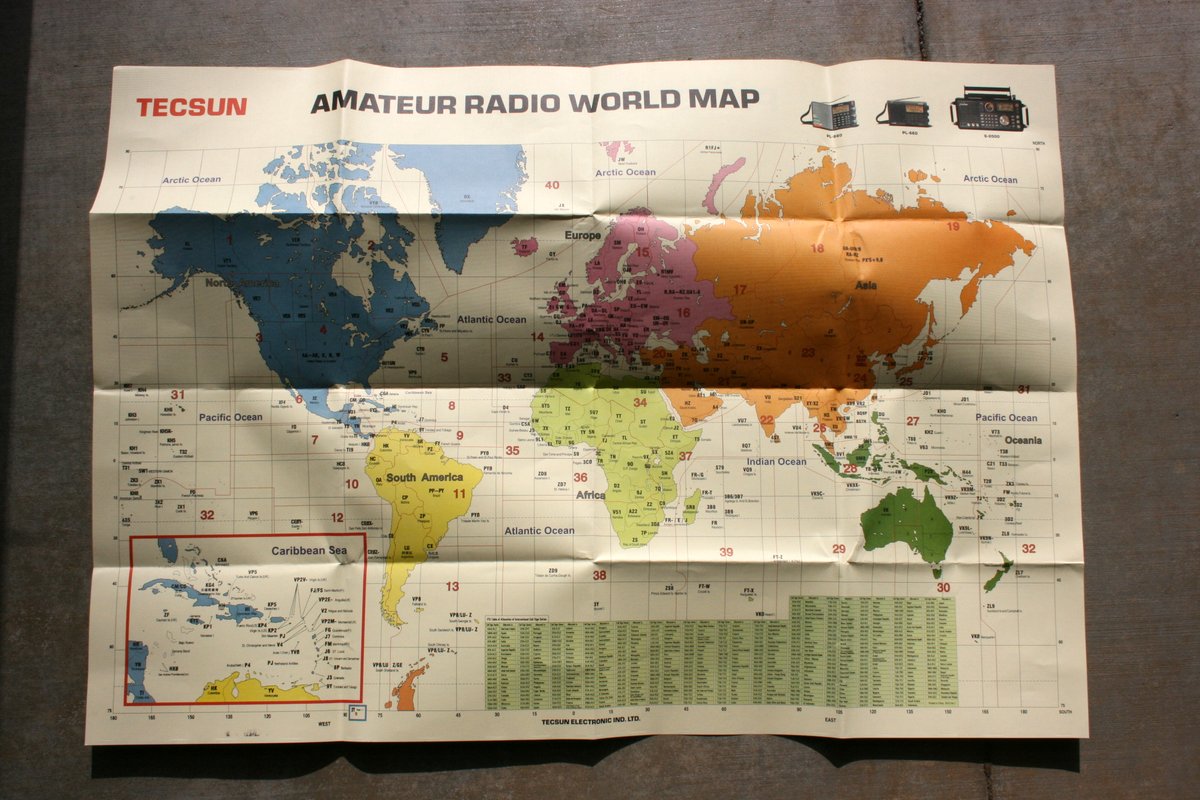
Along with the owner’s manual, Tecsun has included a large, fold-out amateur radio world map and quick reference guide.

Tecsun-PL880-SWLing-Post-0513

Tecsun-PL880-SWLing-Post-0514

Tecsun-PL880-SWLing-Post-0515

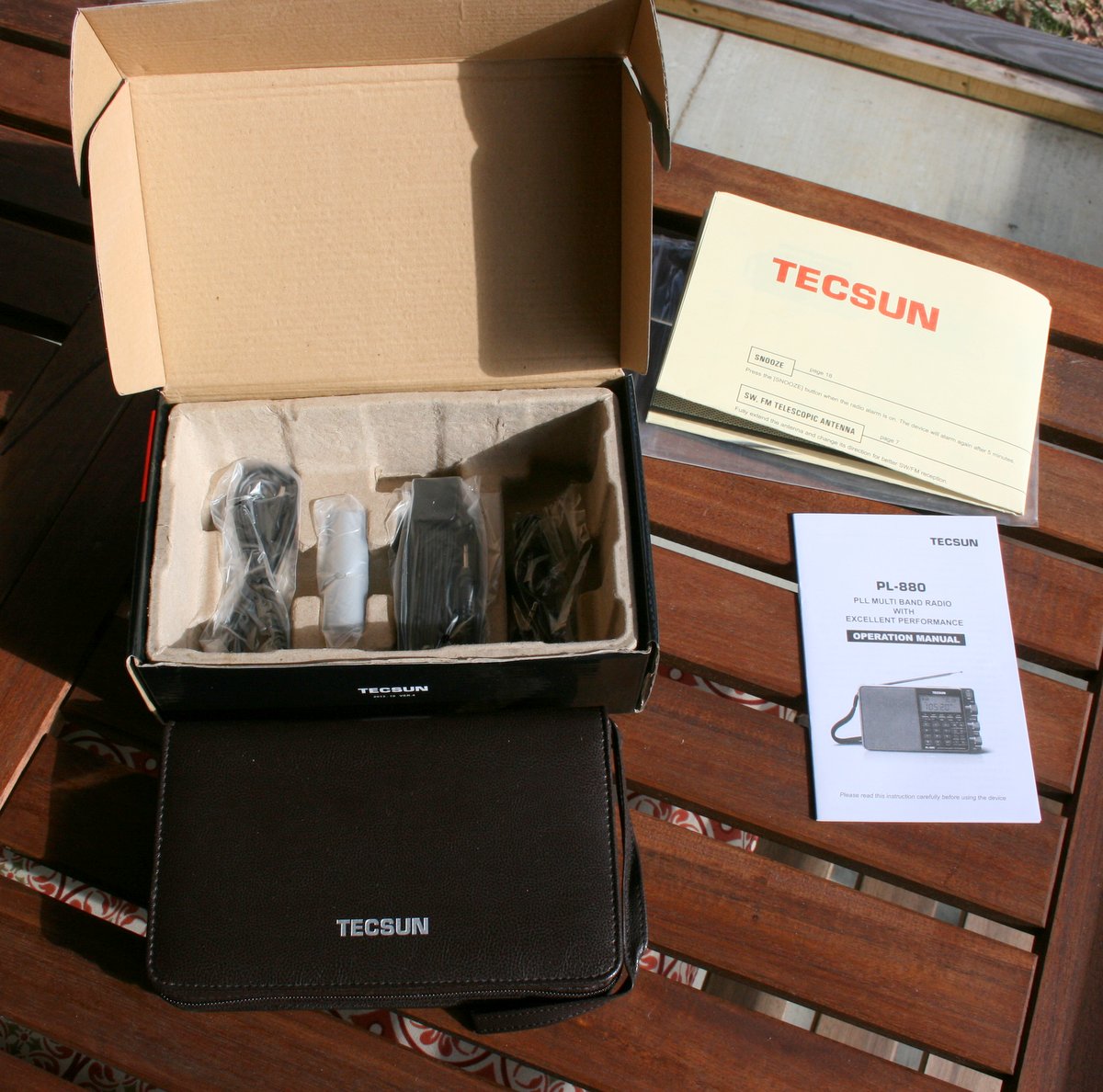
In the box, along with the manual and fold-out map, you’ll find: a USB charging cable, a rechargeable lithium battery, a wire antenna and a set of earbud headphones.

Tecsun-PL880-SWLing-Post-0516

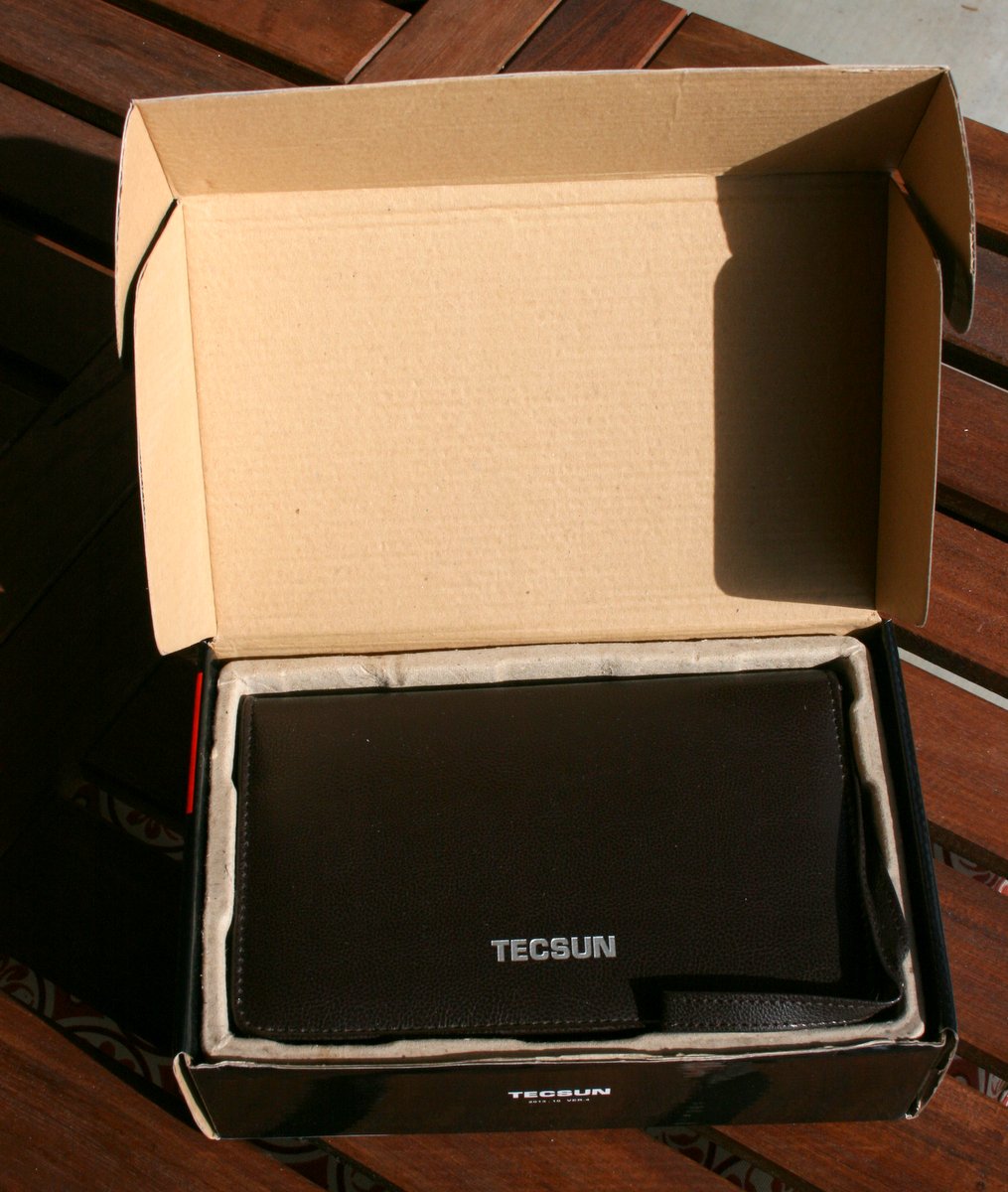
The padded faux leather case reminds me of cases we used to receive with world band radios.

Tecsun-PL880-SWLing-Post-0518

I like the layout of the front panel. The buttons have a very nice feel and the tuning wheels/knobs are fluid.

Tecsun-PL880-SWLing-Post-0520

Tecsun-PL880-SWLing-Post-0521

IMG_0523

Tecsun-PL880-SWLing-Post-0524

Tecsun-PL880-SWLing-Post-0525

What’s most impressive, though, is the sound out of the internal speaker. Though I need to spend more time with it, it will most likely be one of the best I’ve ever heard in a radio this size. Nice bass and treble tones.

Tecsun-PL880-SWLing-Post-0526

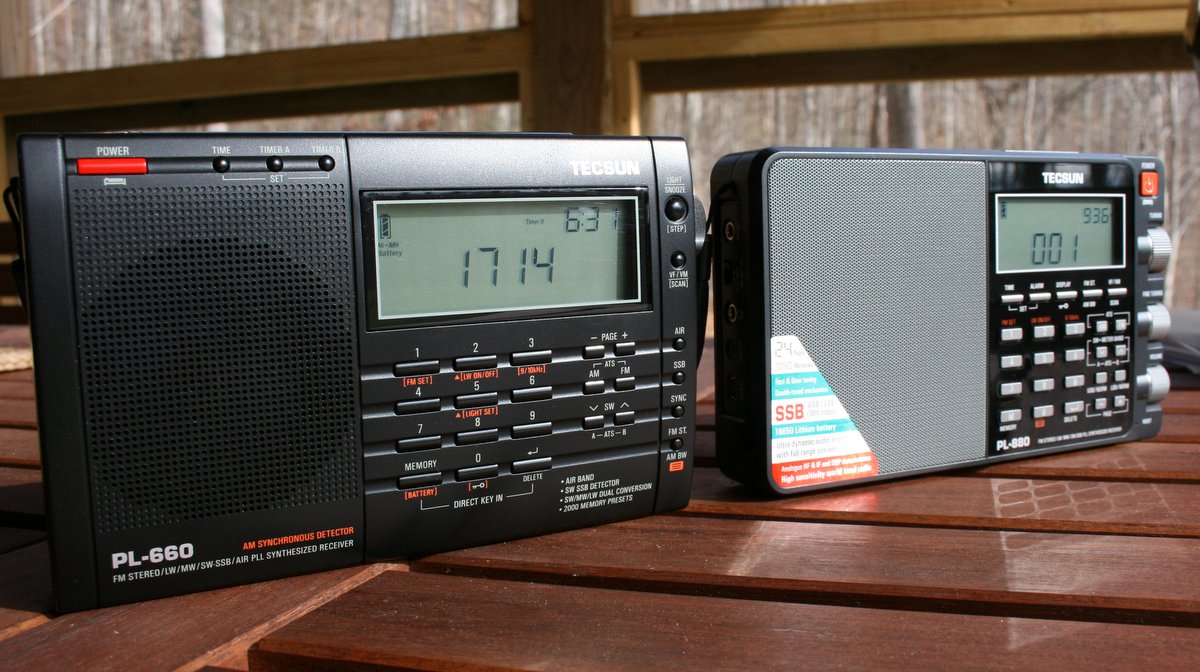
The Tecsun Pl-660 (left) and PL-880 (right). Nearly identical in size.

Tecsun-PL880-SWLing-Post-0527

Tecsun-PL880-SWLing-Post-0528

Of course, I will do a full review as soon as possible. I may also post updates along the way as I make discoveries.

Can you guess how I will be spending this afternoon and evening? Yep, playing radio.  Stay tuned!

You can follow all Tecsun PL-880 updates by bookmarking/checking this link.
Voice of Greece has become a relay of Radio Station of Macedonia, ERT 3

ERT3In response to my post and recording yesterday, TheGreekRadio.com commented on the current state of the Voice of Greece:

“After the forceful eviction of the redundant ERT employees from the Radio House in Athens, the shortwave frequencies no longer transmit the normal program of Voice of Greece as there is no such service produced in Athens.  This happened on the 7th of November, when you probably noticed the station ID change.

Mediumwave and shortwave frequencies have been now set to relay the radio program of “Radio Station of Macedonia” by the redundant employees of ERT3, from Thessaloniki. (This used to be the independent program relayed for a few hours before midnight on 7,450 until June’s ERT switch-off, when phone lines were cut and the “guerilla” program started). They keep doing a full program during the day, but being unemployed, it seems that they cannot carry on overnight.

The official interim public radio (one single service for entire Greece) so far does not care for [the take] over [of] the shortwave and mediumwave resources in Athens. Probably they do not have the staff to operate them, as only the necessary personnel was hired to keep the single radio service running on FM.”

Many thanks to TheGreekRadio.com for this informative explanation.

Thus it looks like VOG’s shortwave service might be easily cut–and without warning. We already know that the Greek government is considering dismantling the Avlis transmitting site.

Tecsun PL-880 Operation Manual Published

Tecsun PL-880 Owners Manual

Click here to download.

The eBay seller, Anon-co, has posted the owner’s manual for the Tecsun PL-880. Click here to download the manual as a PDF.

Many thanks to SWLing Post reader, Mike, for sending me this file.

I purchased a PL-880 and expect to receive it soon. I will post some preliminary photos and a review in time to help you make any holiday buying decisions.

BBC announces closure of Seychelles relay station

BBC Seychelles Relay Station (Photo: Vijay.sc)

BBC Seychelles Relay Station (Photo: Vijay.sc)

(Source: BBC Media Centre via Rob Wagner)

The British Broadcasting Corporation (BBC) announced today that the Indian Ocean Relay Station (IORS) transmitter site at Grand Anse, Mahé, will cease all shortwave transmissions on 29 March 2014.

The site was established in 1988 and has been in continuous service since then, relaying BBC broadcasts to audiences in East Africa primarily in English and Somali.

The closure will not affect the availability of BBC World Service programmes in Seychelles, which are relayed from satellite broadcasts on to local FM frequencies 106.2, 105.6 and 105.2MHz. In areas of East Africa still dependent upon shortwave broadcasts, the signal will be supplied by other relay stations. The announcement follows an earlier decision to stop all shortwave broadcasts from the BBC World Service site in Cyprus for similar commercial, technological and audience reach reasons. These ended in March of this year.

The announcement will unfortunately result in 11 staff being put at risk of redundancy. The staff over the last 25 years have operated and maintained this shortwave broadcast facility with passion, expertise and professionalism. The technical ability and commitment of the team at the IORS has been applauded by the BBC World Service.

The decision to close the site has been taken due to changing commercial and technological circumstances. As countries develop and their media markets open, listening and viewing habits have changed. New technology has changed the way audiences listen to BBC programmes and reduced the importance of shortwave broadcasts in much of the area currently served by the IORS, making the IORS commercially unviable.

The BBC is supporting the development of new delivery platforms such as internet and mobile streaming as well as FM radio and TV broadcasts. Shortwave broadcasts continue to regions and markets where listening remains strong and BBC services can be delivered efficiently to large geographic areas.