Category Archives: News

Scrambling to keep VOA China on the air

(Source: Fox News)

Congressional lawmakers are scrambling to prevent America’s international media arm from going off-air in China, arguing that a plan to shift much of its reporting to the Internet won’t do much good in a country notorious for its web censors.

[…]The Broadcasting Board of Governors, which oversees Voice of America, argues that it only makes sense to go digital in a country with the largest Internet-using population in the world. Board officials claim the existing shortwave radio broadcasts don’t have the audience they used to and that the Chinese government is jamming them anyway. In changing platforms, the board projects it will save $8 million and eliminate about 45 positions.

But critics of the move, including Rep. Dana Rohrabacher, R-Calif., say the United States is setting itself up to cede vital territory in the battle of information abroad.

The article goes on to mention that the BBG would like to fuel internet services, citing, “one-tenth of 1 percent of Chinese listen to VOA in Mandarin, with radio ownership on the decline…[a]nother survey showed computer and Internet usage on a steep upswing.”

Internet usage is up everywhere, but even if VOA succeeds in creating proxy servers that would allow Chinese guests to punch through internet censorship in China, there will still be a risk that Chinese authorities could monitor this circumvention and take action against the listener/web guest.  With shortwave radio, this is a non-issue. Shortwave radio listeners cannot be traced. In fact, ironically, this strength makes it difficult for the BBG and other international broadcasters to justify shortwave service. They can’t identify who is listening!

VOA China services could receive up to 14 million dollars if lawmakers are successful in their push. The hope would be that the BBG would then allow continued services into China.

One can hope.

Read the full article here.

CRI’s growing Tamil audience

(Source: The Hindu)

S. Pandiyarajan was fiddling around with his shortwave radio set one hot summer evening at Villupuram, Tamil Nadu, when he stumbled upon a strange station.

At first listen, it was a language he couldn’t identify. It sounded like Tamil, but spoken in an accent he could not recognise. He listened on, straining his ears. To his surprise, he discovered that the voices were coming from faraway China.

“I could hear two Chinese people speaking in perfect Tamil!” he said. “And this was Sentamizh [classical Tamil], which you never hear anywhere, anymore, even in Tamil Nadu.”

That evening, Mr. Pandiyarajan became the latest member of China Radio International’s fast-growing overseas fan base. The station, run by the Chinese government, has, for more than six decades, been tasked with carrying news from China — from politics to arts and culture — to boost the country’s image overseas.

[…]Remarkably, CRI’s Tamil station enjoys the widest reach of all its channels. Its popularity underscores the quiet success China’s “soft power” push is having in unlikely locations. The Tamil station, which broadcasts every day from a modest 12th floor office, has more than 25,000 registered listeners — besides thousands of others who tune in casually every day — in Tamil Nadu and the rest of India, Sri Lanka, Malaysia, Singapore, South Africa, Germany, the United States and Japan.

The Tamil station started broadcasting in 1963. Since then, it has continued to beam its shows uninterrupted, building up an almost cult following overseas, with its fans even organising themselves into a network of listeners’ clubs.

[…]This month, the station invited the heads of some of its listeners’ clubs in Tamil Nadu to visit its Beijing headquarters, part of an effort to engage more with listeners.

S. Selvam, head of the All-India Listeners’ Club, said the station’s popularity was driven by its novelty. “The first thing that strikes you is, why are these Chinese people learning Tamil, and speaking perfect Sentamizh?” he said. “You think, if they are making such an effort, we have to reach out to them.”

Mr. Pandiyarajan agreed. “This is something completely new,” he said. “We have Villupuram Tamil, Chennai Tamil, Puducherry Tamil. But I never thought I would discover that there would also be a Cheena [Chinese] Tamil.”

Read the full article at The Hindu. Also, read about CRI’s broadcasts in the local US radio market.

BBC strike could affect World Service today

It appears some BBC journalists, as of 23:01 UTC (Sunday), have gone on the strike we mentioned previously.
(Source: BBC News)

Members of the National Union of Journalists (NUJ) began their strike at 00:01 BST. From Tuesday, members will also observe a work to rule.

The NUJ says the BBC is “unwilling to engage in finding reasonable resolutions” for those forced to leave and who face compulsory redundancy.

The BBC says it is unable to agree to demands for no compulsory redundancies.

[…]The NUJ accuses the BBC of “wasting thousands of pounds making skilled and experienced people compulsorily redundant instead of redeploying staff”.

If this strike affects the World Service, and if history is a guide, we will most likely hear pre-recorded content today.

Read full article here.

Guinea imposed temporary ban on Radio France International

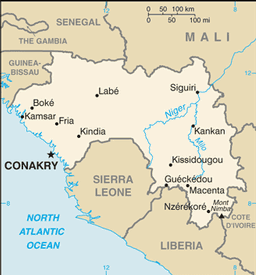
Map of Guinea (Source: CIA World Fact Book)

(Source: Committee to Protect Journalists via RNW Media Network)

On Monday [25 July], Guinea’s state-controlled media regulatory agency imposed a “temporary” ban on media coverage of the July 19 attack on the private residence of President Alpha Conde, silencing private radio and television talk programmes in which critical questions were being raised about the episode.

In such circumstances, Guinean listeners turn to foreign media outlets such as France’s state-funded international broadcaster, Radio France Internationale (RFI), the most popular station in Francophone Africa. With programmes such as “Appels Sur L’actualite”, a daily news call-in show, RFI is considered by millions of African listeners to be an essential source of news and information.

Wednesday’s “Appels Sur L’actualite” began with an ominous statement read by host Juan Gomez. “We had planned this morning to debate the attack last week against the residence of the Guinean president, but yesterday the National Communications Council of Guinea decided to temporarily suspend any programme or article about the attempted assassination against the head of state as well as all call-in programmes.” Gomez told listeners they would have to debate another topic.

Squeezed between the expectations of listeners and the conditions set by governments leasing the local frequencies it needs, RFI found itself in a difficult position. “We are not submitting to a censorship measure; we regret it and we hope that it will be temporary.” RFI deputy director Genevieve Goetzinger told CPJ today [28 July].

RFI has suffered for its critical reporting on current events in Africa. The station has seen its reporters expelled from Chad, Rwanda, and Senegal, its local correspondent jailed in Niger, and another correspondent killed in the Ivory Coast.

RFI has had its broadcasts temporarily banned in a number of countries, most recently in the Democratic Republic of Congo where the government of President Joseph Kabila sought the removal of RFI senior reporter Ghislaine Dupont, the station’s DRC specialist who was expelled from the country in 2006. Nevertheless, RFI management remains adamant the station will continue to report without interference. “Our editorial line is set in Paris, in complete independence from all the governments in the world,” Goetzinger said.

As a follow-up, RNW Media Network noted that the temporary ban was eventually lifted.

As with Fiji, Burma, Zimbabwe and many other countries where the ruling party arbitrarily tries to block free speech, shortwave radio cuts through censorship without regard for national borders.

BBC strikes in light of Murdoch

(Source: The Guardian)

Sometimes it’s easy to figure out which side people are on – the strikers and their union, the National Union of Journalists (NUJ) are on one side – as are the other unions in the BBC and outside. At the rallies at the BBC’s Bush House and Television Centre, NUJ General Secretary Michelle Stanistreet read out a strong solidarity statement from her Public and Commercial Services union equivalent Mark Serwotka – one of many messages from other unions. Also on the side of the BBC are Labour MP and chair of the NUJ parliamentary group, John McDonnell, and former MP and NUJ Member of Honour, Tony Benn, who joined NUJ members on the picket line.

On the other side, for quite a long time, has been the Murdoch empire, chipping away at support for the BBC, particularly in parliament. However, the events of the last few days have shown the irony of the closing line of James Murdoch’s 2009 MacTaggart lecture: “The only reliable, durable, and perpetual guarantor of independence is profit.” The craven pursuit of profit by the company of which he’s boss led to the phone hacking scandal that has shocked and disgusted so many and so damaged his family’s empire.

…[T]he NUJ, on the eve of the strike, called for the licence fee deal to be re-examined in the light of revelations surrounding the influence of Rupert Murdoch and his News International executives on David Cameron and senior government ministers.

Read the full article in The Guardian.

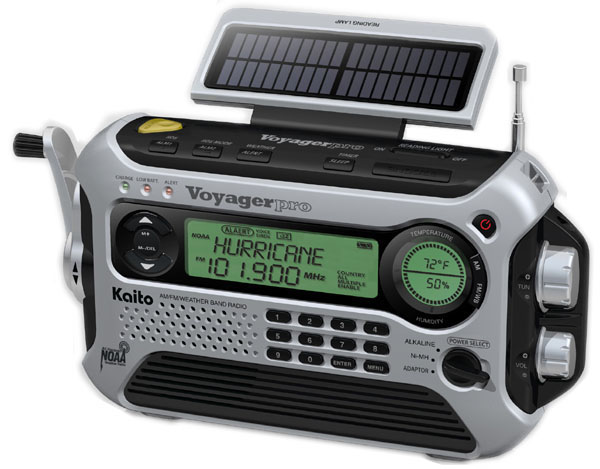
The Kaito KA600 Voyager Pro self-powered emergency radio

The Kaito KA600 self-powered radio has direct keypad entry of frequencies--a unique feature in this product niche.

Universal Radio has started selling the new Kaito KA600 Voyager Pro self-powered shortwave radio.  Two features really set this radio apart in the self-powered market: RDS and the ability to enter a frequency via direct keypad entry. I know of no other mass-produced unit that can do this.

We have made an entry for the KA600 in the Shortwave Radio Index where we will post updates and reviews of this model as they are available.

Passion for Morse Code, Night of Nights featured in NY Times

Many of you reading the SWLing Post are not only passionate shortwave radio listeners, but also amateur radio operators. My love of shortwave radio listening eventually led me to obtain my ham radio license, and as a result, to learn about Morse code. I had always admired Morse code–a.k.a. CW (Continuous Wave)–as a mode of communication in the amateur radio world.

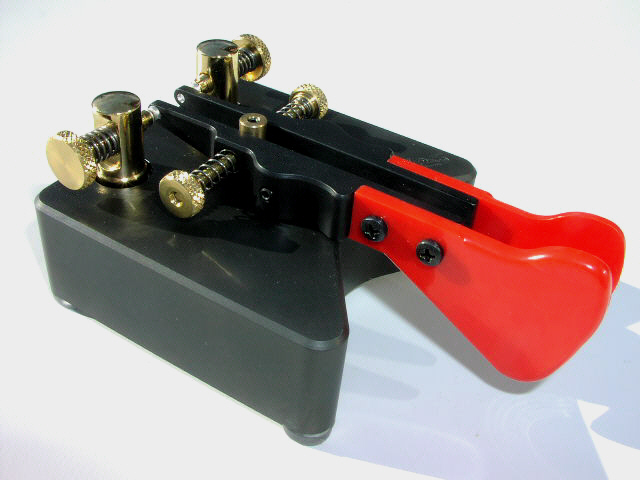
The Italian, hand-crafted Begali Simplex is this author's way of sending code in style. (Photo courtesy: Begali)

Several years ago my passion for CW finally encouraged me to learn it, during which time I practiced it almost daily with my ham radio mentors. During the process of learning code, I went from struggling to hear the difference between “dits” and “dahs” to being able to distinguish letters, symbols, words and phrases. Today, we chat over the SW radio bands about all sorts of things–radios, the weather, our families–in Morse code, or what we like to call “the sacred language.” Indeed, it is sacred…in its simplicity and its efficacy. Morse code is more intelligible than voice-over long-distance radio transmission, because the receiver or radio operator only needs to distinguish between the short and long “dit” and “dah” sounds, truly form following function.

And speaking of function, Morse code used to have a vital role in our communications landscape. The following article, from the NY Times, sheds some light on a little maritime radio history. For a Night Each Year, the Airwaves Buzz With Morse Code

Morse code/CW frequencies–how to find morse code on the shortwaves

Don’t be fooled by the NY Times article’s title: the airwaves are always filled with the sounds of Morse code 24/7. Don’t believe me? Simply turn on the SSB (single-side band) mode on your portable shortwave receiver, then tune between the following frequencies:

1800-2000 kHz

3500-3600 kHz

7000-7200 kHz

10100-10150 kHz

14000-14150 kHz

18068-18110 kHz

21000-21200 kHz

24890-24930 kHz

28000-28300 kHz

This is by no means a comprehensive list of all frequencies where you’ll hear CW; rather, it represents the main amateur radio watering holes for CW/Morse code operations.

Want to learn Morse code? Check out this article on QRPer.com!