Many thanks to SWLing Post contributor and noted political cartoonist Carlos Latuff, who shares the following illustrated radio listening report.
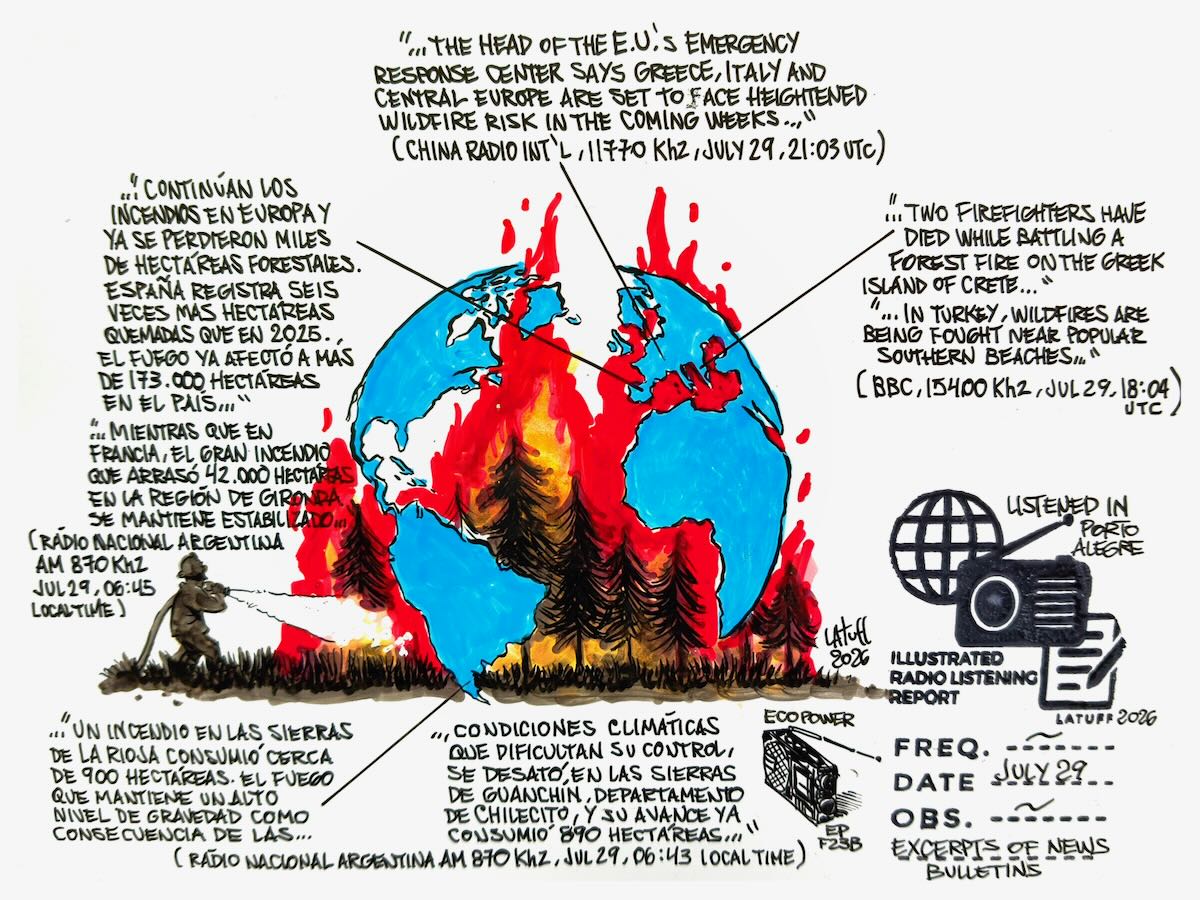

Carlos notes:
Wildfires, via Radio Nacional Argentina, BBC and China Radio International

Many thanks to SWLing Post contributor and noted political cartoonist Carlos Latuff, who shares the following illustrated radio listening report.
Carlos notes:
Wildfires, via Radio Nacional Argentina, BBC and China Radio International
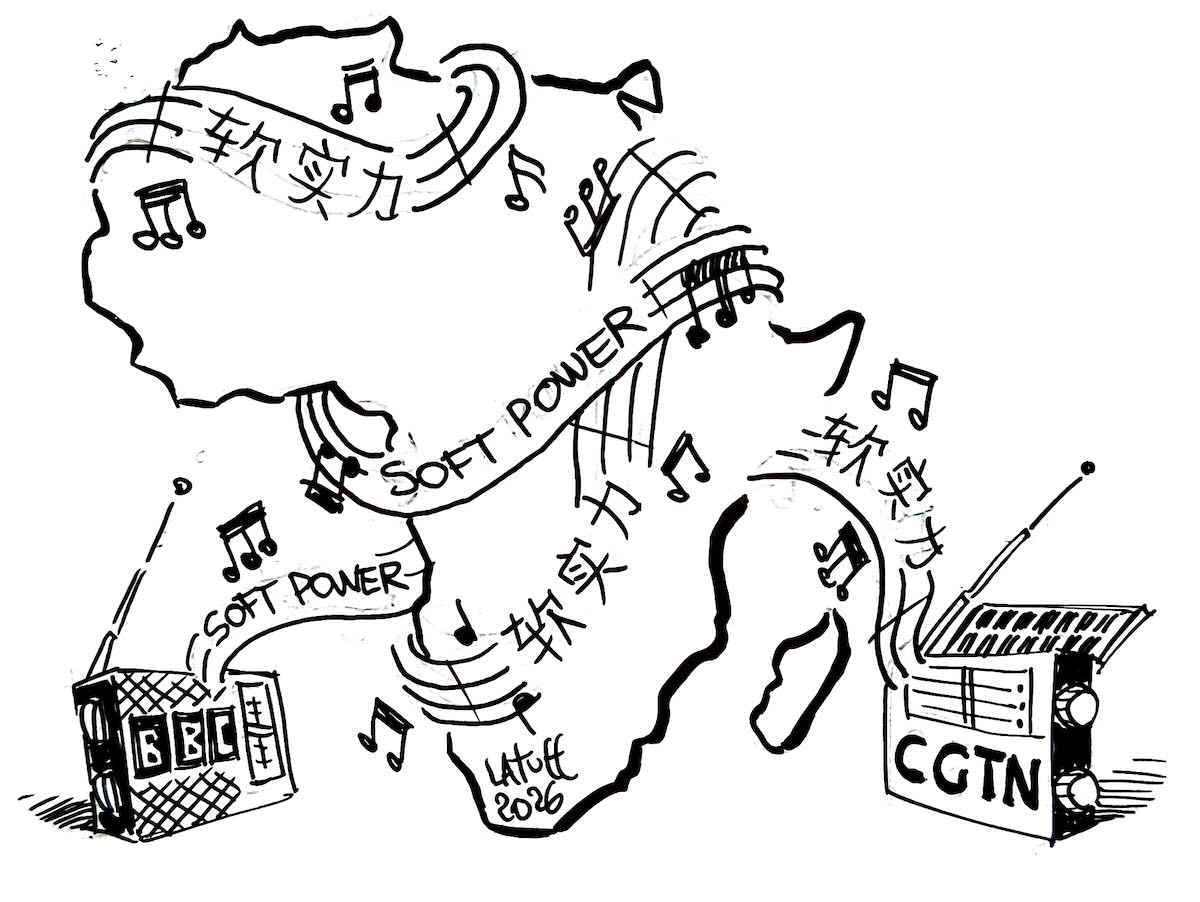
by Carlos Latuff
I found it strange to come across interference from a Chinese radio station on the BBC’s shortwave broadcast. For about a month, between April and May 2026, I was monitoring this special BBC radio service, transmitted from a station in Madagascar and aimed at Sudan and Gaza in Arabic. Aside from some technical and propagation issues, this was the first time I had encountered this kind of interference.
At first, I thought it was some sort of technical problem. The interference from the Chinese radio made it impossible to understand what was being said on the BBC broadcast. I tried again on other days, and the problem persisted. On May 25 at 17:00 UTC, I tuned into another BBC broadcast, this time transmitted from Ascension Island and aimed at West Africa in English, on the frequency 17780 kHz. To my surprise, the BBC broadcast was once again overpowered by the signal of a Chinese station — I couldn’t tell whether it was China National Radio or China Radio International (also known as CGTN Radio).
This monitoring was done on an Ecopower EP-F23B radio — a white-label model — with DSP technology and manual tuning. I wondered if it might be a problem with the device itself. So I used a digital Xhdata D808 radio, and when I tuned precisely to the frequency, I determined that the issue wasn’t a technical fault with my equipment, but rather deliberate interference with the BBC broadcast.
Faced with this situation, I started to believe this wasn’t a technical problem but an intentional act. I decided to investigate online, and it didn’t take long to find confirmation of my suspicions.
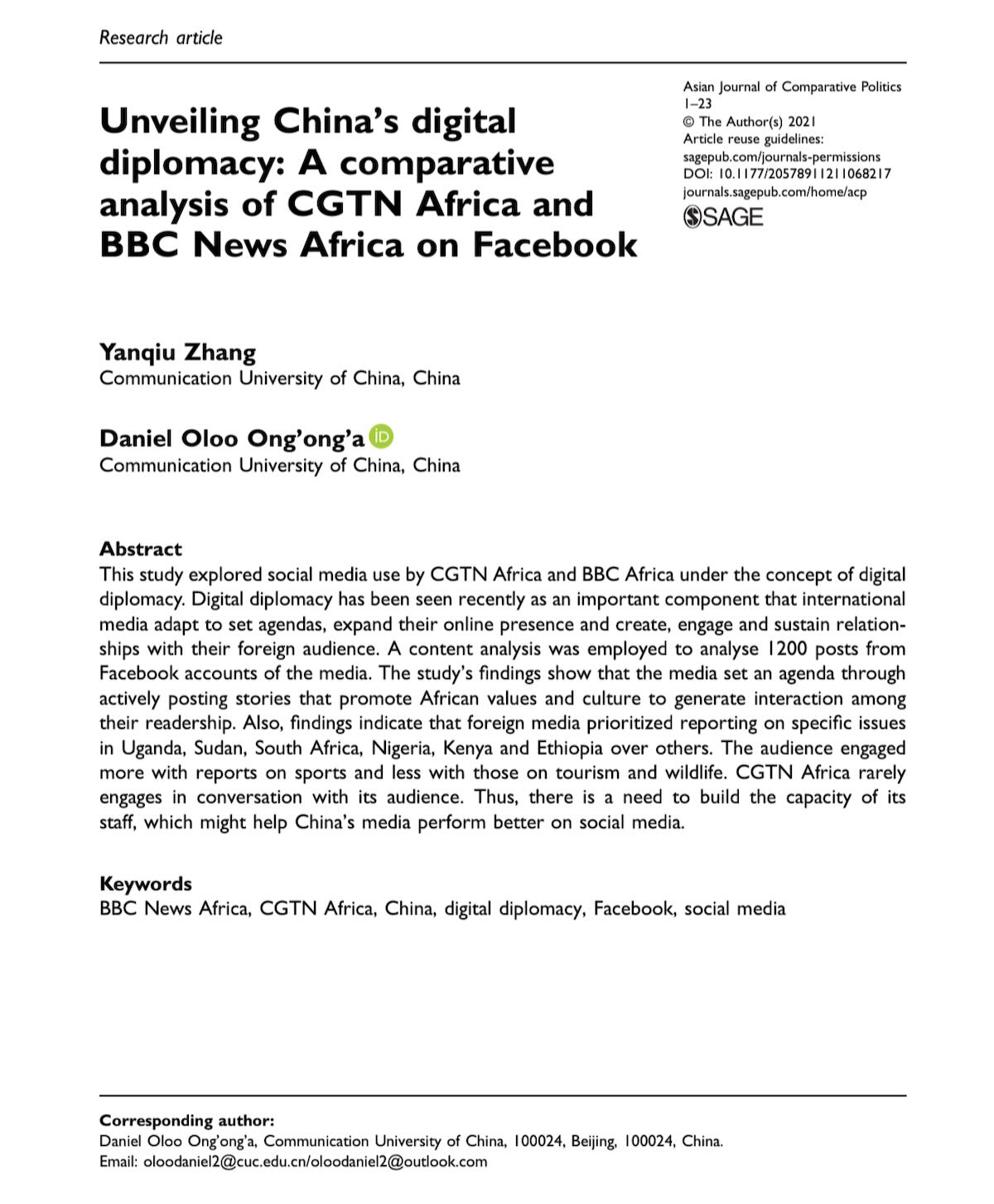
I found an article written in 2021 by two communication scholars, Yanqiu Zhang and Daniel Oloo Ong’ong’a, titled “Unveiling China’s digital diplomacy: A comparative analysis of CGTN Africa and BBC News Africa on Facebook.” It became clear to me that radio waves were once again the stage for geopolitical rivalry. The article focuses on the clash between the two broadcasters on social media, but clearly, this battle isn’t limited to the internet.
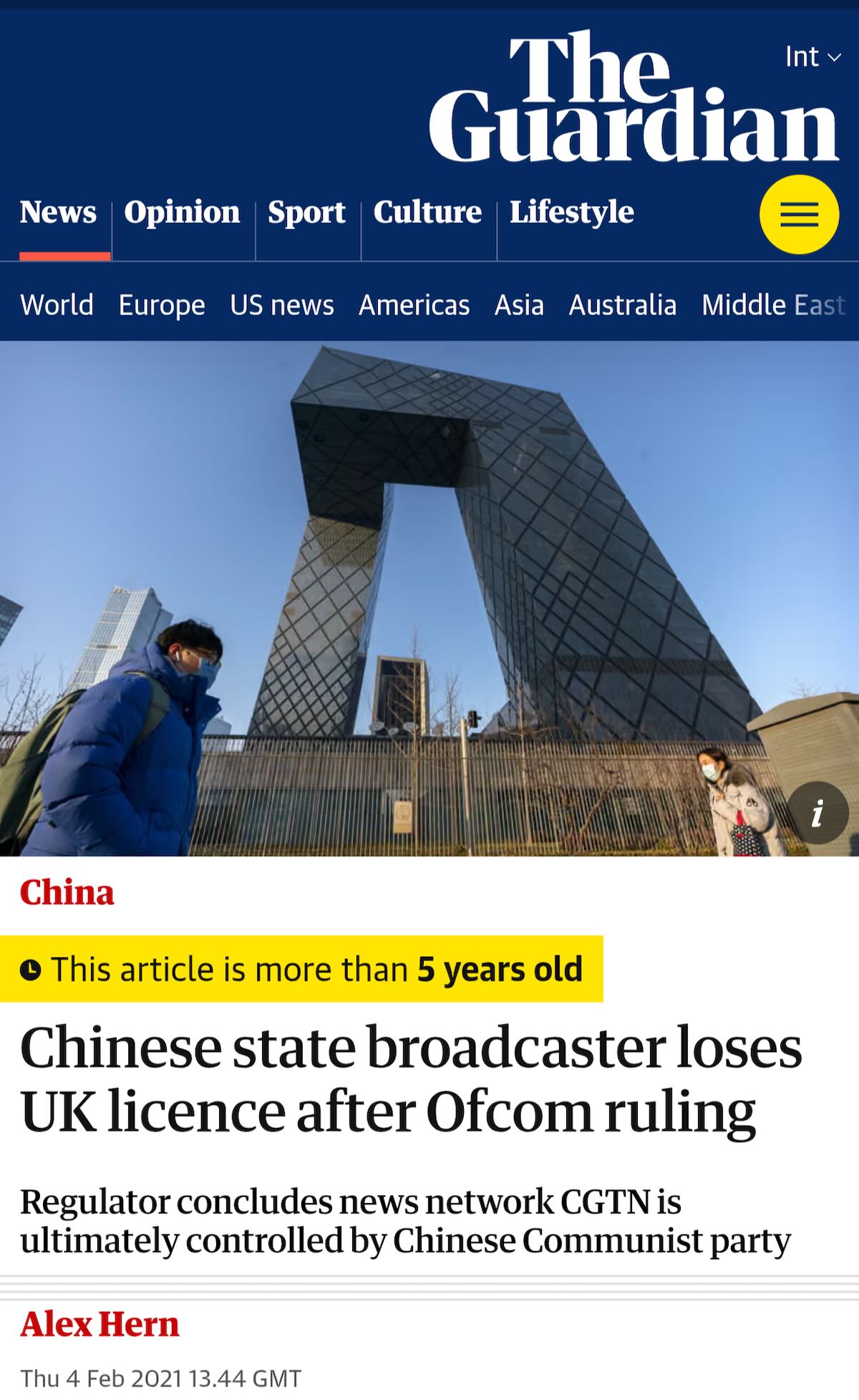
Continuing my research, I found news reports that illustrated this conflict well. On February 4, 2021, The Guardian reported: “Chinese state broadcaster loses UK licence after Ofcom ruling; Regulator concludes news network CGTN is ultimately controlled by Chinese Communist party.”
Well, well, ladies and gentlemen — we’re back to the good old days of the Cold War, aren’t we?
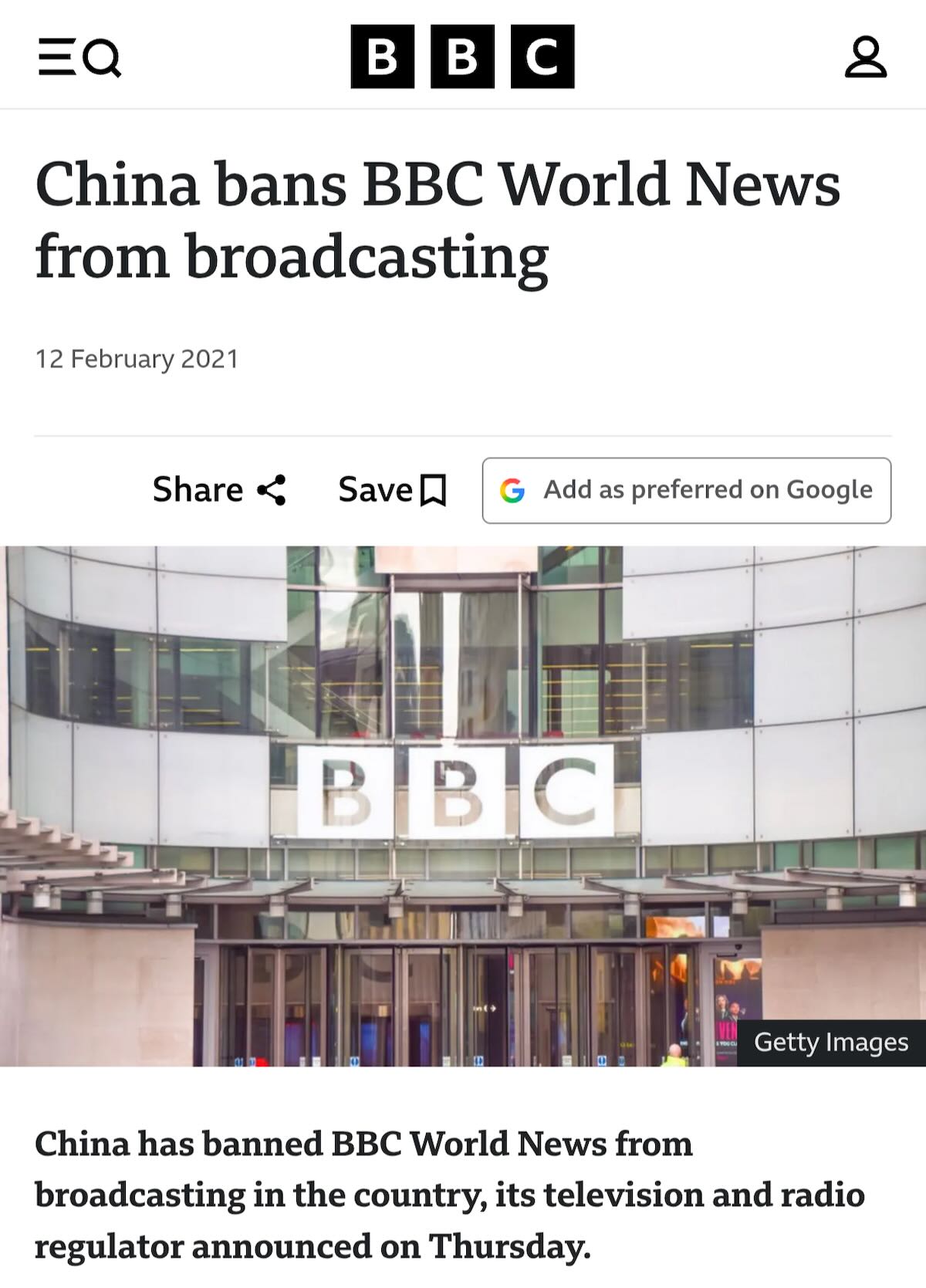
Following this arbitrary decision by the British government, the Chinese government quickly responded, as reported by the BBC itself on February 12 of that same year: “China bans BBC World News from broadcasting.”
Despite the differences between the BBC (a public service broadcaster) and CGTN (a state broadcaster), the fact is that both represent the interests of their respective nations.
In the 19th century, the British Empire — “on which the sun never set” — had colonies in Africa. The BBC, founded in 1922, was the voice of that empire. Indeed, in 1932 it created the Empire Service, the forerunner of the World Service. The British crown thus exerted its soft power through the microphones of the BBC and its hard power through the rifles and bayonets of its soldiers.
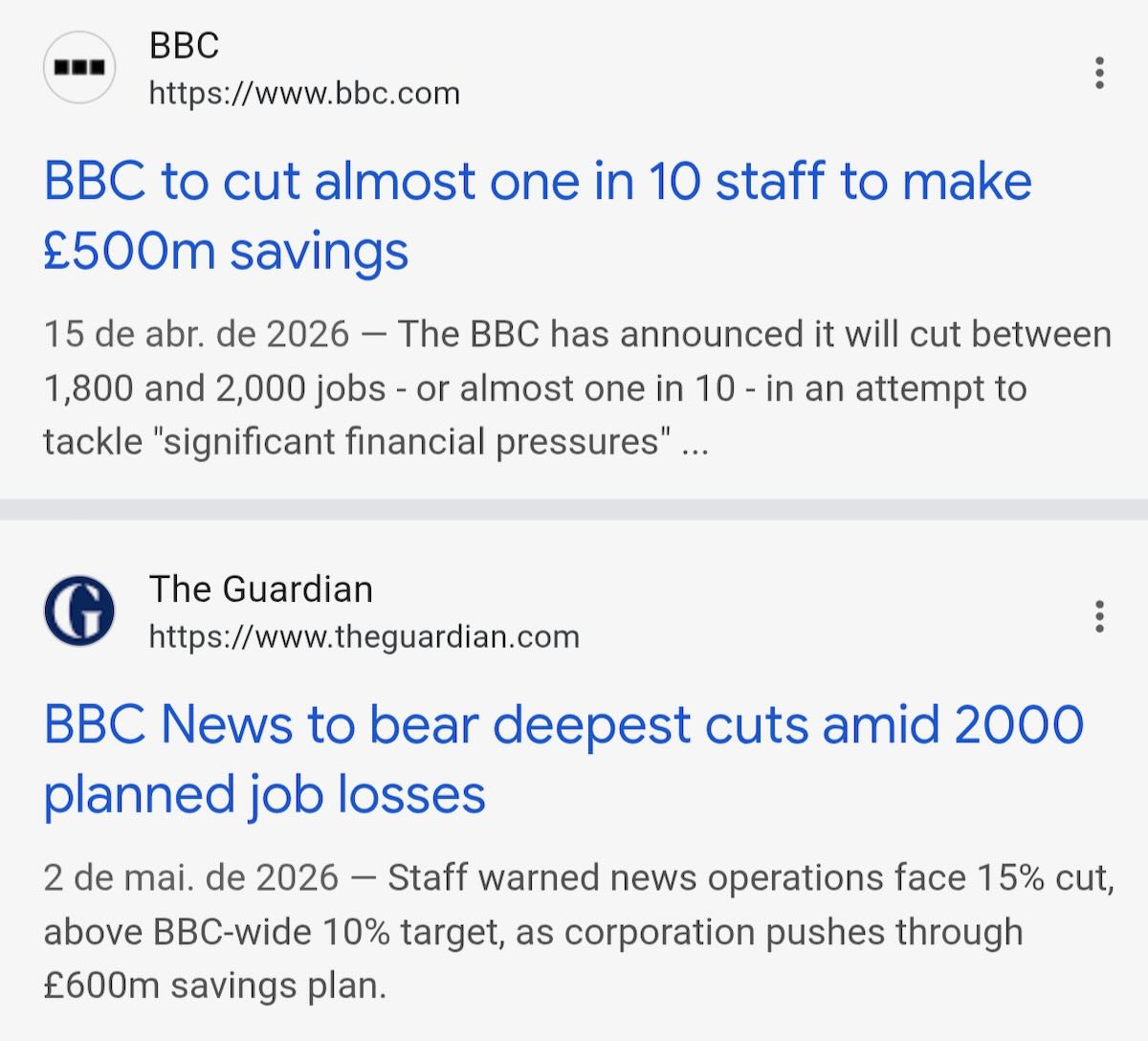
But the days of the redcoats are long gone. After much struggle and much bloodshed, African peoples expelled their British colonizers. However, the post-colonial BBC continues to defend the interests of the British state, even as it faces major financial difficulties. Due to budget cuts, the BBC has bet on digital platforms, cut radio programs in other languages, reduced its shortwave presence, and has been carrying out mass layoffs.
In contrast to the British broadcaster, Chinese CGTN has expanded its reach across the African continent, investing in digital platforms, but also in radio transmitters, programming in multiple languages, and the production of low-cost radios — with AM, FM, and shortwave, plus a flashlight and solar panel — taking into account that a large portion of Africa’s population has limited access to electricity and the internet.
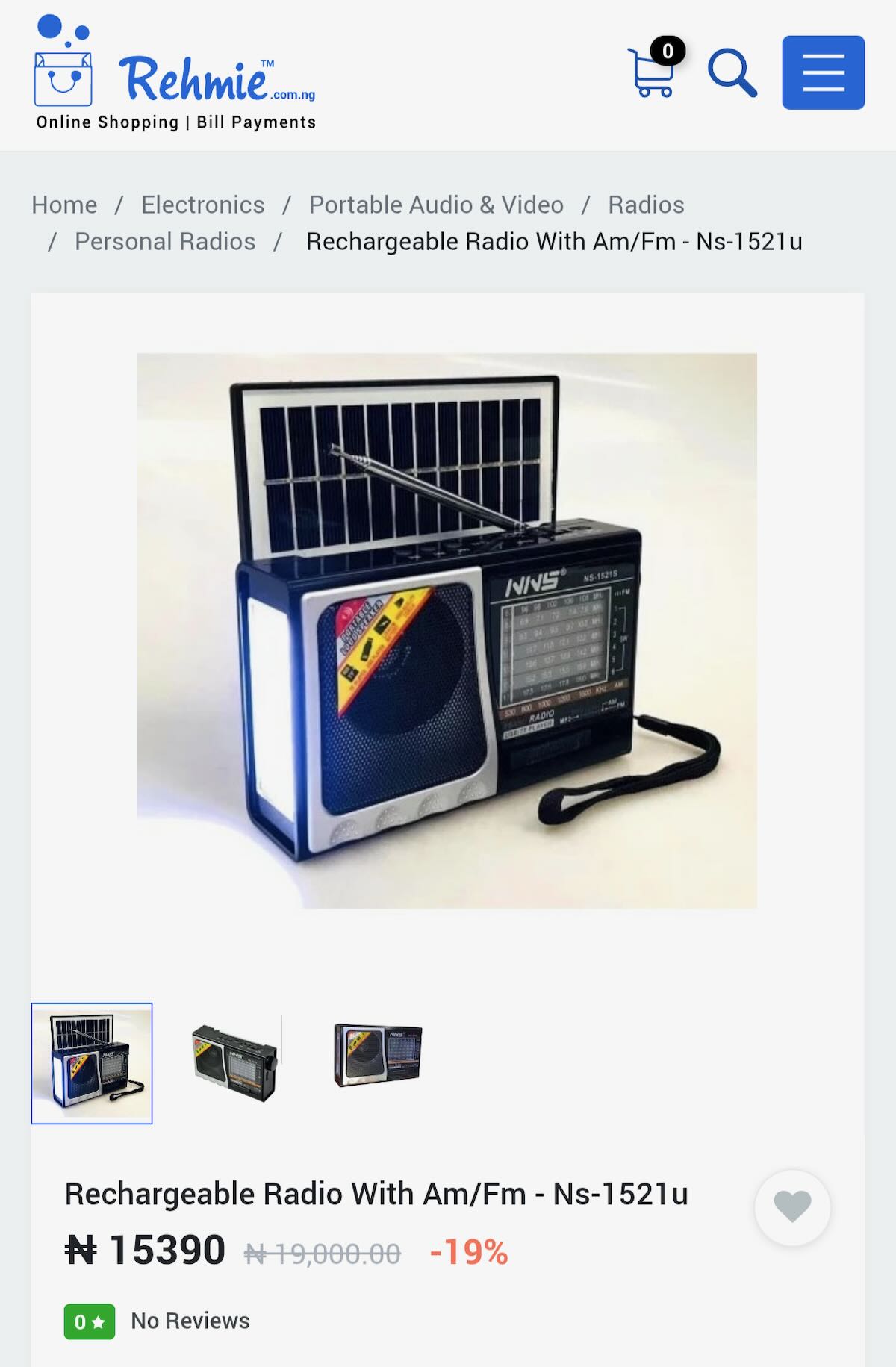
A Chinese-made radio, with a solar panel, flashlight, AM, FM and shortwave bands, advertised by an electronics store in Nigeria for the equivalent of US$11.
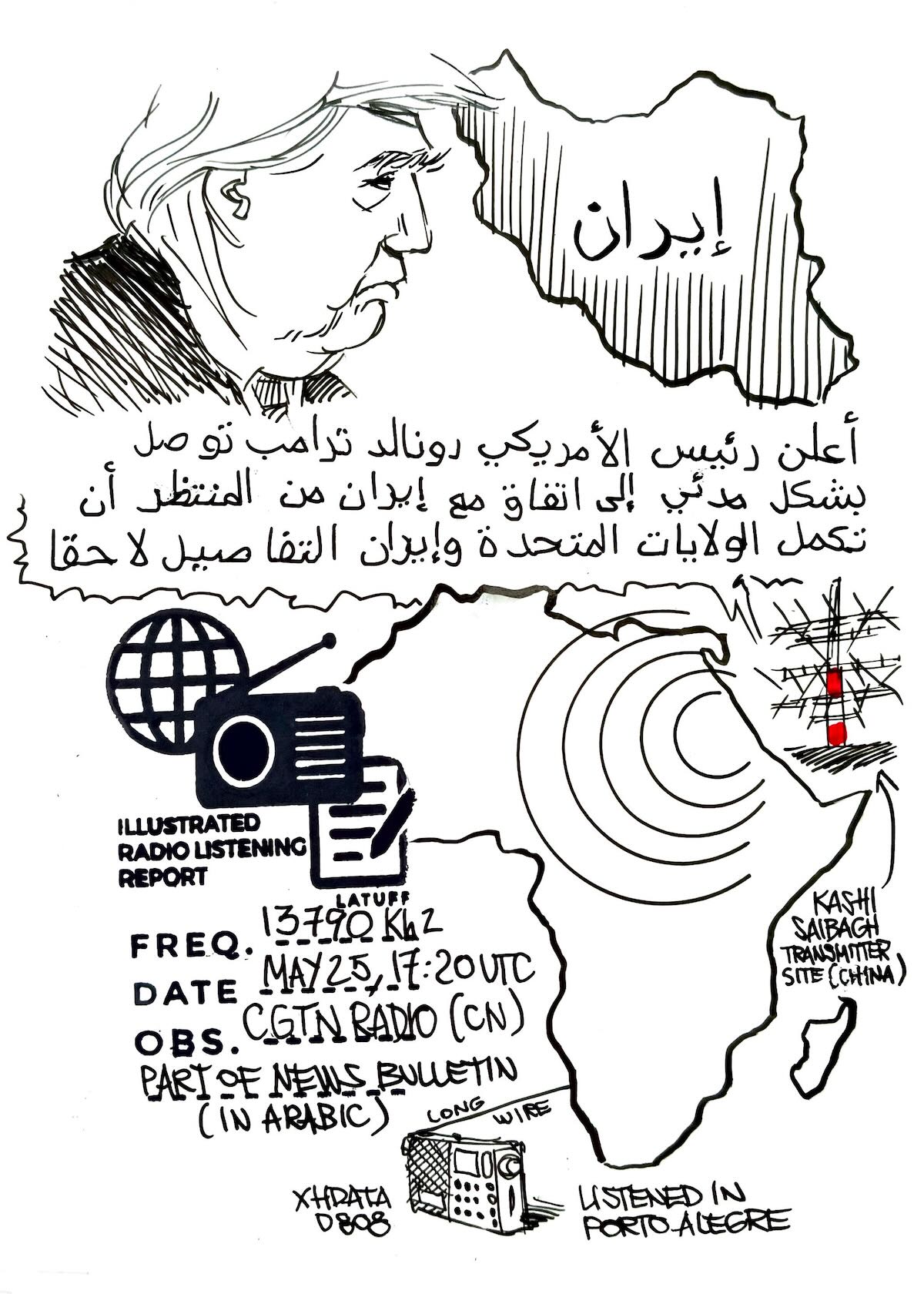
Illustrated Radio Listening Report related to CGTN broadcast in Arabic. While the BBC announced in 2023 the end of its Arabic broadcasts, CGTN broadcasts in that language on 7 different frequencies daily.
The BBC’s soft power in Africa was built in the wake of Britain’s colonial past. CGTN, on the other hand, reflects the relationship China has consolidated with the African continent as its largest trading partner.
The BBC, like the United Kingdom, is no longer the empire it once was, struggling to maintain what little influence it has left with whatever budget remains. CGTN, however, is the portrait of a rising economic power — a China that builds its soft power the same way it built its economic leadership: with persistence and patience.
In January of this year, UK Prime Minister Keir Starmer visited the president of China Xi Jinping in an attempt to resolve differences between the two nations. Meanwhile, the shortwave battle between the CGTN and BBC continues. A clash between a declining power and an emerging one. This isn’t about chasing ratings. It’s geopolitics, played out on the radio waves, before the ears of the world.
In any case, these are conclusions I drew from the recent history of animosity between the United Kingdom and China, notably involving the BBC and CGTN. It’s possible the interference I detected is just technical problems, who knows? Perhaps a simple coincidence.
Many thanks to SWLing Post contributor and noted political cartoonist, Carlos Latuff, who shares the following illustrated radio listening report of a recent CRU broadcast.
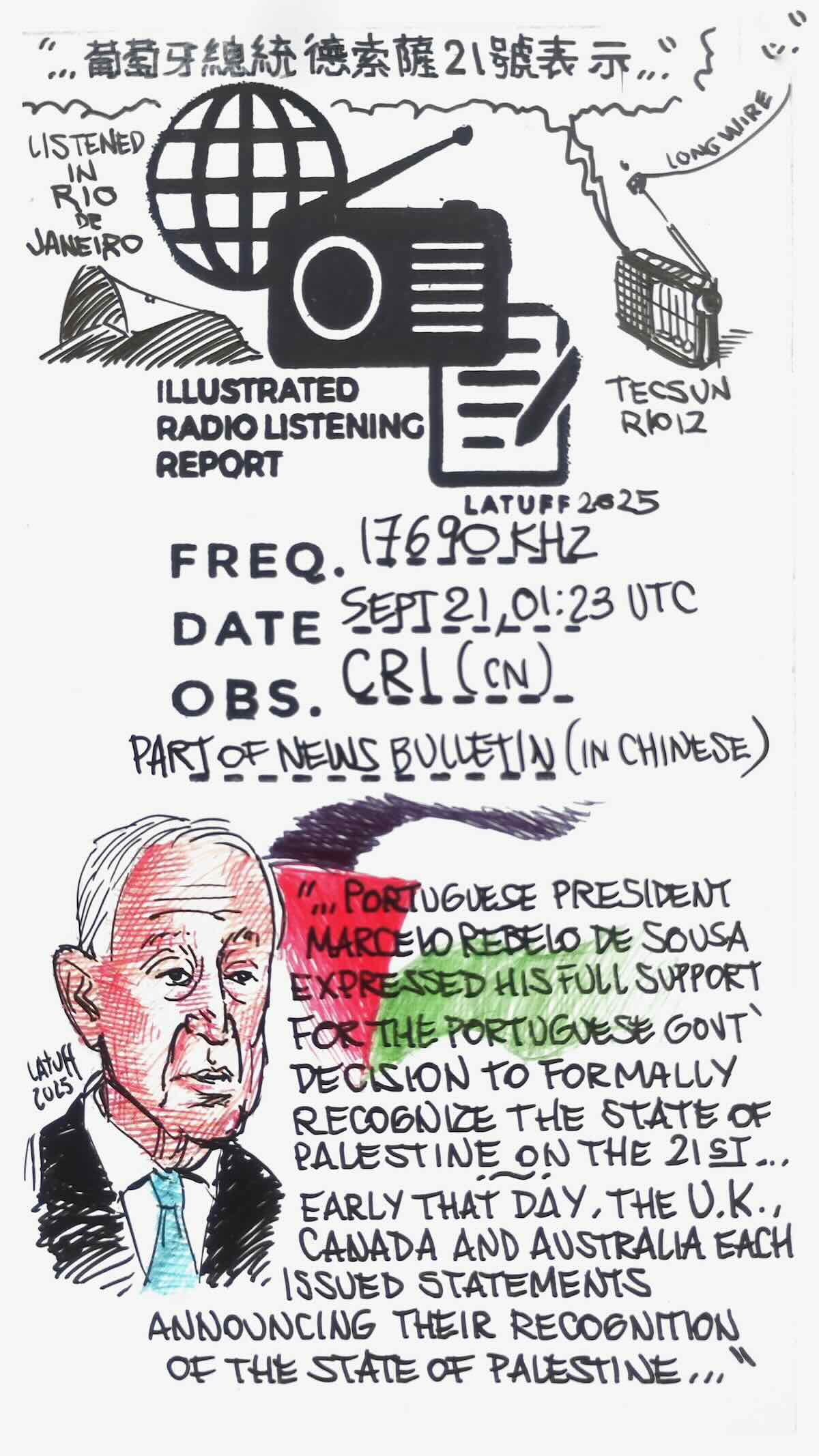
Carlos notes:
Portugal officially recognizes the State of Palestine, China Radio International (CRI), 17690 kHz
Many thanks to SWLing Post contributor and noted political cartoonist, Carlos Latuff, who shares his radio log art of a recent CGTN/CRI broadcast.
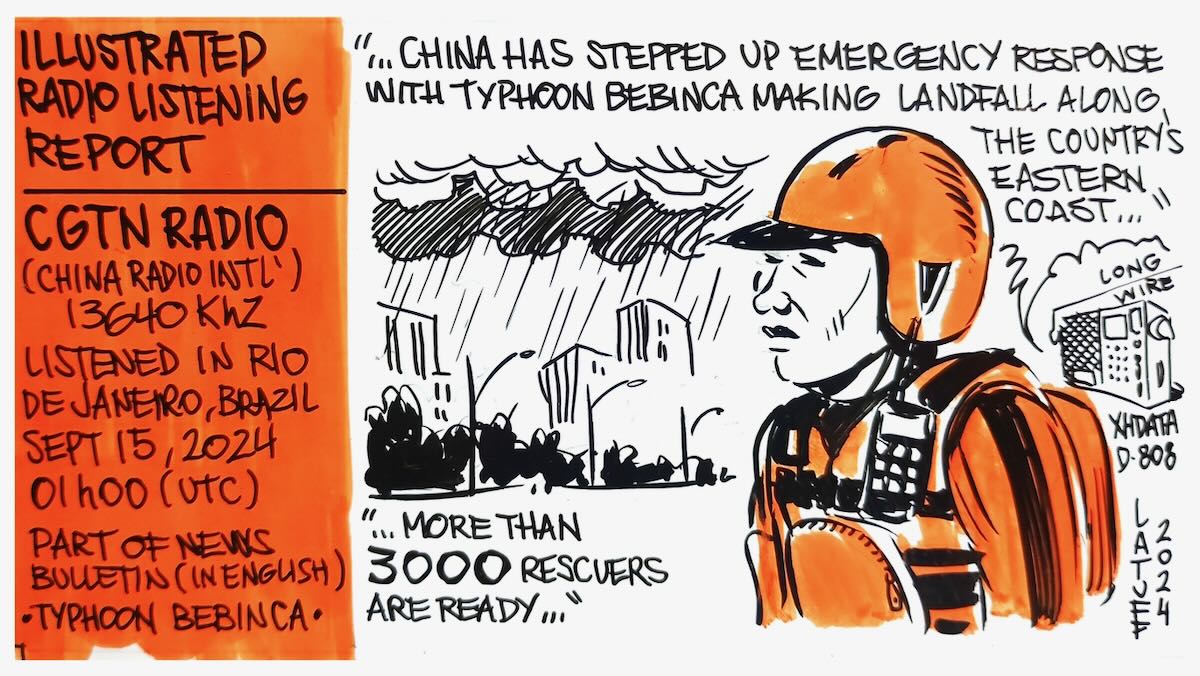
Carlos notes:
Part of CGTN Radio news bulletin about typhoon Bebinca approaching China. Listened via shortwave in Rio de Janeiro, Brazil.
Many thanks to SWLing Post contributor and noted political cartoonist, Carlos Latuff, who shares his radio log art of a recent CGTN (China Radio international) broadcast.
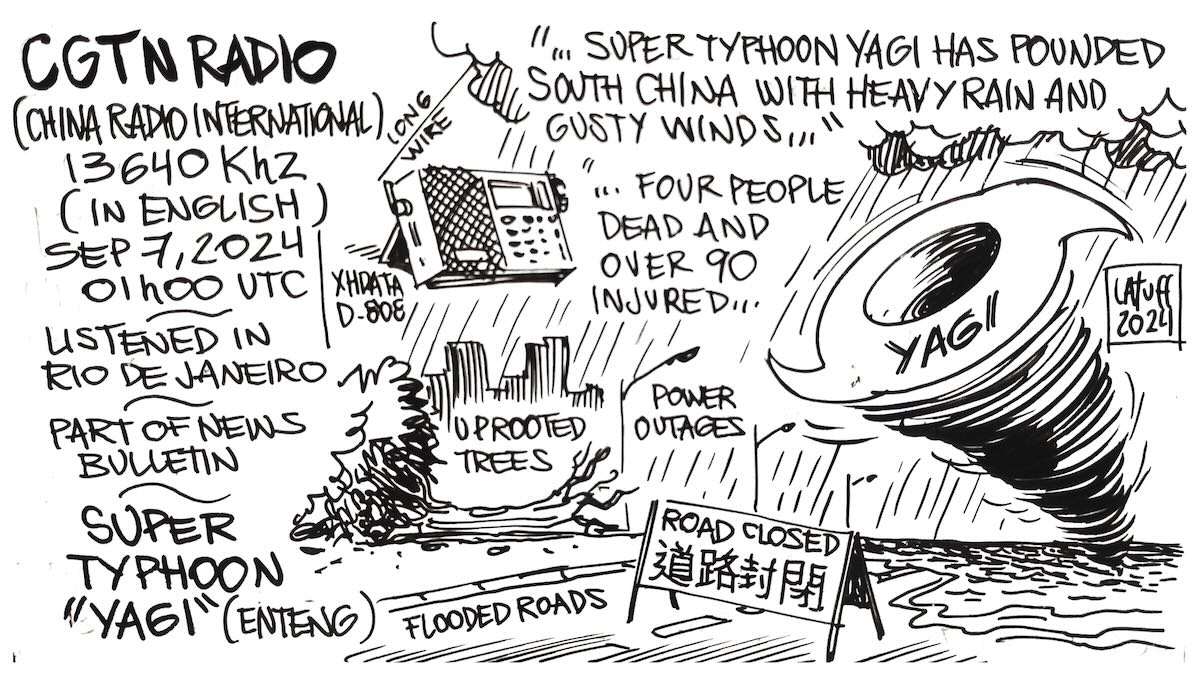
Carlos notes:
Part of CGTN Radio (China Radio International) news bulletin about damages caused by Super Typhoon Yagi in Chinese provinces. Listened in Rio de Janeiro.
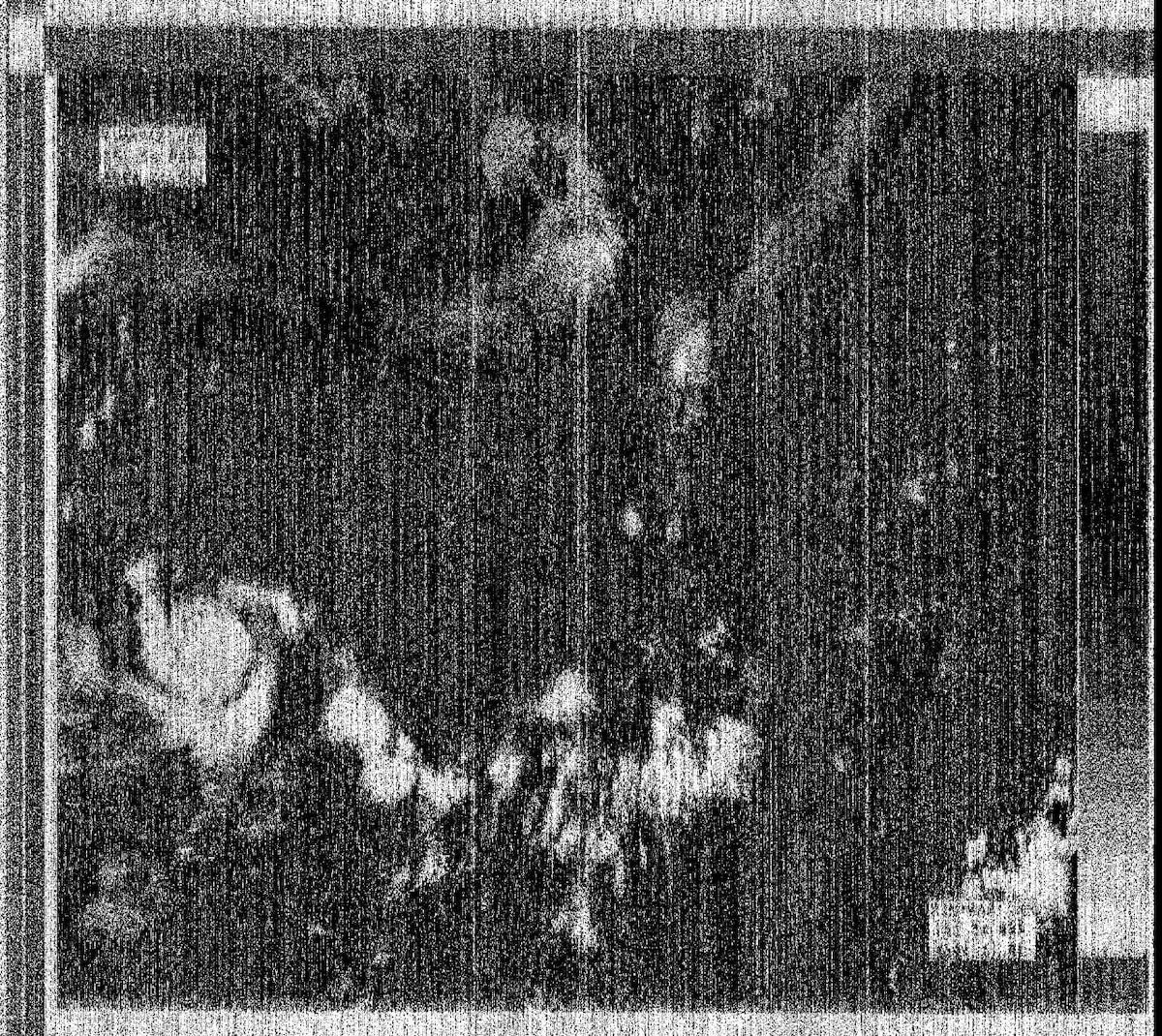
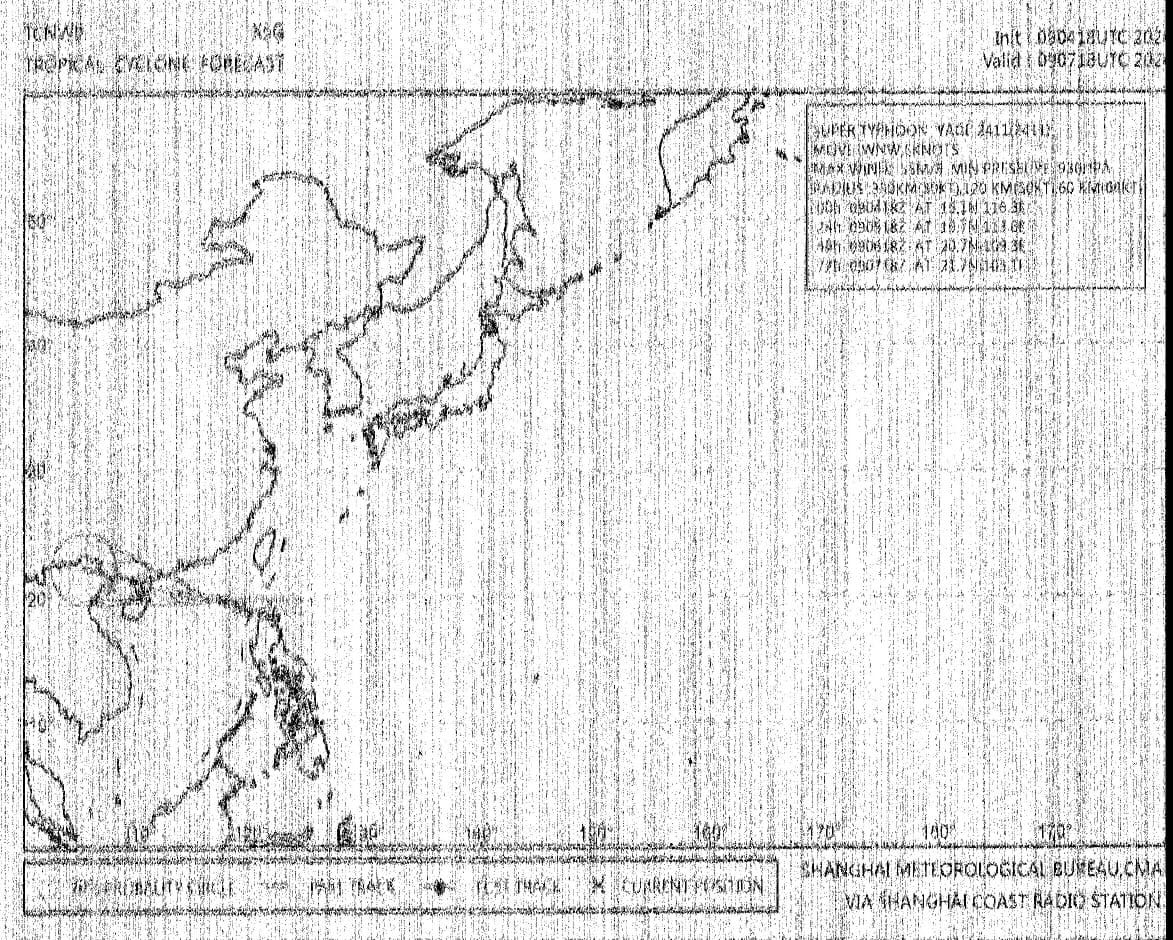
Many thanks to SWLing Post contributor and noted political cartoonist, Carlos Latuff, who shares his radio log art of a recent China Radio international broadcast plus radiofax transmissions from the Shanghai Meteorological Bureau.
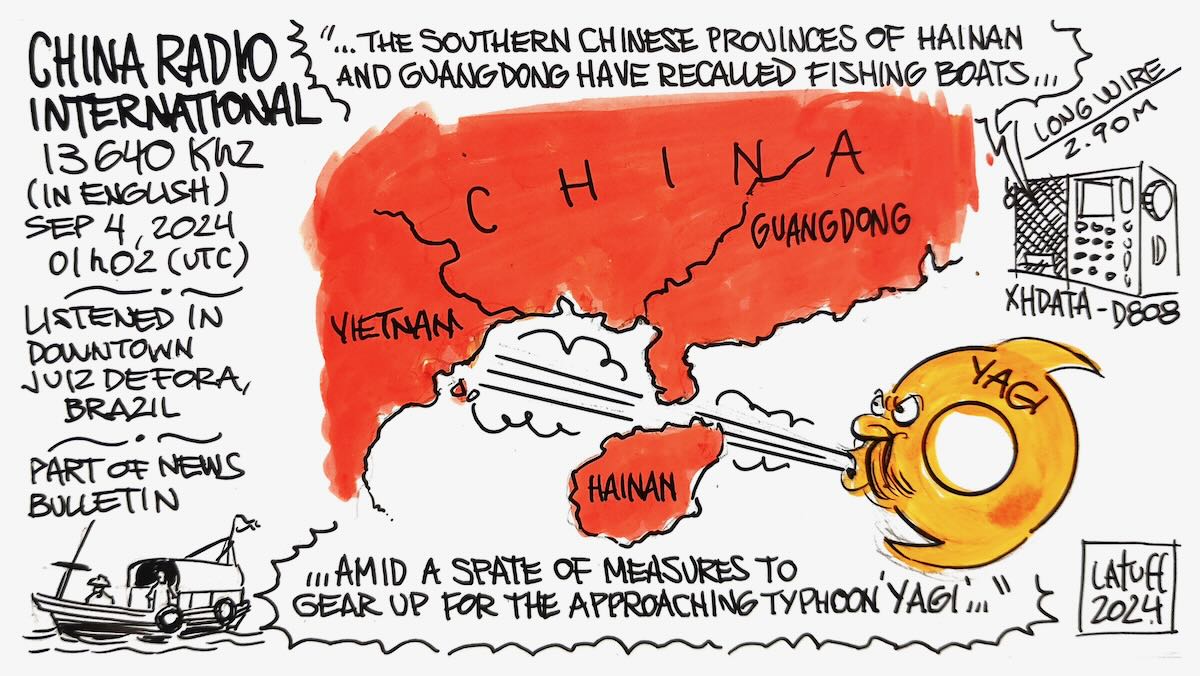
Carlos notes:
Part of news bulletin from China Radio International about Super Typhoon Yagi. Listened in downtown Juiz de Fora, Brazil. Frequency of 13640 kHz.
Click here to view on YouTube.
Bonus: Super typhoon Yagi (Enteng) via radiofax from Shanghai Meteorological Bureau, Guangzhou Meteorological Bureau and Japan Meteorological Agency, received at the campus of the Faculty of Human Sciences of the Federal University of Juiz de Fora, Brazil (see photo below):


Welcome to the SWLing Post’s Radio Waves, a collection of links to interesting stories making waves in the world of radio. Enjoy!
Many thanks to SWLing Post contributors Dennis Dura and Ulis (K3LU) for the following tips:
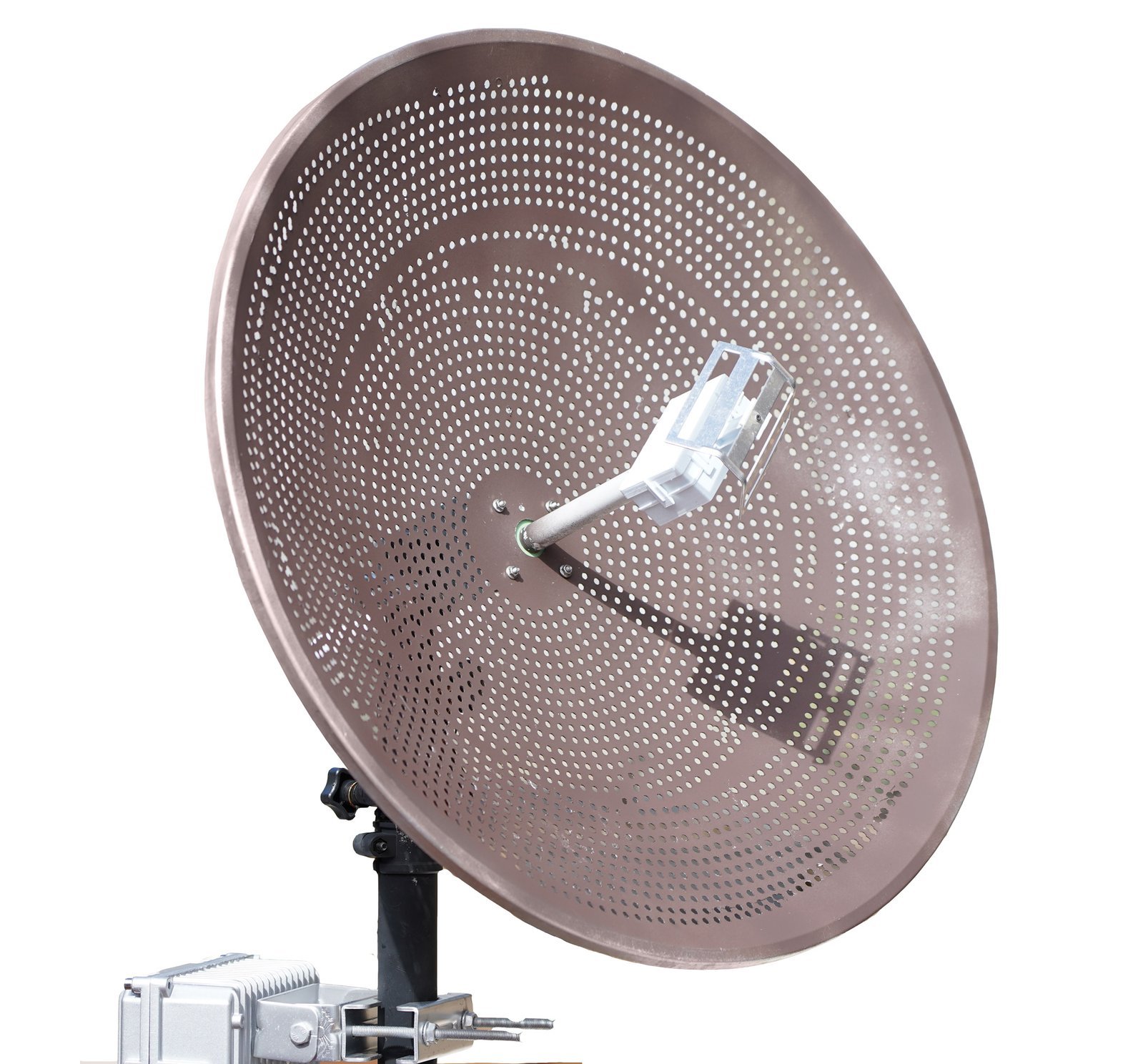
For the past few years we have been working on finding the best way to help beginners get started with L-band weather satellite reception and basic radio astronomy. We have now come up with a solution that we’re calling the ‘Discovery Dish’ – a lightweight 65 cm diameter dish and active filtered feed set.
The Discovery Dish will be crowd funded, and we currently have a pre-launch page set up on Crowd Supply. So if you are interested, please visit the pre-launch page and click on the Subscribe button for updates.
Discovery Dish is a 65-cm diameter aluminum satellite dish and active filtered feed designed for receiving GOES HRIT, GK-2A LRIT, FengYun LRIT, NOAA HRPT, Metop HRPT, Meteor M2 HRPT and other weather satellites that operate around 1.69 GHz. The dish is designed to weigh under one kilogram, and it splits into three petals, making it easier to ship worldwide. The 1.69 GHz feed contains a built-in LNA right at the feed point, as well as filtering, which means that there is almost no noise figure loss from cables or connectors.
Note that the prototype images show an early non-petalized prototype with rough laser cut wind holes. The production version will obviously be a lot neater looking! […]
Click here for more details about the Discovery Dish campaign.
State-owned China Radio International is airing its content without attribution on commercial radio stations in Europe.
China has consistently and systematically pursued the dissemination of its narratives on the global stage, with the primary aim of shaping the international landscape to align with its strategic interests and ideological perspectives. These endeavors encompass a diverse array of tactics, including the acquisition of media enterprises, active engagement by Chinese ambassadors in both mainstream and fringe media outlets, the utilization of paid supplements, collaboration with pro-Kremlin media, and the steadily expanding presence of China across various social media platforms.
Recently, China Radio International (CRI), an official Chinese state media outlet broadcasting in multiple languages, has garnered attention for its establishment of partnerships with and provision of content to radio stations worldwide. Remarkably, CRI has effectively outsourced the production of China-related programming to local partners, often without transparently disclosing the sponsorship of content creation to the listeners. This strategy, known in Chinese as “borrowing a boat to go out on the ocean,” plays a pivotal role in laundering Beijing’s propaganda and fostering the acceptance of its messaging among local audiences.
One illustrative case of this approach within Europe involves two Czech radio stations, namely Radio HEY, a nationwide commercial radio station airing rock music, and Radio Color, which positions itself as “one of the last independent radios.” From 2019 to May 2023, these radio stations broadcasted a program titled “Barevný sv?t” (Colorful World), a nearly 30-minute segment aired six times a week, with the objective of acquainting Czech listeners with Chinese culture, language, and history. [Continue reading…]
When cheap digital TV dongles enabled radio enthusiasts to set up software defined radio (SDR) systems at almost zero cost, it caused a revolution in the amateur radio world: now anyone could tune in to any frequency, with any modulation type, by just pointing and clicking in a computer program. While this undoubtably made exploring the radio waves much more accessible, we can imagine that some people miss the feeling of manipulating physical buttons on a radio while hunting for that one faint signal in a sea of noise. If you’re one of those people, you’re in luck: [Kaushlesh C.] has built a portable, self-contained SDR system with real knobs and switches, called SDR Dock 1.0.
The heart of the system is a Raspberry Pi running GQRX, an open-source SDR program that supports many different RF modules. [Kaushlesh] used an Airspy HF+ Discovery, a compact receiver that can work the HF and VHF bands, but it’s easy to modify the SDR Dock to accept other types like those ubiquitous RTL dongles. A seven-inch LCD screen with integrated speakers forms the main output device, with everything powered by a 10,000 mAh lithium-polymer battery. [Continue reading…]
Many baseball fans, especially older ones, originally fell in love with America’s pastime by listening to ballgames on AM radio
Click here to browse this gallery.
Please consider supporting us via Patreon or our Coffee Fund!
Your support makes articles like this one possible. Thank you!