Category Archives: Nostalgia

Radio Waves: AU2JCB Special Event, 1 Million Watt FM Tower, 3ZZZ Breaches Rules, Australia Calling, WWII KGEI, and EV Charger QRM

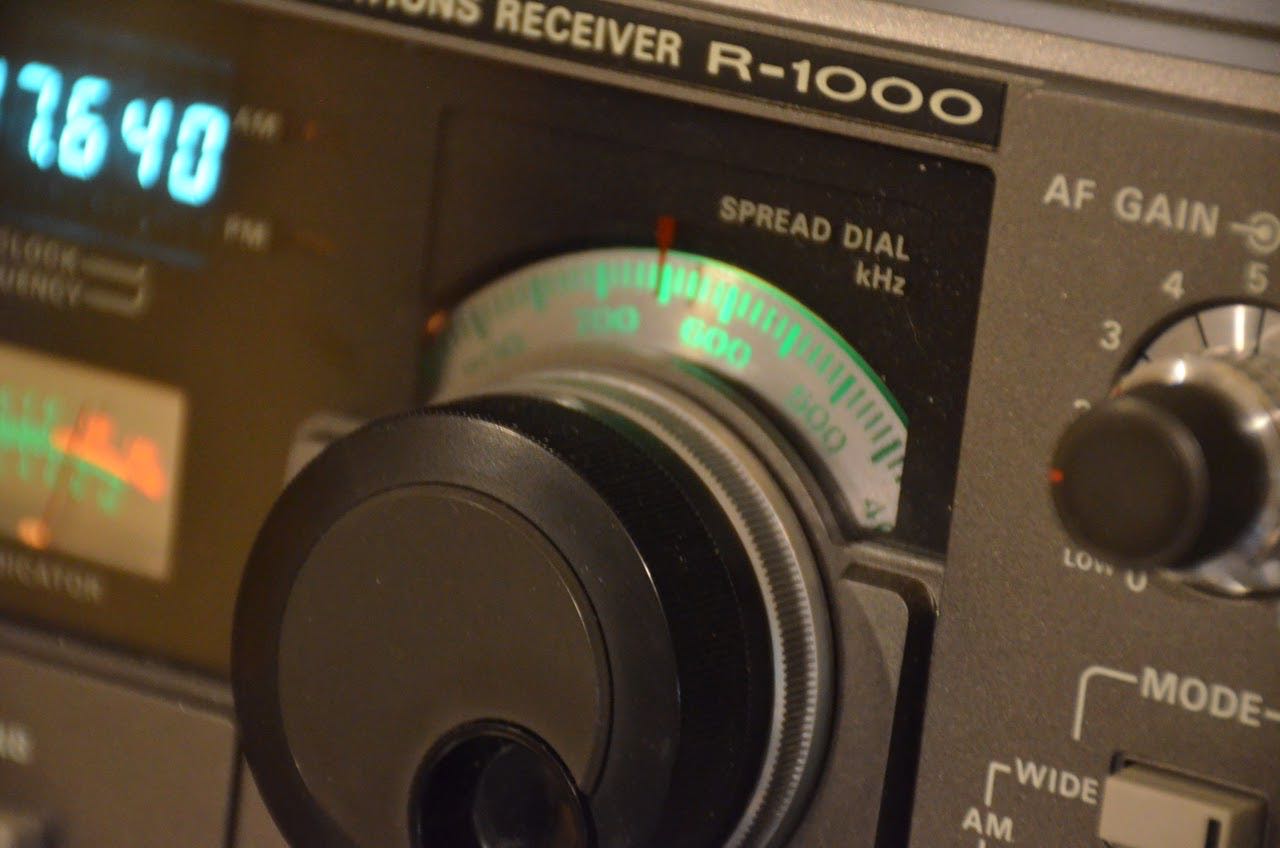
Icom IC-756 Pro Transceiver Dial

Radio Waves:  Stories Making Waves in the World of Radio

Welcome to the SWLing Post’s Radio Waves, a collection of links to interesting stories making waves in the world of radio. Enjoy!


AU2JCB Special Event Station (Nov 25 – Dec 13, 2022)

Many thanks to SWLing Post contributor, Datta, who shares the following announcement:

AU2JCB is a special event call-sign to commemorate the birth date (30 NOV) & to pay homage & to tell about the great INDIAN scientist Acharya JAGADISH CHANDRA BOSE who is recognized as the “Father of Wireless Communication” by the scientific community of our world &IEEE.

I, VU2DSI, have been operating with this call sign for the last 17 years since 2005 & operate AU2JCB from 25 NOV 2022 to 13 DEC 2022.

The Details of operation —-

Period: 25 NOV 2022 to 13 DEC 2022

Frequencies:

  • 10 M: 28545, 28510,28490
  • 21 M: 21235, 21310, 21350
  • 20M: 4210, 14250, 14310
  • 40 M: 7040, 7150
  • 80 M: 3710
  • 6M in FM mode 50800, 51500
  • 10 M: 29700

Preferably the operation will be on higher bands according to propagation conditions.

QSL— Direct to VU2DSI, “SURABHI” MEHERABAD. AHMEDNAGAR.414006. INDIA.

FOR DX STATIONS PLEASE SEND 2IRC’s—–IF POSSIBLE— as many many DX stations are requesting QSL’s.

I will appreciate the GOOD number of used postal stamps instead of IRC as I love collecting stamps.

About

Aacharya J.C.Bose is well known as the “Father of Wireless Communication”.

Acharya Bose’s demonstration in 1895 & 1897 predates all.

Bose transmitted wireless signals to a distance of a mile. Popova in Russia was still trying remote signaling at this time & the first wireless experiment by Marconi was not successful until May 1897.

Bose is a pioneer in microwave optics technology.

Bose’s invention of 1-centimeter to 5 millimeters radio waves is being used in radars, satellite communication& remote sensing.

Bose’s concepts from his original 1897 papers are now incorporated into a new 1.3 mm multi-beam receiver on the NRAO (National Radio Observatory) 12 Meter Telescope.

Bose anticipated the use of P-type& N-type semiconductors & hence 60 years ahead of his time. Bose developed the use of GALENA crystals for making receivers.

In Bose’s presentation to the Royal Institution in London in January 1897, he speculated on the existence of electromagnetic radiation from the sun. This radiation from the sun was not detected until 1942.

Video: Exploring a 1 MILLION Watt FM Tower (YouTube)

My Dad and I took a road trip to tour the 1 MW FM community tower in Crestwood, MO, serving the entire St. Louis metro area combining 10 FM radio signals into two antenna systems.

Special thanks to the Audacy engineers who allowed us to take a peek at their (very clean!) transmitter rooms and equipment!

Click here to view on YouTube.

3ZZZ breaches community radio broadcast rules in its coverage on Ukraine (ACMA)

The Australian Communications and Media Authority (ACMA) has found Melbourne-based community broadcaster 3ZZZ in breach of community broadcasting rules in its coverage of the invasion of Ukraine by Russia. Continue reading

“Mystery of BBC radio’s first broadcasts revealed 100 years on”

(Source: BBC News via Jon Langley)

Mystery of BBC radio’s first broadcasts revealed 100 years on

The BBC is celebrating the centenary of its first official broadcast – a news bulletin that included a court report from the Old Bailey, details of London fog disruption, and billiards scores.

It was broadcast by London station 2LO, but new research shows many early BBC moments came from northern England.

Manchester station 2ZY aired the first children’s show and introduced the first regular weather forecast.

Birmingham’s 5IT station broadcast the first “official concert”

The BBC that began broadcasting at 6pm on 14 November 1922 was not the British Broadcasting Corporation of today. It was in fact the British Broadcasting Company and was made up of separate stations around the country operated by different companies.

London 2LO was run by the Marconi company. Manchester’s station was operated by Metropolitan-Vickers.

However, in these early days few records were kept of what was broadcast.

But new research on the BBC’s very early days has been carried out by Steve Arnold, a self-confessed Radio Times obsessive.

His tricky task was to try to piece together the BBC’s schedules before the Radio Times – so named as it listed the times that the new medium’s shows were being broadcast – was first published in September 1923.

He explained he found information in “gossip columns [in regional newspapers] mainly, people saying we listened to this last night and this is the only record of some of these things”.

Now, using sources from archive documents and newspapers, Steve has begun to piece together a picture of what the early BBC was doing. [Continue reading at the BBC…]

Radio Waves: QSL Book, Ham Radio in Taiwan Civil Defense, Radio Silence in Venezuela, and ARRL Handbook 100th Edition

Radio Waves:  Stories Making Waves in the World of Radio

Welcome to the SWLing Post’s Radio Waves, a collection of links to interesting stories making waves in the world of radio. Enjoy!


New Book: QSL? (Do You Confirm Receipt of My Transmission?) (Standards Manual)

A collection of over 150 “QSL cards”, QSL? chronicles a moment in time before the Internet age, when global communication was thriving via amateur, or “ham”, radio operators.

Discovered by designer Roger Bova, the distinctly designed cards follow the international correspondence of one ham, station W2RP, who turned out to be the longest-standing licensed operator in The United States.

Click here to read more.

If China declares war, these ham radio enthusiasts could be crucial (LA Times)

TAIPEI, Taiwan — On Tuesday nights, BX2AN sits near the Xindian River, motionless but for his thumb and middle finger, rhythmically tapping against two small metal paddles. They emit a sound each time his hand makes contact — from the right, a dit, or dot; from the left, a dah, or dash, the building blocks of the Morse code alphabet.
“Is anyone there?” he taps.

The replies come back in fits and starts: from Japan, then Greece, then Bulgaria. Each time, BX2AN, as he is known on the radio waves, jots down a series of numbers and letters: call signs, names, dates, locations. Then he adjusts a black round knob on his transceiver box, its screens glowing yellow in the dark.

There can be no doubt that this is his setup. That unique call sign is stamped across the front of his black radio set, scrawled in faded Sharpie on his travel mug and engraved in a plaque on his car dashboard. On the edge of his notepad, he’s absent-mindedly doodled it again, BX2AN.

In the corporeal world he is Lee Jiann-shing, a 71-year-old retired bakery owner, husband, father of five, grandfather of eight and a ham radio enthusiast for 30 years. Every week, he is the first to arrive at this regular meeting for Taipei’s amateur radio hobbyists.

[…]The self-governing island, about 100 miles east of China, is weighing wartime scenarios in the face of growing military aggression from its vastly more powerful neighbor. If cell towers are down and internet cables have been cut, the ability of shortwave radio frequencies to transmit long-distance messages could become crucial for civilians and officials alike. [Continue reading…]

Radio silence grows in Venezuela as government shutters dozens of stations (Reuters)

CARACAS, Oct 26 (Reuters) – In July officials from Venezuela’s telecommunications regulator entered the Moda 105.1 FM radio station, in the northwestern state of Cojedes, accompanied by members of the national guard and demanding to see all the station’s licensing.

Hours later they stopped it broadcasting – making Moda one of at least 50 stations in Venezuela’s interior which have been closed so far this year by the Conatel regulator because it says they lack valid licenses.

The accelerated closures are a new step in efforts by the government of President Nicolas Maduro to control information and give state media hegemony over communications, journalist guilds and non-governmental organizations say, continuing a policy begun under his predecessor Hugo Chavez. [Continue reading…]

The ARRL Handbook for Radio Communications100th Edition (ARRL)

We have arrived at a milestone. The 100th edition of The ARRL Handbook for Radio Communications is here: Handbook 100. How do you celebrate the most widely used one-stop reference and guide to radio technology principles and practices? By continuing to fill the pages of another edition with the progress and achievement of radio amateurs. Handbook 100 is written for everyone with a desire to advance the pursuit of wireless technology. Here is your guide to radio experimentation, discovery, and innovation.

What’s Inside

Each chapter is filled with the most up-to-date knowledge representative of the wide and ever-expanding range of interests among radio amateurs. There are practical, hands-on projects for all skill levels — from simple accessories and small power supplies to legal-limit amplifiers and high-gain antennas.

Key topics:

  • Radio electronics theory and principles
  • Circuit design and equipment
  • Signal transmission and propagation
  • Digital modulation and protocols
  • Antennas and transmission lines
  • Construction practices

Updated with new projects and content, including:

  • An all-new chapter on radio propagation covering a wide range of bands and modes
  • New and updated sections on electronic circuit simulation
  • New cavity filter and high-power HF filter projects
  • New coverage on digital protocols and modes
  • New material on RFI from low-voltage lighting and other sources
  • Revised sections covering new RF exposure limits
  • New content on portable station equipment, antennas, power, and assembly
  • New material on ferrite uses and types
  • New section on how to use portable SDR to locate sources of RFI …and more.

Click here for more information and to place an order.


Do you enjoy the SWLing Post?

Please consider supporting us via Patreon or our Coffee Fund!

Your support makes articles like this one possible. Thank you!

Don Moore’s Photo Album: Ecos del Torbes

Many thanks to SWLing Post contributor, Don Moore–noted author, traveler, and DXer–for the following guest post series:


Don Moore’s Photo Album

by Don Moore

Introduction

When I discovered DXing over fifty years ago I also discovered the world. Through my ears I traveled to other countries and explored other cultures. But DXing has also literally taken me places. My early interest in Latin American DXing developed into a broader interest in Latin America. That led to me joining the Peace Corps after college and working three years in Honduras. That experience furthered my interest in Latin America and I have continued to travel in the region whenever possible. For me DXing and travel were always intertwined. I’m one of a handful of hobbyists who took DXing beyond just listening and went knocking on broadcasters’ doors to visit the distant stations I heard. My ex-wife dubbed this ‘door-to-door DXing.’

To date I’ve visited over 150 radio stations in thirteen countries. A few were medium-wave or FM only, but I was always most interested in visiting broadcasters that used shortwave, either at the time of my visit or a few years before. As my station visits were primarily made in the 1980s and 1990s, almost all of the stations are long-gone from the shortwave bands. However, many are still around on medium wave and FM and often also via streaming on the Internet. As much as I miss the magic of shortwave I know that these stations reach more listeners today via streaming than they ever did with their low-powered shortwave transmitters. Honestly, I sometimes enjoy tuning them in without the fading and static of shortwave. But the memories of what shortwave once was are still there.

Photos also bring back memories. I took dozens of pictures on my station visits and enjoy scrolling through them now and then. You may have seen some of them. Many of my photos were printed with articles I wrote for various DX publications and I’ve done a few slide-shows at DX get-togethers over the years.

In this series of columns I want to share my old photos once again. If you’ve been DXing as long as I have maybe they’ll bring back memories of what you once heard. And if you haven’t been around that long you will have a better understanding of the good old days we oldtimers talk about.

Ecos Del Torbes

There is no better place to start this journey than with Ecos del Torbes. Using ten kilowatts on 4980 kHz, this Venezuelan broadcaster was possibly the most consistent station in the sixty-meter band throughout the 1970s, 80s, and 90s. If you were DXing the tropical bands during those years you surely logged them a few times. If you were lucky you may even have heard their one kilowatt signal on 9640 kHz. They were a very good verifier and for many DXers Ecos del Torbes was among the first Latin American stations QSLed.

Just after Christmas in 1994, my then-wife, four-year-old daughter, and I flew to Mérida in western Venezuela for a family vacation. For ten days we had a great time in this Andean city and then Theresa and Rebecca returned to Iowa while I stayed another week to visit radio stations. I was also getting paid by the Voice of America to research and write a study on the media scene in Andean Venezuela. The now very-out-of-date report can be read at my Patepluma Radio website (which hasn’t been changed in over twenty years and is in need of a facelift).

In that week I visited fifteen radio stations in six towns and cities and Ecos del Torbes was the highlight. I arrived at their doorstep unannounced but was immediately treated as an important guest. I was given a great tour and even got to sit in on a live newscast to see the famous Venezuelan doorbell being used live. I was there about ninety minutes and then walked a block up the street to sister station Radio Táchira. Their facilities were smaller but that’s where the technical offices were and Chief Engineer Ivan Escobar had been told to expect me. Ivan gave me a tour and invited me to visit the Ecos del Torbes transmitter site with him in the afternoon. On the way we stopped by his house where his wife had lunch waiting for us. Visiting Ecos del Torbes was not just the highlight of this trip but ranks as one of my all-time favorite station visits. These pictures bring back many good memories.

Photos

Ecos del Torbes was located in the second floor of this building in downtown San Cristóbal. The entrance was the door on the side.

The small plaque next to the door was easy to miss. I walked right by the first time.

Edgar Fabala of the news department showed me around. Here he demonstrates the mini-xylophones that Venezuelan stations used to make the distinctive ‘doorbell’ sound that separated items in the news reports.

Announcer in the studio preparing to read the news.

The adjoining control room.

Ecos del Torbes had one of the largest record libraries in Venezuela. The LPs were color-coded by type.

Julio Achila was a control room operator who had worked at the station since it opened in 1947.

This pennant was considerably larger than the ones sent to DXers.

Sister station Radio Táchira was located a block up the street on the fourth floor of this building.

The Ecos del Torbes transmitter building.

The 50 kilowatt medium wave transmitter on 780 kHz.

Chief Engineer Ivan Escobar and Don Moore next to the 31 meter transmitter. The larger transmitter was for the well-heard 4980 kHz frequency.

The antenna array used for 4980 kHz. The medium wave tower is in the background.

Dipole antenna used for 9640 kHz.

San Cristóbal once had a third broadcaster on shortwave. Radio San Sebastian used 6070 kHz in the early 1970s. (They were not affiliated with Ecos del Torbes).

That was nearly three decades ago and a lot has changed. Ecos del Torbes and Radio Táchira have been gone from shortwave for over twenty years.

In 1995 Ecos del Torbes was at the corner of Calle 9 and Carrera 8, the same address as when I first QSLed them in 1972. Sometime since my visit they moved an outer neighborhood about two kilometers to the east. To find the new offices locate San Cristóbal on Google maps and then search for “Grupo Radial Gonzalez Lovera”. The transmitter site is still where I visited it and can be seen by plugging the coordinates “7.7885, -72.2725” into Google maps and switching to satellite view. (Ignore the picture that pops up to the side. That’s not it.) Zooming in, the medium wave tower is clearly visible but there are no signs of the old shortwave antennas. I suspect they were sold for scrap years ago. I never have found out where the Radio Táchira transmitter site was.

I’d love to go back to Venezuela someday and see some of the other cities that I used to listen to, such as Barquisimeto, Valencia, El Tigre, and Sucre. Unfortunately the political and economic situation there doesn’t look good and it doesn’t look as if it will improve any time soon. But when it does, I’ll be back.


Click here to check out all of Don Moore’s Photo Album columns. Each new article will appear on the SWLing Post home page/feed and in this link.

Radio Waves: BBC Centenary, RNZ Continues DRM Investment, Hurrican Ian Help from a Ham, and Philips 353A Restoration,

Radio Waves:  Stories Making Waves in the World of Radio

Welcome to the SWLing Post’s Radio Waves, a collection of links to interesting stories making waves in the world of radio. Enjoy!


BBC centenary marked at first national radio transmitter (BBC News)

The BBC’s 100th anniversary has been marked in the town that enabled it to make nationwide radio broadcasts.

Opening on 27 July 1925, the Daventry Transmitter was the world’s first long wave transmitting station.

Known as 5XX, it was on Borough Hill in the Northamptonshire town and its first transmission was with the a poem called “Daventry Calling…”.

Sophie Good from the town’s museum said: “Daventry has got a strong affiliation with the BBC.”

The BBC chose the position so the transmitter could cover the maximum land area.

It brought the total audience within listening distance to 94% of the population.

When it opened, the poem by Alfred Noyes was followed by speeches from the postmaster general, external and the mayor of Daventry, introduced by Lord Gainford, BBC Chairman.

The then Prime Minister Stanley Baldwin sent a message, published in the Radio Times, which said he saw “Daventry as another milestone on the road to the social betterment of our people”. [Continue read at the BBC…]

The BBC is celebrating its 100th birthday (NPR / AP)

LONDON — The British Broadcasting Corp. marked 100 years of broadcasting on Tuesday, a century after a group of wireless manufacturers founded the company and began filling the airwaves with its first daily radio service.

The BBC was founded on Oct. 18, 1922, in London and daily broadcasting began a month later. The broadcaster is marking its centenary with a series of special programs, including a guest appearance from King Charles III on The Repair Shop, a program featuring expert craftspeople restoring antiques.

Actress Jodie Whittaker will make her last appearance as the Time Lord on a special episode of Doctor Who on Sunday, before Ncuti Gatwa takes over the role. [Continue reading…]

DRM Member Ampegon Wins a New Shortwave Transmitter Contract with RNZ (DRM Consortium)

In September 2022, Ampegon Power Electronics AG and RNZ (New Zealand public broadcaster) signed a contract to supply a new TSW2100-V4 100 kW shortwave transmitter to New Zealand. The transmitter will broadcast the RNZ Pacific service to millions of people living across the Pacific with high reliability and energy efficiency: Ampegon wins a new Shortwave Transmitter Contract with RNZ – Ampegon.

Continue reading

Seeking recordings of VOA broadcaster Billy Brown

I received the following inquiry from Neal Lavon via the Shortwave Radio Audio Archive contact form. Check out Neal’s request below and if you have any information or leads that might help him, please comment.

Neal writes:

I am working on a project about a Voice of America broadcaster from 1952-54 named Billy Brown. He was a 16 year-old kid who launched a Pen Pals club by speaking on a Voice of America broadcast to the Near East, particularly Pakistan.

The announcements were so successful they generated hundreds of responses and led to him getting a 15-minute weekly radio program on VOA in English that was later translated into Urdu. The programs were broadcast on Friday nights at 1530 GMT on 17750, 16.90; 15130, 19.30. The relay were TAN 17780 16.87 15230 19.70, and Colombo 15120 19.84. At least, I think those are the frequencies; it comes as close as I can get it.

So far, I have not been able to find any surviving tapes of this broadcast at the National Archives or the Library of Congress. The family does not have any tapes. So I am wondering, hope against hope, if somehow, somewhere, someone in the region or someone else might have a copy of this. I would greatly appreciate it.

Neal Lavon, Takoma Park, Maryland, former VOA Staffer.

This would have been in the very early days of home recording so I imagine it might be difficult to find audio from Billy Brown’s broadcasts. If you have any leads, please comment. 

Tokyo Rose: Exploring the Story of Iva Toguri and Genesis of “The Zero Hour”

If you’ve been an SWLing Post reader for long, you’ll likely know that I’m a Word War II history buff and I especially enjoy exploring the deep rabbit hole that is WWII radio and propaganda.

Radio broadcasts were heavily used by all of the players in WWII, and some prominent personalities emerged from the Axis propaganda machines: most notably Axis Sally and Lord Haw Haw in the European theatre, and Tokyo Rose in the Pacific theatre.

Iva Toguri

Toguri being interviewed by the press in September 1945 (Source: Public Domain)

Although Tokyo Rose was the name given to an array of female personalities on Radio Tokyo (NHK), at the end of WWII Iva Toguri was widely accused of being the “real” Tokyo Rose. After attempting to return to her native US, she was arrested, tried, and became the seventh person in U.S. history to be convicted of treason.

Her trial in 1949 resulted in a conviction on one of eight counts of treason and she received a 10 year sentence. Her sentence was eventually cut to 6 years due to good behavior.

U.S. President Gerald Ford pardoned Toguri in 1977 based on new evidence that important witnesses in her treason trial had been forced to lie.

The story of Iva Toguri is truly one of being in the wrong place at the wrong time.

Tokyo Rose – Zero Hour: A Japanese American Woman’s Persecution and Ultimate Redemption After World War II

If you enjoy comics/graphic novels and WWII history, then you’re in for a treat. Last week, I purchased a new graphic novel about the life and trial of Iva Toguri written by Andre Frattino and illustrated by Kate Kasenow.

This book is beautifully illustrated in black and white and the author does an amazing job of telling the story of Toguri, woven into a narrative, while keeping it historical accuracy.

It’s obvious a lot of research went into this particular graphic novel.

If this sounds like something that would interest you, I highly recommend it.

Tokyo Rose – Zero Hour the graphic novel is available at Amazon.com as a hardcover or Kindle ebook. (Note: this is an affiliate link that supports the SWLing Post)

Twenty Thousand Hertz: Tokyo Rose

Image Source: Twenty Thousand Hertz. Art by Jon McCormack.

Many thanks to SWLing Post contributor, Wilbur Forcier, who recently shared a link to the latest episode of the excellent Twenty Thousand Hertz podcast. This entire episode also explores Iva Toguri’s life and involvement in NHK’s propaganda broadcasts.

I also highly recommend listening to this episode.

Read the show notes and listen to this episode at 20K.org.