Category Archives: Nostalgia

Radio in the third season of “Stranger Things”

Many thanks to SWLing Post contributor, David Iurescia (LW4DAF), who writes:

I started to watch season 3 of “Stranger Things”.

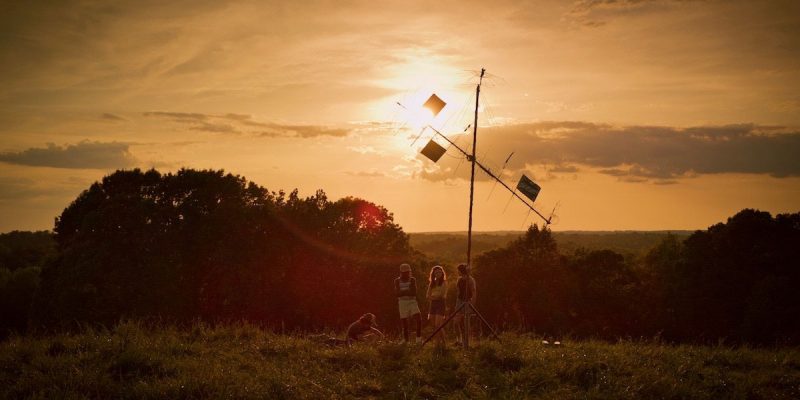
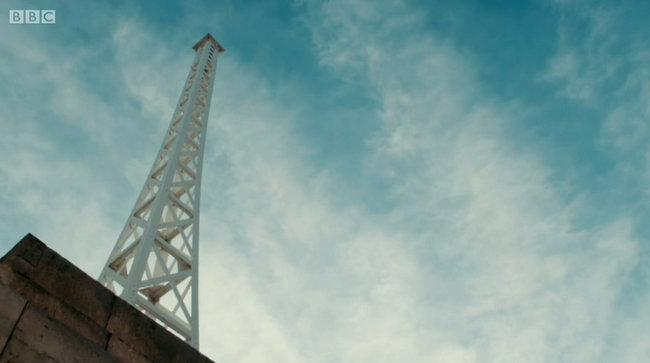
In the first chapter, “Dustin” uses a “ham radio” rig to contact his new girlfriend and builts a strange Antenna in the top of a hill. She didn´t answer, but he listens a coded transmission in Russian.

Thank you for sharing, David! Stranger Things certainly has a number of interesting radio references!

“Father Knows Best” episode features shortwave radio

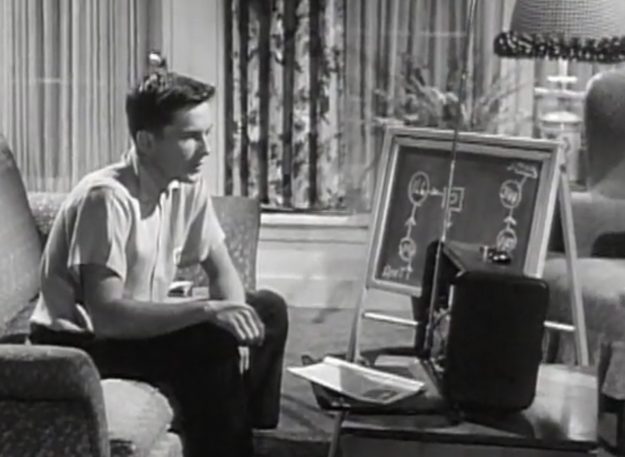
Many thanks to SWLing Post contributor, Dave Zantow (N9EWO), who notes the following episode of “Father Knows Best” (link below) features shortwave radio. Dave also points out that the website streaming this episode can be somewhat slow to load, but is very watchable.

Click here to view on Shout Factory TV.

Thanks for the tip, Dave!

“Night of Nights” CW Event Returns Tonight!

Many thanks to SWLing Post contributor, Brian Smith (W9IND), who shares the following announcement:

“Night of Nights” CW Event Returns Friday (U.S. Time) 

“It was 20 years ago today,” say members of the Maritime Radio Historical Society, but they’re not covering a famous Beatles song.

They’ll certainly be on key, however, when they fire up two maritime CW stations, KPH and KFS, and their amateur radio club station, K6KPH, for the 20th annual “Night of Nights” at 8:01 p.m. Eastern Time on Friday, July 12/0001 UTC Saturday, July 13. (Alas, several previously participating stations will be absent again this year, including ship-to-shore stalwart WLO of Mobile, Alabama, and a quartet of Coast Guard stations.)

This weekend’s event marks the date in 1999 when commercial Morse code operations ceased in the United States. One year later, the preservation-minded MRHS staged its first “Night of Nights,” treating shortwave radio enthusiasts to the dits and dahs of historic maritime station KPH and other callsigns that were once presumed dead on shortwave CW frequencies.

This year, the society has put out a special appeal to anyone (licensed or not) with CW proficiency to help operate K6KPH. While KPH and KFS transmit “code wheels” (repeating messages), personal messages, and tributes to long-gone maritime stations and operators, K6KPH will make CW contacts with other amateur stations on 3550, 7050, 14050 and 21050 kHz.

Whether reporting for CW duty or not, the public is welcome to observe today’s event and tour the facility, located at 17400 Sir Francis Drake Boulevard in the Point Reyes National Seashore. Doors open at 3 p.m. local (Pacific) time.

And if you’re not within driving distance, you can tune in the Morse signals on the following medium wave and shortwave frequencies:

KPH:  426, 500, 4742.0, 6477.5, 8642.0, 12808.5, 17016.8, 22477.5 kHz

KFS:  12695.5 kHz

Reception reports go to P.O. Box 392, Point Reyes Station, CA 94956. Please include an SASE if you’d like a QSL.

The following links provide additional information:

Maritime Radio Historical Society: 

http://www.radiomarine.org

http://campaign.r20.constantcontact.com/render?m=1109843077277&ca=156b371f-da9f-4fed-8819-4bb55bd7bd44

http://campaign.r20.constantcontact.com/render?m=1109843077277&ca=b54f353c-4692-4564-b79a-0059721f9206

National Park Service: https://www.nps.gov/pore/planyourvisit/events_nightofnights.htm

Okay, Brian…that “being on key” bit? Clever! 🙂

Looking forward to some sweet CW music on the Night of Nights! Thank you for sharing!

What’s your favorite shortwave listening story?

Many thanks to SWLing Post contributor, Zack Schindler (N8FNR), who writes:

Back in the 1980’s I was tuning around and came across two guys talking back and forth in a non-ham portion of the HF spectrum. They were not using any callsigns which I found weird so I kept listening. It became obvious that one guy was on the ground and the other was in a plane. The guy on the ground was trying to give the other guy instructions on where to land. The pilot kept saying that he was not seeing any of the landmarks that the other guy told him to look for. The man on land then gave the pilot a beacon callsign to navigate by so I looked it up and it was in the Yucatan. The pilot said that he was not receiving the beacon but after a bit said that he could see a water tower in a town. He flew near the tower and read off the name and it was a town in the panhandle of Florida.

So it appears to me that they were probably drug smugglers and the pilot was so bad that he was off course by 700 miles or so. I always wondered how this story played out.

Please reply with your favorite SWLing story here. I look forward to reading yours.

What a great idea, Zack!

In fact, I’ll sweeten the pot…

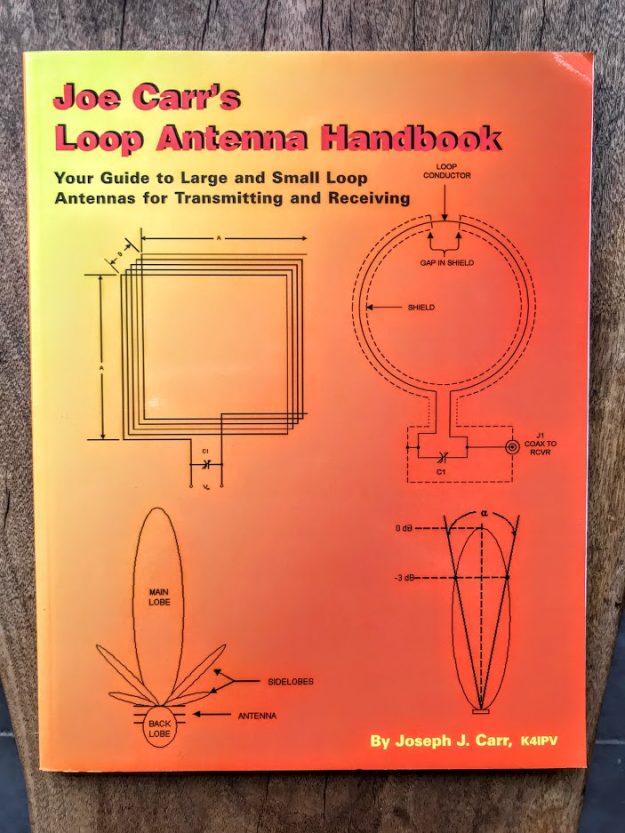
Next Sunday (July 14t, 2019) I will pick a commenter at random from this post and send them a copy of Joe Carr’s Loop Antenna Book which has been graciously donated by Universal Radio.

This is open to anyone, anywhere–I’ll ship it globally.

Please comment with you favorite shortwave listening story!

[Note: Please include a valid email in the email address field of the comment form, else I will not be able to contact you to get your shipping address. We never share your email or use it for any other purpose.]


Do you enjoy the SWLing Post?

Please consider supporting us via Patreon or our Coffee Fund!

Your support makes articles like this one possible. Thank you!

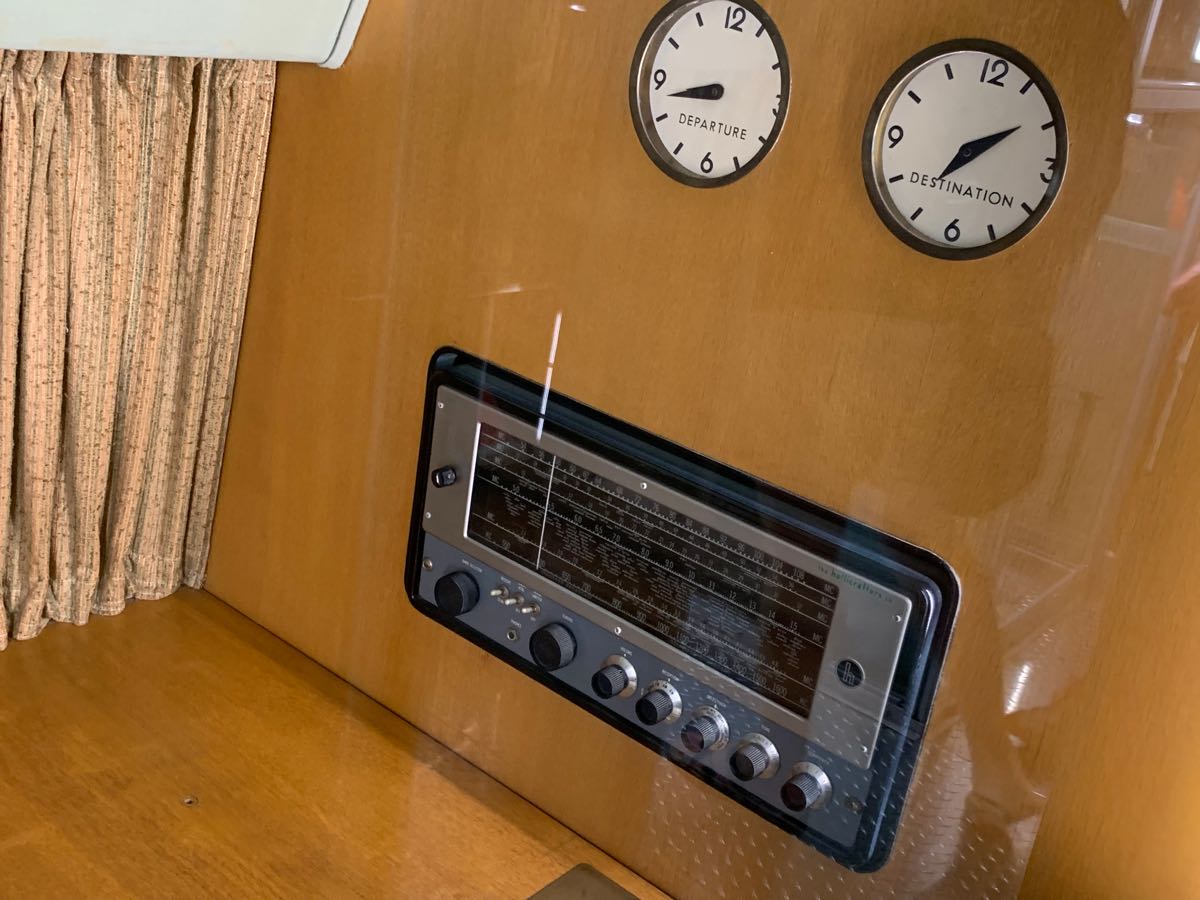
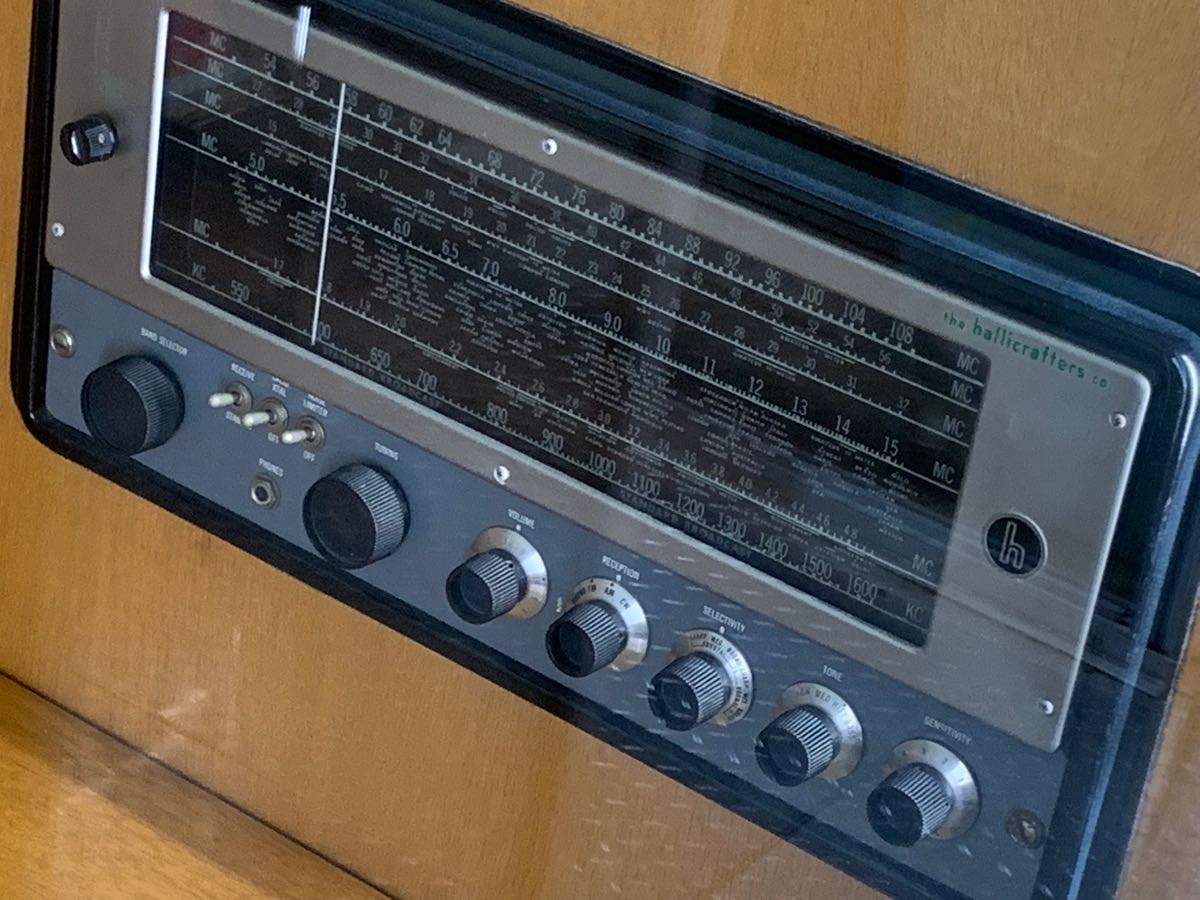
Can you identify this Hallicrafters model onboard the Columbine III?

The Lockheed VC-121E “Columbine III” (Image Source: USAF Museum)

Many thanks to SWLing Post contributor, Robert Yowell, who writes:

I was visiting the US Air Force Museum [Friday] and walked through “Columbine III” which was the Lockheed Constellation used as Air Force One by President Eisenhower from 1954 until he left office. In the back of the cabin was a nice cozy area where this Hallicrafters receiver was installed – ostensibly for the passengers to listen to news or other events while in flight.

I am sure one of your readers will be able to identify which model it is.

Can you imagine flying in this gorgeous Lockheed VC-121E four prop aircraft and listening to HF radio from a built-in Hallicrafters set? Wow…

Thank you, Robert, for sharing these photos. The National Museum of the US Air Force is one of my favorite museums in the world. I bet I’ve visited it more than a dozen times over the past decade–always a treat and always something new to discover!

Post readers: Can you identify this Hallicrafters model?  Please comment!

Site shares story of the BBC’s wartime reporting

Many thanks to SWLing Post contributor, Kris Partridge, who shares the following note following our recent series of posts about WWII radio:

The, nearly, full story of the BBC’s wartime reporting can be found here. Yes, I hope another interesting read both for your good self and the readers of The SWLing Post:

http://www.orbem.co.uk/repwar/wr_action.htm

What an excellent read! Thank you for sharing this link, Kris!

OTR: CBS Radio Workshop episode includes interval signal from “Radio Rhodesia”

Many thanks to SWLing Post contributor, Dan Robinson, who passes along this interesting radio show from the CBS Radio Workshop and a description from his friend, Art Chimes.

Art writes:

Airing in 1956-57, The CBS Radio Workshop was an anthology series that featured a wide range of productions, often in experimental formats. On Nov. 11, 1956, the program was “Report on the Weans,” an adaptation of a satirical article by Robert Nathan published in Harper’s Magazine, “Digging the Weans.”

It is 6,000 years in the future. The American continent is unpopulated, but archaeologists from Africa — apparently now the center of civilization — are digging in various sites, uncovering artifacts of the 20th century people who once lived there. In a gentle satire of anthropology, we find the experts completely mis- (or over-) interpreting their findings, such as Macy’s bargain basement, which they think is a tomb full of items to be used in the afterlife.

The magazine article [click here to download PDF] is a straightforward parody of an academic paper. The radio show, however is presented as a report broadcast on “Radio Rhodesia” on the mega-, micro- and strato-beams, complete with an interval signal used at the beginning and end that features bird chirping. (I can’t help you on the particular species, sorry.)

Click here to download recording of full show.