Category Archives: Nostalgia

Dan shares photos from journalist trip to Zanzibar in 1986

Many thanks to SWLing Post contributor, Dan Robinson, who writes:

Here’s a blast from the past that might be interesting reading for the SWLing Post.

Back in 1986, just before ending my three year tour as VOA East Africa bureau chief, I had an opportunity to visit Zanzibar, with a group of journalists. Back then, Zanzibar was still under the socialist government in charge at the time, and was still attached to Tanzania’s socialist government.

Zanzibar town was full of old structures, and clay/stucco type buildings [see photo at top of page]–it was a wonderfully exotic place, with pristine beaches. The main hotel at the time was in poor condition — this was way before any of the extensive hotel development that the island has seen in recent decades.

One day we were traveling across the island, but I made a point of stopping at what was then still Radio Tanzania/Zanzibar. This was of course years before that station would become ZBC, which remains on the air today, and that time the power was still far lower than the station we know today that serves some fairly wide sections of East Africa and up into the Gulf region.

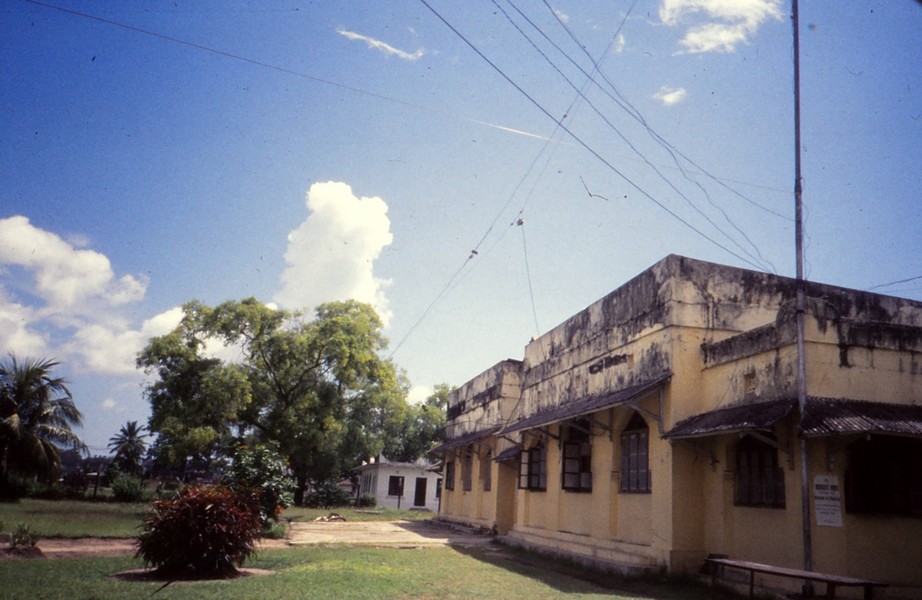
I hadn’t remembered snapping this photo, but found it recently while going through some old prints. This is what I believe to be Radio Tanzania/Zanzibar as it looked back in 1986 [see below].
Another photo [below] shows old Zanzibar town (shot taken from just off the shore).

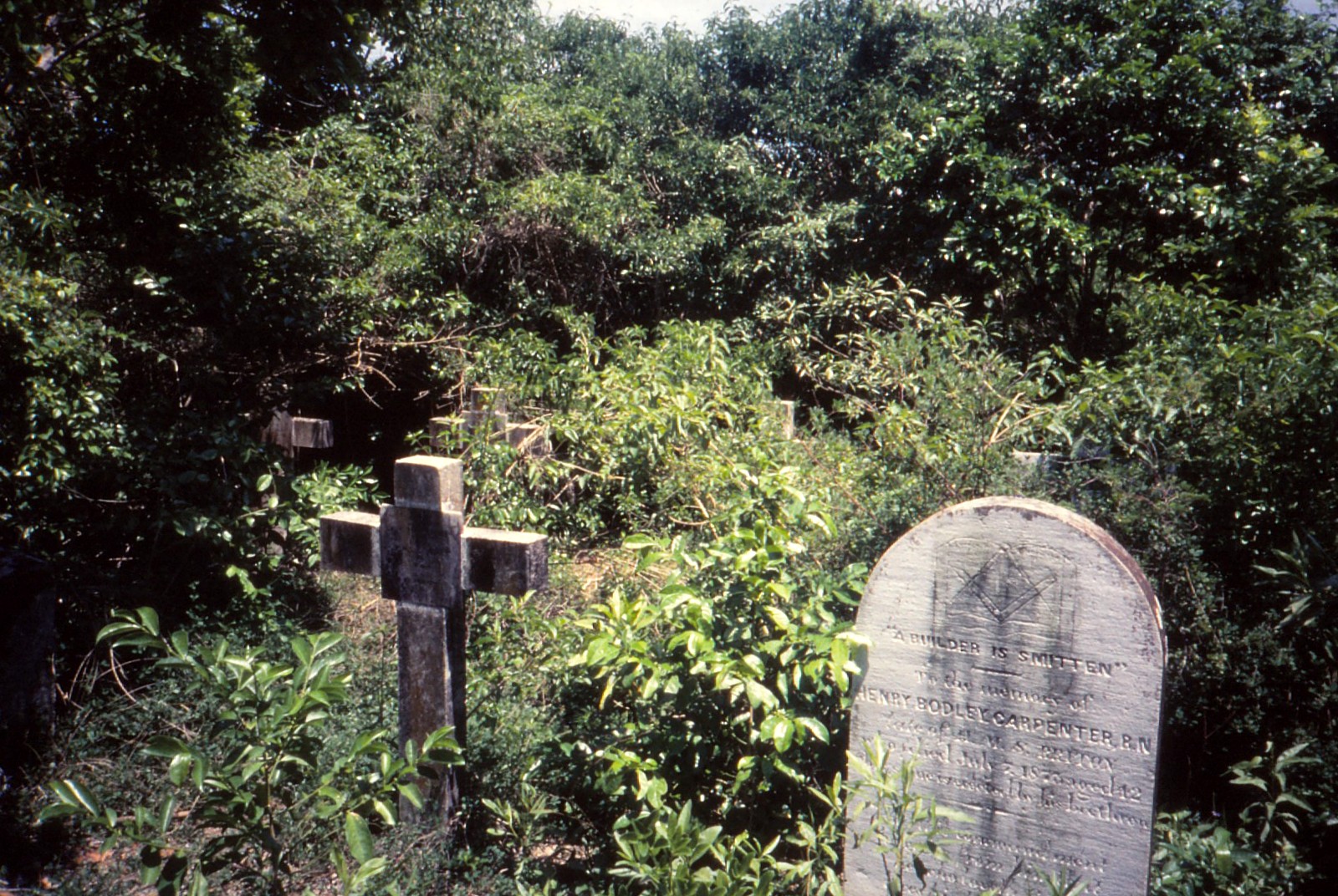
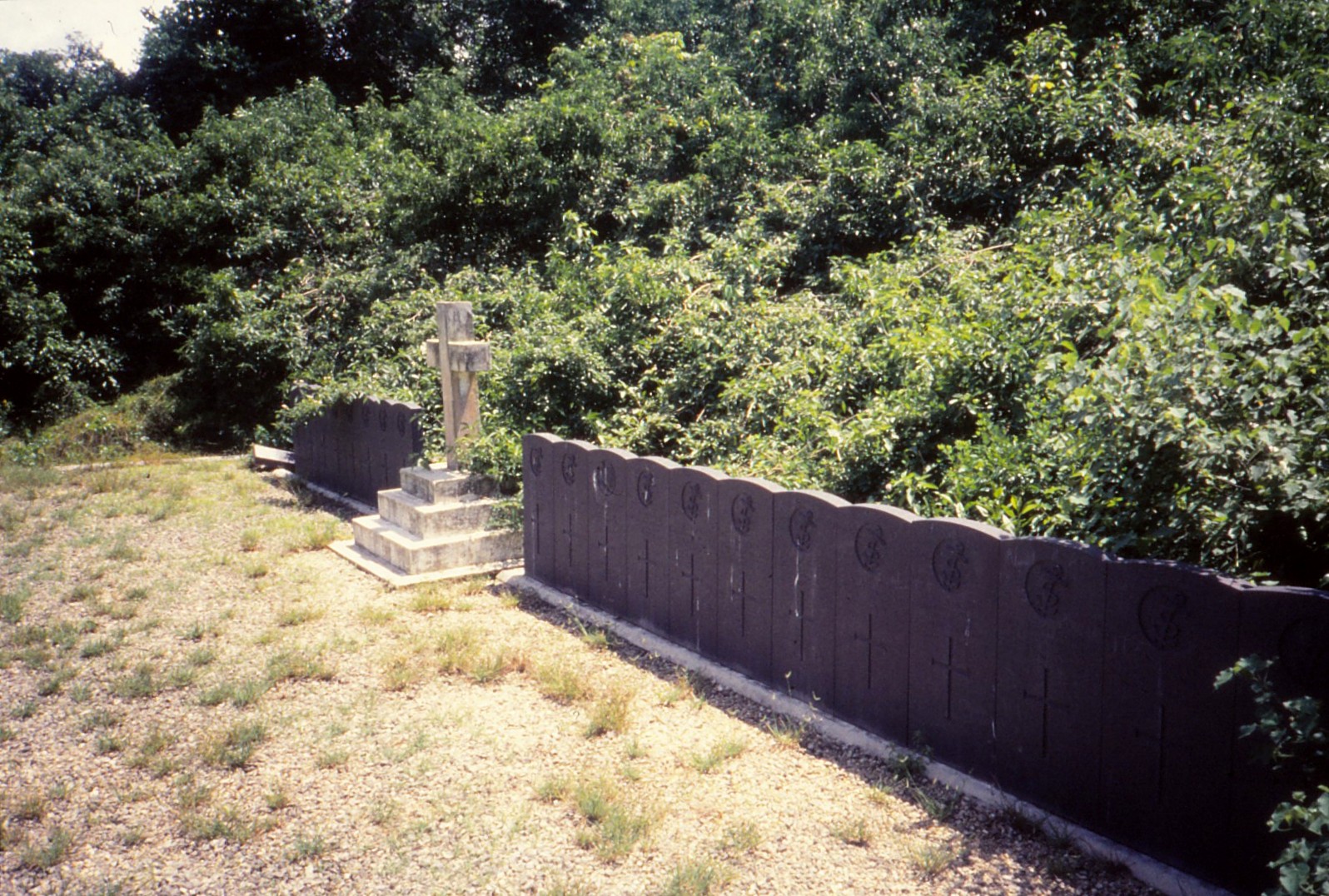
Two other shots [below] show a graveyard on Grave Island, off Zanzibar, with one of the stones belonging to someone named Henry Bodley Carpenter (click here for more info) who served on the H.M.S. Briton and died in 1873.
Thanks so much, Dan, for taking the time to share these photos of Zanzibar with us. I imagine your work with the Voice of America took you to many corners of our wonderful planet!

I still get a small thrill when I put Zanzibar in the logs! Thank you again.

The history of Deutsche Welle’s interval signal and signature tune

(Source: Deutsche Welle via Mike Hansgen)

Beethoven on the air: the DW signature tune

When Deutsche Welle went on the air 65 years ago, the broadcaster opted for a melody from “Fidelio” for its signature tune. Ludwig van Beethoven’s opera is about an act of liberation.

A political prisoner is starved and nearly tortured to death because the prison’s military governor knows that the prisoner could incriminate him. The incarcerated man’s wife masquerades as a young man and, thus camoflaged, makes her way into the dungeon. When the governor attempts to stab the prisoner, the woman jumps between them and pulls out a pistol. At that very moment, trumpets sound out and the Minister, a higher authority, enters the scene. A friend of the prisoner, he recognizes what has been going on and sets the political prisoners free.

At this happy ending of the opera “Fidelio” by Ludwig van Beethoven, Minister Fernando sings the words “Es sucht der Bruder seine Brüder” (The brother seeks his brothers), and continues: “Und kann er helfen, hilft er gern” (And if he can help, he does so gladly.)

The melody to the words is anything but catchy; it is nearly ungainly in fact. Nonetheless, it was chosen as the signature tune when Germany’s international broadcaster began its shortwave radio transmissions on May 3, 1953.

The symbolism in the words

The choice not only had to do with the musical motif, but was also based on the symbolism in the words. Only eight years after World War II’s end, building new friendships and international relationships was no easy task for the new Federal Republic of Germany.

One sought to proceed in a “brotherly” manner with listeners and partners abroad through friendly exchange. Trust was to be built in a fair and impartial sharing of information.

For many years, the melody, played on a celesta keyboard, penetrated the constant ebb and flow of interference noise on the shortwave radio spectrum. It thus made its way to the speakers of shortwave radio sets around the world – often in endless repetitions leading up to the news at the top of the hour.

Click here to download a clip of the DW interval signal recorded on February 22,1982 at 1400 UTC. (Source: IntervalSignal Database)

The broadcaster then had its headquarters in Cologne, and the Beethovenfest classical music festival took place only sporadically in Bonn, 30 kilometers upstream the Rhine.

The move from Cologne to Bonn, and the media partnership with the re-established and much bigger music festival, had to wait until the new millennium. Then it seemed only fitting that Deutsche Welle should once again associate itself with Beethoven.[…]

Continue reading and listen to a number of “Fidelio” variations at Deutsche Welle.

Sound Designer Ben Burtt Reveals Radio’s Influence in Star Wars films

Today is popularly known as Star Wars Day––and I’m reminded of one of my favorite posts, featuring Star Wars sound designer, Ben Burtt, who to my surprise, contacted me to answer a question I published here on the SWLing Post.  Once again, here it is. Enjoy!  And “May the fourth be with you!”


StarWars-LogoSWLing Post readers may remember a post I published in which I believed I’d identified a familiar shortwave time signal station in the Battle of Hoth scene from The Empire Strikes Back.

To recap, here’s the scene in The Empire Strikes back–listen carefully:

Now listen to the recording of Canadian Time Station CHU I made recently–note the tone and duration of the data pips:

Upon hearing this, I went so far as to muse that the Star Wars sound designer might be a radio listener. I asked our readers if anyone could confirm this–?

Well, we’ve got our answer!  I’m truly indebted to an SWLing Post reader who passed my post along to his friend, Ben, who could provide this definitive response:

“This is Ben Burtt, sound designer of the Star Wars films. A friend sent me a link to this blog thinking I would like to comment.

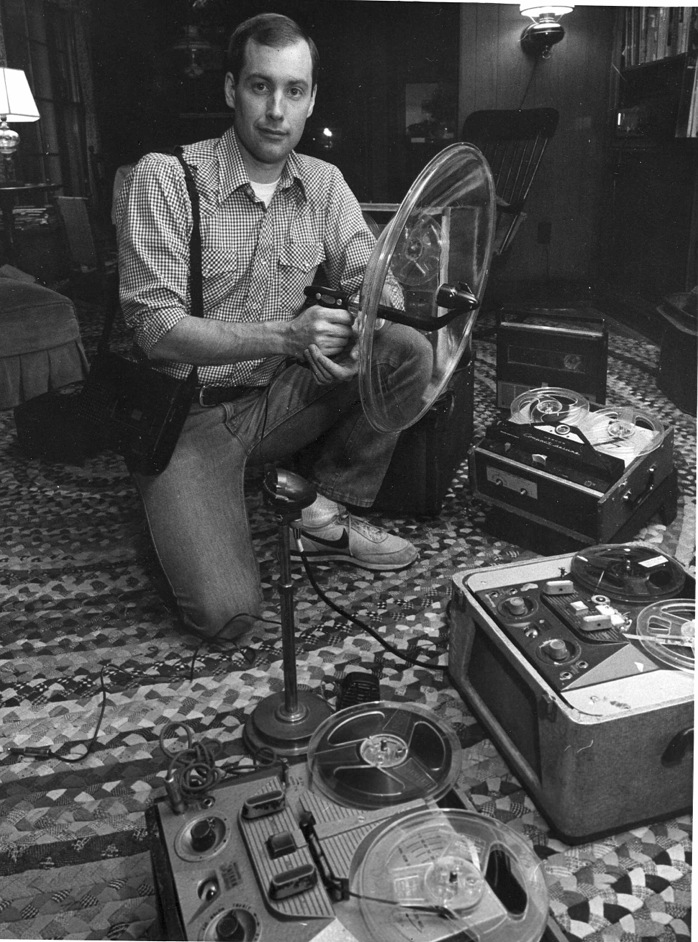
Ben and old recorders

Ben Burtt with his recording gear, circa 1980. The mike on the stand at Ben’s feet is one from his grandfather’s ham radio station in the 1950s, or possibly earlier.

“The answer is yes, I have always been a ham radio enthusiast.”

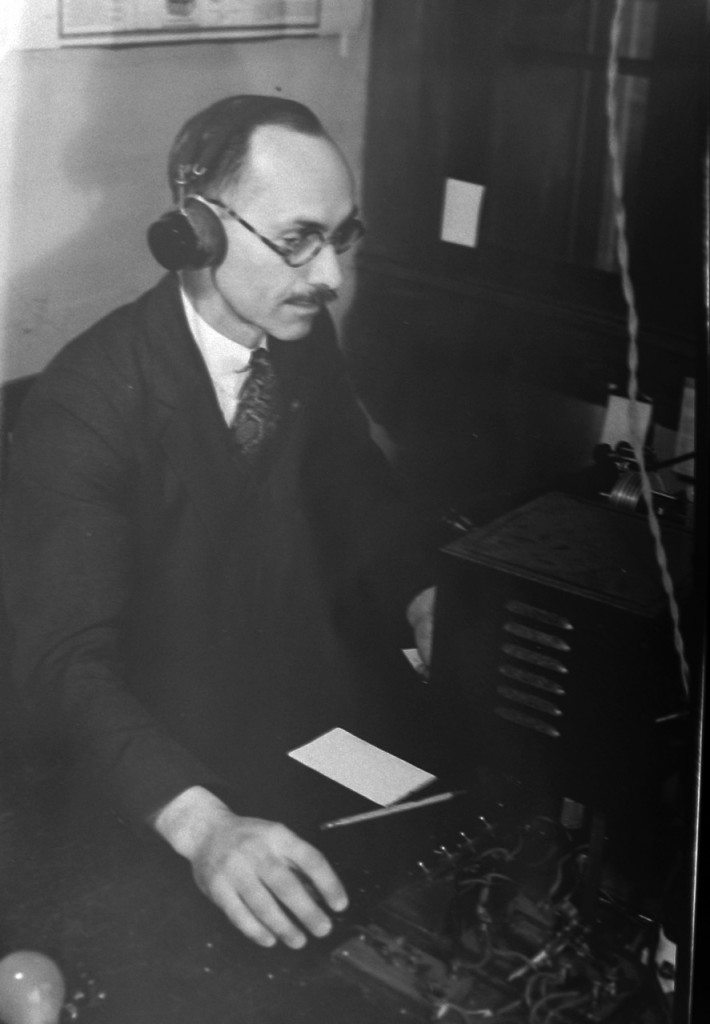
“My grandfather, Harold Burtt, operated W8CD out of his home in Columbus, Ohio 1930s-1960s. I was enthralled as a kid listening to the sounds on his receiver. I heard alien worlds and cosmic ‘voices.’

Harold Burtt, (Chairman of the Psychology Dept Ohio State) with his attic gear approximately 1935

Harold Burtt, W8CD. (Chairman of the Psychology Dept Ohio State) with his attic gear,  approximately 1935

“So not only did I record his radio, but continued to do so on the Star Wars series and Star Trek as well.

My memory of the Hoth transmission was that it was WWV but it could have been CHU since I was recording all that interested me on the dial.”

Terrific! Thank you, Ben, for taking the time to respond. As I said, you’ve certainly started off this radio enthusiast’s year on the right wavelength…no doubt some of our readers will agree.

Indeed, the powerful sonic experience of the Star Wars and Star Trek films has, in my estimation, helped shape many of us into the radio/sound enthusiasts we’ve become–myself certainly included. Thank you, Ben, for this!  You’ve sharpened my ear to a greater appreciation of sound, especially filmic sound, and your work in particular.    

For readers who are less familiar with Ben Burtt’s work, check out his Wikipedia page and IMDB profile–you’ll find he’s been the sound designer on numerous influential films including the recently released Star Wars: The Force Awakens.

A special thanks to Ben Burtt for sharing these wonderful photos and kindly giving me permission to use them here on the SWLing Post.  I must say, considering my love of radio in the thirties, I especially like that photo of Harold Burtt (W8CD) in his shack.

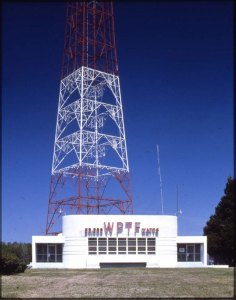
WTPF’s former site: A “Time Capsule from the 1940’s”

(Source: ABC11.com via Mike Hansgen)

Photo source: WTPF.com

The distinct Art Deco style clearly defines the WPTF radio station as a 1940’s classic.

With rounded windows and curved edges, the building looks tiny on the outside, but cuts deep underground into a shelter that allowed announcers to broadcast through wars and hurricanes.

Today, it’s hidden behind tall shrubs, a chain-link fence, and a set of train tracks – it often goes unnoticed, a relic from a long past era of Raleigh history.

Decades ago, this station was staffed 24-hours a day, which means it provides amenities like a kitchen and shower. However, this enticing building has been closed to the public, mostly forgotten, for decades. Nearly 80 years old and sealed to most of the outside world, it harbors dust-coated secrets that time forgot, like a living time capsule.[…]

Click here to read the full article and view photos of the site.

Also, check out the following photos of WTPF courtesy of this imgur.com account:

Former WPTF 680 AM art deco studio – Cary, NC

Radios spotted in “V” Sci-Fi Series

Last week, I picked up the first season DVDs for the TV science fiction series “V” at our local library. I somehow missed this series when it was first produced in 2009–however, I do remember clearly the original 1984 series.

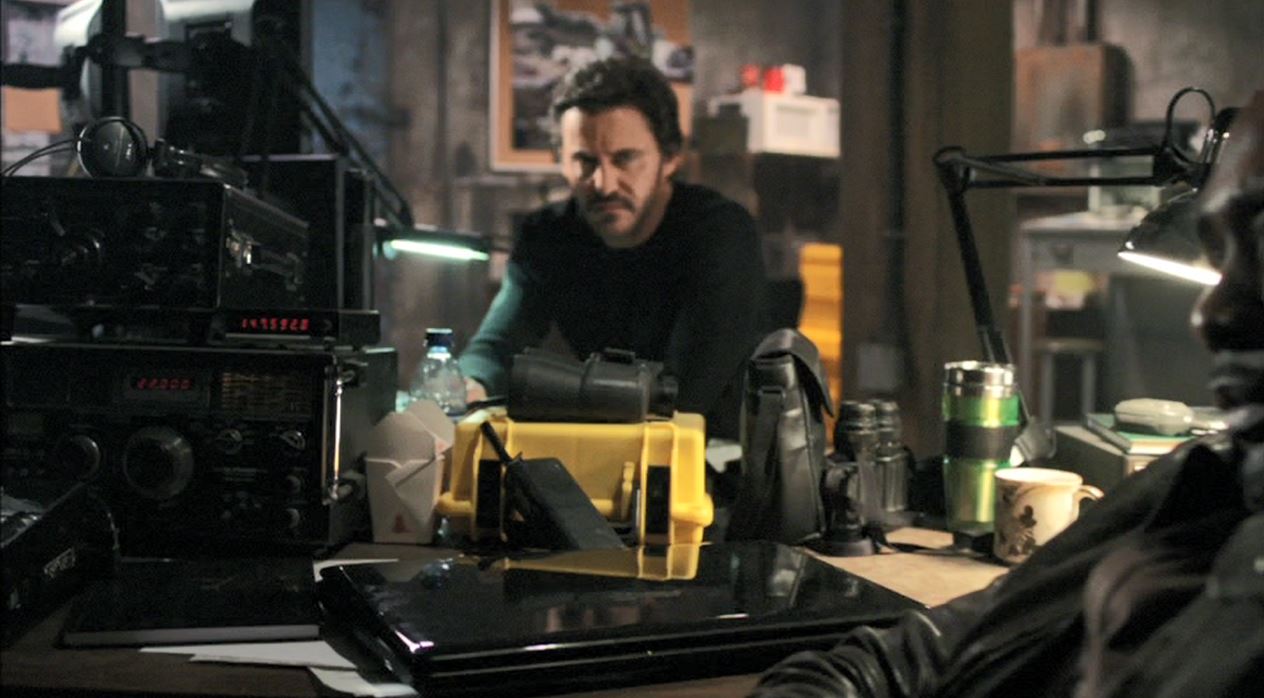
In the second half of the first season, a small group of resistance fighters created a makeshift basement headquarters for their operations. In many of the scenes, the camera would pan over a table with a compter (or laptop) and two radios. Both rigs appear to be transceivers or transmitters. Can anyone ID these sets?  Please comment!

I’ll add this post to our growing archive of radios in film.

California Historical Radio Society has acquired one of 8 original NBC chime machines

(Photo source: The CRHS Newsletter)

Many thanks to SWLing Post contributor, Dave Richards (AA7EE),  who writes:

Thomas – I know you’ve posted before about the NBC chimes, so I thought you might be interested to know that CHRS, the California Historical Radio Society, has acquired one of 8 original NBC chime machines. They don’t think that more than a dozen were ever made. CHRS have their own building on the island of Alameda, CA, and are putting a huge amount of time and work into amassing an impressive collection of vintage radio gear. [I]f you scroll about 1/3 way down this page, you’ll see the news, along with a brief history of an NBC chime machine, and pictures of the one they now have in their collection. It is a rare find indeed!

Click here to read the new on the CHRS newsletter.

Very cool! Thank you for sharing this, Dave! I’m very happy to hear that these chimes have proper custodians.

Review of “A Quiet Place” in The Economist

Many thanks to SWLing Post contributor, Kevin Turinsky, who writes:

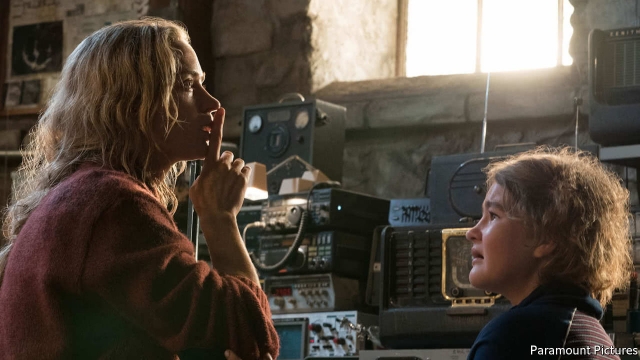
Just spotted a curious radio stack in an upcoming movie reviewed by The Economist:

Take a look:

“A Quiet Place” is high-concept horror at its best

John Krasinski transforms a B-movie conceit into a smart, nerve-shredding film

IN MOST cinemas, films are preceded by a polite request that patrons switch off their mobile phones. Wherever “A Quiet Place” is shown, that request should be upgraded to a legal requirement and transgressors should be frogmarched from the building. There is so little dialogue in this nerve-shredding post-apocalyptic survival chiller that it almost counts as a silent movie, and yet sound has rarely been more crucial to a story. The ingenious high-concept is that bloodthirsty, presumably alien, monsters have butchered most of humanity, but these near-indestructible crab-creatures are sightless so track their quarry using their super-sensitive ears. Silence, therefore, is more than golden. If somebody drops a cup or sneezes, they might well be punished with a foot-long claw through the belly, so any viewer who breaks the spell by letting their phone ring deserves a similar, if not so extreme, punishment.[…]

Click here to read the full review at The Economist online.

Thanks for the tip, Kevin! That screen shot at the top of the post contains so many radio sets–including a lovely Zenith Transoceanic!

William first reported this film a couple weeks ago here on the Post. I watched the trailer and it does seem to be rather suspenseful. Perhaps a new take on the zombie genre. I imagine there are no small number of radios to be spotted in A Quiet Place

Thanks again, Kevin!

Have any readers watched the film yet? Please comment!