Category Archives: Nostalgia

Review of “A Quiet Place” in The Economist

Many thanks to SWLing Post contributor, Kevin Turinsky, who writes:

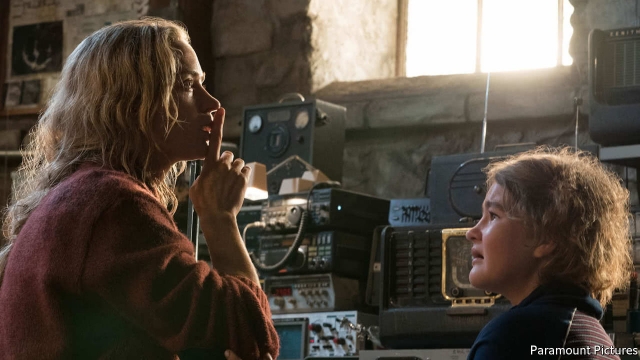
Just spotted a curious radio stack in an upcoming movie reviewed by The Economist:

Take a look:

“A Quiet Place” is high-concept horror at its best

John Krasinski transforms a B-movie conceit into a smart, nerve-shredding film

IN MOST cinemas, films are preceded by a polite request that patrons switch off their mobile phones. Wherever “A Quiet Place” is shown, that request should be upgraded to a legal requirement and transgressors should be frogmarched from the building. There is so little dialogue in this nerve-shredding post-apocalyptic survival chiller that it almost counts as a silent movie, and yet sound has rarely been more crucial to a story. The ingenious high-concept is that bloodthirsty, presumably alien, monsters have butchered most of humanity, but these near-indestructible crab-creatures are sightless so track their quarry using their super-sensitive ears. Silence, therefore, is more than golden. If somebody drops a cup or sneezes, they might well be punished with a foot-long claw through the belly, so any viewer who breaks the spell by letting their phone ring deserves a similar, if not so extreme, punishment.[…]

Click here to read the full review at The Economist online.

Thanks for the tip, Kevin! That screen shot at the top of the post contains so many radio sets–including a lovely Zenith Transoceanic!

William first reported this film a couple weeks ago here on the Post. I watched the trailer and it does seem to be rather suspenseful. Perhaps a new take on the zombie genre. I imagine there are no small number of radios to be spotted in A Quiet Place

Thanks again, Kevin!

Have any readers watched the film yet? Please comment!

WUNC on Jazz: “America’s Coolest Weapon During The Cold War”

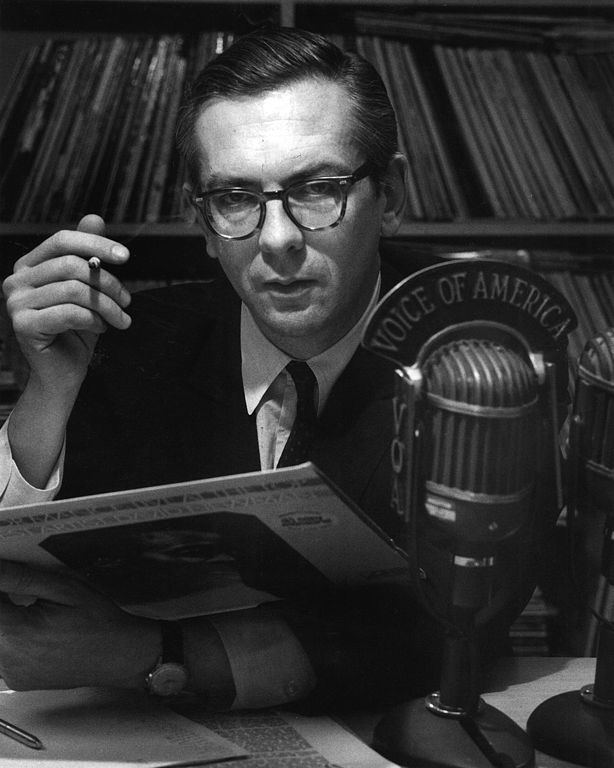
Willis Conover, The Voice of America (Source: Wikimedia Commons)

(Source: WUNC’s The State of Things via Kim Elliott)

During the Cold War, the U.S. Department of State sent jazz musicians around the world to sell the American way of life. This initiative took place in the 1950s, during segregation and the beginning of the civil rights movement. Jazz was gaining popularity on the international stage partly because of a Voice of America program hosted by Willis Conover, and partly because jazz musicians, like Louis Armstrong, played international tours.

The U.S. government took note of this popularity and decided to send musicians as representatives of the country, even as those representatives didn’t have the full benefits of the freedom they were touting. Many of these multi-racial, multi-gender groups were not allowed to perform within the boundaries of the United States due to Jim Crow.

Host Frank Stasio talks to Hugo Berkeley, director of the new documentary “The Jazz Ambassadors: The Untold Story of America’s Coolest Weapon in the Cold War.” Historian Adriane Lentz-Smith joins the conversation to put the story of the jazz ambassadors into context. Lentz-Smith is a professor of history at Duke University who served as an advisor to the documentary. She’s also the author of “Freedom Struggles: African Americans and World War I” (Harvard University Press/2011). “The Jazz Ambassadors” screens at the Full Frame Documentary Film Festival in Durham on Sunday, April 8.[…]

RSGB and WWII Voluntary Interceptors

(Source: Southgate ARC)

WWII role of the RSGB and Voluntary Interceptors

A new RSGB web page highlights the role of Voluntary Interceptors in the Second World War and the crucial involvement of the Society

At the outbreak of WWII in 1939 MI5 established a unit known as the Radio Security Service (RSS) to detect and monitor enemy radio transmissions. The RSGB were approached to help pick and recruit radio amateurs with advanced Morse skills. These volunteers became known as the Voluntary Interceptors.

Read the RSGB story at
http://rsgb.org/main/about-us/national-radio-centre-gb3rs/the-role-of-the-rsgb-and-voluntary-interceptors/

The former President of the Chelmsford Amateur Radio Society, Harry Heap G5HF (SK), was a Voluntary Interceptor, further information at
http://g0mwt.org.uk/society/g5hf-sk/g5hf.htm

Click here to read at the Southgate ARC.

RadioWorld: “Radio Caroline Returns to Its Roots”

(Source: RadioWorld via Mike Hansgen)

The station is now operating 24 hours seven days a week on AM

NEAR COLCHESTER, England — Well into its second half-century of broadcasting, Radio Caroline has begun the next phase of its operations, returning to wide-area AM transmissions for the first time in nearly 30 years. Although by no means the first offshore radio station (that honor probably goes to one of the gambling ships that operated off the coast of California back in the mid-1930s), it is nevertheless the archetypical “pirate” station and one of the most famous names in European broadcasting.

[…]Under its new license, Radio Caroline is permitted to broadcast with a radiated power of 1 kW, not a particularly high-power service in terms of its earlier offshore activities. However, given the lack of incoming interference on the frequency, and its long-wavelength signals, the result is effective coverage that, in practice, for many listeners is larger than planning criteria might suggest.

In many ways, Radio Caroline has both kept up with the times in terms of the broadcasting technologies it uses and come full circle with its recent return to AM broadcasting.[…]

Click here to read the full article via RadioWorld.

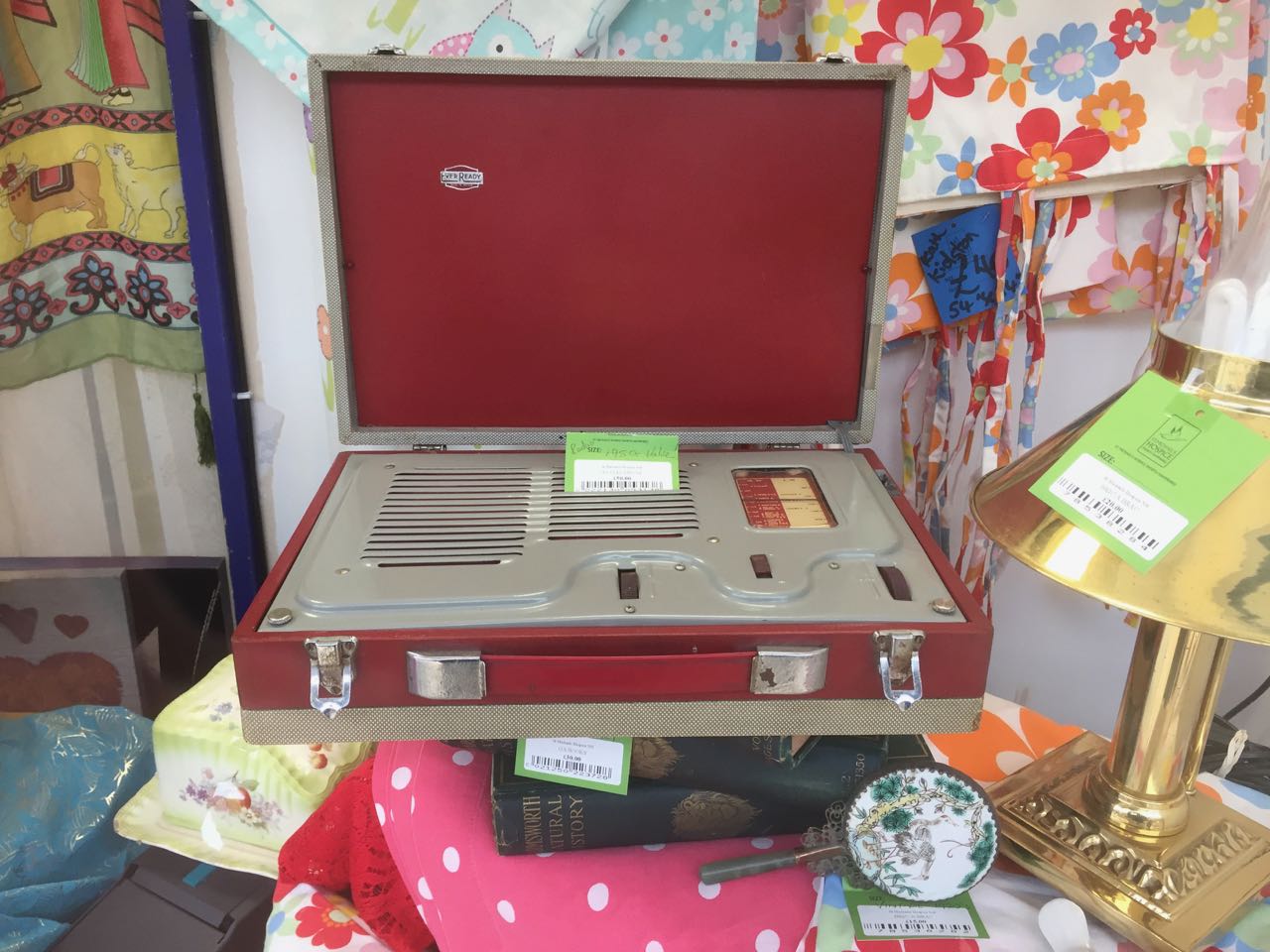
Ever Ready Model N attache case radio spotted in charity shop

The 1955 British Ever Ready Model N. Click to enlarge. (Photo: Mark Hirst)

Many thanks to SWLing Post contributor, Mark Hirst, who writes:

A vintage radio appeared briefly in one of my local charity shops.

A little Googling turned up this video (part 1 of 2) showing an example in operation:

Click here to view Part 1 on YouTube.

Click here to view Part 2 on YouTube.

Wow–thanks for sharing Mark!  So did you grab this radio?  I don’t think I could have resisted!

I love how the radio turns on as the case is opened and that the MW and LW antennas are in the lid.  Brilliant!

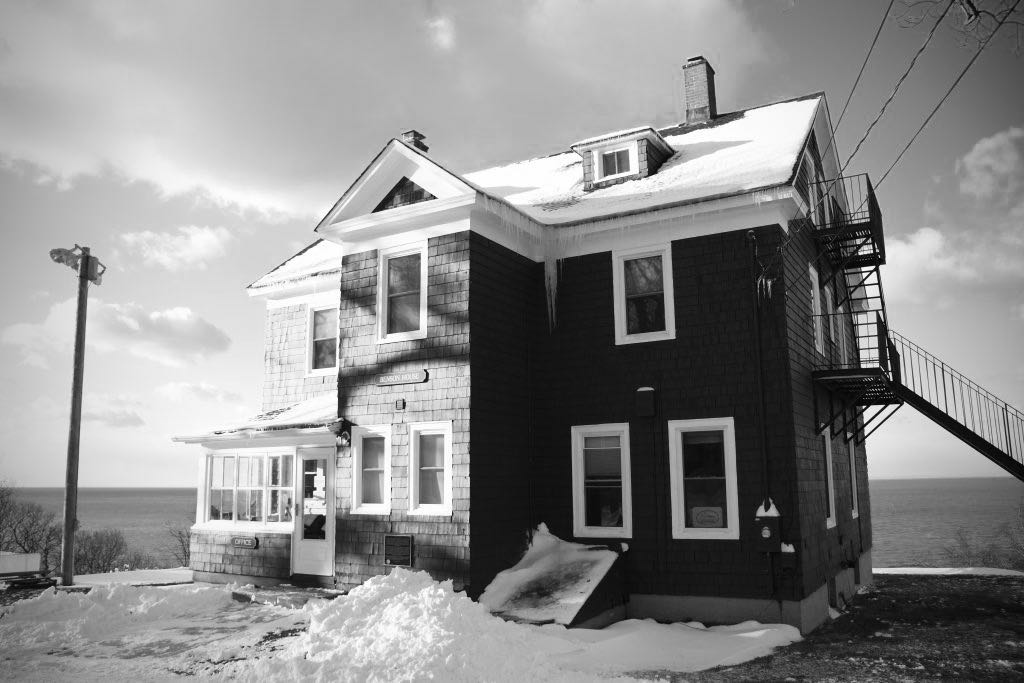
Wading River: WWII FBI covert radio station listed on the National Register of Historic Places

(Photo: Camp De Wolfe)

(Source: Riverhead Local via Mike Hansgen)

A house on the bluffs at Camp DeWolfe in Wading River, covertly used as an FBI radio transmission station during World War II to gather military intelligence, has been added to the state and national registers of historic places.

FBI radio operators impersonating German agents used the Wading River Radio Station to communicate with the German intelligence service, according to the site’s registration form with the National Register of Historic Places.

Information covertly gathered by agents at the radio station was critical to inspiring the United States’ development of an atomic bomb.

The station was also involved in the Operation “Bodyguard,” which used counterintelligence to confuse and mislead the Nazi government about the upcoming Allied invasion of Europe.

The radio station operated from 1942 to 1945.

[…]In January 1942, FBI engineers installed radio equipment in the house, hid a large antenna in the woods, and built a diesel-powered generator using an automobile engine to avoid local suspicion about electricity consumption at the house, which was far greater than what was then the norm due to the radio operations. An FBI agent assigned to manage the operation moved in with his family — and two or three radio operators. The first floor was maintained as the agent’s family home, while the second and third floors were used for the FBI operation, according to the national register registration narrative. They remained there for the duration of the war.

[…]The FBI had been looking for a spot to locate the transmission station for the spying operation and were attracted by the home’s cliffside location and the site’s remoteness. According to the national register registration document:

“By January 1942 [an FBI radio engineer] had stumbled upon the Owen House located in the tiny fishing and farming hamlet of Wading River, New York. Located eighty miles east of New York on Long Island’s North Fork the spacious three story building sat on a cliff bordered on one side by Long Island Sound and acres of dense trees on the other three sides, and the only approach to the station was a bumpy, rutted quarter mile path. Even by today’s standards the house is not easy to find. In 1942 it would have been nearly impossible.”

An FBI agent’s inquiry took the Owen family by surprise. They were sworn to secrecy.[…]

Click here to read the full article at the Riverhead Local.

“Air Waves”: A WWII era film about the art of broadcasting at NBC

Many thanks to SWLing Post contributor, Mike Hansgen (K8RAT), who shares the following film by RKO Radio Pictures via YouTube.

Click here to watch on YouTube.

Here’s the film description:

Made during WWII by RKO Radio Pictures, AIR WAVES gives a brief history of the radio, and shows the development of the technology as it progressed from a crystal set novelty to an indispensable part of American life. Radio City Music Hall and the Rockefeller Center are seen at the 2:00 mark, with the largest radio studios in the world. At 2:30, the NBC studios are seen and at 3:10 a demonstration is made of how sound effects are made using cellophane, wooden blocks, and rubber spheres. At 4:10, a studio is seen with actors rehearsing their lines, and an engineer working with the actors to make sure everything is technically okay. At 5:41, announcers Milton Cross is seen with Jack Costello and Calvin Keach. “Twin gods of radio broadcasting are the clock and the conference…” says the narrator, and at 6:00 you’ll see the discussions that lead up to the broadcast of any network show on radio (and today, on TV). At 7:15, records are played on the air, scripts are produced on steno and mimeograph machines, and all sorted… The music library is seen at 7:48 with sheet music laid out. At 8:06, all stations are notified of the latest information with the new program and a dress rehearsal undertaken. The stopwatch commands the attention of everyone, and the program is finally on the air at the 9:10 mark.

At 10:00, the film dramatically shifts to show December 7th in Hawaii, and speaks about the work of NBC to sell war bonds and promote national defense and “do its share unflinchingly”. The war effort is shown with men and women working on the air to help people working “at war” and boosting their morale. Lowell Thomas is shown at the 11:30 mark, keeping the public informed of the latest developments.

Thanks for the tip, Mike! It’s truly amazing to see the amount of effort that went into live radio broadcasts.