(Source: RT)
Read the full transcript on RT. Thanks to Kim Elliott for the tip!

(Source: RT)
Read the full transcript on RT. Thanks to Kim Elliott for the tip!
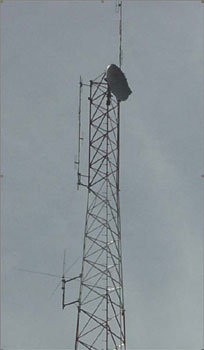 It seems there’s no shortage of interest in numbers stations these days. This article, from Wired magazine, Inside The Russian Short Wave Radio Enigma:
From a lonely rusted tower in a forest north of Moscow, a mysterious shortwave radio station transmitted day and night. For at least the decade leading up to 1992, it broadcast almost nothing but beeps; after that, it switched to buzzes, generally between 21 and 34 per minute, each lasting roughly a second—a nasally foghorn blaring through a crackly ether. The signal was said to emanate from the grounds of a voyenni gorodok (mini military city) near the village of Povarovo, and very rarely, perhaps once every few weeks, the monotony was broken by a male voice reciting brief sequences of numbers and words, often strings of Russian names: “Anna, Nikolai, Ivan, Tatyana, Roman.” But the balance of the airtime was filled by a steady, almost maddening, series of inexplicable tones.
[…][A]feed of UVB-76 had been made available online (http://www.wired.com/magazine/2011/09/ff_uvb76/), cobbled together by an Estonian tech entrepreneur named Andrus Aaslaid, who has been enthralled by shortwave radio since the first grade. “Shortwave was an early form of the Internet,” says Aaslaid, who goes by the nickname Laid. “You dial in, and you never know what you’re going to listen to.” During one 24-hour period at the height of the Buzzer’s freak-out in August 2010, more than 41,000 people listened to Aaslaid’s feed; within months, tens of thousands, and then hundreds of thousands, were visiting from the US, Russia, Britain, the Czech Republic, Brazil, Japan, Croatia, and elsewhere. By opening up UVB-76 to an online audience, Aaslaid had managed to take shortwave radio—one of the most niche hobbies imaginable—and rejuvenate it for the 21st century.
Today, the Buzzer’s fan base includes Kremlinologists, anarchists, hackers, installation artists, people who believe in extraterrestrials, a former Lithuanian minister of communications, and someone in Virginia who goes by the moniker Room641A, a reference to the alleged nerve center of a National Security Agency intercept facility at an AT&T office in San Francisco. (“I am interested in ‘listening,’” Room641A tells me by email. “All forms of it.”) All of them are mesmerized by this bewildering signal—now mostly buzzing, once again. They can’t help but ponder the significance of it, wondering about the purpose behind the pattern. No one knows for sure, which is both the worst and the best part of it.
Read the full 3 page article at Wired.com.
New to numbers stations? Check out our previous posts on the subject.
 (Source: Madison.com)
“Deciphered your lines from the shortwave,” Jace Lasek sings on “Like the Ocean, Like the Innocent,” the opening track off the Canadian crew’s latest album, “The Besnard Lakes are the Roaring Night” (Jagjaguwar).
[…]Even as a child, Lasek enjoyed escaping into the shadowy underbelly of Cold War-era spy stories, huddling on the front porch of his parent’s home with a shortwave radio to listen to the mysterious, coded words being beamed in from all around the globe.
“I’d be sitting on the front stoop in broad daylight on a hot summer day and I’d still be scared as hell,” said Lasek, who brings the Besnard Lakes to High Noon Saloon for a show on Sunday, Oct. 2. “It really resonated with me. The transmissions coming in were really eerie, and it sort of mirrors the music we’re making as well. We want it to be eerie and (David) Lynch-ian, where there’s this sort of grotesque beauty.”
Read the full article and interview at Madison.com.
The Besnard Lakes video for “Albatross” from their Jagjaguwar release The Besnard Lakes Are The Roaring Night. The opening scene says it all:
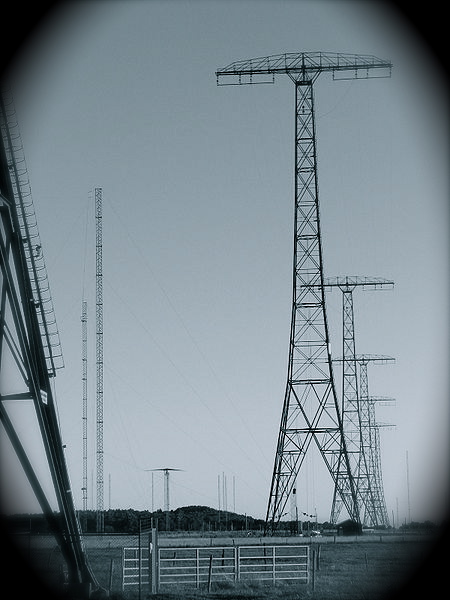 A friend recently sent me this archive site of a BBC documentary from 2005 that tracks the Lincolnshire Poacher and other numbers stations.
If you’re unfamiliar with numbers stations check out our previous post on the subject–and be sure to listen to David Goren’s production, “Seis Siete Tres Siete Cero“.
Along with pirate radio stations, I think numbers stations are one of the most sonically interesting catches we find while cruising the ether. When I happen upon one, no matter what language, I end up listening to them for way too long. Indeed, I do the same with WWV, but that’s a different story.
Want to hear the Lincolnshire Poacher live? It can be a bit tricky, but learn where they broadcast by visiting this page and set the memories on your radio to scan those frequencies.
Happy hunting!
 (Source: Gizmodo)
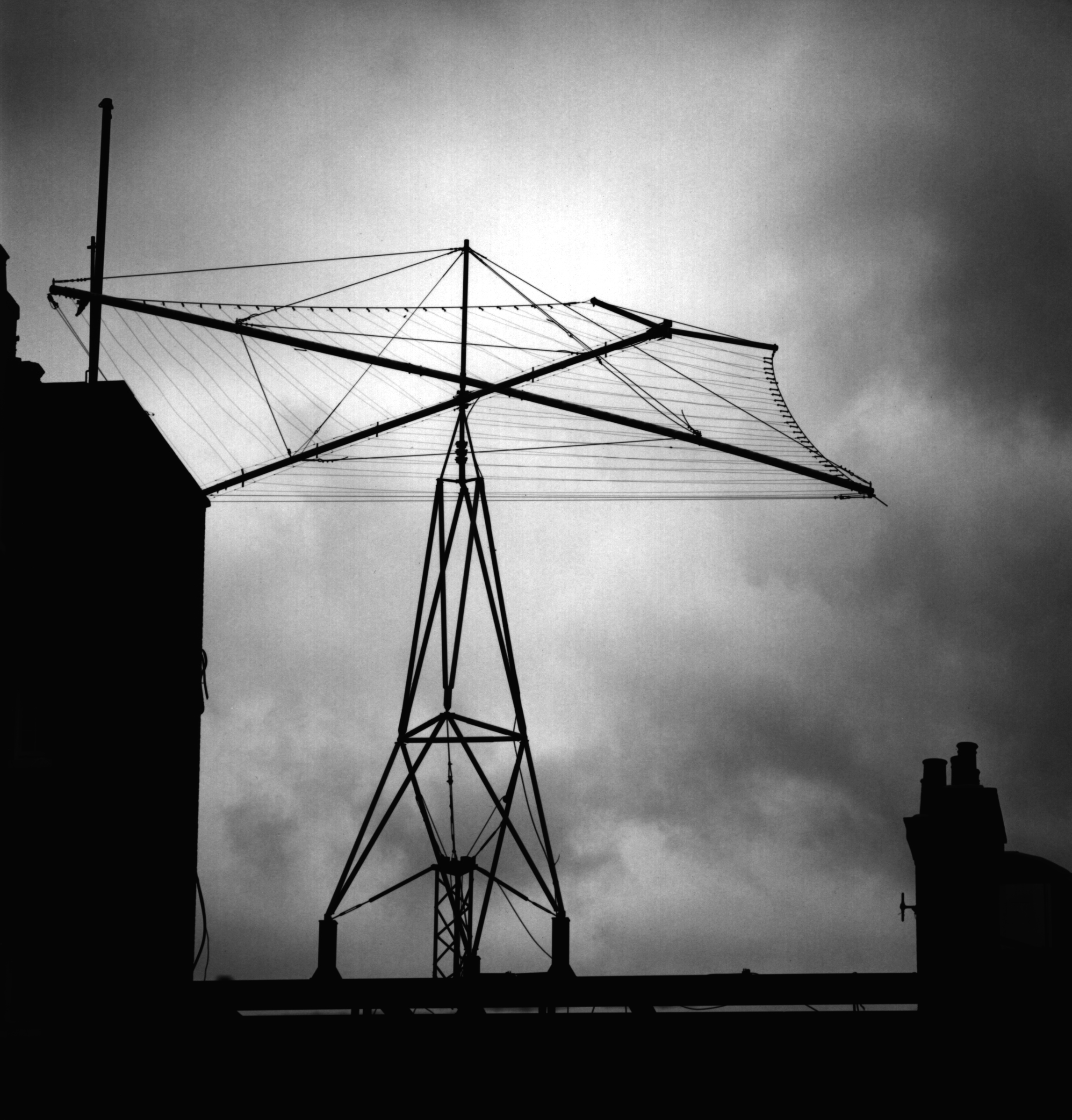
The bizarre, constant audio output of one particular mysterious Russian “Numbers Station” has changed, for the first time in 20 years. This might mean something bad is about to happen, or simply that someone finally remembered to switch tapes.
 This weekend, NPR’s Guy Raz interviewed Mark Stout, the official historian at the International Spy Museum. Their topic? Numbers stations. Click hear to go to NPR’s webpage, listen and/or read the full transcript. You can also download an MP3 audio file of the report by clicking here.
For even more numbers station audio, check out the piece that shortwave enthusiast, David Goren, produced by clicking here. Also, read all of our various articles that mention numbers stations.
Slate:
It may seem like the digital era of spy technology has passed the Russians by. In the Washington Post, columnist Jeff Stein tittered that “the FBI must have been clapping its collective hands when it discovered the primitive radio techniques the Russians were using.” But they aren’t the only ones using short-wave radio for espionage. Great Britain has publicly admitted that its foreign intelligence agency, MI6, still uses “numbers” stations. And scientists have tracked numbers broadcasts to transmitters at government sites in Israel and (until they went silent in the late ’90s) the United States…
…The reason this dusty method is still ideal for espionage is that, even if you locate a spy station’s transmitter, you have no idea who’s tuning in across the hemisphere. Unlike telephone or Internet connections, receiving a radio signal leaves no fingerprint, no traceable phone connection, no IP address, and no other hint as to where the recipient might be.
Read the full article on Slate Magazine’s website and my previous post about the Russian spies who were recently headline news in the US.