Category Archives: Radio History

“When Switzerland broadcast Esperanto around Europe”

Many thanks to SWLing Post contributor, David Iurescia (LW4DAF), who shares this article from swissinfo.ch regarding the history of the Esperanto language service of SWI. The following is an excerpt:

Esperanto

Esperanto (literally “one who hopes”) was the brainchild of Polish Jewish ophthalmologist Ludwik Lejzer Zamenhof, who published his first brochure in the language in 1887. He wanted it to become a second language for everyone.

The Swiss Esperanto Society was founded in 1903.

The Universala Esperanto-Asocioexternal (Universal Esperanto Association) was founded in Geneva in 1908. It is now based in Rotterdam.

The association says: “Based on the number of textbooks sold and membership of local societies, the number of people with some knowledge of Esperanto is in the hundreds of thousands and possibly millions”. Around 1,000 people speak it as their first language.

Esperanto has a relatively simple grammar with no exceptions to its rules. Its vocabulary is derived primarily from Romance languages and to a lesser extent from Germanic and Slavic languages.

“Beyond Europe, no regular Esperanto broadcasts take place,” the memo noted. The one exception was a special broadcast for Esperantists in Brazil on January 31, 1953.

Baur – who worked on the Swiss Broadcasting Corporation’s Esperanto programmes until 1991 – had reckoned there was a great interest in Esperanto in Brazil. The memo noted that the response to the one-off, five-minute broadcast was “thoroughly gratifying”, resulting in 25 letters (17 from Brazil, eight from other countries with reception).

“But from the beginning we stressed that even if people really liked it, it wouldn’t result in the introduction of Esperanto broadcasts in South America since, given the nation-joining aims of Esperanto, it would be contradictory to add a third language to a continent of only two languages which are more or less mutually comprehensible,” it said.

Aims of the broadcasts

The Bern memo explained that the main aim of the Esperanto broadcasts had always been “to reach the intelligentsia behind the Iron Curtain, who successfully bridged their linguistic diversity – especially in southeast Europe – through Esperanto”.

It added: “Our Esperanto broadcasts can therefore spread information about Switzerland and its ideas and ideals in an unobtrusive manner in those otherwise closed regions – as long as broadcasts in those regions’ national languages don’t make sense for us.”

It’s hard to say how many people listened to these broadcasts, none of which sadly have been saved in the SBC archives. According to the 1953 memo, Bern received two or three confirmations of reception a week, mostly from those countries behind the Iron Curtain. “Their relative rarity can be explained by the great risk most probably faced by the letter-writers,” the memo said.

Then, at the end of January 1965, the shock news was announced that the 16 Esperanto programmes a month would no longer be broadcast for financial reasons.

The Swiss Esperanto Societyexternal said this was a “heavy loss for the Western world”. “A reduction from four weekly programmes to two or even one would certainly have met general understanding, but it is highly regrettable that the Swiss Broadcasting Corporation has decided to pull the Esperanto programmes completely,” it said.

Not dead yet

That happened next is not clear from the archives. We do know, however, that – if the programmes did indeed stop – at some point they started up again in some form and frequency because in the late 1980s Swiss Radio International (SRI), as the Short-wave Service was renamed in 1978, was sending transcription tapes with Esperanto material around the world.[…]
Click here to read the full article.

SAQ receives 438 listener reports

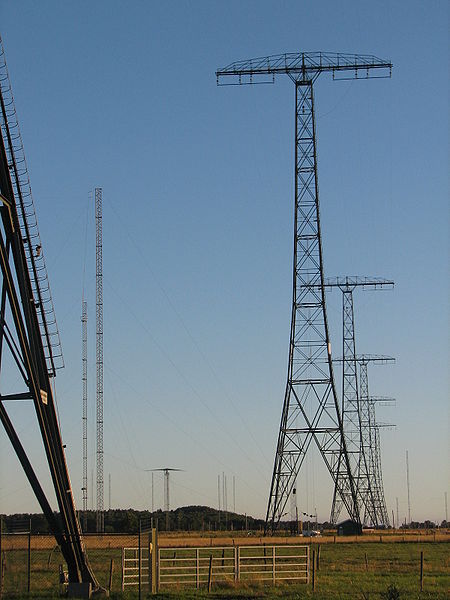
Grimeton VLF mast

(Source: Southgate ARC)

Alexanderson Alternator station SAQ says it received 438 listener reports — ‘an incredible amount’ — for its June 30 Alexanderson Day transmissions from Sweden including 8 ‘super’ DX reports, five from the USA and three from Canada.

The historic electro-mechanical transmitter, which dates back to the 1920s, is fired up periodically throughout the year on 17.2 kHz.

“We are very thankful for all your enthusiastic and positive feedback, with images, recordings, videos, and even Morse ink writer strips,” SAQ said.

The station is a World Heritage Site in Grimeton, Sweden and SAQ’s June 30 message commemorated the 100th anniversary of the first east-to-west transatlantic voice transmission from the Marconi station in Ireland to Cape Breton Island, Nova Scotia.

SAQ has posted an interactive map showing the locations of all received listener reports from recent transmissions and video of the Alexanderson Day transmission event has been posted to its YouTube channel.

https://www.youtube.com/user/AlexanderSAQ/videos

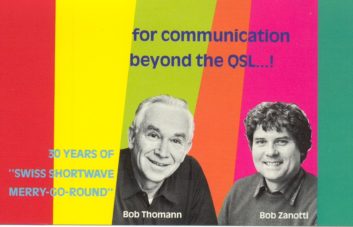
Swiss Shortwave Merry-Go-Round Founder Bob Thomann (HB9GX) is Silent Key

Readers old enough to remember listening to SBC/Swiss Radio International will, no doubt, remember Bob Thomann. I just received the following note from Bob Zanotti:

Dear Friends and Broadcasting Colleagues,

[O]ur old friend and colleague, Bob Thomann HB9GX, passed away peacefully on Saturday afternoon 3 August local time. He would have been 91 in September.

Image via Radio World

[…]Bob Thomann was the founder of the Swiss Shortwave Merry-Go-Round on
SBC/Swiss Radio International back in the 50’s. He and I were teamed up in 1970, when I joined SRI. We co-presented the technical mailbag show,
which became know as “The Two Bobs” for 24 years between 1970 and the show’s ending in June 1994. Bob never missed a show, even when we had to do a telephone hookup when he was hospitalized back in the 80’s.

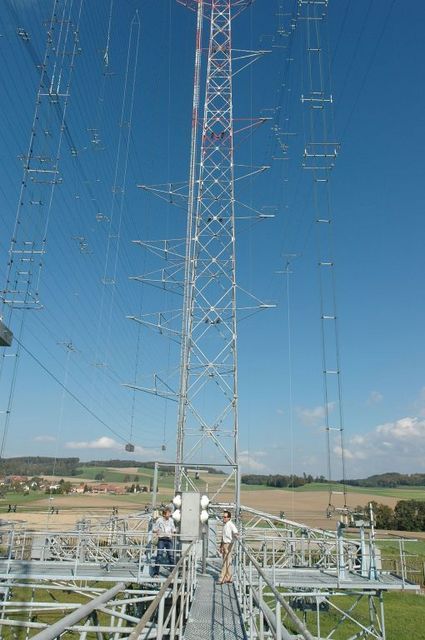
the Schwarzenburg transmitter site, often mentioned by the Two Bobs (via Jonathan Marks)

This is the end of “The Two Bobs” Era and an era in shortwave broadcasting in general. But I’m happy to say that the show lives on at www.switzerlandinsound.com, where it has its own section. All that survived from the “Merry-Go-Round” is there, including new material we produced especially for the website. And this will remain as a memorial to Bob Thomann and his contribution to shortwave broadcasting as long as I’m still around.

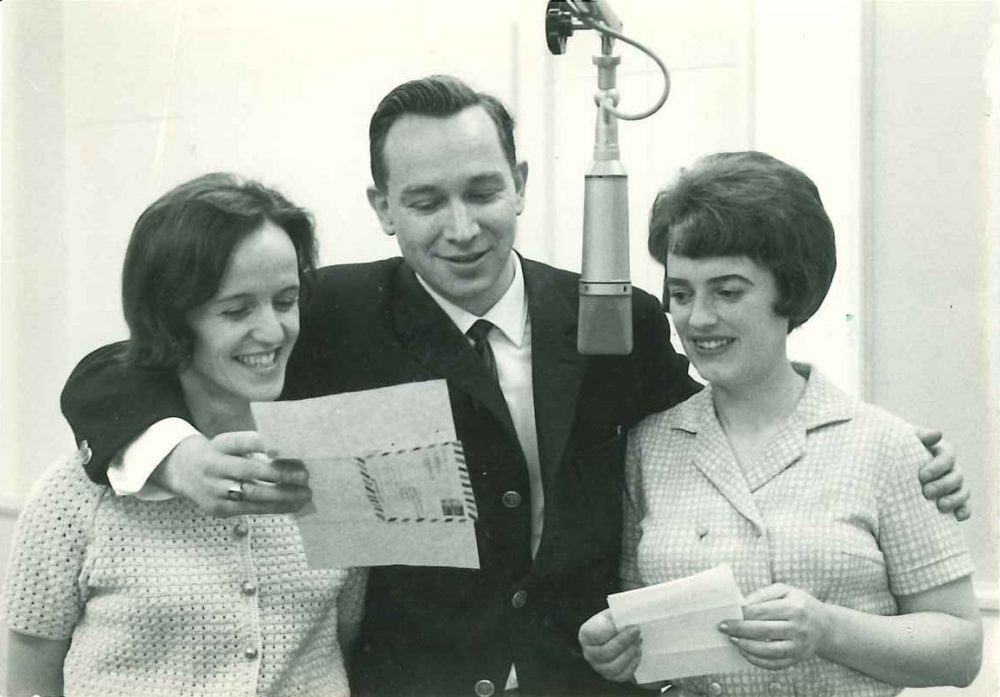
Mid-1960s photo showing Bob with Heidi Schweizer and Pamela — SBC’s DX Trio at the time. (Image courtesy of Richard Langley)

Bob Thomann was my friend, colleague and fellow ham operator for many years. I will always fondly remember those golden days we shared together. Long live those memories.

73,
Bob Zanotti

Click here to listen to archived episodes of The Two Bobs at Switzerland in Sound.

Bob, we’re so sorry for the loss of your dear friend and colleague. His memory certainly lives on.

1963 Film features the Rugby Radio Station

(Source: Southgate ARC)

Rugby was not a conventional radio station but a communications hub transmitting radio telephony, including the now obsolete telex service that later gave way to fax

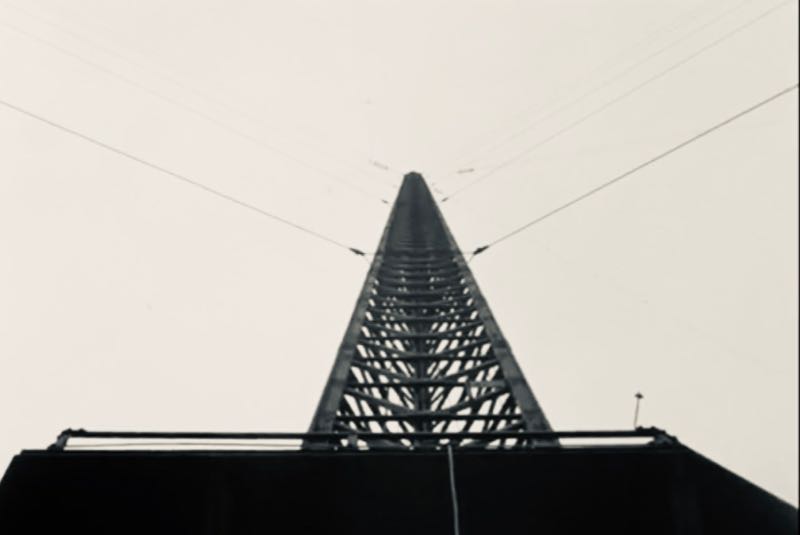
The 800 ft high masts had been a landmark since the 1920s and, as reporter David Rees finds out, maintaining them is tough, particularly during the coldest winter of the twentieth century. As one rigger says, “The wind doesn’t have time to go round you, it goes straight through you.”

Eighty years of broadcasting history came to an end when Rugby Radio Station was closed in 2007.

Watch the 1963 Rugby Radio Station at
https://player.bfi.org.uk/free/film/watch-rugby-radio-station-1963-online

Rugby Radio Station
https://en.wikipedia.org/wiki/Rugby_Radio_Station

Post Readers: Please note that this film is a region-blocked video and only viewable in the UK. If one were to know such things, a way to circumvent this would be to watch it using a VPN located in the UK. 🙂

You might also read this Rugby Radio book review by Dave Porter found in our archives.

From the Shortwave Radio Audio Archive: VOA and BBC on the anniversary of moon landing

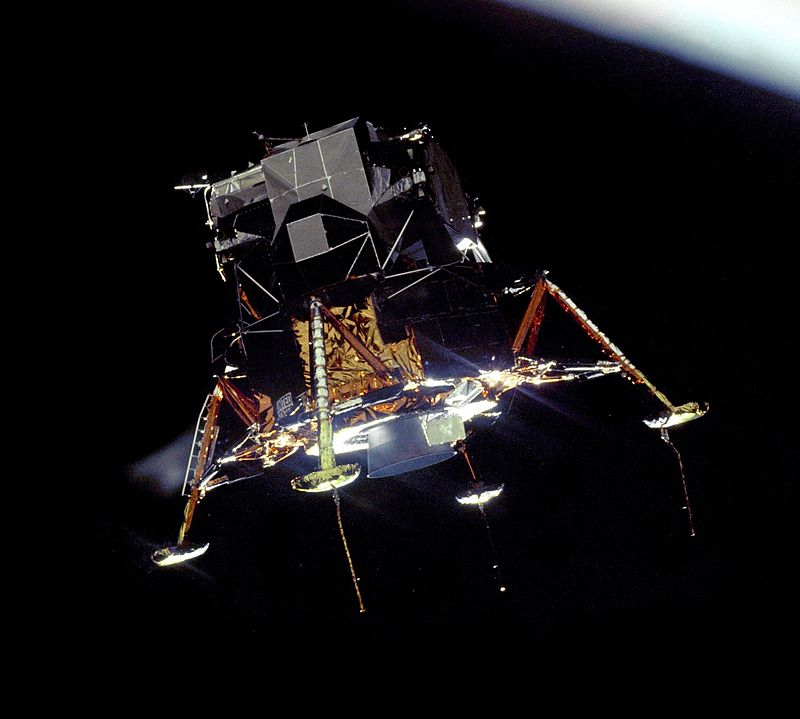
Eagle in lunar orbit photographed from Columbia. (Image: NASA)

There are a hundreds of fascinating off-air radio recordings in our Shortwave Radio Audio Archive.

One of our frequent contributors, Tom Laskowski, has digitally converted numerous magnetic tape recordings from his personal collection to share with the archive. Tom made the following recording of the Voice of America on July 20, 1979 at 0500 UTC on the 31 meter band.

Tom notes:

The first 4:30 is from a VOA newscast that aired before the main part of the program.

The main recording was presented on the 10th anniversary of the Apollo 11 moon landing. I enjoy listening to this every year on the landing anniversary.

I’ve enjoyed listening to this 10th anniversary presentation as we, today, celebrate the 50th anniversary of the moon landing::

Click here to download this recording.

[Update:] Tom also shares another recording that marks this anniversary:

I thought this might be [another] appropriate file to upload considering we are  marking the 50th anniversary of Apollo 11. I recorded this program thirty years ago on July 20, 1989 [5.975 MHz at 0400 UTC] the 20th anniversary of the Apollo 11 moon landing. Omnibus takes a look back at the historic Apollo mission and how and why it happened:

Click here to download the recording.

Thank you so much for sharing this, Tom!

Readers: Note that you can subscribe to the Shortwave Radio Audio Archive as a podcast via iTunes or by using the following RSS feed: http://shortwavearchive.com/archive?format=rss You can also listen via TuneIn.

Covert shortwave transmitters smuggled into trial of Bruno Richard Hauptmann

Many thanks to SWLing Post contributor, Ed, who writes:

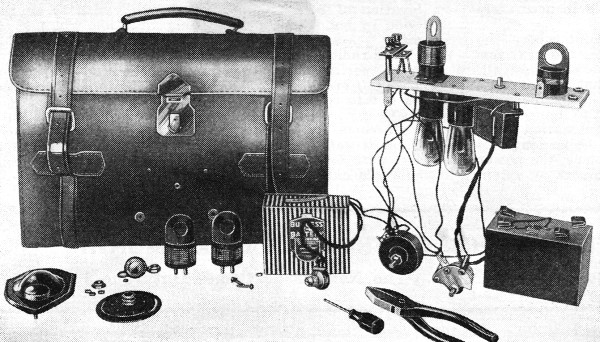
I ran across this fascinating historical article about how the Associated Press and the New York Daily News each smuggled a covert shortwave radio transmitter into the 1935 courtroom trial of Bruno Richard Hauptmann, who was charged with kidnapping and murdering the young son of Charles Lindbergh.

http://www.rfcafe.com/references/short-wave-craft/short-waves-hauptmann-trial-short-wave-craft-june-1935.htm

Neither news organization knew of the other’s covert transmitter, and crossed signals led to erroneous news of the verdict being reported.

Wow! What a fascinating bit of history, Ed! I bet those briefcase transmitters were heavy!

“Night of Nights” CW Event Returns Tonight!

Many thanks to SWLing Post contributor, Brian Smith (W9IND), who shares the following announcement:

“Night of Nights” CW Event Returns Friday (U.S. Time) 

“It was 20 years ago today,” say members of the Maritime Radio Historical Society, but they’re not covering a famous Beatles song.

They’ll certainly be on key, however, when they fire up two maritime CW stations, KPH and KFS, and their amateur radio club station, K6KPH, for the 20th annual “Night of Nights” at 8:01 p.m. Eastern Time on Friday, July 12/0001 UTC Saturday, July 13. (Alas, several previously participating stations will be absent again this year, including ship-to-shore stalwart WLO of Mobile, Alabama, and a quartet of Coast Guard stations.)

This weekend’s event marks the date in 1999 when commercial Morse code operations ceased in the United States. One year later, the preservation-minded MRHS staged its first “Night of Nights,” treating shortwave radio enthusiasts to the dits and dahs of historic maritime station KPH and other callsigns that were once presumed dead on shortwave CW frequencies.

This year, the society has put out a special appeal to anyone (licensed or not) with CW proficiency to help operate K6KPH. While KPH and KFS transmit “code wheels” (repeating messages), personal messages, and tributes to long-gone maritime stations and operators, K6KPH will make CW contacts with other amateur stations on 3550, 7050, 14050 and 21050 kHz.

Whether reporting for CW duty or not, the public is welcome to observe today’s event and tour the facility, located at 17400 Sir Francis Drake Boulevard in the Point Reyes National Seashore. Doors open at 3 p.m. local (Pacific) time.

And if you’re not within driving distance, you can tune in the Morse signals on the following medium wave and shortwave frequencies:

KPH:  426, 500, 4742.0, 6477.5, 8642.0, 12808.5, 17016.8, 22477.5 kHz

KFS:  12695.5 kHz

Reception reports go to P.O. Box 392, Point Reyes Station, CA 94956. Please include an SASE if you’d like a QSL.

The following links provide additional information:

Maritime Radio Historical Society: 

http://www.radiomarine.org

http://campaign.r20.constantcontact.com/render?m=1109843077277&ca=156b371f-da9f-4fed-8819-4bb55bd7bd44

http://campaign.r20.constantcontact.com/render?m=1109843077277&ca=b54f353c-4692-4564-b79a-0059721f9206

National Park Service: https://www.nps.gov/pore/planyourvisit/events_nightofnights.htm

Okay, Brian…that “being on key” bit? Clever! 🙂

Looking forward to some sweet CW music on the Night of Nights! Thank you for sharing!