Category Archives: Radio History

Geoff Hanley and the Radio Security Service

Geoff Hanley (Photo source: Express and Star)

Geoff Hanley (Photo source: Express and Star)

Many thanks to my friend, Phillip, for sharing this brilliant article from the Express and Star:

Researchers discover Wolverhampton man’s secret past

He was a happily married insurance agent with a secret that he took to the grave. 

Geoff Hanley was known to be a keen radio ham but nobody realised exactly what he was doing once he donned a pair of special issue headphones in his garden shed.

He would leave his family night after night to operate from the ‘radio shack’ that was specially blacked out for fear of air raids and in which he kept a sten gun, Lee Enfield 303 rifle and hand grenades.

When the siren sounded he ensured his wife, two children and dog were safe in the shelter he had dug in the garden of their Wolverhampton home but he would not join them. He stayed above ground at his post in the shed continuing to secretly monitor German military radio signals.

The operation was so hush-hush that even he may not have been entirely sure how the information he gathered was being used. But he was certain of two things – it was important and he could not speak about it to anybody outside those he worked with.

Continue reading…

Paul Litwinovich’s Vintage Radio series

SX-99-Dial

Many thanks to SWLing Post reader, Richard Cuff, for pointing out a brilliant series of articles called Vintage Radio by WSHU Chief Engineer, Paul Litwinovich.

Here are links to each article written thus far in the Vintage Radio series. If you would like to start at the beginning of the series, go to the bottom of the list first, then work your way up:

1-RadioListening

Paul Litwinovich is a shortwave listener, amateur radio operator and holds a commercial FCC license as well; here’s his bio, taken from the WSHU website:

“Paul caught the radio bug as a child. By age 12, he had taught himself the basics of vacuum tube theory.  He began repairing old, discarded radio sets, the kind that we now call vintage sets.  He loved listening, too, to local programs, DJs who picked their own music, talk shows designed to inform, not shock the listener.  But his favorite listening was to short wave radio, with its magic of music and programming from all around the world.

Hobby led to career.  Paul was a design engineer and engineering manager in the broadcast industry  for 14 years before coming to WSHU in 1990.  He holds an FCC commercial radio license, and an extra class Amateur radio license. And, oh yes, he’s still restoring and collecting vintage radio sets, for more than 45 years now, and counting.”

I’ve been in touch with Paul who tells me that an upcoming article will focus on one of my favorite WWII era receivers, the BC-348.

I can’t wait to read it!

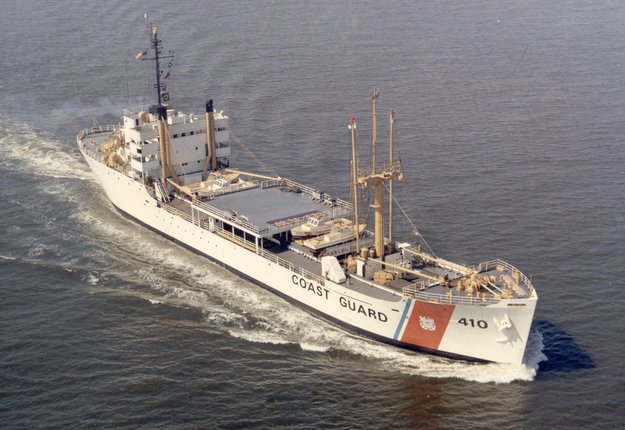
Coldwar Radio: When the VOA was an offshore broadcaster

Photo courtesy of former Courier crewman David M. Newell. Source: US Coast Guard

Photo courtesy of former Courier crewman David M. Newell. Source: US Coast Guard

(Source: VOA News)

In 1952, amidst the Cold War, a 338-foot Coast Guard Cutter was transformed into the mobile broadcasting base of the Voice of America. Its mission for more than a decade: send information beyond the Iron Curtain to counter Soviet propaganda in more than a dozen native languages. Daniela Schrier reports from an exhibit honoring the veterans and broadcasters who served aboard the ship in the waters off of Rhodes, Greece.


Click here to watch the video if the embedded player above is not visible.

BBC Radio 4 Extra: The First Pirate

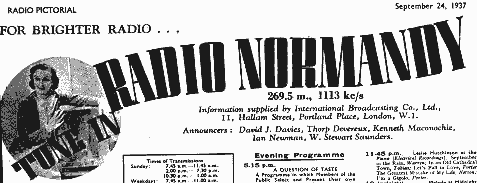
RadioNormandy

The First Pirate is the title of a Radio 4 Extra–an interview with Les Woodland who tells the story of Captain Plugge, founder of Radio Normandy, the first station to take on the BBC.

(Source: Southgate ARC)

Capt Leonard Plugge was the driving force behind Radio Normandy in the early 1930s. He created the International Broadcasting Company in 1931 as a commercial rival to the British Broadcasting Corporation by buying airtime from radio stations such as Normandy, Toulouse, Ljubljana, Juan les Pins, Paris, Poste Parisien, Athlone, Barcelona, Madrid and Rome. IBC worked indirectly with Radio Luxembourg until 1936. World War II silenced most of Plugge’s stations between 1939 and 1945.

Click here to listen to The First Pirate which will be broadcast on Thursday, August 21st 2014 at 05:30, 12:30, and 19:30 UTC and Friday August 22 at 1:30 UTC. 

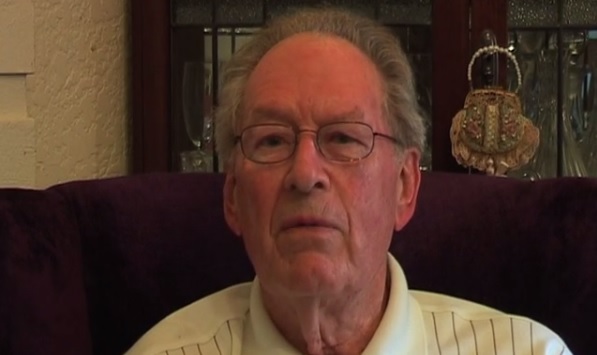
A chat with Peter Homfray

Peter-HomfrayOn the topic of Radio Australia, Jonathan Marks writes:

“It doesn’t seem like 10 years ago that I sat down with Peter Homfray to discuss the early days of Radio Australia. What a truly fascinating person.”

A Chat with Peter Homfray from Jonathan Marks on Vimeo.

BBC World Service Documentary: “Hang On, I’ll Just Speak to the World”

BBC-WorldServiceMany thanks to Mike Barraclough who shares this documentary about the BBC World Service from 1982: “Hang On, I’ll Just Speak to the World.”

I’ve embedded video players and linked to each of the four parts on YouTube:

Part 1

Part 2

Part 3

Part 4

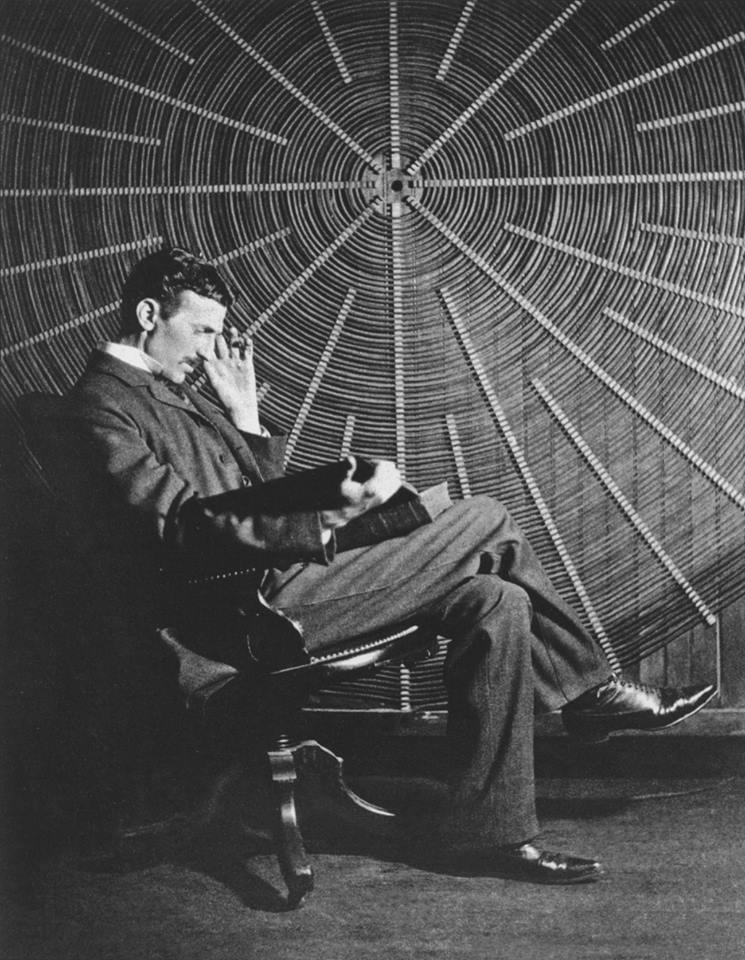
Remembering Nikola Tesla on his birthday

Mikola-Tesla
Today is Nikola Tesla’s birthday (lived July 10, 1856 – January 7, 1943) and I, for one, will be remembering him for his enormous contributions to our hobby.

If you’re not familiar with Tesla,  I highly recommend Margaret Cheney’s book, Tesla: Man Out of Time. In the meantime, I would at least encourage you to read his page on Wikipedia.

And if you’re in the mood for a mixture of fact and funny, check out The Oatmeal’s comic, “Why Nikola Tesla was the greatest geek who ever lived.” (Profanity warning!) In fact, Matthew Inman, the comic artist behind The Oatmeal has raised over $2 million dollars to create a Nikola Tesla museum in New York. Amazing…Looking forward to visiting that.

My thoughts? We need more Nikola Teslas on this planet–clearly, a man ahead of his time.

Hat tip to my buddy, Skip Arey, for sharing this dynamic photo of Tesla.