Category Archives: Radio History

Uncovering Wullenweber’s “Elephant Cages”

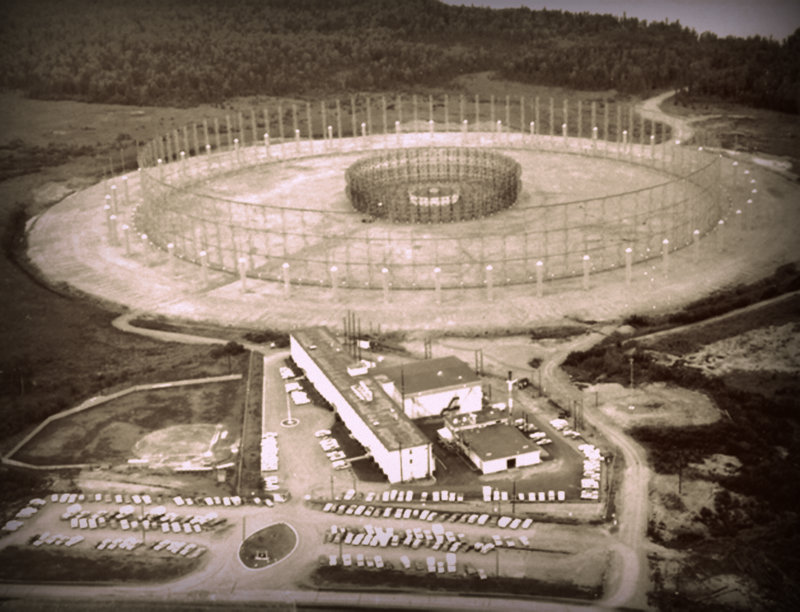
800px-CDAA_Elmendorf_AFBMany thanks to SWLing Post reader, Bill Patalon, for sharing this article via Gizmodo:

In the early days of electronic espionage, the US intelligence community didn’t have the benefit of all-seeing spy satellites—it had to intercept and interpret high-frequency radio waves transmitted by the Soviet Union. To do so, the Americans relied on a network of mysterious structures whose real purpose was kept highly classified throughout the Cold War.

Nicknamed “Elephant Cages” by outside observers, these structures were actually high-frequency antenna arrays, part of the US military’s AN/FLR-9 “Iron Horse” system. These arrays, commonly known as “Wullenweber” antennas—and named after German WWII scientist, Dr. Hans Rindfleisch was Wullenwever—are a type of Circularly Disposed Antenna Array (CDAA). They can be used for a variety of purposes from intelligence gathering and identifying high-value targets to navigation and search and rescue operations.

Each elephant cage consisted of an inner ring of antennas tuned for high frequency waves surrounded by one or more outer rings tuned for lower frequencies. These antennas would listen for HF radio waves bouncing off the ionosphere (which is what also allows HF radios to communicate beyond the horizon) and triangulate the precise location of the signal’s source.

Click here to continue reading at Gizmodo…

If you’d like to read more about “Elephant Cages” check out the following links:
RNZ Sounds Historical: 90 years since first NZ/UK radio contact

london-geographical-institute_the-peoples-atlas_1920_dominion-of-new-zealand_3012_3992_600

Many thanks to SWLing Post reader, Frank Holden, for sharing this episode of Sounds Historical via Radio New Zealand. In commemoration of the first radio link between New Zealand and the UK, host Jim Sullivan features a 1964 recording of New Zealand radio pioneers, Frank and Brenda Bell:

(Source: Radio New Zealand)

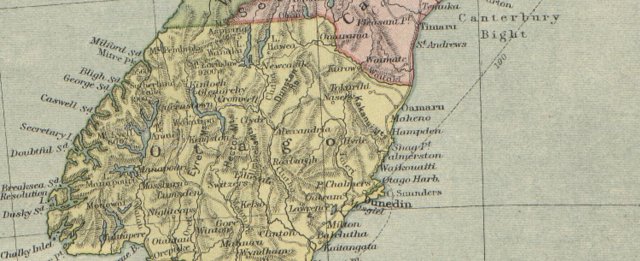
The first radio link between New Zealand and England took place 90 years ago yesterday and last night it was re-enacted. In 1964 at the time of the 40th anniversary Frank and Brenda Bell recalled the 1924 event which Frank Bell orchestrated from their home in Shag Valley, East Otago. His sister Brenda recalls the historic occasion from her home. The recording was made at Shag Valley to mark the 40th anniversary between Frank and Cecil Goyder of London. Allan Frame and Clive Liddell also recall the event. Then Martin Balch reports from the vents at Shag Valley Station on 18 October 2014. He talks to Mike ZL4OL from Dunedin, Dave Mulder, ZL4DK and Mike Mather ZL2CC from Gisborne. Frank Bells’ great-grandchildren Henry and Lucy re-create the 1924 event by talking to children at Mill Hill School, London.

Below, I have embedded audio players for Part 1 and Part 2 of Sounds Historical. While I would encourage you to listen to the whole show, you’ll find the anniversary recording in Part 2 beginning around 36:00. Enjoy:

Part 1

Part 2

If you’d like to read more about this historic event, check out this article on nzhistory.net.nz. The Otago Daily Times also features a photo of the transmitter the Bells used.

I’m a little surprised to discover no articles about Frank or Brenda Bell on Wikipedia (of course, their uncle, Sir Francis Henry Dillon Bell is featured).

The BBC Genome Project

RadioTimes

Many thanks to Mike Barraclough who shares this news:

“BBC has today launched a website publishing every BBC programme ever broadcast by the Corporation from digitised editions of the Radio Times 1923-2009. Getting occasional internal errors at the moment presumably due to heavy use following publicity. Well designed and easy to search. http://genome.ch.bbc.co.uk/

The archive is quite deep–if you’re the nostalgic type, expect to spend a few hours browsing.

Video: The Battle of the Beams

Many thanks to SWLing Post reader, Jonathan Marks, who shares this video about Luftwaffe Navigation Beams via YouTube–fascinating WWII history:

Video description:

This episode documented how British Intelligence became aware of various German Luftwaffe Navigation Beams, such as Knickebein, X Gerat and Y Gerat, and the counter measures developed to combat them, in what became known as the Battle of the Beams.

It is largely based on the book Most Secret War written by R.V.Jones who features heavily in the series. This programme contains rare footage of The Blitz including the bombing of Coventry. Interviewees include Albert Speer and AVM Edward Addison.

Wartime radio: The secret listeners

RadioSecretService

After publishing the post about Geoff Hanley and the Radio Security Service last week, I discovered this brilliant 1979 documentary from the BBC which highlights civilian involvement in radio-based intelligence during WWI and WWII.

Here’s a description from the East Anglian Film Archive:

“It was the tireless work of amateur radio enthusiasts during World War I, that initially convinced the Admiralty to establish a radio intercept station at Hunstanton. Playing an integral role during the war, technological advances meant that radio operators could pinpoint signals, thus uncovering the movement of German boats, leading to the decisive Battle of Jutland in 1916.

Wireless espionage was to play an even more important role during World War II, with the Secret Intelligence Service setting up the Radio Security Service, which was staffed by Voluntary Interceptors, a band of amateur radio enthusiasts scattered across Britain. The information they collected was interpreted by some of the brightest minds in the country, who also had a large hand in deceiving German forces by feeding false intelligence.”

Click here to watch the 30 minute film. 

1930s refrigerator had built-in radio

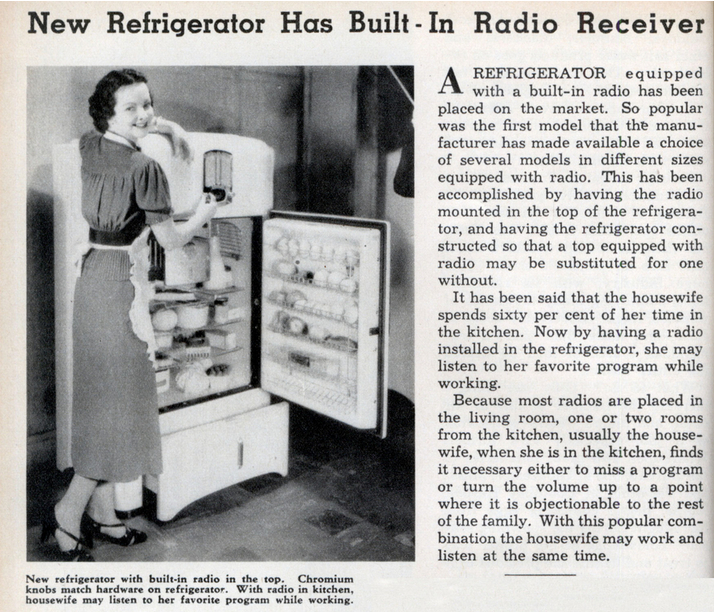
Many thanks to Andy Sennitt for sharing this fascinating piece of radio nostalgia:

RefrigeratorRadio

Gizmodo columnist, Matt Novak, writes:

Jesse Walker, author of the book Rebels on the Air: An Alternative History of Radio in America, pointed me to this rather novel invention from 1937 — the refrigerator-radio combination unit. This may seem like an odd marriage of tech, but it makes perfect sense when you realise that it in the 1930s it was becoming harder to sell new radios and much easier to sell new fridges.

Despite the Great Depression, America saw an explosion of mechanical refrigerator ownership during the 1930s. In 1930, just 8 per cent of American households had a fridge. By the end of the decade, nearly half of American homes had one.

But the market for radios was pretty saturated in the late 1930s. Over 80 per cent of American households had a radio by the end of the decade. So radio set manufacturers tried to insert their products into new places that from the vantage point of the future, we can see didn’t pan out (like refrigerators) and others that did (like cars).

Continue reading on Gizmodo…