Category Archives: Shortwave Radio

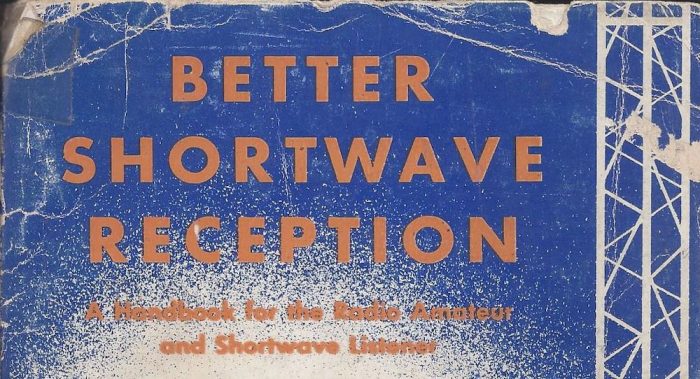
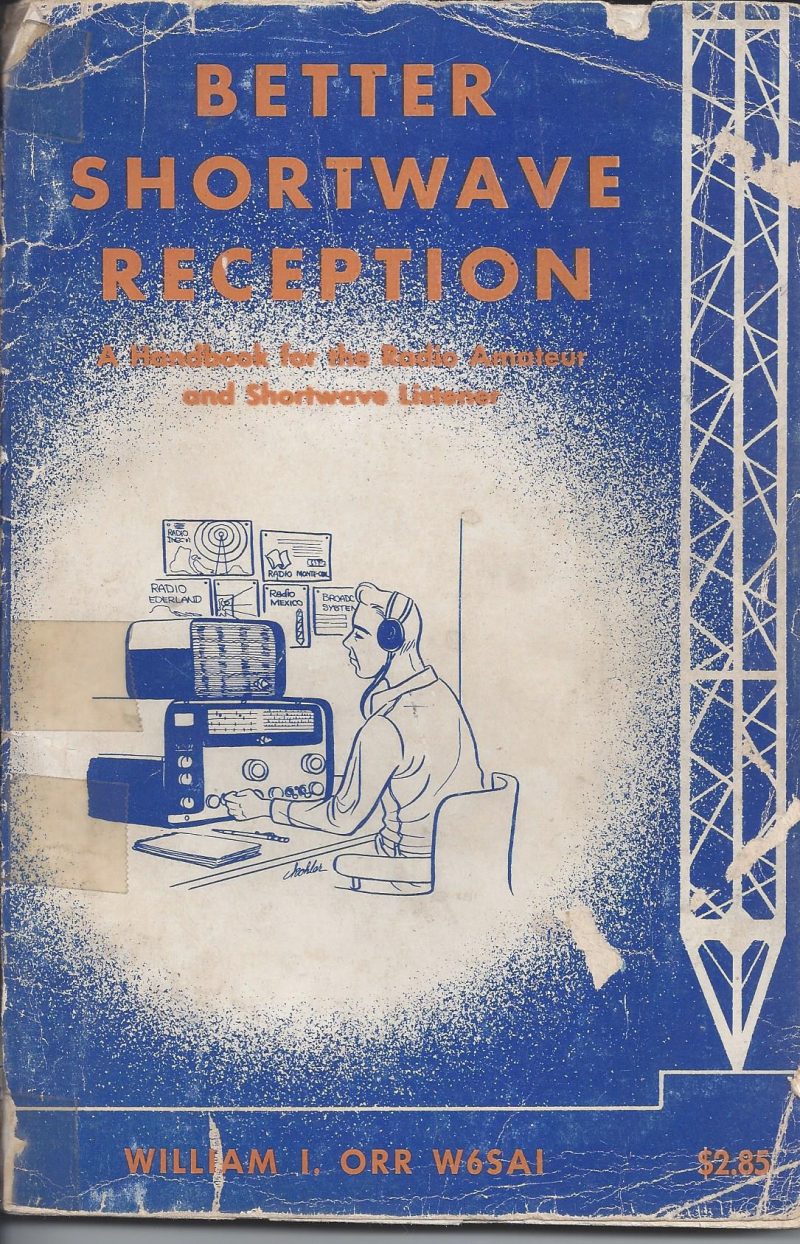
John’s mystery book: “Better Shortwave Reception” by William Orr (W6SAI)

Herein lies one of the wonderful things about our SWLing Post community….

Yesterday, we posted a message from John (KC8RZM) asking readers to help identify a vintage radio book that had meaningful impact on his life. Within a few hours, SWLing Post contributor, Bob LaRose (W6ACU), came to the rescue with the following comment:

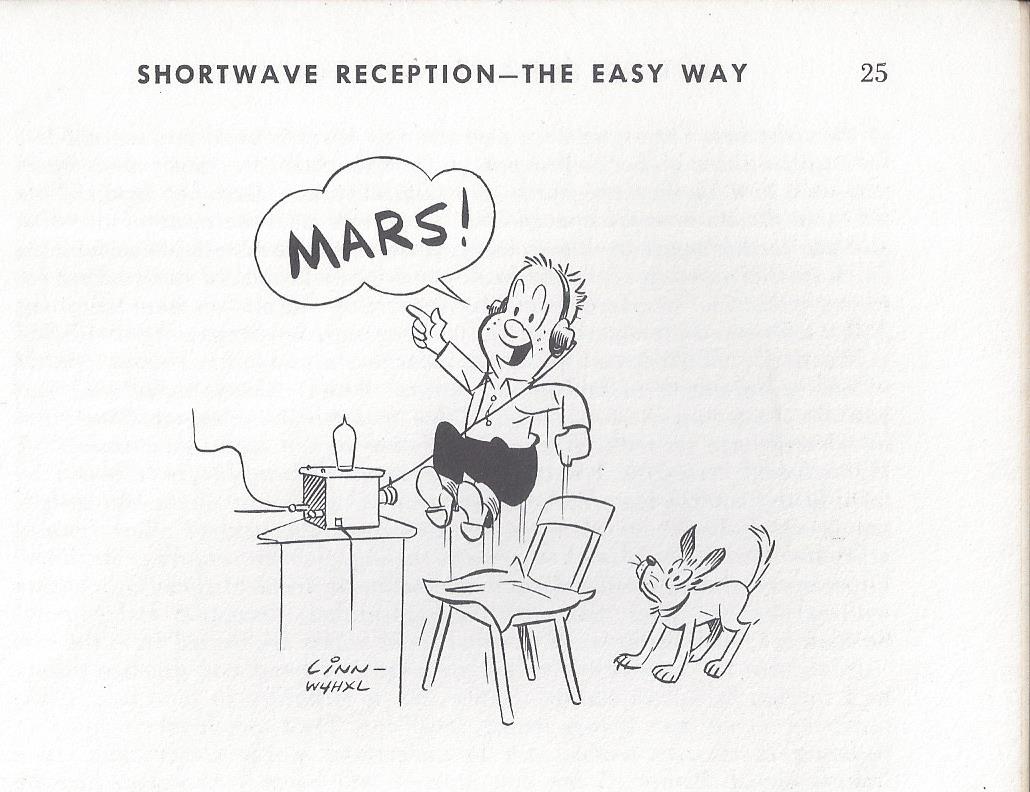
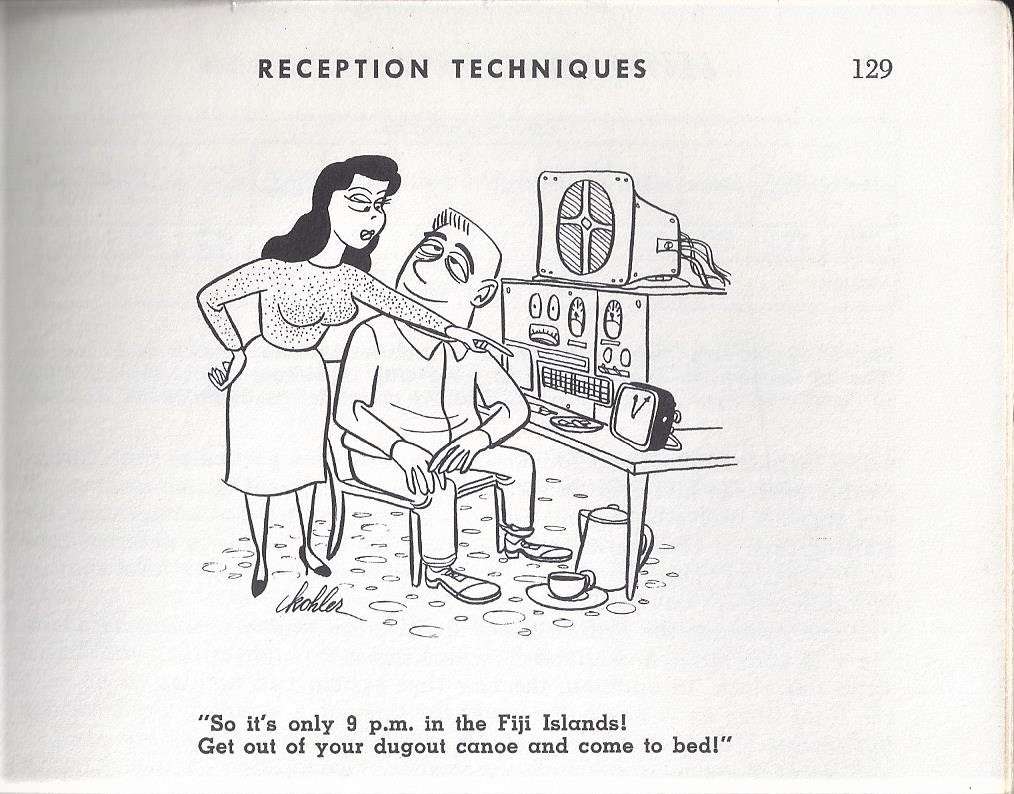
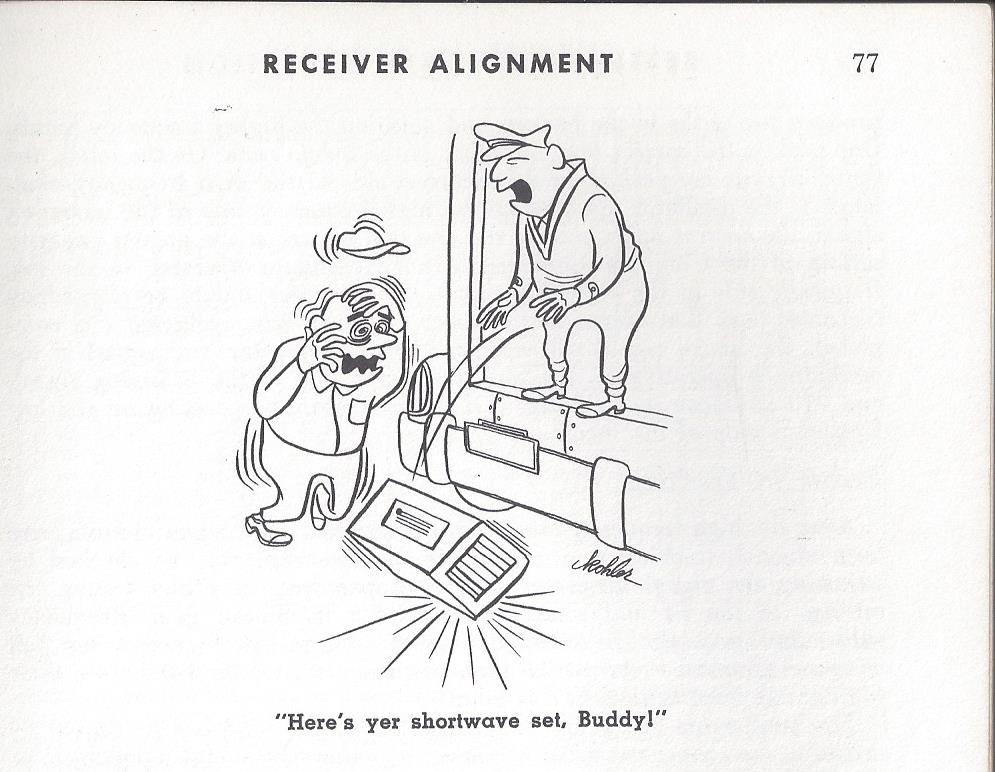
I’ve got a copy of the book! – “Better Shortwave Reception” by William Orr, W6SAI. My “First Edition” is dated 1957. It has both cartoons as you mentioned. It was probably the earliest SWBC book I had, that’s why I remembered it.

Bob also scanned some of the pages and images to share with John and the SWLing Post community. Bob notes:

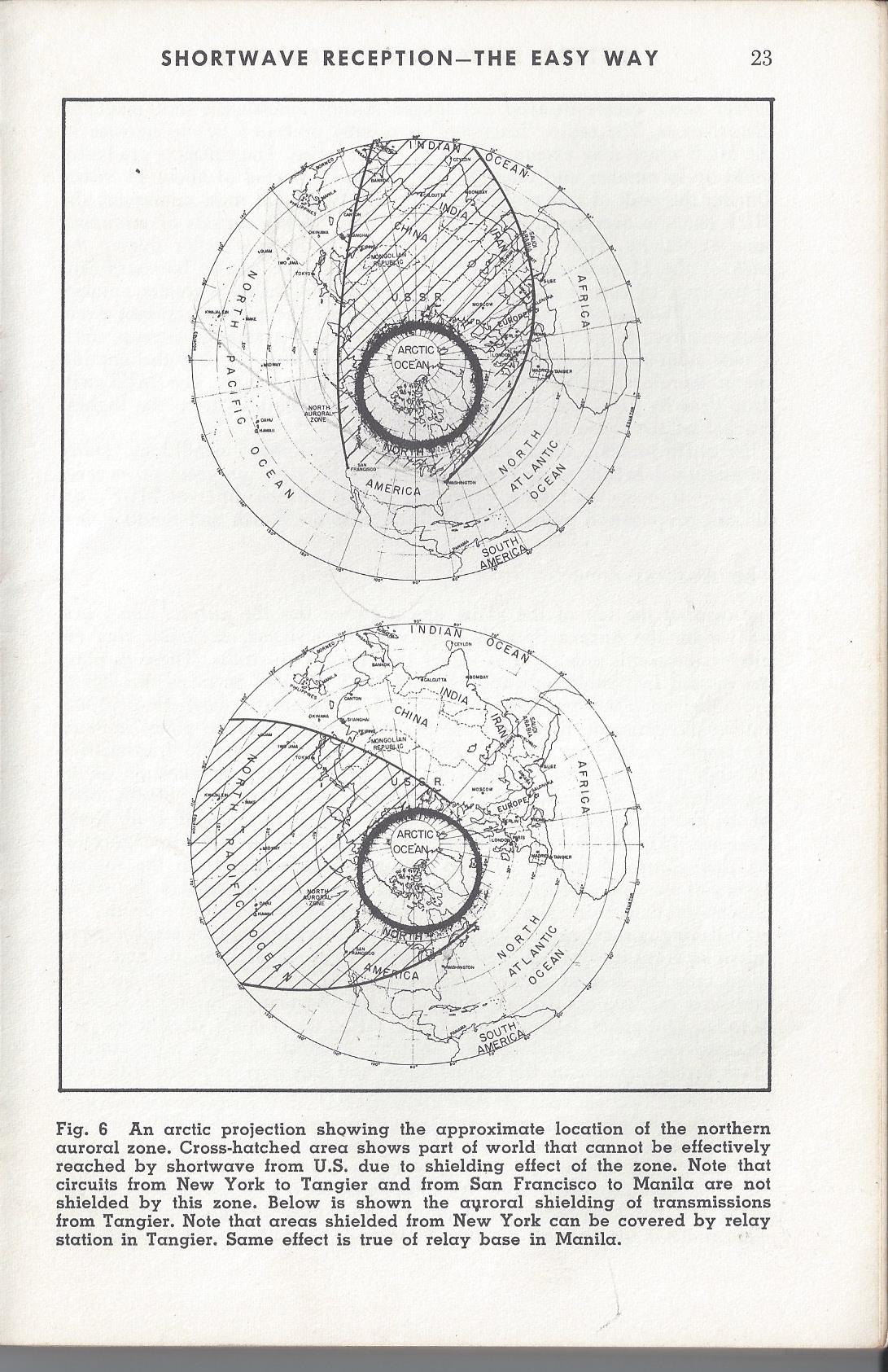
I scanned the well-worn front cover, three of the cartoons inside and another page that readers may find interesting – the Auroral Zones from the East and West Coasts.

I probably got this book in 1959 or 60 and kept it all these years, along with my early vintage WRTV Handbooks. (The rest of the Handbooks from about 1970 on were given to Ray Robinson of KVOH for reference purposes).

I always liked the Auroral Zone map because when I first started DXing on the East Coast in 1959 at the height of the Solar Cycle there were frequent solar storms that totally disrupted reception of the many European stations that transmitted to North America at that time. The map clearly shows why the VOA picked Tangier and Manila for relay stations!

Select images from “Better Shortwave Reception” by William Orr, W6SAI

Thank you so much, Bob! The moment I saw these images–especially the cover–I, too, remembered this book!  I love the cartoons!

Post readers: Does anyone else remember this book?  What are your favorite shortwave books?  Please comment!

Radio Waves: DXE Virtual Hamfest, USAGM Shake-Up, Ham Radio Breaking the C-19 Doldrums, and FCC Fines FM Pirates

Radio Waves:  Stories Making Waves in the World of Radio

Because I keep my ear to the waves, as well as receive many tips from others who do the same, I find myself privy to radio-related stories that might interest SWLing Post readers.  To that end: Welcome to the SWLing Post’s Radio Waves, a collection of links to interesting stories making waves in the world of radio. Enjoy!

Many thanks to SWLing Post contributors Bill, Paul, Mike Terry and the Southgate ARC  for the following tips:


DXE Virtual Hamfest and DX Academy on July 25 (DX Engineering)

Join the Elmers at DX Engineering and a host of Ham Radio luminaries on Saturday, July 25, 2020, for the first DXE Virtual Hamfest and DX Academy—two online events combined into a full day of fun, learning, and drawings for DX Engineering gift cards (must be registered and present on Zoom during the drawings to qualify).

Both events are free and open to all—click here to register. Once signed up, you will receive a link to access the events in real-time on the Zoom webinar platform, or you can watch live on the DX Engineering YouTube channel.[]

US global media agency seeks to kick out international journalists (Southgate ARC)

CNN Business reports: Efforts to clean house at the US Agency for Global Media continued this week as leadership indicated that international journalists who work for Voice of America (VOA) will not have their visas extended and a widely respected top editor at Radio Free Asia was fired, explained three sources familiar with the decisions.

Under the new leadership of Michael Pack, who took the job as USAGM’s CEO last month, the organization which oversees US-funded broadcasters VOA and RFA among others has been thrust into a wide-ranging shakeup which appears to be politically motivated.

With indications that Pack is not going to allow visas to be extended for international VOA journalists in the US, there are dozens of journalists who could face retaliation if they are forced to return to their home countries.

Read the full CNN news story
https://edition.cnn.com/2020/07/10/media/usagm-voice-of-america-visas/index.html

In Colorado Springs and beyond, ‘magic’ of ham radio breaks doldrums of COVID-19 (The Gazette)

On the windswept prairie east of Colorado Springs, in a ramshackle trailer plastered with maps and codes associated with every sector of the world, strange sounds are coming from a radio.

Static mixes with R2-D2-like beeps and bops. Don DuBon has a microphone in one hand while the other twirls a dial, searching.

“Alpha, foxtrot, zero, sierra,” he says, speaking into the void. “Alpha, foxtrot, zero, sierra…”

That’s the call sign for the Pikes Peak Radio Amateur Association, the group of enthusiasts who make this trailer their base.

Hams, as they’re also called, take special pride in their contact with each other across the globe. They keep log sheets. One here by DuBon shows contact made with a Chuck (call sign KI6HK) in California; a Jake (K4BOM) in England; a Brooks (K2CNN) in Alabama; and others in Uruguay, Brazil and New York.

DuBon, N6JRL, is looking for others.

“Spain,” he says, recognizing the call sign heard through the clutter. “That’s a station in Spain. … He’s got a bunch of people calling him.”

“It’s called a pile-up,” says Jim Bishop, KD0KQL, fellow club member and retiree. The two are now gray but engaged in something that makes them feel young, still boys with their radios.

The Pikes Peak Radio Amateur Association (PPRAA), counting a little more than 100 members mostly from generations past, is among an underground but bustling faction of American culture. Active call signs given by the Federal Communications Commission represent 0.25% of the U.S. population. In El Paso County, the ranks number about 3,500.[]

FCC Continues to Prosecute Pirate Radio Operators – Two Settlements with Identified Violators (Lexology.com)

Pirate radio operators continue to be a problem – particularly in major metropolitan areas. The week before last, the FCC resolved two long-pending cases against pirate operators through negotiated settlements. In one case, the FCC last year initially proposed a fine of $151,005 for the illegal operation. After examining the operator’s finances, the Bureau agreed to a $4,000 fine now, with a penalty of $75,000 should the operator violate the law again (see this decision against an operator called Radio Concorde). In the second case, the FCC had proposed a $453,015 fine last year, but agreed to take $5,000 now, with penalty of $225,000 if the operator violates the terms of the consent decree (see the decision dealing with operator Radio TeleBoston). Last year, we wrote here about the much larger fines initially proposed for these two operators.

In both cases, the FCC seemingly recognized reality in taking the small upfront payments now rather than trying to collect huge fines that likely were beyond the ability of the operators to pay. The FCC also required the surrender of the operator’s equipment and a commitment to stay away from pirate radio for 20 years or face much larger fines. The big fines initially imposed in these cases were set even before Congress enacted the PIRATE Act early this year. The new law allows for fines on illegal operators of $100,000 per day, up to a maximum total fine of $2,000,000. Even without the full effect of the PIRATE Act, these cases show the deterrent effect of these large fines.[]


Do you enjoy the SWLing Post?

Please consider supporting us via Patreon or our Coffee Fund!

Your support makes articles like this one possible. Thank you!

Can you help John identify a vintage shortwave radio book–?

Many thanks to SWLing Post contributor, John (KC8RZM), who writes:

I wonder if anyone at SWLing can help me identify this book on shortwave listening from my childhood.

It was an older book when I checked it out from the local library mid-1970s but what I remember specifically is that it had a cartoon of a truck driver delivering, and by delivering I mean dropping on the ground, a new shortwave receiver plus the horrified look on the new owners face. The caption read (from memory) “here’s your new radio buddy (or pal).”

I checked that book out of my local library and pestered my parents to buy me a short wave radio kit.

Assembled the kit (probably inhaling a decent amount of lead vapor from the soldering) and started listening.

VOA was one of the first stations I heard and thought…what an interesting place the US sounds like compared to the small isolated Scottish village I grew up in (21-mile journey to school each way on narrow twisting roads that sheep could freely roam on, and did, all the time), what with all that NASA stuff going on there. I can still hear in my head the VOA host that presented a show on jazz.

So that book, SW listening, and VOA started me on the road to becoming an American citizen!

What a fantastic story behind that book, John! I hope one of our amazing readers can help you identify it! Please comment with any helpful info!

UPDATE: Bob solved the mystery! Click here to read the update.

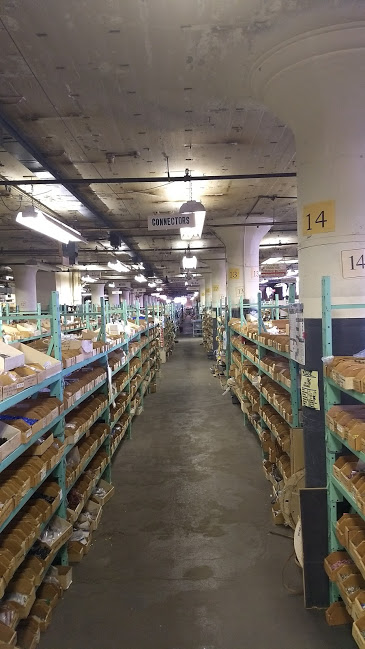
List of electronics and radio surplus outlets

Many thanks to SWLing Post contributor, Neil Goldstein, who writes:

I added a sub-page to radiokitguide.com with a list of the remaining electronics and radio surplus outlets I was able to find and verify. The list is evolving, but is complete enough to publish at this point. Enjoy!

https://fofio.blogspot.com/2020/07/sources-parts--outlets-and-more.html

Many thanks for sharing, Neil!

Special VORW Radio International Broadcasts This Weekend!

Hello readers! I’m pleased to announce that I’ll be doing a special broadcast of VORW Radio International on Saturday the 18th of July and Sunday the 19th of July. This is purely being done for the fun of it and no other reason.

The show will feature good music, listener requests, comments and responses to listener emails. There will be a 1 Hour show on Saturday and a 2 Hour show on Sunday. The broadcasts will be transmitted live for listeners in Europe from Moosbrunn, Austria and repeated for listeners in North America from WRMI in Florida.

Here is the broadcast schedule:

(LIVE) Saturday 1700 UTC (1 PM Eastern / 7 PM CEST) – 6070 kHz – Moosbrunn 300 kW – Europe, The Middle East & Africa

Saturday 2200 UTC (6 PM Eastern / Midnight CEST) – 9395 kHz – WRMI 100 kW – North America

(LIVE) Sunday 1300 UTC – 1500 UTC ( 9 AM Eastern – 11 AM Eastern / 3 PM CEST – 5 PM CEST) – 6070 kHz – Moosbrunn 100 kW – Europe 

Sunday 2100 UTC (5 PM Eastern / 11 PM CEST) – 7780 kHz – WRMI 100 kW – Eastern North America

Monday 0200 UTC (10 PM Eastern / 4 AM CEST) – 5850 kHz – WRMI 100 kW – North America

A QSL will be given to any and all listeners who submit reception reports. Feedback is most welcome at [email protected]

I hope you can tune in!

What are your Sunday radio plans?

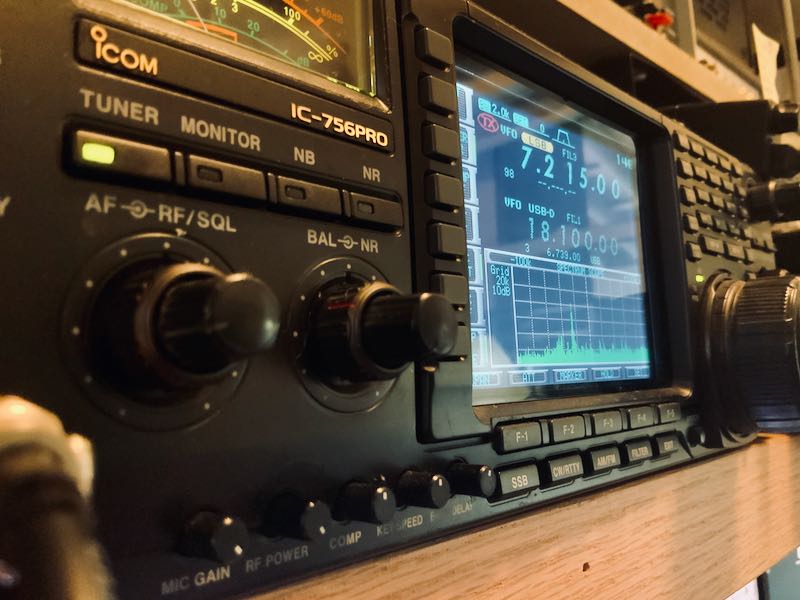
Icom IC-756 Pro Transceiver Dial

I had planned on today being a rather laid-back Sunday with a good book lined-up and lots of radio time. Instead, my wife has convinced me to work on a home project this afternoon. That’s okay, because it is a project I’d like to get out of the way and the weather today is ideal.

Still, this morning, I’ve been hunting a few Parks On The Air (POTA) stations with the ‘756 Pro to help park activators along with their numbers. I try to do this when I can because I’m typically the activator and I truly appreciate logging well over my ten required stations for a valid field activation.

After the project this afternoon, I also plan to hit the 31 meter band and lower, catching a few broadcast stations and soaking in the shortwaves most likely with my RSPdx and HF+ Discovery SDRs.

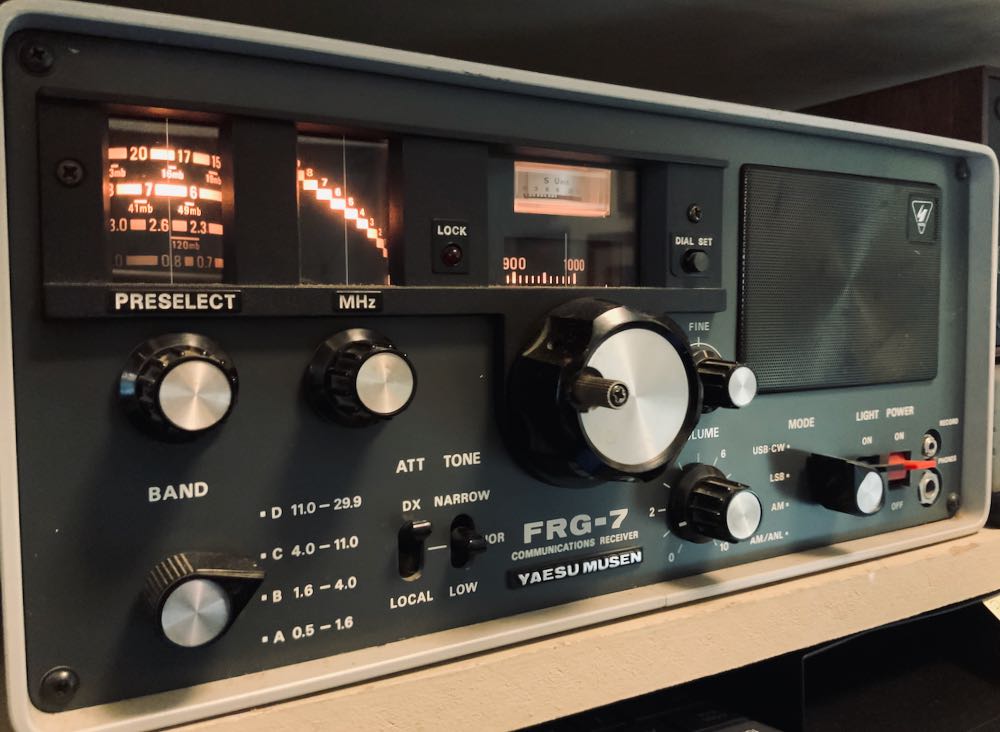
It won’t be all SDR, though! I’ll be busy doing band-scans with my beloved Yaesu FRG-7 (Frog 7) while my SDRs record audio and spectrum.

Post readers: What are your plans today and this week?  Please comment!


Do you enjoy the SWLing Post?

Please consider supporting us via Patreon or our Coffee Fund!

Your support makes articles like this one possible. Thank you!

Radio Waves: Maritime Mobile Net Assists, Voice of Ambiguity, Promising Solar Cycle 25 Prediction, and the Future of Ham Radio

Radio Waves:  Stories Making Waves in the World of Radio

Because I keep my ear to the waves, as well as receive many tips from others who do the same, I find myself privy to radio-related stories that might interest SWLing Post readers.  To that end: Welcome to the SWLing Post’s Radio Waves, a collection of links to interesting stories making waves in the world of radio. Enjoy!

Many thanks to SWLing Post contributors Rich Smith, Kim Elliott, and Pete Eaton for the following tips:


Maritime Mobile Service Network Comes to the Aid of Vessel in Distress (ARRL News)

The Maritime Mobile Service Net (MMSN) on 14.300 MHz came to the assistance of a sailing vessel on June 25. MMSN control operator Steven Carpenter, K9UA, took a call on 20 meters from Ian Cummings, KB4SG, the skipper of the Mystic Lady, then some 40 miles east of Florida. Cummings reported that his engine had failed as he was attempting to return to his home port of Stuart, Florida. He not only had insufficient wind, but a strong current was carrying the vessel out to sea.

Cummings had been unable to reach any station via his VHF marine radio, since he was too far from the coast. Assisting in the call was Robert Wynhoff, K5HUT, also an MMSN net control operator. Cummings said his vessel, with one passenger on board, was drifting northwest toward the South Carolina coast.

“A major concern was that the vessel was heading directly towards a lee shore,” the MMSN reported. “Lee shores are shallow, dangerous areas which are a hazard to watercraft. Vessels could be pushed into the shallow area by the wind, possibly running aground and breaking up.”

Carpenter contacted Cummings’ family, who had already called the Sea Tow marine towing service. Sea Tow advised Carpenter to tell the captain to head closer to shore by sailing west, if possible. Carpenter told Cummings that if he was unable to get nearer to shore, he would notify the US Coast Guard, which was already monitoring the situation.

As the MMSN reported, “The Mystic Lady was able to make some headway, but it was very slow. Members of the MMSN made additional calls via landline to the captain’s family as to the ongoing status of those on board. The family was concerned but relieved that communication was established and that all were well.”

Several hours later, the captain advised that the wind had picked up, allowing him to head close enough to shore for Sea Tow to reach the vessel and take it back to port.

The Pacific Seafarers’ Net, which monitors 14.300 MHz from the West Coast after the MMSN secures at 0200 UTC, kept in touch with the Mystic Lady into the night while it was under tow.

The tired, grateful captain later messaged the net, “A million thanks to everyone last night who helped rescue us on 14.300. Everyone chipped in as we drifted north in the Gulf Stream 60 miles headed to a lee shore. The MMSN net control and several others stayed with us for hours, phoned people, and were immensely helpful. The situation on board was dangerous. We are now safely under tow home. You folks are amazing!”

In operation since 1968, the MMSN monitors 14.300 MHz 70 hours a week to assist vessels and others in need of assistance. — Thanks to MMSN Net Manager Jeff Savasta, KB4JKL[]

VOA: Voice of ambiguity (The Hill)

From 1985 to 2017, I was an audience research analyst at the Voice of America. During that time I was preoccupied by the fact that the BBC World Service had a larger audience than VOA. VOA had a larger budget, so money was not the issue.

In audience surveys, I inserted a question asking those who listened to BBC more often than VOA: “why?” The answer provided most often was trustworthiness of the news.

I asked a listener from Burma (now known as Myanmar) why he thought BBC is considered more trustworthy than VOA. He replied that VOA is more closely connected to the U.S. government than BBC is to the U.K. government. I asked how he knows this. He responded that it’s because VOA says so every day.

He was referring to the “disclaimer” at the beginning of the editorials that, by the 1980s, were heard daily on VOA’s English broadcasts: “Next, an editorial reflecting the views of the United States government.”

The daily editorial was a requirement handed down by VOA’s parent U.S. Information Agency. The editorials are drafted by the VOA’s policy staff, sent to the State Department for approval and finally broadcast after a sometimes lengthy back and forth.

Michael Pack, the new CEO of the U.S. Agency for Global Media, VOA’s present parent agency, is restoring the editorials to their previous prominence on VOA. In recent years, with diminished radio output, editorials were relegated to VOA’s little-viewed satellite television service and to a website separate from the main voanews.com. The revival of the editorials is a step in the repoliticization of VOA.[]

Newer Solar Cycle 25 Forecast Runs Counter to Consensus (ARRL Newsletter)

Scientists associated with the National Center for Atmospheric Research, the University of Maryland, NASA Goddard Space Flight Center, and other institutions are offering a “bold prediction” on how Solar Cycle 25 will play out. In a paper, “Overlapping Magnetic Activity Cycles and the Sunspot Number: Forecasting Sunspot Cycle 25 Amplitude,” they assert that the next sunspot cycle will be of major proportions. The forecast stands in stark contrast to the consensus of forecasters who predict that the magnitude of the nascent Cycle 25 may not be much different from the current unremarkable solar cycle, which appears to have reach its low point.

“From the dawn of modern observational astronomy, sunspots have presented a challenge to understanding — their quasi-periodic variation in number, first noted 160 years ago, stimulates community-wide interest to this day,” the abstract points out. “A large number of techniques are able to explain the temporal landmarks, (geometric) shape, and amplitude of sunspot ‘cycles,’ however, forecasting these features accurately in advance remains elusive.”
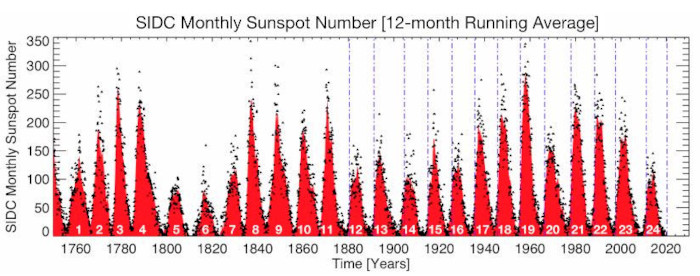
Monthly sunspot numbers since 1749. The data values are represented by dots, and the 12-month running average values are illustrated as a red shaded area. Vertical blue dashed lines signify the magnetic activity cycle termination times that trigger the rapid growth of sunspot activity.

The paper notes that recent studies have illustrated a relationship between the sun’s 22-year Hale magnetic cycle and the production of sunspot cycle landmarks and patterns, but not the amplitude of the cycle.

“Using discrete Hilbert transforms on 270 years of monthly sunspot numbers to robustly identify the so-called ‘termination’ events — landmarks marking the start and end of sunspot and magnetic activity cycles — we extract a relationship between the temporal spacing of terminators and the magnitude of sunspot cycles,” the abstract explains. “Given this relationship and our prediction of a terminator event in 2020, we deduce that Sunspot Cycle 25 will have a magnitude that rivals the top few since records began. This outcome would be in stark contrast to the community consensus estimate of Sunspot Cycle 25 magnitude.”[]

The Uncertain Future of Ham Radio (IEEE Spectrum)

Software-defined radio and cheap hardware are shaking up a hobby long associated with engineering

Will the amateur airwaves fall silent? Since the dawn of radio, amateur operators—hams—have transmitted on tenaciously guarded slices of spectrum. Electronic engineering has benefited tremendously from their activity, from the level of the individual engineer to the entire field. But the rise of the Internet in the 1990s, with its ability to easily connect billions of people, captured the attention of many potential hams. Now, with time taking its toll on the ranks of operators, new technologies offer opportunities to revitalize amateur radio, even if in a form that previous generations might not recognize.

The number of U.S. amateur licenses has held at an anemic 1 percent annual growth for the past few years, with about 7,000 new licensees added every year for a total of 755,430 in 2018. The U.S. Federal Communications Commission doesn’t track demographic data of operators, but anecdotally, white men in their 60s and 70s make up much of the population. As these baby boomers age out, the fear is that there are too few young people to sustain the hobby.

“It’s the $60,000 question: How do we get the kids involved?” says Howard Michel, former CEO of the American Radio Relay League (ARRL). (Since speaking with IEEE Spectrum, Michel has left the ARRL. A permanent replacement has not yet been appointed.)

This question of how to attract younger operators also reveals deep divides in the ham community about the future of amateur radio. Like any large population, ham enthusiasts are no monolith; their opinions and outlooks on the decades to come vary widely. And emerging digital technologies are exacerbating these divides: Some hams see them as the future of amateur radio, while others grouse that they are eviscerating some of the best things about it.[]


Do you enjoy the SWLing Post?

Please consider supporting us via Patreon or our Coffee Fund!

Your support makes articles like this one possible. Thank you!