Shortwave listening and everything radio including reviews, broadcasting, ham radio, field operation, DXing, maker kits, travel, emergency gear, events, and more
Many thanks to SWLing Post contributor, Eric McFadden (WD8RIF), who notes that Elecraft co-founder, Eric Swartz (WA6HHQ), is featured on the latest episode of Ham Radio Workbench. Here’s the description of the interview provided by Ham Radio Workbench:
Eric Swartz WA6HHQ, co-founder of Elecraft, joins us to guide our understanding of RF receiver performance specifications. Eric introduces us to common receiver specs such as Sensitivity, Noise Floor, Dynamic Range, Intermod Dynamic Range, Phase Noise, and RMDR. He tells us what they mean in real-world receiver performance terms, how they are tested, and whether it’s better to have a higher or lower number in each one.
Eric’s interview starts around 1 hour 9 minutes into the show:
Shortwave Trading | Part I | the West Chicago Tower Mystery
Since 2014 this blog has extensively covered the wireless networks built by high-frequency trading (HFT) firms or network providers to reduce latencies between the different exchanges around the world (market makers need fast connectivity to manage risk, news traders also need to be fast, etc.). This epic investigation on microwave, which started with HFT in my backyard, will be fully reported in a book I’m currently writing (in French for now). As I’m quite busy with this writing (and other/more interesting matters about market structure), I didn’t really have the time to check out what I have been hearing about “shortwave” or “high frequency” radio. This is the way high-frequency trading firms may use shortwave radio to directly connect widely-separated locations (in short, traders are willing to use shortwave to cross oceans with less latency than any fiber – like Hibernia).
But recently I got more intel about the situation (and some fun anecdotes). With some help from the US, I found that a firm purchased a field for more than 1$M to build towers and antennas; with some help from the EU, I got hints about Germany; and I dug into UK public records. I even met, last March in Amsterdam, people involved in those projects. Not surprisingly, at least five HFT/market making firms showed up behind the shell companies/names they use to hide. The usual suspects. Above all, I have been contacted recently by someone from Chicago, Bob, who decided to investigate the “shortwave” networks in his backyard. Today I’m pleased to host Bob as a new guest writer on this blog. This first part of the “Shortwave Trading” series is released at the same time Bob is talking about what he found at the STAC Summit in Chicago. Next parts will follow soon.[…]
This is a fascinating read, and it’s fun to follow Bob–who obviously knows his way around communications sites and the FCC–put all of the pieces together. I’m looking forward to his future posts.
I think it’s fascinating that while some are calling the HF/shortwave spectrum a dead, outdated medium, others are working in the background leveraging shortwave’s strong and unique properties as a communications medium:
Shortwave requires no infrastructure between communication points
Shortwave can be used to communicate over vast distances
Shortwave needs no permission to cross borders
Shortwave has no latency–signals/communications travel at the speed of light
Shortwave communications are relatively durable, adaptive and are difficult/costly to intentionally block
As I’ve mentioned a number of times in the past–especially in this article from almost four years ago–while we may be seeing big government broadcasts sun-setting we haven’t seen the end of shortwave communications.
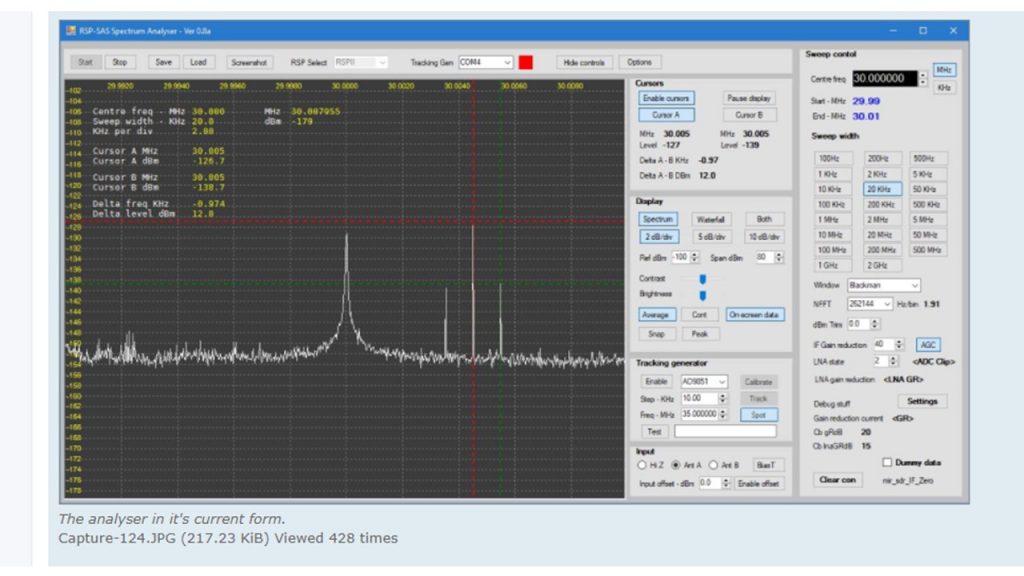
Steve Andrews contacted the SDRplay forum recently to share ideas for a new Spectrum Analyser tool for use with SDRplay RSPs. A lively discussion started, with a lot of enthusiasm and encouragement from the user community, for something optimised for these devices. Steve is progressing well with the software development and hopes to have an Alpha release of the basic tool available during May. You can follow the discussion, review progress and add your comments by joining the SDRplay forum and going to: https://www.sdrplay.com/community/viewforum.php?f=12 where we have created a section especially for the Spectrum Analyser topic.
For six-and-a-half decades, Germany’s international public broadcaster has been providing the world with news and information. Deutsche Welle’s offerings are more diverse and widely used than ever before.
“Dear listeners in faraway countries” — with these words from German President Theodor Heuss, Deutsche Welle (DW) began broadcasting on May 3, 1953. Germany’s foreign public radio station was charged with providing audiences abroad with a political, economic, and cultural picture of the country.
DW broadcast via shortwave and initially only in German. The first foreign languages were added in 1954. In 1992, DW expanded into television and, shortly thereafter, the internet.
“Of course the days of just shortwave were easier,” says Deutsche Welle Director General Peter Limbourg. “But thanks to the internet, social media, and our network of partners, we now have the chance to reach significantly more people than we used to. We offer a mix of news, background, and think pieces, presented in a modern fashion and oriented around the interests of our diverse and often very young target audiences.”
Limbourg has been DW’s director general for the past four and a half years.[…]
Many thanks to SWLing Post contributor, Dan Robinson, who writes:
Here’s a blast from the past that might be interesting reading for the SWLing Post.
Back in 1986, just before ending my three year tour as VOA East Africa bureau chief, I had an opportunity to visit Zanzibar, with a group of journalists. Back then, Zanzibar was still under the socialist government in charge at the time, and was still attached to Tanzania’s socialist government.
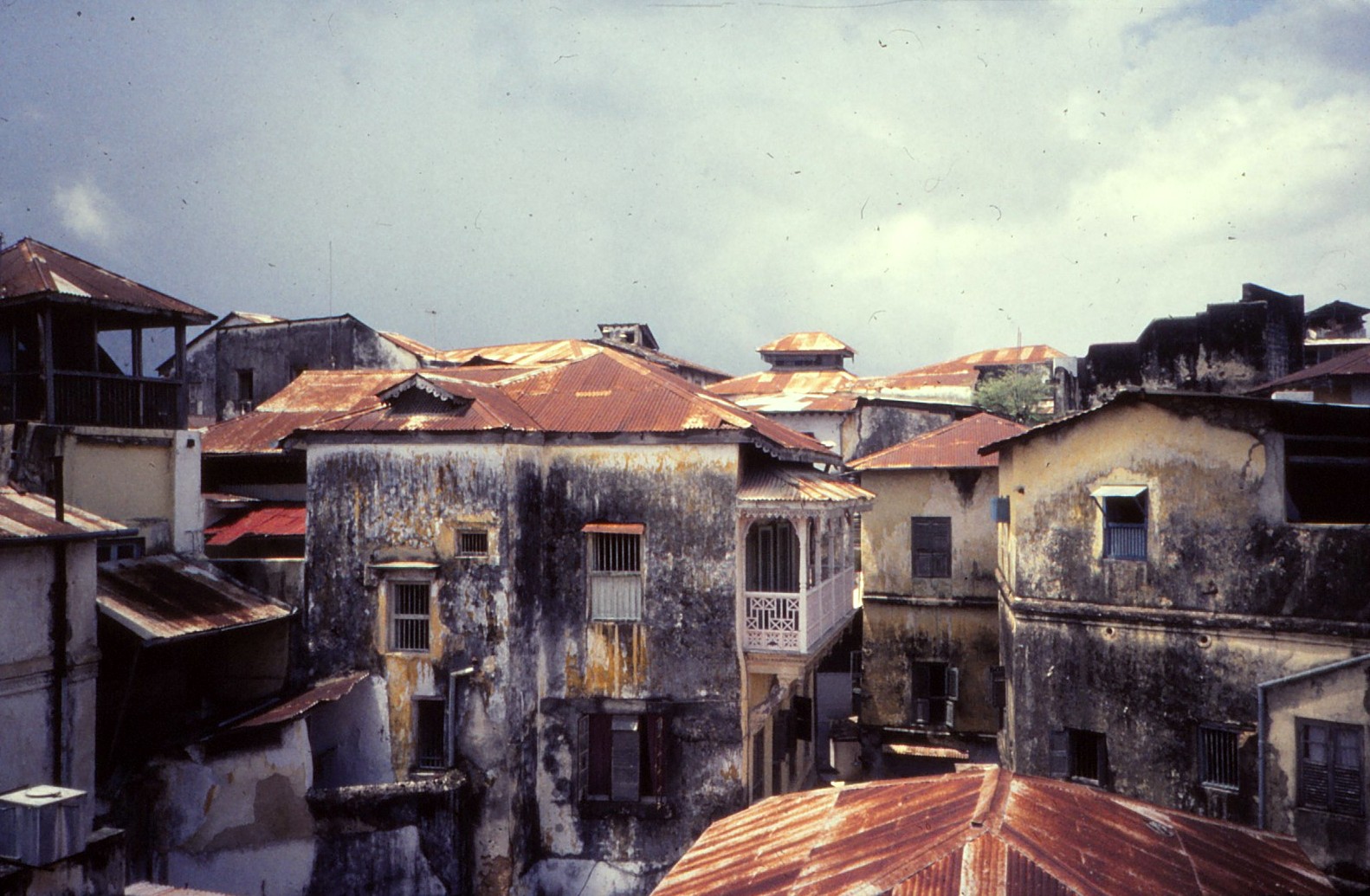
Zanzibar town was full of old structures, and clay/stucco type buildings [see photo at top of page]–it was a wonderfully exotic place, with pristine beaches. The main hotel at the time was in poor condition — this was way before any of the extensive hotel development that the island has seen in recent decades.
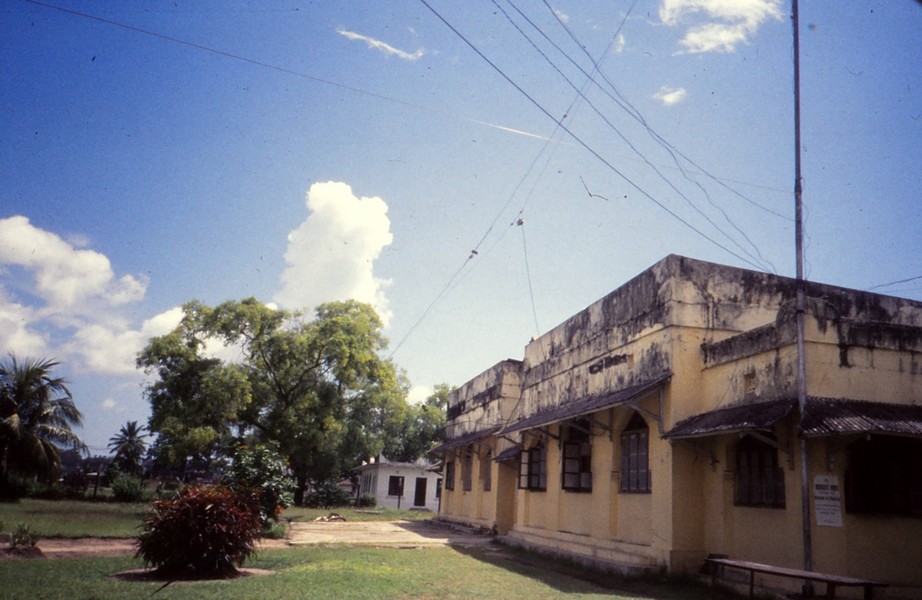
One day we were traveling across the island, but I made a point of stopping at what was then still Radio Tanzania/Zanzibar. This was of course years before that station would become ZBC, which remains on the air today, and that time the power was still far lower than the station we know today that serves some fairly wide sections of East Africa and up into the Gulf region.
I hadn’t remembered snapping this photo, but found it recently while going through some old prints. This is what I believe to be Radio Tanzania/Zanzibar as it looked back in 1986 [see below].
Another photo [below] shows old Zanzibar town (shot taken from just off the shore).
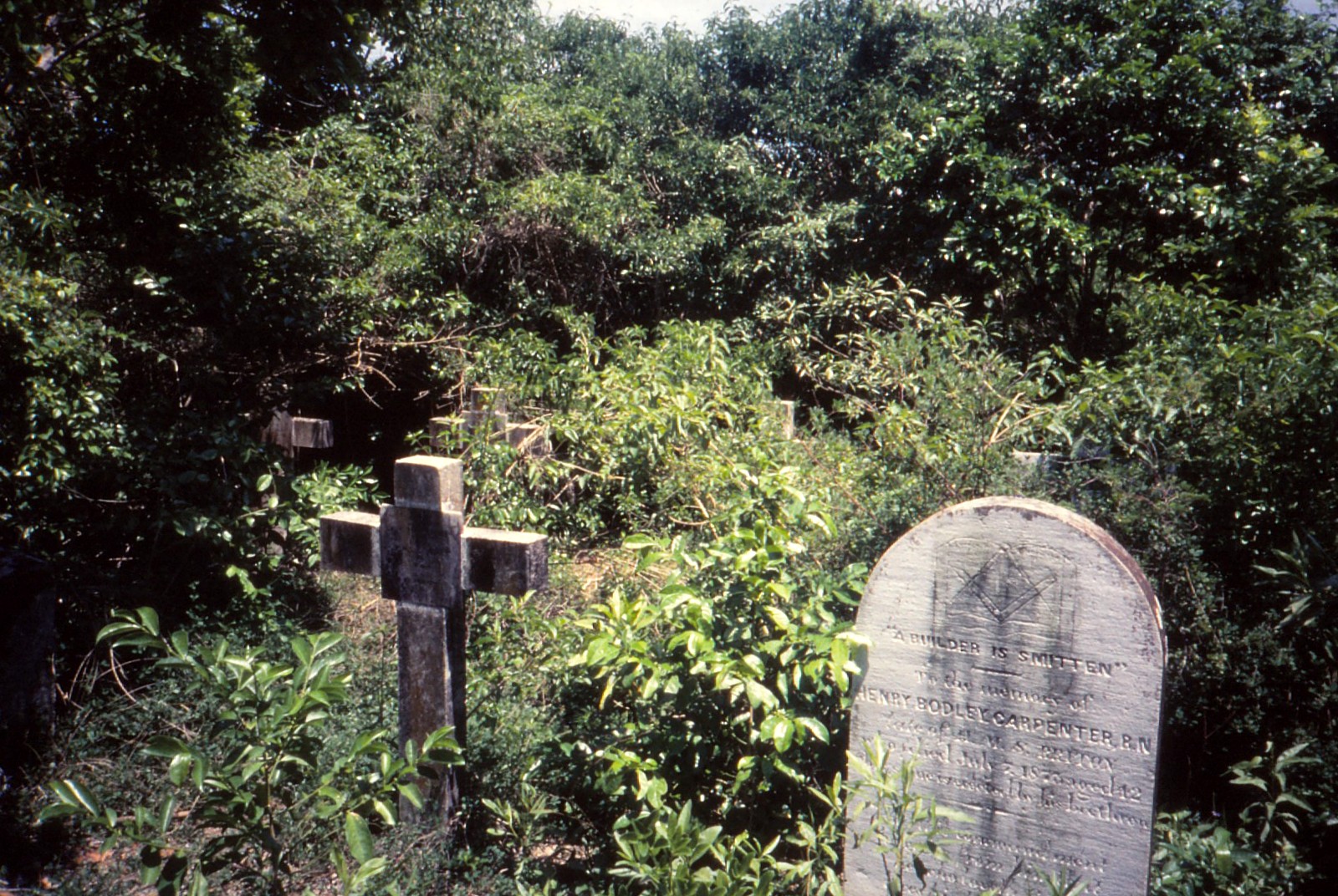
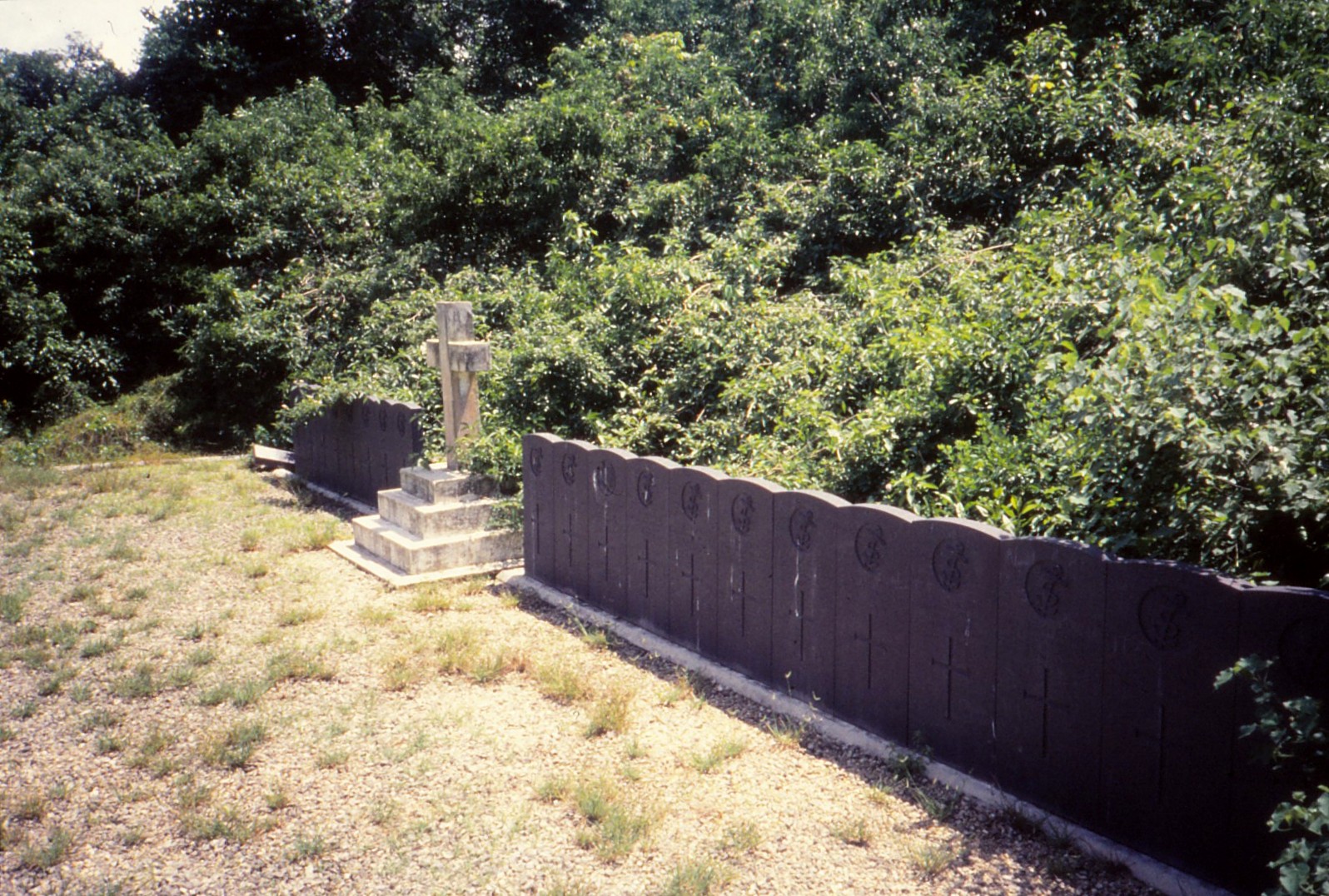
Two other shots [below] show a graveyard on Grave Island, off Zanzibar, with one of the stones belonging to someone named Henry Bodley Carpenter (click here for more info) who served on the H.M.S. Briton and died in 1873.
Thanks so much, Dan, for taking the time to share these photos of Zanzibar with us. I imagine your work with the Voice of America took you to many corners of our wonderful planet!
I still get a small thrill when I put Zanzibar in the logs! Thank you again.
When Deutsche Welle went on the air 65 years ago, the broadcaster opted for a melody from “Fidelio” for its signature tune. Ludwig van Beethoven’s opera is about an act of liberation.
A political prisoner is starved and nearly tortured to death because the prison’s military governor knows that the prisoner could incriminate him. The incarcerated man’s wife masquerades as a young man and, thus camoflaged, makes her way into the dungeon. When the governor attempts to stab the prisoner, the woman jumps between them and pulls out a pistol. At that very moment, trumpets sound out and the Minister, a higher authority, enters the scene. A friend of the prisoner, he recognizes what has been going on and sets the political prisoners free.
At this happy ending of the opera “Fidelio” by Ludwig van Beethoven, Minister Fernando sings the words “Es sucht der Bruder seine Brüder” (The brother seeks his brothers), and continues: “Und kann er helfen, hilft er gern” (And if he can help, he does so gladly.)
The melody to the words is anything but catchy; it is nearly ungainly in fact. Nonetheless, it was chosen as the signature tune when Germany’s international broadcaster began its shortwave radio transmissions on May 3, 1953.
The symbolism in the words
The choice not only had to do with the musical motif, but was also based on the symbolism in the words. Only eight years after World War II’s end, building new friendships and international relationships was no easy task for the new Federal Republic of Germany.
One sought to proceed in a “brotherly” manner with listeners and partners abroad through friendly exchange. Trust was to be built in a fair and impartial sharing of information.
For many years, the melody, played on a celesta keyboard, penetrated the constant ebb and flow of interference noise on the shortwave radio spectrum. It thus made its way to the speakers of shortwave radio sets around the world – often in endless repetitions leading up to the news at the top of the hour.
Click here to download a clip of the DW interval signal recorded on February 22,1982 at 1400 UTC. (Source: IntervalSignal Database)
The broadcaster then had its headquarters in Cologne, and the Beethovenfest classical music festival took place only sporadically in Bonn, 30 kilometers upstream the Rhine.
The move from Cologne to Bonn, and the media partnership with the re-established and much bigger music festival, had to wait until the new millennium. Then it seemed only fitting that Deutsche Welle should once again associate itself with Beethoven.[…]