Category Archives: What’s On Shortwave

The Mighty KBC testing on 6150 kHz January 10 & 11

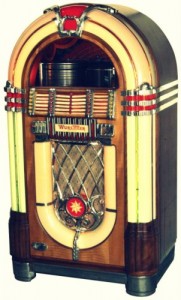
wurlitzerJukeboxThe Mighty KBC will be doing special broadcasts to test modulation on 6,150 kHz. They will broadcast old shows of The Giant Jukebox. Here is the schedule with dates/times in UTC:

  • Thursday, 10 January 2013 from 10.00 – 12.00 UTC on 6,150 kHz
  • Friday, 11 January 2013 from 13.00 – 15.00 UTC on 6,150 kHz

Mail your reception reports to [email protected]

Shortwave Radio Recordings: Voice of Greece music

greeceFor your listening pleasure: ninety minutes of music, and a little Greek commentary, from the Voice of Greece. Recorded on Friday, January 4th–around 22:00 UTC–on 9.42 MHz.

Click here to download the MP3 of the recording, or listen below:

The SWLing Post Podcast

podcasticonThanks to SWLing Post reader, Michael, I have set up our RSS feed for podcasts.

This means that if you enjoy listening to our shortwave radio recordings, you can now easily subscribe and download all of our audio automatically. This is not edited material–no introductions, nor host–simple shortwave radio recordings.

If you would like to subscribe to the SWLing Post Podcast, point your favorite podcasting application to our RSS feed:
http://feeds.feedburner.com/TheSwlingPost

In iTunes, for example, go to the “File” menu and select “Subscribe to podcast”–then, simply paste our RSS feed address in the url field.  Other podcast applications will have a similar approach.

Thanks, Michael!

Radio Australia: Saturday Night Country mixes in holiday music

Yesterday, like most Saturday mornings, I sipped my coffee while listening to ABC’s Saturday Night Country from Radio Australia’s Shepparton shortwave transmission site on 9.58 MHz.

In this program, SNC’s host, Felicity Urquhart, shuffled in some holiday tunes with her normal mix of country music, news and interviews. Fortunately, I captured the whole show in two recordings (starting on 9.58 MHz for the first hour, then moving to 11.945 MHz for the rest of the show).

Enjoy:

More shortwave digital text (and the reason behind it)

Screenshot of digital mode being selected in FLDIGI. Click image to enlarge.

SWLing Post readers have seen previous posts regarding text being broadcast via shortwave digital modes on WBCQ, WRMI and The Mighty KBC (which broadcasts again this weekend).

Recently, Kim Elliott explained his mission behind these digital tests. Not only do I agree, but I support him completely. Why? It’s proof that the shortwave spectrum is an excellent medium to transmit digital information across the globe. Decoding requires a very basic shortwave radio, some free software and a computer. I believe, in the near future, there will be a smart phone app that can handle this with ease–it simply needs a developer (hint, hint).

Here is Kim Elliott’s post on the topic–I have emphasized points in bold:

Radio amateurs use several modes to transmit text via shortwave. It occurred to me that text via shortwave might be a workaround whe[r]e the internet is not available because of disasters, dictators, or other causes.

I have not yet convinced any major international broadcasters to let me test this hypothesis on their (remaining) shortwave transmitters. However, the Netherlands-based Mighty KBC has kindly been allowing me two one-minute segments during their broadcast to North America at 0000 to 0200 UTC on 9450 kHz. This is via leased time on a transmitter in Bulgaria.

Reception of text via shortwave is possible on an inexpensive shortwave radio, even one without single sideband (SSB) capability. The audio is patched into a PC that does not have to be especially powerful. This involves a patch cord from the earphone jack of the radio to the microphone input of the PC. If there is no patch cord, placing the radio’s speaker near the built-in microphone of a laptop might work.

Software for decoding the text should be installed in the PC. There are several available to radio amateurs, including DM780, MixW, and MultiPSK. Especially popular these days is Fldigi. This is available from www.w1hkj.com. While you are there, please also download Flmsg, because it will be needed for this weekend’s test on KBC. [Note: This software is free and open source.]

This weekend’s test on KBC will feature the MT63 modes with long interleave. After Fldigi is installed, go to Configure > Modems > MT-63 > check 64-bit (long) interleave, 8-bit extended characters, and Allow manual tuning. Also, go to Configure > Misc > NBEMS > check Open with flmsg and Open in browser and, below that, indicate where your flmsg.exe file is located.

The first KBC text transmission will be around 0130 UTC Sunday (Saturday evening 8:30 pm EST). The MT63-1000 mode with long interleave will be centered at 1000 Hz on the waterfall visible on the software display. PSKR125 will be cenetered at 2200 Hz. Decode one while listening, and decode the other from your recording of the transmission.

The second text transmission will be just before 0200 UTC Sunday (9 pm Saturday EST). This will be MT63-2000 centered at 1500 Hz. This message will be formatted for Flmsg. If all goes well, the shortwave transmitter in Bulgaria will open a new window of Flmsg and then open a new window of your web browser with formatted content, in color no less.

One week after my first text transmissions (11 November) on KBC, Arnie Coro at Radio Havana Cuba began transmitting digital text modes on his Dxers Unlimited program (in English). He might do so again this weekend. The schedule for DXers Unlimited can be found at the World of Radio website (where all times and days are UTC, so those UT Monday transmissions are actually Sunday evening in North America).

More discussion of the concept of digital text via analog shortwave broadcast is in Kim’s December 2012 column (pdf) for the North American Shortwave Asociation.

Coded message from WWII carrier pigeon structured like numbers station communiqué

The message contains the all-too-familiar 5 character groupings we’re used to hearing in numbers station broadcasts

This news story about a recently discovered WWII carrier pigeon message has been floating around the Internet over the past few days.

(Source: CNN)

Not even the British spy agencies that inspired James Bond can solve the mystery of a secret World War II message recently found on the skeleton of a carrier pigeon in a house chimney.

The meaning of the encoded message apparently died about 70 years ago with the wayward pigeon that David Martin found in his smokestack in Bletchingley, Surrey County, England.

Martin recently discovered the bird’s remains with the surprisingly intact message inside a small red canister attached to a leg bone.

[…]Hand-written on a small piece of paper labeled “Pigeon Service,” the note consists of five-letter words. Those words don’t make sense: The jumble begins with “AOAKN” and “HVPKD.” In all, the message consists of 27 five-letter code groups.

Indeed, the only hope the UK intelligence agency, the GCHQ, stands in deciphering the message (click here to see the full message) would be to find the appropriate, specific decipher key. Most likely, this message–like numbers station (a.k.a. spy numbers) messages–was a one-time communiqué, with a one-time decipher key. This type of encryption is incredibly effective as they provide little to no context for deciphering.

But again, that’s a part of the magic and mystery many of us find so fascinating about numbers stations.  The messages are (still) everywhere and broadcast publicly, yet, we have no clue of the meaning.

If you’ve never heard a numbers station, check out this audio of the numbers station, “The English Man” I recorded earlier this year:

Also, you should check out the many numbers station audio files in the Conet Project on Archive.org. Listen to a sample in the embedded player below:

The Mighty KBC’s December special broadcast frequencies

In a previous post we mentioned that the Mighty KBC, who has been very active on the shortwave bands, announced a line of special broadcasts in December. They’ve just published the frequencies for the broadcasts:

The extra frequencies and transmitters for 22, 23, 25 and 26 December are:

EU (German time) UTC +1
9835 kHz, 1500-1600 UTC, Non Directional, 125 kW

USA (East Coast time) UTC -5
21600 kHz, 1500-1600 UTC, 300°, 250 kW

Asia (Vietnam time) UTC +7 / Australia (Sydney time) UTC +11
15470 kHz, 1500-1600 UTC, 75°, 250 kW

And on 22, 23 December we also have our 6095 transmitter on the air as
well with 100 kW 09.00 – 16.00 UTC.

During weekdays we also have The Mighty 6095 on the air between 09.00
– 11.00 UTC with 100kW