Rest In Peace, Larry Van Horn

I’ve been away for almost a week and a number of readers have written in to express their condolences after only recently learning that a legend in our radio world, Larry Van Horn, passed away in August after a short period of illness. 
I remember meeting Larry once when I stopped in unannounced at The Monitoring Times HQ in Brasstown, North Carolina. He was a true gentleman and shared his enthusiasm for the airwaves with me for a couple of hours. He was a passionate radio man through and through. 

Of course, our condolences and hearts go out to his wife Gayle Van Horn and son, Loyd Van Horn, both of whom are also prominent figures in our radio world.

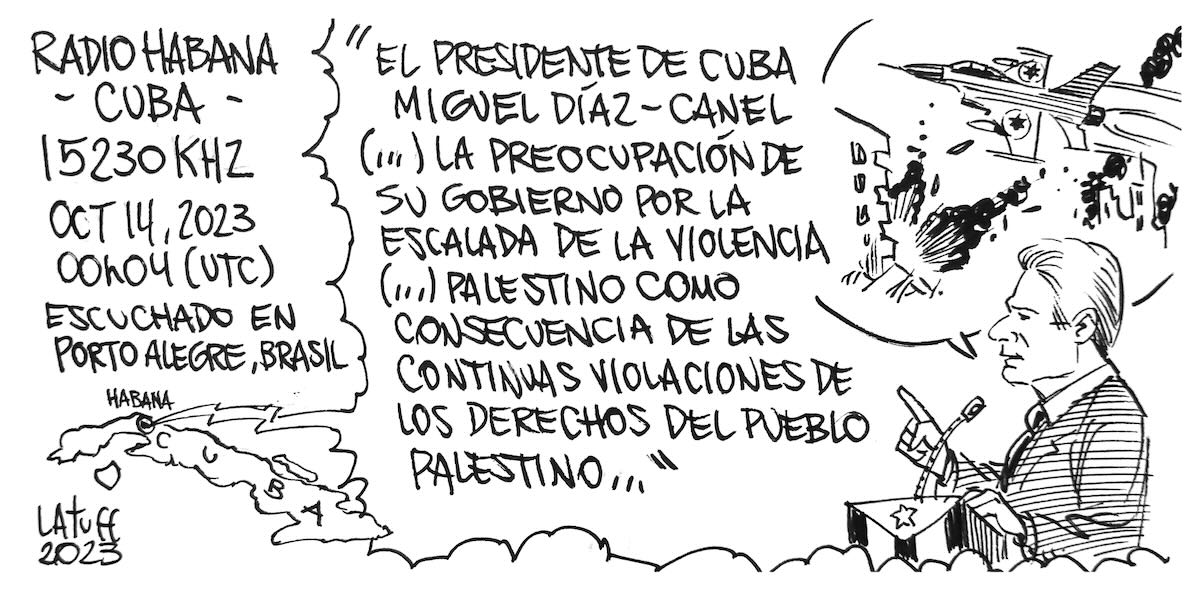
Carlos’ Shortwave Art and recording of Radio Havana Cuba (October 14, 2023)

Many thanks to SWLing Post contributor and noted political cartoonist, Carlos Latuff, who shares his radio log art of a recent RHC broadcast.

Carlos’ goal is to vividly illustrate the broadcaster’s message in his own unique artistic style and is not a reflection of his own beliefs or those of the SWLing Post. His objective is for his artwork to add historical context and put a visual with the news, reporting, and broadcast content:


Carlos notes:

Extract from the news bulletin of Radio Havana, Cuba, with the position of the Cuban government regarding the Palestine and Israel conflict. Heard in Porto Alegre, Brazil.

Click here to view on YouTube.

Special Program: Woofferton Transmitting Station’s 80th Anniversary on October 17, 2023

Many thanks to SWLing Post contributor, Dave Porter, who shares the following announcement:

Woofferton Transmitting Station UK – 80th Anniversary – October 17, 2023

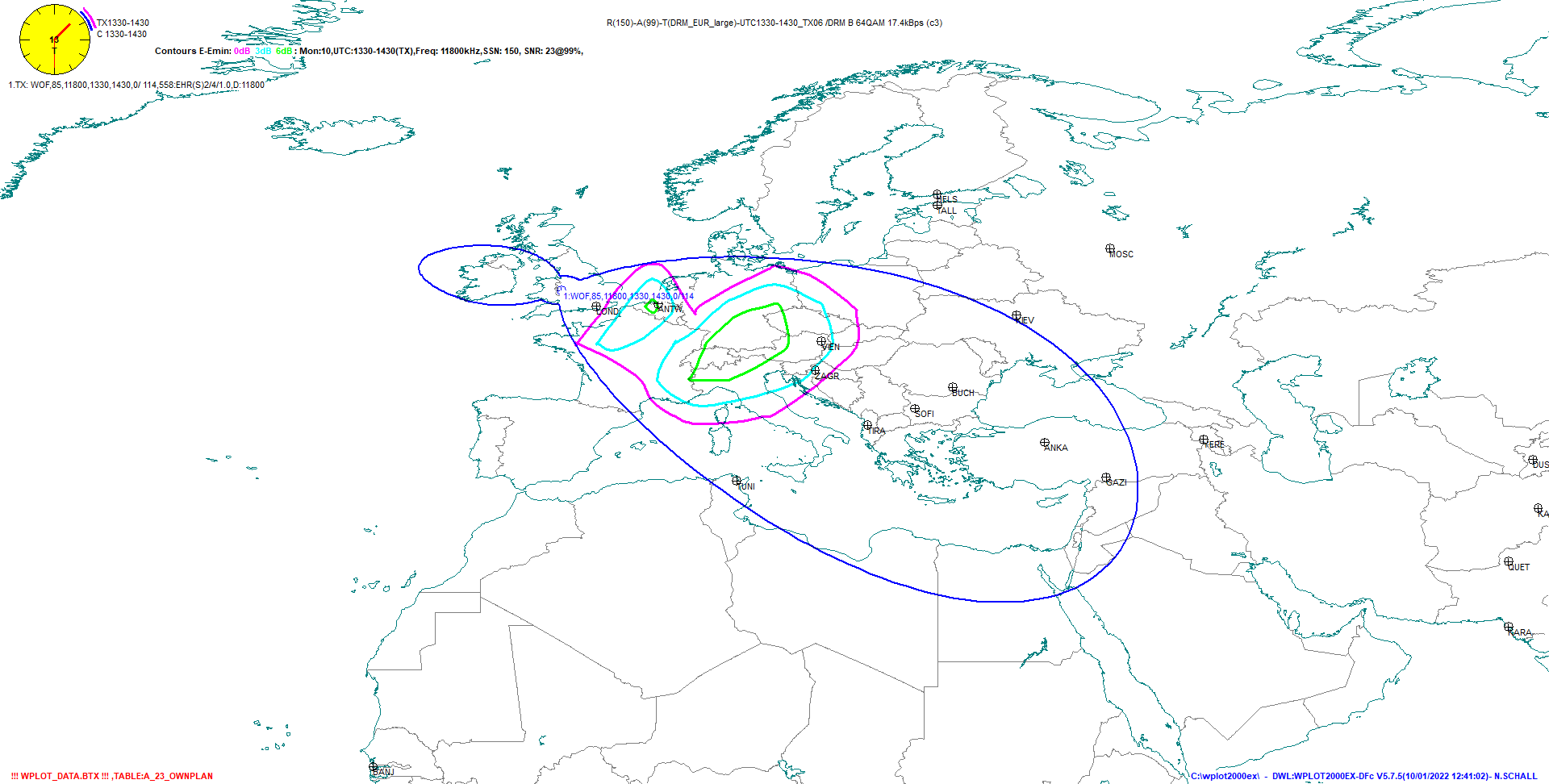
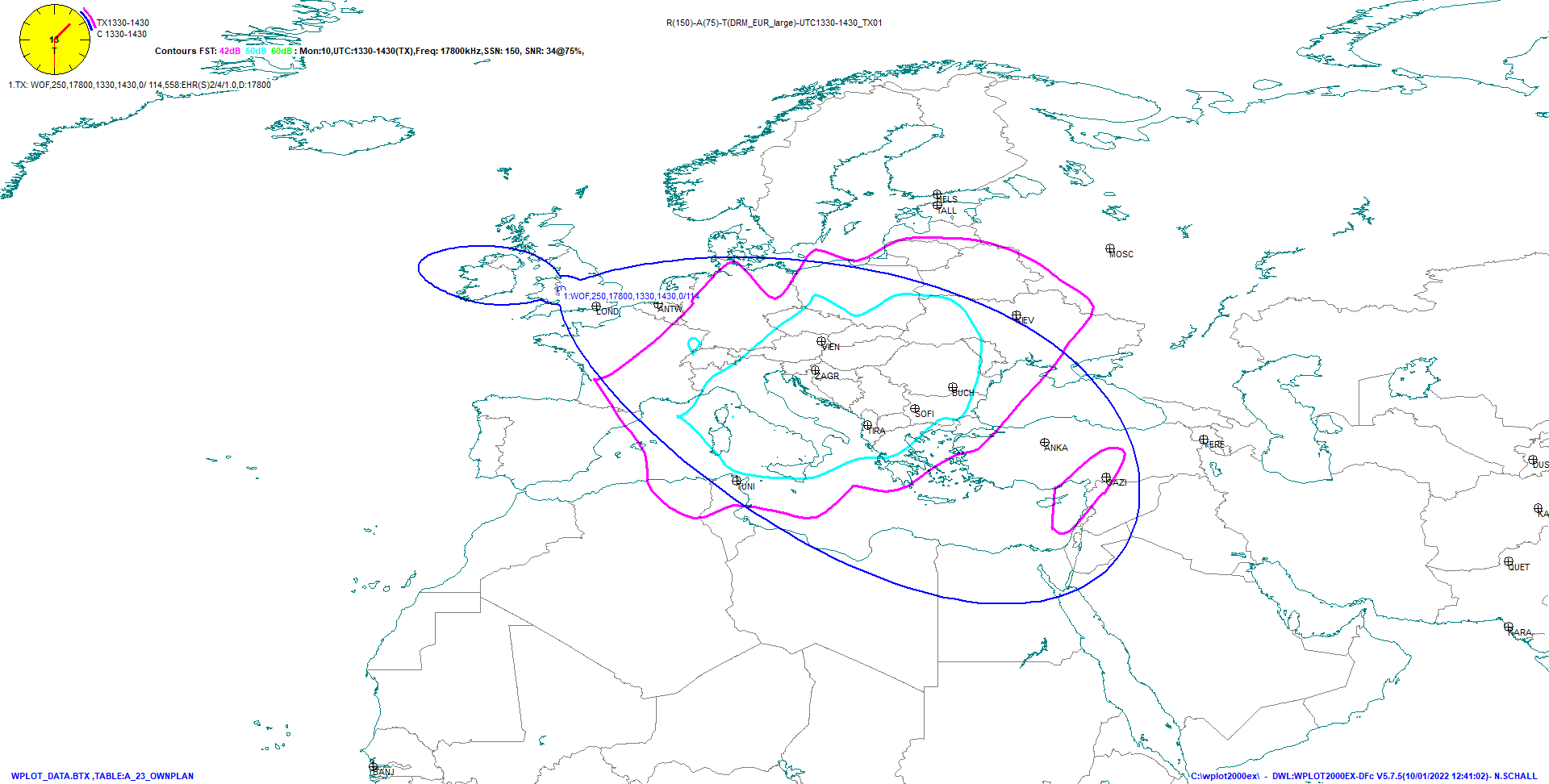
To mark this anniversary Encompass Digital Media at WOF will be running a special programme on HF :

Tuesday 17th October 2023 from 1330 – 1430 UTC/GMT

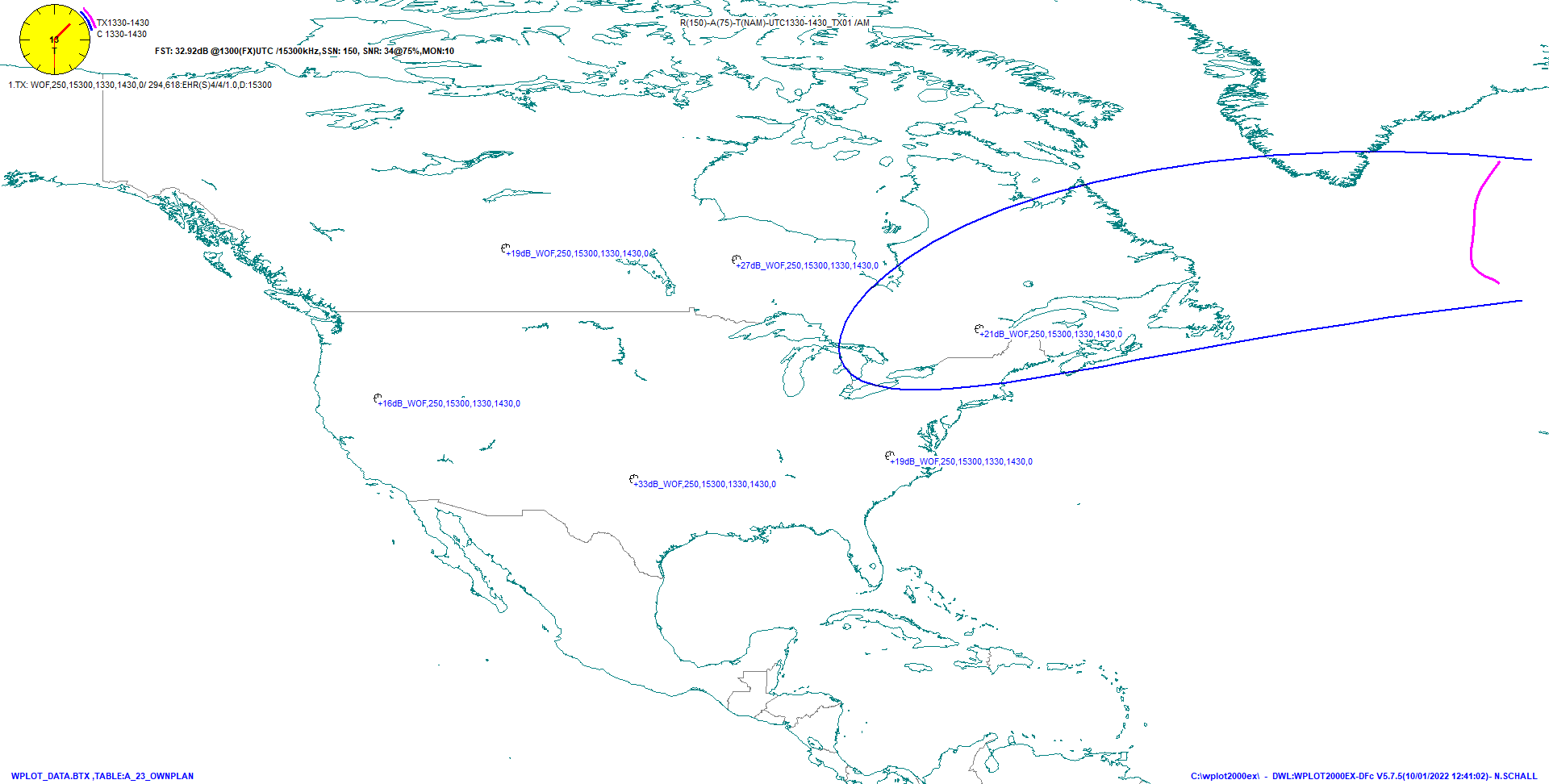
Sender 95 Marconi (BD272 from 1963) 250 kW AM 15245 kHz Array 928 294* for North America

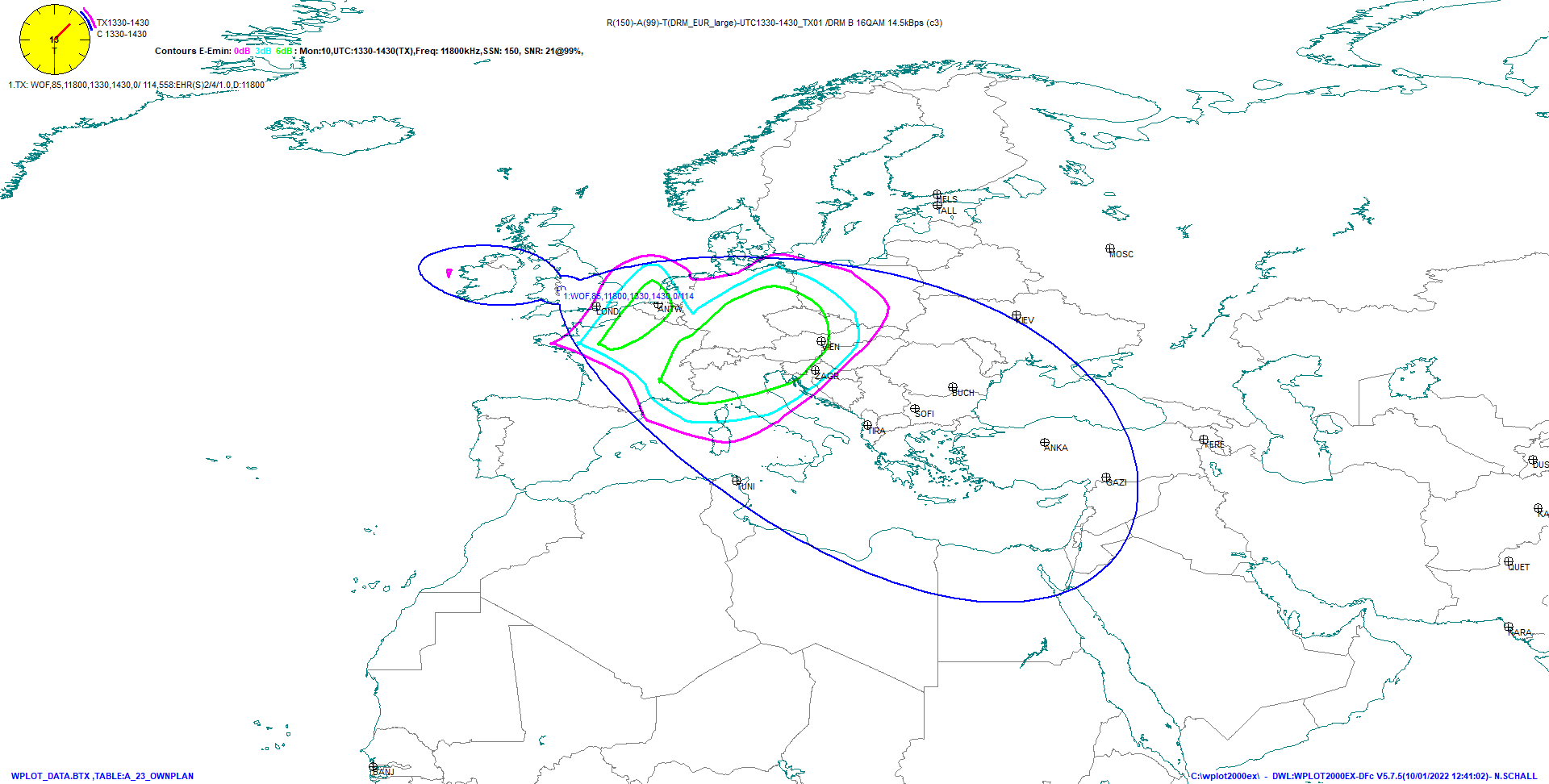
Sender 96 Riz 250 kW AMC 17785 kHz Array 904A 114* for Europe and beyond.

Sender 92 Riz 110 kW DRM 11725 kHz Array 909A 114* for Europe and beyond.

There will be an opening interval signal on all three frequencies.

The programme content will be historical facts of WOF in BBC, VoA, Radio Free Europe, R Liberty ,CBC etc and the later privatised times, DW and VoV for example as well as up-to-date information on DRM as well as personal recollections from many former WOF staff. There will be station idents of services over the years.

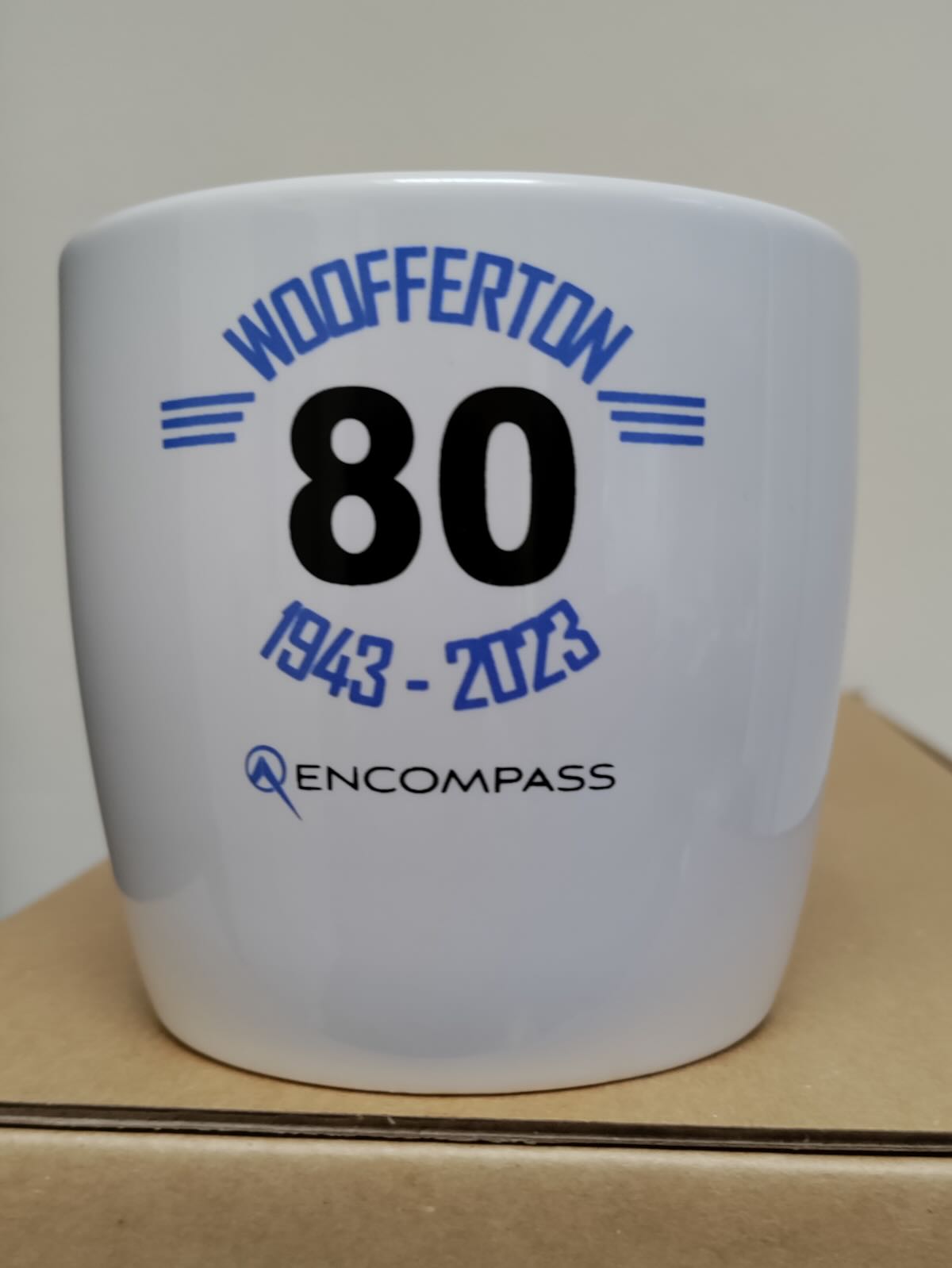
There will be a special e-QSL card and the chance to enter a competition to win a historic station artifact and an Woofferton 80th mug.

There may be more details to follow…

Watch this space

73

Dave Porter G4OYX

Broadcast coverage plots

Today is the day . . . The Great Medium Wave Grey Line Challenge!

It’s time to have some fun for a couple of hours chasing MW DX along the grey line. Please note: an important change has been made to the rules: you can choose either Civil Twilight at sunrise or Civil Twilight at sunset . . . but not both.

Here are the rules:

  1. Frequency range is the medium wave band: 520-1710 kHz
  2. From one hour before Civil Twilight your local time TODAY, Saturday, October 14, to one hour after Civil Twilight at your location . . . at either sunrise or sunset
  3. Any radio with any antenna, but must be the radio at your location (no using remote internet radios)
  4. The listener must hear the signal in real time
  5. The stations must be ID’ed by listening to the signal.
  6. Your report should include:
    • Your name (or Internet handle)
    • Your receiver and antenna (stay with the same setup from beginning to end; if you use multiple setups, provide a separate report for each).
    • Your location
    • The time, the frequency, and the ID of each station heard
    • The total mileage of your top five most distant stations.

A final point: this is not a contest; it is a challenge. The reward for every participant will be fun and fellowship.

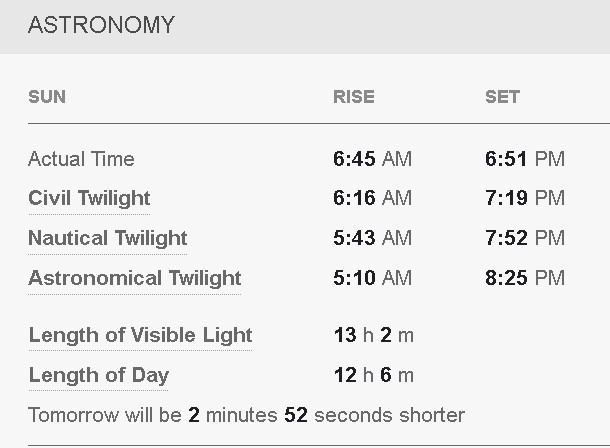
You can find when Civil Twilight begins at your location by visiting www.wunderground.com  . Enter your location, click on “Full Forecast” then scroll down to the “Astronomy” section.

And when you have completed the Great Medium  Wave Grey Line Challenge, please post your results in the comments below.

Important change to The Great Medium Wave Grey Line Challenge

by Jock Elliott, KB2GOM

On the very helpful advice of 13dka, who noted that “this should be optional – the grayline happens twice a day, with the morning grayline favoring westerly propagation paths and the evening grayline the east,” participants in the challenge can now choose either the grey line in the morning as the sun rises, or the grey line in the evening as the sun sets . . . but not both.

Otherwise, the rules remain the same, and the challenge will be open for participation with the grey line at dawn tomorrow.

  1. Frequency range is the medium wave band: 520-1710 kHz
  2. From one hour before Civil Twilight your local time on Saturday, October 14, to one hour after Civil Twilight at your location . . . at either sunrise or sunset.
  3. Any radio with any antenna, but must be the radio at your location (no using remote internet radios)
  4. The listener must hear the signal in real time
  5. The stations must be ID’ed by listening to the signal.
  6. Your report should include:
    • Your name (or Internet handle)
    • Your receiver and antenna (stay with the same setup from beginning to end; if you use multiple setups, provide a separate report for each).
    • Your location
    • The time, the frequency, and the ID of each station heard
    • The total mileage of your top five most distant stations.

Thank you 13dka for the sage advice.

You can find when Civil Twilight begins at your location by visiting www.wunderground.com  . Enter your location, click on “Full Forecast” then scroll down to the “Astronomy” section.

Imagine the sound of international radio

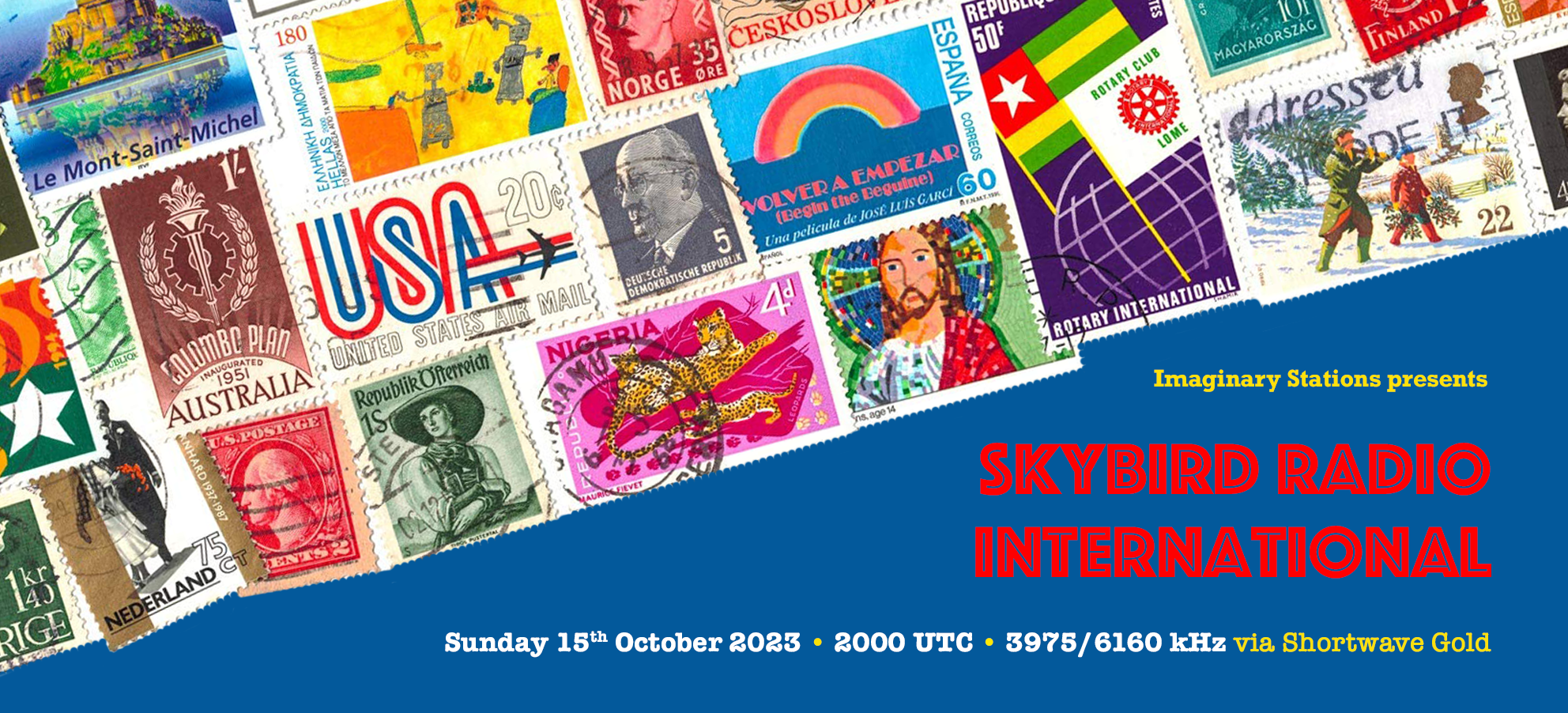
Hi all SWLing Post Community, FastRadioBurst 23 here bringing you news of this week’s Imaginary Stations transmissions. Beamed to Europe via Shortwave Gold on Sunday 15th October 2023 at 2000 hrs UTC on 3975 & 6160 kHz, we have the third episode of Skybird Radio International bringing you music and culture from all over the world. Tune in and enjoy some great jazz, electronica, pop and dub.

A few hours later via the transmitters of WRMI on Monday 16th October we have a different episode of Skybird Radio International. The broadcast is at 0200 UTC on 9395 kHz and then repeated at 0300 UTC on 9455 kHz. No genres or no agendas, just some cool sounds from around planet earth featuring a collection of international platters that really do matter. Enjoy!

For more information on the shows please email [email protected] and check out our old shows here.

The weirdest shortwave tuning technique

By Jock Elliott, KB2GOM

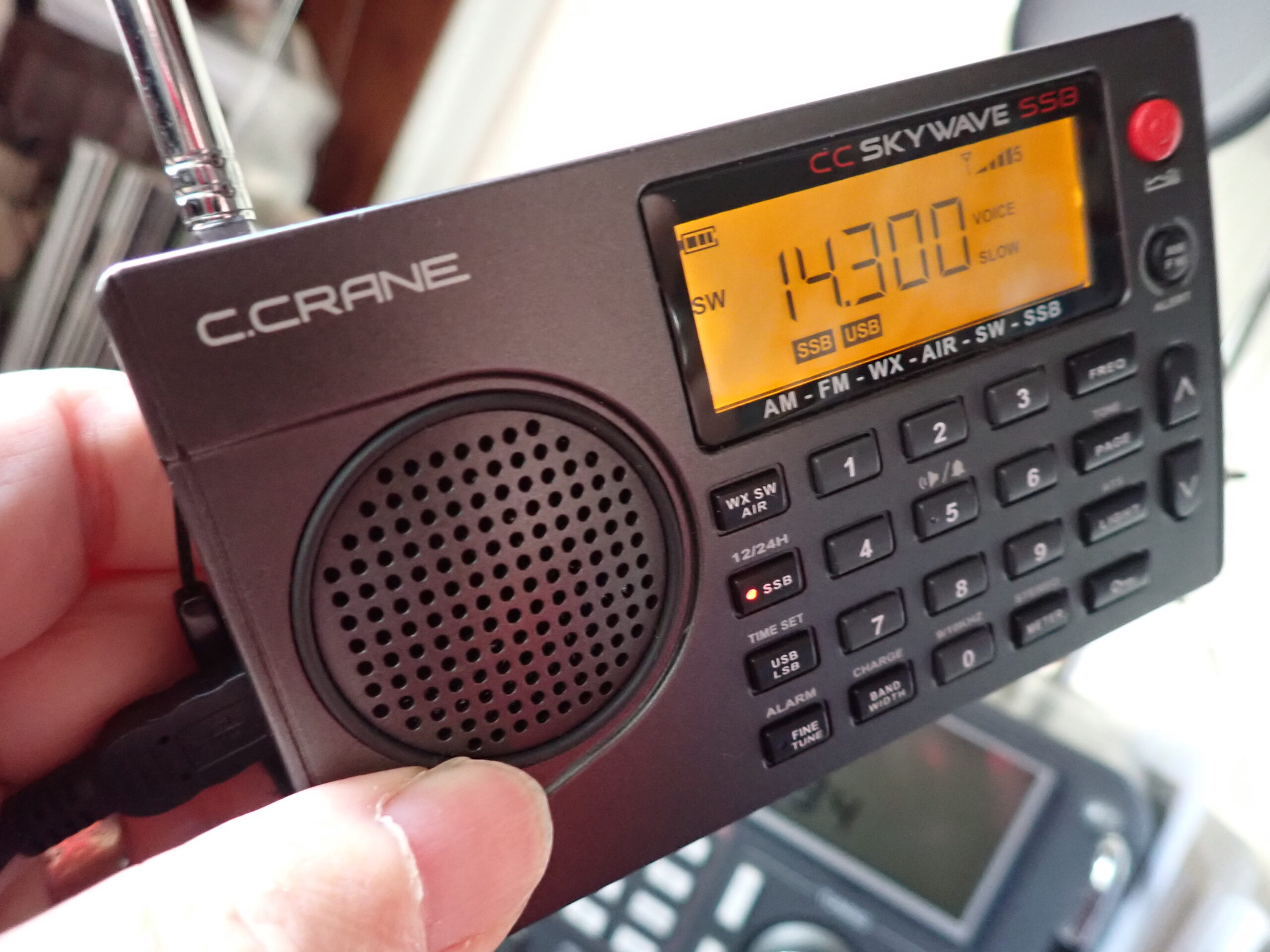
You never know what you will encounter while simply “tuning around” on the HF frequencies. Just a few days ago around 2 pm local time, I happened upon the Maritime Mobile Service Network. Net control was being swapped from one ham to another, and it soon became clear that the hams running the net were smooth, articulate, and friendly to those checking into the net. The frequency was 14.300 USB.

According to the Maritime Mobile Service Network’s website:

Our primary purpose now is that of handling legal third party traffic from maritime mobiles, both pleasure, and commercial and overseas-deployed military personnel. We also help missionaries in foreign countries, and volunteer net control stations from throughout North America and the Caribbean maintain the network. Furthermore, these stations are assisted by relay stations to ensure total coverage of the Atlantic Ocean, Mediterranean & Caribbean Seas, and the eastern Pacific Ocean. The network, in particular, has been formally recognized for its work with emergency traffic by the Dept. of Homeland Security, the United States Coast Guard, and the National Weather Service, to mention a few.

The network acts as a weather beacon for ships during periods of severe weather and regularly repeats high seas and tropical weather warnings and bulletins from the National Weather Service and the National Hurricane Center.

The Maritime Mobile Service Net is operational every day from 12:00pm until 9:00pm Eastern Standard Time, and from 12:00pm until 10:00pm Eastern Daylight Time, on the 20-meter *Global Emergency Center Of Activity frequency of 14.300 MHz as outlined by the International Radio Union.

* At the International Amateur Radio Union (IARU) Region 1 meeting in 2005, it was decided that certain frequencies on certain amateur bands would be designated as “Global Emergency Center Of Activity” (GECOA) frequencies. The purpose of establishing the GECOA frequencies was to designate a place for passing emergency traffic on amateur frequencies, should the need arise. Over the next few years, Regions 2 and 3 followed suit in making the following frequencies world-wide GECOA frequencies. Those frequencies are: 21.360 MHz, 18.160 MHz, 14.300 MHz, 7.240 MHz, 7.060 MHz, 3.985 MHz, and 3.750 MHz. These and other frequencies, with their band plans, can also be viewed at www.iaru-r2.org/band-plan.

You can find out more about the MMSN here: https://mmsn.org/

Wow, I thought, this is definitely a net that I would like to listen to from time to time. Since MMSN operates from noon until 10 pm, I decided that night to see if I could hear it in bed on my CCrane Skywave SSB with its relatively small telescoping antenna. I extended the whip antenna skyward, clamped on the headphones, and listened to 14.300 USB. Nothing at first . . . but then I could hear some faint modulation in the background. Then, on a whim, I picked up the Skywave and started to wiggle it around, moving the whip in different orientations, in the hope of improving the signal.

To my surprise, it worked. I could hear the signal improve in some orientations of the whip and get worse in other directions. After a bit of experimentation, I got a positive ID on the Maritime Mobile Service Network with the whip at a 45 degree angle to vertical and pointed toward the North. Any other orientation yielded poorer results.

Now, here’s the thing: in years that I have been involved in messing about with radios – including the years I wrote for Passport To World Band Radio, QST, Popular Communications and Monitoring Times — never once did see or read anyone suggesting that picking up your portable shortwave and pointing the whip in different directions and orientations might improve the signal . . . not once.

Back in March, Thomas did a survey and found that 36.8 percent of SWLing readers used portables radios as their “daily drivers.” So, while it might look weird and might draw some stares if you are in a public place, try picking up your portable and pointing the whip at different angles and orientations to see if it improves a difficult to copy signal.

Based on my experimentation on both ham and shortwave broadcast signals, you might just be pleasantly surprised.

And if you already knew about this, or if you try it and it works, I would love to hear about it in the comments below.