Shortwave listening and everything radio including reviews, broadcasting, ham radio, field operation, DXing, maker kits, travel, emergency gear, events, and more
Art Bell, a radio host best known for a paranormal-themed nightly show syndicated on hundreds of stations in the 1990s, died at his home in southern Nevada, authorities said Saturday.
Nye County Sheriff Sharon Wehrly announced in a Facebook video that Bell died Friday in Pahrump. He was 72. An autopsy will be conducted to determine cause of death, she said.
Bell hosted the popular radio talk show “Coast to Coast AM” before he left the airwaves in 2002. He broadcast the show from his radio station, KNYE, in Pahrump.
The program focused on Bell’s conspiracy theories and his fascination with the paranormal and unexplained phenomenon such as UFOs and crop circles. He served as his own producer, engineer and host, according to the Las Vegas Review-Journal.
Fans, including celebrities like William Shatner and singer Josh Groban, took to Twitter to praise Bell. Groban recalled staying up late to listen to the host’s “one of a kind” voice and how “his shows were so weird & spooky but somehow managed to hold off your skepticism.”
Former business partner Alan Corbeth said during Bell’s 2008 induction into the National Radio Hall of Fame that nobody was better than Bell at understanding “how to create theater of the mind…”[…]
Many thanks to SWLing Post contributor, The Professor, who shares the following guest post:
Late Night Pre-Christmas Medium Wave Scan, NYC 2017
I haven’t recorded a proper scan of the AM dial in New York City for a while, so I took a shot at it a week before Christmas, starting around three A.M. Monday morning, December 18.
I asked Thomas if his readers might be interested in the audio from an AM scan here and some annotations, kind of like I used to do on my Radio Kitchen blog not so long ago. When I scan the dial I often start at the top of the AM dial and work my way up, but sometime it’s fun to do it the other way around and begin with more low power small stations where the fare is a little more exotic than the typical talk and news formats you hear from regional and powerful clear channel transmitters up the dial.
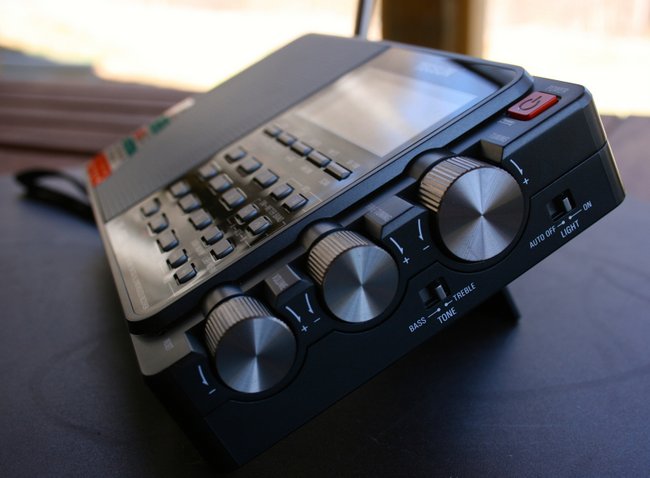
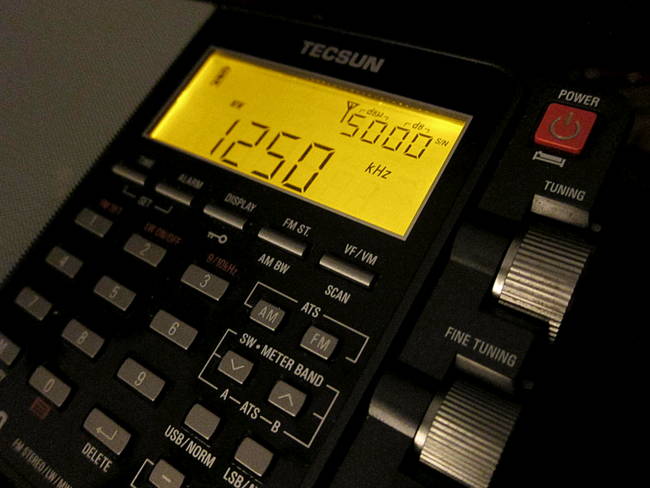
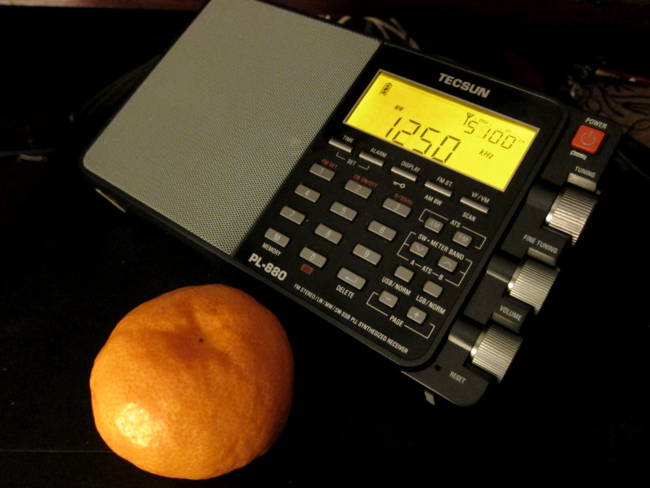
I have a number of radios that would really be better candidates to do this sort of thing, but since I’m kind of between places right now and most of my radios are in a storage unit somewhere, I’m using the Tecsun PL-880 I have with me. And typically I’d do this with a loop antenna up next to the radio, but they’re in storage too. So it’s just the stock ferrite antenna inside the radio doing all the work here. There’s some of the typical urban RF noise in the mix, but it’s not all that bad. Then there’s the awful splatter of digital IBOC to plow through. Not fun to listen to, and some stations you might otherwise find are masked by hash.
If you don’t listen to AM this late at night (or this early in the morning), it’s really not a great time to hear live programming. A lot of talk shows from daylight hours are rerun at this time, and the few music stations you might find are often running music automation with no live DJs. But a few talk local talk shows in big cities are live, and syndicated ones like Coast to Coast or Red Eye Radio are broadcast live overnight on quite a number of stations.
Instead of trying to do a lot of DX digging and pull in the really hard to hear stuff, I’m not equipped for that right now so I just plow through looking for what I can find without too much trouble. As I said, I didn’t have another antenna to assist me, but I duly rotated the radio and adjusted the bandwidth when appropriate. If you’re keeping score at home I do at least pause on every viable MW frequency, even if there’s nothing there.
I wouldn’t say it’s a typical late night New York medium overview of the band, as a few common finds on the dial were missing, and didn’t find many of the smaller Canadian locals I’ve heard on other nights. The one difference is that for years I’ve been listening from my former home in Greenpoint, Brooklyn. For now I’m down in Bay Ridge, at the bottom southwest corner of Brooklyn, and a few things are different. Like the very first station I come across.
1710 kHz – This scan begins with an oddity, WQFG689 a “traveler’s information station” broadcasting just a notch above the x-band, but a spot on the dial that is still included on contemporary AM radios. According to Wikipedia it’s the only legit station in America broadcasting on 1710. It’s owned by Hudson County in New Jersey broadcasting on a handful of ten watt transmitters. I’m assuming this reception might be coming from Jersey City, which is across the water not far from here. A few years ago one of the Hasidic communities in Brooklyn had a lo-fi pirate station at this frequency, but I haven’t heard it there in a long time. And as WQFG689 sits in a very lonely place on the dial, this station is a popular DX target. Apparently at this hour they were experiencing “technical difficulties.”
1690 kHz – Some contemporary R&B style pop song with a male singer. It’s an English language performance however (is it Spanish?). I’m not sure what this might be, but from looking around on the web it may be CHTO, a multicultural station in Toronto, Ontario.
1650 kHz – A weak reception of a talk radio show. Some discussion of the desires of Harvey Weinstein and other matters. Perhaps this is WHKT in Portsmouth, Virginia.
1630 kHz – At this spot on the dial I receive an image of WINS (1010kHz) as well as some station broadcasting the unavoidable Brother Stair. Don’t know exactly what is going on there, but the PL-880 is known to toss in some stray images on the dial in dense radio markets like New York.
1600 kHz – Some spirted South Asian pop music. Bollywood stuff I suppose. This would be WWRL here in New York, broadcasting from Secaucus, New Jersey.
1570 kHz – I believe this is the Eagles singing about Christmas. I have no idea what station this might be. WFLR in Dundee, New York is a guess.
1560 kHz – A little bit of Bible from Family Radio – still on New York City radio, but not on the FM dial anymore. Otherwise known as WFME here in New York. Armed with fifty-thousand watts, their signal has quite a reach. I hear the ghost of Harold Camping on here from time to time.
1530 kHz – Speaking of ghosts, it’s Ol’ Brother Stair buying some time on WJDM in Elizabeth, New Jersey I believe. Is he in prison yet?
1520 kHz – Sports talk from WWKB in Buffalo, New York.
1500 kHz – A discussion of Christmas treats on WTOP in Washington, D.C.
1480 kHz – Seasonal mischief in Chinese from WZRC, a Cantonese station here in New York.
1460 kHz – Some distant choral or Christmas music from somewhere.
1430 kHz – Casual talk of God’s happiness plan from WNSW in Newark, New Jersey. Not to judge, but Catholic talk radio is just more civilized than most Protestant talk radio. A little more breezy than the fire and brimstone stuff. They always sound like their shirts are ironed. Carrying the Catholic radio network “Relevant Radio” is the latest format at this frequency in the city. Before that the “Voice of Russia” was broadcast here.
1380 kHz – More Chinese talk. This time it’s from another multicultural station – WKDM here in New York City.
1350 kHz – A poor reception of late night talk. I believe it’s “Red Eye Radio.” I really don’t know where this is coming from.
1310 kHz – A female host on a talk radio program. Mediocre reception from another unknown AM station.
1300 kHz – Again, a female conversation here as well, but this time the topic is spectator sports of some kind. I’m thinking this is the ESPN affiliate WAVZ in New Haven, Connecticut.
1280 kHz – A medical case study in Spanish and English from WADO, here in New York. This is a Spanish news/talk station owned by Univision.
1250 kHz – It’s WMTR in Morristown, New Jersey, which is essentially the only true oldies station that reaches New York City. During the day it’s not a rock solid signal in New York, but anybody who knows how to fiddle with a decent AM radio can pick it up. At night, I had a hard time getting a good read on WMTR when I lived up at the top of Brooklyn, but down here in Bay Ridge at the South Brooklyn waterfront it’s pretty solid as you can hear. Starting with “Da Doo Ron Ron” and “Sugar, Sugar” I let it roll for a few minutes. Not many radio stations play a “classic oldies” format these days, or if they do it might just be the torture of a super tight 300 song playlist. While WMTR can’t top the huge music library of WLNG out at the end of Long Island, they rotate a respectable mix of the old hits. There’s a rather interesting Wikipedia entry for WMTR, where you can read about their experimentations with AM Stereo and how they’ve tweaked their oldies rotation over the last few years, partly in response to WCBS-FM in New York moving away from oldies into a morass of format noodling.
1210 kHz – WHPT in Philadelphia playing the conspiracy/paranormal Coast to Coast program, the most popular syndicated overnight radio show in North America. It’s George Knapp hosting, but during the week it’s George Noory. The original host and creator of the program, Art Bell is long gone after quitting radio about five times. After one A.M. or so, moving across the AM dial means you’ll come across Coast to Coast many times. Tonight the topic is Area 51, which is hardly surprising.
1190 kHz – Some contemporary R&B flavored Christian music from WLIB. in New York. This station was actually the original flagship station for “Air America,” the short-lived progressive talk network. For those of you who may remember WOWO, the Midwest clear channel 50,000 watt station heard far and wide at 1190 from Fort Wayne, WLIB’s powerful 30,000 watt upgrade is directly related to that Indiana station’s demise as a nighttime powerhouse. Back in 1994 the owners of WLIB actually bought WOWO for the specific purpose of cutting back their signal after dark (It’s now only 9,300 watts and directional) so WLIB’s could be increased up to what it is today. Sneaky, eh?
1180 kHz – Coast to Coast again, this time coming from in WHAM, in Rochester, New York. Great call letters.
1170 kHz – Coast to Coast coming from WRVA in Wheeling, West Virginia this time.
1130 kHz – WBBR in New York, otherwise known as “Bloomberg Radio.” I may find it kinda tedious, but if you’re a big time profiteer this might be your favorite radio station. Just listen to the commercials, sheesh! And as a bonus you get a public service announcement about how high-tone Manhattanites should prepare for disaster.
1110 kHz – A strong read of Coast to Coast from WBT in Charlotte, North Carolina.
1100 kHz – It’s WTAM in Cleveland, Ohio broadcasting Coast to Coast. Not as strong as the signal from Ohio.
1090 kHz – WBAL in Baltimore, Maryland offering some tips on “layering” customer rewards programs.
1050 kHz – Sports in Spanish from WEPN in New York City.
1030 kHz – WBZ in Boston, Massachusetts. Something about hips. One of the few talk stations I’ve heard which still specialize in local programming around the clock. WLW in Cincinnati would be another.
1010 kHz – WINS in New York. News radio which still features the hokey teletype sound effects in the background. I let this play for a few minutes, including a PSA about a cocaine cessation program.
960 kHz – Something about a meatball sub. It may well be WELI in New Haven, Connecticut.
970 kHz – 970 “The Answer,” otherwise known as WNYM in Hackensack, New Jersey with top of the hour Fox News. The big story – the power outage at the airport in Atlanta.
970 kHz – More Fox News from WNYM in New York City.
950 kHz – Choral Christmas music. Probably the Family Radio outlet WKDN in Philadelphia, Pennsylvania.
930 kHz – WPAT, a brokered station in Patterson, New Jersey. In this late night slot it’s either an infomercial or just a discussion of meditation and mindfulness.
920 kHz – Newsradio 920, an iHeartMedia station – WHJJ in Providence, Rhode Island. The weather.
910 kHz – “Eight Days a Week” from the Beatles. I don’t know where this is coming from, but it might be bumper music for a talk radio show like Coast to Coast (They often let the bumper music play for a minute or two) or a full playing of the song on a music radio station. Some crosstalk from a talk station in the mix on this reception.
900 kHz – CHML in Hamilton, Ontario. I know this Canadian news and talk station for playing old time radio shows overnight. Kind of odd to me that they’re covering the hearings of an American judge. Followed by some news about Prince Harry.
880 kHz – It’s WCBS in New York, a powerful clear channel news outlet heard across the country. Here you get a dramatic report on four separate shootings in New York City, the kind of news you don’t hear so much these days. I let this play for a few minutes.
860 kHz – Very poor reception of CJBC, a French CBC outlet in Toronto. I’ve heard a wide variety of great music on this station over the years. I almost always would get a good copy on this station from my former home in North Brooklyn, but then again late night AM reception does vary.
820 kHz – WNYC-AM in New York, the sole NPR outlet on the AM dial in the city. Overnight they carry the BBC World Service, which is what you hear in this scan.
770 kHz – Trump apologetics from “Red Eye Radio” on WABC in New York. While this syndicated program has roots in Bill Mack’s great country music program, now it’s just one more conservative talk show. But it’s the exception to the rule as most live overnight talk radio programs don’t stray into political opinion like this, unlike during the day when it’s everywhere.
750 kHz – WSB in Atlanta, Georgia. It’s a strong signal up the east coast. Here I find them in a commercial break which leads into a snippet of a rebroadcast of the Johnny Kielbasa Final Fast Food Review of 2017. Then the much beloved Meg calls in.
740 kHz – CFZM, or “Zoomer Radio” in Toronto, Ontario. It’s a quirky format, and often the only dependable music radio station for listeners in the eastern middle of North America. Here we’re treated to Jim Croce and some holiday fare.
710 kHz – WOR in New York. It’s former WABC talk host Mark Simone enthusiastically selling “My Pillow.” AM radio can be so comforting late at night, but the IBOC surrounding this frequency not so much.
700 kHz – You can almost hear WLW in Cincinnati, Ohio trying to cut through the IBOC from WOR, but it’s a mess. I guess it’s a sacrifice so all those dozens of HD radio listeners can enjoy WOR in all its digital glory.
660 kHz – WFAN in New York. Sports radio heaven I guess.
640 kHz – Some old-fashioned vocal belting in Spanish. Not sure what this is. Perhaps WWJZ in Mount Holly, New Jersey.
620 kHz – WSNR in Jersey City booming in. Here you get one of the epic and much-played recordings of Alexander Scourby reading from the King James Version. What a voice – warm, authoritative and dramatic. I have to admit he sounds dated, but in a good way. His recitation of the Bible is still popular almost seventy years after it was recorded.
610 kHz – Difficult to read signal of a talk radio show. Male host. I’m guessing this is sports talk WTEL in Philadelphia.
600 kHz – Another hard to hear transmission of a talk show with a male host, and it seems to be another sports discussion.
570 kHz – A cheesy Infomercial on WMCA. Once a great top 40 station, WMCA was also where the “Father of Talk Radio” Barry Gray got his start back in the nineteen-forties. Nowadays it’s a New York City Christian outlet owned by Salem Media, which apparently pays some bills by playing tightly edited testimonials praising the miracles of consuming fruit and vegetable pills. I never hear programming like this promoting a diet of real fruits and vegetables.
560 kHz – More Christian broadcasting from another former legendary top 40 station, WFIL in Philadelphia. They’re also owned by Salem. Some more traditional preaching, and not a great signal arriving here in Brooklyn.
From there, I stop by a couple very weak signals up to the top of the dial, and that’s it.
There were a number of radio stations I almost always hear late at nights that were absent or very faint in this scan, like WHAS in Louisville, WAY in Schenectady, WJR in Detroit and WHKW in Cleveland come to mind. And on a good night (especially if the IBOC on an adjacent station isn’t active), if I can null out a booming local next door I can receive WSM in Nashville, or KMOX in St. Louis and even occasionally pick up WLS in Chicago sneaking over the edge of booming clear channel WCBS at 880.
I hope some shortwave listeners find something of interest in this medium wave excursion. Thomas runs a fantastic blog, and I’m proud to be a little part of it today.
Thanks for listening, and reading.
Thanks so much, Prof, for taking us on a guided tour of the Brooklyn AM radioscape!
I thoroughly enjoyed your recordings and, especially, your commentary and insight. You’re welcome here on the SWLing Post anytime. I’m also posting your recordings and notes to the Shortwave Radio Audio Archive.
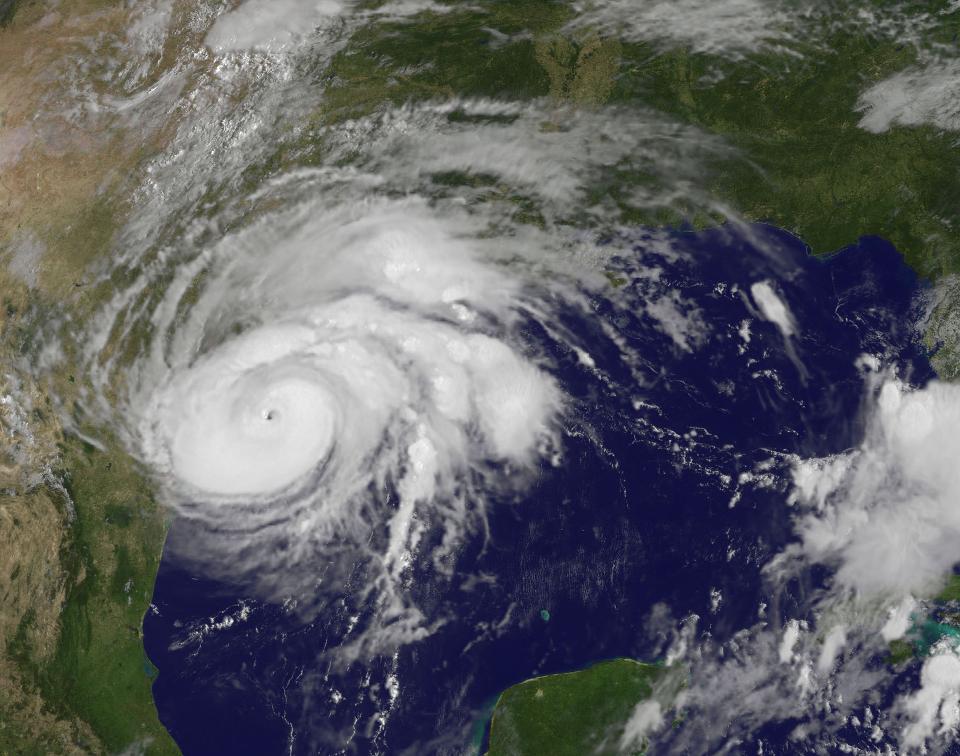
When Hurricane Harvey’s intensity became clear, employees at 93Q in Houston reserved hotel rooms across the street from the station. They were going to be very busy.
The on-air talent slept in the Cox-owned radio station for days, said Bill Tatar, digital content manager at Cox Media Group Houston. When they weren’t on-air, they did Facebook Live hits.
93Q is not normally an all-news station. But when emergencies hit, local radio stations can convey vital information: which streets are open, what shelters are taking people in and where communities can rally once the water begins to recede.
“Radio has been all over Harvey doing what radio does; immediately helping with updated information,” said Valerie Geller, a radio consultant. “Most stations dropped the format and went ‘all Harvey,’ taking calls, and across the country, stations are sending help and raising money.”[…]
Earlier this week, I received a message from my good friend, Mike, who lives south of Houston in Galveston County, Texas. Mike noted:
Here in Texas, we’re still dealing with the impact of hurricane Harvey.
[…]The absolute best hurricane information came from AM 740 KTRH Houston. A 50,000 Watt AM transmitter that covers a major portion of the gulf coast.
I’m learning that the Corpus Christi AM news station was evacuated and secured operations. KTRH kicked in and served the listening public very well.
I haven’t heard from Mike in a couple of days and, since then, Harvey has caused unprecedented levels of flooding in south Texas. I hope he’s doing okay and hope to hear from him soon.
Indeed, I hope SWLing Post readers in the affected area, their friends and family have all made it to safety.
Many thanks to SWLing Post contributor, Phil Brennan (VK8VWA), who shares the following:
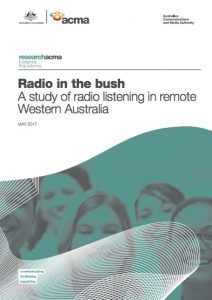
I spotted this bit of research from the Australian Communications and Media Authority regarding radio listening habits of people living in remote Western Australia.
It shows that radio very much remains a big part of people’s lives in the bush, particularly AM radio. I’m sure these findings would be replicated in the Northern Territory where I live, but as you are only too aware, we’ve had our remote SW radio service axed by the ABC. Anyway, it may be of interest to you and your readers.
Thank you for the tip, Phil. This is a pretty fascinating report. As you mention, the use of AM radio is quite heavy–no doubt due to the vast broadcast footprint. It’s this sort of report that should have been done prior to any decision about axing ABC’s NT shortwave service.
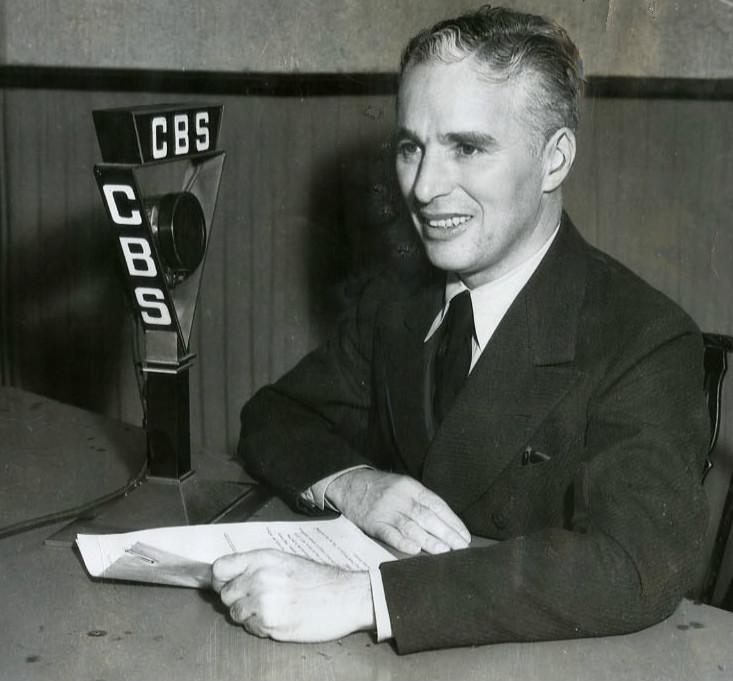
CBS Corp. is poised to exit the radio business that it helped create.
Eighty-eight years ago, the company’s founder, William S. Paley, bought the nascent Columbia Broadcasting System, and those radio stations became the nucleus of a budding broadcast empire.
But on Tuesday, CBS Chairman and Chief Executive Leslie Moonves said the company was exploring strategic options, including a sale or spinoff, of its entire radio division.
“The aim here is to unlock value for our shareholders,” said Moonves, who made the announcement during an investor day in New York.
The decision marks the end of an era and highlights the waning influence of commercial radio, which is no longer considered a growth industry. Young adults spend more time listening to digital music files, podcasts and subscription Internet radio services such as Spotify and Pandora. The shift has prompted major advertisers, including car dealerships, wireless phone companies and financial services firms, to steer more of their marketing dollars to digital platforms.
Amid all the changes in television and digital media, a report from Nielsen released Tuesday found that radio’s nationwide audience reached an all-time high during the second quarter of 2015.
According to Nielsen, about 245 million Americans ages 12 and up used radio during the that span.
It was a continuation of an upward trend for radio, which has seen its national audience swell to record highs in each of the last two years. In the first quarter of this year, radio eclipsed television as the country’s top reaching medium.