Tag Archives: AM Radio

KGGF’s Old-Time Christmas Radio Drama and Music!

Many thanks to SWLing Post contributor, James Copeland (KDØICP), who writes:

Hi Thomas,

Hope you are doing well. A few years ago, I sent you a story about radio dramas we were doing on my college radio station, KSDB in Manhattan, KS. Well, I’m now working at KGGF in Coffeyville, KS, continuing the tradition on this heritage AM station.

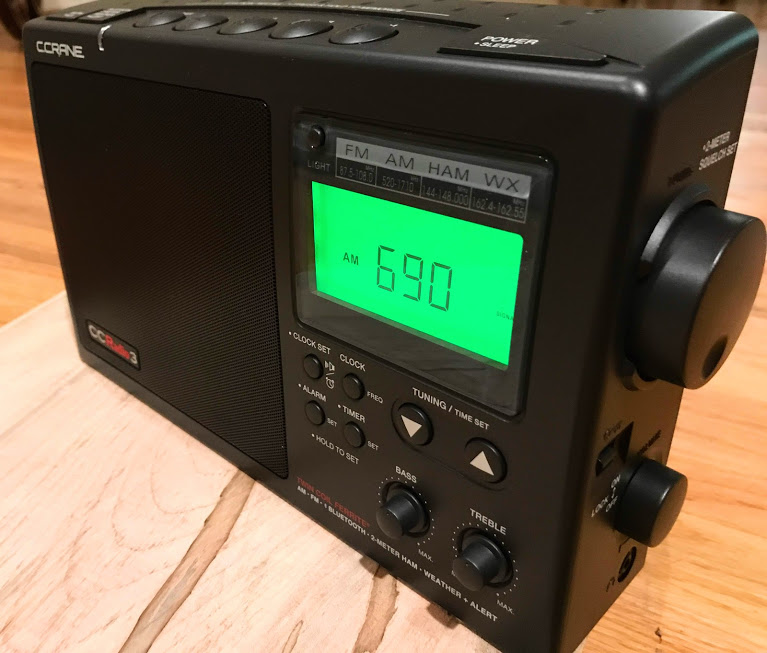
Earlier this month, we broadcast a community Christmas program to benefit our local theater in town that is being restored. The broadcast featured two old-time radio dramas and local music. Coffeyville, KS is a small town with a population under 9,000, but it has one of the oldest and largest radio stations in the area. 10 KW day and 5 KW night on 690 kHz. I thought some in your audience might enjoy trying to tune in Christmas morning at 8 a.m. CST for the rebroadcast of the program. A link for more information and the audio as well is available here:

https://kggfradio.com/local-news/721426

For those who are interested in the technical details of the broadcast, I used two ribbon mics and the main microphones, an RCA 77-DX and an RCA BK-11. The room acoustics proved to be a bit of a challenge with the final mix, but the whole thing was live with no edits and while it was far from perfect, I think the genuine nature of the community program shines through. The signal was sent to the station using a VHF Marti remote pickup unit. This particular recording was made at the station.

Also, if your readers are interested in submitting QSL reports, I would be glad to answer them. We usually get a few throughout the year, and I especially enjoyed a report early this year from some of the serious DXers in Norway!

Merry Christmas and 73!

James Copeland, KDØICP

Many thanks, James, for sharing this here on the SWLing Post. We all love a good radio production! It’s brilliant that you’ve brought this tradition to Coffeyville, KS!

I’ve also linked to the audio file of the broadcast below:

“Attempt to Pass AM for Every Vehicle Act in Senate Falls Short”

Photo by Courtney Corlew

(Source: Radio World via Dennis Dura)

Attempt to Pass AM for Every Vehicle Act in Senate Falls Short

Sen. Rand Paul objected, saying “mandating that all cars have AM radio is antithetical”

A maneuver by Senate sponsors of the “AM Radio for Every Vehicle Act” to pass the bill by avoiding a vote of the full Senate this week has fallen short.

The push to use “unanimous consent” to pass the bill was led by Sens. Ted Cruz (R-TX), Edward Markey (D-MA) and Ben Ray Luján (D-NM). However, (R-KY) objected to its passage.

“Mandating that all cars have AM radio is antithetical to any notion of limited government,” Sen. Paul said on the floor of the U.S. Senate on Tuesday.

Paul said there is irony in seeing Republicans come to the floor to pass bills that place mandates upon American businesses, “therefore picking winners and losers.” [Continue reading…]

Radio Waves: SWL Contest, Shortwave Modernization Concerns, Still Need AM, and ARRL Asks for Comments on 60M Rulemaking

Radio Waves:  Stories Making Waves in the World of Radio

Welcome to the SWLing Post’s Radio Waves, a collection of links to interesting stories making waves in the world of radio. Enjoy!

Many thanks to SWLing Post contributors Dennis Dura and Wayne Davis for the following tips:


SWL Contest With Nice Prizes Open Worldwide: November 1th – December 31th 2023 (YouTube)

Click here to watch on YouTube.

Hams Worry About Shortwave Proposal (Radio World)

The U.S. Coast Guard also is concerned about petition from the Shortwave Modernization Coalition

Numerous commenters have told the FCC that a proposal to “modernize” the shortwave band is a threat to amateur radio operators in the United States and possibly the end of ham radio as we know it. And hams are just one source of opposition to the idea.

The FCC inquiry was prompted by a request from the Shortwave Modernization Coalition for a rulemaking to amend the Part 90 rules.

SMC believes there is underutilized spectrum in the high-frequency bands. The coalition wants to use 20 kW transmitters for the transmission of time-sensitive data from fixed stations. It wants the FCC to allow these fixed, long-distance, non-voice communications in multiple bands between 2 MHz and 25 MHz.

Ham opponents worry about interference. One also characterized the coalition as being “packed with special interest groups that harbor little interest in shortwave modernization beyond their own needs to getting faster financial market information.”

The commission’s Office of the Managing Director sought comments on its proposal this summer. The petition, RM-11953, drew more than 800 comments. [Continue reading…]

Do we still need AM radio? (Farm Progress)

Automakers say no, but motives are complicated.

Many of us hold fond memories of listening to AM radio in the car. But these days, drivers are just as likely to listen to satellite radio, Spotify, audiobooks or podcasts. Good ole FM radio is still around too. That’s led many people to question if AM, America’s oldest broadcast medium, still has a future?

Not many people noticed when Tesla removed AM from new vehicles a few years ago. Ostensibly, they did so because the frequency interferes with electric vehicles. Never mind that older Teslas previously had functioning AM/FM radios. Or that the Federal Communications Commission has rules to limit electrical interference. Seemingly no one questioned Tesla’s decision.

In the past couple of years, other manufacturers including Ford, Audi, Volvo, BMW and Porche began removing AM receivers from new models or announced plans to do so. This elicited a more passionate response from AM listeners, particularly those in rural areas. For them, the frequency is more than just entertainment. They say it’s a lifeline for those in remote areas who otherwise wouldn’t have access to emergency information. It’s also one of the last places where they can get hyper-local news and entertainment. [Continue reading…]

Letters: AM in Cars, HD in Cars (Radio World)

Readers comment about matters of the dashboard

It’s Just Too Late to Save AM in Cars (Radio World)

It has been with great interest that I’ve read about carmakers dropping AM reception capability in new cars, particularly EVs, and about the introduction of the “AM for Every Vehicle” Act.

The reason most often cited by makers of electric vehicles is interference from on-board systems to AM band reception. The truth is we have ourselves to blame.

The assault on AM band purity predates the popularity of electric vehicles by decades. The onslaught of cheap switching power supplies in consumer electronics, RF noise-producing computers and personal devices, and the absolute lack of any care given to protecting the spectrum are incompatible with AM quality.

For far too long, consumers, manufacturers, the NAB and even the FCC did not fight to protect the band. It seemed nobody cared whether new fluorescent lights (remember those?) caused so much noise that they even affected reception in neighbors’ homes. Nobody took up the fight to keep the band clean and make noise-free AM reception even somewhat possible in high-density housing areas. Nobody seemed appalled at this complete disregard for the usefulness of the band in the future. [Continue reading…]

How to comment on the 60-meter rulemaking (ARRL)

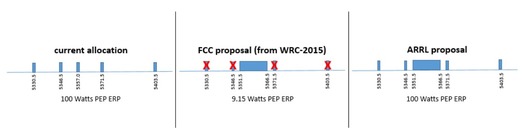
ARRL  The National Association for Amateur Radio® is asking that all radio amateurs urge the Federal Communications Commission (FCC) to continue the existing use of the 60-meter band. A public comment period is open until October 30, 2023. ARRL encourages expressions of support to the FCC for the current 100 W ERP power limit (instead of reducing the power limit to 15 W EIRP) and continuing secondary access to the current channels.

Click to enlarge image.

To submit a filing of your comments for the FCC’s consideration in the rulemaking process:

Go to the FCC web page for the Notice of Proposed Rulemaking’s (NPRM) Docket Number 23-120 at https://www.fcc.gov/ecfs/search/docket-detail/23-120.

If you wish to directly enter your comments, select the button labeled SUBMIT AN EXPRESS FILING.

If you are uploading a document that contains your comments, select SUBMIT A STANDARD FILING.

When submitting your comments, be sure the correct proceeding’s docket number, 23-120, is included on the form. Your name and comments will be entered into the official public record of the proceedings and will be viewable by anyone who visits the docket web page.

While radio amateurs are encouraged to include any comments they would like in their submissions, they’re especially encouraged to draw upon their personal experiences using the 60-meter band for public service purposes and for its location between the amateur 80- and 40-meter bands, which is critical to ensuring signal propagation to certain geographic areas during variations in time and the solar cycle.

Some of the main points to comment on for this NPRM are:

  • Urging the FCC to keep the four existing channels allocated to amateur radio on a secondary basis.
  • Urging the FCC to keep the 100 W power limit for the four existing channels and the new 15 kHz subband.

ARRL Public Relations and Outreach Manager Sierra Harrop, W5DX, underscored the importance of commenting, urging members to speak up. “ARRL members make up the strongest voice in matters of amateur radio spectrum defense,” said Harrop. “Your membership and participation in the rulemaking process both ensure ARRL continues to make the difference when our band privileges are threatened. Please join us in effort to protect our 60-meter band privileges.”

Previous coverage:

Comment Deadlines Set on Propose 60-Meter Band Changes
ARRL News | 10/04/2023

ARRL Advocates for Radio Amateurs as FCC Proposes Changes to 60-Meter Band
ARRL News | 4/28/2023

World Radiocommunication Conference Approves Global 60-Meter Allocation
ARRL News | 11/18/2015


Do you enjoy the SWLing Post?

Please consider supporting us via Patreon or our Coffee Fund!

Your support makes articles like this one possible. Thank you!

Radio Waves: AM After Recess, KD9VFU Portable SDR and Ham Radio Help

Radio Waves:  Stories Making Waves in the World of Radio

Welcome to the SWLing Post’s Radio Waves, a collection of links to interesting stories making waves in the world of radio. Enjoy!

Many thanks to SWLing Post contributor, Dennis Dura, for the following tips:


What Happens to AM Radio After August Recess? (NRB)

This fall could be a busy time for broadcasters on Capitol Hill.

Earlier this year, with leading automakers poised to remove AM radio capabilities from new electric vehicle lines, lawmakers in the House and Senate worked across the political aisle to introduce a pair of proposals (H.R.3413 and S.1669) that would preserve AM radio in the auto dash.

Even with Congress in recess, the AM Radio for Every Vehicle Act has continued to benefit from the issue’s momentum. In recent days, the legislation has attracted several new cosponsors, most recently adding Reps. James Comer (R-Ky.), Carlos Gimenez (R-Fla.), Mike McCaul (R-Texas.) and Sens. Catherine Cortez Masto (D-Nev.) Joni Ernst (R-Iowa.), Lindsey Graham (R-S.C.), Josh Hawley (R-Mo.), Chris Murphy Chris (D-Conn.), and Jacky Rosen (D-Nev.), for a total of 150 cosponsors in the House and 34 in the Senate.

The bill sailed through Senate markup in July. Prior to the markup, a manager’s amendment (package of amendments from the lead sponsor or committee chair) introduced a few tailored changes, such as narrowing the bill to “passenger motor vehicles” as opposed to “motor vehicles” more generally and revising the requirement that radio be “conspicuous” to merely “easily accessible.” Changes were also made to the effective date and to the fee structure, but the core elements of the bill—requiring that AM radio will remain in cars and be placed in cars that have eliminated it—was not changed.

Once the Senate is back in session, the bill must be brought up before it is considered on the floor. This can happen by unanimous consent or by voting to adopt a motion to proceed to the bill. After this step of the bill process happens, Senators can then offer amendments. Unlike in the House, amendments in most circumstances are not subject to “germaneness” rules, and can sometimes include aspects that are unrelated to the bill. Furthermore, there is no limit to debate at each step of the process (motions to proceed, amendments, the bill itself), so there is no way to cut off debate to force a vote. This makes the bill’s time and debate on the floor unpredictable, but given its bipartisan support and quick progress so far, S.1669 has a good chance of avoiding these procedural difficulties. [Continue reading…]

Bipartisan Support for AM Radio Legislation Grows (Radio World)

A whopping 184 members of Congress have cosponsored the AM Radio for Every Vehicle Act

It’s a rare occasion when lawmakers on both sides of the political spectrum can agree on any given legislation, but that’s just the case for the AM Radio for Every Vehicle Act. The bill, first introduced in May, continues to garner strong, bipartisan support, with one-third of all senators and members of the House of Representatives cosponsoring the legislation.

The AM Radio for Every Vehicle Act would give the government power to mandate that automakers maintain AM service in their future car models. If adopted, the act would direct the National Highway Traffic Safety Administration to implement new rules requiring car manufacturers to keep the service without any additional charges.

The bill also would direct the Government Accountability Office to study whether alternative communication systems could fully replicate the reach and effectiveness of AM broadcast radio for alerting the public to emergencies.

As of Sept. 7, 150 out of the 435 total members that comprise the U.S. House of Representatives have cosponsored the measure. Of those House representatives, 72 are Democrats and 78 are Republicans.

Additionally, 34 out of 100 senators support the bill. Of those members of Congress, 16 are Democrats and 18 are Republicans. [Continue reading…]

Kaushlesh “KD9VFU” Chandel’s SDRDock Is a Pocket-Sized Software-Defined Radio Powerhouse (Hackster.io)

Built around a Raspberry Pi and an Airspy HF+ SDR dongle, the SDRDock includes a custom ESP32-powered physical user interface.

Radio ham Kaushlesh “KD9VFU” Chandel is putting together a pocket-sized device designed to make it easier to play with software defined radio (SDR) on-the-go: the Raspberry Pi-powered SDRDock.

“Built on a Raspberry Pi platform, SDRDock aims to enhance the SDR experience by integrating all essential hardware components onto a single, streamlined PCB,” Chandel claims of his creation. “With the convenience of 3D-printable enclosures and compatibility with various SDR dongles, this device is both accessible and versatile. What sets it apart is its tactile interface, featuring user-friendly knobs and buttons that transform complex SDR tasks into an intuitive and engaging experience.”

Radio ham Kaushlesh “KD9VFU” Chandel is putting together a pocket-sized device designed to make it easier to play with software defined radio (SDR) on-the-go: the Raspberry Pi-powered SDRDock.

“Built on a Raspberry Pi platform, SDRDock aims to enhance the SDR experience by integrating all essential hardware components onto a single, streamlined PCB,” Chandel claims of his creation. “With the convenience of 3D-printable enclosures and compatibility with various SDR dongles, this device is both accessible and versatile. What sets it apart is its tactile interface, featuring user-friendly knobs and buttons that transform complex SDR tasks into an intuitive and engaging experience.”

That interface is immediately visible on the very front of the device. Where most software-defined radio work is done on a laptop or desktop with a keyboard and mouse, Chandel wanted something more streamlined — so developed what is, in effect, a custom mixing deck-style user interface based on 3D knobs and sliders. These are then mapped to actions in the SDR software running on the Raspberry Pi — meaning it’s possible to hone in on an interesting signal with no keyboard or mouse in sight. [Continue reading…]

Climate change is affecting telecommunications infrastructure. Ham radio might be able to help (CBC)

The technology is ‘an unsung hero’ for getting messages out, one operator says

As Atlantic Canada gears up for another hurricane season after a year of unprecedented disasters linked to climate change — including post-tropical storm Fiona last September — amateur radio operators say a simple technology can play a part in the response to disasters across the region.

When Fiona hit Nova Scotia, it affected electrical grids and telecommunications networks, leaving some people unable to call for help. That experience in particular prompted a renewed interest in amateur radio — also known as ham radio — which allows non-professional users to send messages without requiring the internet or cell phone networks.

“I think it’s kind of an unsung hero in communications that gets forgotten in the noise of disaster when it comes to, ‘Well, how do we get that message out?'” said John Bignell, president of the Halifax Amateur Radio Club.

Ham radio operators use a special designated set of frequencies — not the regular AM or FM radio signals — to exchange messages locally or around the world.

They say the technology can help Nova Scotians respond to the increasing risks of extreme weather, as climate change forces a reckoning with communications infrastructure across the country. [Continue reading…]


Do you enjoy the SWLing Post?

Please consider supporting us via Patreon or our Coffee Fund!

Your support makes articles like this one possible. Thank you!
Radio Waves: Nebraska Radio History, KBS Radio, AM Radio, Free Radio Preservation Webinar, and Belka Review

Radio Waves:  Stories Making Waves in the World of Radio

Welcome to the SWLing Post’s Radio Waves, a collection of links to interesting stories making waves in the world of radio. Enjoy!

Many thanks to SWLing Post contributors Mike, Jeramy Phillips, Fred Waterer, and Dennis Dura for the following tips:


Nebraska Radio History

Many thanks to SWLing Post contributor, Jeramy Phillips, who writes:

Greetings, Thomas.

I thought you might like this little bit about some Nebraska radio history:
https://history.nebraska.gov/norfolks-wjag-and-the-roots-of-political-talk-radio/

That blog post also links to an article that has a lot more in-depth information.
https://history.nebraska.gov/wp-content/uploads/2018/05/doc_publications_NH2011WJAG.pdf

Enjoy!

KBS WORLD Radio 70th Anniversary Special (KBS World)

August 15 marks 70 years since the start of KBS WORLD Radio. For the past 70 years, KBS WORLD Radio grew and evolved with the development of Korean history, through the Korean War, the democratization of Korea and the rapid economic growth that South Korea has seen.

And to celebrate our 70th anniversary, we have prepared a special #InDepthNewsAnalysis with three public media experts to look back on the past 70 years of KBS WORLD Radio, to discuss the role of public international media and also how the next 70 years to come.

Letter: Emergency Response in Maui Fires Highlights Radio’s Importance (Radio World)

Engineer Ron Schadt says people have become way too reliant on cell phones

An interesting story from CBS News about the fires in Maui. If you read through it, nothing worked. Sirens didn’t work, cell phones were sketchy or not working at all, no electricity, etc. etc. If you read through the entire story, near the end is one line: “Emergency management had to resort to radio to communicate with the victims of the fires.”

Well, well, interesting that what we have been saying all along is really true, the oldest form of contacting people is still the most reliable and unfortunately, because people are so attached to their stupid phones, radio has to be “resorted to.” This little section of this article needs to get to these senators and congressmen who are on this AM in every car movement. [Continue reading…]

Save AM Radio? Why?!? (The Gate)

Politicians come to the rescue.

Radio broadcasting using amplitude modulation — or AM — has been used commercially for greater than 100 years. Its heyday generally ranged for decades from the 1930s through the 1970s as its programming content transitioned from dramas and comedies to popular music to talk programs, with the latest news mixed into each format. Advancements in technology has arguably rendered AM radio virtually obsolete. Why save AM radio from extinction?

Save AM Radio? Why?!?

The waning popularity of terrestrial AM radio technology is not so much the reason as to its potential extinction. Rather, the reason is due to the technology of electric vehicles — and because rental car companies such as Hertz have been increasing the number of electric vehicles in their fleets, the days of listening to AM radio in rental vehicles may be numbered.

The electric motors which power the drive wheels in order to propel electric vehicles also tend to generate electromagnetic interference with the reception of AM broadcast radio directly through the receiver. That interference can result in annoyances which range from buzzing, distortion, and fading of the signal itself to static and sounds of crackling instead of clear reception. Streaming audio of programs from AM radio stations — as well as the reception of FM stations — remain unaffected.

Always seeking to save time and money, eight of 20 of the leading carmakers in the world have removed AM broadcast radio from their electric vehicles; and manufacturers of electric vehicles are considering eliminating the option of tuning in to AM radio in their vehicles. Engineers have not found an easy way to eliminate the aforementioned interference without adding excessive weight to the car or increasing the cost of the vehicle…. [Continue reading…]

Preserving Broadcast History (NAB)

Join NAB and the Library of American Broadcasting Foundation (LABF) on Wednesday, August 23 at 2 p.m. ET for the first of a two-part series to learn the importance of documenting and preserving broadcast history for future generations.

Part One: The “Preserving Broadcast History” webinar will provide guidance for broadcasters on how to catalog your station’s history, best practices for creating an inventory and where to store this data and information. A Q-and-A will follow the webinar.

Featuring:

  • Jack Goodman, co-chair, LABF
  • April Carty-Sipp, executive vice president, Industry Affairs, NAB
  • Laura Schnitker, Ph.D., C.A., curator, Mass Media and Culture, University of Maryland’s Special Collections and University Archives
  • Mike Henry, reference specialist, University of Maryland’s Special Collections and University Archives

Click here for more information and to register for free!

Belka Review (N9EWO)

Click here to read Dave’s review of the Belka receiver. Thanks to Mike for the tip!


Do you enjoy the SWLing Post?

Please consider supporting us via Patreon or our Coffee Fund!

Your support makes articles like this one possible. Thank you!
Radio Waves: Great Solar Storm of 1940, Hawaii DJ’s Lack Vital Info, Edison Claims AM/FM Audio Usage Surpasses YouTube, and Radio 4 Longwave Reception

Radio Waves:  Stories Making Waves in the World of Radio

Welcome to the SWLing Post’s Radio Waves, a collection of links to interesting stories making waves in the world of radio. Enjoy!

Many thanks to SWLing Post contributors Troy Riedel, Dennis Dura and David Shannon for the following tips:


The Great Solar Storm of March 1940 (Spaceweather.com)

This story is shocking. On March 24, 1940, a solar storm hit Earth so hard it made copper wires in the United States crackle with 800 volts of electricity. A New York Times headline declared that a “sunspot tornado” had arrived, playing havoc with any signal that had to travel through metal wires.

“For a few hours it completely disrupted all long-distance communication,” wrote astronomer Seth B. Nicholson in a recap of the event for the Astronomical Society of the Pacific. Radio announcers seemed to be “talking a language no one could understand.” The New York Times reported that more than a million telephone and teletype messages had been garbled: “Veteran electrical engineers unhesitatingly pronounced it the worst thing of its kind within their memory.”

So why have you never heard of this storm? Even in 1940 it was fairly quickly forgotten. World War II was underway in Europe, and the USA was on the verge of joining. People had other things on their minds.

Modern researchers, however, are paying attention. A team led by Jeffrey Loveof the USGS Geomagnetism Program just published a new study of the event in the research journal Space Weather. Their work confirms that it was no ordinary solar storm.

“It was unusually violent,” says Love. “There were very rapid changes in Earth’s magnetic field, and this induced big voltages in long metal wires.” [Continue reading at Spaceweather.com…]

[…]Read Love’s original research here: https://agupubs.onlinelibrary.wiley.com/doi/full/10.1029/2022SW003379

A valued source of communication, Maui radio DJs grapple with lack of information (Hawaii News Now)

HONOLULU (HawaiiNewsNow) – From taking calls of desperation, to sharing what they know when they know it, local radio hosts have long been a valued source of communication, especially during disasters.

However in light of the recent fires, many on Maui have expressed concerns that information from the government in times of disasters is far too sparse and delayed.

Lines of communication remain severed with cell towers burned to the ground. That’s leaving radio as one of the few dependable sources of communication, which is putting added pressure on local outlets.

Veteran radio host Ed Kapoi of KISS took a call from Napili, North of Kaanapali.

“People are desperate. Babies need diapers and formula. The elderly need their medication,” one caller said through tears.

It just rocks you to your core it really does. It’s hard to take those kind of phone calls,” Kapoi said.

Fellow KISS radio host Brandee Carvalho added, “We hear their crying, their tears, their desperate pleas. It is real. It’s very real for me.” [Continue reading…]

Hawaii residents turn to radio station for vital updates (YouTube)

Click here to watch on YouTube.

AM/FM Radio Is Most Listened to Audio Source in U.S. (Radio World)

Edison Research says streaming music and YouTube claim 2nd and 3rd place

Edison Research just released its latest “Share of Ear” findings. The quarterly study determines what portion of all audio time is spent with different platforms.

The analysis looks at all audio usage across the United States among Americans age 13 and older. The data is gathered from a detailed one-day diary entry administered either online or via mail. Share of Ear data has been continuously updated since 2014. Find this quarter’s insights compiled in the graph below.

Per Edison’s findings this quarter, AM and FM radio (counting both over-the-air and streams) accounted for 36 percent of all listening for Americans age 13 and older. Streaming music via platforms like Spotify, Pandora and Apple Music, among others, accounted for 18 percent of all listening time. Using YouTube for music and/or music videos accounted for 14 percent of all listening time; followed by podcasts, SiriusXM and “owned music” — a.k.a. CD’s and other digital music files.[Continue reading…]

Radio 4 gets a terrible reception over scrapping long wave amid fears older people will struggle with digital radio” (Daily Mail)

[Editor’s Note: Per Wikipedia, “The Daily Mail is a British daily middle-market tabloid newspaper and news website published in London.”]

Listeners have criticised Radio 4’s retreat from long wave amid fears that older people will struggle with digital radio.

The BBC said last year it will stop scheduling separate content for the long wave version of the station in ‘anticipation of the closure’ of the platform.

Programmes which are on long wave but not Radio 4 FM include Test Match Special, editions of the Shipping Forecast, the Daily Service and a longer version of Yesterday in Parliament.

These shows will be available on other platforms once separate scheduling for long wave ends next March.

It is expected that listeners will be directed to the digital BBC Sounds audio platform to find these programmes. [Continue reading…]


Do you enjoy the SWLing Post?

Please consider supporting us via Patreon or our Coffee Fund!

Your support makes articles like this one possible. Thank you!