Tag Archives: Amateur Radio

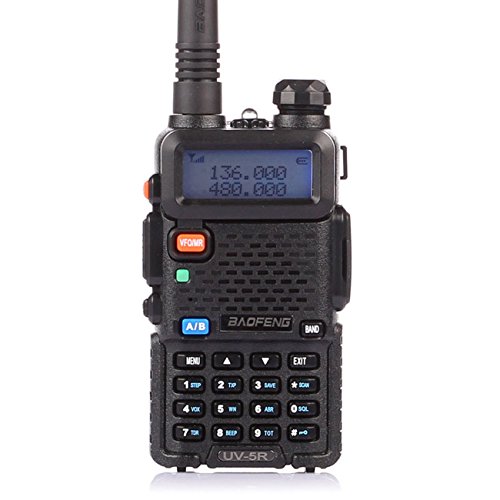
The end of cheap non-compliant VHF/UHF two-way radios?

Many thanks to SWLing Post contributor, Dave Zantow (N9EWO), who references this thread on RadioReference.com regarding the following FCC Enforcement Advisory:

The Enforcement Bureau (Bureau) of the Federal Communications Commission (FCC) has observed that a growing number of conventional retailers and websites advertise and sell low-cost, two-way VHF/UHF radios that do not comply with the FCC’s rules. Such devices are used primarily for short-distance, two-way voice communications and are frequently imported into the United States. These radios must be authorized by the FCC prior to being imported, advertised, sold, or operated in the United States.

Many of these radios violate one or more FCC technical requirements. For example, some can be modified to transmit on public safety and other land mobile channels for which they are not authorized, while others are capable of prohibited wideband operations.

Such radios are illegal, and many have the potential to negatively affect public safety, aviation, and other operations by Federal, state, and local agencies, as well as private users. Because these devices must be, but have not been, authorized by the FCC, the devices may not be imported into the United States, retailers may not advertise or sell them, and no one may use them. Rather, these devices may only be imported, advertised, sold, or used only if the FCC first has approved them under its equipment authorization process (or unless the devices operate exclusively on frequencies reserved for amateur licensees or they are intended for use exclusively by the federal government). Moreover, with only very limited exceptions, after being authorized, the devices may not be modified. Anyone importing, advertising or selling such noncompliant devices should stop immediately, and anyone owning such devices should not use them. Violators may be subject to substantial monetary penalties.

What Should You Know?

The Bureau has noted an increase in the manufacturing, importation, advertising, and sale of two-way VHF/UHF radios that are not authorized in accordance with the Commission’s rules. Generally, electronic devices that intentionally emit radio waves are required to be certified by the FCC or an authorized third-party certification entity (Telecommunications Certification Body) prior to importation, advertising, sale, or use. Two-way VHF/UHF radios require FCC certification to show compliance with our rules, unless they qualify for a limited exception (see Amateur Radio Exception, below, and Federal government exception at footnote 4).

This certification requirement ensures that equipment complies with technical requirements to avoid causing interference to federal government operations, private licensed operations, and other authorized operations or equipment. Equipment that does not comply with the technical requirements cannot be certified and thus cannot be imported, advertised, sold, or used.

Amateur Radio Exception. There is one exception to this certification requirement: if a device is capable of operating only on frequencies that the FCC has allocated for use by Amateur Radio Service licensees, it does not require FCC equipment authorization,8 and an amateur licensee may use his or her license to operate such radios. However, many two-way radios that purport to operate on amateur frequencies also operate on frequencies that extend beyond the designated amateur frequency bands. If a two-way VHF/UHF radio is capable of operating outside of the amateur frequency bands, it cannot be imported, advertised, sold, or operated within the United States without an FCC equipment certification.

Even if a two-way VHF/UHF radio operates solely within the amateur frequencies, the operator is required to have an amateur license to operate the device and must otherwise comply with all applicable rules. The Bureau will take very seriously any reports of failures of two-way radio operators to comply with all relevant rules and requirements when using devices in the amateur bands.

What Happens If Manufacturers, Retailers, or Operators Do Not Comply with the FCC’s Rules?

Violators of the Commission’s marketing rules may be subject to the penalties authorized by the Communications Act, including, but not limited to, substantial monetary fines (up to $19,639 per day of marketing violations and up to $147,290 for an ongoing violation).

What Should You Do?

The FCC rules governing two-way VHF/UHF radios are designed to minimize interference to all authorized spectrum users, including important government and public safety operations. Manufacturers, importers, retailers, and radio operators should take the time to learn the FCC rules governing equipment authorization and comply with them. When manufacturing, importing, advertising or selling two-way radios and accessories that either are electronic or have electronic components, manufacturers, importers and marketers should ensure that such devices or components are properly certified and labeled as FCCcompliant and cannot be easily modified to operate outside its grant of certification. Prior to purchase or operation, individuals should ensure that a device is either labeled as FCC-compliant or operates solely within amateur frequencies.

Need more information? For additional information regarding equipment marketing and amateur radio rules, please visit the FCC website at https://www.fcc.gov/engineering-technology/laboratory-division/general/equipmentauthorization and https://www.fcc.gov/wireless/bureau-divisions/mobility-division/amateur-radio-service, respectively. Media inquiries should be directed to Will Wiquist at (202) 418-0509 or [email protected].

To file a complaint, visit https://consumercomplaints.fcc.gov or call 1-888-CALL-FCC.

Click here to download the full advisory including footnotes (PDF).

I can’t imagine how many of these non-compliant HTs are floating around on the market. I’m guessing this could also affect the sale of used non-compliant radios–? I’m sure there are a number of amateur radio retailers that have a vast inventory of non-compliant radios that they can no longer sell, without potentially facing serious fines by the FCC.
Spectrum Management and the Impact on Amateur Radio

Many thanks to an SWLing Post reader who has shared the following document which was published during the IARU Region 3 conference in Seoul. The document is titled “The evolution of spectrum management in the era of hyper-connectivity and its impact on the amateur service.” Certainly a tough look at the realities of spectrum use and amateur radio’s part in it.

Click here to download (.docx format). 

Shortwave station WTWW promotes Field Day on the air

Many thanks to SWLing Post contributor, Bill (WD9EQD), who writes:

Shortwave Station WTWW is promoting Field Day with a special shortwave broadcast. From their Web Page:

http://wtww.us/

Call in toll free at:

833-390-5085

Promote The Ham Radio Hobby To The Entire World On A Powerful International Shortwave Radio Station – WTWW BY Calling In From Your Field Location and Tell The World about it. Put the members of your Field Day group on the air by passing the phone around. Include special guests and your local city officials. Let’s catch the excitement from the young kids and teens that are visiting your Field Day site. Let’s talk to prospective Hams that have gotten excited by watching your field day activities.

If you can’t get through on the first try to this number – you can leave a message and we WILL call you during the live show. You are welcome to leave a message by calling ahead of time as well!

Let’s give the world a shout from Field Day 2018!

Thank you, Bill and a number of other SWLing Post readers who shared this tip!


Shortwave Radio Recordings: Ham radio contacts between W2PVF (SK) and two Antarctic Stations, circa 1974

Palmer Station (Photo Credit: Ryan Wallace and the USAP)

Many thanks to Bill Hemphill (WD9EQD) who is one of our newest contributors at the Shortwave Radio Audio Archive (SRAA). Bill approached me at the Winter SWL Fest this year noting that he has a wide variety of radio-related audio recordings to share with the SRAA and the SWLing Post.

This week, Bill shared two fascinating tape recordings he originally acquired from an estate sale box.  These recordings were originally made in 1974 by the late Jim Hayward (W2PVF) in Absecon, New Jersey (USA) with two different ham radio stations in Antarctica.

This first recording is between W2PVF and KC4AAC of Palmer Station. The audio starts mid conversation:

Click here to download.

The second recording is between W2PVF and LU1ZE of the Argentine Antarctica Station. The operator at the microphone is W1PV. The recording even includes a phone patch:

Click here to download.

Bill, thanks so much for sharing these recordings–I thoroughly enjoyed them!

I’m so impressed with the audio and signal quality of the Antarctic stations.  In 1974, we were approaching a solar minimum in Solar Cycle 20. Still, I bet conditions were better than anything we’ve seen in over a decade!

I’m curious if any Post readers have ever made contact with either of these stations or even know the operators in the recordings? Bill notes that  Jim (W2PVF) was president of the local Atlantic City Electric Company for many years. Would be fun to share these recordings with the some of the original operators, if they’re around!

Video: Professor Joe Taylor K1JT talks FT-8 and WSJT-X

(Source: Southgate ARC)

Work the World with WSJT-X

Video of the talk given by Professor Joe Taylor K1JT about the FT-8 and WSPR modes at the 2018 MicroHAMS Digital Conference on March 24

Budd Churchward WB7FHC writes:

Dr. Joe Taylor, K1JT, author of many of the weak signal digital modes and co-author of the very popular FT-8 mode presented: “Work the World with WSJT-X”  at the 2018 MicroHAMS Digital Conference in Redmond, Washington about the WSJT-X Digital Software Suite for Amatuer Radio.

Dr. Taylor gives a detailed description of both the FT-8 and WSPR modes that so may Hams are using all over the world.

Watch Work the World with WSJT-X – Dr. Joe Taylor

Click here to view on YouTube.

Wired: Hunting Radiosondes

Image source: NOAA

(Source: Wired via David Korchin)

SOME RETIREES TAKE up fly fishing. Others pick up golf. But when Roland—or “F5ZV,” as he’s known on ham radio—left his job in Belfort, France a decade ago, he devoted his newfound leisure to a far more peculiar hobby: hunting radiosondes.

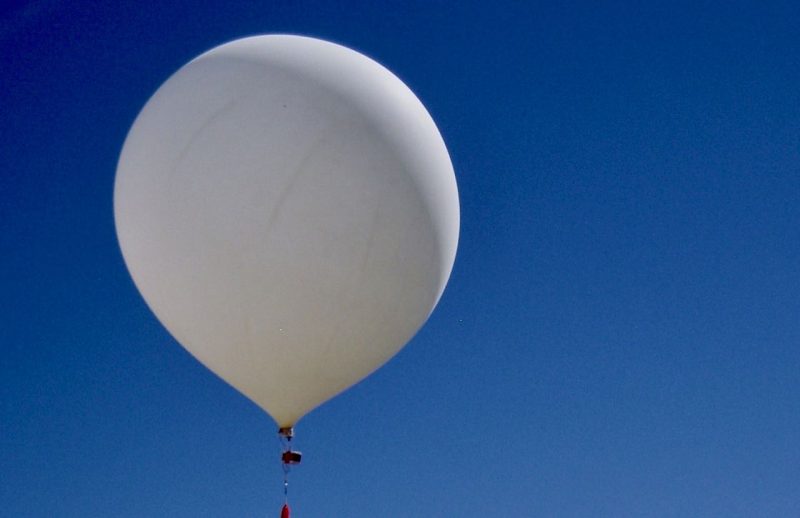
The white plastic boxes contain instruments to measure things like wind, temperature and humidity; meteorologists send them skywards on balloons, and they transmit data back over radio waves. But somewhere around 100,000 feet, the balloons burst, and the radiosondes parachute back to earth.

Roland began using a radio receiver and antenna to track them to the rooftops, parking lots, and random cow pastures where they land. “He was completely obsessed with radiosondes,” says Swiss photographer Vincent Levrat, who documents the chase in his quirky series Catch Me If You Can. “He would wake up at night just to hunt.”

By Roland’s own estimation, there are hundreds of other radiosonde hunters across Europe who monitor launch schedules for weather station balloons. They begin each hunt by using software called Balloon Track to predict the general area where a radiosonde might land; Balloon Track calculates the trajectory based on wind speed and burst altitude.[…]

Click here to read the full article on Wired.

ARRL Requests HF Privileges for Technician Licensees

(Source: ARRL via Ron)

ARRL has asked the FCC to expand HF privileges for Technician licensees to include limited phone privileges on 75, 40, and 15 meters, plus RTTY and digital mode privileges on 80, 40, 15, and 10 meters. The FCC has not yet invited public comment on the proposals, which stem from recommendations put forth by the ARRL Board of Directors’ Entry-Level License Committee, which explored various initiatives and gauged member opinions in 2016 and 2017.

“This action will enhance the available license operating privileges in what has become the principal entry-level license class in the Amateur Service,” ARRL said in its Petition. “It will attract more newcomers to Amateur Radio, it will result in increased retention of licensees who hold Technician Class licenses, and it will provide an improved incentive for entry-level licensees to increase technical self-training and pursue higher license class achievement and development of communications skills.”

Specifically, ARRL proposes to provide Technician licensees, present and future, with phone privileges at 3.900 to 4.000 MHz, 7.225 to 7.300 MHz, and 21.350 to 21.450 MHz, plus RTTY and digital privileges in current Technician allocations on 80, 40, 15, and 10 meters.[…]

Click here to read the full article via the ARRL.