Tag Archives: CHU

Hang on a second…seriously

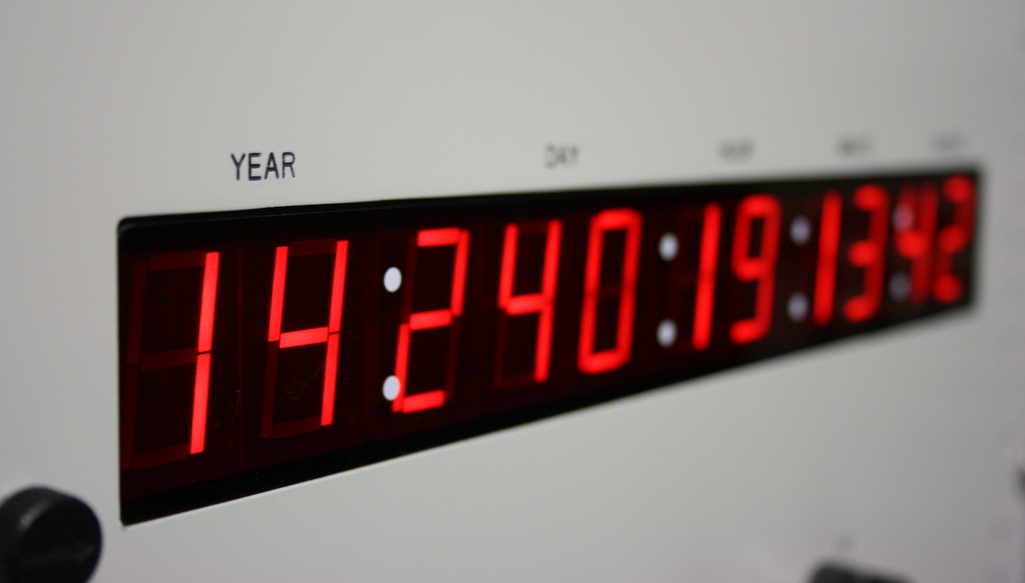
WWV-TimeCodeGenerator

One of four WWV time code generators in late August, 2014

Tonight, for the first time in three years, we will experience a leap second. What is a leap second?  Wikipedia provides a concise explanation:

A leap second is a one-second adjustment that is occasionally applied to Coordinated Universal Time (UTC) in order to keep its time of day close to the mean solar time, or UT1. Without such a correction, time reckoned by Earth’s rotation drifts away from atomic time because of irregularities in the Earth’s rate of rotation. Since this system of correction was implemented in 1972, 25 such leap seconds have been inserted. The most recent one happened on June 30, 2012 at 23:59:60 UTC. A leap second, the 26th, will again be inserted at the end of June 30, 2015 at 23:59:60 UTC.

Like many of you, when I think of time–or UTC–I think about the NIST radio station WWV in Fort Collins, Colorado.

I had the honor of visiting the facility last year (yes, photo tour still forthcoming!).  During the tour, my guide and Chief Engineer at WWV and WWVB, Matthew Deutch, told me that he’s always going to be on site come Leap Second!

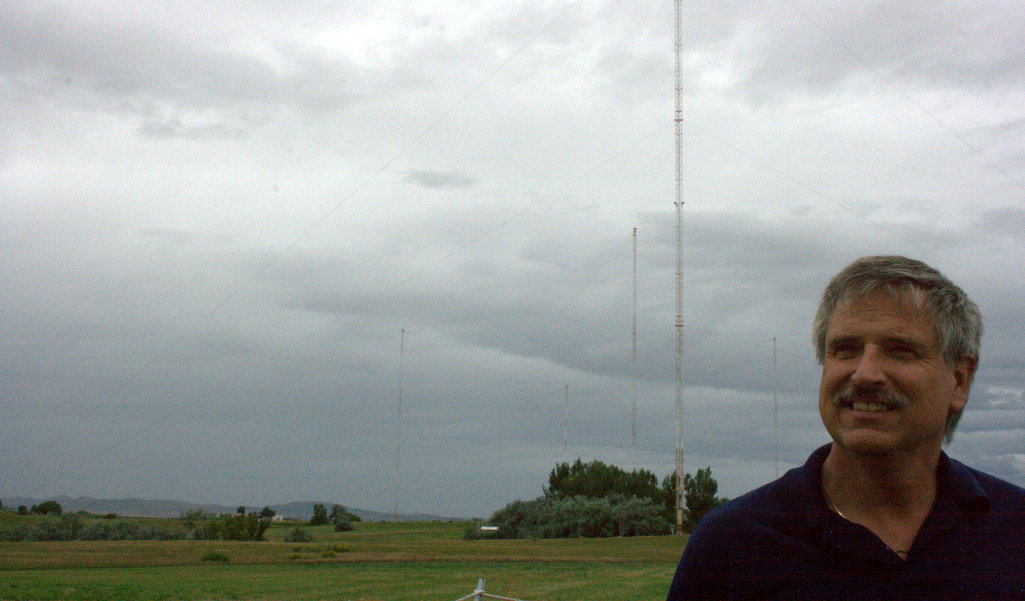
MattDeutch-WWVB

WWV’s Matthew Deutch with WWVB antennas in background

I wrote Matt this morning to ask what were his plans tonight?  His reply:

“The leap second happens at 0000 UTC tonight, which is 6:00 pm here in Fort Collins. All of the programming took place at the beginning of the month, so the equipment is armed…we just sit back and watch for the leap this evening.

Even though it is automated I hang around the station to make sure everything goes smoothly at the critical moment…”

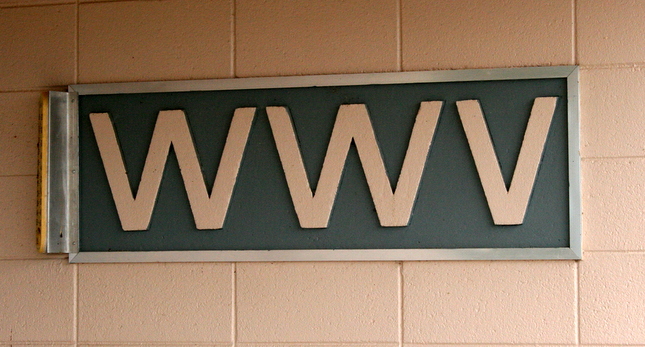
WWV-First-Sign-SMMatthew closed his message by wishing me a “Happy Leap Second.”

Back at you, Matt! We hope that second leaps as smoothly as you’d like!

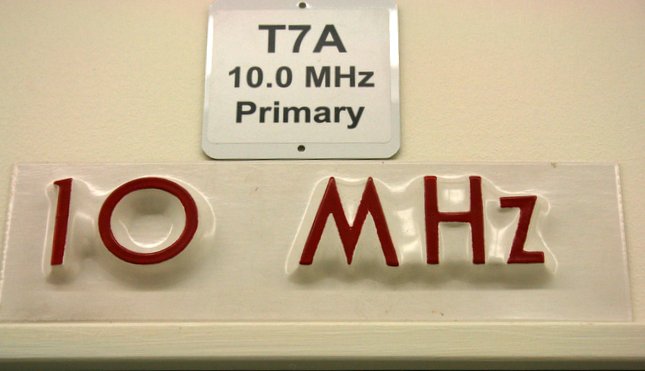
Not to put Matt on the spot, but you can listen to WWV (or the atomic clock of your choice) make the leap second tonight at 00:00 UTC. As for me, I’ll hop on 10 MHz and 15 MHz to hear (and hopefully record) the extra “tick.” At the end of this post, I’ve provided a list of time stations for your convenience.

Happy Leap Second!

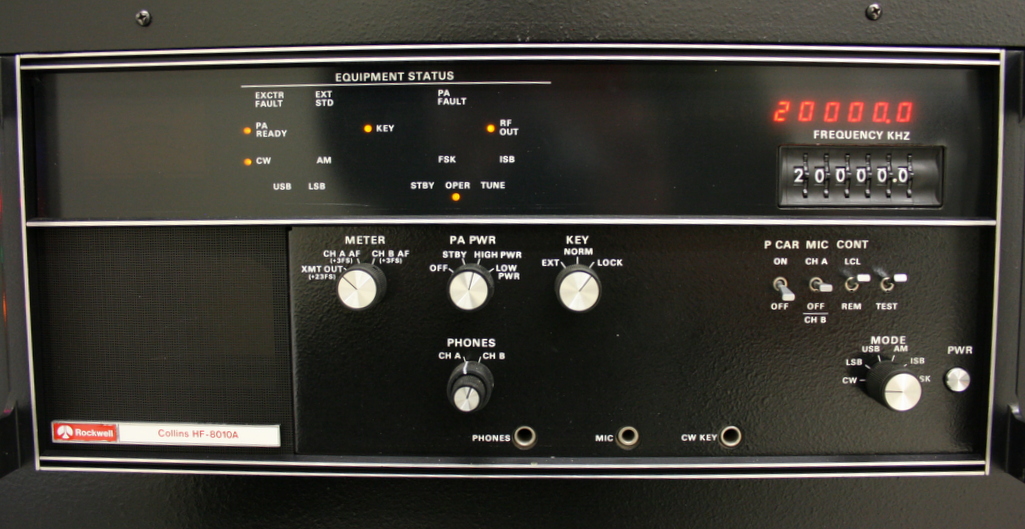
20MHZtransmitter

WWV 20 MHz Collins transmitter

List of shortwave radio time stations

  • CHU Canada: 3330 kHz, 7850 kHz, 14670 kHz
  • BPM China: 2,500, 5,000, 10,000, and 15,000 kHz
  • HLA South Korea: 5,000 kHz
  • BSF Taiwan: 5,000 and 15,000 kHz
  • WWV (Ft. Collins)/WWVH (Hawaii) United States:  2,500, 5,000, 10,000, 15,000, 20,000 and 25,000 kHz

Update

Click here to listen to Leap Second recordings from WWV and CHU.

Grandfather of WWV’s atomic clock

I just discovered a film produced by the National Physical Laboratory (NPL) Film Unit in the 1950s explaining the principles behind the first accurate atomic clock. The clock was designed by Louis Essen and built at the National Physical Laboratory in 1955.

This film gives fascinating insight into the physics that run atomic clocks like those behind the WWV and CHU time stations. Better yet, the science is easy to swallow with the traditional “BBC” style voice narration. Enjoy!

Canada’s shortwave time station, CHU, is moving

Press release from the National Research Council (NRC) of Canada:

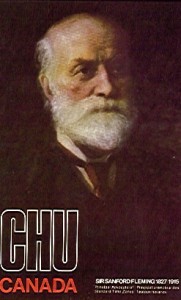
CHU's QSL card used in the 1980s depicting Sir Sanford Fleming, father of uniform times zones.

1980s QSL card from radio station CHU depicting Sir Sanford Fleming, father of uniform time zones.

Time to change your shortwave radio dial

After seventy years of broadcasting Canada’s official time, NRC’s shortwave station CHU will move the transmission frequency for the 7335 KHz transmitter to 7850 KHz. The change goes into effect on 01 January 2009 at 00:00 UTC.

CHU is a part of NRC’s system for disseminating official time throughout Canada, broadcasting 24 hours a day from a location approximately 15 km south-west of downtown Ottawa. Listeners hear tones to mark the seconds, voice to announce the time in French and English, and digital data to set computers.

The atomic clocks at CHU are part of the ensemble of clocks in the time and frequency research laboratories in Ottawa, at the National Research Council Canada. The NRC clocks are used in conjunction with clocks in the time laboratories of other countries to construct the internationally accepted scale of time, UTC (Coordinated Universal Time), which is now the reference for official time used by all countries. UTC is the modern implementation of Greenwich Mean Time.

“Coincidentally, this frequency change comes at a time when NRC is investing resources to refurbish the aging transmitters at CHU in order to provide clear, dependable shortwave services as part of NRC’s mandate to disseminate time to all Canadians.” said Raymond Pelletier, Technical Officer at the NRC-Institute for National Measurement Standards, who oversees the CHU facility. “The shortwave time service is especially beneficial for those in remote locations where there is limited access to internet and telephone communication. CHU also provides a back up against failure of other services.”

In April 2007, the International Telecommunications Union re-allocated the 7300-7350 KHz band from a fixed service to a broadcasting service. Since then, interference on the 7335 KHz frequency has come from many information broadcasters around the world.

CHU listeners in Canada and around the world who have for so long considered the 7335 KHz frequency exclusively for time signals, are very vocal about this interference. We have heard from amateur radio operators, watchmakers, astronomers, and navigators who use the tones and voice signals. As well, comments were received from those who use the carrier as a calibration source at a distance for their equipment.

To give notice to users, CHU will broadcast an announcement in both English and French. More information
about CHU can be found at:
http://inms-ienm.nrc-cnrc.gc.ca/time_services/shortwave_broadcasts_e.html
Comments about the CHU change can be sent by e-mail to [email protected].