Tag Archives: Environment Canada Weather Radio

Breaking News: Environment Canada to permanently shut down VHF Weatheradio (and Hello Weather) on March 16, 2026

Many thanks to SWLing Post contributor, Paul Evans, who first tipped me that Environment Canada is ending Weatheradio and the Hello Weather service effective March 16, 2026.

Environment and Climate Change Canada (ECCC) has posted the following notice:

Change to services:

Starting March 16, 2026, Weatheradio and Hello Weather services will be permanently disconnected.

You can get radio marine forecasts via the Canadian Coast Guard. For your local weather forecasts and alerts, visit the interactive weather map or download the WeatherCAN app.

If you use Weatheradio in Canada (especially for “always-on” alerting via a dedicated receiver), you’ll want to take note of what’s changing, what isn’t, and what alternatives ECCC is directing users to.

ECCC notes–on the same page as their announcement above–that over 90% of Canadians currently live within range of a Weatheradio transmitter, and that typical broadcast range is about 60 km (terrain, receiver quality, and antenna height can affect this). This network uses the familiar VHF weather frequencies in the 162 MHz range (including 162.400–162.550 MHz, depending on the transmitter)–the same frequencies used by NOAA in the US.

The Toronto Sun also picked up this news and notes that the service has been around for decades (launched in 1976, with a later upgrade in 2004 to include SAME-style alerting), and frames this as a significant change for Canadians who rely on weather radio for emergency alerting. Click here to read: https://torontosun.com/news/national/environment-canada-ending-weatherradio-forecast-service

Thomas’ Thoughts
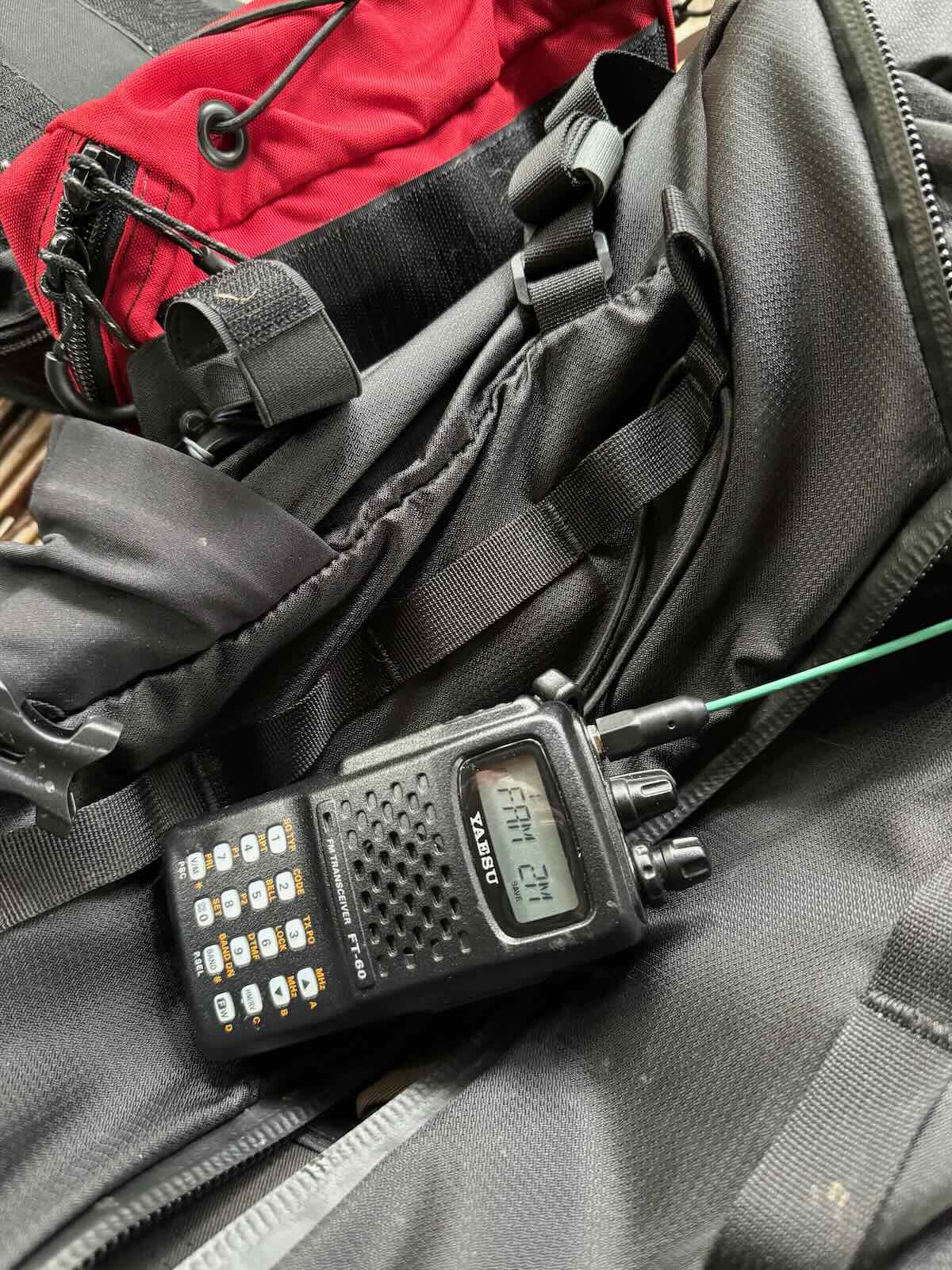
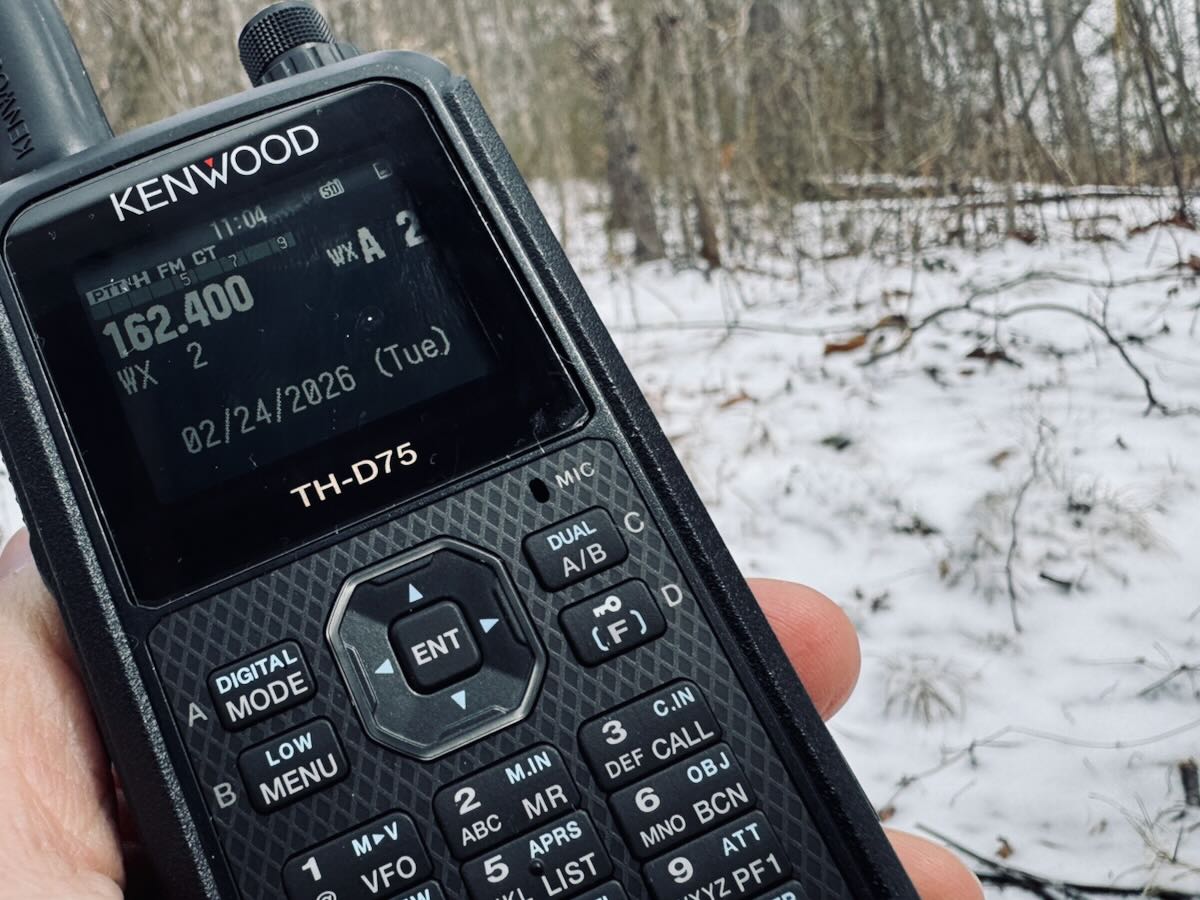
As we worked helping neighbors in our remote community in the aftermath of Hurricane Helene, we programmed NOAA Weather Radio on our handheld radios for reference.

I think this is a terrible idea—and I say that recognizing there are real costs involved in maintaining a nationwide radio network.

Relying only on online services for weather and alerting across a country as vast (and as frequently remote) as Canada feels short-sighted.

When a natural disaster hits (and it will) that’s exactly when internet access, cellular service, and even power can fail–and the “cost-benefit analysis” stops being theoretical.

Many of you know, I was personally in the path of Hurricane Helene in North Carolina, and my community was without power and without reliable mobile data for three weeks. During that time, we relied heavily on NOAA Weather Radio to keep receiving forecasts and updates. That experience really drove home something many of us in the radio community already understand: sometimes you invest in systems not because they’re used every day, but because they can be life-saving when everything else breaks.

In my opinion, removing a resilient, one-to-many broadcast alerting resource like Weatheradio is poor management of taxpayer funds–not because it’s cheap, but because the value shows up when you need it most.

Canadians: Take Action Now

Here are two official channels I could find to ask for the Weatheradio shutdown decision to be reversed:

1) Contact your Member of Parliament (MP)

2) Contact the Minister responsible

The Weatheradio decision falls under Environment and Climate Change Canada (ECCC). Readers can also write directly to the Minister of Environment, Climate Change and Nature: The Honourable Julie Aviva Dabrusin.

Please comment if you have other suggestions about how to take action. 
NOAA Weather Radio Review: three excellent choices under $90

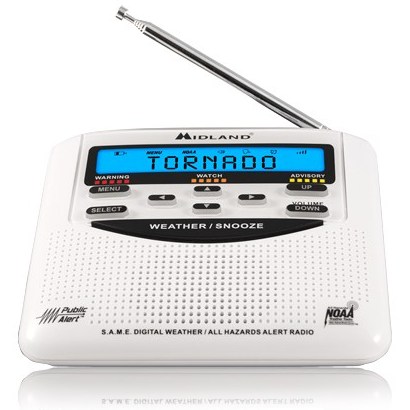
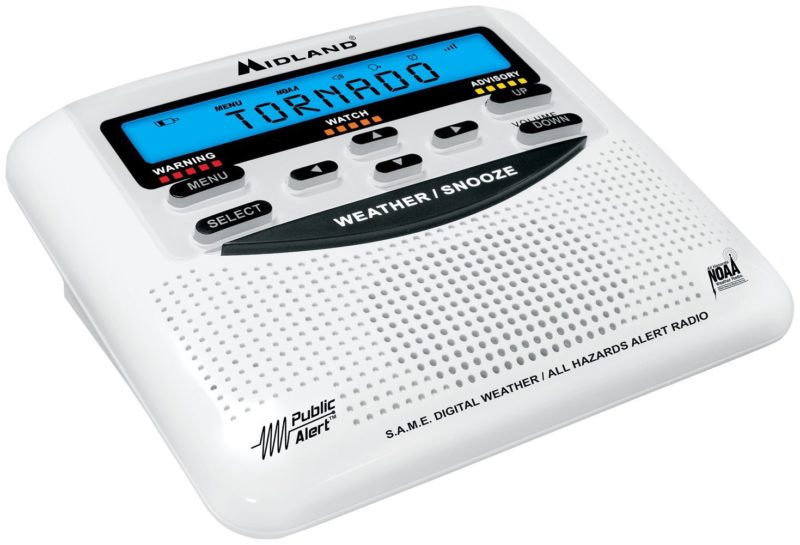
The Midland WR120 weather radio.

Many thanks to SWLing Post reader, Jim T, who writes with the following inquiry:

Wondering if you can give me some guidance re: NOAA weather radios.

We’re looking to be better prepared for disasters, bad weather etc. and have narrowed our radio candidates to CC Crane, Sangean and Kaito.

AM/FM would be nice, hand cranking and solar as well, but just want to get NOAA alerts should we have an earthquake here in the NW. Willing to spend $50-100 for something quality with relevant features to it. Your thoughts would be appreciated!

Thanks for your message, Jim. There are dozens of inexpensive weather radio models on the market, but I know a few good options based on my personal experience.

Note that all of these radios work in both the US (via NOAA) and Canada (via Environment Canada)–both countries have been using the S.A.M.E. (Specific Area Message Encoding) weather alert system since 2004.

The Midland WR120: A dedicated weather radio

If you’re looking for a weather radio to plug in and continuously monitor weather alerts through the S.A.M.E. system, I recommend a dedicated weather radio like theMidland WR120. These radios don’t typically have AM/FM functions, but are entirely devoted to the seven weather radio frequencies in the US and Canada (162.400, 162.425, 162.450, 162.475, 162.500, 162.525, and 162.550 MHz). They plug into mains power and the better ones have battery backup in case of power outages.

I have family that own the Midland WR120. They’ve used it for years and it’s worked flawlessly. Once you set up the radio with your preferred NOAA frequency and SAME alert regions, it will alarm and automatically play NOAA weather radio alerts when they’re issued for your area.  My family use this for tornado and storm alerts.

The Midland WR120 uses three AA alkaline cells for emergency power back-up. It’s very much a “set it and forget it” radio and, in my opinion, a bargain at $29.99.

As with any SAME alert radio, be aware that sometimes the alarm can be annoying. Depending on where you live and how the alert system is set up, you might get notifications for isolated weather events on the other side of your county–the S.A.M.E. system cannot pinpoint your neighborhood.

Still, I believe S.A.M.E. notifications are worth any extra inconvenience, especially if you live in an area prone to sudden storms and earthquakes.

Purchase options:

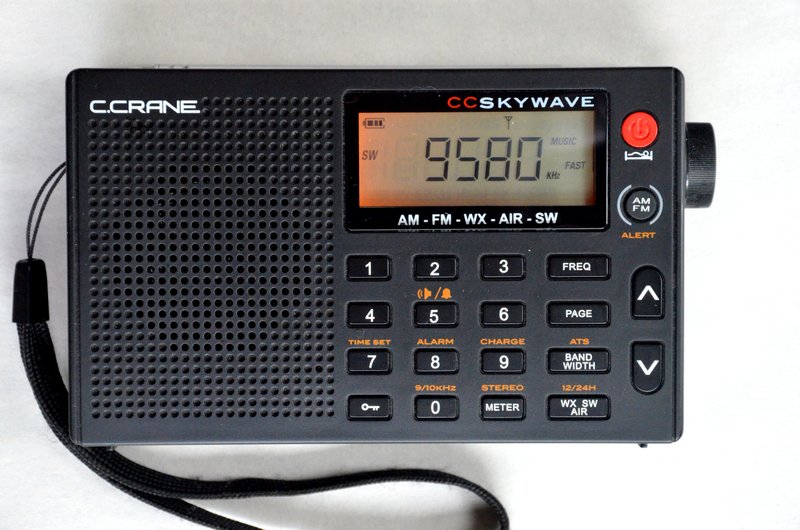
C. Crane CC Skywave: A portable shortwave radio with excellent NOAA weather reception

The C.Crane CC Skywave

If you’re looking for a battery powered radio to use during emergencies that has much more than NOAA weather radio, I’d recommend the C.Crane CC Skywave. Not only is it a full-fledged AM/FM/Shortwave and Air band radio, but it has exceptional NOAA weather radio reception with a weather alert function. The CC Skywave is a great radio to take on travels or keep in the home in case of an emergency. It’ll operate for ages on a set of two AA batteries, though I always keep a pack of four on standby just in case.

You can read a thorough review of the CC Skywave by clicking here. Note that C. Crane is also taking orders for their new CC Skywave SSB which is an upgraded version of the original CC Skywave and includes SSB mode, but costs $80 more than the original.

Purchase options:

C. Crane CC Solar Observer: A self-powered AM/FM NOAA weather radio

There are a number of self-powered NOAA weather radios out there, but frankly, many are very cheap and the mechanical action of the hand crank are prone to fail early.

I believe one of the best is the CC Solar Observer by C. Crane. It’s durable, and can also run on three AA cells, and is an overall great radio in terms of sensitivity on AM/FM as well. Unique in the world of self-powered radios, it also has a backlit display (which can be turned off or on)–a fantastic feature if the power is out.

Like other self-powered analog radios, the CC Solar Observer has no S.A.M.E. alert functionality.

Purchase options:

One more option: Eton self-powered weather radios

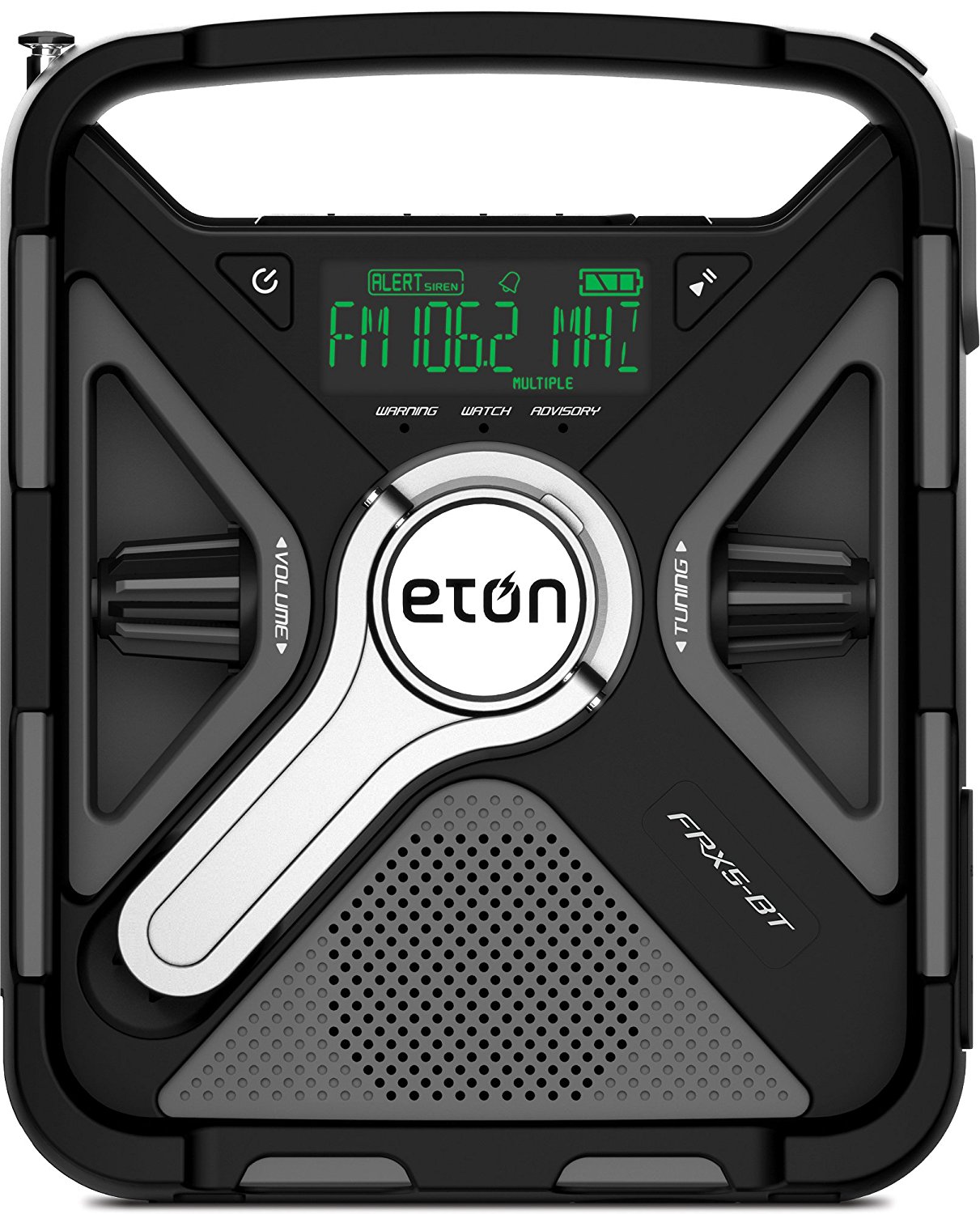
The Eton FRX5 sport weather alert, a digital display and futuristic design.

I would also encourage you to check out the wide selection of self-powered weather radios through Eton Corporation.

Many are digital and even have S.A.M.E. weather alerts. I haven’t commented on performance since I haven’t personally tested the 2016 and later models.

Eton typically packs a lot of features in their self-powered radios–having manufactured them for well over a decade, they’ve implemented iterative improvements along the way.

I have tested previous models extensively.

I particularly like the Eton FRX5 although being a digital radio, you get less play time per hand-powered crank–that’s why I prefer analog self-powered radios. The CC Solar Observer, for example, will yield roughly 40 minutes of listening time (at moderate volume levels) on 2-4 minutes of cranking.

Still, if charged fully in advance, I’m sure the FRX5 will play for hours. Note that using S.A.M.E. functionality in standby mode will deplete batteries more quickly.

Click here to view Eton’s full Red Cross radio line on the Eton Corporation website.

Any other recommendations?

Post readers, if I’ve omitted a worthy receiver, please comment with your recommendation.

I hope this helps with your decision, Jim! Thanks for the question!