Tag Archives: Paul Walker

Radio Nacional da Amazônia Announces Temporary Shortwave Schedule Changes

Many thanks to SWLing Post contributor, Paul Walker, who shares the following:

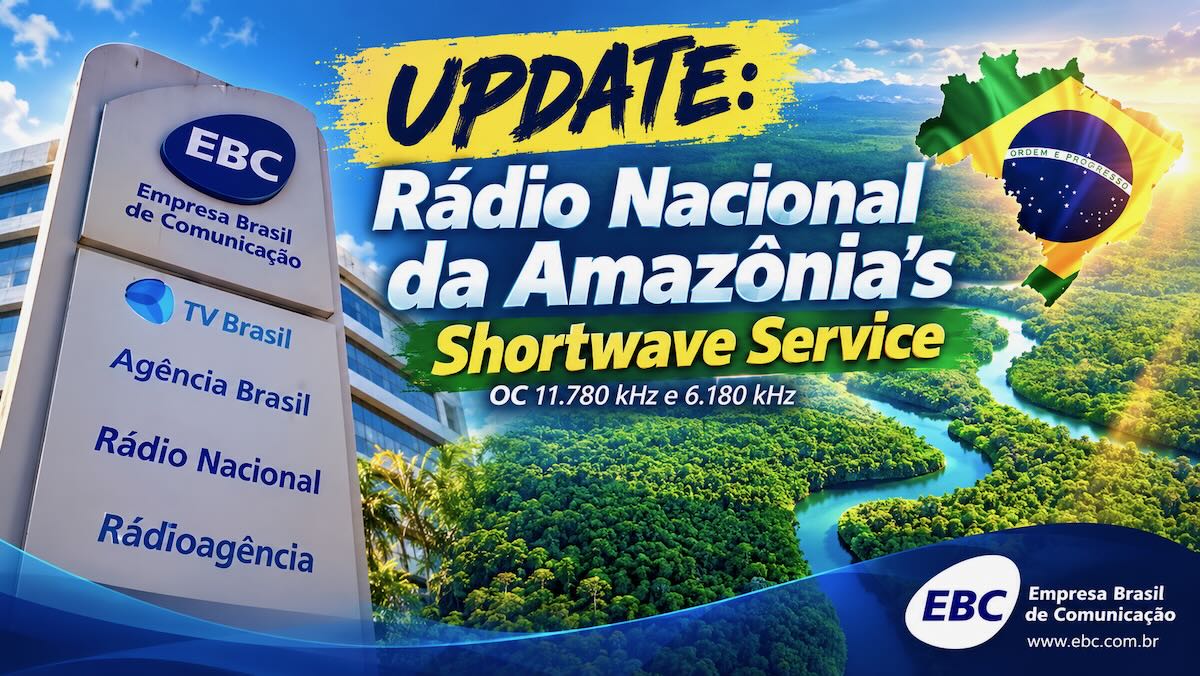
The shortwave transmitter site NW of Brasilia, operated by the national public broadcaster Empresa Brasil de Comunicacao for the Radio Nacional de Amazonia service, has had to make a change to its SW operating schedule.

EBC’s Radio Engineering Manager Manoel Caetano tells me, “Due to technical problems and energy costs, the Radio Nacional de Amazonias service will have reduced operating hours through at least the end of the year”

11780kHz will operate weekdays from 0745UTC to 2000UTC and 6180kHz will operate weekdays from 2000 to 0300UTC.

On weekends, 11780kHz will operate from 0900UTC to 1800UTC, while the 6180kHz frequency will remain off-air.

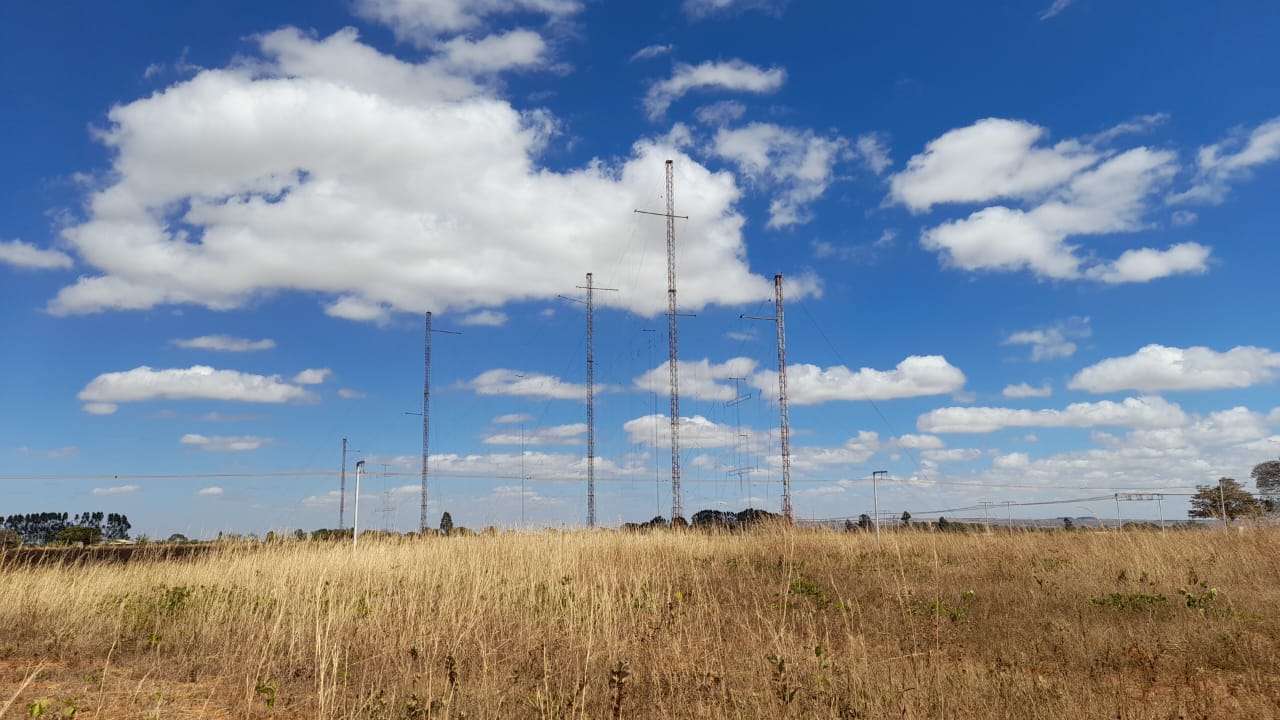
Problems And Temporary Changes At The Shortwave Transmitter Park Near Brasilia

The 11780khz antenna beaming at 312 degrees

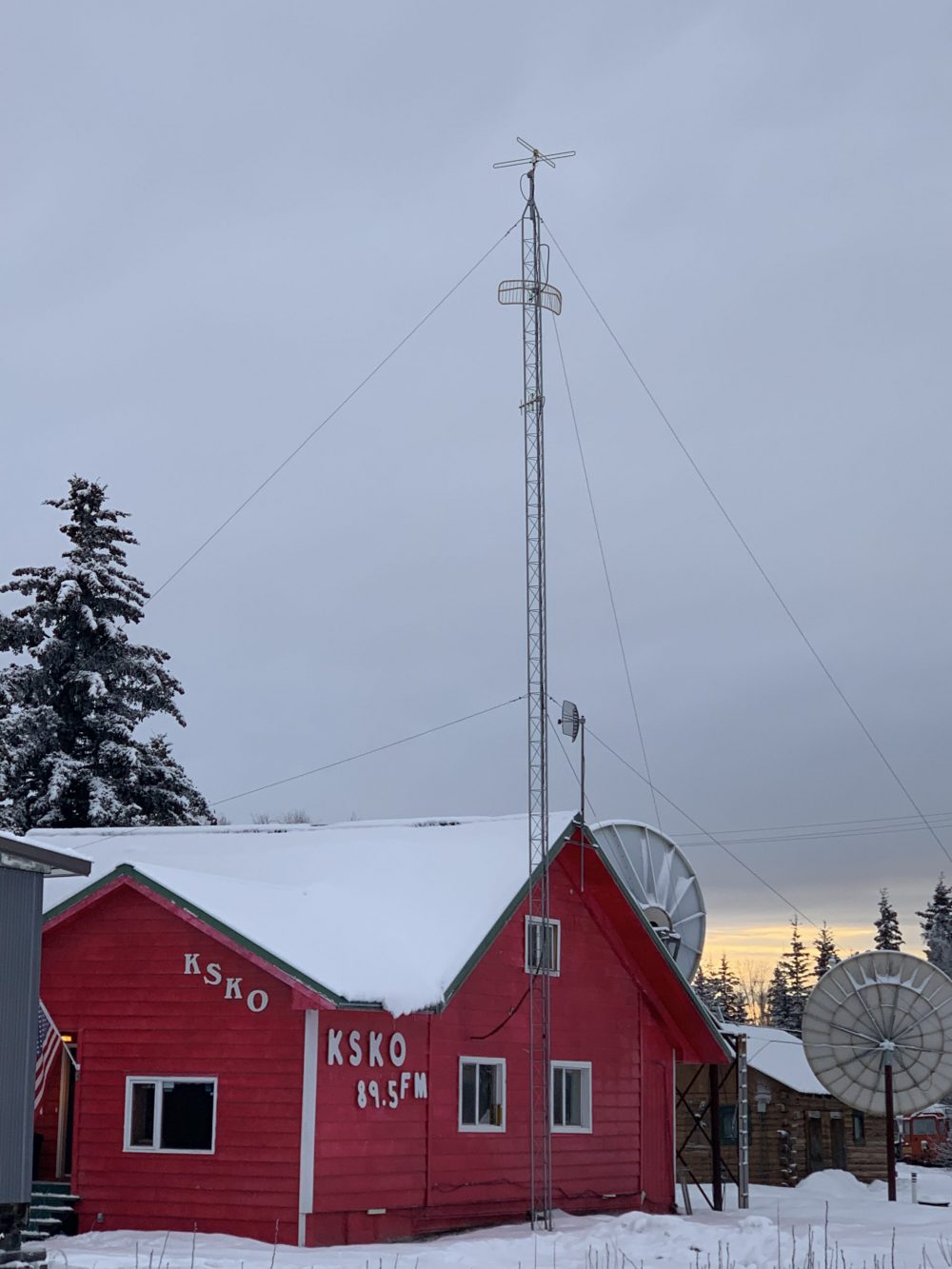
(compiled, posted and edited by Paul Walker, KSKO-FM McGrath Alaska Program Director and Avid SWL’er)

UPDATE: On November 13th, I was told that 11780khz is operating with 50,000 watts transmitter power output instead of it’s usual 100,000 Watts. It was also shared with me that new tubes are in the process of being ordered and they hope to be back to normal about in about a week from the date of this update.  This story was originally published November 9th.

Over the last few years, many of us who enjoy listening to Radio Nacional da Amazônia have noticed the 11780 kHz signal coming and going. It’s had several breakdowns, mostly because the transmitter is about 50 years old now. They’ve been running it at 100 kW instead of the full 250 kW, but even then, it’s been showing its age.

The weekend of November 8th, 11780 kHz was off again. But this time, 6180 kHz was sounding unusually good up here in Alaska — stronger and clearer than I’ve heard it in a while. That one usually beams at 239 degrees toward South America, so it really caught my attention.

Curious about what was going on, I reached out to Manoel Caetano, Radio Engineering Manager at Empresa Brasil de Comunicação, which runs Radio Nacional. Here’s what he told me:

“We had a problem with the logic unit of the 11780 transmitter, but that’s been resolved. However, we’re still having issues with the 4CX5000 tubes, so 11780 is running at reduced power until we get replacements. Also, 6180 kHz has been switched to the 11780 kHz 312° antenna because of the COP30 event taking place in Belém, Brazil.”

Always interesting to get a peek behind the curtain like that. It’s good to know the folks at EBC are keeping these classic shortwave services going, even if it means juggling transmitters and antennas from time to time. Thank you to Manoel for answering my questions and providing the picture.

“KSKO’s One Man, Full-Time Operation Connects Interior Alaska”

Check out this excellent article about our SWLing Post community member and avid DXer, Paul Walker:

KSKO’s One Man, Full-Time Operation Connects Interior Alaska (Alliance of Rural Public Media)

Paul Walker, the self-professed “Alaska Radio Nerd” is the sole full-time employee of a station that provides news, music, and emergency services across a wide swath of central Alaska.

When Paul Walker flips his phone camera around to give a virtual tour of KSKO and its compact studio in McGrath, Alaska, the screen fills with a maze of wires, weathered equipment, and the unmistakable charm of a place well-loved. “This is our rack of equipment,” Walker says with a mix of pride and humor. “It’s a result of managers like me knowing enough to get something done — we add on rather than take away.” As the station’s program director and only full-time employee, Walker navigates this labyrinth daily, ensuring that the voices and needs of interior Alaska’s remote communities are broadcast across the airwaves.

KSKO isn’t just any radio station. Alongside the McGrath studio, a collection of seven repeater stations and two partner stations broadcast widely — across stretches up to 150 miles in some directions, reaching villages across the center of Alaska where the population sometimes doesn’t even hit triple digits. Walker estimates that they serve around 1,200 people, so in a land where the internet is spotty and cell service is a luxury, radio remains a vital lifeline. “The cornerstone of KSKO’s local programming is weather forecasting and what we call ‘messages,’” Walker explains. These messages act as a community bulletin board, sharing everything from emergency alerts to mother moose sightings in town. [Continue reading…]

Video: Danilo Nonato’s Tour of Rádio Nacional

Many thanks to SWLing Post contributor, Paul Walker, who shares the following video via Danilo Nonato. Please note that this video is in Portuguese. If needed, simply turn on Closed Captioning and have YouTube auto-translate the video into your language of choice. Enjoy:

Click here to view on YouTube.

Why I DX?

…… or as all the locals call it, “Talking to the aliens at the International Space Station.” You might ask yourself, what in the world? Well, I live in a very small, remote bush Alaska village, and my DXing is done outside, yes… even in winter. I’ve been here 3 1/2 years now, and when I first got here, 2 or 3 people seriously thought I was trying to talk to aliens.

I’m kinda “late” to the DXing game… starting seriously in 2014 when I was 30 years old but dabbling in it as young as 5th grade when I thought it was SO COOL I could hear WOWO 1190 Fort Wayne, Indiana, and KDKA 1020 Pittsburgh, Pennsylvania, in central Connecticut clear as a bell at night.

In like 6th grade, my uncle gave me a beautiful tabletop Firestone radio and hooked up a long wire about 100 feet long from my bedroom window to a tree in my yard… wow, WLW 700 Cincinnati every night in Connecticut, I was hooked!

When I discovered how radio waves traveled great distances and at the same time, listening to a really fun oldies station, Big D 103… I was like “This is for me,” and started my quest and desire to work in radio… something about speaking into a radio and being heard 10-20-30-40-50 miles away fascinated me to the umpteenth degree.

That was really before the internet, but I’m 40 now and have been working in radio for 20 years, still DXing mostly every day. Most of my money is spent on food and DXing accouterments.

I’ve had people ask me, especially those who in the small Alaskan village I’m in, “Why, especially in cold weather do you do this?”

I tell them a couple things… I moved up here in part for the hobby, so I’m going to take every advantage I can. There’s too much electrical noise for me to do it from home.

Sitting out here at the park is my “Happy place,” especially after a particularly trying day at work for any number of reasons; this is my place to escape and decompress while being by myself… peace and quiet.

Plus, it’s the magic of how these radio waves travel that got me interested in working in radio. I’ve never lost that childhood magic and wonderment of radio waves and how things work, even though I’m 40. I’m really 40 going on 12 anyways.

I like how when I know when and where to listen, I can hear some amazing things up here in Alaska that many people wouldn’t expect I’d hear at all or as well. There’s something to sitting at the park, especially on a nice summer afternoon, and getting a solid S9+60 or better signal on Radio Nacional de Amazonias 11780 kHz from 12,400 km, opening my radio’s audio filter to 8 kHz bandwidth, and listening to a football match, sounding like I’m right in the stadium or tuned to their music/listener interactive show “Eu de Cá, Você de Lá” hosted by Mauricio Rabelo and sound like I’m tuned in on a 50,000 Watt AM from 50 miles away.

And no, I don’t understand 99.5% of Portuguese, and I only know a few basic words I can speak. I’m way way outside of their target area, but RNA from Brazil being anywhere from “listenable” to “Banging in like a ton of lead bricks” is very common because I’m in just the right place for it.

And I do it all without the internet. Well, OK… I do use the schedule from www.eibispace.de.

All of that combines to fascinate me. And yes, remember… I know how it all works, and I still do a lot of internet streaming, but radio waves continue to fascinate me because it takes some twisting of knobs and fiddling with the antenna to get it just right.

And the fact that it just works and travels through the air is amazing to me.

I live in McGrath, Alaska, which is a community of 275 people that is 355 km NW of Anchorage, completely off the radio system. I manage the daily operations of KSKO Public Radio, an NPR member station, with 8 FM transmitters spread across several hundred miles of Alaska. You can also catch me every Friday on Spaceline Bulgaria’s 5900 kHz transmitter across Europe 2100-2200 UTC with a live relay of my very local KSKO Lunchtime show.

I moved up here for the job, but also knowing that from past experiences living 125 miles north of here 7 years ago, that DX would be amazing. And it’s far exceeded my expectations along with the knowledge and expectations of some of my broadcast engineer friends and station owner friends!