Shortwave listening and everything radio including reviews, broadcasting, ham radio, field operation, DXing, maker kits, travel, emergency gear, events, and more
Many thanks to SWLing Post contributor, Tim Brockett, who writes:
Good Morning Thomas.
I enjoy receiving your daily posts. They are informative, helpful and sometimes enlightening.
I wanted to alert you to a change in frequency for Ballsmacker Radio.
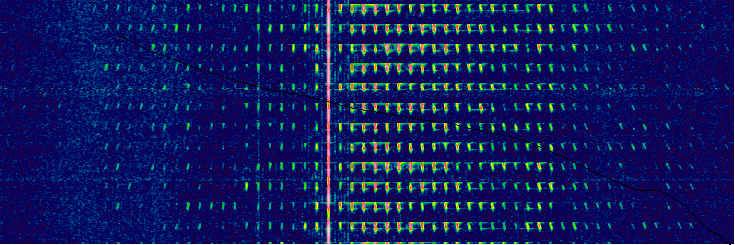
I tuned into them on Friday, March 26 at 6960 kHz. They came in well at Willow Beach, Arizona which is just south of Las Vegas, Nevada. The broadcast started at 01:00 UTC and ended at 02:25 UTC.
Ballsmacker is a pirate station that airs from “somewhere in the northeast” in the USA. He uses just 200 watts but has a great frequency and time. I have routinely picked him up in Willow Beach.
He welcomes reception reports and sends out eQSLs that appear to be different for each week. He broadcasts once a week at 01:00 UTC. You can also stream past shows from his website. The theme of last night’s show was “luck”. Each song had something to do with chance or luck. Most of the show is popular music from the 20th century. The music is interspersed with station IDs, email and website addresses.
Thanks so much, Tim! You’re right: Ballsmacker Radio puts out a great signal and certainly offers up proper music variety! Thanks again for sharing your tip!
Many thanks to SWLing Post contributor, Mark, who writes:
Thomas,
The morning (EST) edition of BBC Newshour on Wednesday presented a five-minute report on the jamming of Russian shortwave mystery station UVB-76 (The Buzzer) with music and digital imagery.
Newshour – Uncertainty over Russian ‘de-escalation’ near Ukraine – BBC Sounds
Thank you for the tip, Mark. Impressive that this bit of shortwave news would be included in a Newshour report. They did a fantastic job including some audio clips from the Conet Project and authentic UVB-76 audio.
Radio Waves: Stories Making Waves in the World of Radio
Because I keep my ear to the waves, as well as receive many tips from others who do the same, I find myself privy to radio-related stories that might interest SWLing Post readers. To that end: Welcome to the SWLing Post’sRadio Waves, a collection of links to interesting stories making waves in the world of radio. Enjoy!
Many thanks to SWLing Post contributors Paul, Dave Zantow, Mark Fahey, Jerome van der Linden, and Phil Brennan for the following tips:
It was 1979 and Jian Guo was stationed at a military camp in Yunnan, a province in south-western China bordering Vietnam, when he listened to Radio Australia for the first time.
The then-17-year-old was patrolling the base one night when he saw a group of fellow People’s Liberation Army (PLA) soldiers tuning radio equipment on the back of a truck.
He initially thought they were intercepting enemy signals, but, as he got closer, he realised they were listening to a radio broadcast.
It was the ABC’s international broadcasting service, which was considered an “enemy channel” at the time.
“The so-called ‘enemy channels’ included almost every station outside mainland China,” Guo told the ABC.
“The biggest ones were the VOA [Voice of America] from the US, Voice of Free China from Taiwan, and Radio Australia.”
Guo had joined the PLA in 1979 during the peak of the Sino-Vietnamese War but, thanks to his talent in the arts, he was chosen to be a secretary of his company, so he could avoid fighting on the battlefield.
Apart from painting propaganda materials, he also looked after weapons and communication equipment like the radios, which was an extraordinary privilege.
He was not supposed to use the equipment he maintained, and was fearful of breaking the rules, but after seeing his comrades listening to the Australian broadcast the curiosity grew inside him.
One night, alone in his room, he turned on a radio.
It took a while for him to find the right frequency, because of the interference put out by China, but then suddenly he was listening to Radio Australia and the song that would change his life.
“It was broadcasting The Moon Represents My Heart by Teresa Teng,” Guo said.
“That was the first time I knew such music existed in the world.” [Continue reading…]
Kia ora koutou k?toa. Thank you to RNZ and National Library for organising this celebration of the start of radio in New Zealand, 100 years ago tonight.
Tonight is something of a game of two halves: first I will talk about the first broadcast of voice and music by radio and the start of radio broadcasting in this country – and then I’m also going speak about a research project I am working on, radio recordings made of New Zealand’s forces overseas during World War II.
I have always been a huge fan of radio, ever since childhood listening to the Weekend children’s request sessions, and then as a teenager, eating my breakfast with Morning Report coming out of the family transistor beside me. As a radio journalist I became one of those voices and worked for RNZ and Deutsche Welle in Germany, where I experienced the power of voices coming out of the air from the other side of the world. And as a sound archivist working with the Radio New Zealand archives, I learnt that that power of the voice doesn’t diminish with time – listening to a voice from 80 years ago can transport you not just through space but also time. Sound to me, has a power that in many ways seems different to that of visual images. Continue reading →
Many thanks to SWLing Post contributor, Edward, who shares the following announcement:
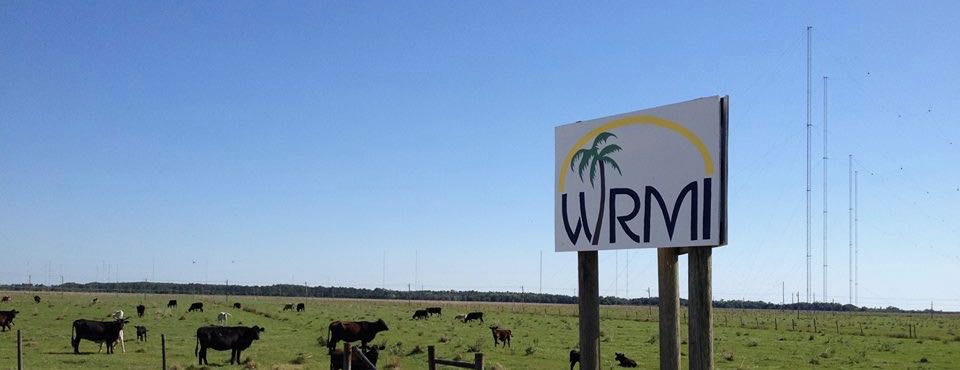
WRMI to air second series of European free radio and low-power licensed stations
WRMI will air a second series of Texas Radio Shortwave programs featuring European free-radio and low-power licensed stations during September, October, and November.
The one-hour programs will be broadcast every Friday at 9 p.m. ET (Saturday at 0100 UTC) by WRMI, Okeechobee, Florida, on Texas Radio Shortwave’s “regular” frequency of 5950 kHz.
Dates and featured stations in Series 2 are as follows:
September 4-5 = Radio Clash (Somewhere in Europe)
September 11-12 = Radio Merlin (UK) *
September 18-19 = Crusin’ Radio (UK)
September 25-26 = CoolAM Radio (The Netherlands) *
October 2-3 = Radio Monique International (The Netherlands) *
October 9-10 = Radio Blackstone International (The Netherlands)
October 16-17 = Charleston International Radio (Germany) *
October 23-24 = KR1 (The Netherlands)
October 30-31 = To Be Announced
November 6-7 = To Be Announced
November 13-14 = To Be Announced
November 20-21 = To Be Announced
November 27-28 = To Be Announced.
*Series 1 station invited to produce a program for Series 2.
eQSLs will be available from individual stations. TRSW will not issue verifications for these programs.
These popular stations are heard regularly in Europe but seldom in North America because of propagation conditions.
Many thanks to SWLing Post contributor, Bill Hemphill, who writes:
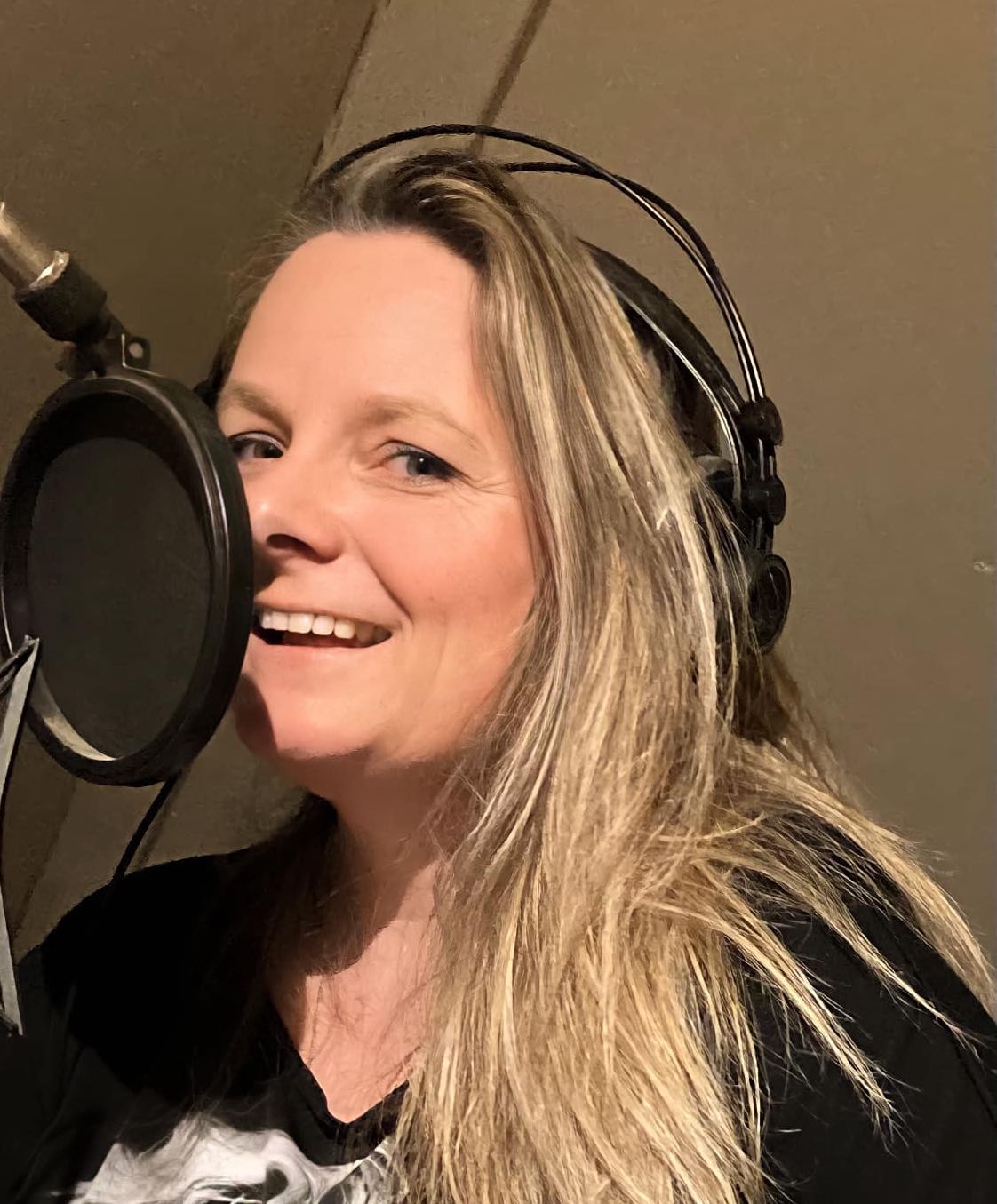
I ran across a reference to Radio Delta International Shortwave, a Hollands station on 6020 kHz. The reference was to a song that was recorded for them by Silvia Swart en het Radio Delta lied. Which (according to Google) translates to The Radio Delta Song. It’s on YouTube and I like the sound of it even thought I don’t know Dutch.
I learned that his store carries Pirate Music as well as the usual Dutch and other stuff a record store would normally carry. Now I understand her interest in radio.
One last song I found that she recorded with her group, The Greenlights:
Mijn opa is een zendpiraat
Which translate to: My grandfather is a radio pirate
Maybe one of the forum members can give us a quick translation/summary of the songs.
73
Bill Hemphill
WD9EQD
Thank you for sharing this, Bill! Any fans of Silvia Swart out there? Please comment!
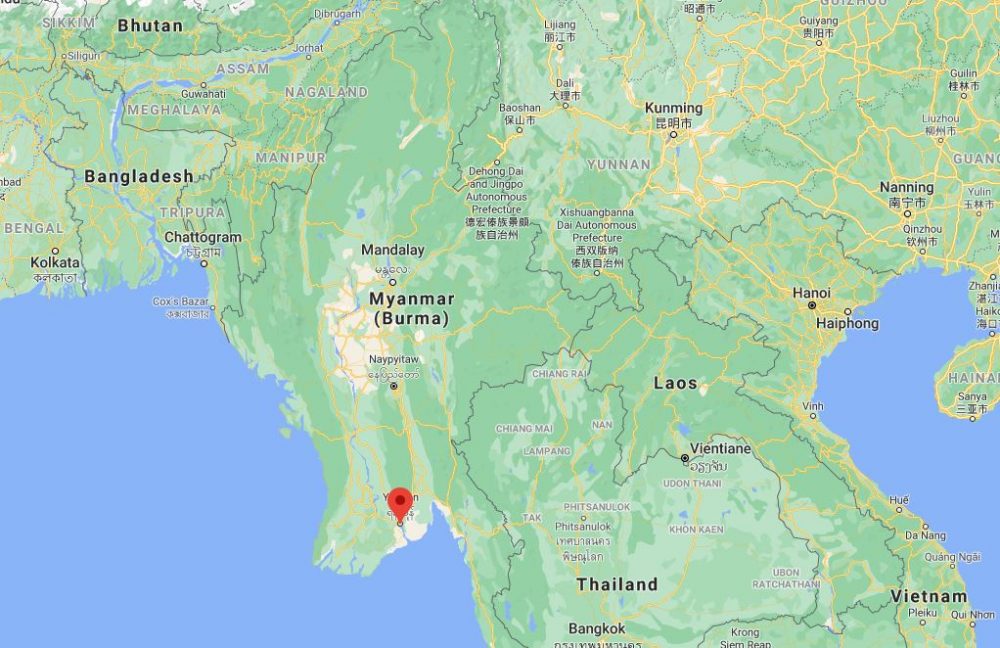
In a safehouse in Yangon last Thursday morning, a small group of 20-somethings gathered to assemble a portable radio transmitter. For several hours, they broadcast translations of international news into Burmese—tributes to protesters killed by the armed forces, revolutionary songs and poems, and interviews with the leaders of Myanmar’s civil disobedience movement that has sprung up to oppose the military junta that seized power in February.
Then, they dismantled the equipment, each person taking a different piece by a different route to another safe location where they store it. Security is tight. They never broadcast from the same place twice, and the group use aliases, even among themselves. This is Federal FM Radio, live on 90.2 MHz.
Its name betrays its politics. Support for a federal Myanmar, one which rejects the state’s majoritarian Bamar identity and strives for true ethnic unity, has surged in the months since the coup. It is a message that does not sit well with the military government, which has responded with violent repression and internet blackouts. But young dissidents like these refuse to be silenced and have turned to old technologies to spread the word.
“This radio was born out of Myanmar’s Spring Revolution,” said one of its founders, who goes by “Mulan.” “This is revolution radio.”
The junta has imposed nightly internet blackouts to disrupt the protest movement, preventing people from organizing and communicating with the outside world. Social media platforms have been blocked, although many people continued to access them through virtual private networks.
However, on April 2, the mobile internet in Myanmar was completely switched off. Fixed-line connections are rare, and the move left millions of people unable to access news or to communicate with one another. In the vacuum, State media has broadcast propaganda that underplays the scale of the crisis, portrays protesters as “terrorists” and foreign agents, and blames the civil disobedience movement for recent violence on the streets.
“Our people need to get information, real information, because the military spread out fake news on their own media,” Mulan said. She and her colleagues were able to source radio equipment from a friend of the movement — they won’t say precisely who, for obvious reasons. The team is entirely made up of young, digital natives, and most of them were working for civil society organizations before the coup. None of them knew how to operate the gear, but they found technicians willing to train them. “So now, we are learning, like, a radio crash course,” Mulan said.[…]
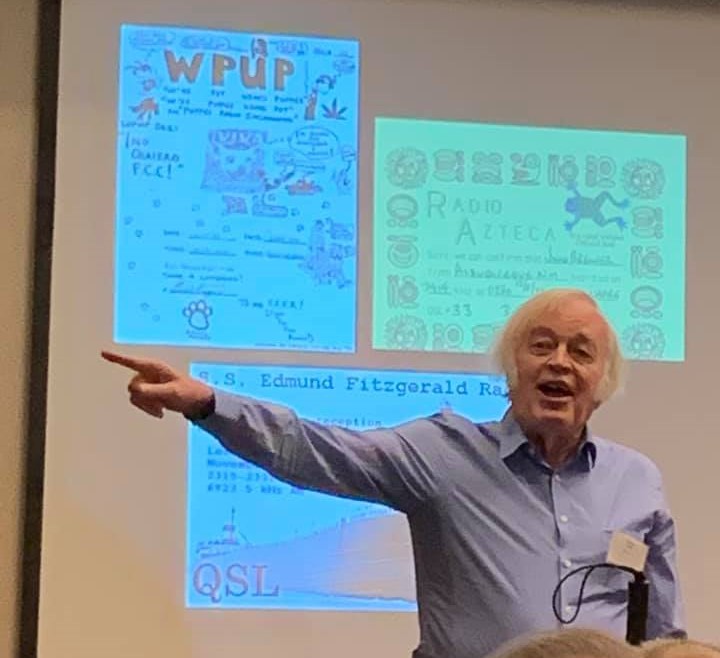
George Zeller at the Winter SWL Fest Pirate Radio forum (Photo by Paul Kaltenbach)
Many of us who were friends with George Zeller or who regularly attend the Winter SWL Fest are devastated to learn that this well-loved SWL personality passed away after an unintentional electrical fire in his Cleveland home on Saturday March 20, 2021.
Richard D’Angelo with NASWA posted this message about George:
I was shocked and saddened to learn of George Zeller’s sudden passing earlier today (March 20) in a house fire this morning. I had exchanged emails with George earlier this week on NASWA editorial matters as he was slowly recovering from his recent Covid-19 vaccination. The news article in the online Cleveland Comeback mentioned overcrowded electrical outlets/extension cords as the cause of the accidental fire. George was 71 years old.
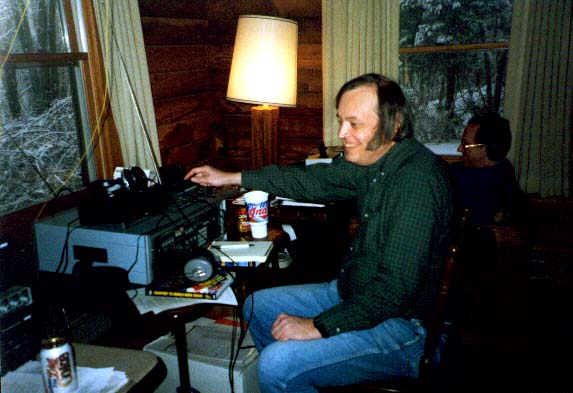
George and I knew each other for about 40 years. George came to several DXpeditions at Gifford Pinchot and French Creek State Parks. We attended many of the same radio hobby gatherings over the years. For several years, I traveled to Cleveland for work; George and I would go out to dinner on those occasions. Naturally, any time my company was mentioned in the local newspaper George would eagerly forward that information to me. George also traveled to the Winter SWL Festival in Plymouth Meeting, Pennsylvania each year to gather with like minded radio people. He attended other radio conventions too over the year’s throughout the country.
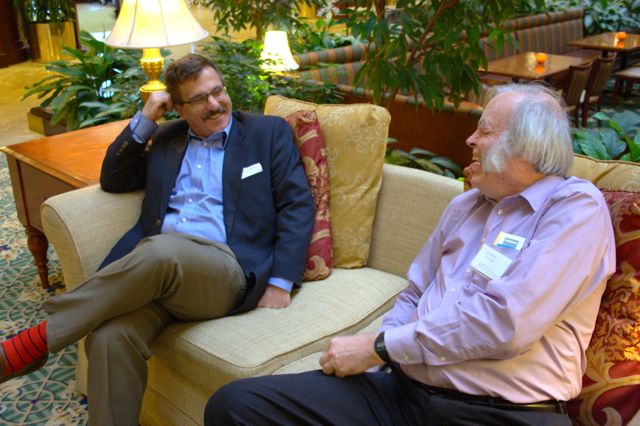
George at a Gifford Pinchot State Park DXpedition
George was well known in the greater Cleveland area as an Economist who kept close tabs on the Ohio economy. The Economic Indicators project he worked on provided continually updated information on poverty, earnings, and the economy in all Ohio counties and communities, with related demographics. In Ohio, Economic Indicators data include annual income trends for all 612 Ohio school districts. Detailed data was also available for job growth and payroll earnings in all Ohio counties going back to 1979, including measures of the very large job losses suffered by Cleveland and Ohio during the 2000s recession that has lingered longer in Ohio than it did elsewhere in the United States. Over the year’s he mixed with local political figures and served as a volunteer in a number of community organizations serving the greater Cleveland area. He was a regular on several talk radio programs when Ohio’s economy was the lead topic.
George was an active baseball and football fan. He attended baseball games wherever he could. He spent time traveling to difference cities attending games in many major league and minor league baseball stadiums. I recall making such a trip to Camden Yards in Baltimore with several others to catch an Orioles-Yankees baseball game when my children were youngsters. He was an enthusiastic Cleveland Indians and Cleveland Browns fan going back to the glory days of the 1950’s. He never forgave the Indians for trading away Rocky Colavito.
For twenty years George wrote a column about unlicensed pirate and clandestine shortwave radio broadcasting news in Monitoring Times magazine. He was also a contributing editor to Passport to World Band Radio, the definitive guide to international shortwave broadcasting frequencies, schedules, and receiving equipment. For decades he wrote a column on Clandestine radio broadcasting in the monthly issues of The ACE from the Association of Clandestine Radio Enthusiasts. Annually, he hosted the Pirate Radio Forum at the Winter SWL Festival in Plymouth Meeting, Pennsylvania as well as being the host of the prize raffle at the Saturday night banquet. In recent years, George was the editor of the Pirate Radio Report column for the North American Shortwave Association. He joined NASWA in December 1965 as a lad of sixteen.
Left to right: Rich D’Angelo and George Zeller at the Winter SWL Fest
George was always fun to be with and a real character to boot. No matter what the topic of the conversation was, he had a story that may or may not have been pertinent. There was never a dull moment when he was part of the group. George Zeller will be missed by all of us.
Thank you for sharing, Rich.
In the news article about the house fire, his neighbor described George as always kind and somewhat reclusive. With his radio community, he was everything but reclusive.
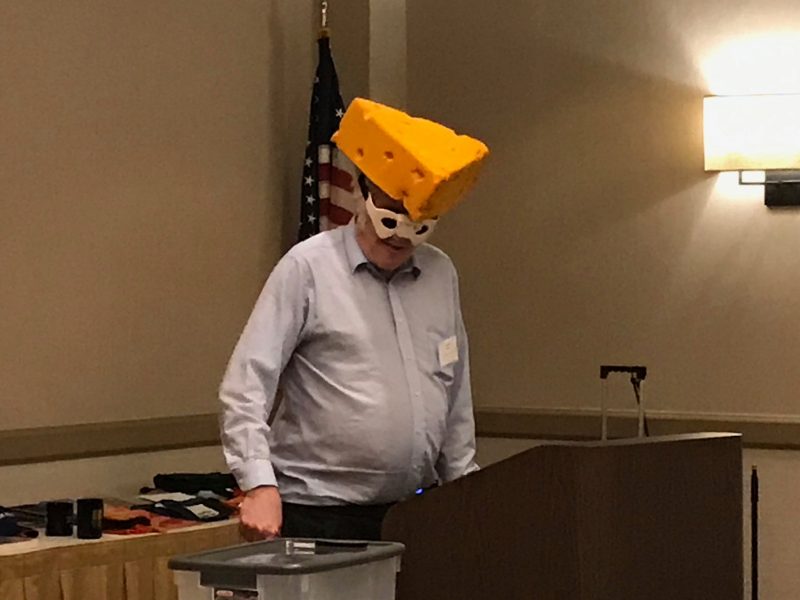
George wearing his ceremonial cheese hat and goggles at a Winter SWL Fest banquet. (Photo by Larry Willl)
George had a huge personality, amazing sense of humor, and perhaps what I admired about him most was his ability to poke fun of himself. A quality I hold in high regard.

 Many thanks to SWLing Post contributor, Tim Brockett, who writes: