Tag Archives: Shortwave Radio

Mexico on Shortwave – Then and Now

by Dan Greenall

Back in the early 1970’s, a wide variety of Mexican stations could be heard on shortwave as evidenced by the loggings columns in the SPEEDX club’s monthly bulletins. Examples from this time period can be found here:

https://www.worldradiohistory.com/Speedx.htm

As well, the late Dr. Richard E. Wood wrote about what was available to be heard from Mexico in the 1971 Communications Handbook on page 18. You can read this here:

A brief recording of La RH, Radio Tricolor (in Spanish) on 11880 kHz from Mexico City can be found here:

The official international broadcaster, Radio Mexico, was known to issue colorful station pennants like the one pictured. Click here to listen to their ID’s in Spanish (though they did use some English) by a female and male announcer, likely on 21705 kHz (one of the many frequencies they used).

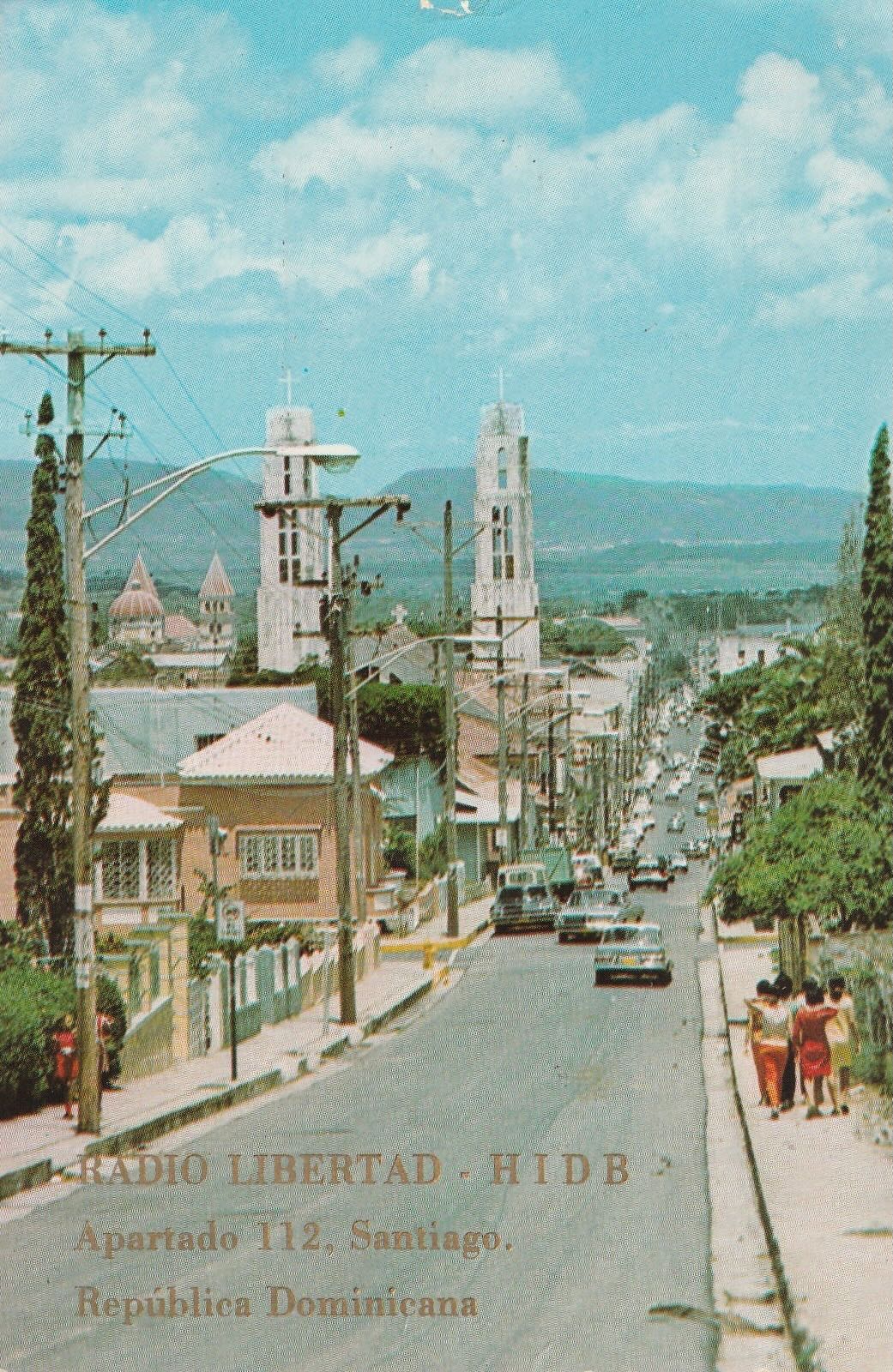
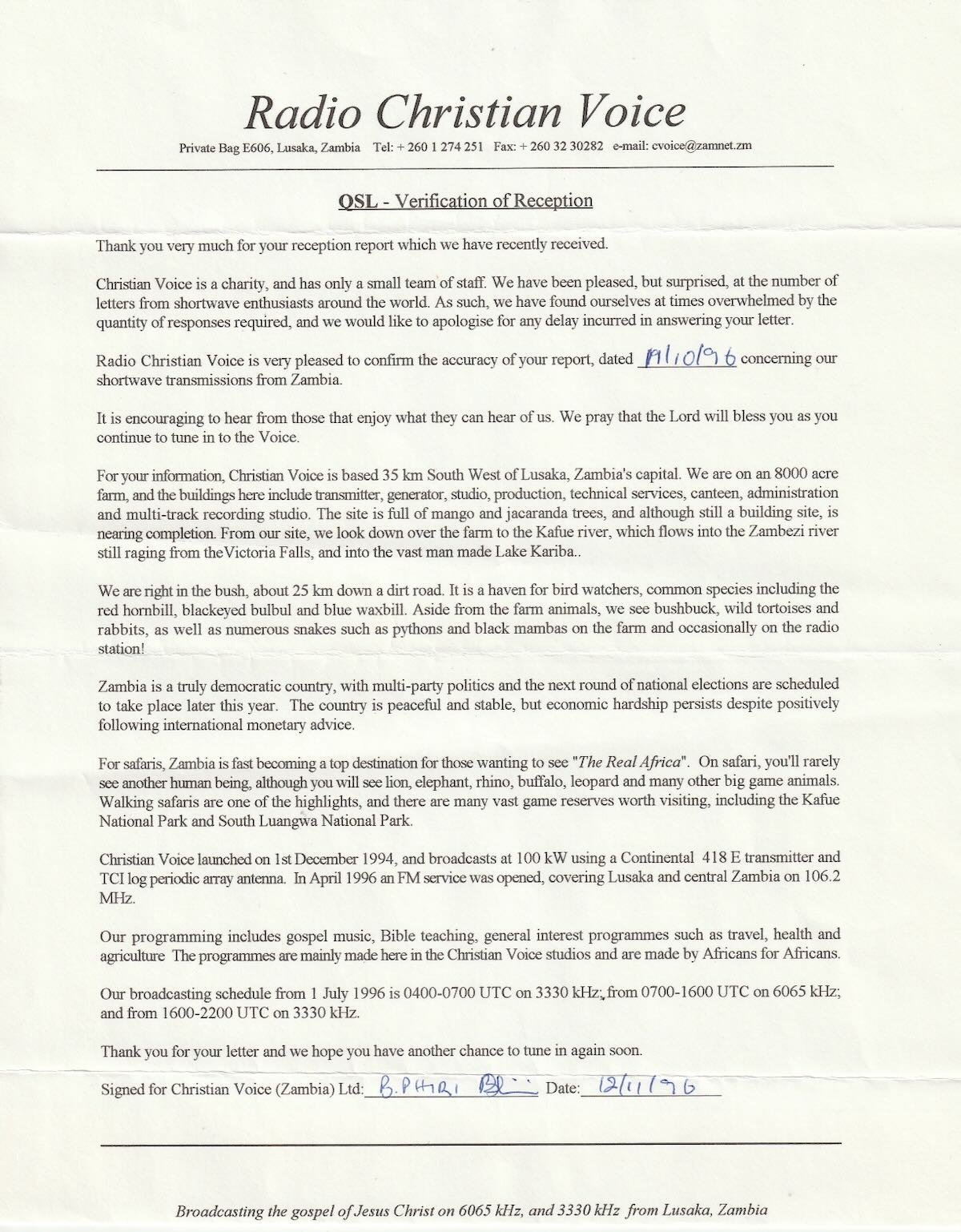
Currently, the only station broadcasting from Mexico on shortwave is Radio Educacion, XEPPM, from Mexico City on 6185 kHz. This recording was made on July 10, 2025 using a remote SDR close to the transmitter to ensure the best overall quality. The QSL attached is one received by my (then) 12 year old son in 1994.


Carlos’ Illustrated Radio Listening Report and Recording of All India Radio (August 20, 2025)

Many thanks to SWLing Post contributor and noted political cartoonist, Carlos Latuff, who shares the following illustrated radio listening report of a recent All India Radio broadcast.


Carlos notes:

Heavy rain warning in Gujarat, All India Radio, 9620 kHz

Click here to view on YouTube.

Carlos’ Illustrated Radio Listening Report and Recording of Voice of Turkey (August 18, 2025)

Many thanks to SWLing Post contributor and noted political cartoonist, Carlos Latuff, who shares the following illustrated radio listening report of a recent Voice of Turkey broadcast.


Carlos notes:

Pakistan flood death toll exceeds 300, Voice of Turkey, 9870 kHz

Click here to view on YouTube.

Radiofax imagery of Hurricane Erin

Many thanks to SWLing Post contributor, Carlos Latuff, who writes:

Here in Porto Alegre, for the past two days, it’s been difficult to receive radiofax from the USCG radio station in Boston. Weak signal, short radio propagation window and lots of noise. Only today morning I was able to receive NOAA chart featuring Cat 4 Hurricane Erin.

Carlos’ Illustrated Radio Listening Report and Recording of Five Broadcasters

Many thanks to SWLing Post contributor and noted political cartoonist, Carlos Latuff, who shares the following illustrated radio listening report incorporating four different broadcasters: ZP-30, All India Radio, CGTN and CBN.


Carlos notes:

Trump-Putin meeting: 5 audio recordings from 5 different radio stations in 5 different languages, plus a Kyodo News radiofax.

Click here to view on YouTube.

Kyodo News radiofax

XHDATA D-219: A Classic Budget Shortwave Receiver in Fresh New Colors

Many thanks to SWLing Post contributor Paul Jamet, who shares the following article: 

The XHDATA D-219 Receiver Gets a New Look

by Paul Jamet

Two and a half years ago, I shared my enthusiasm for an XHDATA receiver, the D-219, first launched at the end of 2022:

Read: Paul explores the incredible affordability of the XHDATA D-219

The XHDATA D-219 stands out for its low price and impressive performance. It combines nostalgic analog charm—with its needle dial—with the power of modern DSP technology, delivering excellent multiband performance for its class and cost. Whether you’re an enthusiast, a traveler, or simply discovering shortwave for the first time, the D-219 is a wonderful gateway into the vast world of radio.

More than 25 readers have commented on or contributed to discussions about this little receiver. The D-219 is very easy to use, has a vintage look, a classic needle dial, and runs on two AA batteries. Sources confirm that it is based on a Si4825-A10 architecture, with analog tuning (via potentiometer and voltage), mono audio output, and reception across the following bands:

  • FM1: 87–108 MHz (International band)
  • FM2: 64–87 MHz (East Asia)
  • AM (MW): 520–1710 kHz (10 kHz spacing) or 522–1620 kHz (9 kHz spacing, depending on version)
  • SW: 9 shortwave bands covering 4.75–22 MHz

Switching between bands is simple—just turn the side-mounted dial.

Recent events have also renewed interest in battery-powered radios and resilient technologies like AM radio, particularly during massive power outages such as:

In such emergency situations, the D-219 becomes even more appealing: it’s lightweight (150 g without batteries), very intuitive to use, and powered by standard AA cells. On top of that, its performance is excellent.

Until recently, XHDATA offered the D-219 in just two classic colors: gray and silver-gray.

But in the past few days, XHDATA has introduced two new finishes on its website: malachite green and grayish white—still under €9 (excluding shipping). Stocks appear to be limited.

Personally, I was immediately drawn to the Malachite Green version.

Its matte finish looks elegant and really highlights the receiver’s craftsmanship. Honestly, I think it’s beautiful! The green gives it a distinctive character and elevates the quality of the finish.

Elegance, performance, and price all come together to make the D-219 an excellent way to discover—or rediscover—shortwave across its nine bands.

With the D-219 ‘Malachite Green,’ radio isn’t just something you hear—it’s something that catches your eye.

Carlos’ Illustrated Radio Listening Report and Recording of CGTN (August 13, 2025)

Many thanks to SWLing Post contributor and noted political cartoonist, Carlos Latuff, who shares the following illustrated radio listening report of a recent CGTN broadcast and radiofax imagery.


Carlos notes:

China raises Typhoon Podul emergency response levels, CGTN Radio, 11770 kHz

Click here to view on YouTube.

Typhoon Podul hitting China: Himawari satellite image via Japan Meteorological Agency radiofax, received in Porto Alegre, August 13, 19h10 UTC, frequency of 7795 kHz USB.