Tag Archives: Time Stations

Hang on a second…seriously

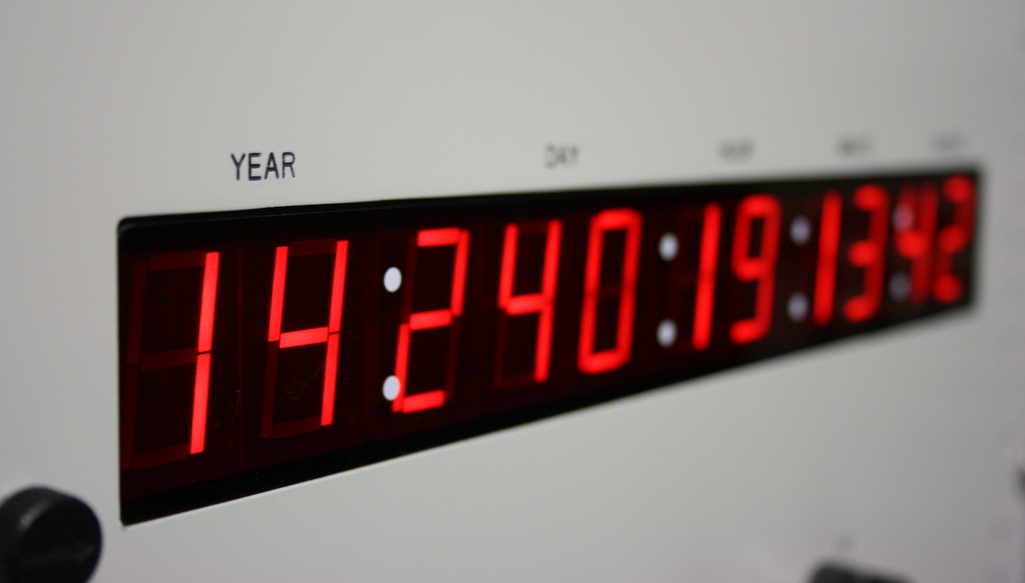
WWV-TimeCodeGenerator

One of four WWV time code generators in late August, 2014

Tonight, for the first time in three years, we will experience a leap second. What is a leap second?  Wikipedia provides a concise explanation:

A leap second is a one-second adjustment that is occasionally applied to Coordinated Universal Time (UTC) in order to keep its time of day close to the mean solar time, or UT1. Without such a correction, time reckoned by Earth’s rotation drifts away from atomic time because of irregularities in the Earth’s rate of rotation. Since this system of correction was implemented in 1972, 25 such leap seconds have been inserted. The most recent one happened on June 30, 2012 at 23:59:60 UTC. A leap second, the 26th, will again be inserted at the end of June 30, 2015 at 23:59:60 UTC.

Like many of you, when I think of time–or UTC–I think about the NIST radio station WWV in Fort Collins, Colorado.

I had the honor of visiting the facility last year (yes, photo tour still forthcoming!).  During the tour, my guide and Chief Engineer at WWV and WWVB, Matthew Deutch, told me that he’s always going to be on site come Leap Second!
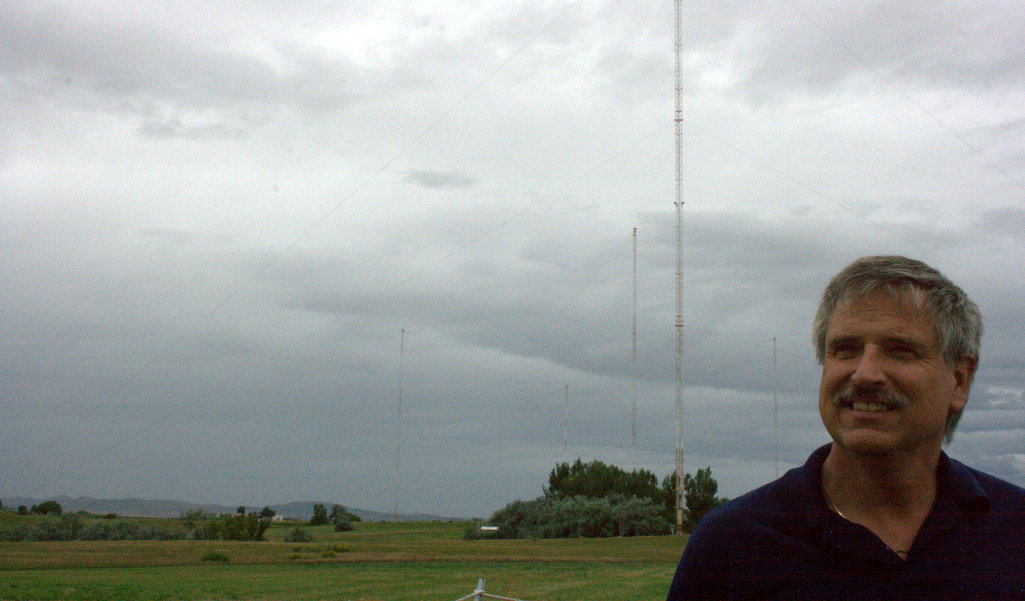
MattDeutch-WWVB

WWV’s Matthew Deutch with WWVB antennas in background

I wrote Matt this morning to ask what were his plans tonight?  His reply:

“The leap second happens at 0000 UTC tonight, which is 6:00 pm here in Fort Collins. All of the programming took place at the beginning of the month, so the equipment is armed…we just sit back and watch for the leap this evening.

Even though it is automated I hang around the station to make sure everything goes smoothly at the critical moment…”
WWV-First-Sign-SMMatthew closed his message by wishing me a “Happy Leap Second.”

Back at you, Matt! We hope that second leaps as smoothly as you’d like!

Not to put Matt on the spot, but you can listen to WWV (or the atomic clock of your choice) make the leap second tonight at 00:00 UTC. As for me, I’ll hop on 10 MHz and 15 MHz to hear (and hopefully record) the extra “tick.” At the end of this post, I’ve provided a list of time stations for your convenience.

Happy Leap Second!
20MHZtransmitter

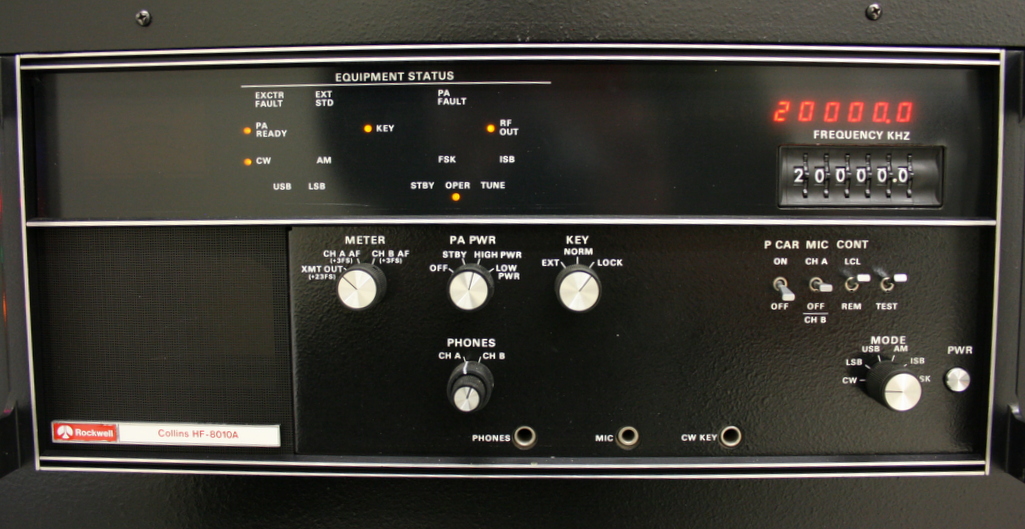
WWV 20 MHz Collins transmitter

List of shortwave radio time stations

  • CHU Canada: 3330 kHz, 7850 kHz, 14670 kHz
  • BPM China: 2,500, 5,000, 10,000, and 15,000 kHz
  • HLA South Korea: 5,000 kHz
  • BSF Taiwan: 5,000 and 15,000 kHz
  • WWV (Ft. Collins)/WWVH (Hawaii) United States:  2,500, 5,000, 10,000, 15,000, 20,000 and 25,000 kHz

Update

Click here to listen to Leap Second recordings from WWV and CHU.
Can you help George identify the mystery pip?

WWV format

WWV format

SWLing Post reader, George (NJ3H), writes:

I quite often see a spike in the evening on 4996 khz. From the listing, this is suppose to be RWM, in Moscow, a time signal station.

When I listen on remote receivers in Poland and Denmark, I do not hear time pips, but rather just hash.

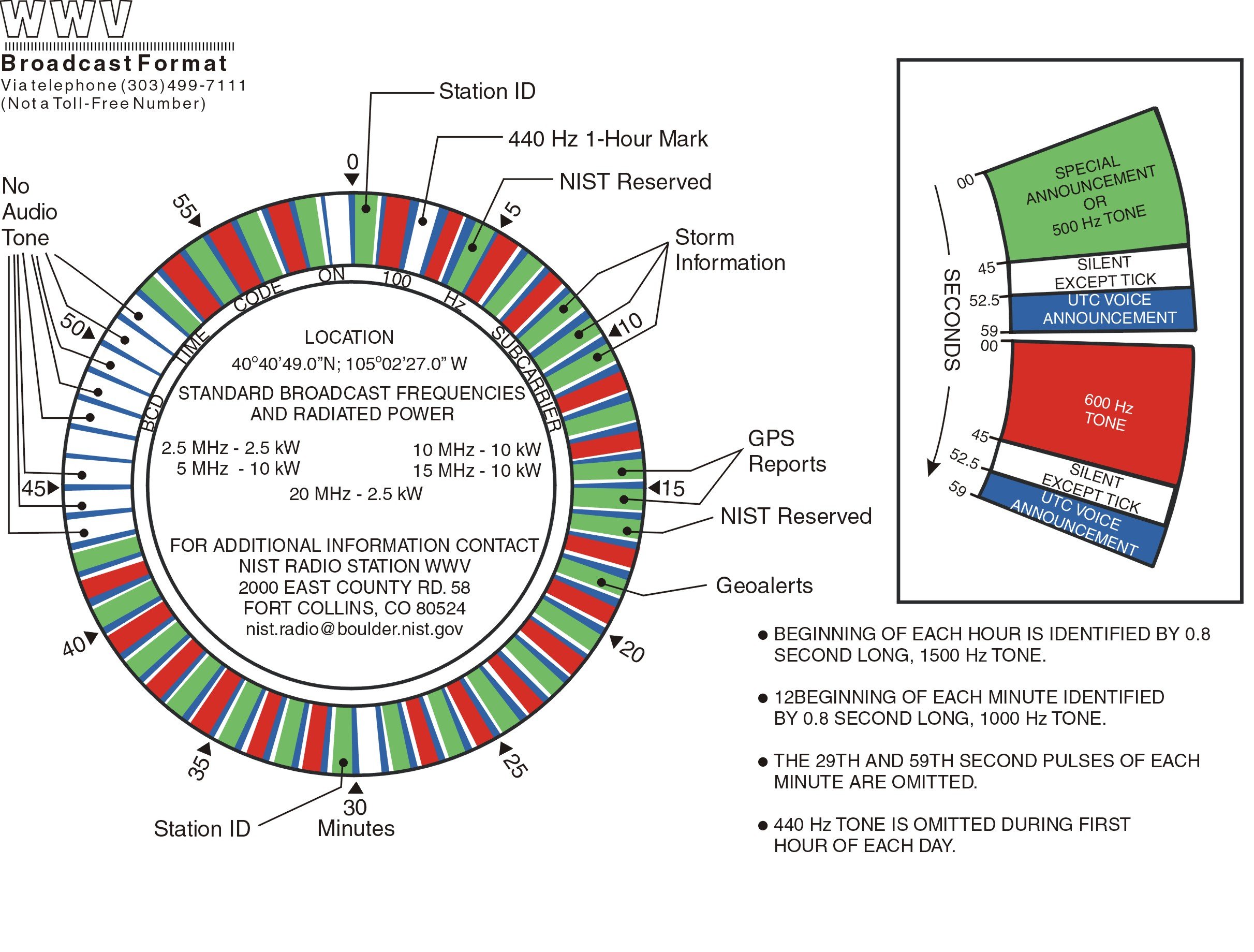
On my Perseus, I can watch the spike go up and down each second. This makes me think it is caused by WWV. However, the 29th second seems to make the spike move up, even though WWV doesn’t have a pip at second 29. The remote receivers in Europe that I just mentioned do not have any time pips being broadcast. Does WWV cause a signal on 4996?

Can you shed any light on 4996? Should we be able to hear RWM in the Eastern US?

Good question, George, and I’m hoping a reader can shed some light on what you’re seeing on the spectrum display. I’m not sure what could be causing the 29th second spike unless it’s WWV transmitting a sub-audible tone.

WWV: experimental broadcasts on 25 MHz

WWV format

WWV format (Click to enlarge)

Want to catch WWV–the Fort Collins-based time station–on a frequency they haven’t used since 1977?

The National Institute for Standards and Technology (NIST) has sent out a press release stating that, as of April 4, 2014, WWV will resume broadcasting on 25 Mhz for a limited time.

Full details follow in their press release:

NOTICE: Experimental 25 MHz WWV Broadcast

As of Friday, April 4, 2014 WWV has resumed broadcasting on 25 MHz on a limited, experimental basis. The broadcast consists of the normal WWV signal heard on all other WWV frequencies, at the same level of accuracy.

Current 25 MHz Broadcast Specifications (subject to change):
Schedule: variable; as an experimental broadcast, the 25 MHz signal is not continuous. It will typically be on the air from approximately 1500 – 2100 UTC Mondays through Fridays, but may operate outside these hours as well. The broadcast may be interrupted or suspended without notice.

Radiated Power: varies; no more than 2500 W

Antenna: broadband monopole, coordinates: 40 deg. 40′ 50.8″N, 105 deg. 02′ 32.6″ W

Listener comments and reception reports may be emailed to: [email protected], or sent via postal mail to:

National Institute of Standards and Technology
Radio Station WWV
2000 E. County Rd. 58
Fort Collins, CO 80524

History of WWV and the NIST Time Stations

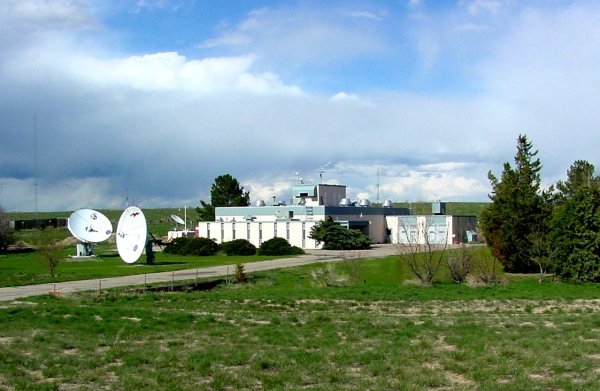
WWV building in Fort Collins, Colorado (photo courtesy: NIST)

WWV building in Fort Collins, Colorado (photo courtesy: NIST)

Many readers know that I’m a bit of a WWV geek, so you can imagine how happy I was when my buddy, Mike, and the Southgate ARC made me aware of this 152 page history of the NIST time station family. At first glance, this looks to be an authoritative and thorough history indeed.

I have already sent this to my Kindle Fire and look forward to reading it (at least, starting it) tonight. Click here to download the NIST time station history as a PDF.

Incidentally, if you have an affinity for the NIST time stations, be sure to check out my previous post on Myke’s audio history of WWV, “At The Tone.”