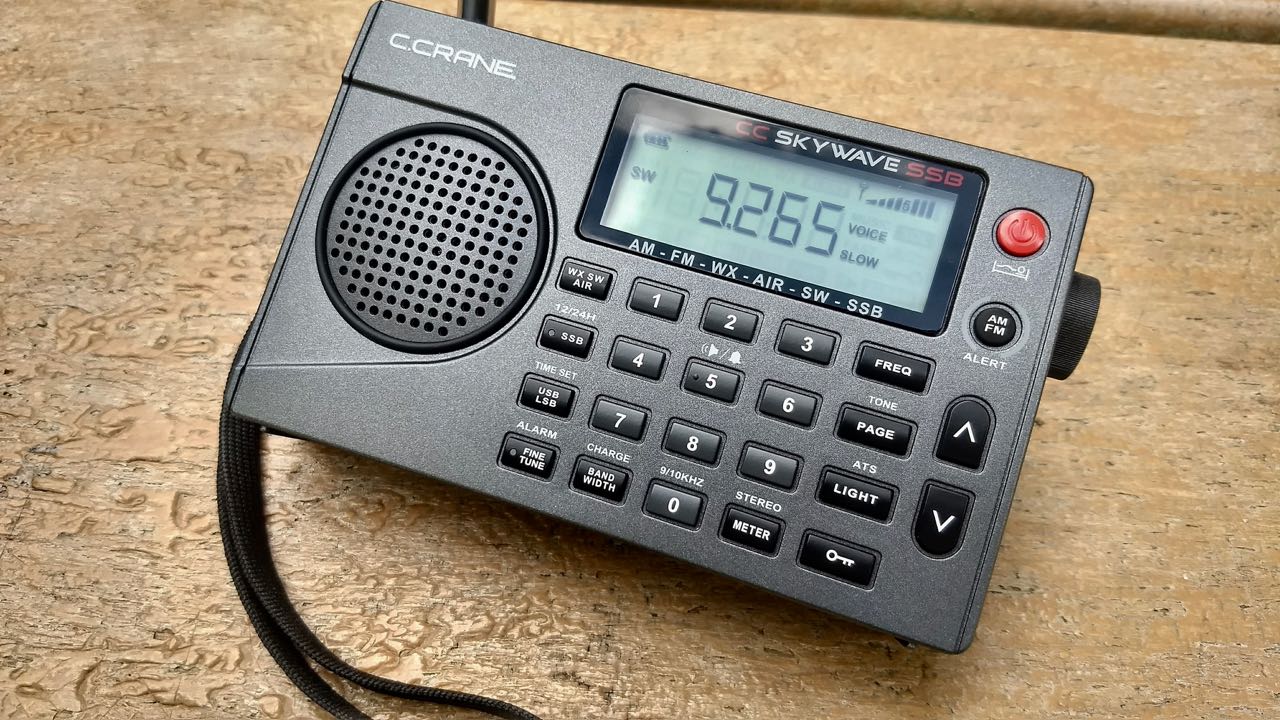
My good friend Frank (K4FMH) has posted this excellent article on his blog:
A must read!. Thank you for sharing, Frank!

My good friend Frank (K4FMH) has posted this excellent article on his blog:
A must read!. Thank you for sharing, Frank!
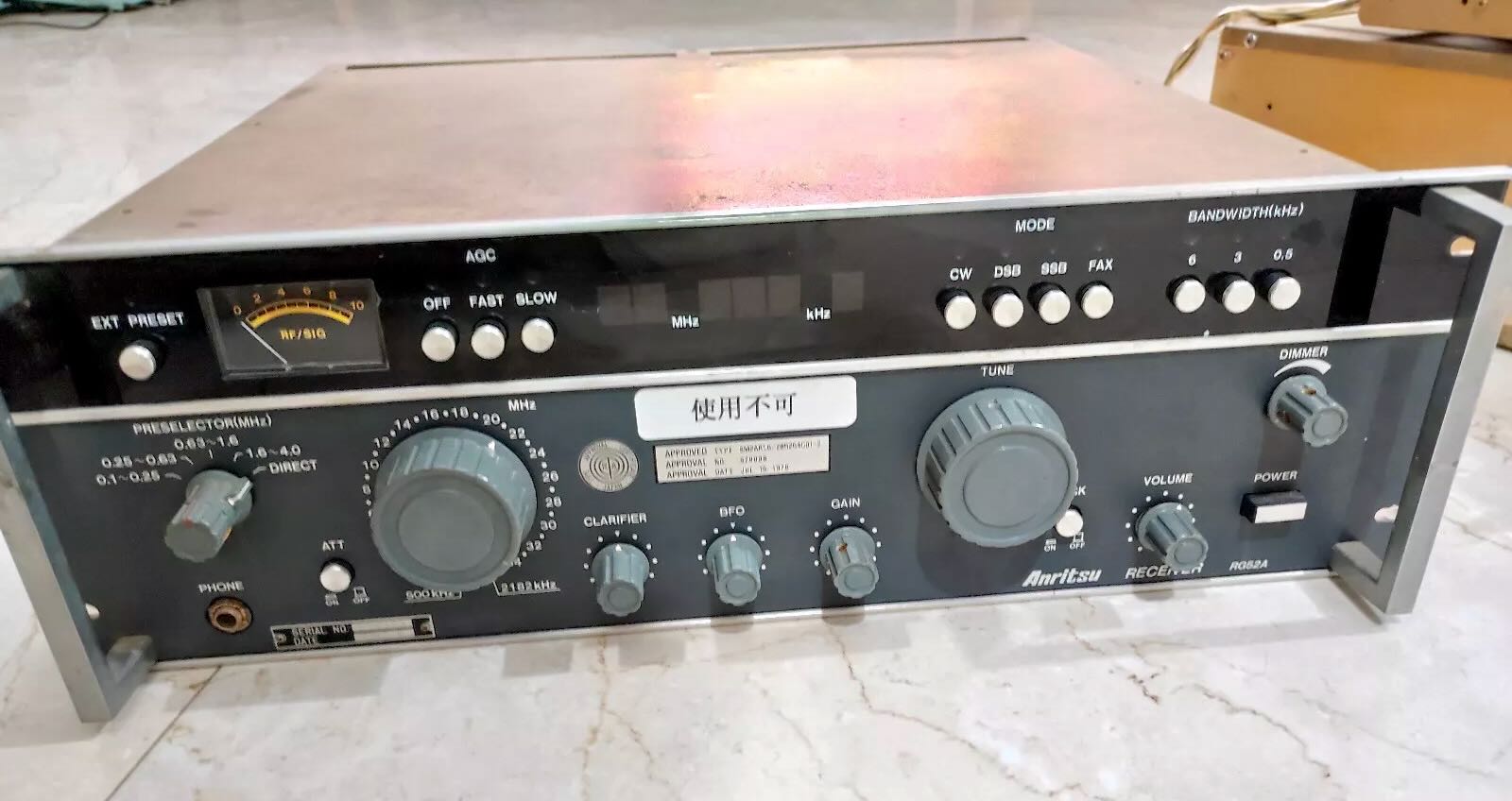 Many thanks to SWLing Post contributor, Rob Gray, who writes:
Hello Thomas.
If interested, the link below is to an extremely rare SW receiver:
Click here to view this listing on eBay.
[note: this is an eBay partnership link]
The latest Radio Receivers Past/Present book shows this model as a Japanese manufactured, commercial-maritime receiver. The Rarity is “Typically Unavailable”, and lists prices at $5,700 New, $800-1600 Used.
73,
Rob
Wow, Rob. I’ve never seen this receiver before. Perhaps one of our commercial receiver experts (*cough* Dan Robinson *cough*) might be able to shed some light on this model!
 Many thanks to Dan Greenall, one of our dedicated Shortwave Radio Audio Archive contributors, who writes:
Hi Thomas
I was going over a few of my old cassettes today and discovered what seems to be an interval signal, but I cannot seem to place it.
Unfortunately, all I can tell you is that it was made sometime in 1971.
I’ve done a little checking with Interval Signals Online but no luck so far. The recording is right at the end of a cassette and you can hear the tape run out abruptly, so no ID, language or frequency info is available.
[…]Any ideas about the mystery IS?
73
Readers: If you can help Dan positively identify this interval signal, please comment!
 Many thanks to SWLing Post contributor, Bill Tilford, who shares the following announcement:
Uncle Bill’s Melting Pot, June 15, 2024
On June 15, 2024, we will feature music from Haiti and the Dominican Republic.
Times & Frequencies (note new schedule) are:
1700-1800 UTC 9670 kHz with beam E-F towards South Asia (but quite good in Russia also)
1900-2000 UTC 3955 & 6070 kHz (omnidirectional for Europe and beyond)
2300-2400 UTC 3955 kHz (omnidirectional for Europe and beyond)
All transmissions from Channel 292, Rohrbach, Germany
Reception reports from websdrs (as well as regular radios of course) are honored with eQSLs IF
1. The entire program is reported
2. If a web sdr, which specific one is included in the report
Shorter reports will be acknowledged with a brief note of thanks.
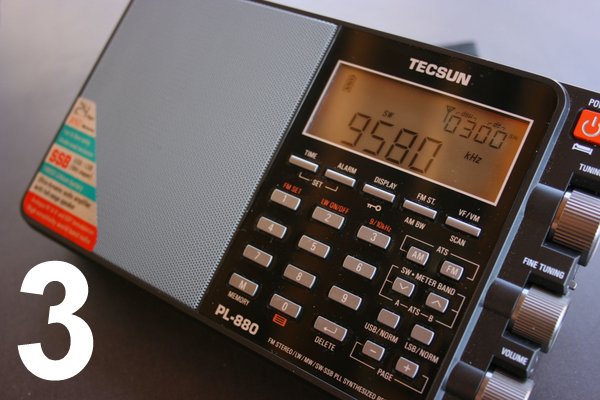 Many thanks to SWLing Post contributor, Dennis Dura, who shares the following promotion at MTC. He notes that there may be an additional coupon code can also be applied.
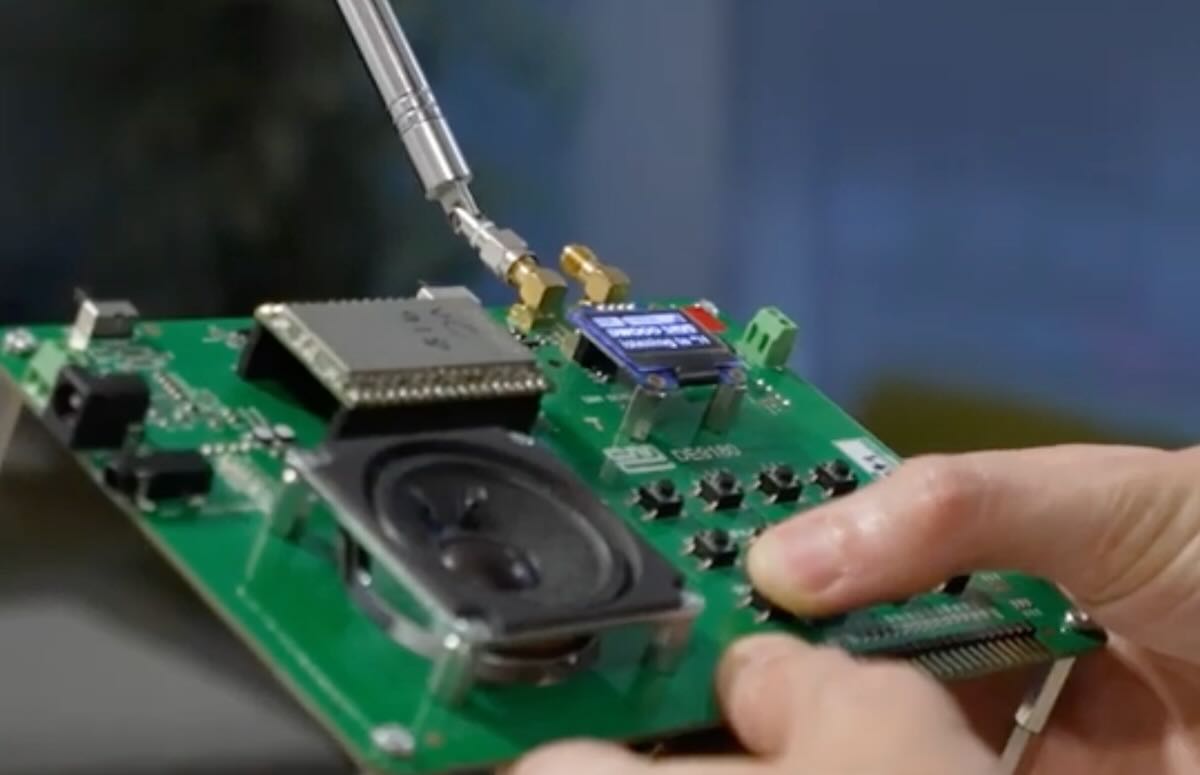
Screenshot of DRM Module
Many thanks to SWLing Post contributor, Alan, who shares the following video via Cambridge Consultants:
Description:
Digital Radio Mondiale (DRM) is the only universal digital radio broadcasting system that can broadcast on all frequencies, offering unparalleled audio, coverage, cost-efficiency and sustainability when compared to legacy analogue radio services – and yet there’s been no portable, low-power, low-cost radio available bring these benefits to life. Until now.
With the release of the DRM1000 module from CC and CML Micro, billions of listeners worldwide can enjoy access to a world of entertainment, information and life-saving emergency warning functionality through digital radio mondiale services.
This milestone doesn’t just mark a technological advancement; it heralds a new era of possibilities. For broadcasters and manufacturers worldwide, it ignites a fresh wave of innovation, while for listeners in remote or low-income areas, it offers a crucial lifeline to the digital world.
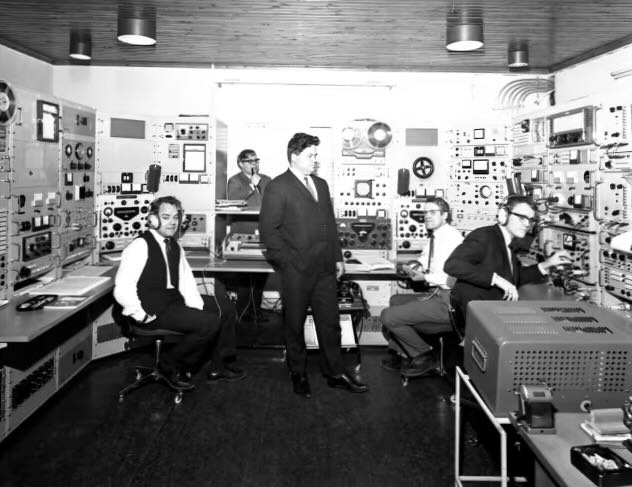
Professionals at the station often had a background as radio amateurs or radio electricians. Photo from YLE’s archive.
Many thanks to SWLing Post contributor, Adid, who writes:
Hi Thomas, a post on Reddit with a picture of radio stuff lead me to Google for its source.
It led me to this page https://yle.fi/a/3-11502533
My Finnish is not as good as Google’s, but even with its poor “auto” translation, the story can be fairly understood and bring to life the 1968 Soviet’s invasion to Prague from the YLE side.
That article was written in a book by an YLE broadcasting engineer for 40 years. A few pages of his book can be viewed here with more nice pictures.
As a child I do recall that event in the local news coverage and it was also immortalized few months later, in the Israeli music scene with an amazing song, very popular till today.
I’m sure many of SWL’ers can share some of their memories of that Soviet’s invasion to Prague in 1968.
Best regards, adi