Author Archives: Thomas

Listen: Apollo 11 Real-Time Mission Experience


CAPCOM Charles Duke (left), with backup crewmen Jim Lovell and Fred Haise listening in during Apollo 11’s descent (Photo: NASA)

Many thanks to SWLing Post contributor, Wilbur, who writes:

I thought you may be interested in this. A few years back the same group posted Apollo 13 realtime audio. I listened to for days. It was during lockdown for Covid-19 so I had lots of time at home to keep it on.

It really renewed my love of radio.

I missed the Launch, as I just found it here at 2:00 local EST. But I will be monitoring for the next few days.

This the Big one, so it will be interesting to hear.

Click here to check out NASA’s Apollo 11 Real-Time Mission Experience.

Thanks for all that you do!

Wilbur

Thank you for the tip! As I did with Apollo 13, I’ll keep this running in the background for the next few days! 

CIDX Special Event Stations and QSL information!

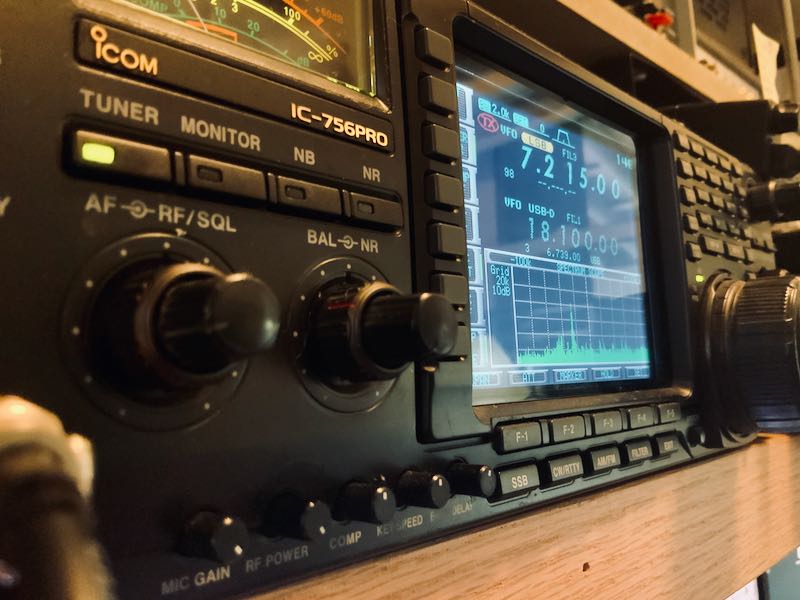
Icom IC-756 Pro Transceiver DialMany thanks to SWLing Post contributor, Sheldon Harvey, who shares the following announcement from the CIDX:


CIDX AMATEUR RADIO CLUB STATIONS ON THE AIR JULY 17, 2022

CIDX has two amateur radio club stations that are activated from time to time on the ham bands, usually to mark special events, club anniversaries, etc.

VE2AQP is our eastern Canada amateur club station callsign, located at CIDX eastern Canadian headquarters in Saint-Lambert, Quebec

VE6SWL is our western Canada amateur club station callsign, located at CIDX western Canadian headquarters in Sherwood Park, Alberta

CIDX is planning to activate the stations in July to mark the 60th anniversary of the Canadian International DX Club.

VE2AQP will be active from Montreal, Quebec, operated by CIDX World of Utilities editor Gilles Letourneau, VE2ZZI, on July 17th from 1800 UTC to 2200 UTC around 14240 kHz USB, plus or minus, depending on activity and the conditions on the band,

VE6SWL will be active from Lamont, Alberta, operated by CIDX Vice-President & Verie Interesting editor Mickey Delmage, VE6IDX, also July 17th from 1800 UTC to 2200 UTC around 14265 kHz USB, plus or minus, depending on activity and the conditions on the band.

VE2AQP will be active again on July 31st at 2200 UTC to August 1 at 0200 UTC on 40 meters around 7150 kHz LSB, plus or minus, depending on activity and the conditions on the band.

CIDX will be issuing special e-QSLs for contacts with either or both CIDX club stations. SWLs are also welcome to submit reports should you log either or both stations. For those receiving e-QSLs who are not CIDX members, a free sample copy of “Messenger” together with club information will accompany the e-QSL.

CIDX will activate the two CIDX amateur club stations at various times throughout the balance of 2022 to mark CIDX’s 60th anniversary. Notices of future operations will be posted on the CIDX Facebook group and the CIDX IO Group.

Listening to Shortwave Australia this morning

I’m traveling at present and staying in a hotel where, let’s just say, QRM is heavy.

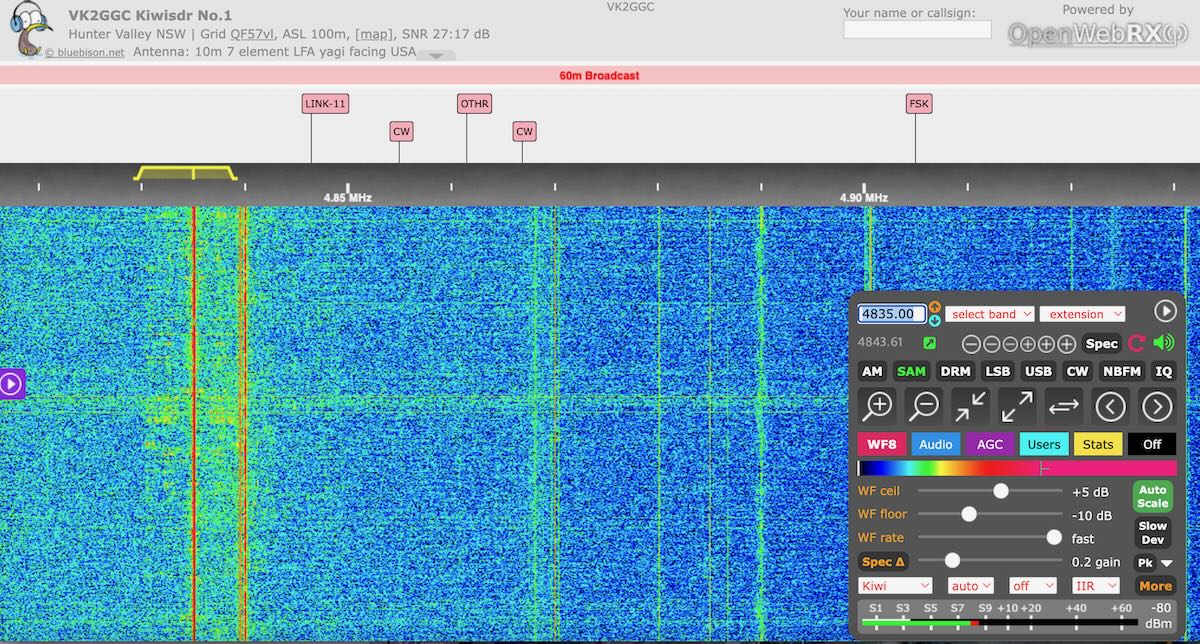
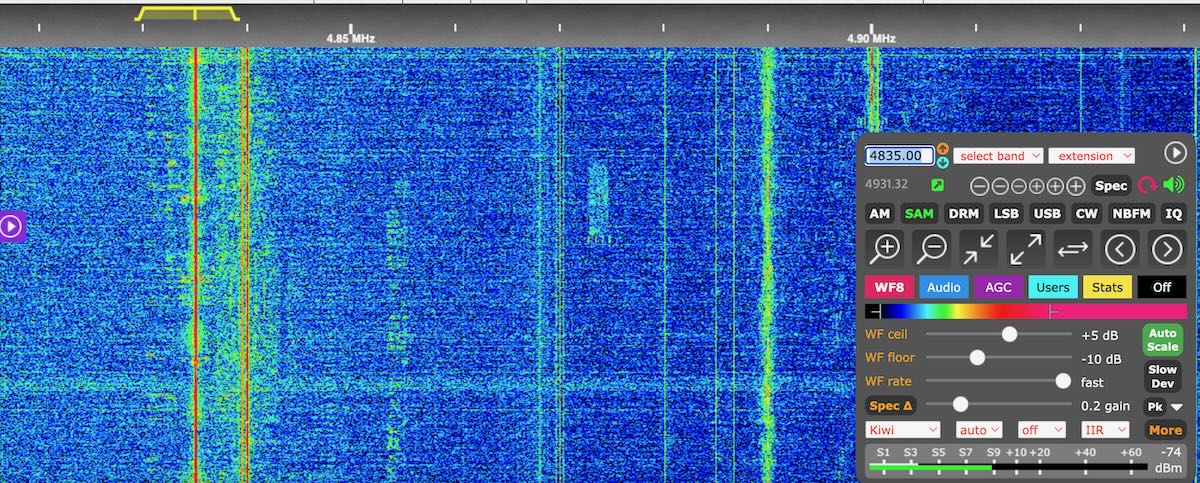
I decided to cruise the KiwiSDR network and found myself on the VK2GGC KiwiSDR in Hunter Valley NSW, Australia. As I was band-scanning, I stumbled upon Shortwave Australia on 4,835 kHz around 9:40 UTC.

It was great hearing this low power shortwave broadcaster on the air again!  Check out the recording below with ID:

Click here to download audio.

WebSDRs are such a wonderful resource when you truly need to escape QRM. It’s fun to travel the globe and tune through the bands like a local. Again, it’s great to hear Shortwave Australia again–I’m curious if anyone has logged them as DX from home.

Photos from the 2022 Milton Ontario Hamfest

Many thanks to SWLing Post contributor, Mike (VE3MKX), who writes:

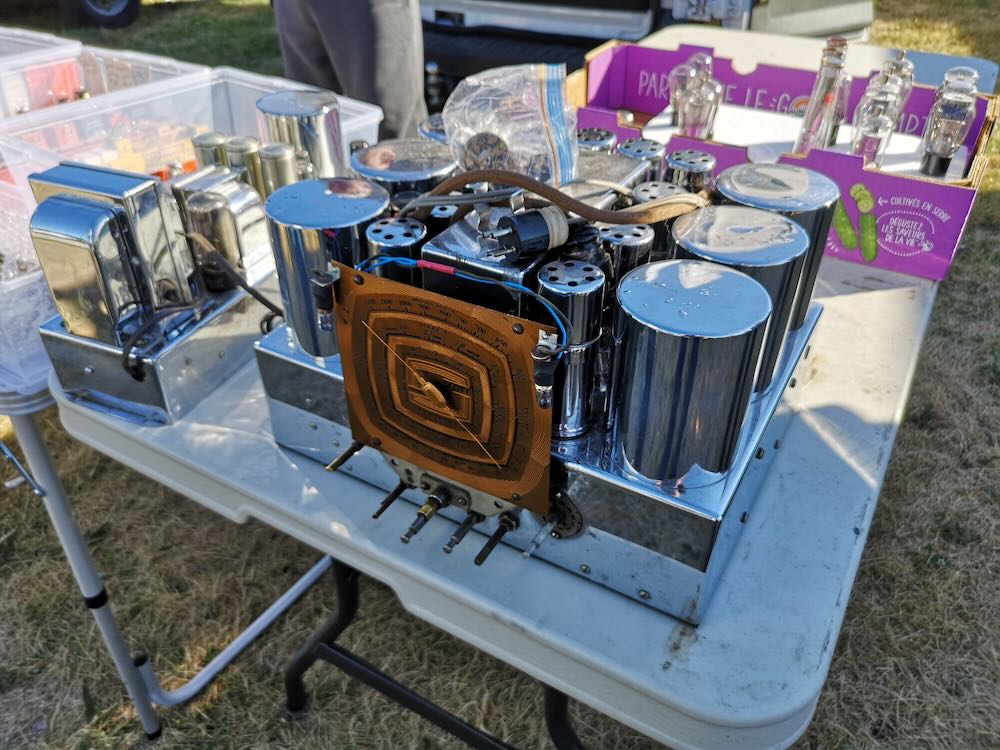
The following pictures are from a Hamfest which was held yearly at the Milton Fairgrounds in Milton Ontario, Canada. (Located 20 minutes west of Toronto).

The Burlington Amateur Radio Club organizes the event and confirms that they had 108 vendor spaces sold and over 475 general admin passed through the gates.

A great day of meeting friends, lots of deals and smiling faces!

Thank you so much for sharing this, Mike! I haven’t been to a hamfest yet this year, so it’s great to catch a glimpse of what looks like a very successful one! 

Readers: This is a large gallery of 132 photos courtesy of Kevin (VA3RCA) and Mike (VE3MKX). If you would like to view the entire image gallery click on the link to see more.  Continue reading

Ken reverse-engineers the Apollo spacecraft’s FM radio

Many thanks to SWLing Post contributor, Paul, who shares the following post from Ken Shirriffs’ Blog:

Reverse-engineering the Apollo spacecraft’s FM radio

How did NASA communicate with the Apollo astronauts, hundreds of thousands of miles from Earth? The premodulation processor1 (below) was the heart of the communication system onboard the Apollo spacecraft. Its multiple functions included an FM radio for communication to the astronauts, implemented by the Voice Detector, the module second from the top. In this blog post, I reverse-engineer the circuitry for that module and explain how it worked.

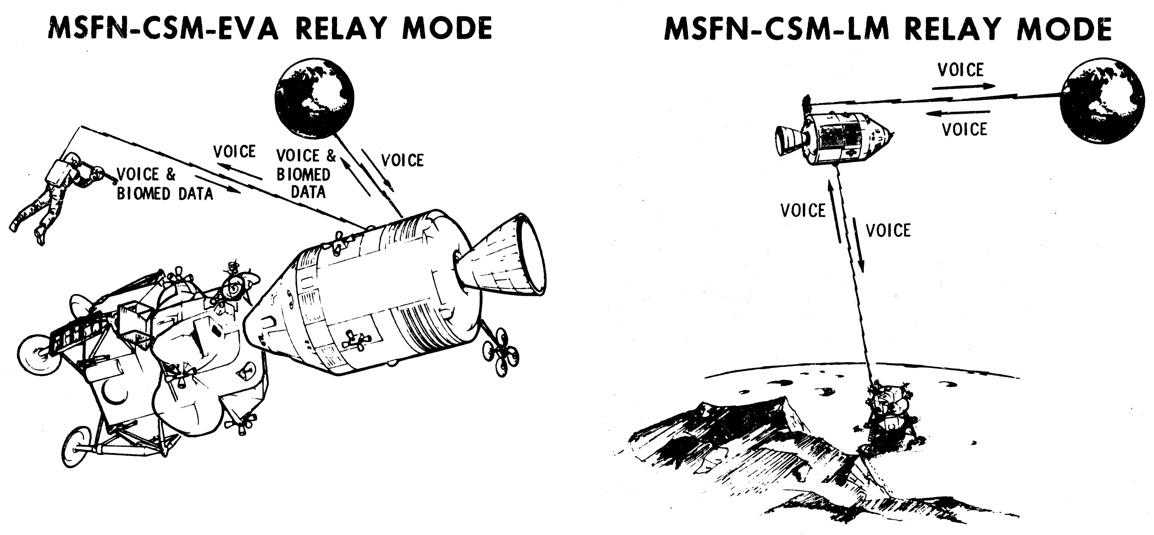
The Apollo communication system was complex and full of redundancy. Most communication took place over a high-frequency radio link that supported audio, telemetry, scientific data, and television images.2 NASA’s massive 85-foot dish antennas transmitted signals to the spacecraft at 2106.4 megahertz, an S-band frequency, giving the system the name “Unified S-Band”. These radio signals were encoded using phase modulation;3 onboard the spacecraft, a complex box called the transponder received the S-band signal and demodulated it.4

The voice and data signals from Earth were combined through a second layer of modulation: voice was frequency-modulated (FM) onto a 30-kilohertz subcarrier while data was on a 70-kilohertz subcarrier, so the two signals wouldn’t conflict.5 One of the tasks of the premodulation processor was to extract the voice and data signals from the transponder’s output. These voice signals went to yet another box, the Audio Center Equipment, so the astronauts could hear the messages from the ground. The data signals were decoded by the Up-Data Link, allowing NASA to send commands to the Apollo Guidance Computer, control onboard relays, or set the spacecraft’s clock.

Many systems worked together for communication, but I’m focusing on a single module: the voice detector inside the premodulation processor that performed the FM demodulation. [Continue reading the full article…]

Changes to KTWR’s DRM broadcast schedule effective 3rd July, 2022

Many thanks to SWLing Post contributor, Mangosman, who shares the following tip from Mike Sabin at KTWR via Alokesh Gupta’s blog:

Due to requests for later broadcasts, improved propagation, and the addition of a program, KTWR is changing its DRM broadcast schedule effective 3rd July, 2022.

KTWR Digital Broadcasts
DRM broadcasts (Effective 3rd July 2022):

Day Time(UTC) Frequency Coverage Area Language
—————————————————
Saturday 1100-1127 12000 kHz China English
Saturday 1128-1230 9910 kHz Japan Japanese, English
Mon-Fri 1215-1245 9910 kHz China Mandarin
Sunday 1500-1545 15205 kHz India English
Sunday 1600-1630 15390 kHz India South Indian languages

(Mike Sabin, KTWR)

Full Schedule of RTI Transmission Tests and Special QSL

Many thanks to SWLing Post contributor, Gerard Koopal, who writes:

Dear Thomas,

[Per the email message below] from Radio Taiwan International, they will bring a direct transmission from Tamsui, Taiwan in German and French.

For correct reception reports there is a special QSL card available.

Reports can be sent to: [email protected] or via the Online Form or by snailmail (Radio Taiwan International, German Service, PO Box 123-199, Taipei 11199, Taiwan).

Wishing everybody a good reception!

Gerard Koopal

Almere, The Netherlands


Onderwerp: RTI direct broadcasts from Tamsui July 2022

Dear RTI listeners,

This year, RTI will once again be broadcasting its German-language program directly from the Tamsui transmitter in Taiwan on several days.

Broadcast dates and frequencies July 2022:

Frequency 11995 kHz 1700-1800 UTC
Frequency 9545 kHz 1900-2000 UTC

1) 08.07. Friday
2) 09.07. Saturday
3) 10.07. Sunday
4) 15.07. Friday
5) 16.07. Saturday
6) 17.07. Sunday
7) 22.07. Friday
8) 23.07. Saturday
9) 24.07. Sunday
10) 29.07. Friday
11) 30.07. Saturday
12) 31.07. Sunday

We confirm receipt reports with a special QSL card.

You can send reception reports to [email protected] by email, using the online form, or by mail (Radio Taiwan International, German Service, PO Box 123-199, Taipei 11199, Taiwan).

We would also like to point out that this year in August RTI will also be broadcasting French-language programs directly from the Tamsui transmitter on Fridays, Saturdays and Sundays.

We look forward to your reception reports!

Your RTI editorial team

https://de.rti.org.tw/

[email protected]


Thank you for the tip, Gerard!