Author Archives: Thomas

Help Brian identify this 1970s era interval signal

[Mystery solved! Click here to read the update.]

Many thanks to SWLing Post contributor, Brian (W9IND), who writes:

I want to thank you for stirring a memory that I never thought I’d relive – even though it still doesn’t solve the mystery of what the heck I was listening to in the first place!

Back in the early 1970s, I was a teenage SWLer with a curiosity for the worldwide signals that emanated from the speaker of my shortwave radio. Bitten by the SWLing bug after stumbling across Radio Nederland’s Bonaire relay station, I spent many a happy hour twirling the dial in search of fresh game to hear and QSL.

But on one such occasion (I’m going to guess it was in 1971), I was surprised and fascinated by what sounded like a snake-charming horn playing notes at random. Stranger still, the transmission would seemingly go off the air for a couple of seconds and then return to play the strange melody again. I chalked it up to one of the countless beeps, hums and other electronic noises that often appeared on utility frequencies in those days.

I never recorded it, I never had a clue what it was, and I never heard it again.

Until recently. On the Shortwave Radio Audio Archive.

A couple of weeks ago, while looking for old shortwave interval signals from the 1970s, I saw a recording marked “Unidentified interval signal 1” listed right after the interval signals of Deutsche Welle and Radio Nederland.

“OK,” I thought. “Sounds like a challenge. Maybe I can even help figure out what it was.”

Then it played … and I almost fell off my chair! I literally sat with my mouth open as the long-lost sounds of the “snake-charming horn” played again. Could it indeed have been an interval signal – and if so, for what station?

I wanted to contact the person who recorded it, but then I learned the sad news that Mr. Greg Shoom is no longer with us.

So I remain mystified, probably forever. But it sure was fun hearing that weird recording again! Thanks for the memories.

Let’s see if an SWLing Post reader can help, Brian!

I know of at least a dozen readers who are experts on all that is interval signals, so hopefully someone can listen and ID this one.

I’ve embedded audio from this SRAA recording below. Note that the unidentified interval signal can be heard between time marks 1:27 – 2:07 in the following recording:

Can you positively ID this interval signal?  If so, please comment!


Do you enjoy the SWLing Post?

Please consider supporting us via Patreon or our Coffee Fund!

Your support makes articles like this one possible. Thank you!

Guy’s mind blown when he stumbles upon WBCQ’s Ampegon antenna

(Source: Ampegon)

Many thanks to SWLing Post contributor, Dan Van Hoy, who shares a link to this YouTuber who stumbled upon shortwave station, WBCQ, while driving through rural Maine in 2018. He obviously didn’t understand what the site was at the time–nor the fact that the owner loves collecting vintage equipment.

The video gives the impression of WBCQ being a place of mystery and intrigue. If he only knew that he would have likely been welcomed with open arms and gotten a detailed tour had he only contacted the station!

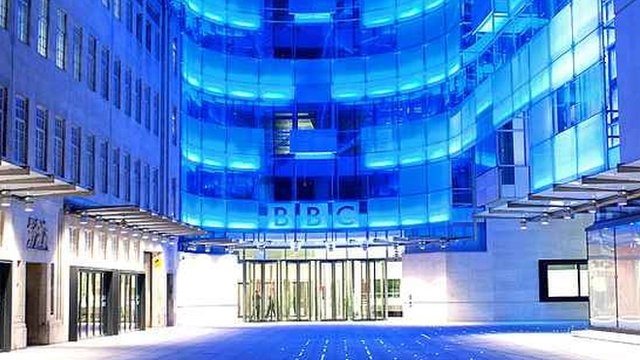
Sky News: “BBC could be forced to sell radio stations in ‘massive pruning back'”

(Image source: BBC)

(Source: Sky News via Dan Van Hoy)

The number of TV channels could also be reduced, the website scaled back and stars banned from taking well-paid second jobs.

[…]The Sunday Times quoted a senior Downing Street source as saying that Prime Minister Boris Johnson is “really strident” on the need for serious reform at the national broadcaster.

The number of TV channels could be reduced, the website scaled back and stars banned from taking well-paid second jobs, the newspaper said.

There will also be a consultation on replacing the licence fee with a subscription model, the source said, adding: “We are not bluffing on the licence fee.

“We are having a consultation and we will whack it. It has got to be a subscription model.

“They’ve got hundreds of radio stations, they’ve got all these TV stations and a massive website. The whole thing needs massive pruning back.

“They should have a few TV stations, a couple of radio stations and massively curtailed online presence and put more money and effort into the World Service which is part of its core job.

Read the full article at Sky News.

KiwiSDR: A brilliant new map portal!

Last month, we noted that the popular SDR.hu KiwiSDR portal now requires registration and an amateur radio callsign to use the site.  While SDR.hu is still online, we certainly get the impression all site development has been halted. This is not the end of the world because SDR.hu is only one of several KiwiSDR portals–we linked to others in our January article.

Personally, I only used the SDR.hu map view to keep track of KiwiSDR sites and found it quite useful because I typically select sites based on geographic location.

A better KiwiSDR map portal

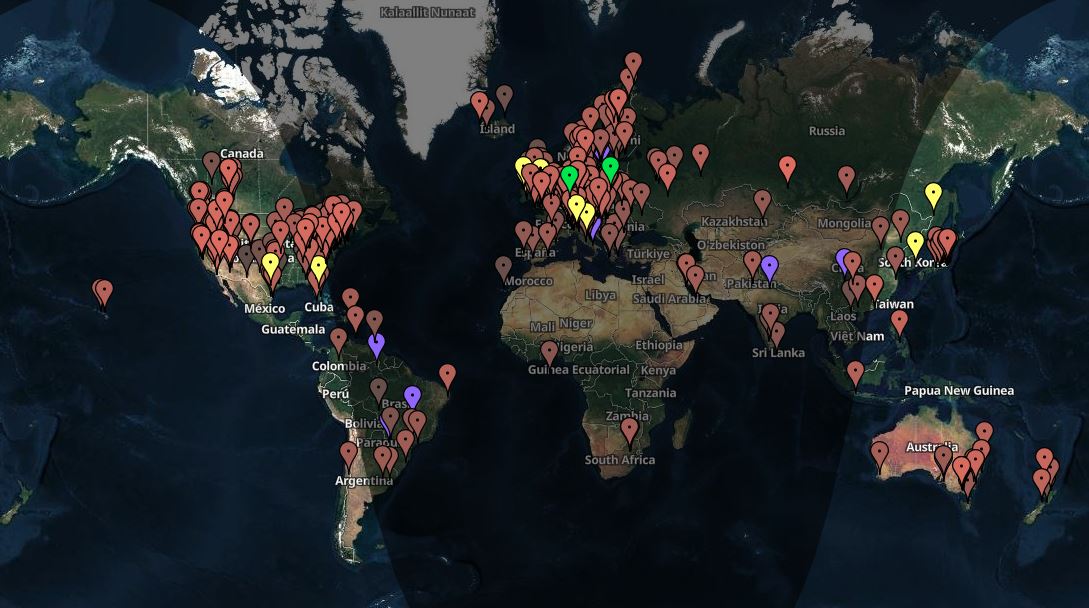
I’ve just learned via the KiwiSDR Twitter account that Priyom.org has updated their KiwiSDR map portal using Dyatlov maps. The results are brilliant and, in my opinion, even better than the SDR.hu’s map.

The Priyom.org map uses the full window, is uncluttered and easier to navigate.

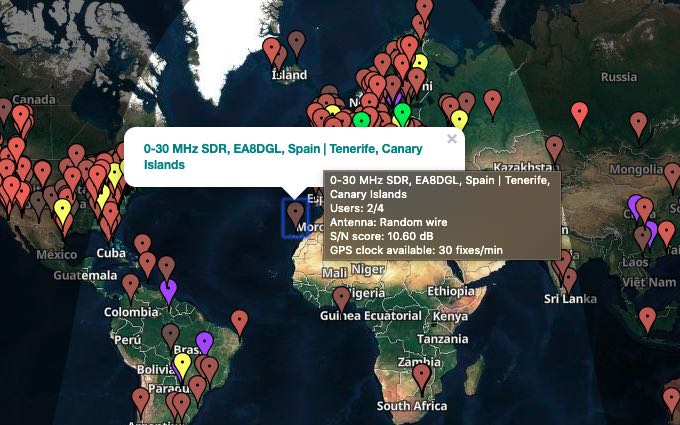
If you click on a KiwiSDR site, you’ll see a pop-up window with basic site information. If you hover the cursor over that site info, another window will pop up with current details about the receiver, number of users, antenna, SNR, and GPS clock (see above).

This is now my favorite way to geographically surf KiwiSDR sites.

Click here to check out the new map portal.


Do you enjoy the SWLing Post?

Please consider supporting us via Patreon or our Coffee Fund!

Your support makes articles like this one possible. Thank you!

Dan notes two eBay finds: one good buy and one too high!

Many thanks to SWLing Post contributor, Dan Robinson, who recently discovered two note-worthy items on eBay.

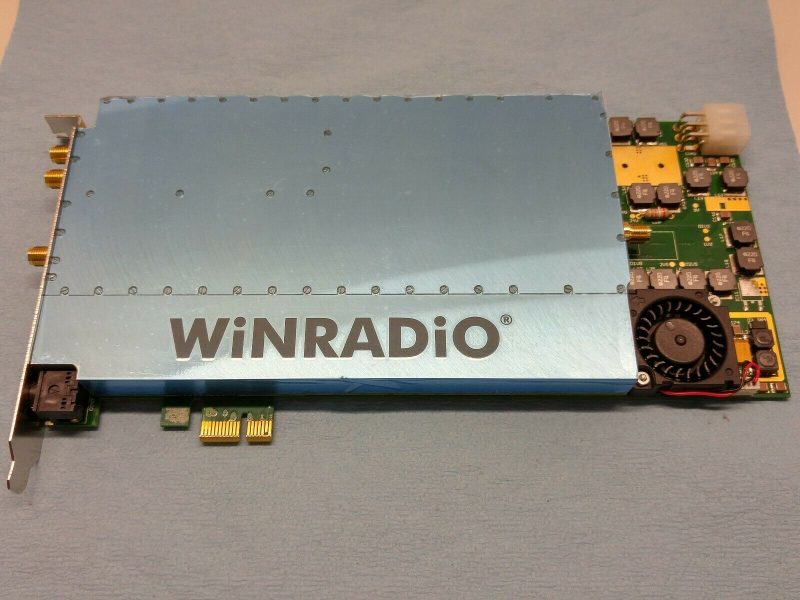
The first is a WinRadio Excelsior SDR.

Dan notes:

A seller on eBay is offering the WR-G39DDCi. Just picked one up on a Buy It Now for $200.

He still has some up without Buy It Now but the price is creeping up. Heck of a deal considering the price new….

Click here to view this listing on eBay.

That’s simply amazing you found an Excelsior for $200! WOW! Perhaps this eBay seller will post more WR-G39DDCi units with a BuyItNow price? I’d be willing to bet these may have all come from a commercial or government auction.

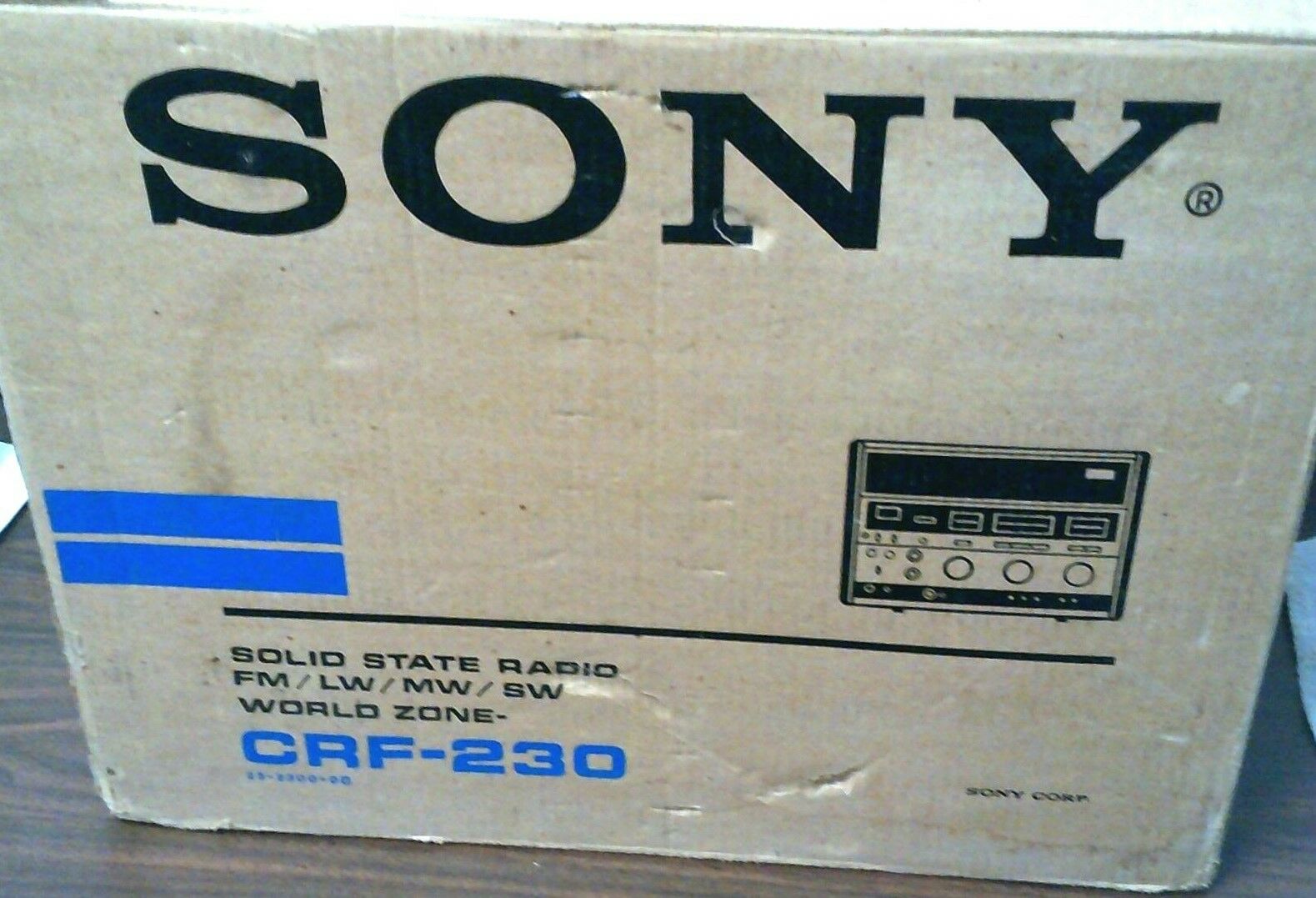
The second item Dan shares is a Sony CRF-230 with original box.

Dan notes:

This guy is trying to get too high a price, but these 230s are rarely seen with the original box. There are many 230s on eBay and prices are usually in the several 100s of dollar range. Anyone considering this one should insist on seeing a video of the receiver powered on and working. The seller’s starting price level is at lest 2 to 3 times what a SONY CRF-330K would be in LNIB condition.

Click here to view on eBay.

A rare bird indeed, but as you point out, Dan, the BuyItNow price is astronomically high.

Note the seller does have a Make An Offer option, too. I suspect that’s what they’ll end up accepting if they ever wish to sell this unit.

Thanks again for sharing your eBay finds, Dan!

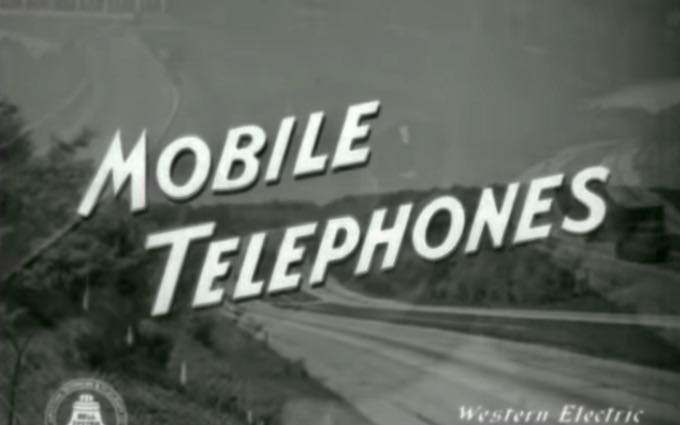
Video: The Bell Telephone 1940s era mobile network

Earlier this week, I stumbled upon this Bell Telephone short film about the beginnings of the mobile phone network:

I don’t know about you, but I love the view inside the trunk of the car! I bet that tube receiver and transmitter both weighed over 100 pounds. Although the system wasn’t full duplex, it must have felt pretty amazing to place phone calls while mobile.

For more vintage films like this one, check out the Periscope Film YouTube channel.

Radio Waves: Radio Bulgaria, Asur Community Radio, Digital Sign Compliance, and a Sound Card Scope

Radio Waves:  Stories Making Waves in the World of Radio

Because I keep my ear to the waves, as well as receive many tips from others who do the same, I find myself privy to radio-related stories that might interest SWLing Post readers.  To that end: Welcome to the SWLing Post’sRadio Waves, a collection of links to interesting stories making waves in the world of radio. Enjoy!

Many thanks to SWLing Post contributors Marty, David Iurescia (LW4DAF), and Phillip Novak for the following tips:


Radio Bulgaria to resume its audio broadcast (Bulgarian National Radio)

“Radio Bulgaria needs to resume its sound presence and we are to work together with the team, in order to build a firm concept in this direction.” This was what BNR Director General Andon Baltakov said in his first interview with Radio Bulgaria.

On the eve of Radio Bulgaria’s 84th anniversary, which is celebrated on February 16, 2020, Mr. Baltakov said that broadcasts of the National Radio aimed for foreign countries would be modernized, but would preserve their philosophy – being Bulgaria’s window to the world and vice versa. You can read the whole interview here. []

Radio aids revival of dying tribal language (The Hindu)

Tucked away in the hills of Jharkhand’s Latehar district, Asur, a particularly vulnerable tribal group, may not have access to good road or means of transportation to the outside world, but that has not deterred them from saving their language. Using mobile radio, the Asur community has been spreading the popularity of the language within their geographical limits.

As the voice Dahan-Dahan Turrarr .. Dang T inatang Turrarr.. Noa Hake Asur Akhada Radio Enegabu Degeabu Siringabu Urrarr (Come, sing, dance and talk.. This is Asur Centre Radio) is played out through loud speakers, the bustle at the weekly market at Kotia seizes briefly, as people turn their attention to the sound system that transmits songs and news transmitted in their native language.

Attention of the Asur tribals assembled at the market is immediately diverted to the sound system that transmits songs, news and information about government schemes — all in their native dialect.

[…]“The initiative has got a huge response from people. Now, villagers are requesting us to organise events at their places and they are also interested in preparing radio programmes,” said Ms. Tete.

“When we started working on languages, we focused on five tribal and four regional languages. Then we realised that the bigger groups can take care of their own languages, but smaller communities need help,” said Ms .Tete.

[…]Youth from the community are also being encouraged to write poems in their language and older ones narrate their experience in their own language.[]

FCC Digital Sign Compliance (International Sign Association)

The U.S. Federal Communications Commission (FCC) continues to cite businesses because digital signs are interfering with the wireless spectrum, creating problems with commercial and public wireless devices. This may occur because the signs are operating at Electro Magnetic Interference (EMI) levels not allowed under U.S. federal law and in violation of FCC regulations.

Click here for frequently asked questions to better understand these issues.[…]

How To: Surface Mount Soldering (Nuts & Volts)

Some people tend to shy away from using surface-mount components in their projects. It seems to be too difficult or needs an array of specialized equipment. In the past, I found myself in this same mindset — wary of using these types of parts. That all changed when I got involved with an open source motor controller project (OSMC).

It used a mix of surface-mount and through-hole components. I took the plunge and built up a pair of OSMC H-bridge boards and the MOB (Modular OSMC Brain) controller board which I used in the Battlebot Crash Test Junior.

At the time, there was little information available on how to mount these parts using an ordinary soldering station and tools that most hobbyists would have on hand. Not wanting to invest in a whole new set of tools (hot air stations, etc.), I experimented a bit and used common sense techniques to get the job done. A point I’d like to stress is the myth about requiring anything exotic to work with most surface-mount parts. I don’t own or use any special soldering equipment for this. All of the soldering that I’ve done on surface-mount boards is built with an old Weller WTCPT station and TC201 soldering iron. It has the fine tip that came standard on it. If you happen to have access to specialized tools, go ahead and use them but you still may find these tips helpful. It has been my experience that depending upon your techniques, you can get by just fine in most instances without specialized tools.[]

Turn Your Computer’s Sound Card Into A Scope (Nuts & Volts)

I’ve been using an oscilloscope for almost 50 years. It’s my go-to measurement instrument in every electronics project I work on, helping me debug and fine-tune hardware and software projects.

In this article, I’ll show how you can get started with a simple-to-use scope you probably already have. Best of all, it’s free! When you graduate from this simple scope, you can purchase a more powerful scope using the exact same user interface.

Full disclosure: I love scopes so much, 10 years ago, I joined Teledyne LeCroy — the third largest scope manufacturer in the world behind Tektronix and Keysight. However, I use the Digilent Analog Discovery 2 Scope (described in this article) in all my hobby activities and in the workshops I teach at Tinkermill — our hackerspace in Longmont, CO.

I think the free scope control software, Waveforms, is the simplest to use, most feature-rich pro-level software of any of the available options. Using a sound card as the hardware interface with Waveforms puts a simple — yet powerful — scope in your hands for free.[]


Do you enjoy the SWLing Post?

Please consider supporting us via Patreon or our Coffee Fund!

Your support makes articles like this one possible. Thank you!