Author Archives: Thomas

VE7SL explores DXing the utilities

Photo: US Coast Guard

Many thanks to SWLing Post contributor, Eric McFadden (WD8RIF), who shares a link to this excellent article by Steve (VE7SL) where he explores his success DXing utility stations on shortwave:

(Source: VE7SL)

DXing The Utilities (Part 1)

After building the house here on Mayne Island, in the early 90’s, it was several years until I was able to set up a dedicated station. In the meantime, I limited my radio activities strictly to listening. I had a nice Icom R-71A set up in a hall closet and spent my radio-time, mostly on weekend evenings, listening to maritime CW, HF aeronautical traffic and, of course, NDBs below the broadcast band.

My HF receiving antenna consisted of three inverted-V’s … one for 160m, the second for 80m and the third for 40m … all fed from the same coaxial line at the top of a 70′ Balsam. It didn’t take long to realize what an exceptional radio location I had, living right at the edge of the ocean, with dozens of miles of saltwater in most directions other than due west.

I really enjoyed following evening airline flights across both the North and South Atlantic, and in the early winter afternoons, following the commercial air-traffic all over Africa. Even though listening on 5 or 6MHz, I was amazed at how strong the signals from airliners over Africa at 30,000 feet or more could become, this far to the west. In the early mornings, directions were reversed and traffic from the far east, right into India, was fairly common. Often, small single-engine planes, usually run by various missionaries, could be heard while on the ground, taxiing at remote field locations and calling in via HF radio to request takeoff and flight-following.

Now QSL’s have always been one of my top radio interests and it wasn’t long before I started sending and collecting verifications for both the aircraft and the ships I was hearing … once I had figured out how to get my reception reports to their proper destinations.[…]

Click here to continue reading Part 1 of “DXing the Utilities.”
Click here to read Part 2.

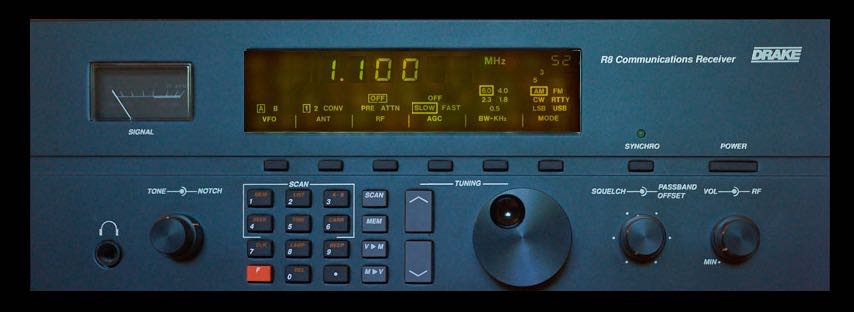
Jeff’s Drake R8 has been online for 24 years and counting

Many thanks to SWLing Post contributor, Jeff Chilton, who writes:

I’ve been finding myself at your excellent SWLing Post site frequently of late.

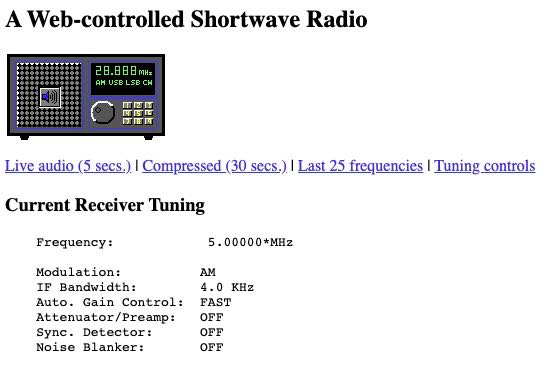
I wonder if you’ve seen my online shortwave receiver website. It’s been online since 1995, when it looked like this:

It still controls the same old Drake R8 receiver at my house, but I recently rebuilt the pages and server code to make the interface more interactive and improve the audio streaming. It’s now at:

https://www.chilton.com/R8

It is still new, and there’s a lot of Javascript involved so could be a compatibility issue but please do give it another try.

Thanks, Jeff! I’ve spent a little time tuning the R8 and the interface is quite intuitive. With that said, readers, ergonomics was not the original Drake R8’s strong suit. If you’ve never used one, it takes a while to learn to use change filters, select modes, etc. via the row of six buttons above the keypad and encoder.

Also, Jeff’s R8 is not the U Twente web SDR–I’m guessing it can only handle one operator at a time, so we’ll see how this goes as everyone checks it out today!

Click here to check out Jeff’s Drake R8.

Free Radio Skybird returns December 8th and 15th

(Source: Pete Madtone)

Next Sunday 8th December at 1700 UTC/UK will be a new transmission from DJ Frederick’s Free Radio Skybird on 6070 kHz shortwave via Channel 292 and if you haven’t got a suitable radio it can also be heard on the SDR link on their site here. The show will be rebroadcast the week after on Sunday 15th December at 1100 UTC/UK also on 6070 kHz.

This month’s programme will feature: Justin Patrick Moore’s Radiophonic Laboratory, Steve with Indie Science Radio and our very own One Deck Pete presenting the Skybird Mailbag. Also there’ll be an airing of Pete’s “Bouncing off the ionosphere” that has new tunes from: UK DDKoko, Maxime Tisne-VersaillesAmy Root and Ernest Freeman.

The programme will be available on DJ Frederick’s Soundcloud page a day or so before transmission date if you want to hear it in true stereo but we here prefer the show via the ionosphere. Tune in and turn on! #shortwavesnotdead #madtone #freeradioskybird

Los Altos History Museum features “Ham for the Holidays” 

(Source: Southgate ARC)

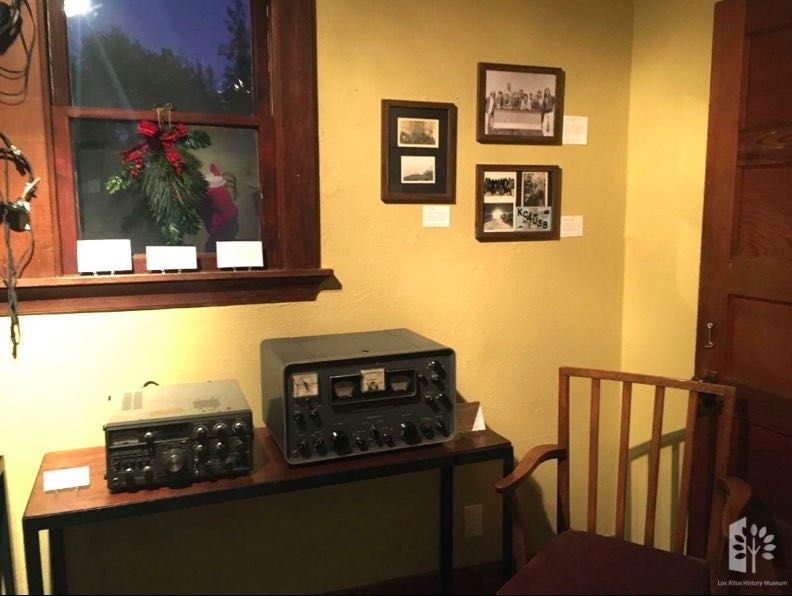
The Los Altos History Museum serves up “Ham for the Holidays: Amateur Radio Operators, Then and Now,” a historical perspective on how radio hobbyists help keep neighborhoods safe during disasters, in an exhibit appearing in the J. Gilbert Smith House through January 5, 2020.

They say: Tis the season for giving thanks, and around the holidays we are especially grateful for our local amateur radio operators. Known as “hams,” these volunteers help keep our community safe throughout the year at regular public events and during times of crisis. In this exhibit, learn more about the history of hams and how a fun hobby can also keep our neighborhoods prepared and resilient.

The exhibit is free to the public, and open Thursday-Sundays, noon-4pm

https://www.losaltoshistory.org/exhibits/ham-for-the-holidays/

Los Altos History Museum, 51 S. South San Antonio Road, Los Altos, CA, USA

“The Spy” dramatizes careless use of covert QRP HF CW transmissions

Many thanks to SWLing Post contributor, Ed, who writes:

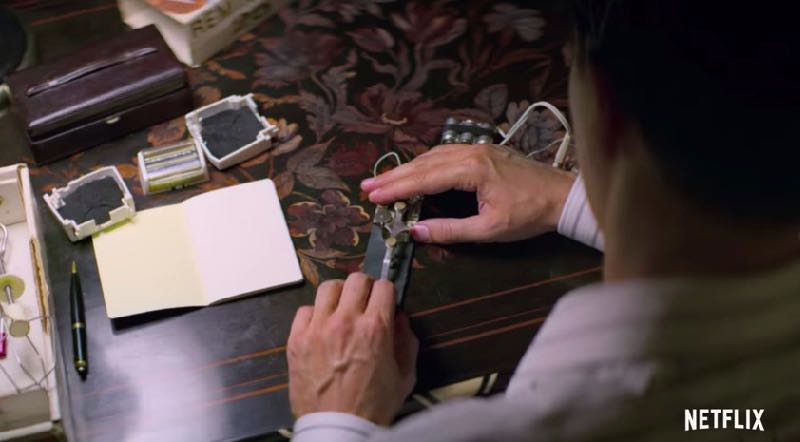
The new 6-part Netflix series ‘The Spy’ about the Mossad agent Eli Cohen (played by Sacha Baron Cohen) who infiltrated Syrian military intelligence from 1962-1965 dramatizes his careless use of QRP HF CW transmissions in Damascus, which were DF’d to track him down.

SWLing Post readers might find the series interesting, especially segments depicting Mossad’s use of covert QRP HF CW transmissions.

Radio-savvy viewers will find unintended humor in the use of a transistor AM radio circuit board, tiny batteries, and no antenna(!) to send CW messages from Damascus to Israel–and in the comical depiction of a Soviet/Syrian radio HF DF van. You’d think a TV series with star power could’ve found a willing ham or film crew member to lend some basic technical expertise.

Links:

Thanks for sharing, Ed! I’m sure this is a great series. And, yes, I suppose this wouldn’t be the first time the movie industry made an attempt at authenticity but fell just a little short! Since that’s such a key part of the film (no pun intended!), you would think they could have consulted an expert to make the setup authentic while preserving the integrity of the scene.

ABC’s review of shortwave broadcasting released

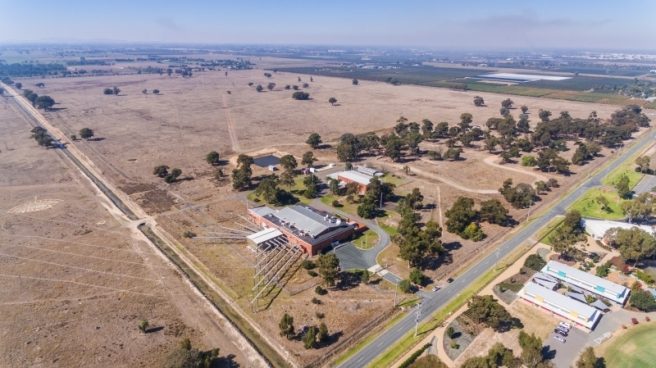
Many thanks to SWLing Post contributor, Michael Bird, who shares a link to RadioInfo that summarizes the recently-released “Review of Australian Broadcasting Services in the Asia Pacific” by the ABC. Micheal notes:

So what do we take from this report? No recommendations. The status quo continues although there were many respondents who would favour [shortwave radio’s] return:

“There are no formal recommendations for action, only a finding that the Government “clarify the objectives of its Asia Pacific broadcasts… in achieving Australia’s broader strategic policy objectives, as well as the target audiences for those broadcasts.”

Click here to read the full article at RadioInfo.

Click here to download the full report [PDF].

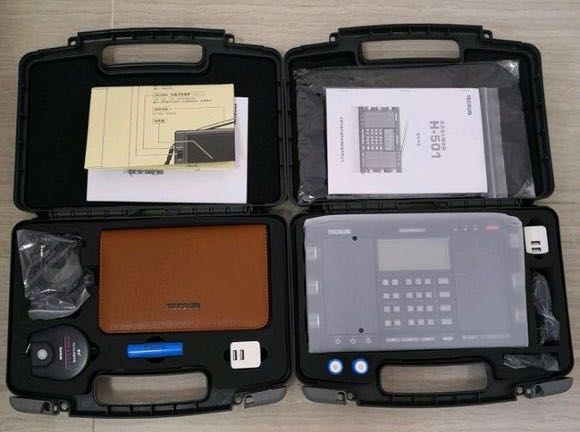
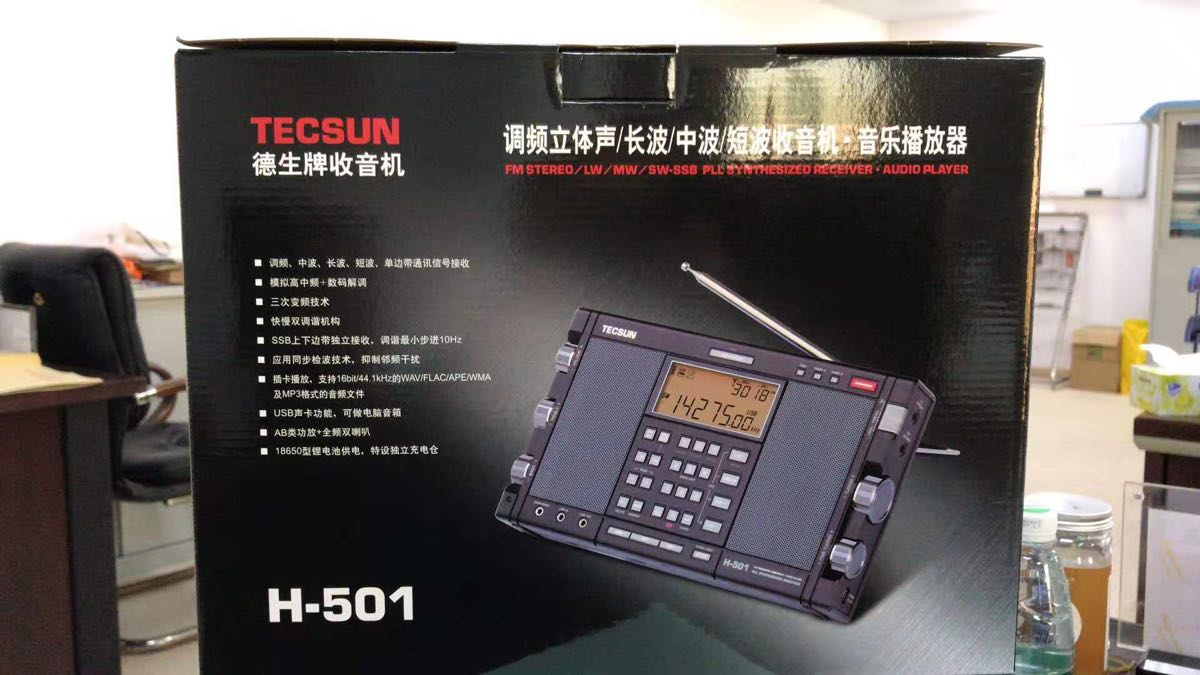
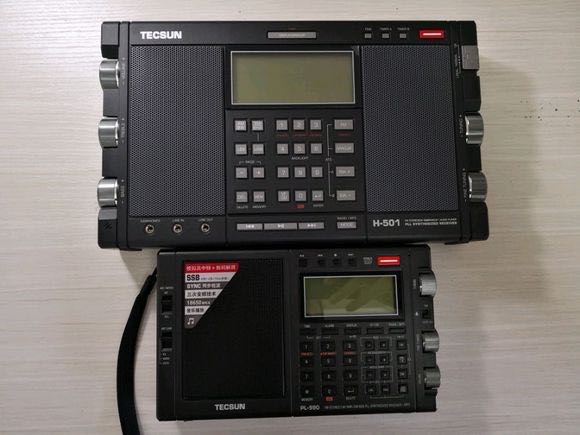
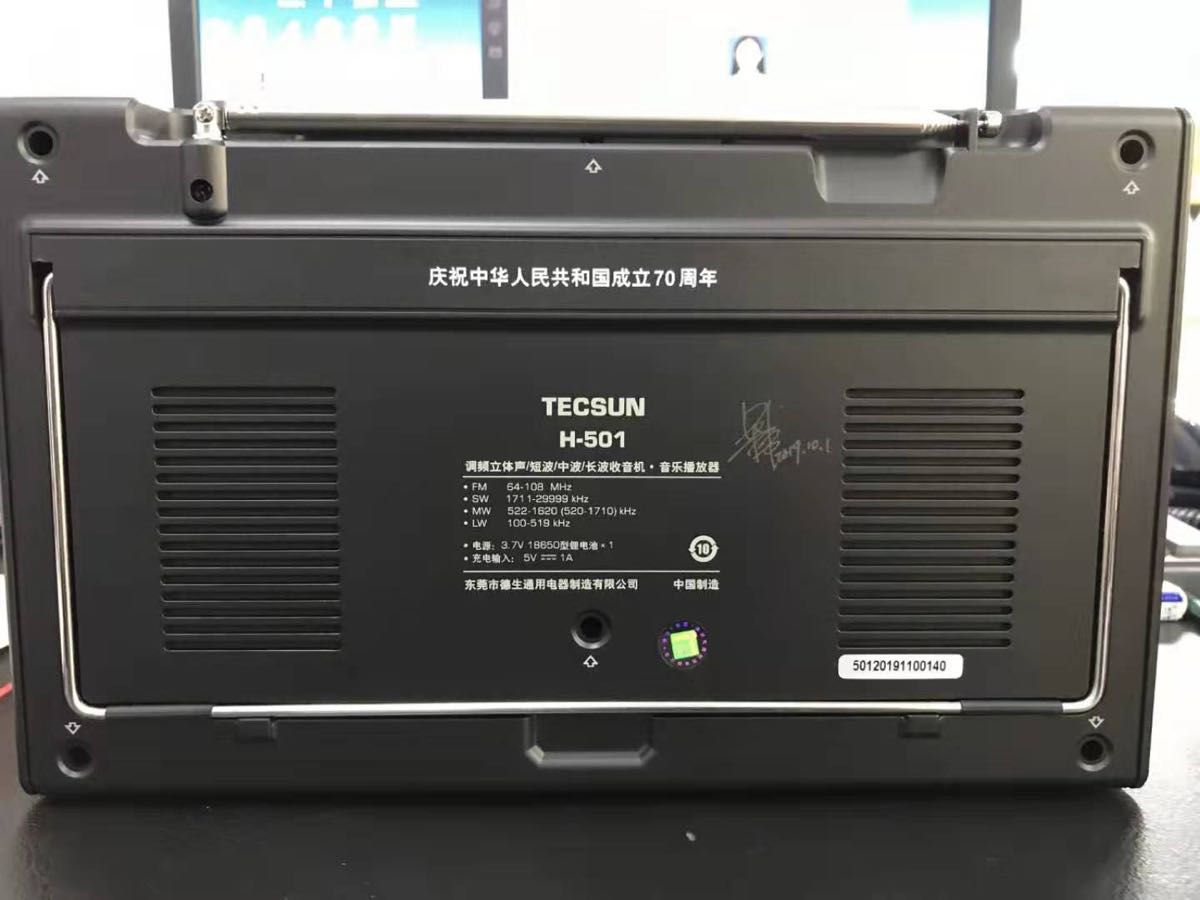
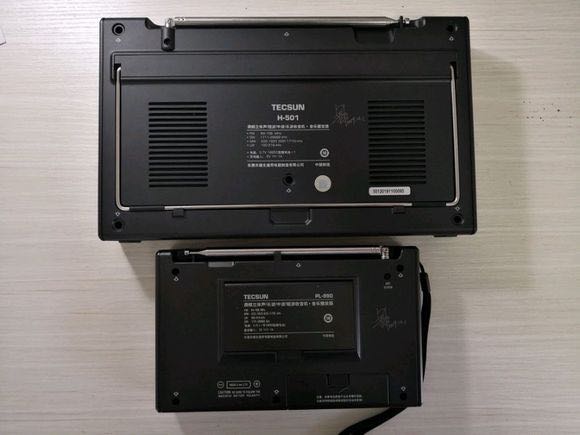
Tecsun PL-990 and H-501 may be the last high-end shortwave portables from Tecsun

Many thanks to SWLing Post contributor from China, Mei Tao, who writes:

I would like to share the latest news about Tecsun’s New Products: the PL-990 and H-501.

These day I found that several Chinese BCLers who received the PL990 or H501 one after another–they posted many a detailed pictures of these two radios. Lots of my friends asked me when they could buy these two radios on the market.

Then I asked the Tecsun’s boss, Mr Liang.

He replied that they had begun to supply the PL-990 and H-501, but there were only a quantity of 300 in the first batch. These radios were first supplied to the subscribers who pre-ordered PL-990 or H-501 in October. Therefore other customers would have to wait for the second or the third batch. As for the foreign BCLers, I believe the wait time will be longer.

In addition, there is a bit of bad news: Mr Liang told me that PL-990 and H-501 were the last products he led the team to design, and they were his last masterpieces. In other words, the PL-990 and H-501 may be Tecsun’s last high-end portable and desktop radios. What a pity!

Thank you for sharing this, Mei Tao. Yes, that would be a pity indeed if the PL-990 and H-501 end up being the last high-end portables from Tecsun. I suppose it’s not surprising, though, as I’m sure some of the demand for shortwave radios is on the decline at the same time so many inexpensive DSP-based portables are saturating the market.

Two years ago I heard from a reliable source that Tecsun might be pulling the plug on their high-end portables, so I was quite surprised when I saw the PL-990 and H-501 announcements earlier this year. I suppose these models could be a “last hurrah” and certainly a way to mark the PRC’s 70th anniversary (as we’ve seen on some of the radios’ promotional material).

Regardless, I’m looking forward to reviewing both of these radios. Frankly, I’m quite happy a few hundred production models are in the hands of enthusiasts in China. Hopefully early adopters have given critical feedback to Tecsun so that when the first major production run is exported, the units will have been well-vetted and solid performers.


Do you enjoy the SWLing Post?

Please consider supporting us via Patreon or our Coffee Fund!

Your support makes articles like this one possible. Thank you!