
By Don Moore
More of Don’s traveling DX stories can be found in his book Tales of a Vagabond DXer [SWLing Post affiliate link]. If you’ve already read his book and enjoyed it, do Don a favor and leave a review on Amazon.
I’m spending April and May wandering around northern Spain and northern Portugal. My goal is to visit places I haven’t been to before, but I also have to return to Salamanca. I had been there twice before, but Salamanca is the kind of place that draws a person back. I love to wander the back streets of the old city. I also wanted to find some things I hadn’t done before, and that’s how I came across the Museo del Comercio (Commerce Museum) in a modern neighborhood east of downtown. That may not sound very interesting, but I knew immediately that I would have to go. One of the two main permanent exhibits is a collection of old radios.
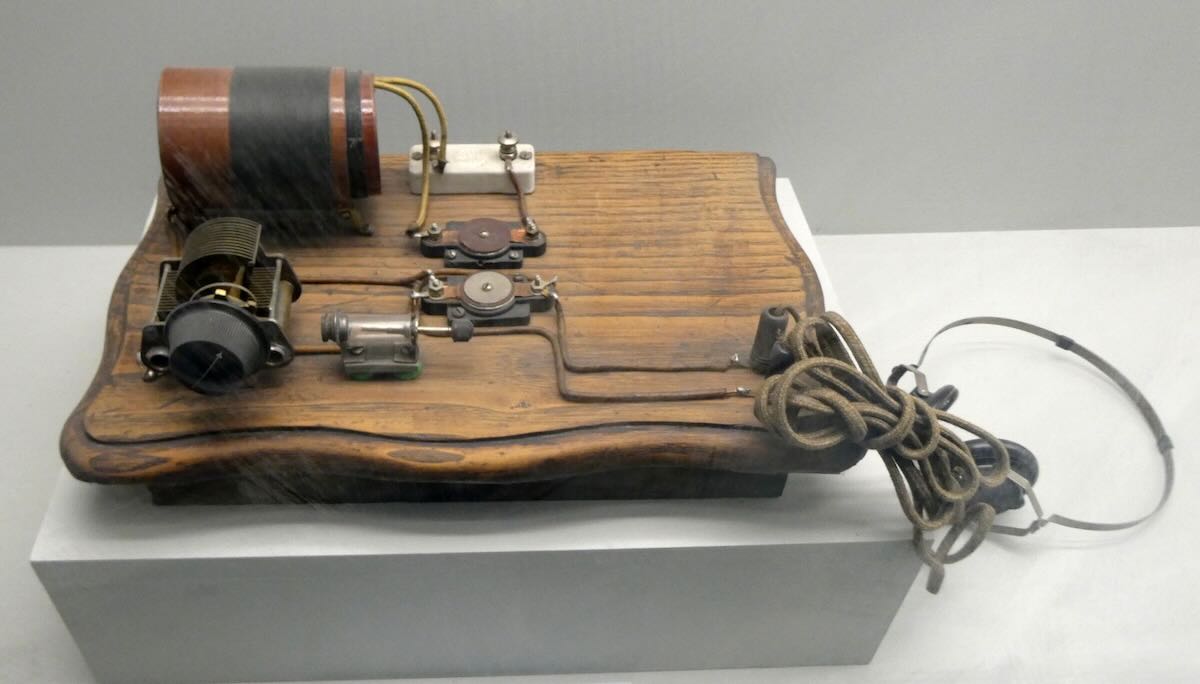
Most of the items on display came from the collection of Agustín De Castro. Agustín was born in Salamanca in 1928 and began building radios when he was eight years old. Here’s one of his early radios.
As a young man, he went into electronics and eventually operated his own radio store and radio repair business in Salamanca. He donated his vast collection to the city in 2002, and in 2006, it became part of the new Museo del Comercio, which was opened in Salamanca’s old underground brick water cistern.
I might only DX on modern SDRs these days, but I still love looking at old radios. Everything here is in excellent condition and is kept in glass display cases to keep it that way. Unfortunately, that does make it harder to get good photos without getting glare or reflections. But I think these came out pretty well.
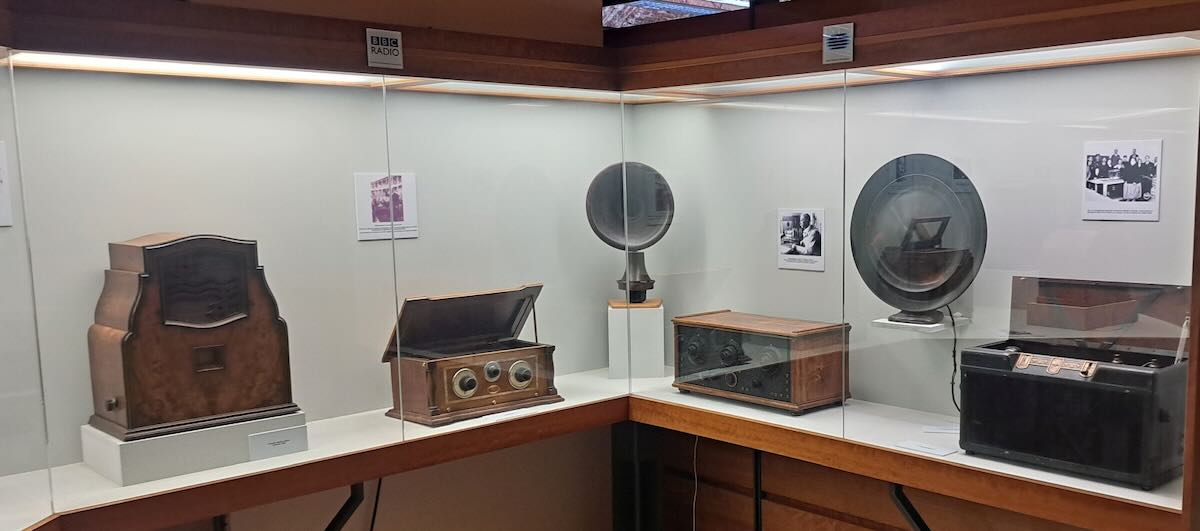
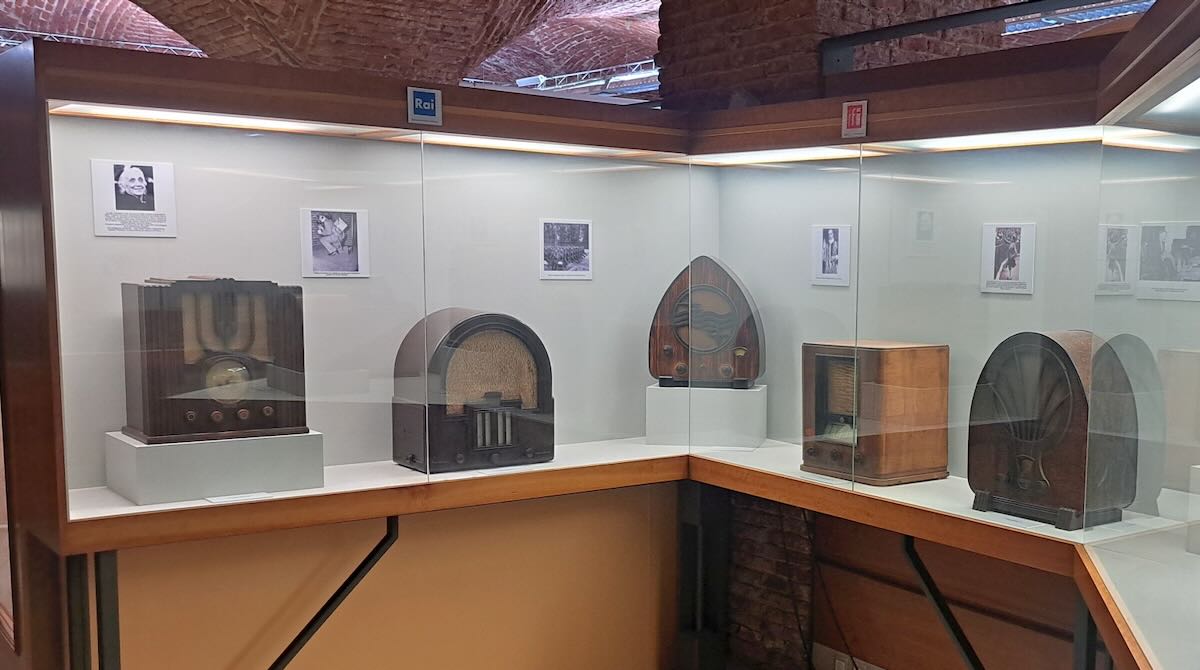 Let’s start with a closer look at a few of the more usual pieces.
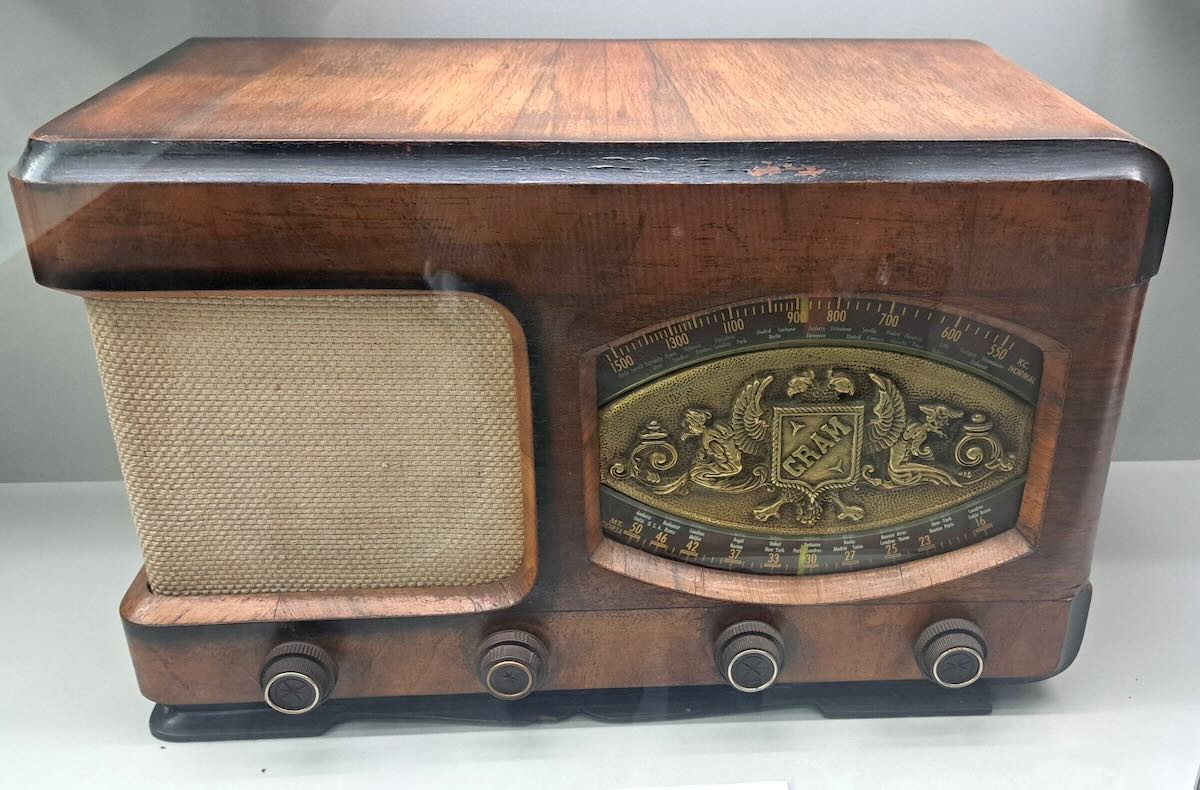
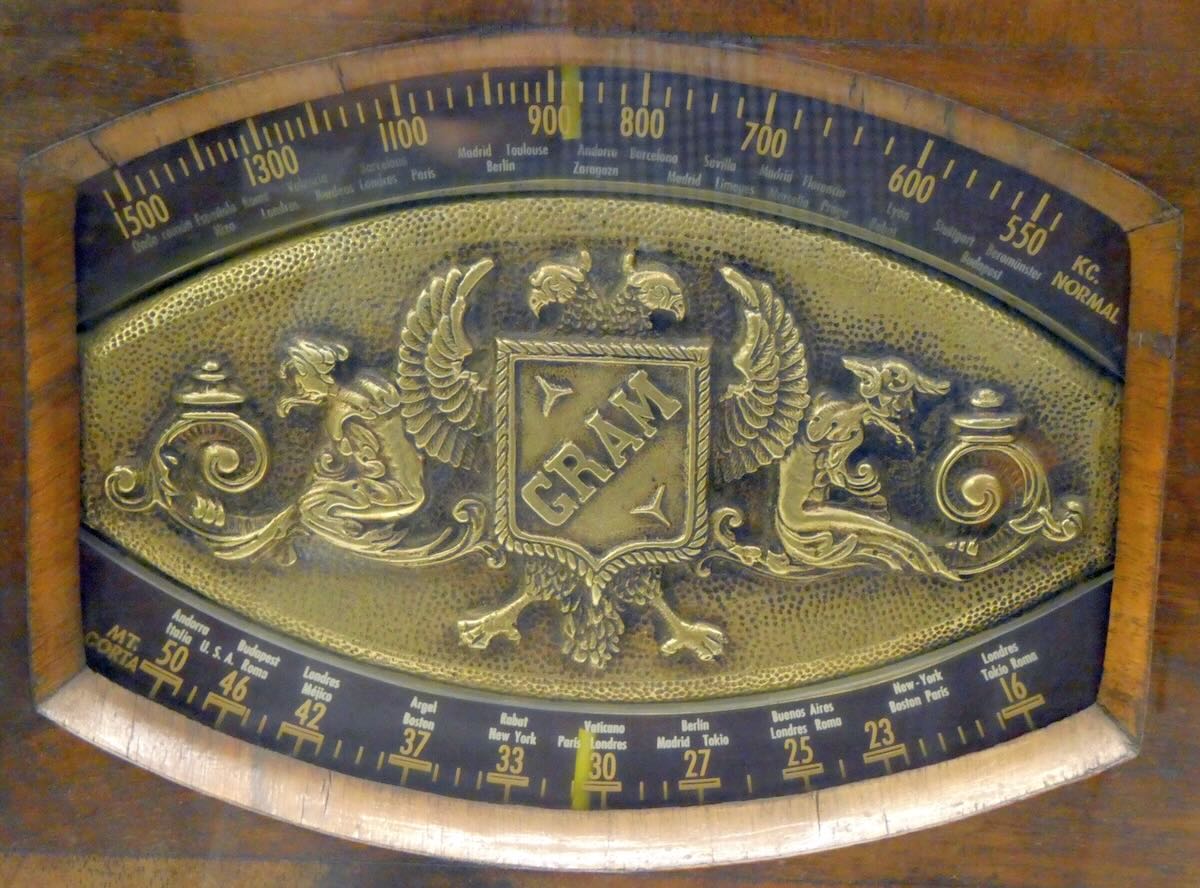
The Gram Model 157 was built in Spain in 1947. I liked this one for the fancy logo on the dial. Note that while the medium wave band at the top is marked in kilocycles, the shortwave band at the bottom still used meters.
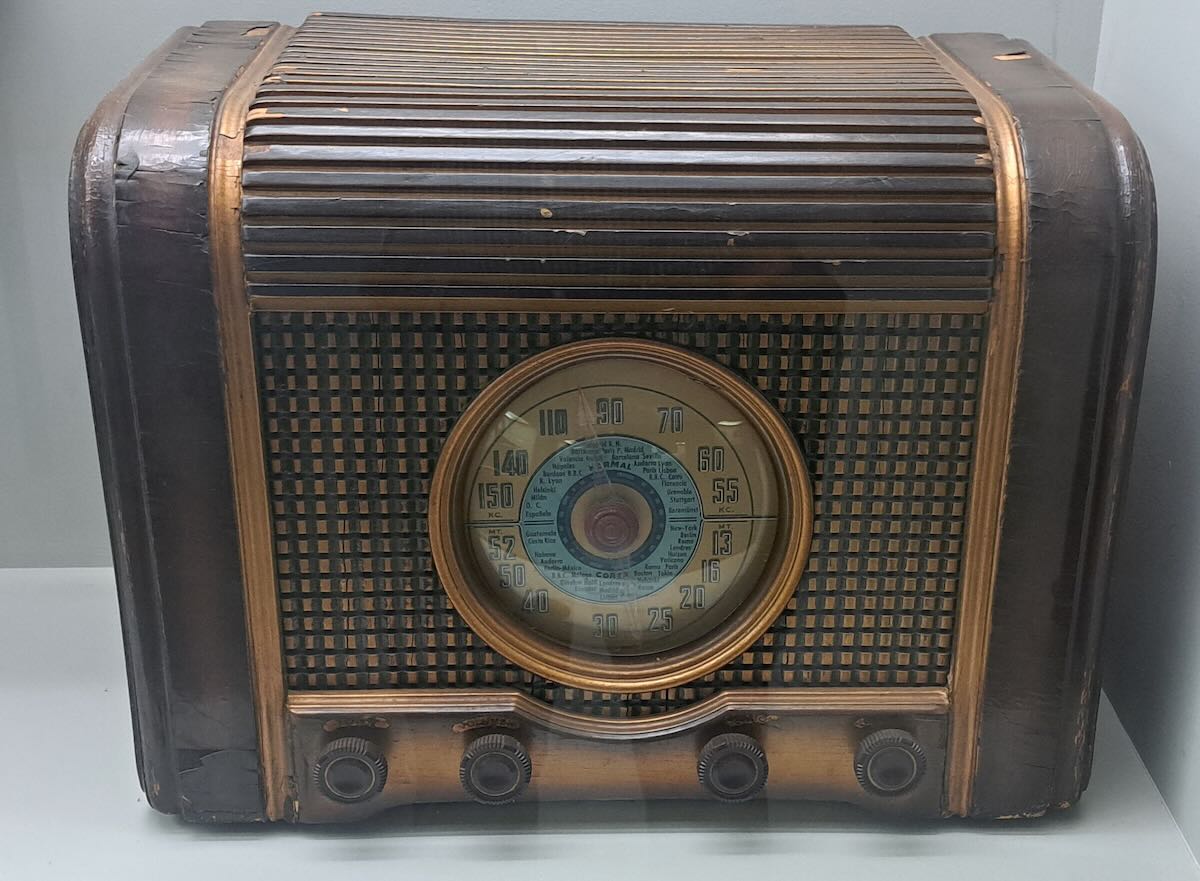
The Fono model 140 was also made in Spain in 1945. Again, the dial used kilocycles for medium wave and meters for shortwave.
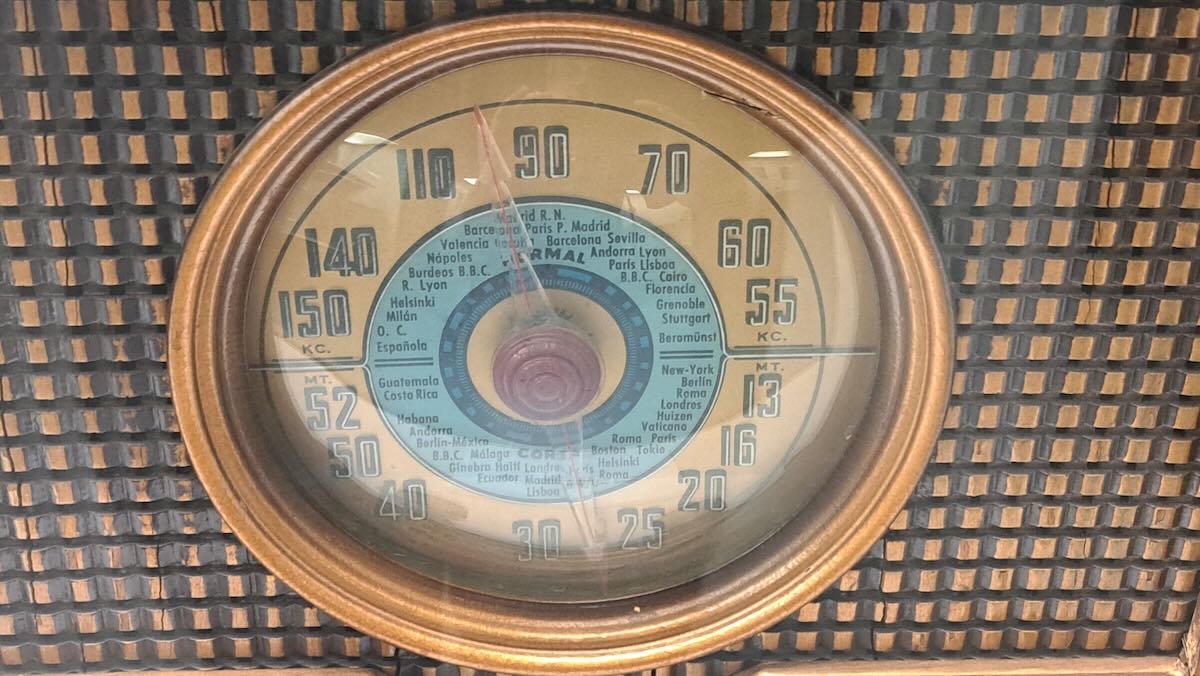
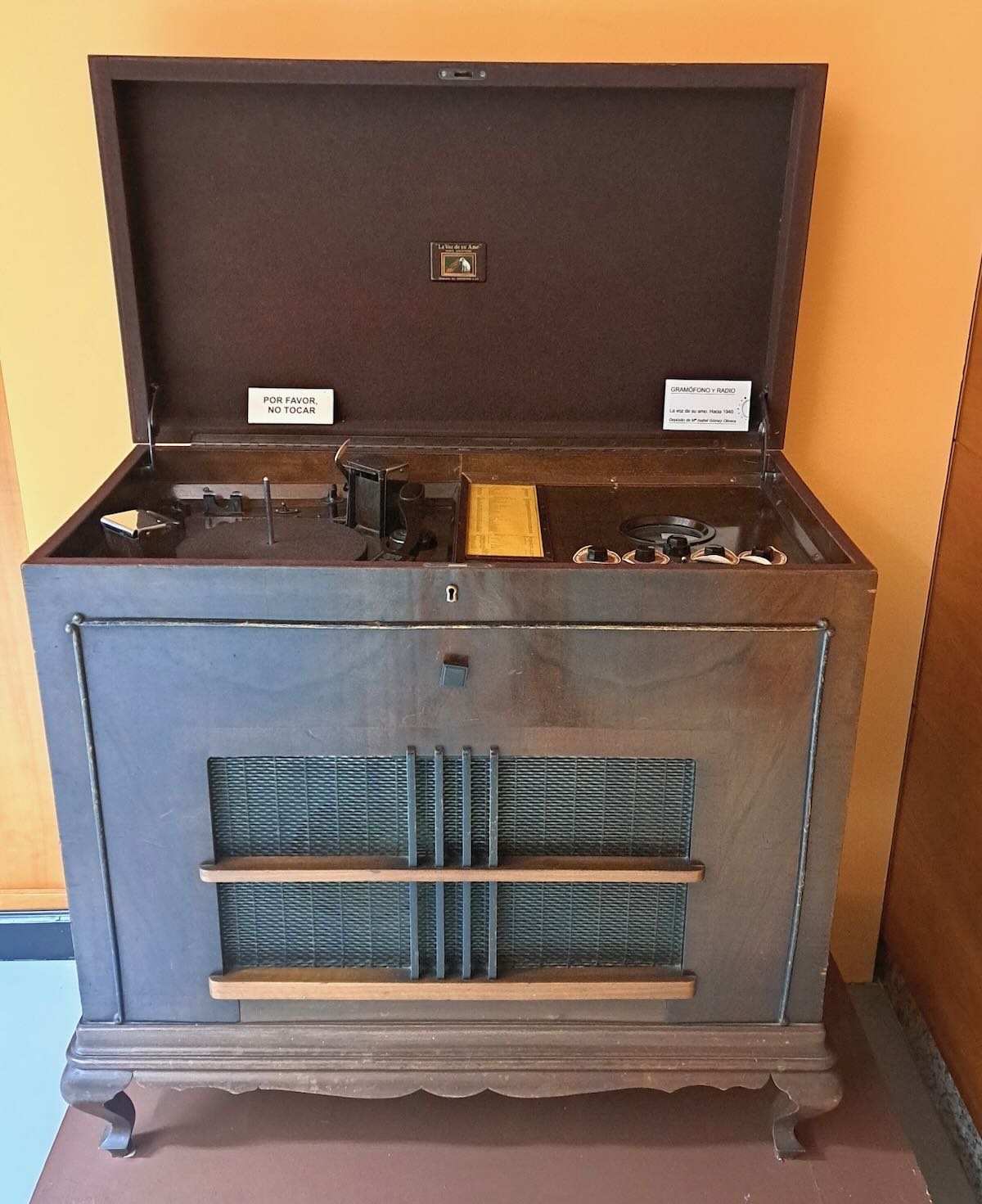
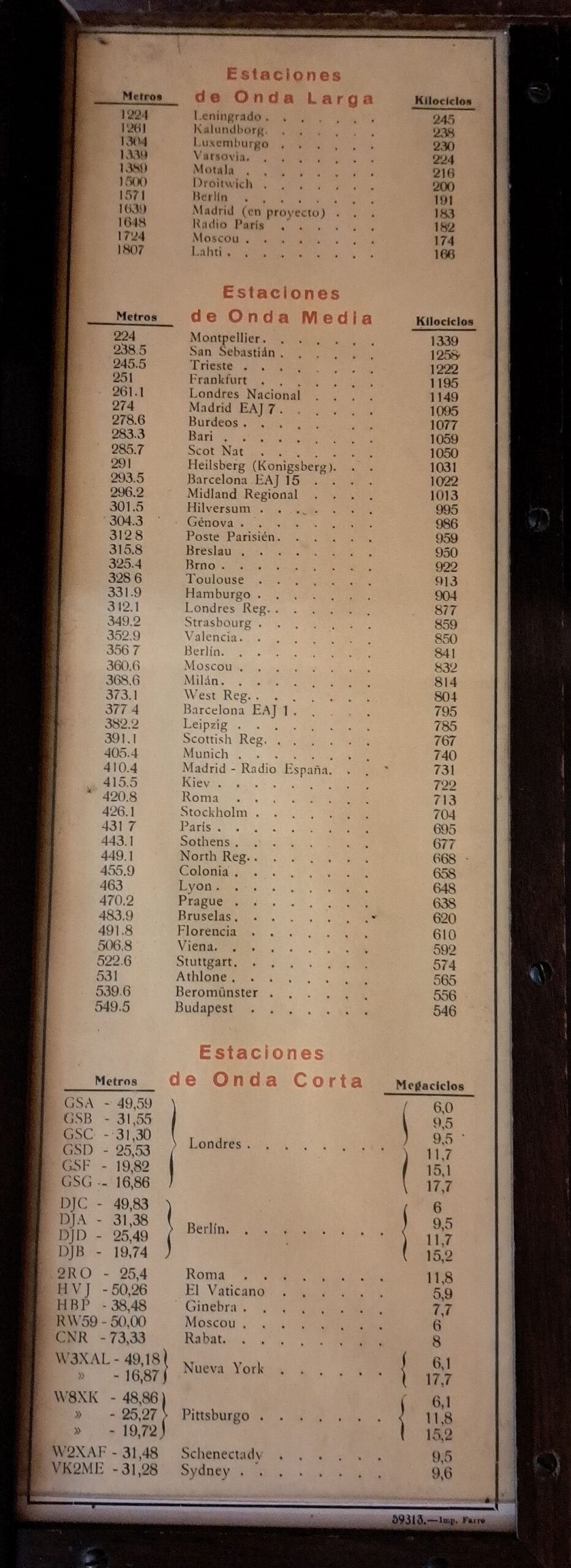
This 1940 RCA radio/phonograph is one of the few items that didn’t belong to Agustín De Castro. What caught my eye was the original station list inside.
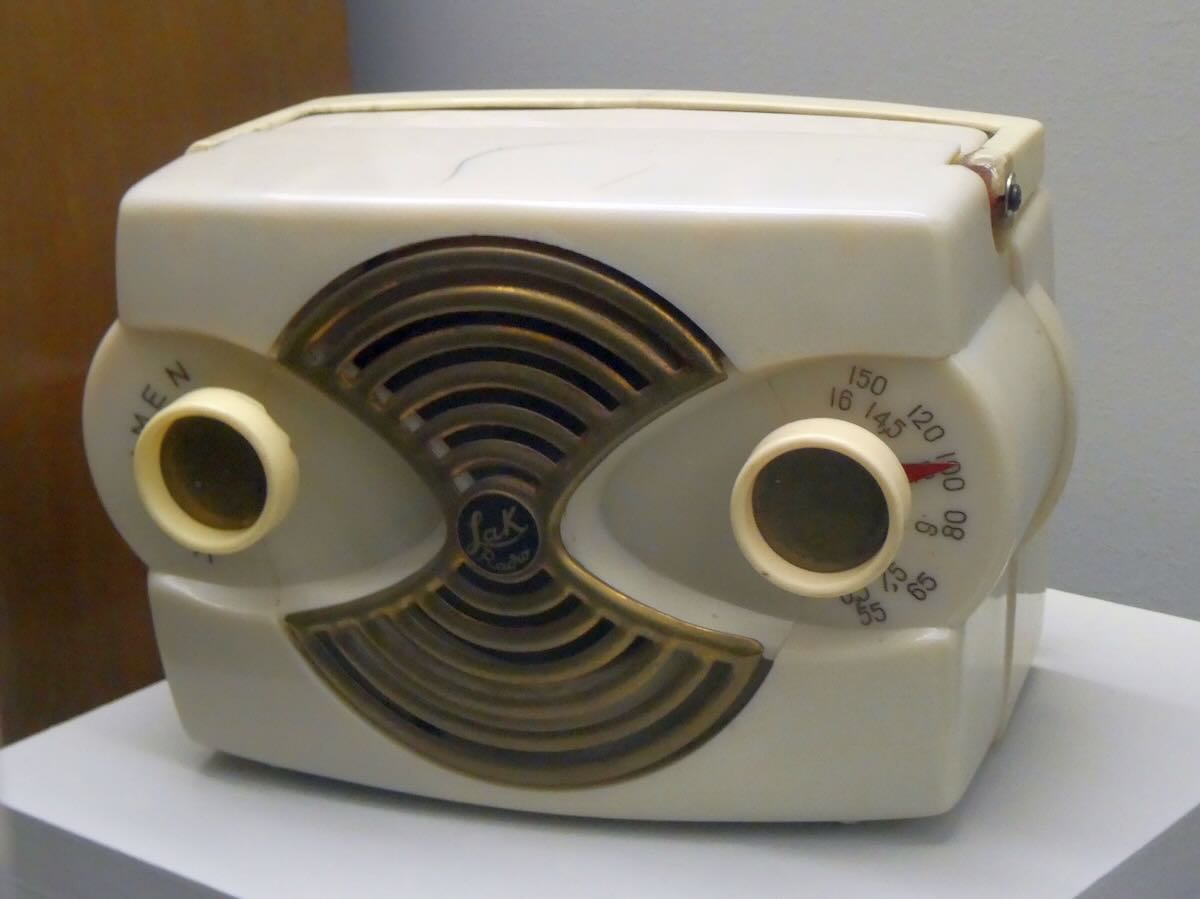
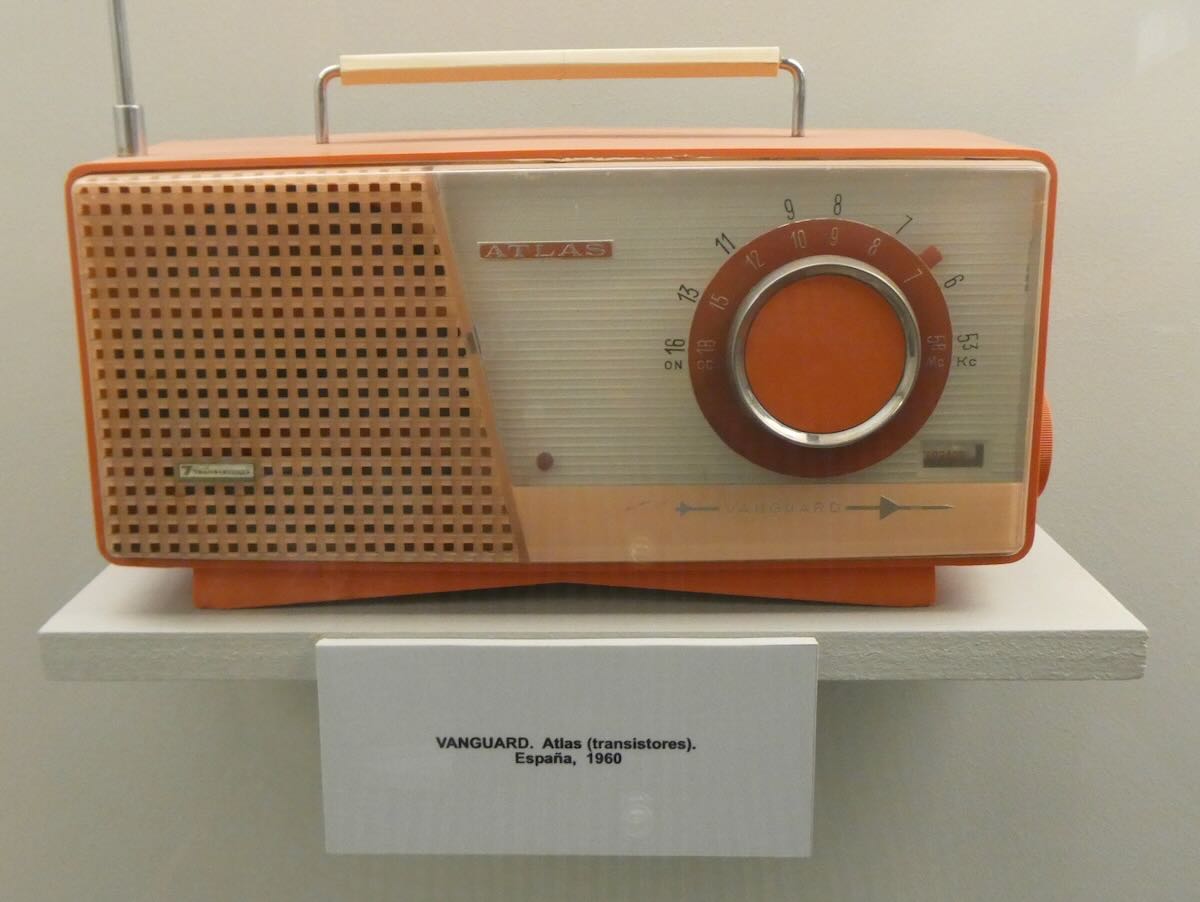
The LAK Radio was a small set made in Spain in 1950. It’s also medium wave and shortwave, but now the shortwave dial has frequencies instead of wavelengths. Likewise, the 1960 Vanguard Atlas from Spain uses only kilocycles.
Two Unusual Designs
The next two sets will show that there were some rather unusual designs coming out of France. This first set is a Philips A-48-U made in France in 1942. The dial is on a panel that folds down when the radio is being used and then snaps back up when it’s not in use. I think the idea is to give the user a way to put the radio away without having to move it. Notice that the knobs are also mostly hidden. The tuning knob just barely sticks out from the front of the fold-down panel. Two other knobs are at the bottom of the speaker grill on either side.
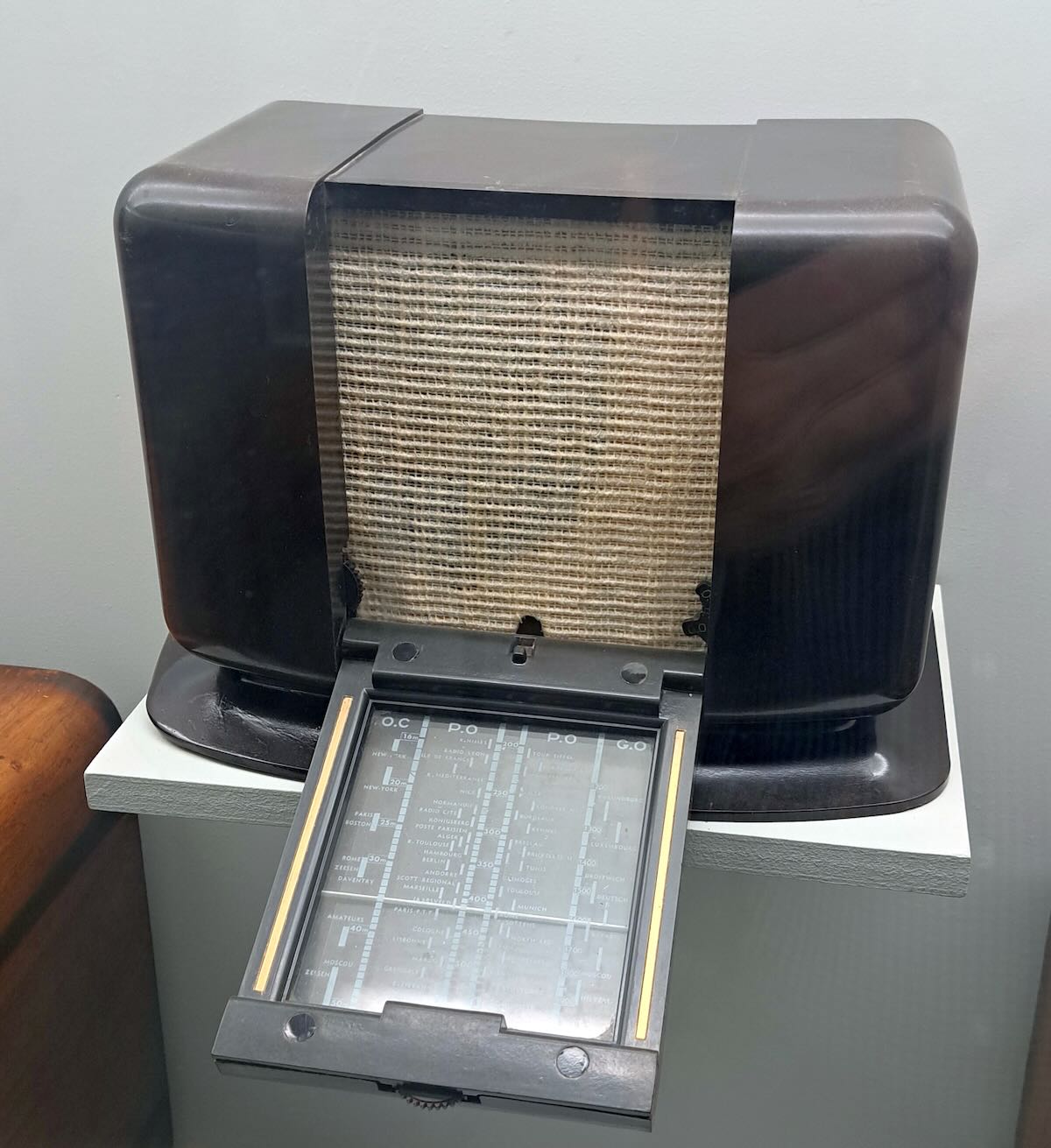
I wish I could have gotten a better picture of the dial markings on this, but there was too much glare at other angles. The A-48-U was only produced in 1941-42 in Paris, which would have been under Nazi occupation at the time. Nevertheless, the dial still lists Daventry, London, and Droitwich, although it would have been illegal to listen to those British stations in occupied France. The dial also shows New York, Boston, and Moscow, but it’s possible the plates were made before the USA and USSR were part of the war.
But now let’s look at something really unusual. The Abel Gody company of Amboise, France made radios between 1919 and 1954. I did a Google image search of the company and all the photos were of radios that looked pretty normal for the period. So just what were they thinking in 1934 when they built the 6700-B, also called the Gody Psyché?
This is not just another radio in a wooden box. It’s gorgeous. The cabinet is made of quality wood and has interesting angles and an intricate design over the speaker. Someone put some serious work into this. The knobs don’t have labels, but I’m guessing the labels wore off. Then there’s the dial. The dial is on the top of the radio, and all the writing on it is backward. The radio is designed so that the user looks at the dial in an angled fold-up mirror. And there aren’t even any frequency or wavelength numbers – just names of cities.
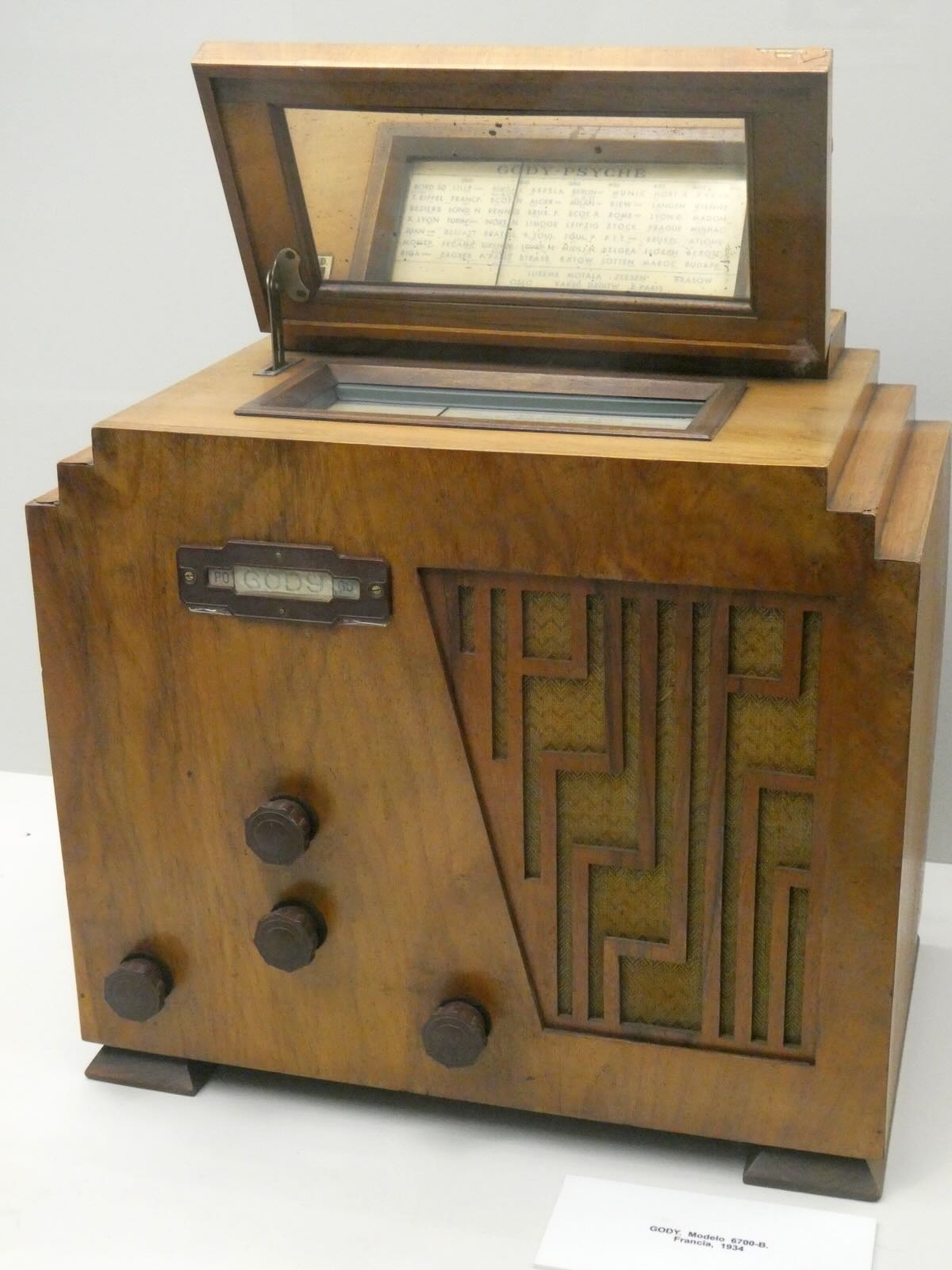
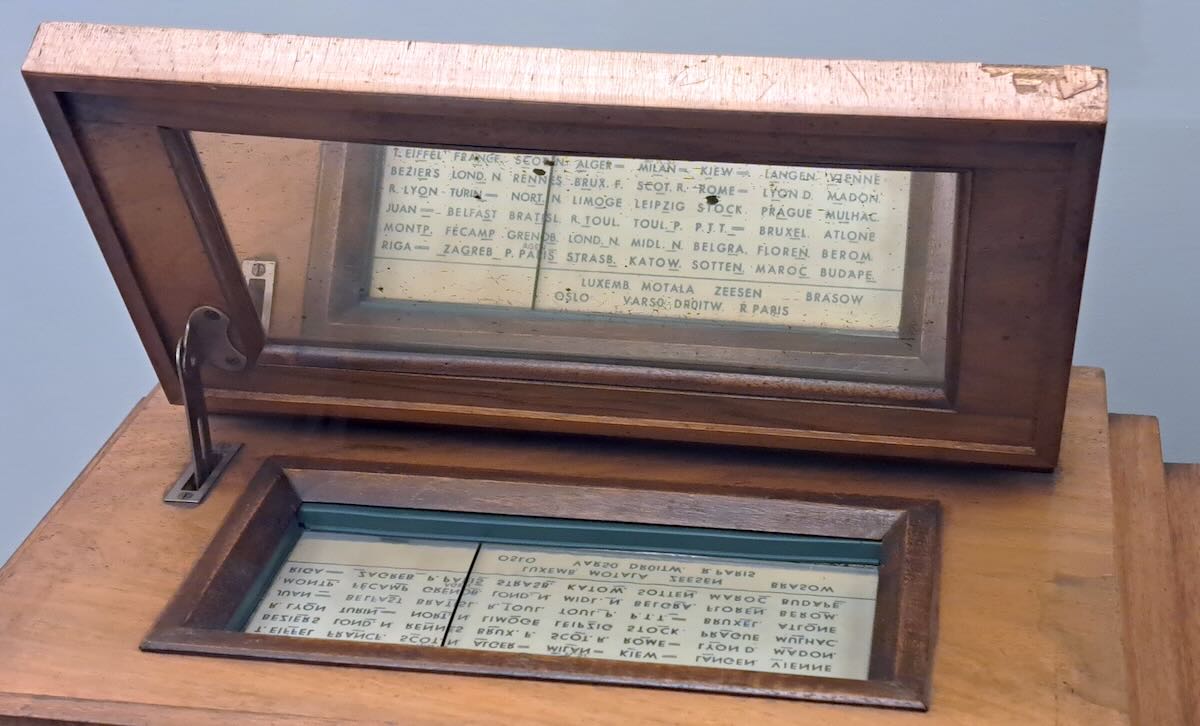
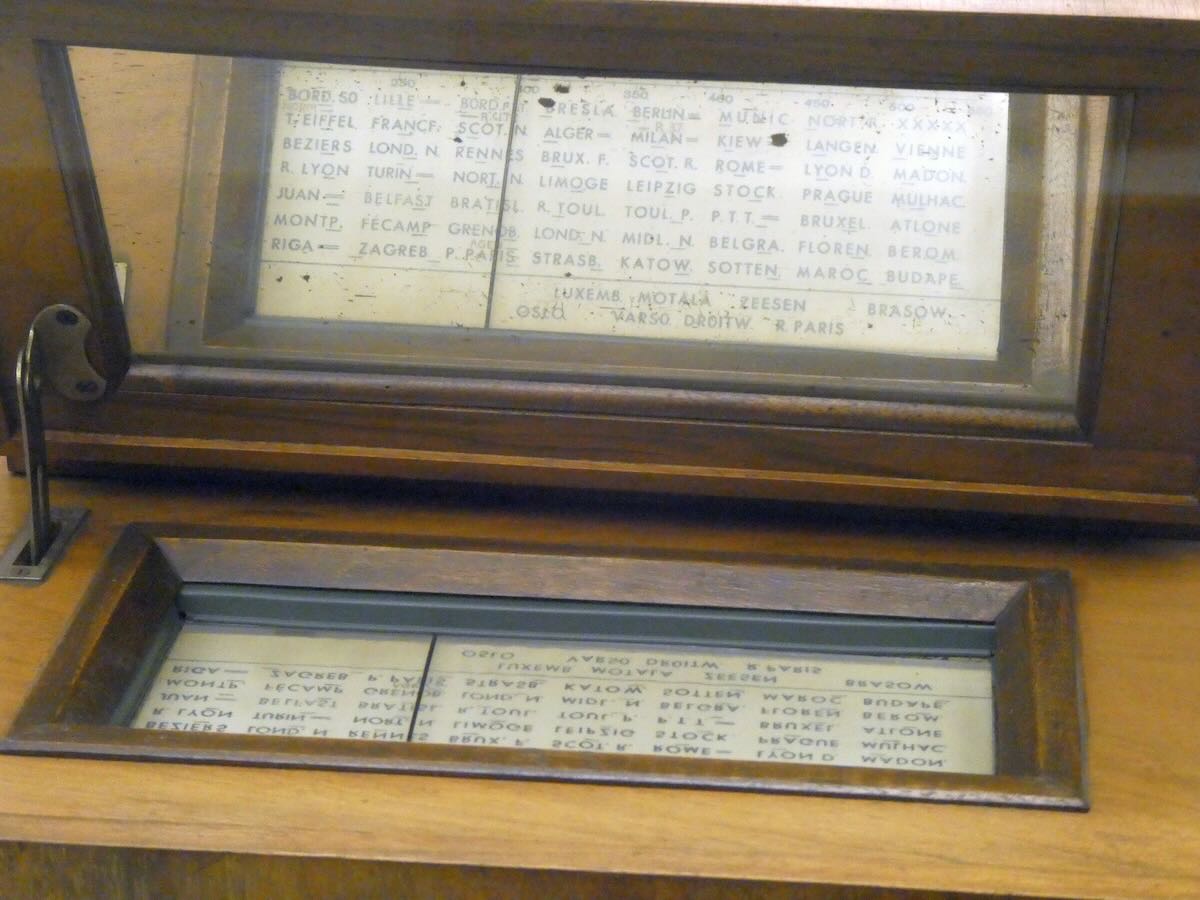
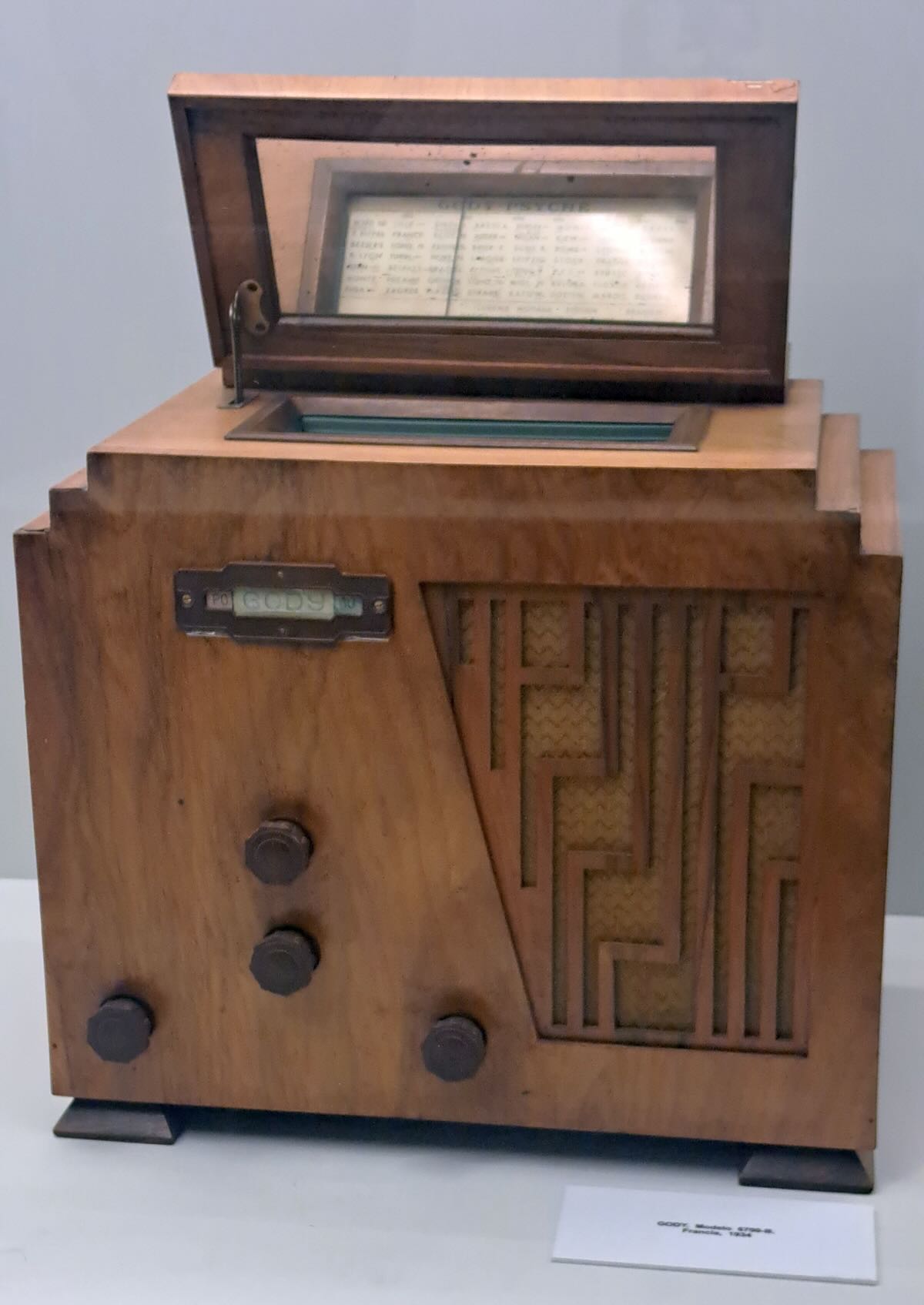
Because the radio was in a display case I couldn’t position myself as if I were using it but I did examine it from several different angles. As far as I could tell, the user would have to sit with the knobs roughly at eye level. Then, if they were just the right distance back, they could look up and see the entire dial perfectly in the mirror. That wouldn’t be so bad if you’re just going to tune the radio to your favorite station and leave it there. But a few hours of tuning around the dial while seriously band-scanning would lead to a very stiff neck.
So why would anyone make a radio like this? I decided that this is what you get if you let a fashion designer make a radio. This radio is cool, unique, and eye-catching. And you would be hard-pressed to find anything as creative as reflecting the dial in a mirror. But gorgeous and creative as it is, it’s also totally impractical for everyday use. (And that’s like a lot of what you see on fashion runways.)
A Really Big Record
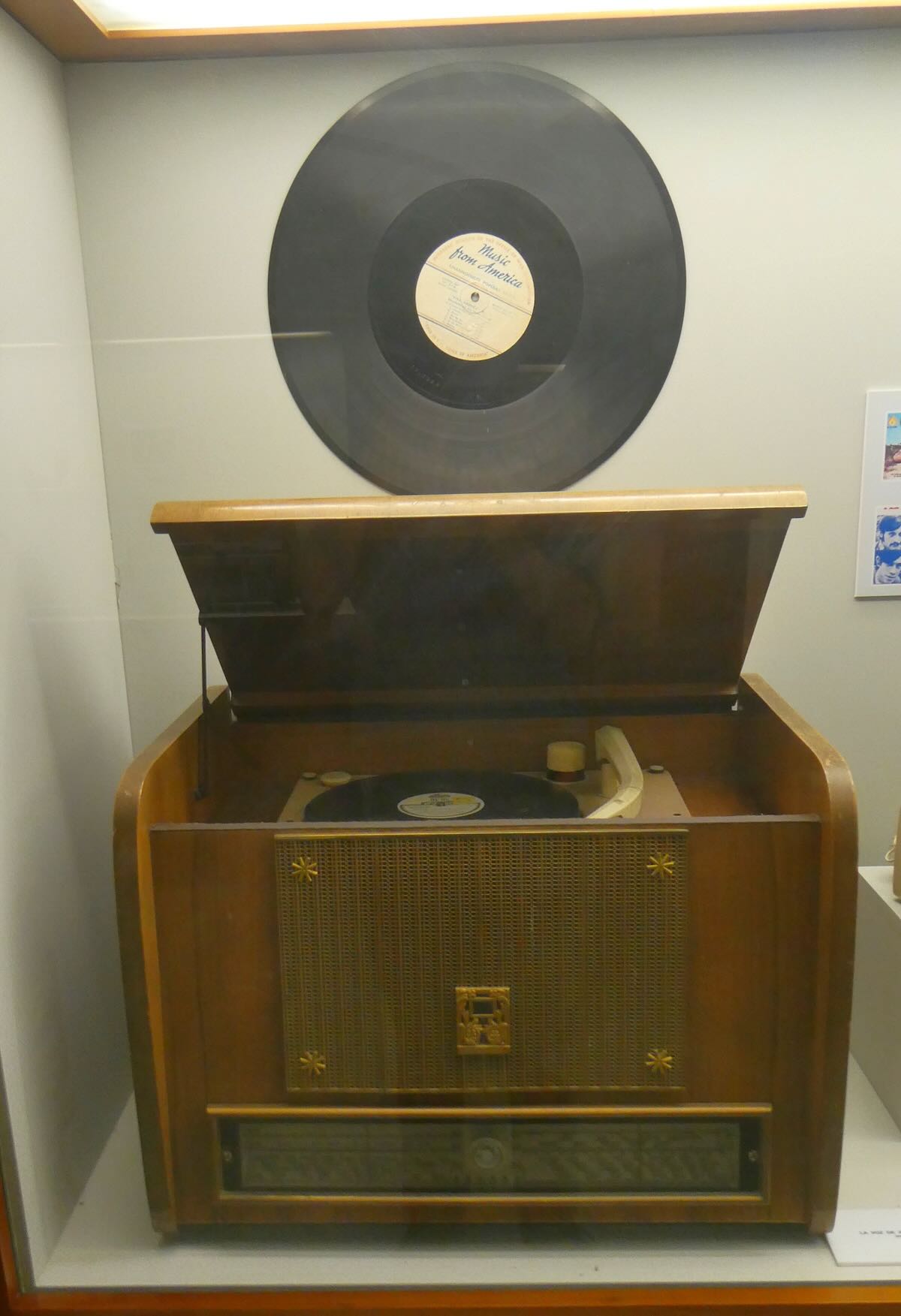
The next thing that surprised me was seeing an old 16-inch Voice of America transcription record. For about fifty years, beginning in the late 1920s, oversize records like this one were the primary way that network radio programming was distributed to radio stations in the USA and around the world. The Voice of America produced transcription records for overseas distribution from its founding in 1942 until at least 1955. This one says Overseas Branch of the Office of War Information at the top, so it must be from the World War II era. The OWI closed in September 1945. The only other time I’ve seen these is when I visited Radio Valera in Venezuela over thirty years ago. They had stacks of them on a shelf. They told me I could take as many as I wanted, but unfortunately, I had no way of carrying them. The New York Public Library lists 1,424 VOA transcription records in its collection.
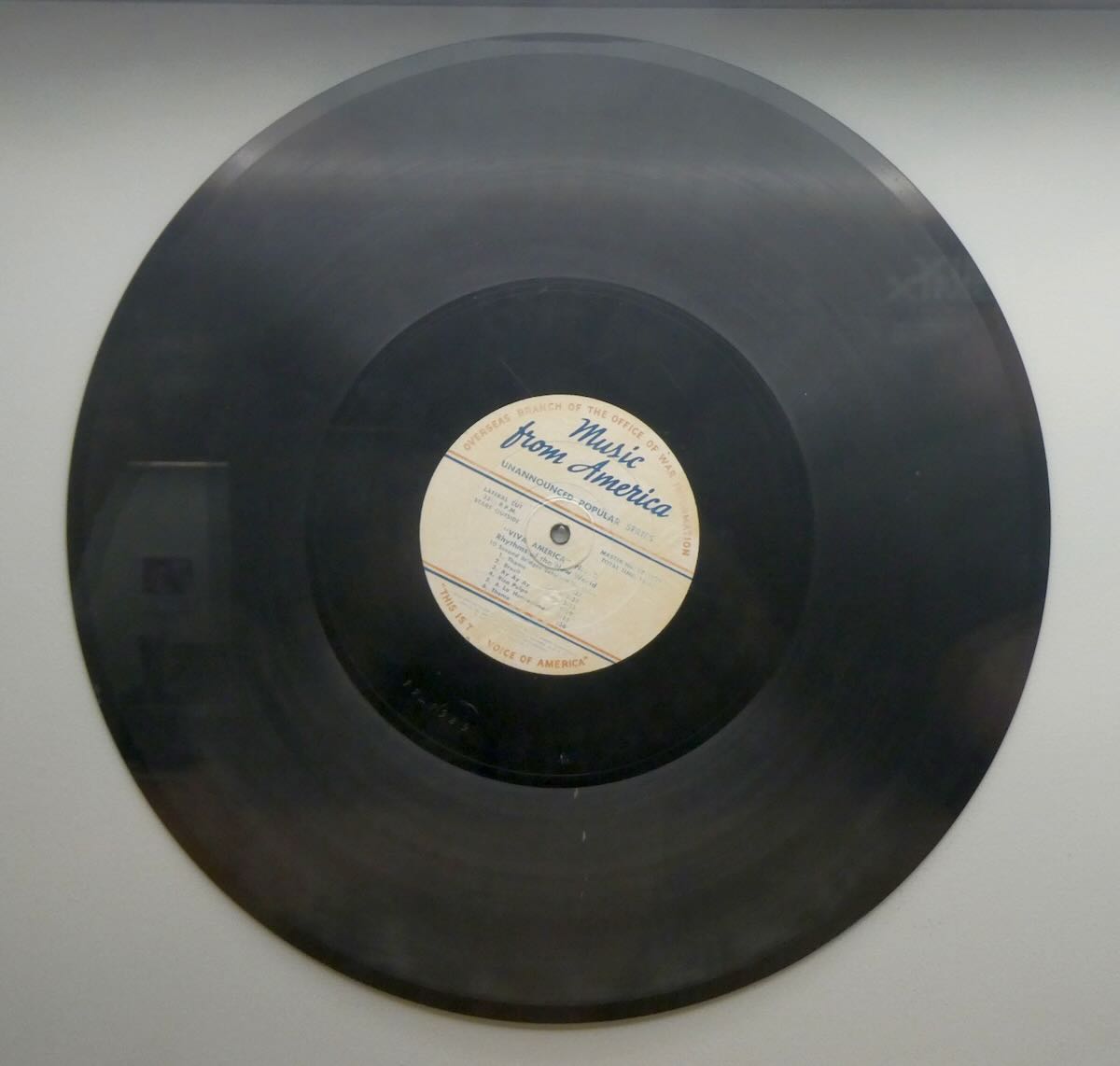
Known as electrical transcriptions, these records were especially designed to provide high-quality audio that could be played over the air. In an era when consumer-grade 78 RPM recordings were pressed in Shellac, transcription records achieved the best fidelity and lowest noise by being pressed in more expensive polyvinyl chloride. Consumer recordings didn’t make the transition to polyvinyl chloride until the 1950s.
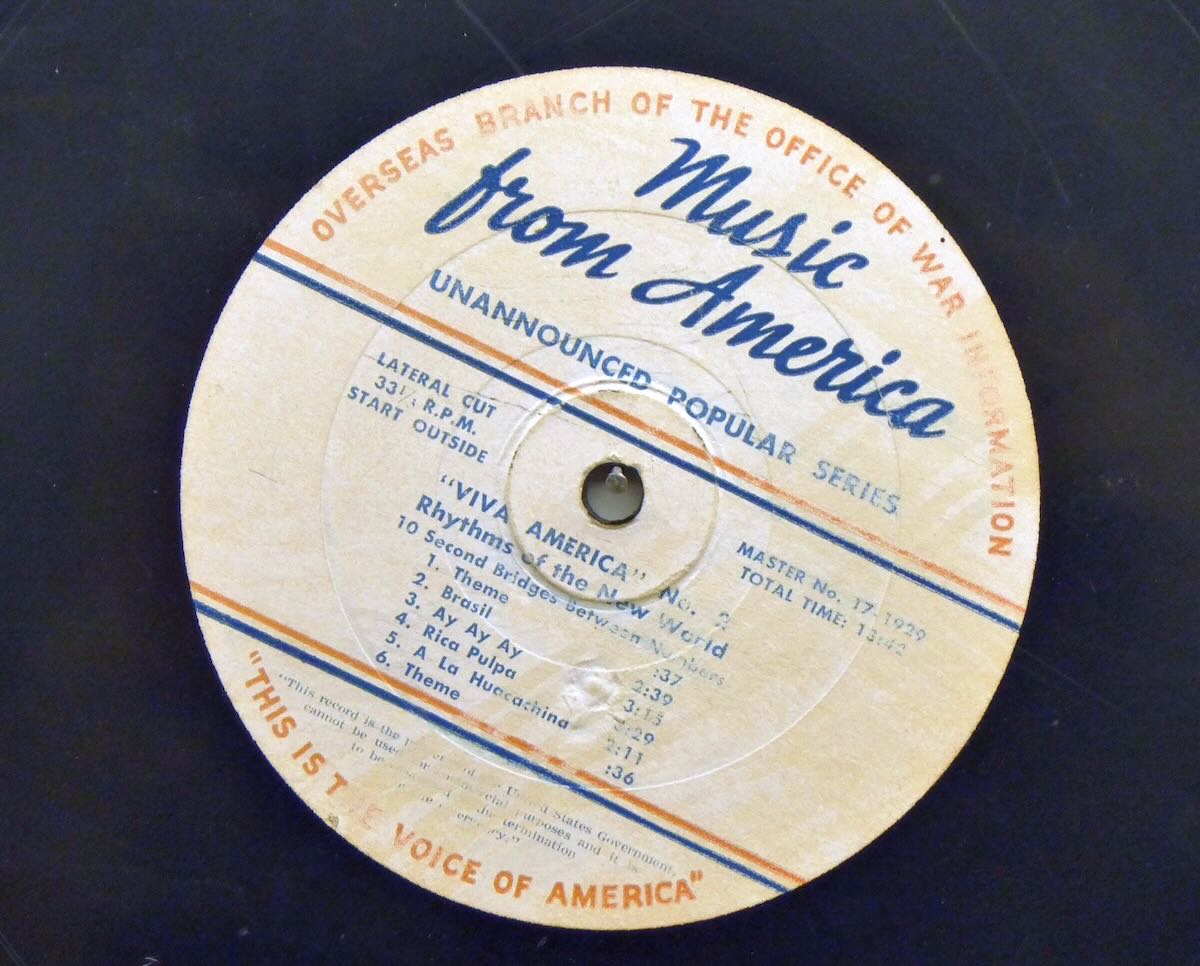
Note that the label specifies “Lateral Cut.” When transcriptions were first made, they used a vertical cut rather than the lateral cut used in consumer recordings. Around 1940, the transcription industry began to gradually change over to lateral cut. What’s the difference? In a lateral cut, sound is created by the side-to-side variation of the grooves, while in a vertical cut, the sound comes from tiny variations in the height of the surface in the grooves. Phonographs that play one type can not play the other (unless they come with interchangeable cartridges).
Just below that, the label instructs the user to “start outside.” That would be obvious, right? Not really. Some transcription records were made to be played from the inside to the outside.
This record has a total time of thirteen minutes and forty-two seconds and is played at 33 1/3 RPM. Transcription recordings began using that speed in 1931, and at the 16-inch diameter, they could hold up to fifteen minutes of audio. The first 33 1/3 RPM consumer records would not be released until 1948. By that time, improved technology allowed up to twenty minutes of audio on a 12-inch diameter disk.
So, when transcription recordings began, they used a speed that was not found on consumer phonographs. They used a cutting method that could not be played on consumer phonographs. Hardly any consumer phonographs could play a sixteen-inch diameter record. And then there was that inside-to-the-outside playing method sometimes used. The intention behind all of this was to make it impossible for the general public to play transcription records.
But then transcription and consumer recordings mostly came back together. Transcriptions moved over to lateral cutting when technological improvements made it the better option. Then the recording industry switched from 78 RPM to 33 1/3 RPM (and the newly developed 45 RPM) in the late 1940s. The one difference that always remained was the 16-inch diameter records. If I had been able to bring back some records from Radio Valera, I wouldn’t have been able to play them. If there’s any doubt as to how big those records are, just compare this one to the standard-size LP in the record player in this picture.
Displays in the Back
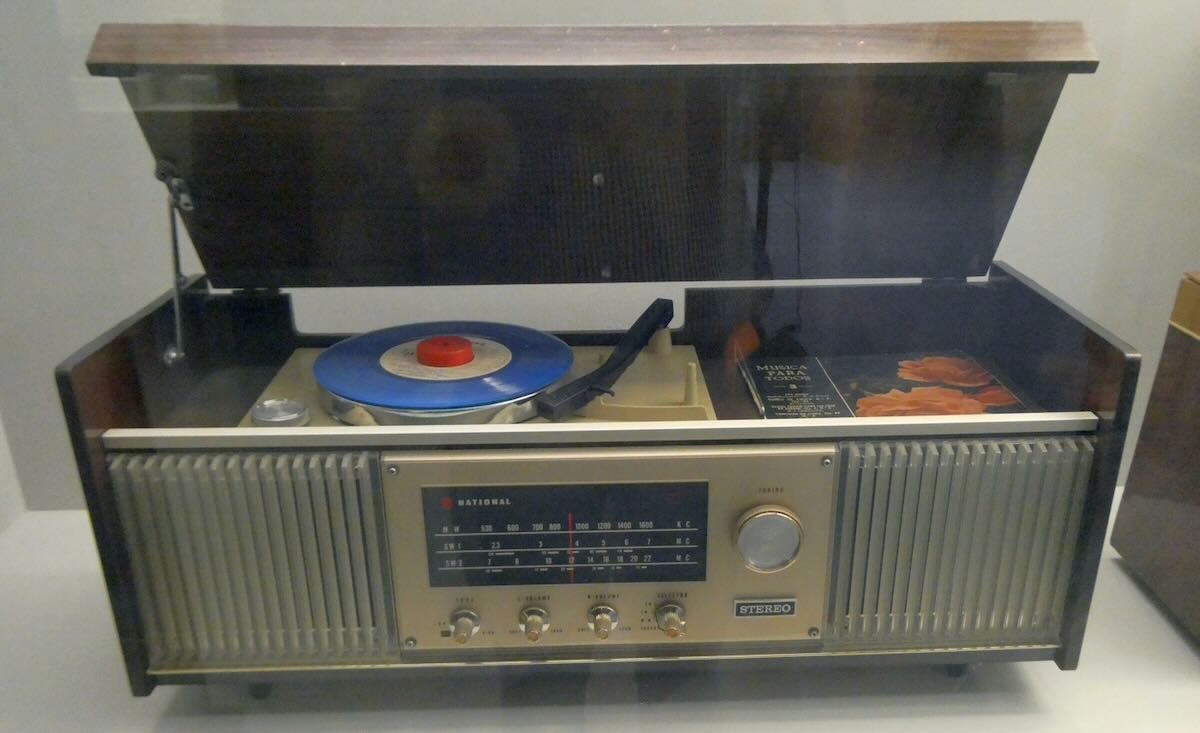
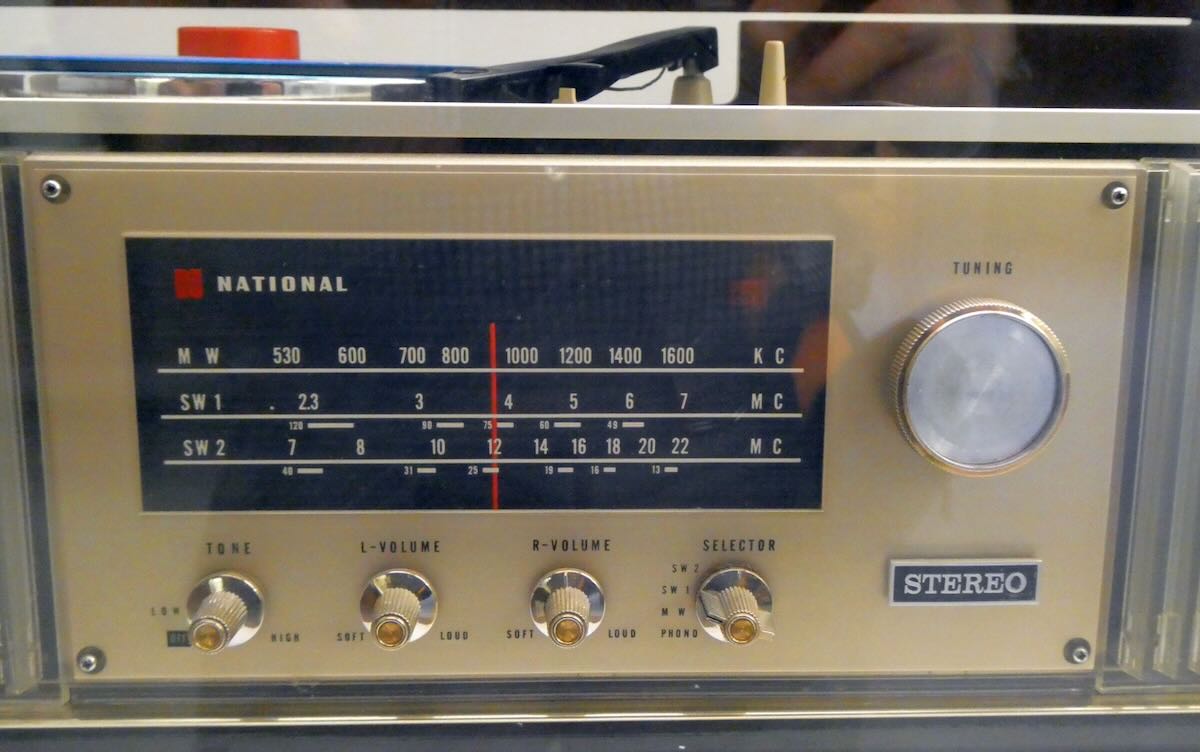
This National SE-15 stereo, made in 1959, looks a lot like consumer stereos of the 1970s with one key difference. The radio dial has medium wave and two shortwave bands covering almost the entire shortwave spectrum. Although this set was made in Japan, the dial is in English, so I suspect it was made for the European market.
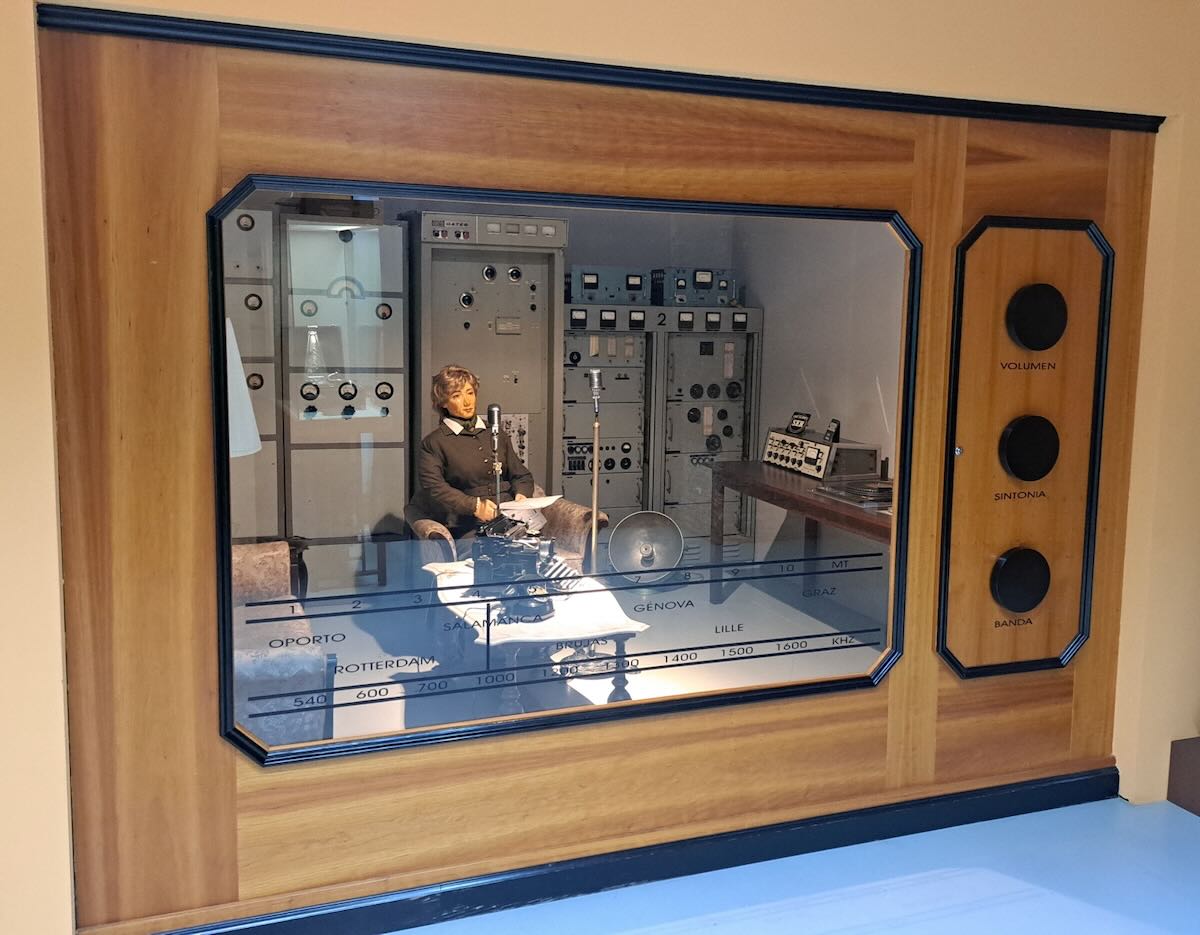
Finally, at the very back was a room filled with old broadcast equipment donated by Radio Salamanca. I like how they set this up to look like a radio receiver. However, take a look at the dial. The bottom band covers 540 to 1600 kHz, but the top band covers one to ten meters … which doesn’t make much sense if you know anything about the radio spectrum. I guess this is what you get when you let an artist design a radio.
The Golden City
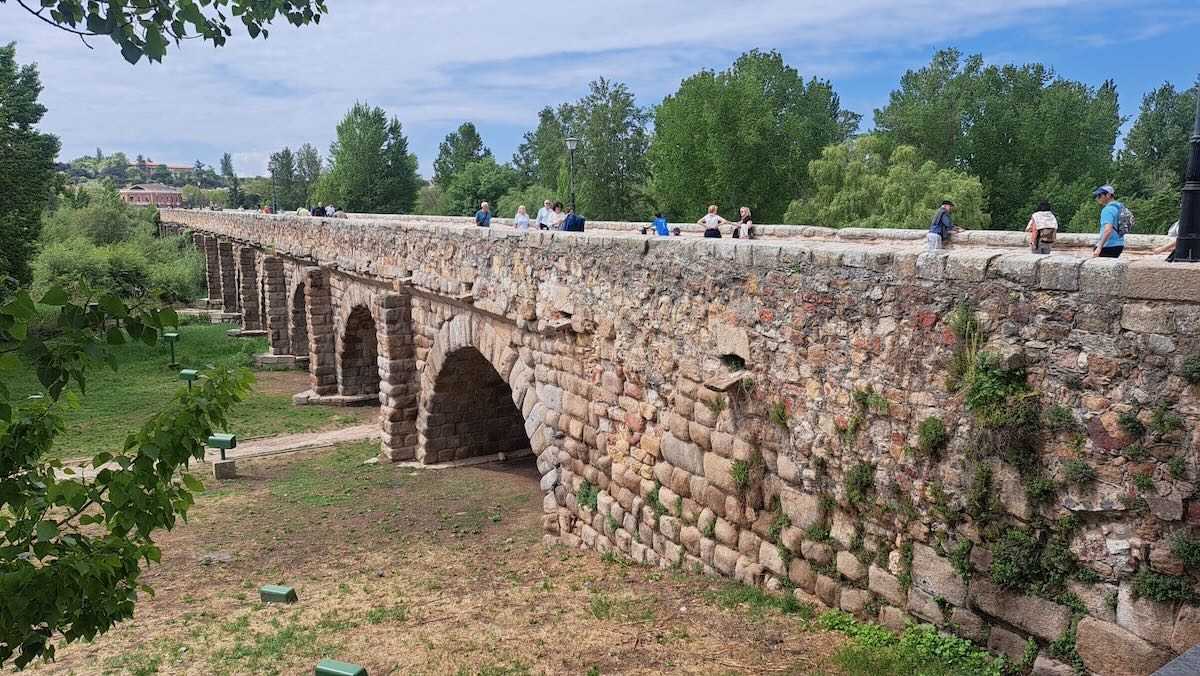
Anyone who would come to Salamanca only to see some old radios is a person to be pitied. Salamanca is a beautiful city filled with history, art, towering medieval architecture, and delicious food. With a population of 150,000, it’s very livable and surprisingly cosmopolitan. Salamanca is an old city. The Roman bridge over the Tormes River is not quite two thousand years old and is still used for pedestrian and bicycle traffic.
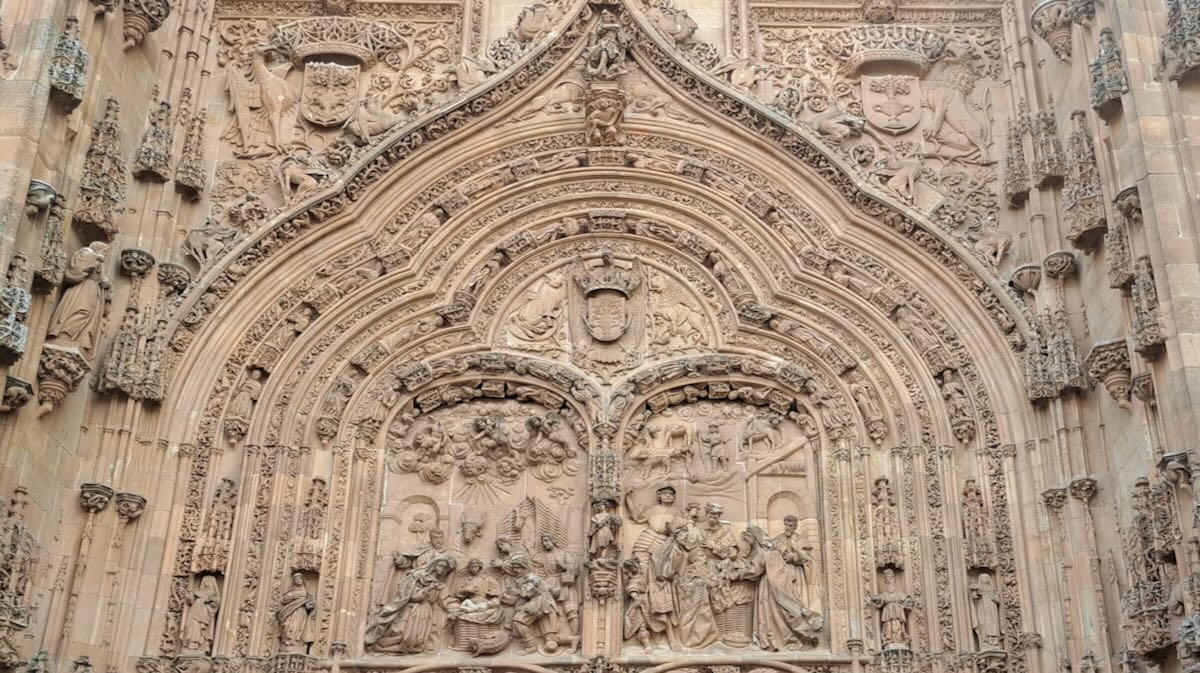
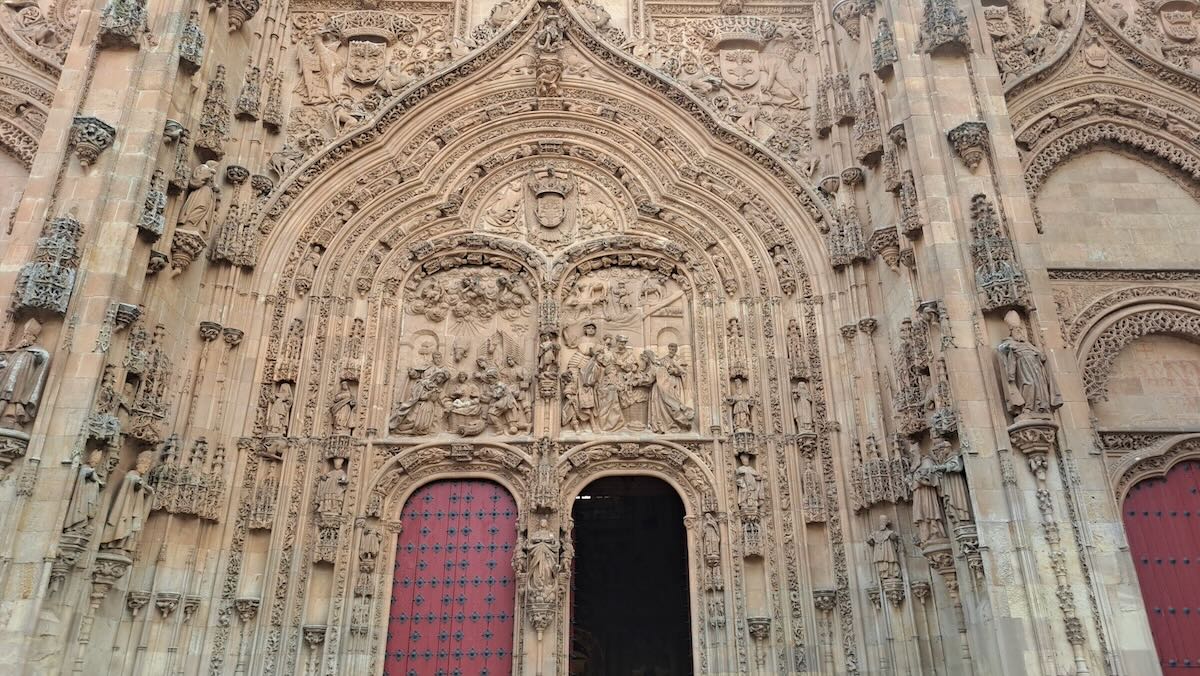
Most of the historical city center dates to the Middle Ages. Construction of the old cathedral began in 1120, while the new cathedral, with its intricate facade, dates to the 1500s.
Founded in 1218, the University of Salamanca is the fourth-oldest in the world. Buildings of that period were made using a locally quarried golden-colored limestone, which gives the city its nickname of La Dorada – the Golden One. The entire old city is a UNESCO World Heritage site.
Salamanca is not one of those Spanish cities like Barcelona or Málaga whose very character is being destroyed by over-tourism. Still, it gets nearly a million visitors a year. However, about sixty percent of those visitors are people coming for the weekend from other parts of Spain. Madrid is just two hours away by train. So the crowds can be avoided by coming during the week (and not during the peak summer months).
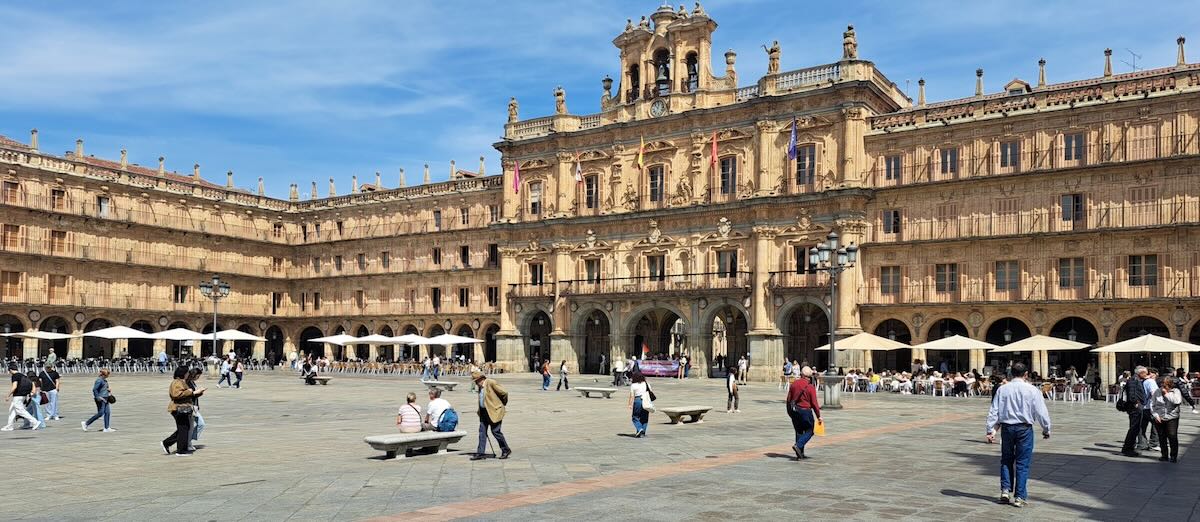
But the core of the old city is still focused on tourism, even on a weekday in April. All four sides of the otherwise gorgeous main plaza are always lined with outdoor restaurant tables. The streets between the plaza and the cathedral, several blocks away, are dominated by visitors. It’s not uncommon to see groups of thirty or forty people listening to a lecture from a tour guide.
It’s also very easy to escape all that. While walking down one of those main streets, just take a random turn down a side street. Then take two or three more random turns. Suddenly, you will be the only person meandering down a picturesque alley that has hardly changed since the Middle Ages. That’s what I love most about Salamanca. I spend two or three hours every day just wandering around. This morning I visited a little 500-year-old church that I hadn’t been to before. The altar and wooden statuary were as beautiful as any I’ve seen in museums. I was the only person there except for the caretaker.
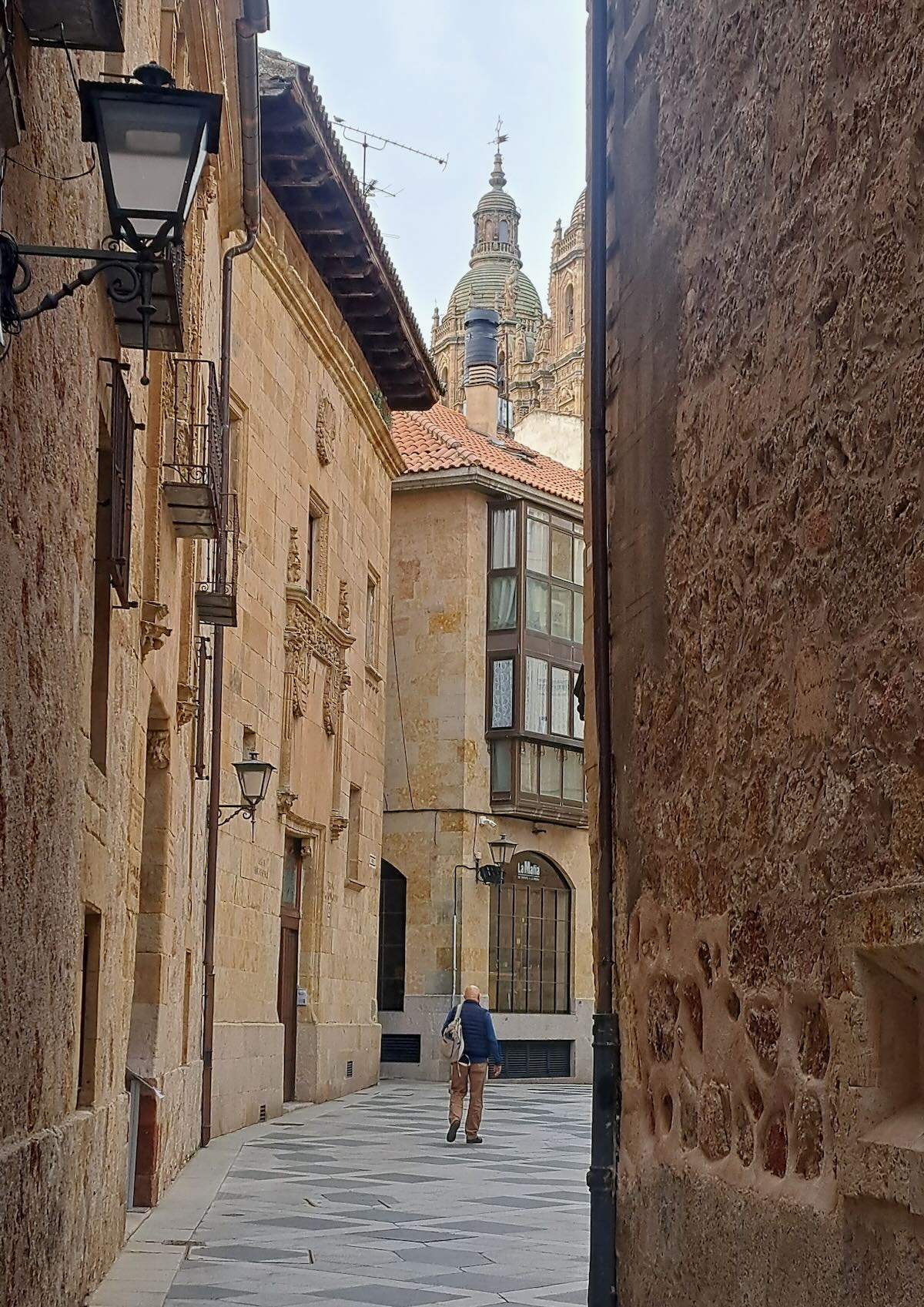
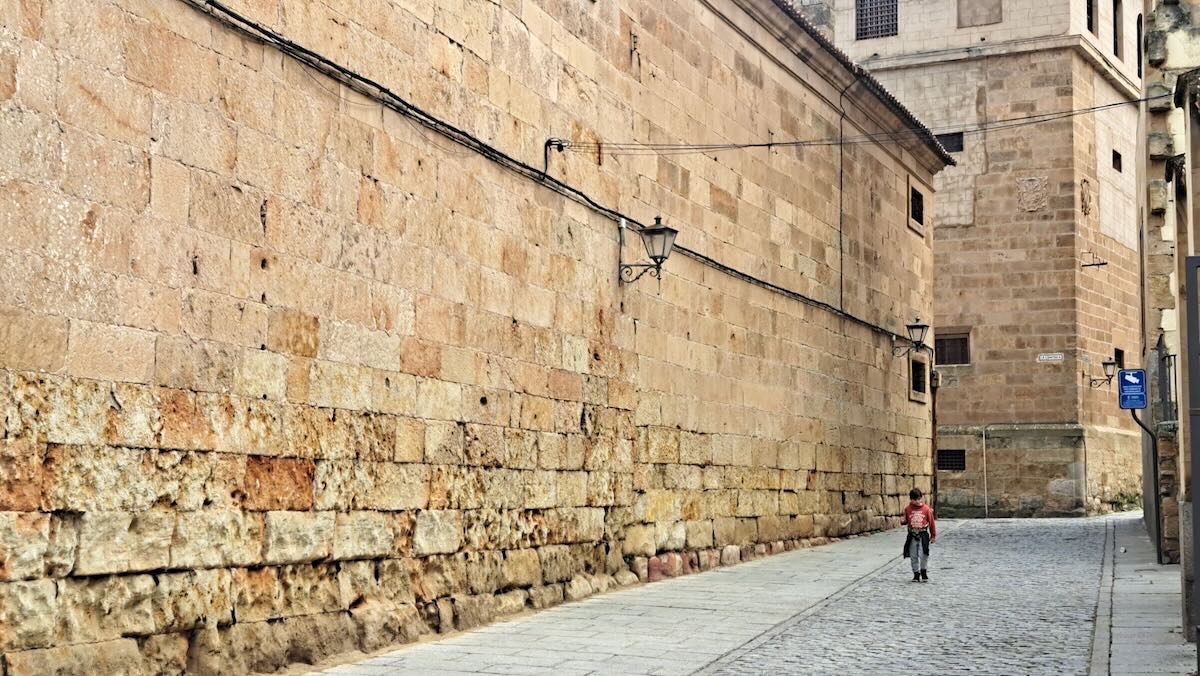
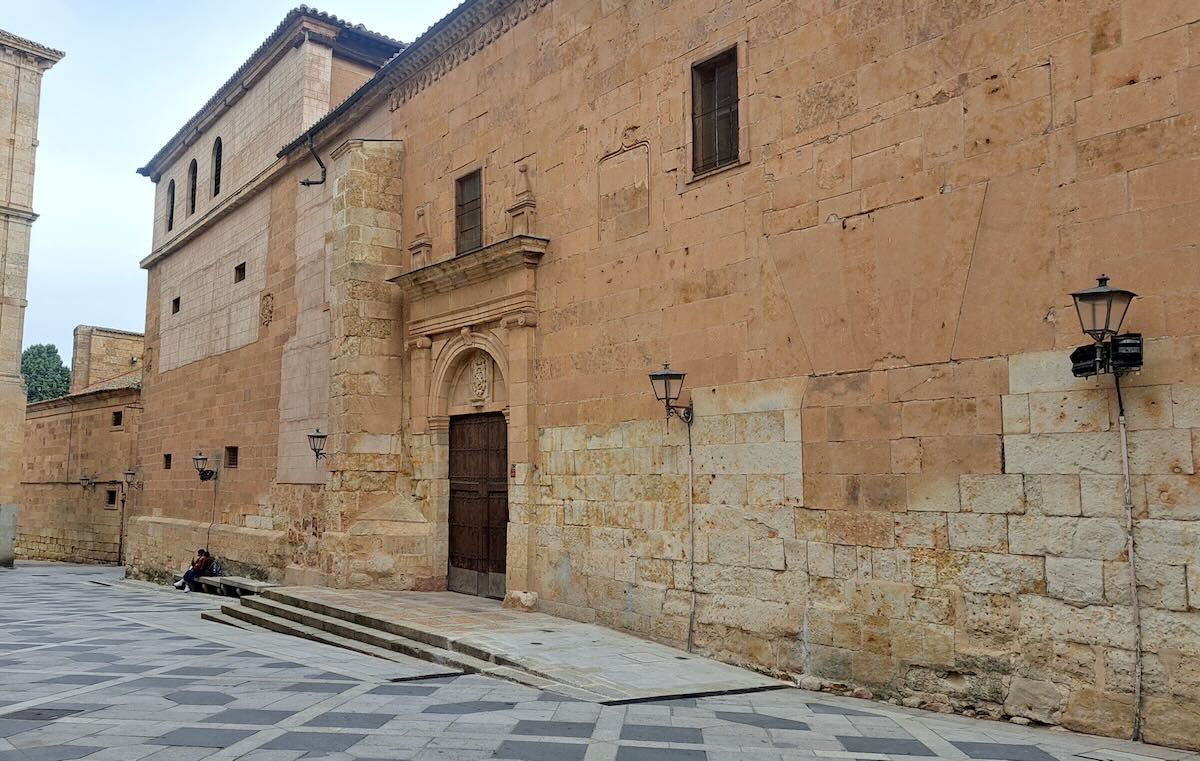
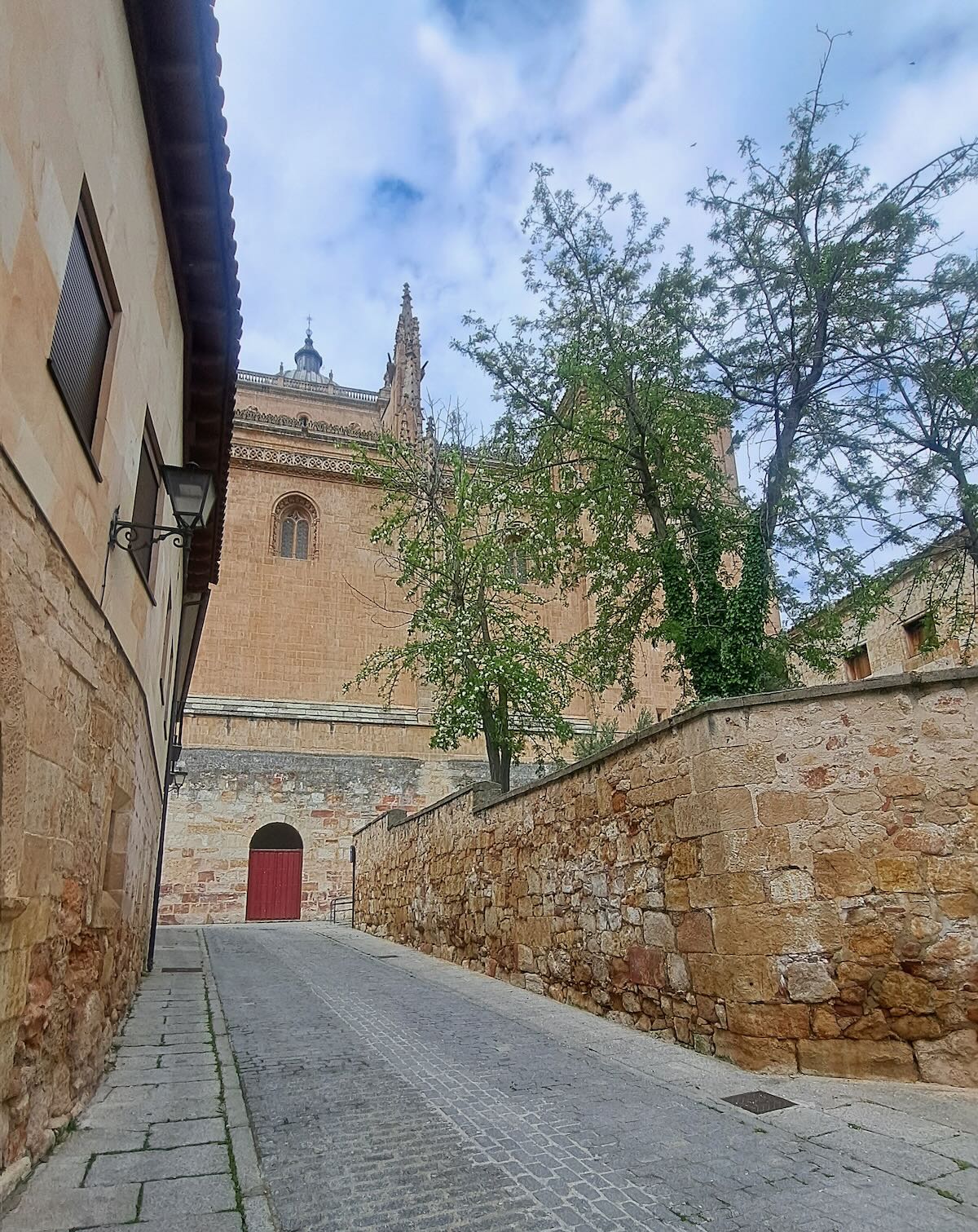
I think the fact that the majority of tourists are domestic is important in maintaining Salamanca’s Spanish character. The tourism industry here is primarily geared towards meeting the expectations of other Spaniards, not foreigners. That’s a big difference from Spain’s better-known and over-touristed destinations, where the local character takes second place to meeting the expectations and needs of foreign visitors. Indeed, that may be why the food is so good in Salamanca. Restaurants can’t lower quality when they’re dependent on customers who will know the difference.
The old center of Salamanca has plenty of hotels and restaurants aimed at tourists. But the best way to really experience a country – and to save some money – is to stay outside the tourist zone. On this visit to Salamanca, I stayed about a ten-minute walk north of the old city in the area around the El Corte Inglés Department store. It’s a quiet residential neighborhood of small apartment buildings with several little hotels. I had a very comfortable single room at the Hotel Aragon for just 35 Euros a night. Within three blocks, I had a choice of over a dozen excellent neighborhood tapas bars. Ten or twelve Euros would get me a beer or a glass of wine and two or three freshly made tapas.
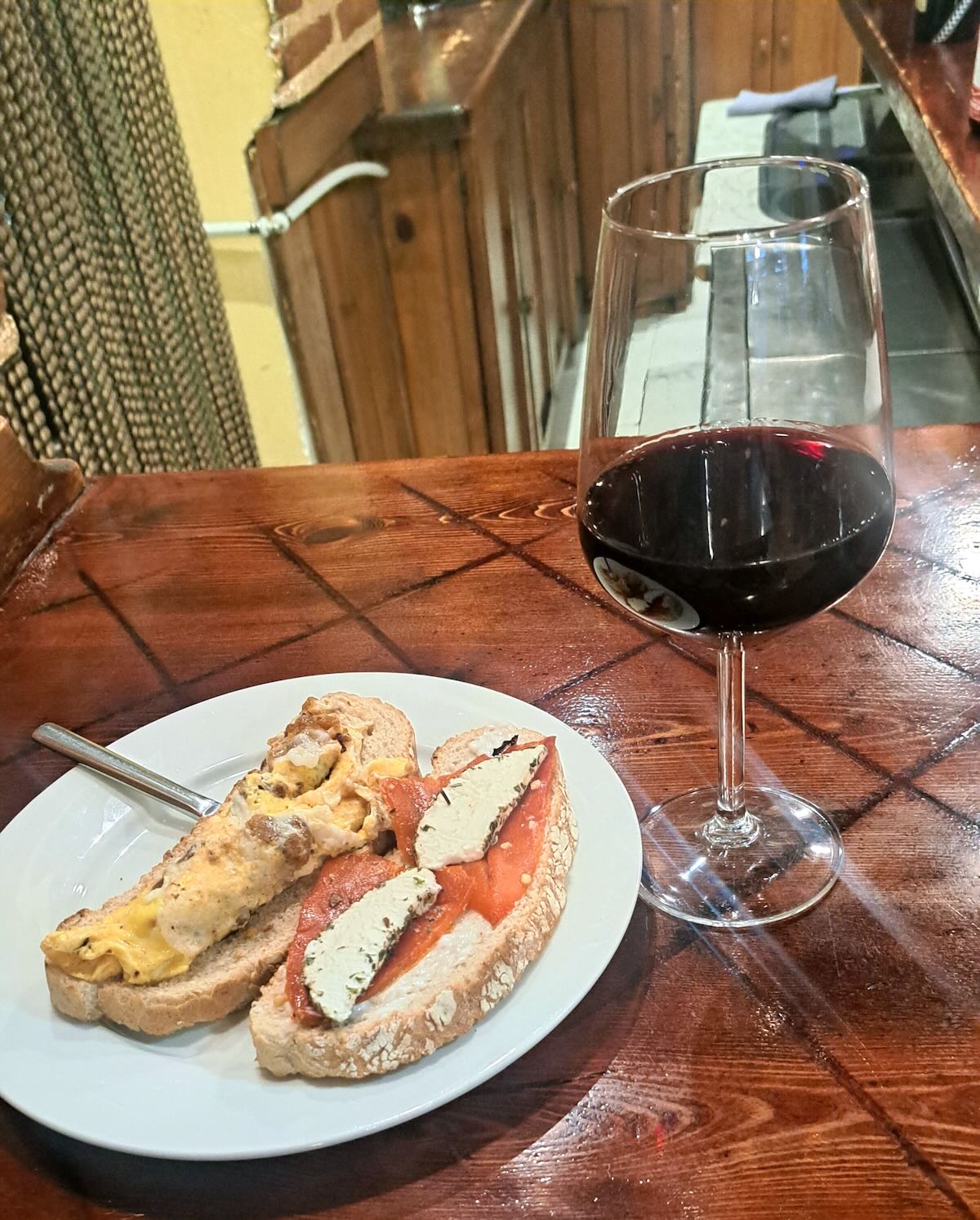
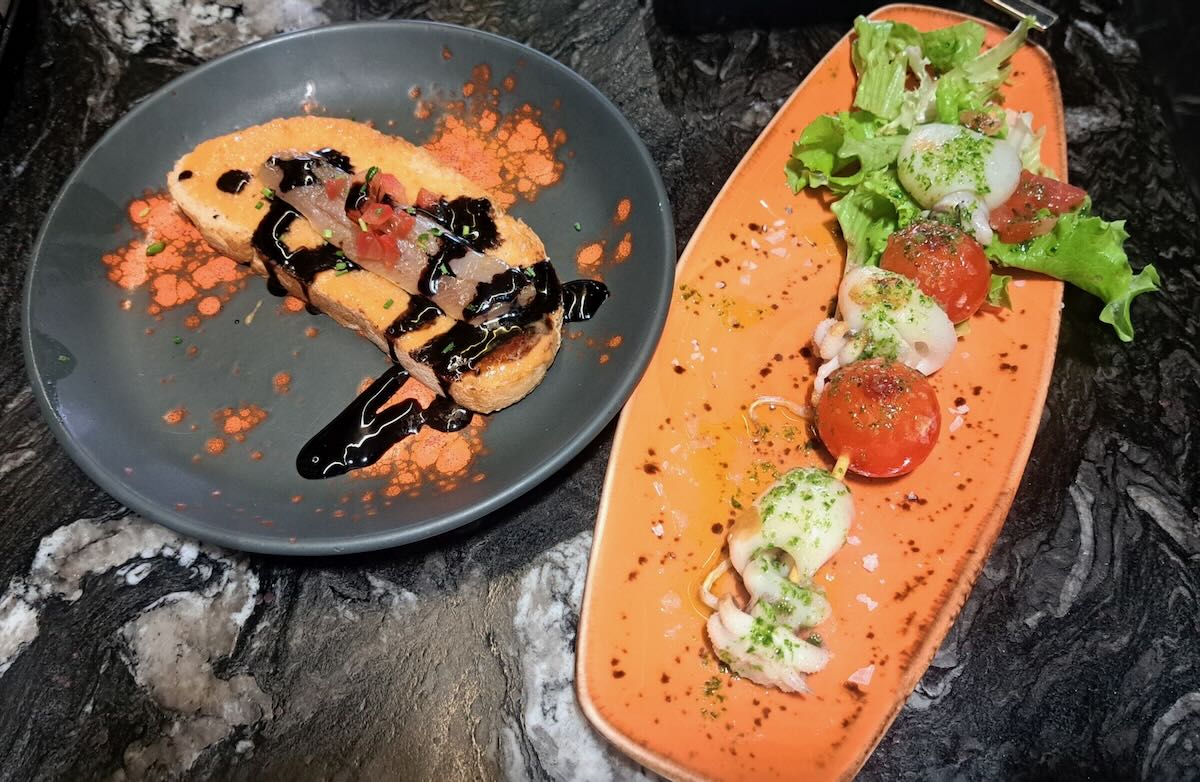
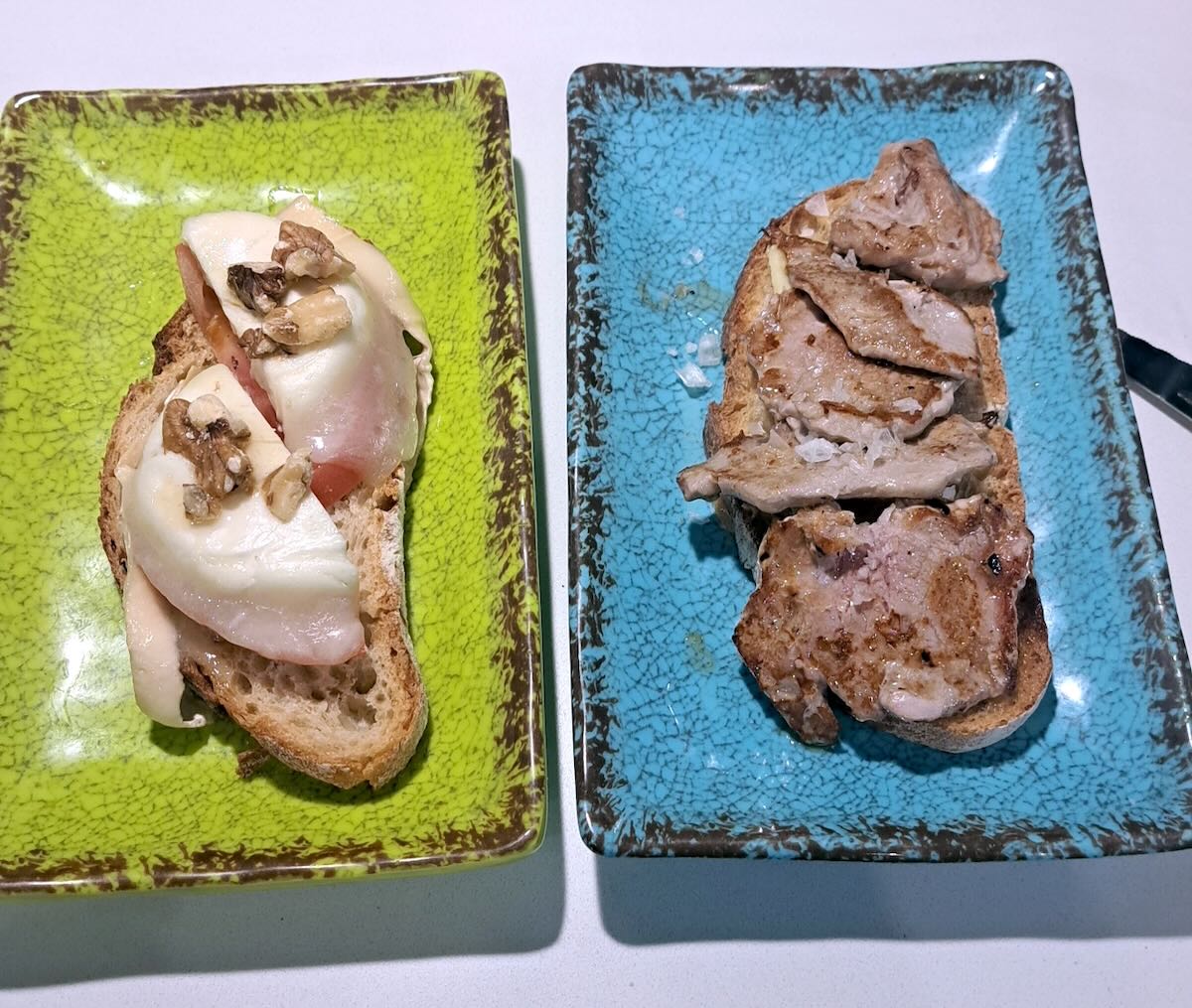
If you’re thinking of visiting Spain, my advice is to avoid the well-known over-crowded major destinations. Instead, just do a little research. Spain is filled with interesting, beautiful places with great food and gorgeous architecture. Salamanca is just one of them.
Links
- Museo del Comercio website.
- The Gody Psyché at the Radio Museum.
- Catalog of Voice of America recordings at the New York Public Library.
- All about transcription records.
- Salamanca Travel Blog.
- Another Salamanca Travel Blog.
- Hotel Aragon website.
- La Fresa is the most upscale of the several neighborhood tapas bars that I ate in near the Hotel Aragon.
Very interesting to see the station list but of course it would have a lot of out of date information soon after publication . . I note that a projected transmitter was Madrid on 183 kHz longwave. I wonder if it ever made it to go on the air ? I believe that many years later , maybe in the ’70s , a transmitter for Radio Cinco ( RNE 5) was set up and did transmit from Logrono ( north central Spain ) on I think 207 kHz . There is very little information about it. The range would not have been very much due to the poos soil conductivity and would not have satisfactorily reached the cities around coastal Spain. Des Walsh , Cork , Ireland .
Don,
I couldn’t agree with you more. Salamanca is one of my favourite cities. I didn’t know about the Museo del Comercio! Next time…
Don-
Thank you for a very interesting and informative post about Salamanca and old radios. We have been to Spain many times, but not this city. This radio museum looks as interesting as the Marconi house and museum in Italy. We hope to get to Salamanca one day.
What a nice way to spend an early Sunday morning…reading Don’s excellent and well illustrated Spanish travelogue. Thank you!