Author Archives: Thomas

Radio Romania celebrates 91 years

Many thanks to SWLing Post contributor, David Iurescia (LW4DAF), who shares the following article from Radio Romania International:

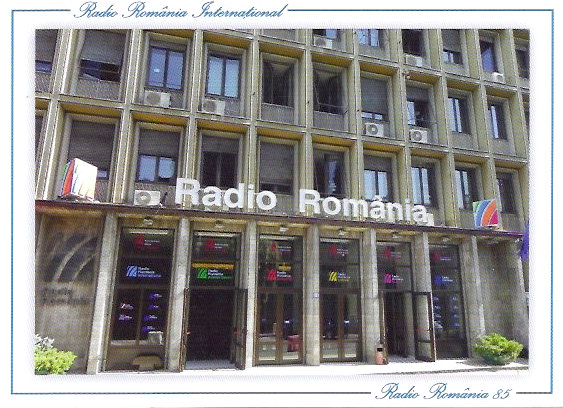
This Friday Radio Romania celebrates 91 years of existence. ‘Hello, hello, this is Radio Bucharest’ were the first words aired by this radio station on November 1st 1928, part of the first broadcast by the Radiotelephony Broadcasting Corporation in Romania.

The words were uttered by the then president of the aforementioned institution Dragomir Hurmuzescu, who was also the founding father of the Romanian radiophony. Along the years Radio Romania broadcast messages from leading figures who had their impact upon the country’s history.

Designed to be a means of information, education and entertainment, the Romanian public radio has been broadcasting for 91 years now adjusting its editorial policies and surviving the radical regime changes that took place during its existence, from the democratic system between the two world wars, to the right-wing dictatorship around WWll, or the communist dictatorship that followed.

Radio Romania celebrates 91st years of uninterrupted public service and broadcasts, 91 years of hard work and sacrifices but also of satisfactions in the sustained process of building the trust and confidence the station enjoys today, the institution’s president and director general Georgica Severin said on this occasion.

‘Either we speak about the accurate news on various daily events, the cultural broadcasts, the programmes devoted to theatre plays from national and world dramaturgy, or concerts and performances given by radio orchestras and choirs, this uninterrupted, relentless work has been always based on professionalism and respect for listeners’, Georgica Severin went on to say.

Besides its well-known channels, News and Current Affairs, Culture, Music and the Village Antenna, Radio Romania also boasts several regional and local stations, as well as the online channels devoted to children and young people.

The Romanian Public radio started to broadcast for listeners abroad as early as the 1930s and is currently broadcasting in 11 foreign languages: Arabic, Chinese, English, Hebrew, French, German, Italian, Serbian, Spanish, Russian and Ukrainian as well as in the Aromanian dialect.

On its 91th anniversary, Radio Romania scheduled a concert given by the National Radio Orchestra as well as an exhibition on its premises, which can be visited until November 5th under the suggestive title ‘Afghanistan, Faces of War’. The exhibition has on display photos taken by Radio Romania’s correspondent in that country Ilie Pintea.

The exhibition was inaugurated in Los Angeles under the high patronage of the country’s General Consulate in Los Angeles and the Cultural Institute in Bucharest in 2018 when Romania celebrated its 100th anniversary.

Click here to read this article at Radio Romania International.
The Netherlands celebrates 100 years of radio

Many thanks to SWLing Post contributor, Gérard Koopal, who writes:

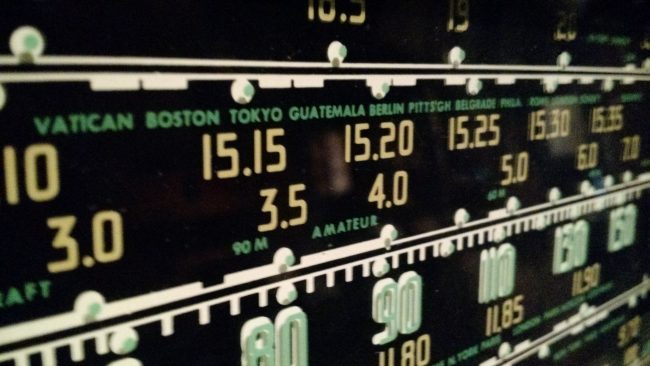
Dear Thomas, on November 6 it is exactly 100 years ago that Hans Idzerda transmitted the first radio broadcast in the Hague, the Netherlands.

To commemorate this event, the VRZA has a special broadcast using the original Zeedijk studio from radio Veronica and historical NOS/NRU studios. The broadcast is from 10.00 till 21.00 hours CET and there is an internet stream available.

Also rebroadcasting through some lpam stations. For more information see this website (in Dutch):

www.hollandspalet.nl

Greetings, Gérard Koopal

Thank you for sharing this, Gérard!

Canada: National Research Council official time signal turns 80

(Photo credit: @chuttersnap)

(Source: CBC via William Lee)

In the 1930s, it helped sailors properly set their instruments for navigation.

It allowed railway companies to be punctual, and helped Canadians set their watches with precision every day.

Today, if you’re a CBC Radio aficionado, you may recognize its repeated beeps over the airwaves every day just before 1 p.m. ET.

To many, the National Research Council official time signal is a fixture of Canadian society. And on Nov. 5, the longest running segment on CBC Radio turns 80 years old.

Day 6 host Brent Bambury spoke with Laurence Wall, one of the current voices of the National Research Council time signal, about its origins, its importance, and where it stands in the digital age.[…]

Click here to read the full article and listen to the interview and audio clips.

Australia: “Whispering to the Asia-Pacific”

(Source: Australian Strategic Policy Institute via William Lee)

Australia gropes and stutters towards a renewed embrace of international broadcasting—the vital need to ‘speak for ourselves’ in the Asia–Pacific.

The latest lurch towards fresh understanding is the silent release of the review of Australia’s media reach in the Asia–Pacific. Note the irony that a report on broadcasting is soundless on arrival.

Behold a classic orphan inquiry, not wanted by either the government or the Australian Broadcasting Corporation, nor particularly desired by the public service. The orphan was created as part of the price to win a Senate vote, and is dumped on the public doorstep without a word of welcome.

The review was completed last December but only released (published on the Department of Communications website) on 17 October. No announcement. No government decisions.

The inquiry matters because it nods towards significant policy failure and the absent-minded trashing of Oz international broadcasting.[…]

Click here to continue reading the full article.

Any real world experience shortwave listening in Antarctica?

Many thanks to SWLing Post reader, Delmar Williams, who writes:

I am going to Antarctica for 9 days on an “expedition.”

I always travel with my radio as I like to to go to remote locations sometimes where there is little or no internet or constant power blackouts. I remember from years ago that someone said reception in Antarctica wasn’t very good, but I could be mistaken. I have looked on the web for this subject, but I don’t see much info. I sent a tweet to someone in Ant., but I don’t think he responded.

Do you know anything about this topic. I tried to go in your chatroom but it didn’t work for me.

Thank you for your question, Delmar.  I know that DXing from the polar regions presents a unique set of challenges in terms of propagation, but it certainly wouldn’t stop me from taking a radio!

My hope is that an SWLing Post reader can shed a little light on Antarctic listening and possibly  even offer advice based on real world experience SWLing in Antarctica.  If so, please comment!

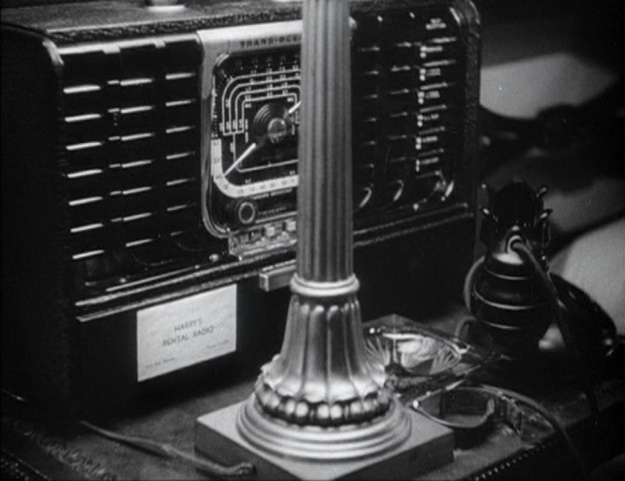
Trans-Oceanic spotted in Humphrey Bogart movie

Many thanks to SWLing Post contributor, Mark Hirst, who writes:

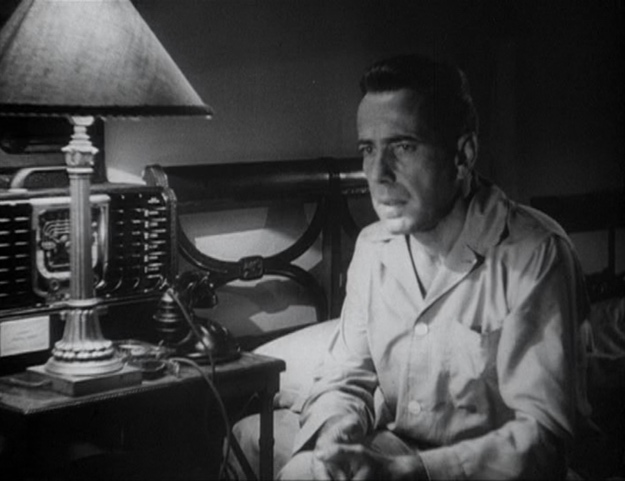
I’m something of a Film Noir fan, so I was pleased to have tracked down “Dead Reckoning” on Amazon recently.

Starring Humphrey Bogart and Lizabeth Scott, Bogart’s character is seen early on in this 1947 film listening to police chatter on his bed side radio.

The police conversation sounds a bit contrived, serving the purpose of advancing the story of course, though I’m wondering if this type of radio could be used this way – I’m sure there are experts who would know.

Please comment if you can answer Mark’s question!

Thanks for sharing, Mark. Like you, I love Film Noir and pretty much anything starring Bogie (or especially Lauren Bacall)!

“When the world got its news from shortwave radio”

Many thanks to SWLing Post contributor, Dennis Dura, who shares the following article from SwissInfo.ch. Make sure you visit SwissInfo.ch to listen to their embedded recordings:

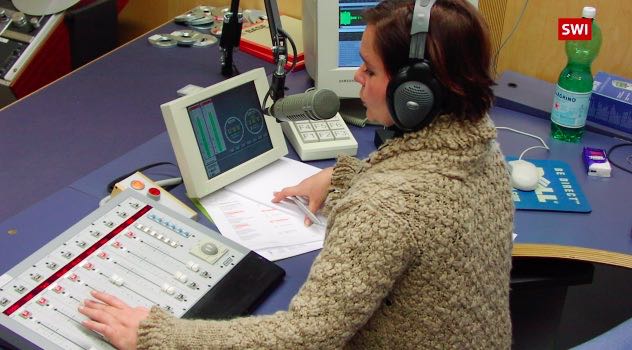
What did SWI swissinfo.ch sound like for the first seven decades of its existence? The short answer: a radio station. 

From the mid-1930s to 2004, Switzerland’s international service was Swiss Radio International (SRI). The first few decades of SRI’s existence were the heyday of shortwave – it was often the only way of getting news directly from other countries.

A brief history of SRI, the predecessor of swissinfo.ch, helps explain why you hear what you do in the video above.

What began as the Swiss Short Wave Service in 1935, would grow from broadcasting programmes in German, French, Italian and English to include other European languages and Arabic, and eventually change its name to Swiss Radio International.

The international service was considered a voice of neutrality during times of war, first during World War II, followed by the decades of the Cold War and up to and including the first war in the Gulf in the early 1990s.

This decade would mark the beginning of the end for Switzerland’s shortwave broadcasts. Shortwave transmitters gave way to relaying programmes via satellite, and this, in turn, would give way to the internet when the service went online in 1999 as SRI’s website.

In 2004, the plug was pulled for good on SRI as part of budget cuts, but not swissinfo.ch. Now producing exclusively online, the international service extended its linguistic reach by adding Russian, Japanese and Chinese, and publishing more video and audio reports.

Journalists working in swissinfo.ch’s current ten languages collaborate closely to set the editorial agenda, providing the necessary context in their stories so they are understood wherever they are read, seen, or heard in the world.

Project ‘The Sounds of…’

This article is part of the project “The Sounds of…” produced with our partner media organisations Polskie RadioRadio Canada InternationalRadio Romania International and Radio Prague International. Further videos have been produced by journalists at these outlets, to give an insight into their work in these countries.