Author Archives: Thomas

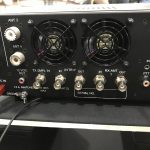
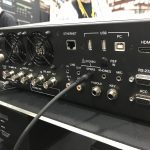
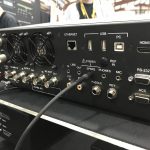
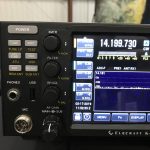
Cap spots an Icom and Yaesu in Netflix Sci-Fi film IO

Many thanks to SWLing Post contributor, Cap Tux, who spotted two ham radio rigs in IO. Cap notes:

ICOM IC-740, Yaesu FT-901DM and Shortwave make an appearance in Netflix Sci-Fi film IO:
Mentions “transmitting on frequency 9043kHz and listening on frequency 9560kHz daily, that’s the 31m band”.

https://www.netflix.com/gb/title/80134721

Thanks for sharing, Cap! I’ll add this post to our ever growing archive of radios in film!

Balázs spots a wide variety of radios in film

Many thanks to SWLing Post contributor, Balázs Kovács, who shares the following radio sightings and notes:

The Priest’s rig from the last episode of “The Walking Dead

A Yaesu in “Jurassic World – Fallen Kingdom

Some emergency/weather radios in the “The Darkest Minds

The Last Ship S05E01
After a cyber attack a backup comm solution for the US Navy.

Night of the Living Dead (1968/1990)
In the original a radio broadcast was the first information source, in the remake only a small one was used at the end.

Hunt for the Wilderpeople (2016)
In a remote shack.

+1: The “Álmodozások kora” (Age of Illusions (US) / The Age of Daydreaming (Int)) was the first (Hungarian) feature film of the director István Szabó (winner of an Academy Award for Best Foreign Language Film in 1981 (Mephisto), English language films: Meeting Venus (1991), Sunshine (1999), Taking Sides (2001), the Oscar nominated Being Julia (2004) and The Door (2012)) in 1965 about a group of young electrical engineers. Two scenes from it about the radios, unfortunately I found the hungarian speaking version only online, but I think maybe it can be still interesting: https://ok.ru/video/228250552961

  • 33:58-35: A custom rig receiving 4 european stations (Paris, London, Rome, Prague) on different speakers at the same time
  • 1:05:43-1:07:20: “How radio works” animation
  • (and there was a short scene also where they talk about the The Pioneer Railway and how they learned the morse code there)

I found another (splited) version of the movie now with english subtitles, the new links and timings:

https://ok.ru/video/904027376280
33:58-35:28: A custom rig receiving 4 European stations (Paris, London, Rome, Prague) on different speakers at the same time

https://ok.ru/video/904028097176
20:00-21:39 “How radio works” animation

The same actor (András Bálint) 13 years later have a short ham radio scene (new year greetings in english) in another movie (BUÉK, 1978). I checked the callsign from the wall (HA5FA) and probably it was already a real one, belongs to Jen? Matzon, active member of the radio amateur community (DXCC Honor Roll, etc.) now a Silent Key.

Wow! Many thanks for sharing all of these radio spots, Balazs! Funny thing is I remember so well those shots from Night of the Living Dead even though I likely watched it 40 years ago! I guess I never forget a Zenith!

Of course, I’ll add this post to our ever growing archive of radios in film!

Ukrainian E17z number station training session covered failure scenario

A few days ago, I noticed a fascinating off-air recording of a live operator covering the “failure scenario” of E17z posted to the Priyom.org Twitter account

From Priyom.org on Twitter:

Listen to the recording in the embedded player below or via Priyom.org:

Click here to download the recording.


Critical reviews of the $37 HanRongDa HRD-737 shortwave radio

Many thanks to SWLing Post contributors Glen and James Fields who shared their experience after  publishing a post about the HannRongDa HRD-737 portable radio.

Glen writes:

I received one Saturday I had ordered from Aliexpress. In one word, avoid. The performance is really terrible everywhere except the FM broadcast band. Reception there is OK, but it is prone to overload more than my other radios. Aircraft reception is terrible. Only very strong shortwave signals are present. Same with AM broadcast. VHF performance is abysmal. To illustrate, my closest NOAA transmitter is so strong it trips the “close signals” quick scan in my Whistler TRX-1. On the HanRongDa, the NOAA signal is present, but it’s weak. All my other weather band receivers can get signals on all 7 frequencies. The HanRongDa hears only the very close one. This is easily the worst receiver I’ve ever gotten. Perhaps it’s defective. Eager to hear experiences from anyone else.

James Fields writes:

Received mine yesterday. Have only tested in my office which is a challenging, RFI-rich environment, so trying to withhold final judgement. However so far my experience matches Glen’s. Can only pick up the strongest shortwave signals. MW AM so far terrible. FM broadcast passable but not at all remarkable, and most stations have a LOT of hiss in the background. Have yet to pick up AIR band transmission on frequency that I can get on every other receiver I have. Nothing on CB yet. Cannot receive any NOAA frequencies, including two that I get solidly on other radios. Interestingly I can receive local police dispatch frequency pretty well.

Construction is pretty cheap.

Positives? I got mine for $37 shipped from a reseller on Ali Express . If I had paid over $40 I would feel worse about the value. And it really is a shirt-pocket portable. Super small and light.

At this time I cannot recommend this for anyone, for any purpose.

Thank you for sharing! I think I’ll pass on the HanRongDa HRD-737!

VOA Museum 75th Anniversary Events & Activities

(Source: WVXU via Michael Bird)

Voice Of America Museum Sets 75th Anniversary Events

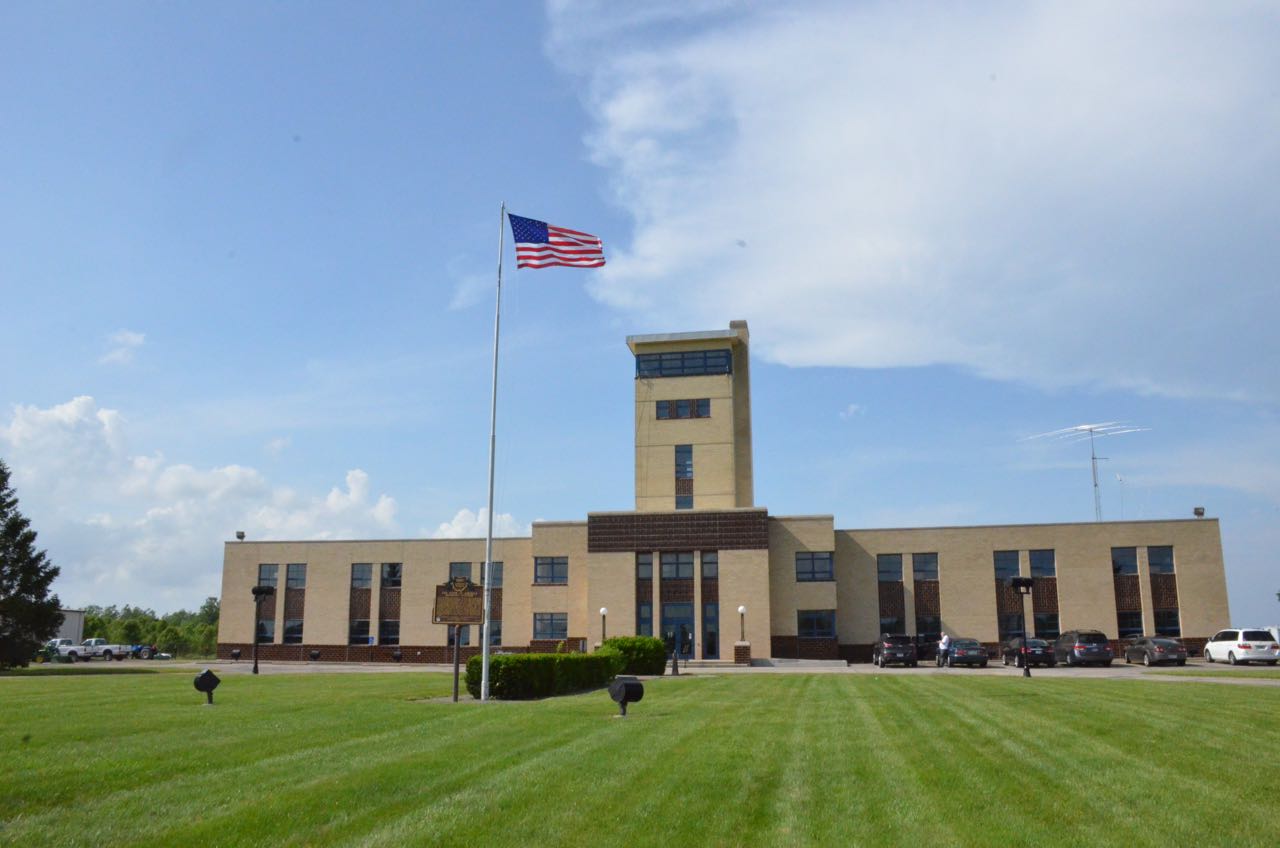
The National Voice of America Museum of Broadcasting will celebrate the 75th anniversary of West Chester Township’s Bethany Station with yearlong programs highlighted by a presentation by VOA White House Bureau Chief Steve Herman on March 6.

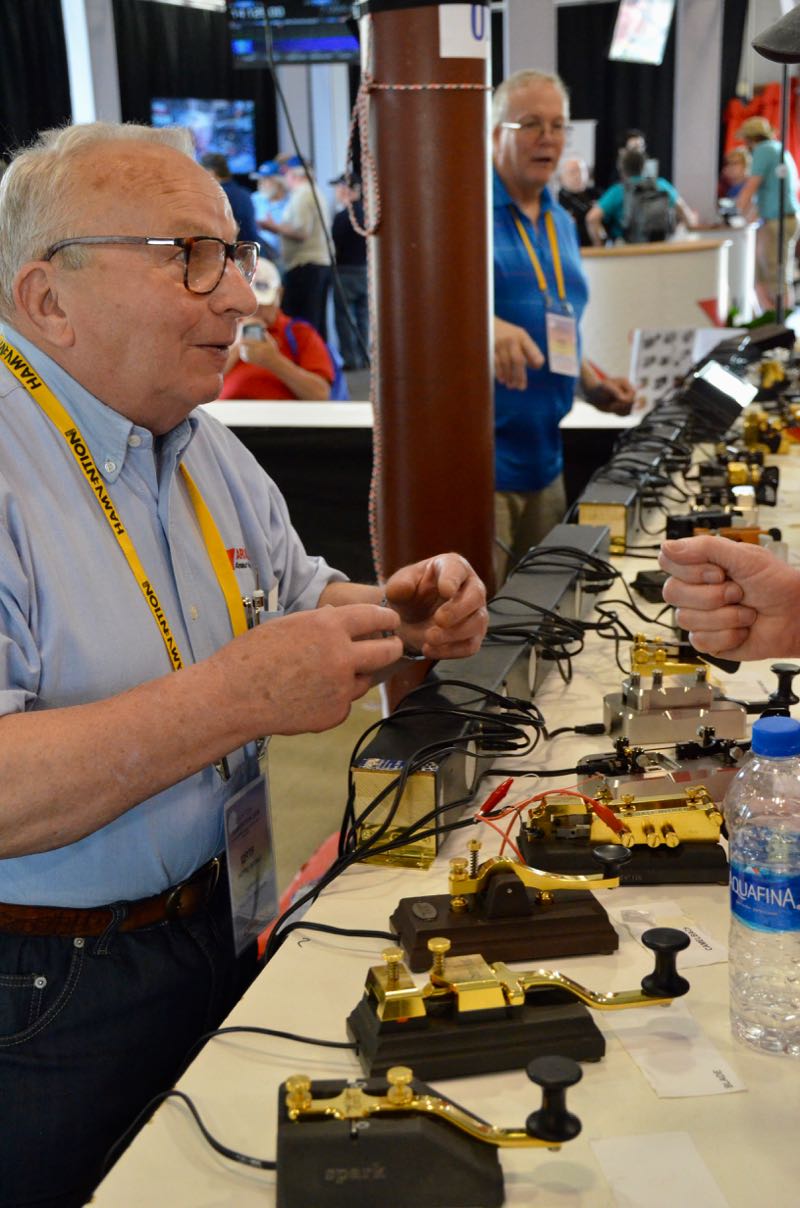
Events include a talk by Rod Serling biographer Nicholas Parisi; a program on sound effects from the golden age of radio; a “Hamvention” by the West Chester Amateur Radio Association; and a free four-part series of programs called “The Voice of Truth in America: Celebrating 75 Years of the VOA Bethany Station” with the MidPointe Library System.[…]

The anniversary events include:

Feb. 17: “The Imagination of Rod Serling: A Conversation with Nick Parisi,” by the author of Rod Serling: His Life, Work, and Imagination published last year.

March 6: “Covering the White House and the World” by Steve Herman, VOA White House Bureau Chief.

April 6: “History of the VOA-Bethany Station and the VOA Museum Today” presentation by museum director Jack Dominic at MidPointe Library West Chester Township.

April 9: “Theater of the Mind: Sound Effects During Radio’s Golden Age” with Mike Martini, president of the museum’s Media Heritage Collection.

May 16-19: “Hamvention Nights at the VOA Museum” with the West Chester Amateur Radio Association.

June 5: “There’s a Radio in My Cell Phone!,” a children’s STEM (Science, Technology, Engineering and Mathematics) event at MidPointe Library Liberty Township.

July 11: “Stealth Antennas for Amateurs Living in HOAs.”

Aug. 25: Big Band music at MidPointe Library West Chester Township.

Sept. 21: The fourth annual VOA Museum “75 Years of Rockin’ the Radio” fundraiser.

Oct. 18-20: “Jamboree on the Air” with West Chester Amateur Radio Association and area scouting organizations at the museum.

[…]The museum is open Saturdays and Sundays 1-4 p.m. at 8070 Tylersville Road. General admission is $5 for adults and $1 for children.  Museum events are listed at the VOA Museum website.

Click here to read the full article at WVXU.

CES Hall of Fame: The Grundig Satellit 650

Photo: Universal Radio

(Source: IEEE Spectrum via Paul)

The Consumer Electronics Hall of Fame: Grundig Satellit 650 Radio

The market for expensive shortwave radios collapsed in the early 2000s. But before it did, Grundig created a blaze of glory

Though they’ll likely deny it, long-distance (DX) radio enthusiasts are also often romantics. For DXers, as they’re known, there’s a powerful enchantment surrounding the chance reception of a signal from somewhere remote and mysterious, like the Australian Outback, the Namib Desert, or a lonely island in the Shetlands. So when they come to favor a piece of equipment, they don’t just like it, they become devotees. And one receiver seems to have earned their undying affection more than any other: the Grundig Satellit 650.[…]

Click here to read the full article at the IEEE Spectrum.

I agree: the Sat 650 is a legend! I’ve never owned one–have you?  Please comment!

India, DRM, and FM white spaces

(Source: Broadcast and Cable Sat)

Digital Radio Receivers – Availability At An Affordable Price

by Yogender Pal (Chairman, DRM India Chapter)

[…]Transmissions in FM band in India, by AIR as well as private broadcasters, are still in analogue mode only. Aware of the advantages of digital radio broadcasting, the Telecom Regulatory Authority of India, the regulator for all the broadcast services too, has recommended to allow private broadcasters to broadcast in the digital white spaces available in the FM band (VHF band II). This recommendation is under consideration of the Ministry of Information and Broadcasting. The Ministry held a meeting on the issue on August 30, 2018. All stakeholders (public and private) were in favor of digital broadcasting in FM band and suggested that the ministry makes public a regulatory policy as soon as possible. Cellphone manufacturers also gave their support provided no additional costs were involved.

A digital receiver is required to receive digital radio broadcasts as analogue receivers cannot decode the digital signals.

One of the welcome features of the current roll-out of DRM digital radio in India has been the early and overwhelming commitment of the car industry. Most of the leading car manufacturers in India have either already incorporated DRM receivers in their cars or are in the process of incorporating them. Hyundai has built-in DRM radios in all its models except one. Maruti Suzuki has also incorporated DRM receivers in 6 models and all their models are soon expected to have built-in DRM receivers. Mahindra has also installed DRM in its TUV model. It is encouraging that the roll-out of DRM equipped cars is growing rapidly. At present the number is understood to have surpassed the 10 lakh mark. Indian car manufacturers are not charging extra from consumers for line-fit DRM radio sets.

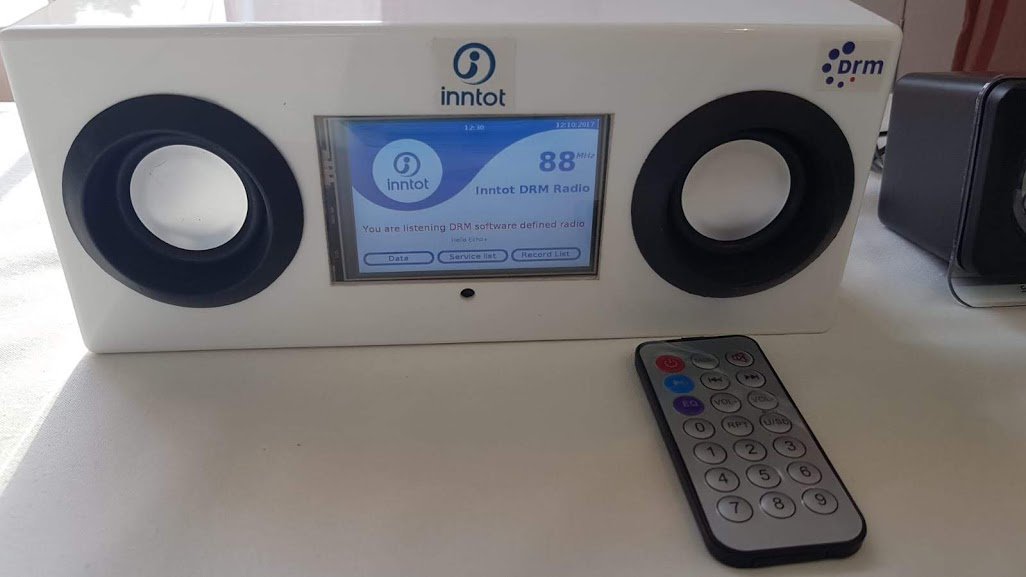
In parallel, efforts are being made by a large number of Indian and foreign receiver manufacturers to provide standalone DRM receivers. Communications Systems is the first Indian radio manufacturer to domestically develop and produce a DRM receiver (AV-1401). Inntot Technologies, a young start-up enterprise, has developed a software-based DRM receiver based on a generic processor. This is likely to be much cheaper. GeekSynergy, another start-up company, is also working on the development of a highly affordable DRM receiver.

Gospell Digital Technology located in China has presented a very well-reviewed DRM Receiver, GR216, which is already in production. Gospell is developing a DRM receiver dongle, GR-227 too, which can be plugged in the existing audio systems in the automobiles on USB ports or Aux input to receive DRM digital signals. Titus SDR, a Panamanian based company, has developed a multi-standard and software-based digital radio receiver. Starwaves has also developed a prototype DRM receiver.

Standalone DRM digital efforts remain relatively expensive at present. Like with any new technology higher volumes will bring down the cost of the receivers. AIR may thus offer content with additional audio services, innovative advanced features such as journaline advanced text, emergency warnings, and traffic information so that listeners see value in buying a digital receiver.

An app for DRM digital reception in mobile phones in FM band has been already developed. Demonstrations have been made on the reception of DRM digital signals in the existing mobile phones by plugging a dongle. External dongle would not be required in the new mobile phones; however, the industry wants to see the publicized policy of the government before making the necessary adjustments for working of the app.

Most of the standalone receivers can receive DRM (in addition to analogue) in AM bands; and its software can also be upgraded to receive DRM in FM band. As announced by Director General recently, AIR may start digital radio broadcasting in FM band. Government may also accept TRAI recommendations and announce a roadmap for digital radio broadcasting in FM band by private broadcasters so that the industry (cellphones, automobile, and standalone receiver manufacturers) gets confidence and starts mass production of receivers.[…]

Read the full article at Broadcast and Cable Sat online.

Many thanks to Ed for the tip!