Many thanks to SWLing Post contributor, Sandipan Basu Mallick (VU3JXD), who shares the following guest post:
Dear Thomas,
On the even of World radio Day, 10 DXers of Kolkata, India gathered while the radio enthusiast around the world are coping with bad news for the hobby.
In this regard, please find a guest post written by fellow DXer and Amateur Radio Operator Dr Supratik Sanatani (VU2IFB):
Why are Kolkata DXers upbeat on World Radio Day 2018?
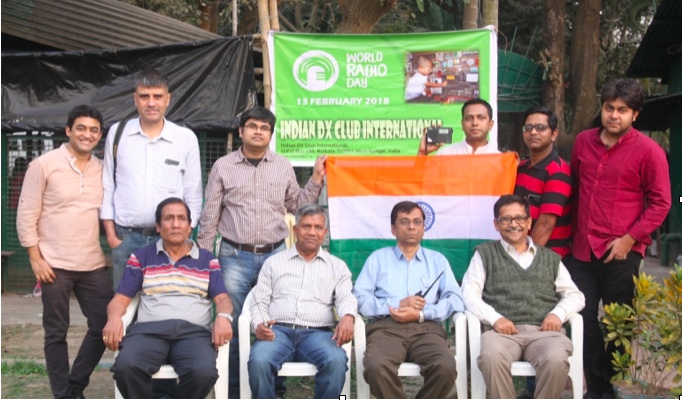
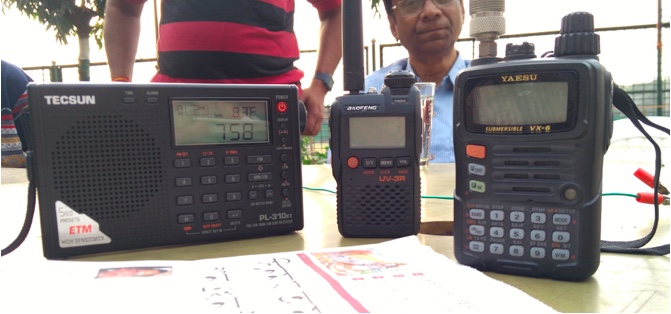
DXers gathers to celebrate World Radio Day 2018 at Kolkata Maidan
A small group of ten DXers gathered in a Kolkata Maidan tent on the eve of World Radio Day 2018. They were very upbeat while worldwide radio enthusiasts have to cope up with bad news for the hobby. In the last few years stations after stations had closed down and so had iconic radio clubs like Danish Short Wave Club and periodicals like Monitoring Times. Broadcasting mega corporations like VOA and DW have reduced their presence in the airwaves to a faint whisper compared to their former roar.
Why are the Kolkata DXers upbeat in 2018? AIR Kolkata which was the first transmitter of the AIR network beginning from 1926 as erstwhile Indian Broadcasting Corporation had gone nearly silent few years ago with woes from aging valve tube transmitters. Then there was the assault of the tropical storm Aila which had brought down one of its mw antenna towers. The situation is entirely different today.
 There are brand new solid state DRM capable mw transmitters in place which are blaring out Kolkata A 657 kHz and Kolkata B 1008 kHz signals at signal levels which dare to compete with the FM stations. Rightfully the two iconic stations have been rechristened “Gitanjali” for Kolkata A and “Sanchaita” for Kolkata B both named after famous works of the noble prize winning prolific author poet composer and painter Rabindra Nath Tagore. In the outskirts of the city AIR Maitri 594 kHz 1000kw which is a external service Bengali broadcast to neighbouring Bangladesh proudly blares its signals across the wave. AIR Maitri was made possible by the personal enthusiasm of the former Chairman of Prasar Bharati, the holding corporation of All India Radio and Doordarshan TV, Mr Jwahar Sircar who hails from the city.
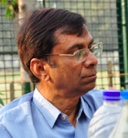 In this meeting there were veteran DXers such as Babul Gupta and Sudipto Ghosh who have had their first QSL in the late 60s to the early 70s, sitting side by side with Abhijit Dutta who started MW listening in Siliguri. When he moved to Kolkata Abhijit came across Kallol Nath who started DXing only a couple of years ago. Kallol introduced Abhijit to the joy of shortwave listening and that is why he was there at the meet. Kallol in this meet narrated how his Tecsun PL660 was bugged by technical glitches and had to be serviced twice in the warranty period by shipping it all the way to the vendor at Singapore. With his receiver Kallol, from his high rise apartment in the heart of Kolkata has to still climb to its roof for better reception. That is when the veterans lamented the rise of manmade radio frequency interference (RFI) from the array of household and community sources which bug the Short Wave DXers today. The present sunspot low is also a big obstacle before the new entrants to the hobby.
While the conventional radio stations are dwindling, the profile of SW and MW DXer is also changing. Debanjan Chakrabarti is a case in point. Starting from a conventional DXer he is now an avid radio collector. He is also a licenced radio amateur (VU3DCH) .His collection sports the iconic radio sets such as the Yaseu FRG 7 which was the apple of the DXers eye in the early eighties. A visit to Debanjans shack is like a trip to the museum of DXing from early 80s. Now a licenced radio amateur Debanjan is presently toying with the idea of adding a hybrid transeceiver to his collection. This would be a radio set sporting both tubes and transistors,
 A distinct shift in profile of the Kolkata DXer is that many of them have either acquired or are in the process of getting their radio amateurs licence. Sandipan Basu Mallick (VU3JXD) is one such who was one of the organisers of this small gathering. The meet was graciously hosted by the veteran technical DXer Sudipto Ghosh (VU2UT). Sandipan is active in Short Wave DXing over 2 decades and recently local VHF bands and Hamsphere as well.
 Babul Gupta after his years of Short Wave DXing is active in Hamsphere. I owe Babul Gupta (VU3ZBG) a QSL because he received my only transmission from my BITX made from my (VU2IFB) location at South of Kolkata to his place some 30 km away at North 24 Parganas. Most of the former SWL only Dxers have their call signs even though the activity level is abysmally low ranging from a a couple of contacts to no
contact.
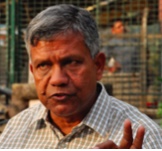 The icing in the cake of this meet was the presence of the veteran homebrew radio amateur Atanu Dasgupta (VU2ATN). His conversation with the group was indeed a technical orientation programme for the semi advanced to the advanced DXer. His emphasis was focussing on basics and keeping the target small – “start with a small project like power supply or a grid dip meter” was his advice to the group. His brief presentation on the powerful history of innovative home brewing in amateur radio in this city from Anadi Ganguly (VU2GE) to Ganesh Banerjee (VU2LL) to Amal Piplai (VU2AT) was an eye-opener for most in this group. Atanau Dasguptas suggestion to those planning for the amateur licence was to aim for the general category because the restrictive category is too restrictive and does not permit Morse. His suggestions and narrative were so useful that that they have been documented in a separate blog page.
An invitee, though not a DXer himself, who could not make to the meet due to previous commitment was Bamaprasad Mukherjee. Mr Mukherjee is a writer for children’s magazines in Bengali. One of his articles which in the late nineties appeared in Bengali children’s monthly “Anandamela” was extremely popular and introduced many a DXers from the city who are very active today. Mr Mukherjee is planning to write another feature on the hobby of DXing, which surely will bring in more enthusiasts to this hobby.
The Kolkata DXers have much to cheer on World Radio Day 2018
Compiled by Dr Supratik Sanatani (VU2IFB) on World Radio Day, February 13, 2018
Video of World Radio Day 2018, Kolkata DXers Meet:
Thank you, Sandipan, for sharing your World Radio Day meet with the SWLing Post community!