Category Archives: Broadcasters

Radio Taiwan International seeks your memorabilia

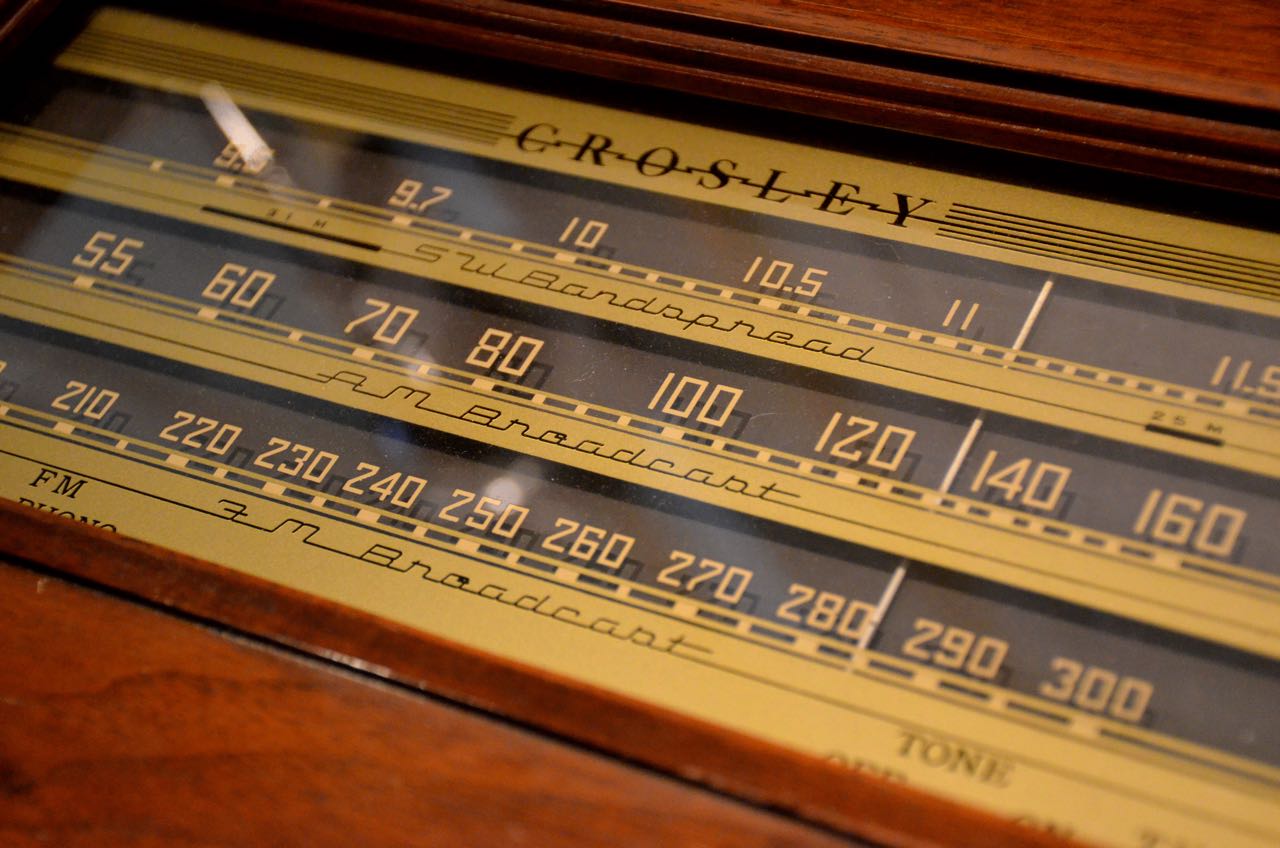
Crosley-Dial

Many thanks to SWLing Post contributor, David Iurescia (LW4DAF), for sharing information about this initiative by Radio Taiwan International:

Radio Taiwan International began broadcasting in 1928. In an era when information did not travel as  quickly as today, RTI programs could be heard thousands of miles away by people like you.

If RTI has touched you in any way over the years, let us travel back in time together to look back at the voices, letters, and memorabilia of RTI’s history.

RTI invites you to take part in piecing together the history of RTI with any sounds and memorabilia you may have collected throughout the years. Your participation will help us commemorate RTI’s precious history.

[…]RTI is inviting listeners to lend/donate RTI memorabilia from 1928-1998, including QSL cards, sounds, and other items from the Central Broadcasting System, Voice of Free China, Voice of Asia, and the Broadcasting Corporation of China (BCC).

Items to be collected?

  • Sounds: Tapes of programs, news broadcasts, and records from the above stations can be sent or e-mailed to RTI.
  • Items: Station gifts to listeners, letters, QSL cards, pennants, and other souvenirs. Mailing the items is preferred. You can also send pictures of the items.
  • Historical pictures or videos related to RTI.

If material is received from the 1928-1982 period, and is perceived to have historical significance to the station, there will be the following feedback:

The official station site will list those who donated and the items donated.

  • RTI will send a thank you letter and souvenir.
  • If the item is from 1983 or later, RTI will send a nice souvenir to thank for the item.
  • If the donated item cannot be put in our archive, the station will send a thank you letter. (RTI reserves the right to make final decisions on the collection)

Full details about the archive initiative are available at Radio Taiwan International.

Radio Romania International: New frequencies as of October 25

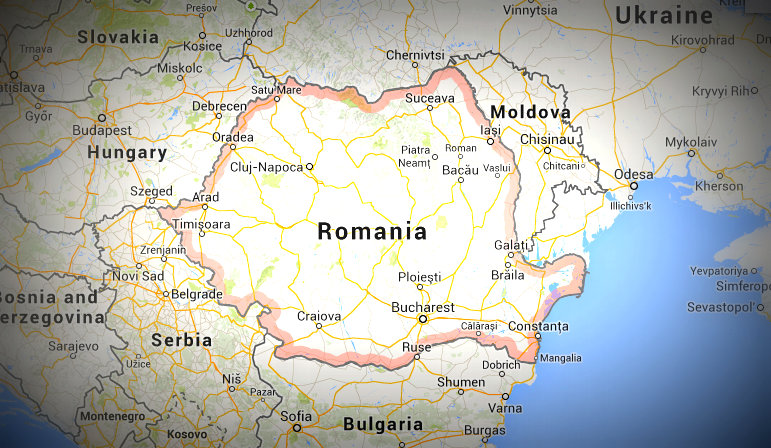
RomaniaMapMany thanks to SWLing Post contributor, David Iurescia (LW4DAF), for sharing the following additional update from Radio Romania International:

Dear friends,

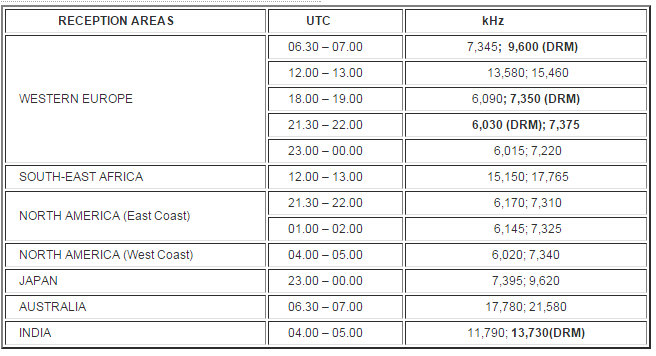
As of October 25th 2015 RRI broadcasts on new SW frequencies. Please check them out:

RRI-freqs-Fall-2015

RRI Listener’s Day: November 1, 2015

RRI-RadioRomaniaInternationalMany thanks to SWLing Post contributor, David Iurescia (LW4DAF), for sharing the following from Radio Romania International:

LISTENERS’ DAY 2015 on RRI

Dear friends, on Sunday, November 1st 2015, RRI celebrates Listeners’ Day. As usual, we invite you to be an active part of our special program airing on that day. The topic of this year’s edition is refugees. We have all followed the news about the refugee crisis, and have seen that hundreds of thousands of people risk their lives leaving their native countries in search of a better life in Europe. This wave has become a big challenge for Europe, for European values, the labor market, economic growth, and the process of integration into society. However, no one can ignore that each refugee has his or her own personal story, which sometimes is very sad.

Therefore Listeners’ Day on RRI invites you to share your opinion on the refugee issue, and to tell us stories you know about refugees. We are sure that many of you know such stories, since the refugee crisis affects the whole world.

We are looking forward to receiving your pre-recorded or written contributions, which you can send by e-mail or by Facebook and of the other social networks on which RRI has a profile. Our address is RRI, 60-64 General Berthelot street, sector 1 Bucharest, PO BOX 111, postal code 010165, e-mail: [email protected]

Kim Elliott on shortwave radios & signal jamming in 2015

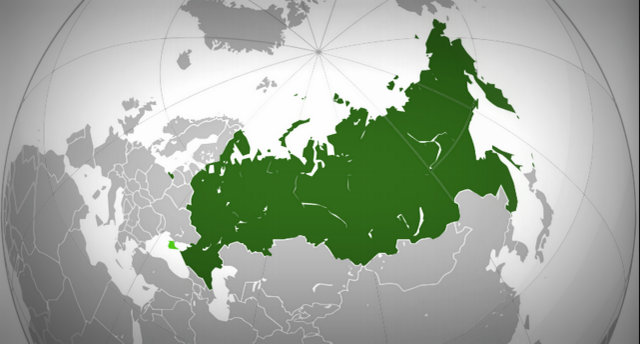
"Russian Federation (orthographic projection) - Crimea disputed" by FutureTrillionaire - Own work. Licensed under Creative Commons Attribution-Share Alike 3.0 via Wikimedia Commons - http://commons.wikimedia.org/wiki/File:Russian_Federation_(orthographic_projection)_-_Crimea_disputed.svg#mediaviewer/File:Russian_Federation_(orthographic_projection)_-_Crimea_disputed.svg

(Source: USC Center on Public Diplomacy)

BBC Russian Wants to Expand, But It’s Not So Easy

The BBC, as part of its 2015 Charter Review document, announced proposals to “invest” in BBC World Service. This includes a desire for a “bigger digital presence in Russian through a new digital service on platforms such as YouTube and the Russian equivalent Rutube, together with TV bulletins for neighbouring states. We would also start a feasibility study for a satellite TV channel for Russia.”

[…]The feasibility of BBC satellite TV for Russia is problematic. Very few Russians have rotatable satellite dishes, surfing the Clarke Belt in search of outside news. About 25% of Russian homes have fixed Ku-band satellite dishes to receive proprietary domestic direct-to-home services such as TricolorTV and NTV+. Western Russian-language news channels are not included in these channel packages and are unlikely to be invited aboard. Content from Western Russian-language broadcasters, including Voice of America and Radio Liberty, is also legally not welcome on Russian domestic terrestrial television and radio stations.

[…]So far, Russia has not blocked the Internet content of Western international broadcasters, at least not on a continuous basis. The Kremlin’s repeated denials of any intent to block Internet content suggest that it has at least been thinking about it. And recent press accounts indicate that Russian authorities may even try to ban anonymizers and other methods used to work around online censorship. Circumvention tools would have to become even cleverer, and Russian users would have to be willing and able to use them. In an extreme scenario, Russia could physically cut off the landlines of Internet traffic into the country. Then no circumvention tool within the Internet Protocol would work.

This could bring BBC Russian full circle to the venerable but unfashionable medium of shortwave radio. To be sure, Russians are out of the habit of listening to shortwave. Shortwave is no longer used for domestic broadcasting in Russia. BBC Russian eliminated its shortwave broadcasts in 2011. But, if need be, Russians could dust off their Cold War era shortwave radios. Or they could purchase inexpensive Chinese-made portable radios with shortwave bands.

In addition to traditional voice broadcasts, text, images, and even formatted web pages can now be broadcast using existing shortwave transmitters, and received on any shortwave radio. The audio must be fed to a PC or mobile device equipped with appropriate (free) software. Such a method allows reception of content even in difficult reception conditions, and allows unattended reception. This new capability of existing shortwave broadcast technology has been demonstrated through the VOA Radiogram experiments.

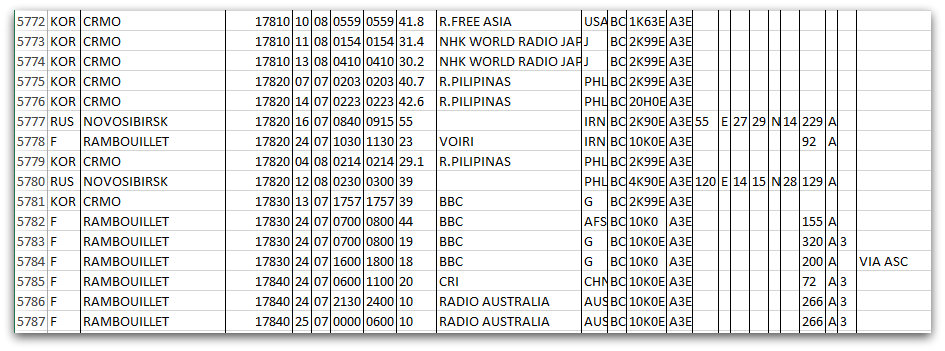
If Russia blocks Internet content from abroad, it will also probably try to jam shortwave radio content from abroad. Most jamming transmitters of the Cold War era have been dismantled or have fallen into disrepair. Many of the jamming transmitters are outside of Russia, in former Soviet republics. Reviving a shortwave jamming apparatus would be a much more expensive proposition than blocking Internet content. Various Cold War anti-jamming tactics, using various tricks of ionospheric propagation, can be employed. Text via shortwave would be even more resistant to jamming than voice broadcasts.[…]

Read the full article by Kim Andrew Elliott at the USC Center on Public Diplomacy online.

The Mighty KBC test broadcast September 27

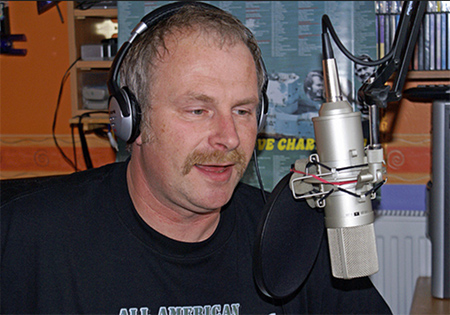
DJ Eric van Willegen, "Uncle Eric" hosts The Giant Jukebox on the Mighty KBC.

DJ Eric van Willegen, “Uncle Eric” hosts The Giant Jukebox on the Mighty KBC.

(Source: The Mighty KBC)

For our listeners across the pond:

Uncle Eric is testing Saturday September 26th on 7395 kHz between 23:00 – 24:00 UTC.

Our normal broadcast on 7375 kHz is on Sunday September 27th 00:00 – 03:00 UTC.

Please spread the word and send your reports for 7395 kHz.

Want to develop a VOA Radiogram application?

VOARadioGramAre you an application developer?

The VOA Radiogram is seeking a developer to create software for PCs and mobile devices “to simplify the decoding of text and images transmitted by VOA and other radio stations.”

The RFQ and Statement of Work from the Broadcasting Board of Governors can be dowloaded by clicking here.

Note that there is a very short deadline–September 26–to submit your proposal.

One Post reader notes that, “although BBG will make the software available for free, and will provide the source code, this is a paid procurement. Respondents are expected to state their fee.”

The category is $15,000 – $25,000 as can be seen here:

http://www.bbg.gov/partnerwithus/doing-business/

Again, responses are due September 26, 2015!

Ampegon introduces new folded SW and MW antenna system for broadcasters

image_manager__fader_3.2_ampegon_folded_monopole_mw_antenna(Source: Ampegon press release)

Ampegon Introduces New Folded Monopole Mediumwave Antenna System

IBC 2015, September 10, Amsterdam. Ampegon, leading supplier of full range mediumwave equipment up to 1200 kW is introducing a folded monopole 50 kW antenna system with new design concept and optimized antenna structure that brings many benefits to broadcasters.

The folded monopole antenna is fully grounded with no need of a base insulator for the placement of the antenna. This is an advantage for the antenna setup; maintenance of components and auxiliary systems installed on the antenna structure is simplified. For example, no isolated energy transformer is required to power the air obstruction light; the light on the antenna structure is supplied directly.

Constructed as a single unit, the folded monopole antenna consists of the mast and the radiating element. The guy ropes supporting the mast are each divided by a single insulator. The upper section forms the “antenna cage”, which is connected to the mast on one side, and by ropes to the insulated feed point at the base of the antenna. As a result, there are no floating potentials in the ropes or in the steel structure, which might cause electrostatic discharges or flashovers. A minimum number of insulators are installed and consequently the maintenance requirements are simplified and minimized. The newest type of insulator used in Ampegon systems features silicon protection and demonstrates an outstanding ruggedness towards environmental influences, such as air pollution.

Ampegon Introduces New Folded Dipole Shortwave Antenna System

IBC 2015, September 11, Amsterdam. Ampegon, leading supplier of shortwave equipment up to 500 kW is setting new standards in antenna construction. A new antenna design concept and an optimized antenna structure is used for the introduction of the single band folded dipole antenna system, available in the RF power range up to 50 kW and developed for economic and efficient domestic shortwave transmission. The 50 kW system is designed with proven and reliable Ampegon components and optimized to low power specifications, which results in significant simplification without any loss of performance.

The antenna system has outstanding key performance indicators like VSWR ? 1.5 in the operational frequency band (Z0 = 300 W) and a gain of 8 dBi.

The highly cost efficient design has tubular structures for suspension of the dipole, no on-site welding is necessary. It is designed for a wind speed of 160 km/h (survival) according to American Standard EIA-222-F with glass fiber reinforced guy ropes for minimal interference with antenna radiation.

Tel. +41 58 710 44 00
[email protected]